Introduction: Repainting Challenges and the Pain of Adhesion
During the process of automotive paint repair, industrial paint refurbishment, or secondary coating of wood coatings, construction workers often encounter a tricky phenomenon: clearly the substrate has been cleaned thoroughly, yet after repainting, large-area bubbling and peeling occur, even flaking off in sheets with a light pull. Many people habitually blame it on ambient humidity or thinner ratio, but laboratory analysis shows that the real "invisible killer" is often the overlooked—paint additives.
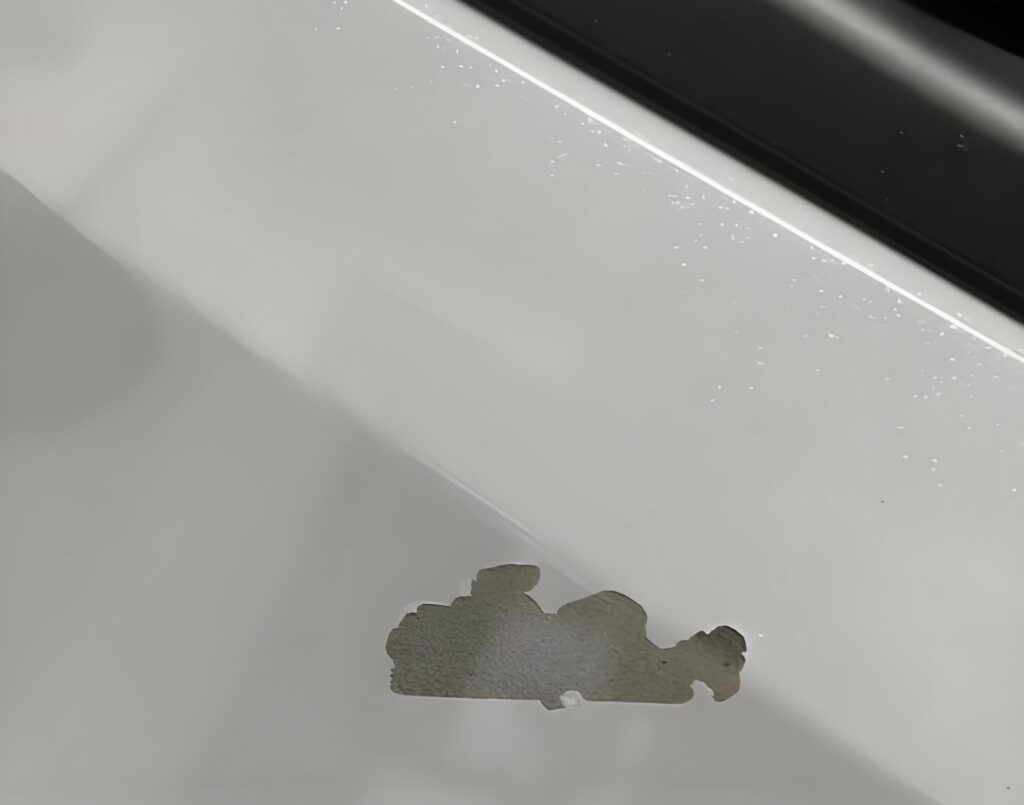


I. Core Truth: How Additives Destroy Interlayer Adhesion?
Although additives account for a small proportion in coating formulations, they are the "stabilizing anchor" that regulates film properties. Once improperly selected or added beyond a critical point, they turn from "performance catalysts" into "quality destroyers".
- Excess leveling agent (overly slippery film): Adding excessive silicone-based leveling agents in pursuit of a mirror-like finish will result in extremely low surface tension and an overly smooth surface. This prevents new paint from wetting and spreading on the surface, failing to "grip" the primer, thereby causing delamination.
- Defoamer anomaly (micro defects): If a strong defoamer is incompatible or used in excess, it can very easily leave tiny pinholes or craters in the dry film. During recoating, the solvent seeps into the old paint layer along the pinholes, causing local swelling and forming obvious blisters.
- Dispersant imbalance (interface weakening): An imbalance in dispersant dosage can cause pigment agglomeration, which not only affects color richness, but also weakens the internal cohesion and interfacial adhesion of the paint film, increasing the brittleness of the coating and making it prone to peeling.
II. Why do recoat results vary so drastically between different manufacturers?
This is the manifestation of the foundational expertise in coating R&D. With the same batch of paint, a mature manufacturer will use "additive balance technology" to ensure application leveling while reserving sufficient surface energy for recoating. The compatibility of the additive system determines the product's fault tolerance under extreme application conditions.
III. Professional Solution: Three Steps to Eliminate Bubbling and Peeling
- Strict formula control, precise addition: The production side must strictly control the proportion of additives according to the formula determined by experiments, and avoid random on-site addition. Especially for high-performance industrial coatings, the fine-tuning of additives needs to be verified by adhesion testing.
- Physical modification, mechanical sanding: Before repainting, perform deep sanding on the old paint film. By increasing microscopic roughness (anchor points), it provides physical bite force for the new paint, which is the most effective method to solve the problem of "overly smooth paint film."
- System compatibility required, strictly no mixing: Choose compatible auxiliaries from the same brand and same system. Mixing auxiliaries from different brands can easily cause chemical reactions or physical incompatibility, leading to the collapse of the paint film structure.


Summary
Whether it is automotive paint pursuing ultimate craftsmanship or industrial anti-corrosion emphasizing weather resistance, the quality of coatings depends not only on pigments and resins, but more on the balancing art of additives. Master the additives, and you master the critical point of coating quality.