Introduction: Coatings — like honey in the can, like water under the brush, like stone on the wall
The coating requires high viscosity in the can at rest to prevent settling—viscosity drops sharply during stirring—stops flowing on vertical surfaces without sagging—while leveling to eliminate brush marks before that. Viscosity must vary by 3–4 orders of magnitude across different shear rates. This is the core of rheology—designing the optimal viscosity profile—balancing the eternal conflict between sag resistance (high viscosity) and leveling (low viscosity).
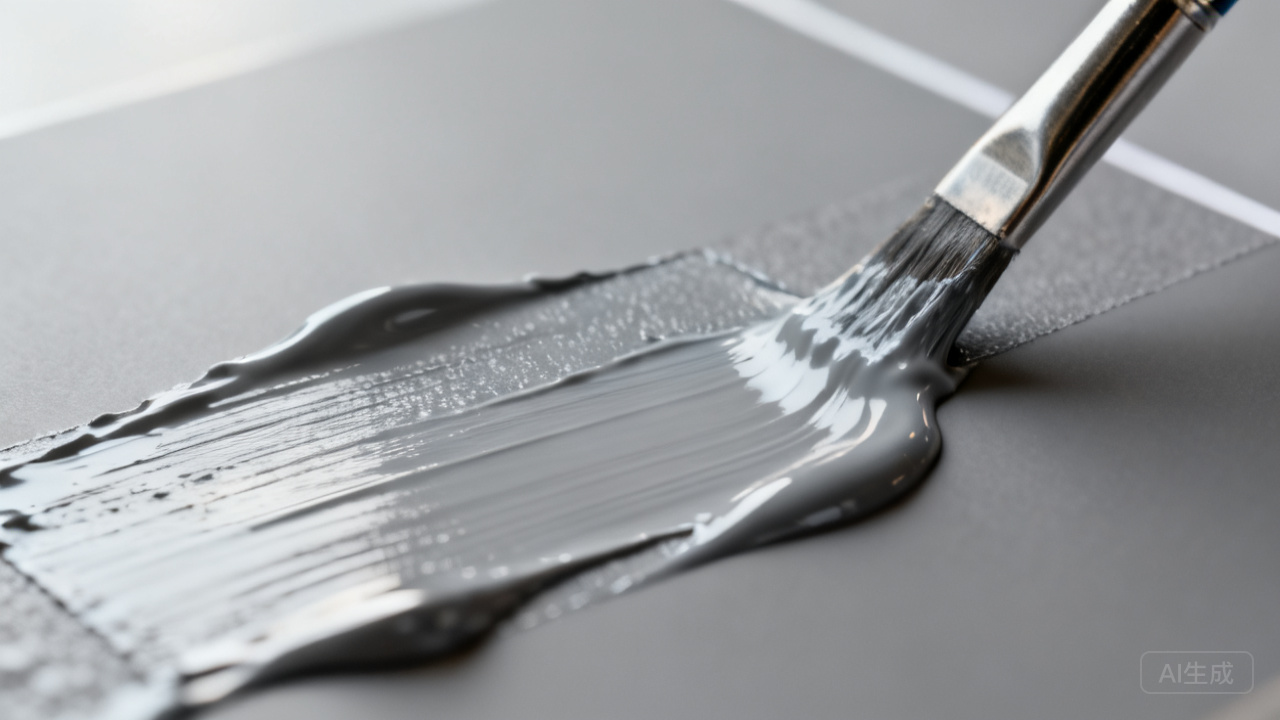
Rheological studies of coatings investigate the viscosity response under different shear rates, from storage (low shear/static) to application (high shear/spraying) to leveling/sagging (mid-to-low shear transition). By selecting thickeners (HEUR associative type — optimal balance; HASE alkali-swellable; bentonite card-house structure), a compromise among sag resistance, leveling, and anti-settling is achieved.
FAQ
Q1: Why is HEUR the optimal solution for balancing sag resistance and leveling?Dual hydrophobic end groups + PEG long-chain structure — Low shear: hydrophobic end groups bridge with latex particles → high viscosity → anti-sag; High shear: end groups are pulled off → low viscosity → good atomization; Shear stops: end groups gradually re-adsorb → viscosity recovers — leaving a 1-2 min leveling window. HEUR associates with latex particles rather than thickening the aqueous phase — aqueous phase is not viscous under high shear — leveling superior to traditional HEC.
Q2: What does the thixotropic loop area represent? Is larger better?A larger area = slower structural recovery = longer leveling time. But too large → cannot recover to sufficiently high viscosity → sagging has already occurred. The optimal area is moderately small — precisely design the recovery rate.
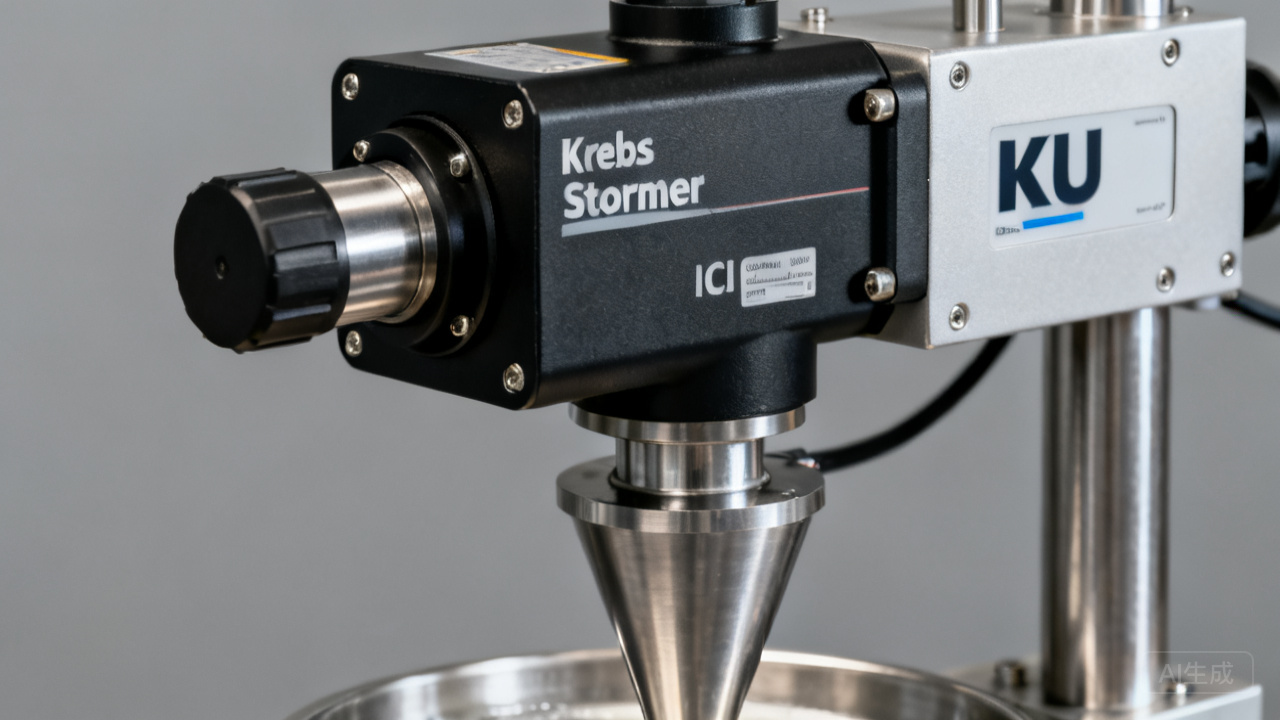
Q3: What do ICI and KU control respectively?ICI (>10000s-1) simulates spray coating — too low (3P) orange peel. KU (~200s-1) simulates brush coating — too low (120) hard to drag. Optimal KU/ICI ≈ 50-80 is the golden window.
Related Reading
Summary
Rheology — low-shear high-viscosity for anti-sag — high-shear low-viscosity for atomization and leveling — thixotropic hysteresis provides a leveling window. HEUR is the most balanced thickener. Kexin New Materials provides rheology optimization and thixotropic modification support — enabling perfect coordination of the three states: in the can, off the brush, and on the wall.