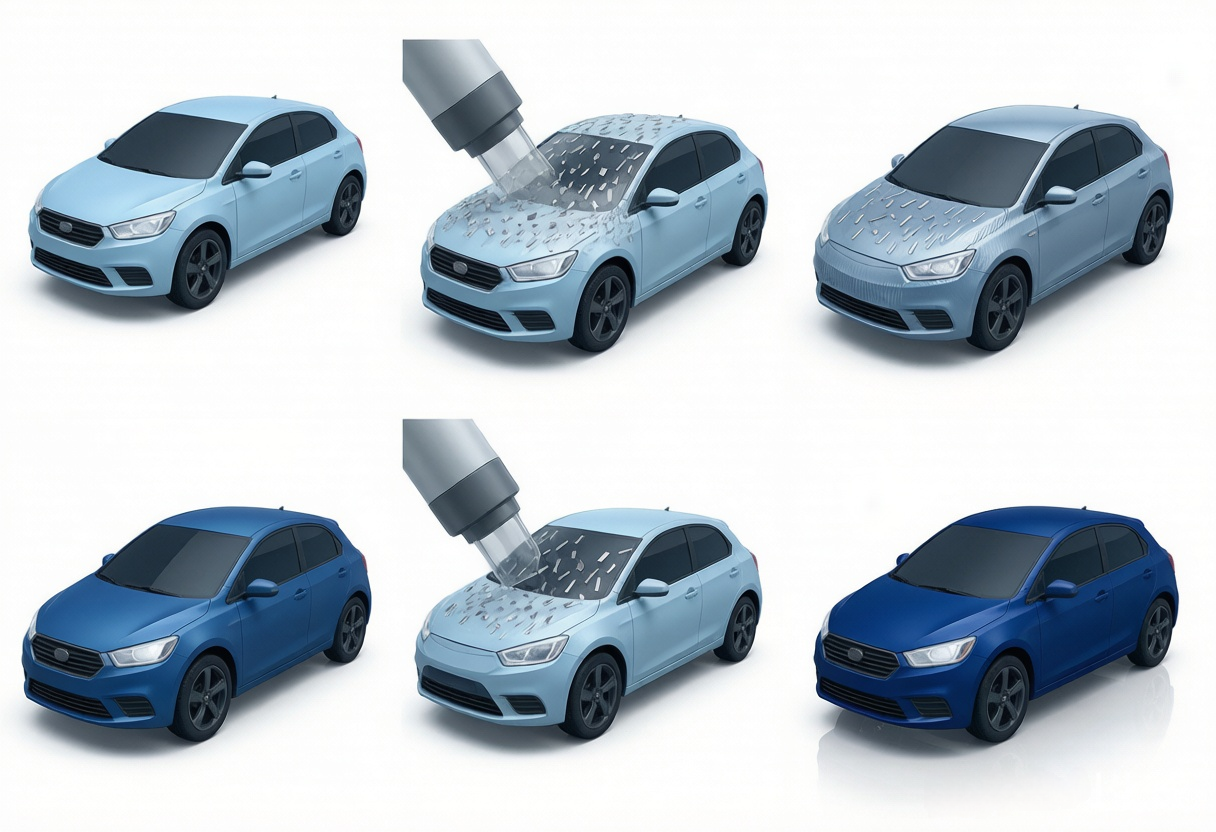
Clearly using the same formula and same color code, yet the repaired area looks "noticeable" — this is the most common embarrassment in repair work. Color consistency depends not only on the formula, but is also influenced by application variables. This article breaks down these invisible influencing factors.
I. Film Thickness and Spray Angle
The orientation of aluminum powder in metallic paint within the paint film changes with film thickness: different film thickness results in different specular-to-diffuse reflectance ratios, causing color shift. Inconsistent spray gun angle/distance leads to local film thickness drift, producing light and dark bands on the entire panel.
II. Flash-off Time and Clearcoat Refraction
- Flash dry: Insufficient intercoat flash drying, solvents trapped, abnormal aluminum powder settling, color phase shift.
- Clearcoat refraction: Changes in clearcoat thickness/refractive index alter the "filter" over the basecoat, causing visual color shift.
III. Temperature and Humidity
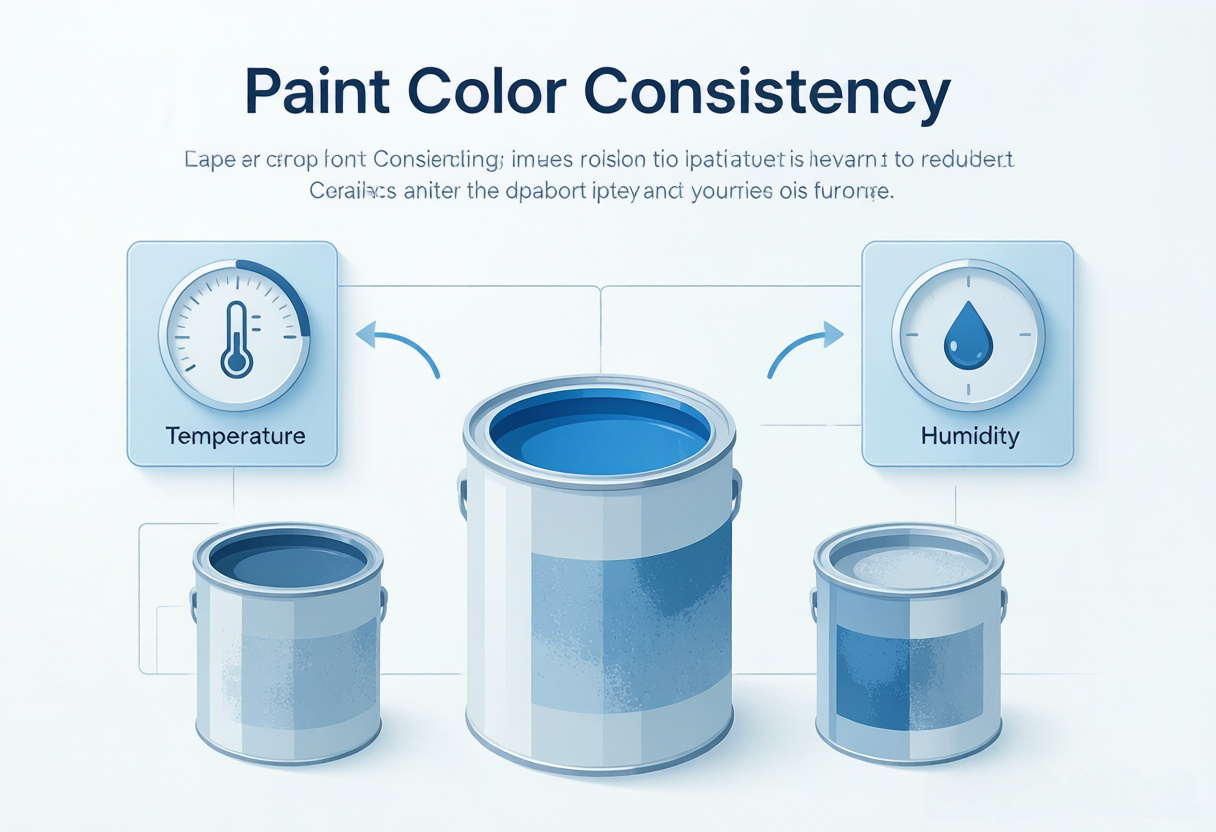
Temperature and humidity affect solvent evaporation rate and leveling: high humidity and low temperature easily cause blushing and poor leveling; high temperature causes fast solvent evaporation and premature orientation of aluminum powder. The same formula sprayed in different environments will show systematic color shift.
Summary
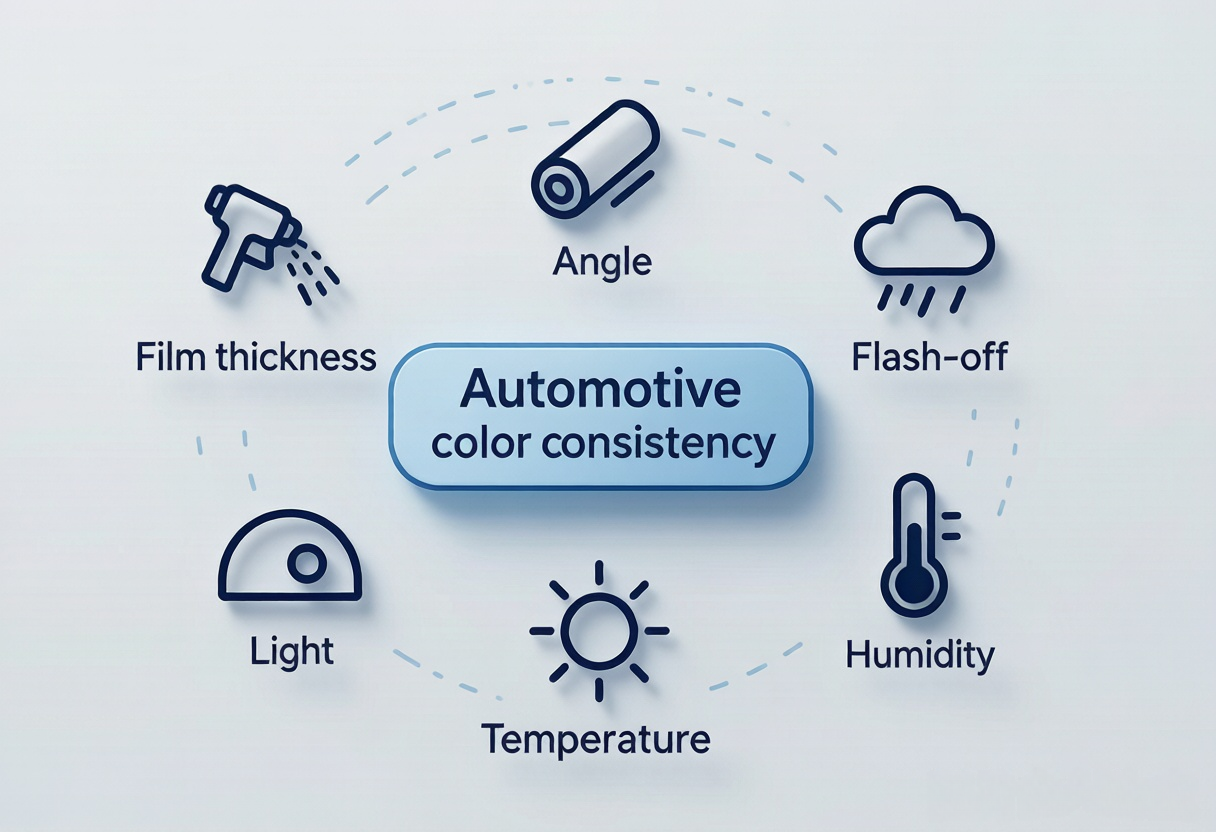
Color consistency is jointly determined by formulation and application. Any drift in film thickness, spray gun angle, flash-off time, clearcoat refraction, or temperature and humidity can cause color difference. The control method is to match the panel with the same process and environment, and use blend spraying to soften the boundaries.
Frequently Asked Questions (FAQ)
{ "@context": "https://schema.org", "@type": "FAQPage", "mainEntity": [ {"@type":"Question","name":"Why is there still color difference with the same formula?","acceptedAnswer":{"@type":"Answer","text":"Because color = formula × application. Any drift in variables such as film thickness, spray gun angle, flash-off, clearcoat refraction, temperature and humidity can cause the same formula to spray different colors."}}, {"@type":"Question","name":"How does film thickness affect metallic paint color?","acceptedAnswer":{"@type":"Answer","text":"The orientation of aluminum flakes in metallic paint changes with film thickness. Different film thicknesses result in different reflectance ratios under direct and side light, leading to visual differences in lightness/darkness, and even overall light/dark bands on the panel."}}, {"@type":"Question","name":"What happens if flash-off time is insufficient?","acceptedAnswer":{"@type":"Answer","text":"Insufficient intercoat flash-off leaves solvent residue, causing abnormal aluminum flake settling and poor leveling, resulting in hue shift and prone to graininess and orange peel."}}, {"@type":"Question","name":"Does clearcoat also affect color?","acceptedAnswer":{"@type":"Answer","text":"Yes. The thickness and refractive index of the clearcoat act like a filter over the basecoat. Inconsistent clearcoat makes the color perceived by the naked eye appear overall brighter or darker."}}, {"@type":"Question","name":"How to minimize color difference?","acceptedAnswer":{"@type":"Answer","text":"Spray the test panel and the vehicle body with the same process and environment, and compare at dual angles under natural light; use blend spraying on repair areas to eliminate hard edges, which is more feasible than pursuing absolute consistency."}} ] }