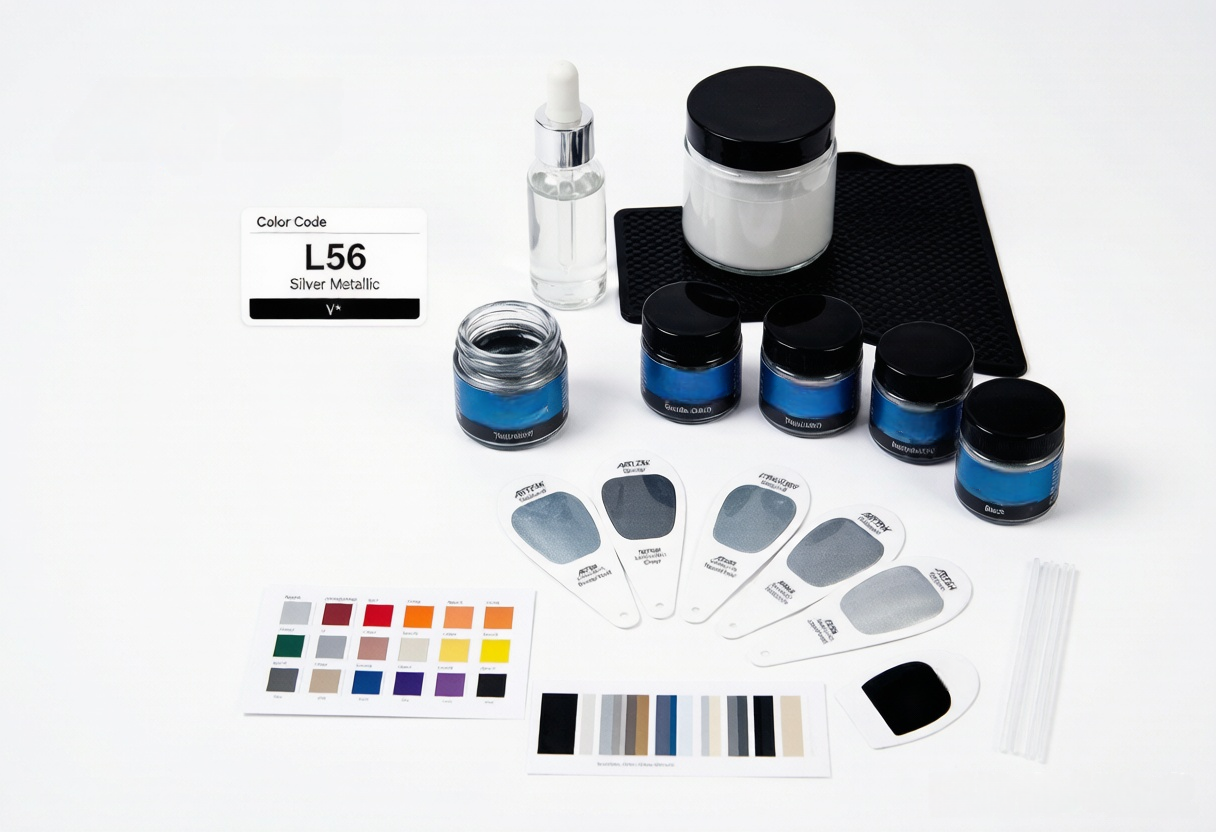
The same "silver-gray" may appear lighter or darker from different angles — this is precisely the charm of metallic paint, and also a nightmare for color matching. The orientation of aluminum flakes causes the color and gloss to change with the viewing angle (flake-oriented color shift). This article explains the underlying logic of metallic paint color matching.
I. Masterbatch System
The refinish paint factory pre-disperses pigments into standardized colorants (color pastes), each with a fixed hue and tinting strength. Color matching is the proportional mixing of several colorants according to the formula to reproduce the target color. In addition to colored colorants, metallic paint formulas also contain aluminum paste / silver powder.

II. Why is it difficult to tint metallic paint?
- Angle-dependent color shift: Aluminum flakes align parallel to reflect directional light, appearing bright when viewed head-on and dark when viewed from the side.
- Tinting strength difference:Different colorants have different hiding power, and a small amount can significantly change the hue.
- Arrangement sensitive: Spray air pressure, film thickness, and flash-off all alter aluminum flake orientation, affecting the final color.

III. Color Toning and Spraying Coordination
Metallic paint "mixed accurately" does not equal "sprayed accurately". The test spray panel must be compared with the target part using the same process (same air pressure, same film thickness, same clearcoat), and confirmed under natural light from both front and side angles, before applying to the vehicle body. Spray gun parameter drift will directly skew the color.
Summary
Metallic paint tinting relies on colorant ratios to reproduce the hue, and on the fineness and orientation of aluminum flakes to determine the metallic effect and flop. Comparison must be made on test panels prepared with the same process and viewed at both face and flop angles; judging from a single angle will inevitably show color deviation.
Frequently Asked Questions (FAQ)
{ "@context": "https://schema.org", "@type": "FAQPage", "mainEntity": [ {"@type":"Question","name":"Why is metallic paint harder to match than solid color paint?","acceptedAnswer":{"@type":"Answer","text":"Metallic paint contains aluminum powder; its arrangement orientation makes the color change with viewing angle (flake-tint or angle-dependent color shift), and spraying parameters significantly alter the silver flake effect. Therefore, both hue and texture must be matched, making it more difficult."}}, {"@type":"Question","name":"What is a toner system?","acceptedAnswer":{"@type":"Answer","text":"Toners are standardized color pastes in which manufacturers have pre-dispersed pigments, with each batch having fixed hue and tinting strength. Color matching mixes several toners in proportion according to a formula to stably reproduce the target color."}}, {"@type":"Question","name":"Why check side light when matching colors?","acceptedAnswer":{"@type":"Answer","text":"Aluminum flakes arranged in parallel reflect light directionally—bright when viewed head-on, dark from the side. Viewing only the front may show similar hue, but the side view can be noticeably darker or lighter, so confirmation from both angles is necessary."}}, {"@type":"Question","name":"Why does the spray-out panel differ in color from the car body?","acceptedAnswer":{"@type":"Answer","text":"Mostly due to different spraying processes between the test panel and the car body (air pressure, film thickness, flash-off, clearcoat refraction differ), which changes aluminum flake orientation. Use a panel sprayed with the same process before applying to the car."}}, {"@type":"Question","name":"What does tinting strength mean?","acceptedAnswer":{"@type":"Answer","text":"It refers to a toner's ability to cover or alter the base color. A toner with strong tinting strength can greatly change color with a small amount, so it must be added precisely and minimally during matching, otherwise it is easy to 'overshoot'."}} ] }