Introduction: Dip coating and electrophoretic deposition — both are “dipped in,” but the physics are entirely different.
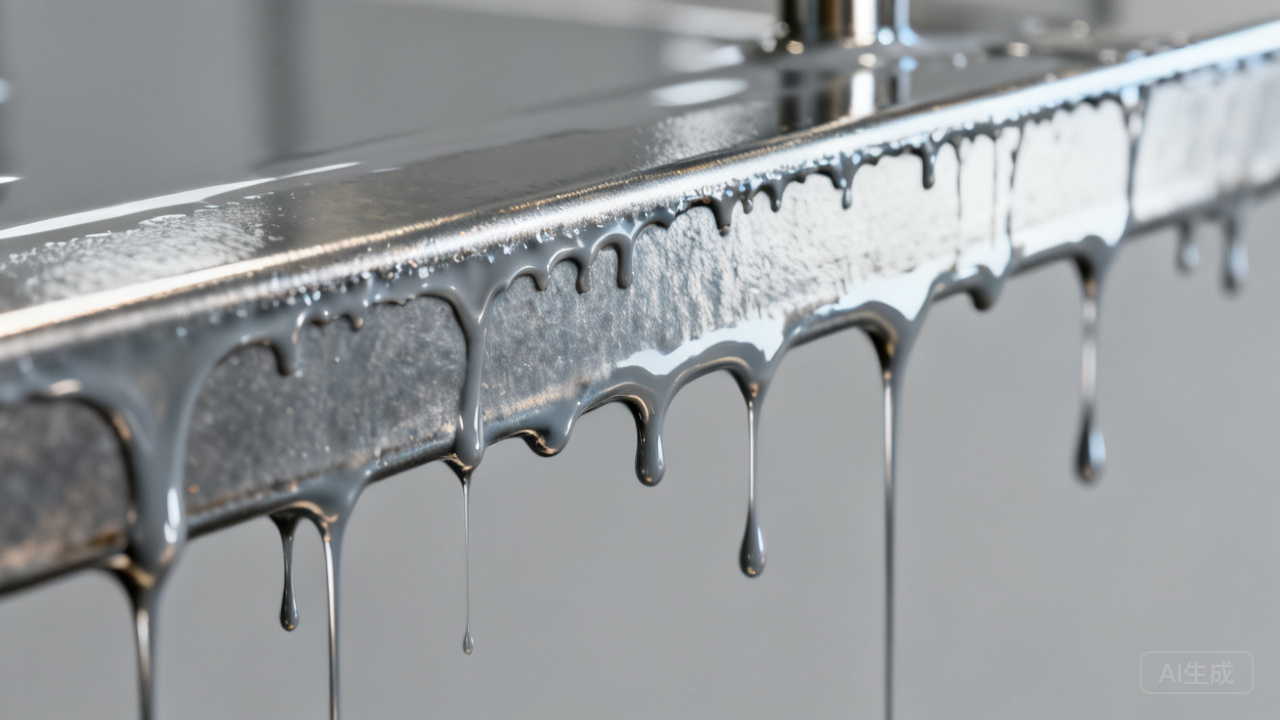
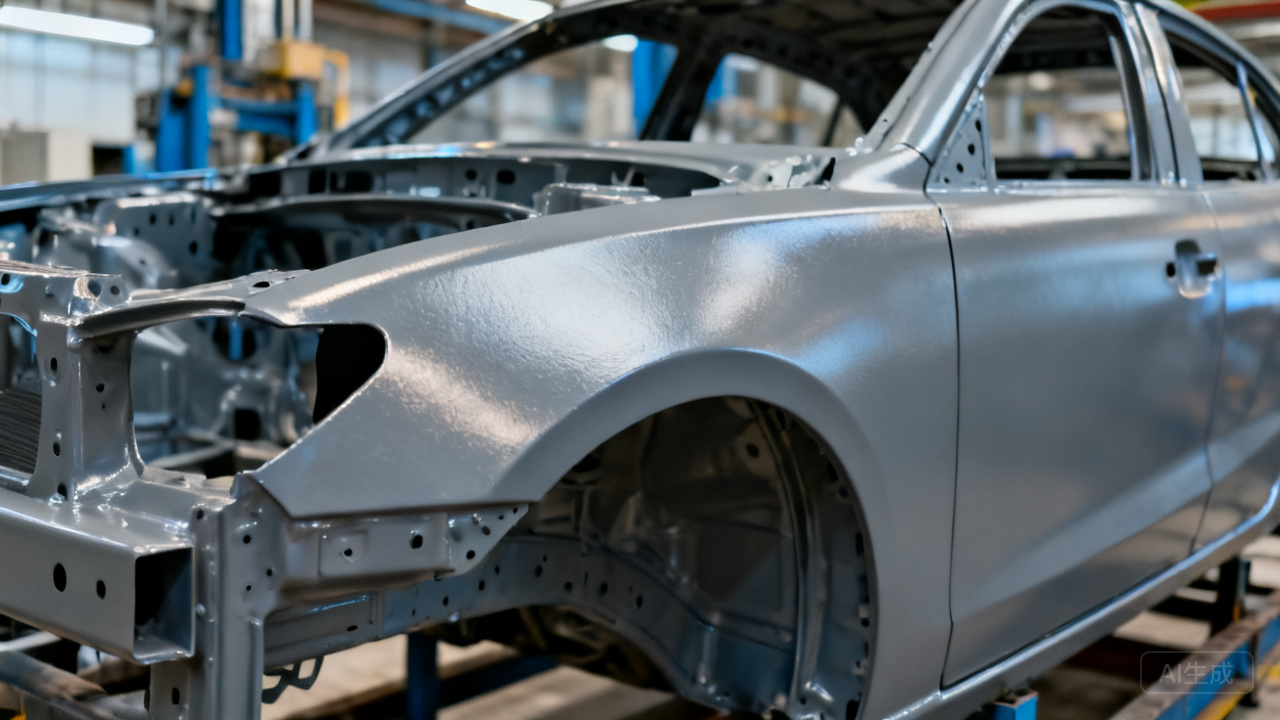
Dip coating and electrocoating (ED/KTL) both involve immersing the workpiece into a coating tank—and forming a coating after removal. However, their film-forming mechanisms are entirely different—dip coating is a purely physical process (workpiece immersed → removed → coating drains by gravity → residual coating on the surface dries into a film)—film thickness is determined by coating viscosity, withdrawal speed and rheological properties—coverage of complex internal cavities is poor—edges are prone to sagging. Electrocoating is an electrochemical process (workpiece is charged → coating particles migrate directionally under the electric field → deposit on the workpiece surface → form a uniform and dense coating)—film thickness is precisely controlled by voltage and time—throw power >85%—even the deepest internal cavities of the workpiece can be uniformly covered. Electrocoating is the “standard configuration” of today’s automotive OEM primer process—globally >95% of car bodies use cathodic epoxy electrocoat primer.
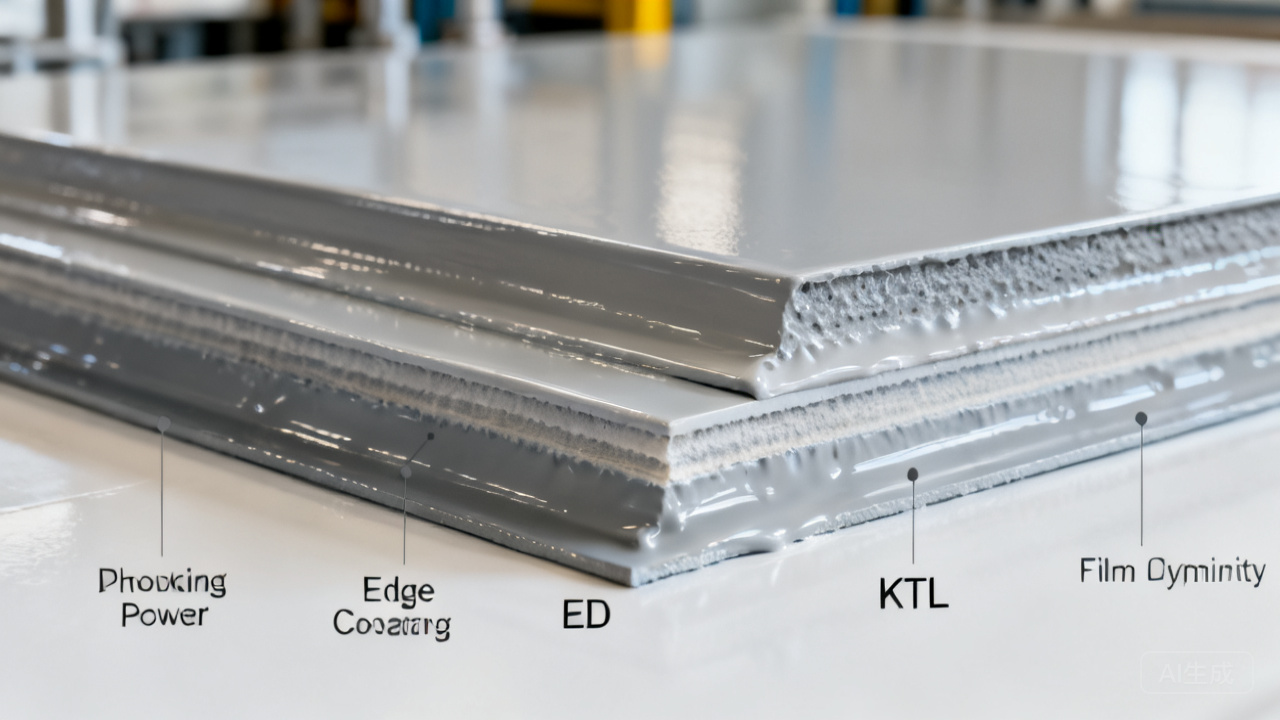
Dip coating vs. electrophoretic painting: Dip coating——workpiece is immersed in coating liquid——relies on gravity drainage and leveling——film thickness determined by coating viscosity and withdrawal speed——suitable for simple shapes/low-requirement scenarios——low cost and simple process; Electrophoresis——workpiece is electrified——coating particles migrate directionally and deposit under electric field——film thickness precisely controlled by voltage and time——throw power >85%——suitable for complex shapes/high anti-corrosion requirements——high cost but superior coating quality (uniform film thickness ±2μm)——standard primer process for automotive OEM and high-end industry.
FAQ
Q1: Throwing Power — Why can electrophoresis “coat every inch of the workpiece — including dead corners” while dip coating cannot?
Dip coating — workpiece is immersed → removed — coating relies on gravity to flow down naturally — in recesses and internal cavities of the workpiece — coating is “trapped” and air cannot escape — film cannot form — dead corners = no coating. Electrophoresis — electric field lines are “everywhere” — coating particles move along electric field lines and “automatically find” the workpiece surface — even the deepest internal cavities — as long as the electric field lines can reach — coating particles can deposit — throwing power >85% — means >85% of the workpiece surface (including internal cavities) can be uniformly covered — the remaining <15% are "electric field shielding zones" — this is the greatest technical advantage of electrophoresis over dip coating.
Q2: MEQ (acid consumption equivalent) of the electrophoresis bath — why is it the “core parameter of bath management”?
MEQ (MilliEquivalent — the millimoles of acid required to neutralize 100g of resin solids) reflects the “neutralization degree” of the electrophoresis resin. If MEQ is too low (30) — excessive neutralization of the resin — reduced deposition rate — thinner film — decreased throwing power. Daily monitoring of MEQ — adjust by adding acid (lactic/acetic acid) or neutralizer (amine) — “keeping MEQ between 15-30 = keeping the electrophoresis bath in optimal working condition”.
Related Reading
Summary
Dip coating (physical deposition—simple and low-cost—suitable for simple shapes) and electrophoresis (electric field driven—throw power >85%—suitable for complex shapes + high corrosion resistance—standard in automotive OEM) each have their applicable scenarios. Electrophoretic bath management (MEQ/pH/conductivity/solid content) is the core to ensuring coating quality. Kexin New Materials provides customers with electrophoretic paint and bath management technical support—so that every workpiece of yours is “fully coated—evenly coated.”