Introduction: A Micron-Sized "Water Droplet" — The "Birthplace" of Waterborne Coating Quality
The core unit of water-based coatings (acrylic emulsion/water-based PU dispersion/VAE emulsion) is polymer particles (particle size 50-500nm) suspended in water. Each particle is a miniature "coating droplet" (containing resin + pigment + additives). The "birth" mode of these particles in the emulsion polymerization reactor (micellar nucleation/homogeneous nucleation/droplet nucleation) — determines the particles' particle size distribution/molecular weight/molecular chain structure and internal particle morphology, which in turn determines the film-forming quality of the coating (MFFT/density/adhesion). Emulsion polymerization is the most complex polymerization method in polymer chemistry because the reaction occurs in a multiphase system (aqueous phase/monomer droplet phase/micellar phase/particle phase) — the monomer diffusion and free radical exchange between different phases make the kinetics completely different from bulk/solution polymerization.
I. Comparison of Three Systems: Acrylic Emulsion / Waterborne PU / VAE
| System | Polymerization Mechanism | Particle Size (nm) | Tg (°C) | MFFT (°C) | Water Resistance | Cost |
|---|---|---|---|---|---|---|
| Acrylic Emulsion | Free radical chain (seed/semi-continuous) | 50-500 | -30~+100 | 0-50 | Good | Baseline |
| Waterborne PU Dispersion (PUD) | Stepwise polycondensation (acetone method/prepolymer method) | 30-200 | -50~+60 | <0 (self-emulsifying) | Excellent | 2-5× |
| VAE Emulsion | Free radical + high-pressure ethylene copolymerization | 200-2000 | -20~+30 | 0-15 | Medium (hydrophilic VAc) | 0.8-1.5× |
II. Core-Shell Structure — The "Unity of Opposites" Between Low-Temperature Film Formation and High-Hardness Coating
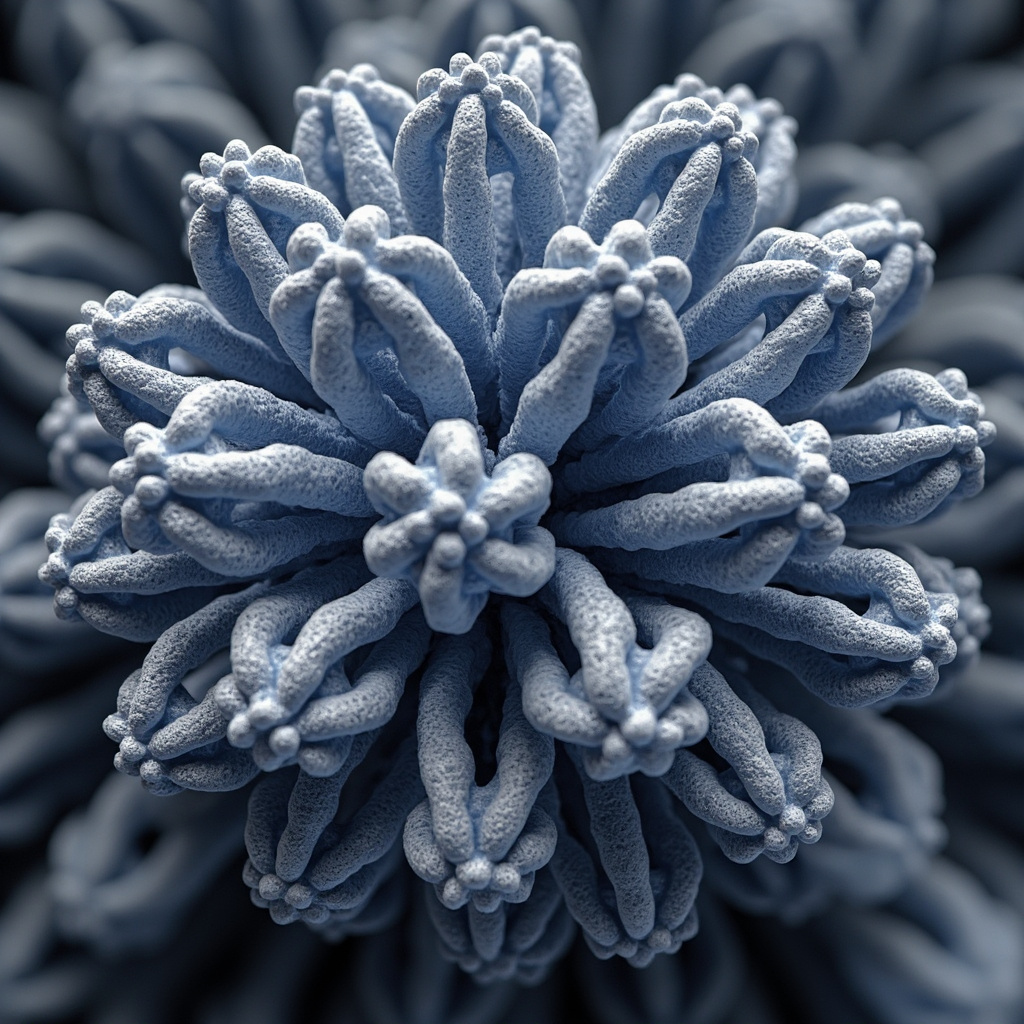
The design philosophy of core-shell emulsion “soft shell (low Tg / deformable and coalescible into film at low temperature) + hard core (high Tg / provides coating hardness)”. At the film-forming temperature (T > shell Tg) — the shell softens → interparticle fusion → formation of a continuous film — the core remains in the glassy state (does not participate in film-forming flow — provides the ”skeleton” hardness of the coating). The core-shell structure resolves the contradiction of traditional emulsions: ”high Tg = high hardness but high MFFT / cannot form film at low temperature” vs ”low Tg = low MFFT can form film at low temperature but soft coating”. The design of core (hard) + shell (soft) enables the coating to simultaneously possess low-temperature film formability (soft shell) + high hardness (hard core).
FAQ
Q1: How is precise control of particle size distribution achieved in Seeded Polymerization?Seeded polymerization—first prepare uniform-sized "seed" particles in the reactor (e.g., D=100nm/PDI<0.1)—subsequent monomer and initiator continue to polymerize on the surface of the seed particles (no new particles are generated)—final particle D = seed D × (total mass/seed mass)^(1/3)—the monodispersity (PDI<0.05) is far superior to conventional one-step emulsion polymerization (PDI>0.2)—this significantly improves the rheology/film formation/gloss of water-based coatings.
Q2: What are the differences between the acetone process and the prepolymer process for preparing waterborne PU? Acetone process—PU prepolymer is synthesized in acetone (solvent) → water is added for dispersion (water "encloses" the prepolymer into droplets) → acetone is removed by vacuum distillation → pure waterborne PU dispersion. Prepolymer process—hydrophilic groups (carboxyl/DMPA) are introduced into the PU prepolymer → neutralization (triethylamine) → water is added for self-emulsification, no organic solvent required (or <small amount of NMP) — this is the production route for "zero-VOC" waterborne PU — but viscosity control of the prepolymer is difficult (high-viscosity prepolymer is hard to emulsify with water addition).
Q3: Relationship between MFFT and Tg—why does smaller particle size lead to lower MFFT?MFFT≈Tg+capillary pressure effect between particlesSmaller particles (10MPa)particles can deform and coalesce at temperatures below TgMFFT can be 10-20°C lower than Tg.Large particles (>500nm)—low capillary pressure—MFFT close to Tg—film formation requires temperature >Tg.Therefore, reducing particle size (improving dispersion stability + better film formation) is a core technical direction in waterborne coating formulations.
Q4: How does Coalescent lower MFFT — the matching principle of Hansen Solubility Parameters?The role of coalescents (e.g., Texanol/Dowanol DPnB) — (1) During water evaporation — the coalescent temporarily plasticizes polymer particles (lowering Tg) — particles deform and fuse at lower temperatures; (2) After film formation — the coalescent slowly volatilizes and the coating's Tg recovers to the original design value — hardness returns. The extent to which the coalescent lowers Tg — is positively correlated with the match (Δδ) of the Hansen Solubility Parameters (δD/δP/δH) between the polymer and the coalescent — the smaller the Δδ → the higher the plasticization efficiency — Texanol's Δδ = 3–5 (well matched with both acrylic and PU) — is the most widely used coalescent.
Q5: IPN (Interpenetrating Polymer Network) emulsion — "molecular-level interlock" of two incompatible polymers?IPN emulsion — swell acrylic monomer + crosslinker into aqueous PU prepolymer particles and then initiate acrylic polymerization — acrylic forms its own network inside the PU particles — PU network + acrylic network are "interlocked" within each particle (non-chemical bond / purely physical entanglement) the two different polymers are macroscopically unable to phase separate the coating film combines PU's flexibility + acrylic's hardness and low cost making it the "cost-effective choice" for water-based wood coatings and industrial coatings.
Q6: The adverse effect of "emulsifier" on coating water resistance in emulsion polymerization—how do reactive emulsifiers solve this?Traditional emulsifiers (sodium dodecyl sulfate SDS/nonionic NP-40)—after polymerization remain free in the coating and are hydrophilic—causing coating water absorption/blistering/poor water resistance. Reactive emulsifiers (emulsifiers containing double bonds/such as allyl polyoxyethylene ether) participate in free-radical polymerization and are chemically bonded to polymer molecular chains—non-free—the coating's hydrophilic sites are greatly reduced, with water resistance more than 2 times better than traditional emulsifiers. Reactive emulsifiers are one of the most important formulation strategies for improving the water resistance of acrylic emulsion coatings.
Q7: Why is VAE emulsion (vinyl acetate-ethylene copolymer) "never" used in outdoor coatings?The vinyl acetate (VAc) units in VAE slowly hydrolyze under UV and heat-humidity releasing acetic acid—the coating pH drops, self-catalyzed hydrolysis accelerates, and the coating chalking/degrades within 1-3 years. The service life of outdoor VAE coatings is only 1-3 years—far inferior to acrylic (>5-10 years) and PU (>10-15 years). VAE is limited to indoor applications (interior wall paints/adhesives)—using it outdoors is an absolute taboo.
Q8: Why does the "storage stability" of water-based dispersions develop "skin formation" or "stratification" after being left for several months?Storage of water-based acrylic emulsion——(1)Surface skinning——at the air/water interface inside the drum——emulsifier migrates to the surface——surface water evaporation + increased emulsifier concentrationpolymer particles fuse at the surface→forming a skin layer (>1mm)——can be used——but the skin layer needs to be removed;(2)Sedimentation/stratification——broad particle size distribution (PDI>0.3)——large particles settle rapidly——a polymer-rich layer appears at the bottom of the drumStirring can re-disperse it——but if the sediment layer undergoes irreversible gelation the entire drum is scrapped——storage temperature <30°C is key to delaying sedimentation.
Q9: What is the difference in thickening mechanisms between "alkali-swellable" (ASE) and "PU thickener" (HEUR) in water-based coatings?ASE——acrylic copolymer emulsion containing carboxyl groups (-COOH)——neutralized by adding alkali (ammonia water/NaOH) → carboxyl groups become ionized → molecular chains expand due to electrostatic repulsion, occupying a large volume of solution → viscosity increases. HEUR——PU backbone + hydrophobic end groups——hydrophobic end groups self-associate into micelle networks (hydrophobic interaction)——network exhibits high viscosity at low shear (static)——network breaks down under high shear → low viscosity (application)——thixotropic effect far superior to ASE.
Q10: Future Trend — Nanocellulose (CNF/CNC) Reinforced Waterborne Coatings?Nanocellulose (plant fiber / diameter <100nm / length >1μm / biodegradable) — added at 0.5%-3% in waterborne coatings — (1) Reinforcement — the high aspect ratio (>100) of CNF provides fiber reinforcement — tensile strength and abrasion resistance of the coating improved by >30%; (2) Thixotropy — the fiber network of CNF provides extremely strong thixotropy — sag resistance greatly improved; (3) Green — 100% renewable / biodegradable — zero carbon footprint. The application of CNF in waterborne coatings is a new direction for the "greening" of the coating industry, but the dispersion and long-term stability of CNF still require technological breakthroughs.
Related Reading
Summary
Emulsion polymerization (micellar nucleation/seed polymerization) is the "genetic engineering" of waterborne coating quality. The core-shell structure (soft shell + hard core) resolves the conflict between low-temperature film formation and high-hardness coatings. Coalescing agents (Texanol/Hansen solubility parameter matching) reduce MFFT to >10–20°C. IPN (interpenetrating polymer network) is the optimal strategy for PU + acrylic synergy. Kexin New Materials provides customers with full-series waterborne acrylic emulsions/waterborne PU dispersions and formulation technical support.