Introduction: Coating of Construction Machinery — the "Last Mile" of Waterborne Transition
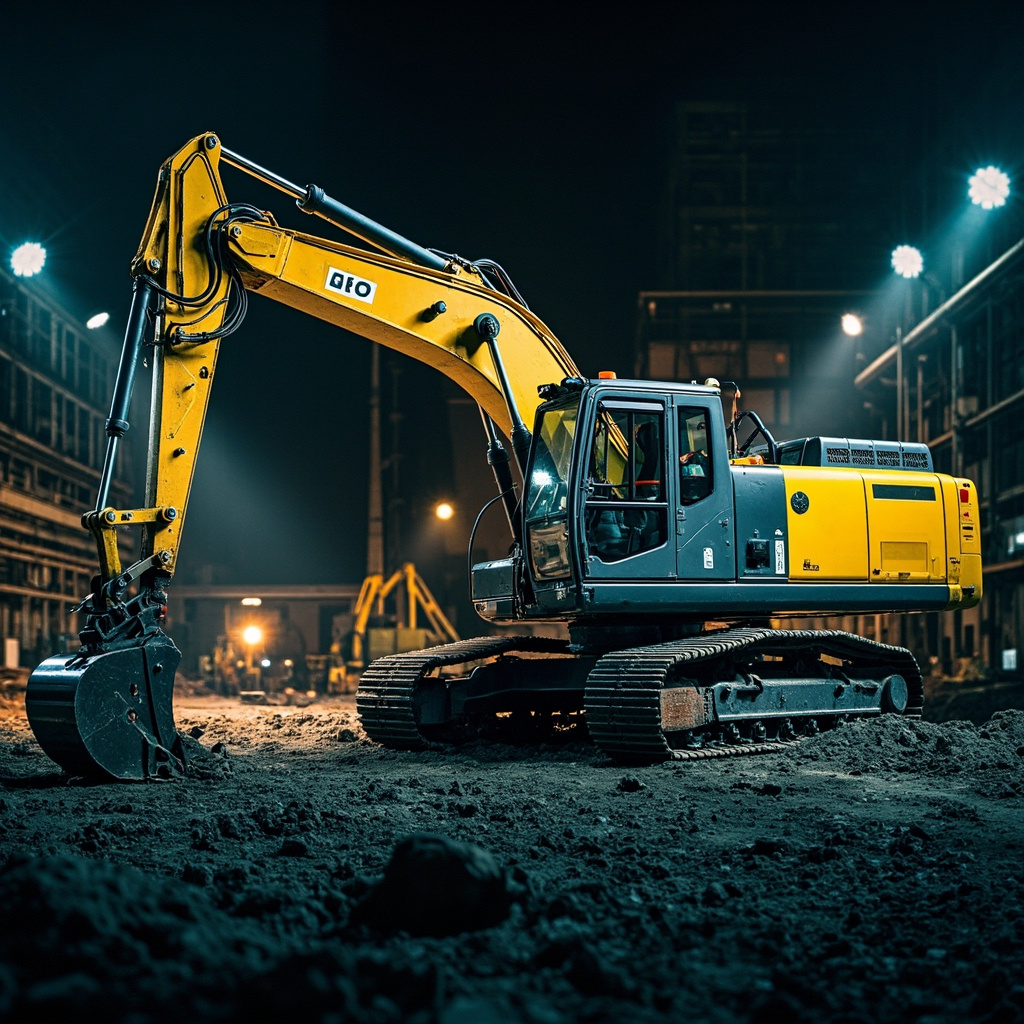
Excavators, loaders, cranes and other construction machinery have an annual coating area exceeding 300 million square meters, making it one of the largest single application scenarios for industrial coatings. The shift from solvent-based to water-based coatings (”oil-to-water”) for waterborne two-component polyurethane (2K WPU) in the construction machinery field faces a core challenge: the airless spray application window of waterborne systems is far narrower than that of solvent-based systems. Spray pressure, gun distance, flash-off time, and environmental conditions must be precisely controlled within a narrow process window; otherwise, large-scale orange peel, pinholes, and interlayer adhesion failure will cause the entire production line to shut down.
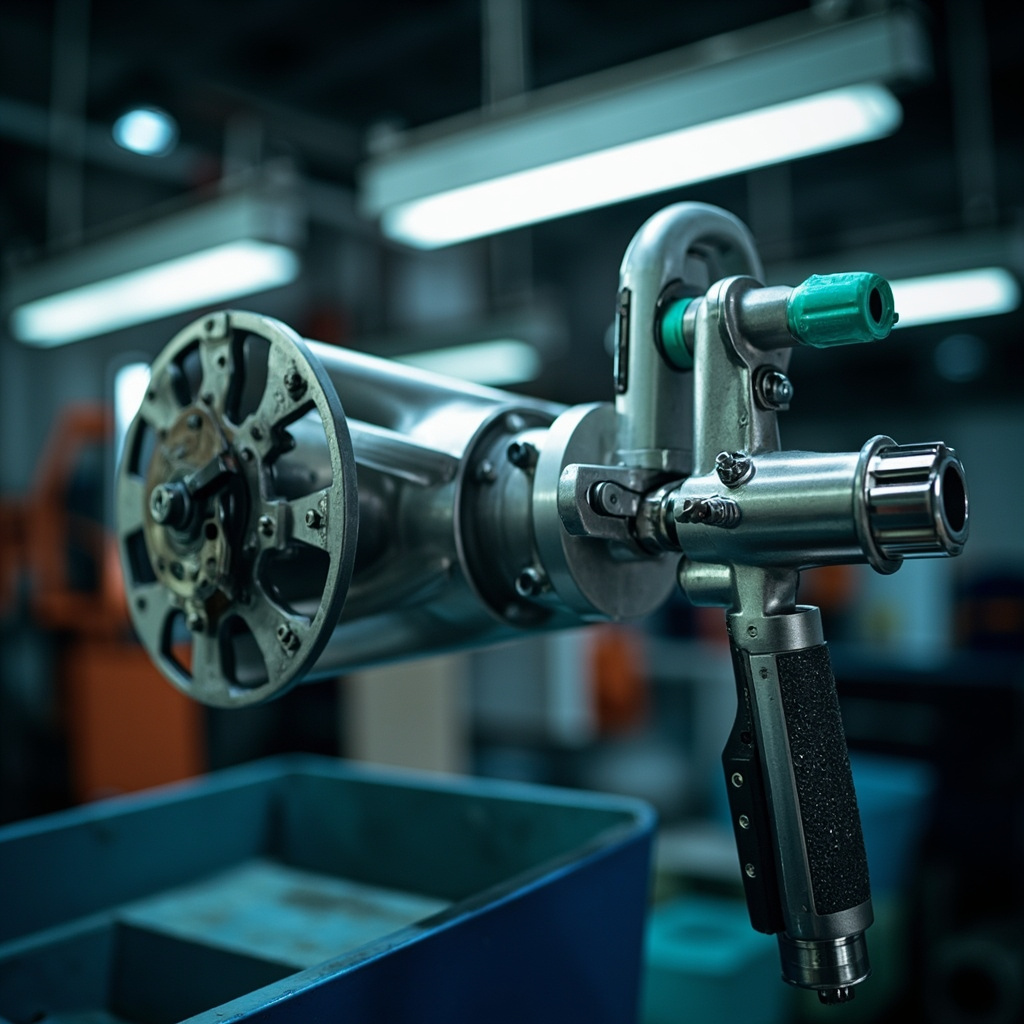
I. Key Parameters for Airless Spraying of Waterborne 2K WPU
| Parameter | Water-based 2K WPU (Recommended) | Solvent-based 2K PU (Comparison) | Reason for Water-based Special Adjustment |
|---|---|---|---|
| Spray pressure (MPa) | 15-18 | 12-15 | Water-based has higher viscosity and requires higher pressure for atomization |
| Spray gun distance (cm) | 30-35 | 25-30 | Water-based overspray tends to dry-spray, needs slightly farther distance to avoid powdery deposition |
| Nozzle orifice (mm/inch) | 0.38-0.53mm(0.015-0.021″) | 0.28-0.38mm(0.011-0.015″) | Water-based has high solids content and needs larger orifice to prevent clogging |
| Flash-off time (23°C/50%RH, min) | 15-25 | 5-10 | Water has high latent heat of vaporization, requiring longer flash-off |
| Recommended wet film thickness (μm) | 80-120 | 60-100 | Water-based has low shrinkage and can be applied slightly thicker |
II. Comparison of Application Parameters Between Airless Spraying and Air Spraying
| Parameter | Airless Spray | Air Spray | Air-Assisted Airless (AA) |
|---|---|---|---|
| Spray Pressure (MPa) | 12-25 | 0.3-0.6 | 5-15 |
| Transfer Efficiency (%) | 65-80 | 35-45 | 75-85 |
| Paint Loss (%) | 20-35 | 55-65 | 15-25 |
| Applicable Viscosity (mPa·s) | 500-5000 | 100-500 | 300-3000 |
| Best Application | Large-area steel structures | Decorative coating | Construction machinery / complex structures |
II. Coating Strategies for Typical Structural Components of Construction Machinery
Large cover panels (hood/door panels): High-pressure airless spraying (15-18MPa) + large-orifice nozzle (0.021″) + two-coat spraying (first coat thin spray 30-40μm DS, flash dry 15-20min then second coat 50-60μm). Complex structural parts (boom/arm/bucket): Air-assisted airless (AA) spraying is recommended — AA combines the efficiency of airless (75-85% transfer efficiency) with the fine atomization of air, and is especially suitable for painting welds, corners and groove areas — these areas are the "weak links" where corrosion first appears on construction machinery coatings. Hydraulic cylinder piston rod: Not sprayable (coating would affect sealing), use chrome plating or thermal spray ceramic treatment.
Technical deepening: systematic optimization methods for process parameters (DOE experimental design)
The optimization of coating production processes should not rely on the "trial-and-error method" but should adopt the scientific method of DOE (Design of Experiments). Taking the dispersion process as an example—factors affecting quality (linear velocity/time/filling rate/temperature), 4 factors each at 3 levels—a full factorial requires 81 experiments—DOE uses orthogonal experiments L9 (9 times) or response surface methodology (27 times) to greatly reduce the number of experiments—while simultaneously obtaining the main effects and interactions of each factor. For example, it is found that "the interaction of linear velocity × time is significant": high linear velocity + short time and low linear velocity + long time can achieve the same dispersion effect—but the former saves over 20% energy.
In DOE analysis, interpretation of the P-value — P95% confidence). The final output of DOE is a set of prediction models (polynomial regression equations) — input line speed/time/temperature → predict fineness/viscosity/gloss — providing formulation engineers with a "digital formula optimization" tool.
Industry practice: from "master craftsman's feel" to "parameter standardization"
The common challenge in the coatings industry — when experienced veteran workers retire, their "feel" (mixing resistance / fineness gauge scraping / visual inspection of wet film gloss) is taken away — new employees cannot replicate it. Transform the "feel" into quantifiable standard parameters (1) mixing resistance → viscometer reading; (2) fineness gauge scraping → fineness gauge reading (μm); (3) wet film gloss → gloss meter (GU value). The "standard parameter card" for each process is posted next to the equipment — new employees operate according to the "card" rather than "by feel". "Parameter standardization" is a key step for coating factories to move from "workshop" to "factory".
FAQ
Q1: Is the pot life of water-based 2K WPU longer or shorter than that of solvent-based?Longer. The pot life of water-based systems is usually 2-4h (23°C), which is 1.5-2 times that of solvent-based. This is because the curing agent of water-based PU is encapsulated in hydrophobic polyol latex particles, and side reactions with the aqueous phase are suppressed. However, the pot life is still significantly affected by temperature—at >35°C it may shrink to 1h.
Q2: How to determine whether old coatings on construction machinery need to be completely removed during refurbishment?If the pull-off adhesion of the old coating is >3MPa and the failure mode is cohesive failure → it can be retained; if the adhesion is <3MPa or the failure is interfacial → it must be removed by sandblasting. When the type of old coating is unknown (possibly non-repaintable types such as alkyd/chlorinated rubber), the conservative strategy is to completely remove it by sandblasting to Sa2.5 grade.
Q3: What to do if "dry spray" occurs during airless spraying of water-based paint?Dry spray refers to spray particles becoming overly dry before reaching the substrate, forming a powdery deposit instead of a continuous paint film. Solutions: (1) Shorten the spray gun distance to 28-30 cm; (2) Reduce spraying pressure to 13-15 MPa to minimize excessive atomization; (3) Check the ambient temperature and humidity — high temperature (>35°C) and low humidity (<30%RH) are conditions where dry spray frequently occurs.
Q4: How can construction machinery painting lines achieve rapid color change while accommodating products of different colors?(1) Each main color (yellow, orange, green, gray) has an independent paint supply line (must not be shared); (2) When changing colors, use cleaning solvent (water) to circulate and clean inside the line until the discharged liquid is clear (usually takes 5-10 min per color); (3) Special colors (metallic paint / pearlescent paint) use independent small paint supply tanks to reduce color-change waste.
Q5: Drying conditions for water-based 2K WPU coating? Surface dry in 1-2h (23°C), hard dry in 24h, fully cured in 7 days. For acceleration: forced drying at 60°C × 45min can shorten hard dry to 4h. In mass production of construction machinery, 60-80°C baking rooms are usually equipped, enabling same-day spraying and same-day off-line.
Q6: Weathering service life of water-based construction machinery topcoat?2K WPU (aliphatic HDI curing) outdoor gloss retention service life is about 7-12 years (depending on color and geographic location), superior to solvent-based alkyd topcoat (3-5 years) but shorter than FEVE fluorocarbon topcoat (20-25 years). Within the typical service life of construction machinery (10-15 years), water-based PU is fully competent.
Q7: What impact does sudden rain during construction have on water-based paint?Uncured (24h/23°C) water-based PU paint film has good water resistance and can withstand rain. For outdoor construction, be sure to pay attention to the weather forecast.
Q8: Cost comparison between water-based 2K WPU and solvent-based 2K PU in construction machinery?Coating unit price: water-based is 15%-30% higher than solvent-based. However, taking into account comprehensively: water-based requires no solvent dilution cost, no hazardous waste solvent disposal fee, lower VOC emission tax, and higher spray transfer efficiency (less water-based overspray rebound). The comprehensive coating cost difference is <10%, and in some scenarios water-based is even better.
Q9: Special maintenance for high-pressure airless spraying equipment for water-based paint?(1) After finishing work each day, the pump, pipelines, and spray gun must be thoroughly cleaned with clean water (dried water-based paint is extremely difficult to remove); (2) Every week, use a cleaning solution containing 5% butyl glycol for deep cleaning to remove trace paint residue; (3) All metal contact surfaces must be made of stainless steel (rust on carbon steel parts will contaminate light-colored coatings).
Q10: Can water-based paint be applied to construction machinery in a winter environment at -10°C?No. The minimum application temperature for water-based paint is recommended to be >5°C (paint temperature >15°C). At -10°C, water-based paint freezes, coalescing agents fail, and coating adhesion is completely lost. For outdoor painting in winter, it must be moved indoors (insulated workshop >10°C) or switched to a low-temperature solvent-based coating (applicable at -15°C).
FAQ: In-Depth Technical Q&A Supplement
Q11: How do the differences in domestic and international standards for this technology affect product export?Domestic standards (GB) differ from ISO/ASTM standards in test methods and acceptance criteria. For example, salt spray testing—GB/T 1771 (equivalent to ISO 7253) has test conditions basically consistent with ASTM B117—but the rating systems (ISO 4628 vs ASTM D610/D714) differ—when providing test reports for exported products, it is mandatory to simultaneously indicate the corresponding international standards, otherwise overseas customers cannot make a comparative assessment. It is recommended to list both GB and ISO/ASTM dual-standard indicators in the TDS (Technical Data Sheet) of exported products—to enhance the trust of international customers.
Q12: How to verify the long-term service performance of this technology in actual engineering?Laboratory accelerated testing (salt spray/QUV/cyclic corrosion) provides comparative data—but cannot fully replace actual outdoor exposure testing. Recommendations—(1) Set up outdoor exposure racks at both the factory location and typical customer locations (e.g., coastal C5-M/industrial C4)—conduct annual inspections of coating appearance/adhesion/film thickness changes—establish a company-owned outdoor service database; (2) Collaborate with universities/research institutes—combine enterprise data with academic research—enhance data credibility.
Q13: What should SMEs pay attention to when purchasing related raw materials/equipment?(1) The batch stability of suppliers is more important than unit price—it is recommended to require suppliers to provide COA data for >10 batches—and evaluate batch variation (CpK); (2) For equipment procurement, visit peers who have used the equipment for >2 years to understand the long-term reliability and after-sales service quality of the equipment—rather than relying only on the demonstration data from equipment suppliers; (3) For key raw materials (resin/curing agent)—maintain at least 2 qualified suppliers to guard against single-supply risk.
Q14: What is the current state and trend of digital transformation in this field?The digital transformation of the coatings industry is evolving from “point-based applications” (automation of individual equipment/processes) to ”system integration” (full-chain ERP+MES+PMS). Currently, the ”highest-ROI investment” for digitalization in small and medium-sized coatings factories is automatic batching systems + digitalization of quality control data—with a payback period of 1–3 years—which is the prioritized recommended direction. Future trend—AI + sensors enabling real-time optimization of process parameters—further reducing quality variation between batches.
Q15: How can a newly entered coating engineer quickly master this technology?(1)Combine theory and practiceDo not only read literature without touching actual production—nor rely solely on experience without studying theory;(2)Establish a “failure case archive”Every customer complaint/production anomaly/coating failure—record the root cause and resolution process—this is the most effective learning material;(3)Learn from suppliersTechnical personnel from resin/additive/pigment suppliers are carriers of "tacit knowledge" in this field—communicate more with them about solutions to specific problems.
Related Reading
Summary
The airless spray parameters for waterborne 2K WPU in construction machinery coating (pressure 15–18 MPa / gun distance 30–35 cm / nozzle 0.38–0.53 mm / flash-off 15–25 min) must be precisely controlled to accommodate the special rheology and drying characteristics of the waterborne system. For the complex geometries of construction machinery structural parts (welds, corners, recesses), air-assisted airless spray (AA) is recommended to achieve better coating coverage and corrosion protection.