Introduction: Curing Agents—the "Other Half" Determinant of Epoxy Coating Performance
Performance of two-component epoxy coatings 50% determined by epoxy resin — 50% determined by curing agent
. Component A (epoxy resin + pigment) — Component B (curing agent + accelerator) — applicator mixes A and B on site at precise stoichiometric ratio (NOT volume ratio!) — epoxy groups (-CH(O)CH₂) undergo ring-opening addition reaction with active hydrogens of curing agent (-NH₂/-NH-/-COOH/-OH) — form three-dimensional crosslinked network — from liquid → solid — final coating properties (hardness/flexibility/adhesion/chemical resistance/salt spray resistance) depend on (1) molecular structure of curing agent (aliphatic — flexible vs aromatic — rigid/chemical resistant); (2) crosslink density (amine hydrogen/epoxy ratio = 1:1 — optimal — amine excess — unreacted amine — plasticization/reduced water resistance — epoxy excess — unreacted epoxy groups — later react with moisture — blistering); (3) compatibility of curing agent and epoxy (solubility parameter δ close — uniform mixing — incompatible "microphase separation" coating performance degradation)
. Wrong choice of curing agent — even with best epoxy resin — coating will show incomplete curing (tacky), poor salt spray resistance (<500h), low adhesion (<3MPa), insufficient flexibility (cracking on bending)
and other issues.
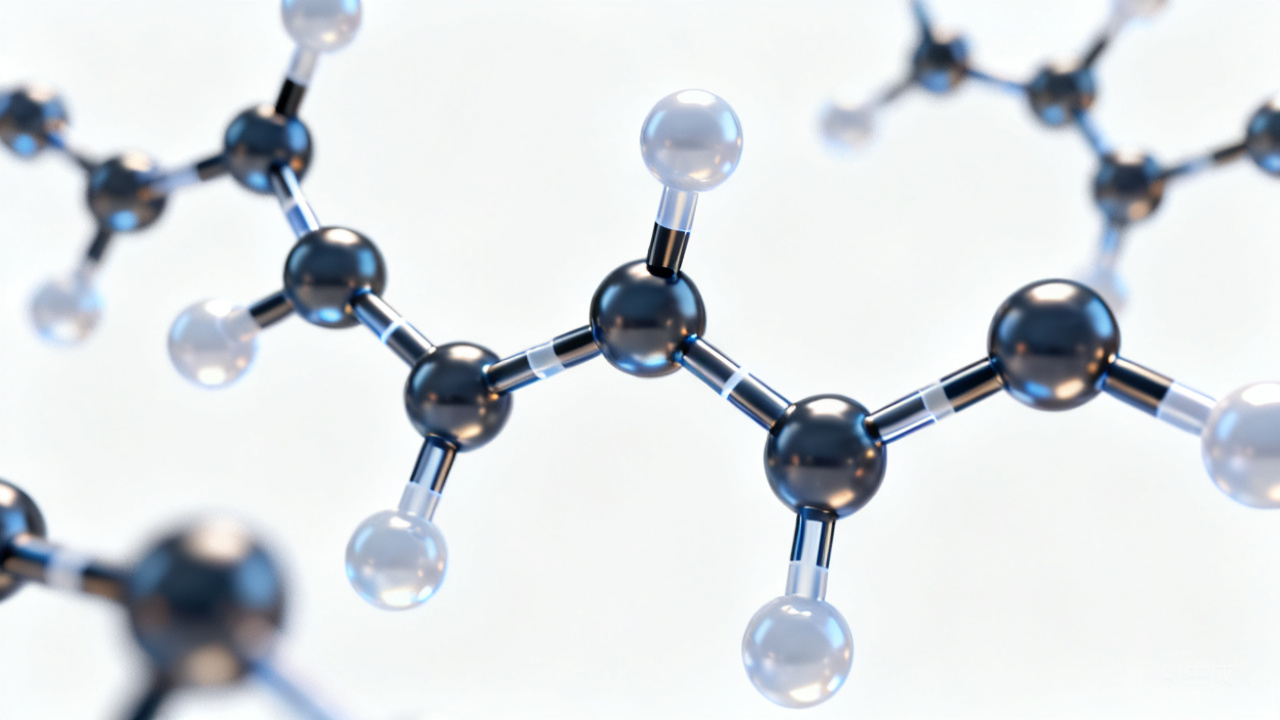
Epoxy curing agents are a class of compounds containing active hydrogen (-NH₂/-NH-/-COOH/-SH/-CONHNH₂, etc.)—which can undergo ring-opening addition reactions with the epoxy groups (-CH(O)CH₂) of epoxy resins—added according to a precise stoichiometric ratio (Phr = AHEW × 100 / EEW)—converting liquid epoxy resin into a three-dimensional crosslinked solid within a specific temperature range (0-200°C) and time frame (15 min-7 d)—a key coating component that determines core properties such as coating hardness/flexibility/chemical resistance/adhesion/salt spray resistance.
I. Chemical Structures and Performance Overview of Six Major Curing Agent Systems
| Curing Agent Type | Representative Compounds | AHEW(g/eq) | Curing Temperature | Pot Life(25°C) | Typical Applications | Core Advantages | Core Disadvantages |
|---|---|---|---|---|---|---|---|
| Aliphatic Polyamines | DETA/TETA/IPDA | 20-60 | Room temp-60°C | 20-60min(short) | Heavy-duty anti-corrosion primer/tank inner walls | High crosslinking/excellent chemical resistance | Short Pot Life/amine "blushing"/skin sensitization |
| Polyamide (PA) | Dimer acid + DETA condensation | 80-250 | Room temp | 2-8h(long) | Flooring/general anti-corrosion | Non-critical ratio/flexible/excellent adhesion/long Pot Life | Chemical resistance < aliphatic amines/slow curing |
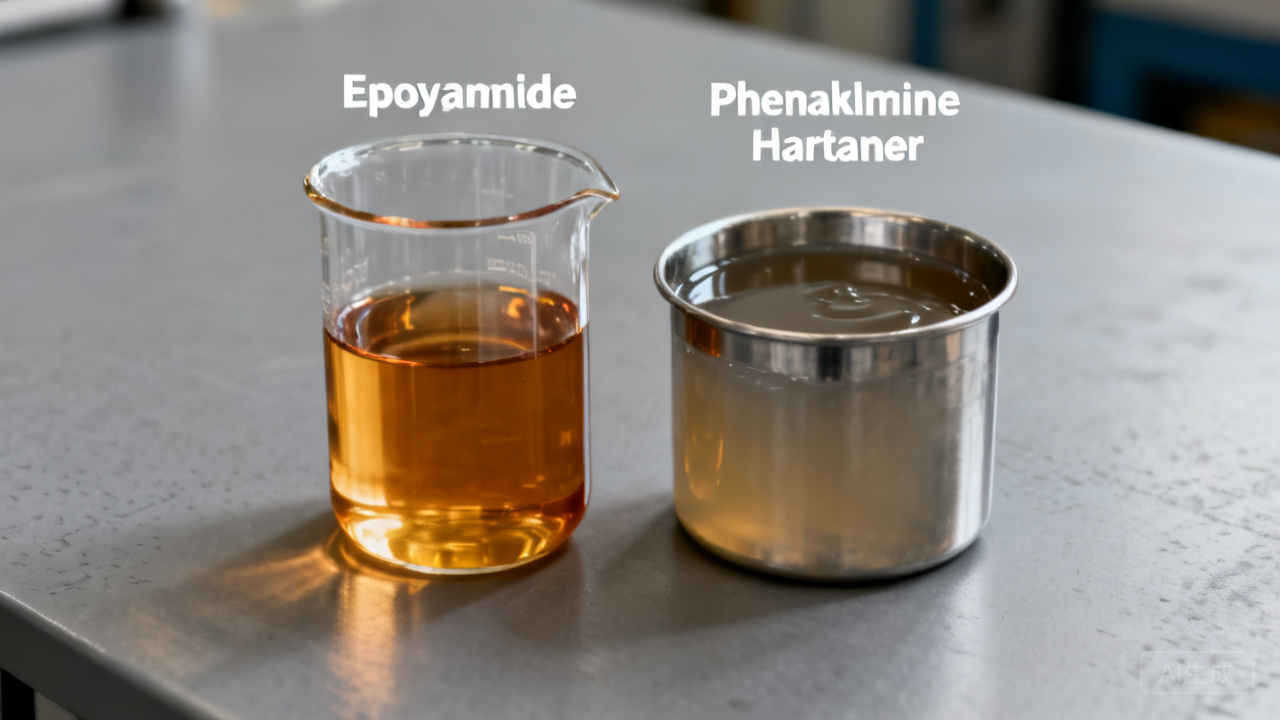
| Phenalkamine | Cashew phenol + DETA (Mannich) | 80-150 | 0-30°C (low temp/underwater) | 30-90min | Ships/marine engineering/underwater | Cures at 0°C low temp/underwater curing | Dark color (red-brown)/high price |
| Mannich Base | Phenol + formaldehyde + TETA | 60-120 | 0-25°C (low temp/fast dry) | 15-45min(short) | Fast-dry primer/repair | Low-temp fast dry/high crosslinking | Short Pot Life/high price |
| Anhydride | MHHPA/MTHPA | 150-170 | 120-180°C (high temp) | >24h(very long) | Powder coatings/electronic potting | High temperature resistance/electrical insulation/low shrinkage | Requires high-temp curing/very long Pot Life not suitable for room temp |
| Latent | Dicyandiamide/ADH/2E4MZ | 21(DICY)/various | 120-200°C (latent) | >6 months(unlimited) | Powder coatings/one-component epoxy | One-component/storage stable (>6 months) | High-temp curing——only powder/baking scenarios |
II. Stoichiometric Ratio Calculation — The "Precise Science" of Curing Agent Addition Amount
Stoichiometry of epoxy curing reactionOne epoxy group (-CH(O)CH₂) reacts with one active hydrogen (one H in -NH₂ / one H in -NH-)
——that is“equivalence”
principle. Non-critical ratio——the ”100 parts epoxy plus 50-70 parts polyamide” for polyamide is not equivalence——but relies on the flexibility and adhesion provided by the ”long-chain dimer acid” in polyamide to compensate for the loss of incomplete crosslinking
——this is the chemical source of the formulation tolerance of polyamide. Any formulation deviating from equivalence——crosslink density decreases——coating properties (hardness/chemical resistance/salt spray resistance) decrease accordingly.
Calculation formula: Phr = AHEW × 100 / EEW
(Phr = grams of curing agent required per 100g of epoxy resin, AHEW = active hydrogen equivalent of curing agent, EEW = epoxy equivalent weight of epoxy resin g/eq).
| Epoxy resin (EEW) | Curing agent (AHEW) | Phr calculation | Mixing ratio (A:B by weight) | Property impact |
|---|---|---|---|---|
| E51 (EEW=190) | DETA (AHEW=21) | 21×100/190=11.1g | 100:11.1 | Stoichiometric — optimal crosslinking — maximum hardness and chemical resistance |
| E51 (EEW=190) | Polyamide (AHEW=120) | 120×100/190=63.2g | 100:63.2 | Non-critical — 50-70 phr all acceptable — high tolerance |
| E20 (EEW=500) | Dicyandiamide (AHEW=21) | 21×100/500=4.2g | 100:4.2 | Precise — over 5.5 phr excess / curing agent precipitation |
| E44 (EEW=220) | Phenalkamine (AHEW=100) | 100×100/220=45.5g | 100:45.5 | ±10% adjustable — does not affect low-temperature curing ability |
FAQ
Q1: What is "amine blush" of aliphatic amines (DETA/TETA) — and how to prevent it?
Amine blush is the reaction of low-molecular-weight free amines in aliphatic amine curing agents with CO₂ and H₂O in the air — forming ammonium carbamate salts (NH₂COONH₃R) — a white/waxy surface exudate
. Hazards of amine blush — (1) waxy surface — very poor intercoat adhesion
for the next coat — must be removed by sanding; (2) coating surface yellowing/whitening
— affects appearance. Prevention — (1) use high-molecular-weight amines (TEPA/long-chain — low volatility — less likely to migrate to the surface)
instead of DETA; (2) application environment relative humidity 10°C
— low temperature + high humidity is the "ideal condition" for amine blush; (3) induction — after mixing A+B, let stand for 30–60 min first — allow the amine and epoxy to "partially react" to reduce free amine
— this is the most effective means to reduce amine blush.
Q2: Why can the "non-critical ratio" of polyamide (PA) "arbitrarily" control the A:B ratio without drastic performance changes?
Molecular structure of polyamide dimer acid (36-carbon long-chain fatty acid — soft/long chain) + polyamine (DETA/TETA)
— contains "long-chain flexible segments". Under non-critical ratio — (1) polyamide excess (>100 phr: >70 phr) — excess polyamide — its "dimer acid long chain" acts as "internal plasticization"
in the crosslinked network — the network is not completely dense — but flexibility and adhesion are instead improved; (2) polyamide deficiency (<100 phr: <50 phr) — unreacted epoxy groups — undergo "post-curing" under the action of moisture and CO₂
— slowly supplement crosslinking — coating final crosslinking density approaches 70-80% of that at equivalent ratio
— but the flexibility of polyamide compensates for the lack of crosslinking density. Non-critical ratio — is a compromise of "sacrificing some hardness and chemical resistance — in exchange for flexibility and tolerance"
— not "any ratio gives equal performance".
Q3: Why can phenalkamine cure at low temperatures of 0°C—even underwater?
The phenalkamine molecule contains cardanol (with a C15 unsaturated long chain—hydrophobic/low viscosity/low melting point (<-20°C)) + polyamine (Mannich reaction)
——(1) The C15 long chain of cardanol—extremely strong hydrophobicity
——Underwater—the cardanol long chain in the coating "repels" water molecules—water cannot enter the coating/curing agent interface
——The curing reaction is not disturbed by water—underwater curing—adhesion >5MPa (pull-off method); (2) The low melting point (<-20°C) of cardanol imparts low viscosity
——At 0°C—the viscosity of conventional polyamide is >5000mPa·s—while the viscosity of phenalkamine remains <500mPa·s—good fluidity—mixes evenly with epoxy resin—can still undergo ring-opening reaction at 0°C—curing time <6h (0°C)—whereas aliphatic amines essentially stop reacting at <5°C.
Q4: The role of the "phenolic hydroxyl group" in Mannich Base—merely accelerating curing?
The "Mannich reaction" of Mannich base curing agents (phenol + formaldehyde + polyamine—introducing -CH₂-NH- groups at the ortho/para positions of phenol)—the reaction product contains phenolic hydroxyl groups (-OH) and amine hydrogens (-NH₂/-NH-)
—the phenolic hydroxyl group is not an active hydrogen (does not react with epoxy groups)—but it has two key roles—(1)Catalysis—the phenolic hydroxyl group (-OH) activates the epoxy group via hydrogen bonding (acid catalysis—similar to tertiary amines)
—accelerates the epoxy/amine reaction—making the curing speed of Mannich base (at room temperature) 2-3 times faster than pure amines—Pot Life <20min—it is the fastest curing among the six major curing agents; (2)Promotes wetting of the substrate (steel/concrete)—due to the polarity of the phenolic hydroxyl group
—the spreading angle of the coating on the substrate is <30°—high adhesion. The residual free phenol in Mannich base
(not involved in the Mannich reaction)—is toxic (phenol—toxic/irritating)—high-quality Mannich base—free phenol <1% (low toxicity/low sensitization).
Q5: Why does anhydride curing require "tertiary amine (BDMA/DMP-30)" as an accelerator?
The reaction between anhydride (e.g., MHHPA/methylhexahydrophthalic anhydride) and epoxy groups——(1) First step——the anhydride ring is "opened" by the nitrogen atom of the tertiary amine (BDMA/benzyldimethylamine/DMP-30)
——generating a carboxylate ion (COO⁻) and a nitrogen cation (N⁺)——COO⁻ is a strong nucleophile——attacks the epoxy group——ring opening——esterification; (2) Second step——the formed "ester bond + new carboxyl group"——the new carboxyl group continues to open the next epoxy group——chain propagation. The curing of anhydride/epoxy is "anionic ring-opening esterification catalyzed by tertiary amine"
——the tertiary amine is not consumed——it is a "true catalyst"——addition level >0.5-3%——without tertiary amine——anhydride >150°C/epoxy reaction is extremely slow (>48h no curing)——adding 0.5% BDMA——120°C/4h——fully cured. Selection of tertiary amine——aromatic tertiary amine (BDMA) > aliphatic tertiary amine (TEA)——the basicity of BDMA is suitable for the activation barrier of anhydride ring opening.
Q6: The "latent" mechanism of dicyandiamide (DICY) — why does it "not react" at room temperature?
Dicyandiamide (H₂N-C(=NH)-NH-CN — melting point 208°C — white crystalline powder) — at room temperature DICY is insoluble in epoxy resin — DICY is "suspended" in the epoxy resin as solid particles — no contact with epoxy groups — no reaction
— this is the chemical origin of "latent": "insoluble = no reaction". When heated above 160°C — DICY begins to partially dissolve in the epoxy resin — dissolved DICY reacts with epoxy groups — curing begins
— DICY melting point 208°C — above 160°C — DICY solubility >5g/100g epoxy — sufficient for curing — further heating — more DICY dissolves — reaction accelerates — 15-30min — fully dissolved — completely cured. DICY is the "standard" curing agent for powder coatings — epoxy/polyester hybrid powder (60/40 — epoxy excess — moderate crosslink density — weather resistance/flexibility).
Q7: What is the special status of adipic dihydrazide (ADH) in waterborne epoxy?
ADH (H₂N-NH-CO-(CH₂)₄-CO-NH-NH₂——hydrazide group (-CONHNH₂)——AHEW≈43g/eq)——two hydrazide groups contain a total of 4 active hydrogens. ADH's "self-emulsifying" property——(1) ADH is itself water-soluble——>10g/100g water dissolves at room temperature
——added to waterborne epoxy emulsion——ADH dissolves in the aqueous phase——reacts with the epoxy droplets dispersed in the epoxy emulsion; (2) The amide bond (-CONH-) in ADH provides strong hydrogen bonding——excellent adhesion to metal substrates
——adhesion of waterborne epoxy/ADH system > conventional waterborne amine curing agents (e.g., Jeffamine D230) > 2-3MPa; (3) ADH's curing temperature can be as low as 10°C
——and salt spray resistance > 2000h
(waterborne epoxy)——in waterborne industrial anti-corrosion (waterborne epoxy zinc-rich primer) it is a "cost-effective" curing agent. ADH's drawbacks short Pot Life (30% higher than conventional waterborne amines
——suitable for scenarios with high waterborne anti-corrosion requirements (containers/steel structures——waterborne conversion).
Q8: Why is 2-ethyl-4-methylimidazole (2E4MZ) a "standard" accelerator in epoxy/dicyandiamide powder systems?
2E4MZ (imidazole—possessing two types of nitrogen, -NH- and =N-—the lone pair electrons of N catalyze epoxy ring-opening)—(1) In epoxy/DICY powder coatings—DICY curing requires >200°C/15min (pure DICY system)—high temperature—high energy consumption + substrate heat resistance (powder coatings are often applied to aluminum/steel—can withstand 200°C—but energy consumption increases); (2) Adding 2E4MZ—0.5-3phr
—curing temperature reduced from 200°C to 160°C
—curing time reduced from 30min to 15min
"Promotion" mechanism—2E4MZ forms an adduct with DICY—lowers the effective melting point of DICY—sufficient DICY dissolves out at 160°C—curing temperature decreases
—2E4MZ also has the ability to catalyze the epoxy/amine reaction—dual acceleration. The addition amount of 2E4MZ must be precise: too much (>3phr)—excessively high crosslink density—coating embrittlement—impact resistance <20kg·cm—too little (<0.5phr)—curing temperature not significantly reduced
—optimal amount—determined via DSC—curing exotherm peak temperature and residual curing heat ΔH at different 2E4MZ amounts—determine optimal amount (>0.5-1.5phr).
Q9: Skin sensitization by aliphatic amines — why are DETA/TETA high-risk chemicals for "occupational disease"?
Aliphatic amines (DETA/TETA — small-molecule amines — molecular weight 10⁻³ mmHg) — skin contact or inhalation of vapor — (1) amines are strongly basic (pKb≈3-4) — corrode the skin's stratum corneum
— redness/swelling/burning pain — repeated contact Type IV (delayed-type) allergic contact dermatitis — skin becomes "permanently sensitized" to amines; re-exposure to trace amines (<1ppm) triggers severe dermatitis
; (2) aliphatic amines cause respiratory tract irritation
— nasal/throat burning pain — long-term exposure — decreased lung function. Prevention — (1) use high-molecular-weight amines (>300 / low volatility — IPDA/polyamides — no measurable vapor pressure)
to replace DETA/TETA; (2) PPE butyl rubber gloves (not latex — amines penetrate latex in <10min) + goggles + face shield
— local exhaust ventilation; (3) first aid — after skin contact immediately rinse with plenty of water for >15min
— do not neutralize with acid first (acid-base neutralization generates heat — accelerates amine penetration).
Q10: How to determine the "optimal curing procedure" through DSC testing?
DSC (Differential Scanning Calorimeter)——Take the mixed A+B sample (5-10mg——sealed in an aluminum crucible)——heating rate 10°C/min——(1) Curing exothermic peak temperature Tp——determine the optimal curing temperature
——Tp>150°C——high-temperature curing system——Tp<80°C——curable at room temperature; (2) Isothermal curing "conversion rate (α)-time (t)" curves at different T——determine the minimum curing time at a specified temperature
——α>95% is "fully cured"; (3) Residual curing heat ΔHresfully cured sample——in the heating curve——ΔHres≈0 (±5J/g)——curing complete——ΔHres>20J/g——insufficient curing——need to extend curing time or increase temperature
. DSC is the "gold standard" for epoxy curing process optimization, "data-driven" rather than "trial-and-error by experience", and a standard configuration for QC/R&D in major coating factories.

Related Reading
Summary
Six major epoxy curing agent systems—aliphatic amines (high crosslinking/chemical resistance—but sensitizing/short pot life), polyamides (non-critical ratio/flexible/forgiving—moderate chemical resistance), phenalkamines (curing at 0°C underwater—marine/offshore—cardanol C15 hydrophobic long chain), Mannich bases (low-temperature fast cure—phenolic hydroxyl catalysis—free phenol control), anhydrides (high temperature resistance/electrical insulation—requires tertiary amine catalysis—powder/electronic encapsulation) and latent types (DICY/ADH/2E4MZ—one-component/storage stable—powder/one-component systems). Stoichiometric ratio (Phr = AHEW × 100 / EEW; equimolar = optimal—non-equimolar = performance compromise) is the core mathematical tool for formulation design. Kexin New Materials provides customers with a full range of epoxy curing agent products and formulation technical support—full-process service from laboratory DSC to plant-scale tanks.