Core Conclusion:
1. The long-lasting anti-rust nano-composite coating for bridge steel structures builds a gradient barrier network through nano-SiO₂/montmorillonite/graphene in a three-layer system of epoxy zinc-rich primer + epoxy micaceous iron oxide intermediate paint + polysiloxane/fluorocarbon topcoat — designed service life of 25-50 years under ISO 12944 C4-C5 environment, salt spray resistance (ASTM B117) >5000h, pull-off adhesion >15MPa.
2. The polysiloxane nano-topcoat system adopted by the Hong Kong-Zhuhai-Macao Bridge (opened to traffic in 2018) — designed service life of 120 years (main concrete structure) — maintenance cycle of 25-30 years for steel box girder anti-corrosion coating — represents the world's highest level of heavy-duty anti-corrosion coating engineering for bridges. The overhaul cycle of the Hangzhou Bay Sea-Crossing Bridge (opened to traffic in 2008) was actually extended from the original design of 15 years to about 18-20 years — the excellent weather resistance of the nano-fluorocarbon topcoat is the key factor.
3. The Life Cycle Cost (LCC) model (ISO 15686-5) shows — although the nano-modified coating system is about 40-60% higher in initial painting cost — over a 100-year bridge lifespan, due to reducing 3-4 maintenance repaintings (each repainting cost = 150-300% of initial painting — requiring scaffolding/lane closure/sandblasting and rust removal), the LCC is reduced by about 40-55%.
Bridges are among the structures in civil engineering with the longest design life (50-120 years)—and corrosion is the number one factor threatening the safety and service life of steel-structured bridges. According to statistics from the U.S. Federal Highway Administration (FHWA), among approximately 600,000 bridges in the U.S., about 15% suffer structural damage due to corrosion—with annual direct corrosion maintenance costs of about $8.5 billion. Long-lasting anti-rust nano-composite coatings for bridge steel structures are the "crown jewel" of heavy-duty anti-corrosion coating technology—they must not only provide 25-50 years of long-term protection in C4-C5 (coastal/industrial) atmospheric environments, but also withstand the extreme tests on coating adhesion and flexibility posed by the complex stress states unique to bridges (wind-induced vibration/traffic fatigue/temperature deformation).
The "invisible killer" of bridge corrosion — not seawater, but de-icing salts and condensate water
Direct answer: For steel structure bridges in inland and northern regions, the greatest corrosion threat is not seawater—it is winter road de-icing salts (NaCl/CaCl₂/MgCl₂). Snow-melting brine seeps onto steel girders through bridge deck expansion joints and drainage holes—forming a high-concentration (up to 3-10 wt%) chloride liquid film on the steel surface—with a corrosion rate 10-50 times that of bare steel in atmospheric corrosion. The main threat to southern coastal bridges (e.g., Hong Kong-Zhuhai-Macao Bridge) is marine salt spray (C5-M environment) + high temperature and high humidity (annual average RH > 80%, temperature > 25°C)—the steel surface is almost year-round in a "wet" state—electrochemical corrosion proceeds continuously. Bridges in mountainous areas (e.g., Yunnan/Sichuan) face high ultraviolet radiation (altitude > 2000 m, UV intensity 30-50% higher than at sea level)—accelerated photo-oxidative degradation of coatings—UV resistance of the topcoat is the primary factor.
Mechanism Explained — Three-Stage Model of Bridge Corrosion.Stage 1 (0–5 years): Coating intact — dual protection of barrier + cathodic protection (zinc-rich primer) — corrosion rate 15 years): Zinc powder of zinc-rich primer depleted — cathodic protection lost — coating degrades to pure barrier type — corrosion rate rises sharply to 5–20 μm/year. The "golden window" for bridge anti-corrosion maintenance is the late Stage 2 — when zinc powder consumption of zinc-rich primer exceeds 80%, perform "overcoating maintenance" (Overcoating) — only surface cleaning + local repair + brushing/spraying one topcoat layer can extend system life by 10–15 years — no need to fully blast off old coating (cost only 20–30% of full repainting). Delayed to Stage 3 (coating largely failed, steel substrate already has >0.5 mm pits) — must fully blast and repaint — cost surges 3–5 times.
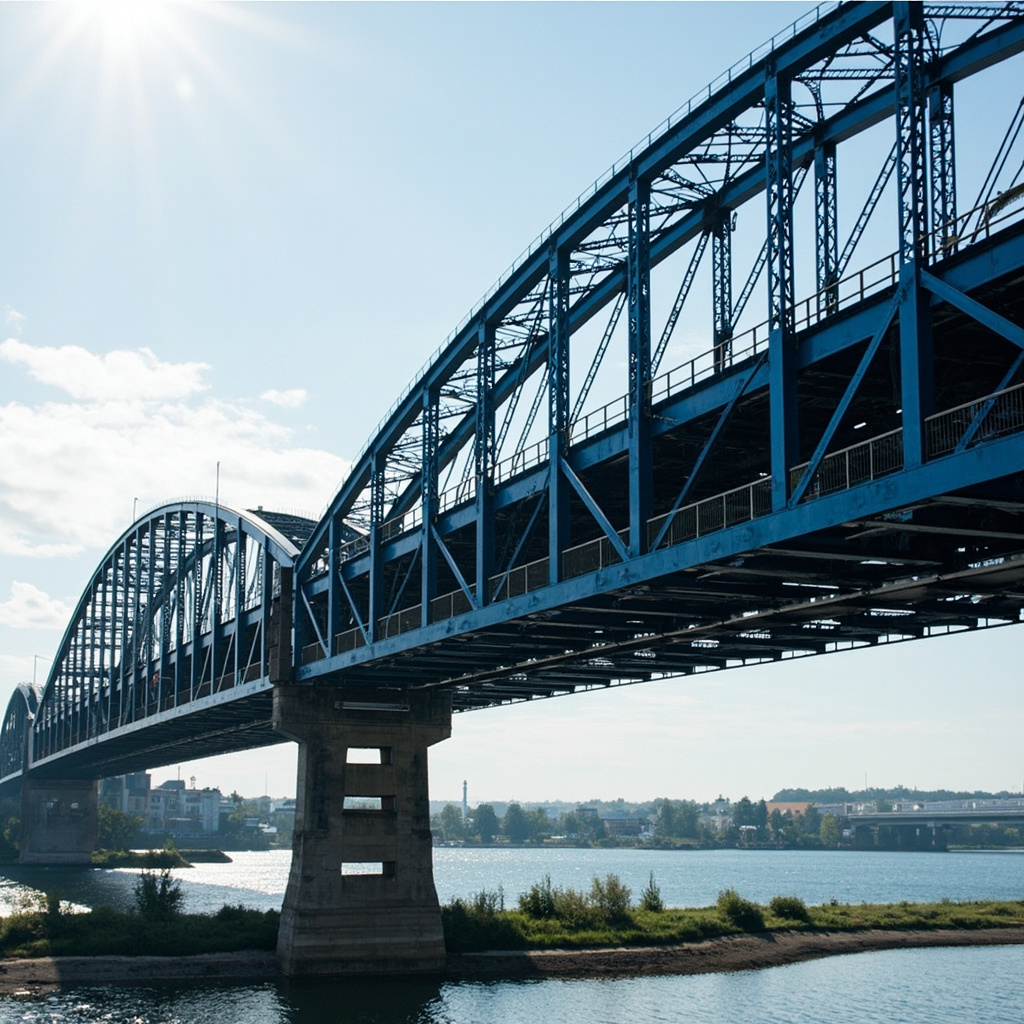
Data Support:Hong Kong-Zhuhai-Macao Bridge steel box girder anti-corrosion design——External surface (atmospheric exposure): epoxy zinc-rich primer (80μm) + epoxy micaceous iron oxide intermediate paint (2×125μm=250μm) + polysiloxane topcoat (2×50μm=100μm)——Total DFT 430μm——ISO 12944 CX environment——Design maintenance cycle 25-30 years. Internal surface (enclosed box girder, dehumidification system maintaining RH50 years. Hangzhou Bay Bridge——Opened to traffic in 2008——Original design for major overhaul at 15 years——Actual by 2025 (17 years) overall coating integrity still >85%——Major overhaul delayed to 2028-2030——The excellent weather resistance of nano-fluorocarbon topcoat (QUV 8000h ΔE80%) is the key.
Source:Hong Kong-Zhuhai-Macao Bridge Anti-Corrosion Design Technical Report, Hangzhou Bay Sea-Crossing Bridge Maintenance Report, FHWA Corrosion Costs Study, ISO 15686-5, ISO 12944
Functional division of labor in a three-layer coating system and nano-reinforcement
Primer (50-80 μm): epoxy zinc-rich (Zn ≥ 80% in dry film) provides cathodic protection — nano ZnO/graphene (0.1-0.5 wt%) enhances conductive network and barrier — reduces zinc content to 70-75% to improve flexibility. Intermediate coat (150-300 μm): epoxy with micaceous iron oxide (MIO) or glass flake reinforcement — flake fillers (MIO flake diameter 5-20 μm, thickness < 5 μm) overlapping in layered arrangement forming "fish-scale" labyrinth — water/Cl⁻ permeation path extended 10-50 times — nano montmorillonite (layer thickness 200) further densifies. Topcoat (50-80 μm): polysiloxane (Si-O-Si crosslinking, weather resistance 15-20 years, 4H-6H hardness, non-recoatable) or fluorocarbon (FEVE C-F bond energy 485 kJ/mol, weather resistance 20-25 years, recoatable) — nano TiO₂/ZnO (0.5-2 wt%) UV shielding extends topcoat's own service life by 30-50%.
Source:ISO 12944-5:2018, NORSOK M-501 Rev.7, Hong Kong-Zhuhai-Macao Bridge Anti-corrosion Technical Report
FAQ
How to choose between polysiloxane topcoat and fluorocarbon topcoat?
Polysiloxane: weather resistance 15–20 years, high hardness (4H–6H), excellent chemical resistance—but non-recoatable (once locally damaged, entire surface must be blasted and repainted). Fluorocarbon: weather resistance 20–25 years, recoatable (easy local repair)—but lower hardness (2H–3H), higher raw material cost (approx. 1.5–2 times). For main bridge structural surfaces (less prone to damage), choose polysiloxane; for deck systems/railings/areas near expansion joints (prone to mechanical damage), choose fluorocarbon.
Q: For bridges with a 100-year service life, can the coating really last 25–30 years before a major overhaul is needed?
Yes—provided that the quality of all three stages is properly ensured: (1) coating construction quality (abrasive blasting Sa2.5 + temperature and humidity control + DFT inspection); (2) coating system design (material selection per ISO 12944-5); (3) regular inspection and preventive maintenance (coating thickness/adhesion/rust inspection every 5–10 years—with overcoating maintenance performed at the end of the second stage). Practical data from the Hong Kong–Zhuhai–Macao Bridge and the Hangzhou Bay Bridge prove that a high-quality coating system plus a scientific maintenance strategy makes a 25–30 year major repair cycle a fully achievable target.
Reference sources:ISO 12944-5:2018, FHWA Corrosion Costs, Hong Kong-Zhuhai-Macao Bridge/Hangzhou Bay Bridge Technical Reports, ISO 15686-5
Deep Rewrite: July 6, 2026