Introduction: The Invisible Enemy—How Microorganisms "Eat" Your Coatings
Coatings in humid environments (bathrooms, basements, ship waterlines, food factory walls) face an invisible yet persistently destructive enemy—microorganisms. Molds grow on coating surfaces—their hyphae penetrate into the coating interior—secreting enzymes that degrade the resin—causing discoloration, chalking, and loss of adhesion. Algae form green patches on coating surfaces—increasing water retention—accelerating freeze-thaw damage. The most insidious are bacteria—sulfate-reducing bacteria (SRB) generate H2S beneath the coating—corroding the steel substrate—a typical mechanism of microbially influenced corrosion (MIC). Statistics show that coating failures caused by microbial degradation account for 15–25% of total failure cases in warm, humid regions. Antifungal and antimicrobial coatings incorporate bactericidal/bacteriostatic active ingredients into the formulation—from physical contact to biochemical disruption—establishing a "coating environment where microorganisms cannot survive."
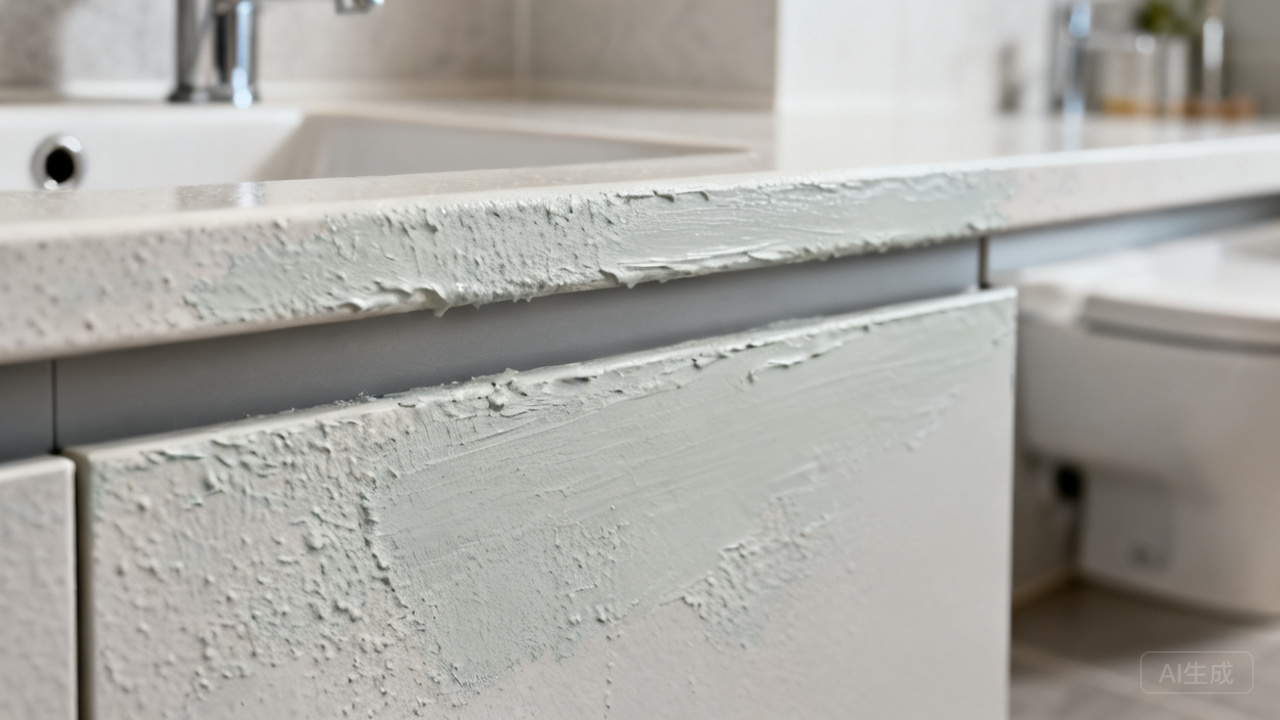
Anti-mold and antibacterial coatings are a type of specialty functional coating that incorporates bactericidal active substances (isothiazolinones/silver ions/quaternary ammonium salts/zinc pyrithione/cuprous oxide) into the formulation—suppressing the growth and reproduction of microorganisms (molds/algae/bacteria) on and within the coating surface through release or contact—preventing coating failure caused by microbial enzyme degradation, acid corrosion, and pigmentation—and maintaining the coating's appearance and protective function. Core bactericidal mechanisms: (1) disrupting the integrity of microbial cell membranes—leading to leakage of cellular contents; (2) inhibiting key enzyme activity and ATP energy metabolism; (3) interfering with DNA/RNA replication—ultimately causing microbial death or inability to reproduce.
I. Comprehensive Comparison of Six Major Antifungal and Antibacterial Agent Systems
| Antimicrobial Agent | Chemical Class | Antimicrobial Spectrum | Mechanism of Action | Addition Level (wt%) | Durability | Regulatory Restrictions |
|---|---|---|---|---|---|---|
| OIT (Octylisothiazolinone) | Isothiazolinone | Fungi/Algae/Bacteria (Broad-spectrum) | Irreversible reaction with sulfur-containing enzymes (-SH) — inhibits metabolism | 0.05-0.3 | Medium (1-3 years — low water solubility) | EU BPR restricted (sensitizing) — being phased out |
| ZPT (Zinc Pyrithione) | Pyrithione Metal Salt | Fungi/Algae (excellent antifungal) | Interferes with membrane transport and ATP synthesis — Zn2+ synergy | 0.1-0.5 | Good (2-4 years — low solubility) | Restricted for marine antifouling — environmental accumulation |
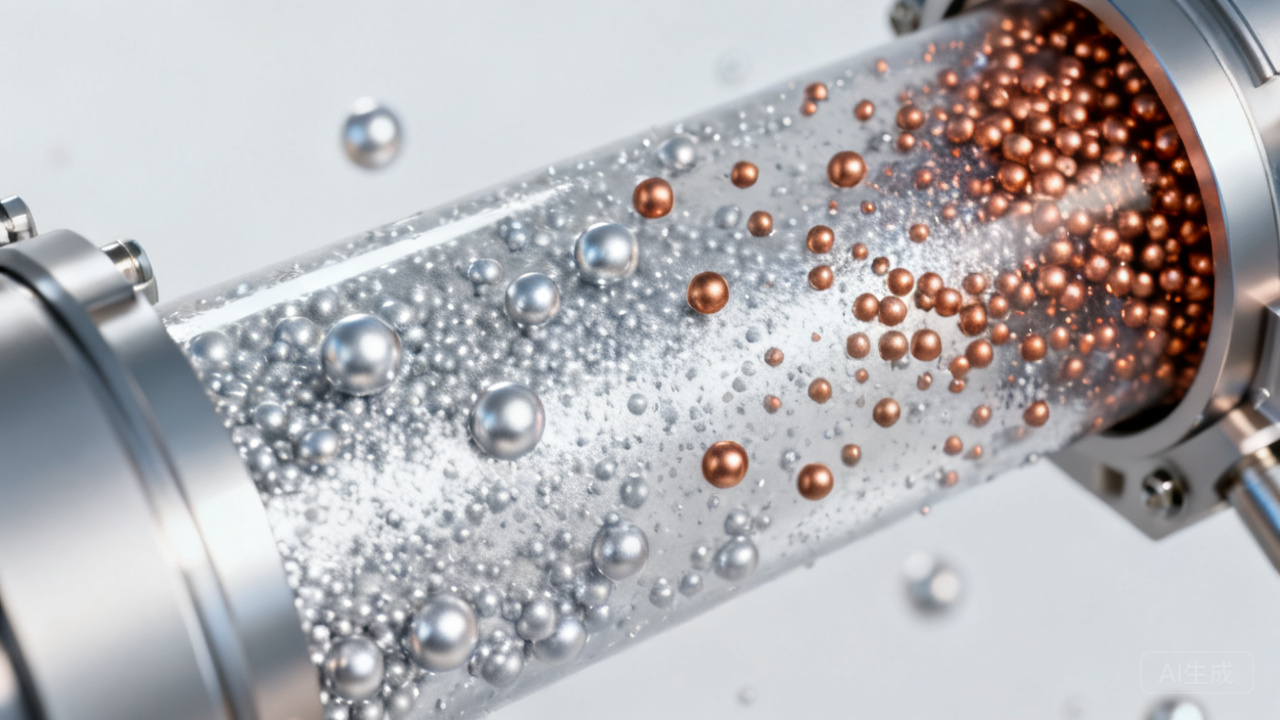
| Nano Silver (AgNPs) | Metal/Nanoparticle | Broad-spectrum — bacteria + fungi + viruses | Ag+ disrupts cell membrane/inhibits DNA replication — sustained release | 0.005-0.05 | Excellent (3-5 years — non-consuming) | Fewer restrictions — high cost |
| Cuprous Oxide (Cu2O) | Metal Oxide | Marine microorganisms/Algae/Barnacles | Cu2+ inhibits enzyme activity — prevents biofouling | 10-40 (high dosage) | Excellent (3-5 years — continuous leaching) | Marine — environmental accumulation — locally banned |
| Quaternary Ammonium Compounds (QAC) | Organic Cation | Bacteria (Gram +/-) | N+ positive charge adsorbs negatively charged bacterial membrane → rupture — contact killing | 0.5-3.0 | Excellent (non-leaching — immobilized — non-consuming) | Fewer restrictions — safe |
| Chitosan (Natural) | Natural Polymer | Bacteria/Some fungi | Protonated NH3+ attracts negatively charged bacterial membrane — disrupts integrity | 2-5 (high dosage) | Poor (<6 months — biodegradable) | No restriction — eco-friendly "natural" label |
II. Three Types of Coating Microbial Deterioration and Evaluation Criteria
| Degradation Type | Harmful Microorganisms | Damage Mechanism | Typical Manifestation | Evaluation Standard | Prevention and Control Strategy |
|---|---|---|---|---|---|
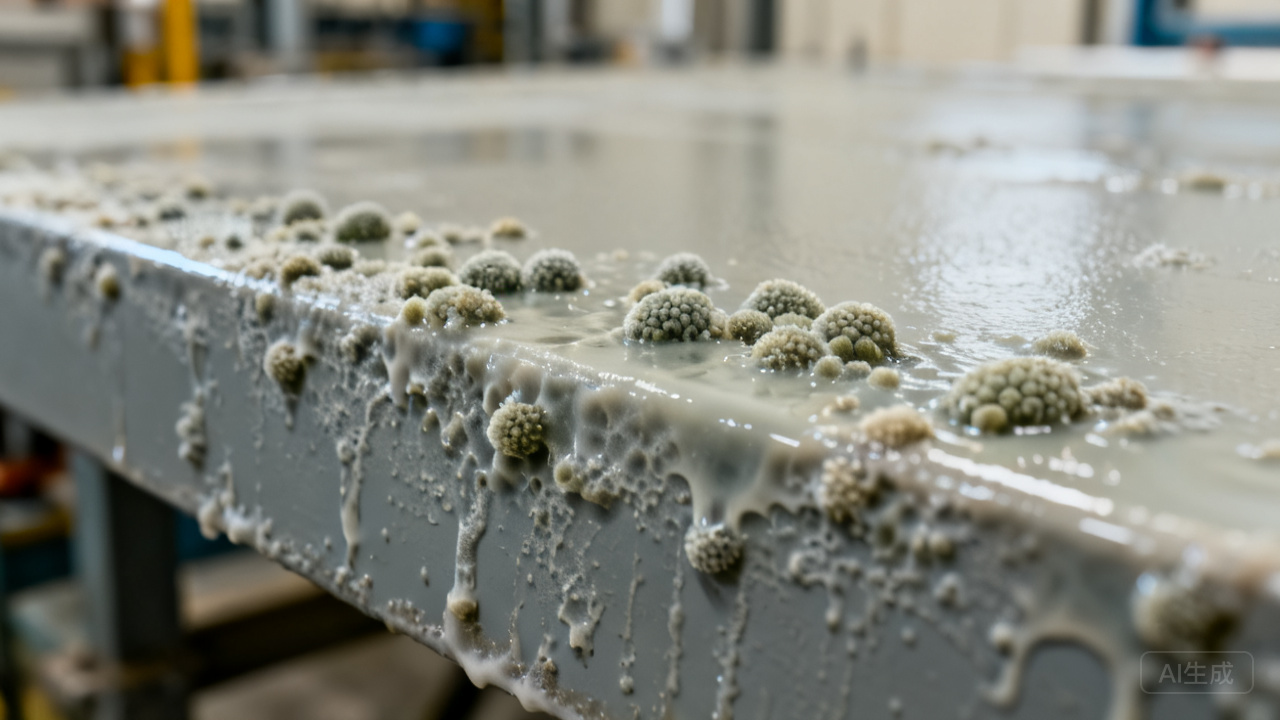
| Mold Degradation | Aspergillus/Penicillium/Trichoderma (fungi) | Hyphae penetrate coating—secrete cellulase/esterase—degrade resin | Black/green/yellow mold spots—coating chalking—loss of adhesion | ISO 846/GB/T 1741—mold resistance grade 0-4 (0=no mold) | Dry-film fungicide (OIT/IPBC/nano-silver)—surface inhibition |
| Algal Degradation | Green algae/blue-green algae (photosynthetic autotrophs) | Grow on coating surface—increase water retention—freeze-thaw cycle damage | Green/black patches—coating blistering—winter freeze cracking | ASTM D5589—algae resistance test | Algaecide (triazine/diuron)—combined with hydrophobic coating |
| Bacterial/MIC | SRB (sulfate-reducing bacteria)/iron bacteria | SRB: SO42-+4H2→S2-+4H2O—Fe+H2S→FeS↓ (black rust) | Black rust spots under coating—cathodic disbondment—pitting and perforation of steel substrate | NACE TM0194—MIC evaluation | Zinc-rich primer (cathodic protection) + biocide (Ag/Cu)—dual protection |
FAQ
Q1: Isothiazolinones (BIT/MIT/OIT) — why are they both the "most effective" and the "most controversial" fungicides?Isothiazolinones undergo an irreversible reaction with sulfur-containing (-SH) enzymes of microorganisms via the S-N bond in their structure — inactivating the enzymes — causing microbial metabolic collapse. BIT (benzisothiazolinone) is mainly used for in-can preservation — broad spectrum — stable — low sensitization — and is the mainstream in-can biocide for water-based coatings. MIT (methylisothiazolinone) and CMIT (chloromethylisothiazolinone — 3:1 mixture) have extremely fast killing speed — but high skin sensitization — the EU has classified MIT as Skin Sens. 1A (strong sensitizer) — restricted to <0.0015% in leave-on products. OIT (octylisothiazolinone) is used for dry-film mold prevention — lower water solubility — better durability — but also faces controversies over sensitization and ecotoxicity. The industry trend is to "reduce reliance on isothiazolinones" and shift to safer alternative systems such as silver/zinc/quaternary ammonium salts — but the cost-performance advantage of isothiazolinones (dosage <0.3%/broad spectrum/moderate price) is difficult to be fully replaced in the short term.
Q2: Nano-silver—why is >0.005% sufficient for effective "slow release" an advantage or a hidden risk?The bactericidal mechanism of silver is Ag+ ions—(1) binding to thiol groups on the bacterial cell membrane—disrupting membrane integrity—causing leakage of contents; (2) after entering the cell—binding to DNA bases—inhibiting replication—binding to respiratory chain enzymes—blocking ATP synthesis. The high efficiency of nano-silver (AgNPs—particle size 5000 yuan/kg) limits its application in large-area architectural coatings—currently it is mainly targeted at hospitals, food factories, and high-end sanitary ware products.
Q3: "Non-leaching" immobilization of quaternary ammonium compounds (QAC) — why can it "kill bacteria without releasing"?Traditional bactericides kill microorganisms by releasing into the environment — posing environmental and health risks. Non-leaching (contact-killing) quaternary ammonium compounds are fixed on the coating surface via chemical bonding (silane coupling — covalent binding) — the positively charged quaternary ammonium N+ attracts the negatively charged bacterial cell membrane — long alkyl chains (C12-C18) insert and pierce the lipid bilayer of the cell membrane — cell contents leak out — bacteria die — while the quaternary ammonium compound itself is not consumed. Advantages of this mechanism: (1) No chemical substances released into the environment — eco-friendly and safe; (2) Theoretically "permanently" effective — because the bactericide is not consumed; (3) Does not induce microbial resistance (due to physical disruption rather than biochemical interference). However, the disadvantages are high dosage (>0.5-3%) — slower killing speed — limited effect on fungi and viruses — needs to be combined with leaching-type bactericides (e.g., BIT) to achieve "fast + long-lasting" dual effects.
Q4: Microbial Corrosion (MIC)——How do Sulfate-Reducing Bacteria (SRB) "corrode" steel under coatings?SRB (Sulfate-Reducing Bacteria/anaerobic bacteria——widely present in soil/seawater/sewage) in the oxygen-deficient environment under coatings——utilize hydrogen on the metal surface (H+/H2——from anaerobic corrosion of iron——Fe+2H2O→Fe(OH)2+H2↑) to reduce SO42- to S2-: SO42-+4H2→S2-+4H2O. The generated S2- reacts with Fe2+ to form FeS (ferrous sulfide——black precipitate)——this is the characteristic product of MIC corrosion, the "black rust". FeS is loosely attached——cannot form a protective layer——the steel beneath continues to corrode——meanwhile a galvanic couple forms between FeS and steel (FeS as cathode——steel as anode)——accelerating localized corrosion rate (5-10 times that of ordinary anaerobic corrosion). MIC prevention strategies: (1) Zinc-rich primer——cathodic protection to inhibit anaerobic reaction; (2) Add biocides (such as silver/copper——suppress SRB activity); (3) Coating with thick film and high cross-linking——physically block water and SO42- penetration.
Q5: Anti-mold coating testing—what exactly does the 0-4 grade rating of GB/T 1741 represent?GB/T 1741 "Determination of Resistance of Paint Films to Mould" classifies anti-mold grades as: Grade 0—no mold growth (no visible hyphae at 50x magnification) "optimal"; Grade 1—trace growth (coverage 60%) "completely failed". Test conditions: 28-30°C/RH>90%/28 days—inoculation with mixed mold spore suspension (8 standard strains including Aspergillus niger/Aspergillus flavus/Chaetomium globosum etc.) "28 days—accelerated simulation—southern China—plum rain season—one month of—mold pressure". ISO 846 standard uses a similar 0-4 grade rating "GB/T 1741—Grade 0-1—=—anti-mold coating—qualified—Grade 2-4—=—ordinary—coating". High-humidity environments such as bathrooms/kitchens—require Grade 0-1—otherwise "three months—walls covered with—mold spots".
Related Reading
Summary
The six major biocidal systems of antifungal and antibacterial coatings—isothiazolinone (high efficiency/controversial—gradually restricted), zinc pyrithione (antifungal/antialgal—environmental restrictions), nano-silver (broad-spectrum and long-lasting/high cost—high-end applications), cuprous oxide (antifouling/marine vessels—environmental accumulation controversy), quaternary ammonium salts (non-leaching—immobilized—permanent—safe), and natural chitosan (eco-friendly—low efficiency—DIY)—each have applicable scenarios and regulatory boundaries. Microbiologically influenced corrosion (MIC—SRB metabolism producing H2S/FeS) is a concealed yet accelerating under-coating degradation mechanism that requires a dual approach of biocides and cathodic protection. Antifungal testing (GB/T 1741—grades 0-4—28 days—8 strains) is the core basis for product selection. Kexin New Materials provides customers with antifungal and antibacterial coating selection and regulatory compliance advice—keeping your coatings undefeated under the "siege" of microorganisms.