Introduction: The "Lab-to-Factory" Gap in Nanoceramic Coatings
Nanoceramic coating is one of the most closely watched technological directions in materials science over the past decade. In the laboratory, it demonstrates astonishing performance data—pencil hardness ≥ 9H, water contact angle ≥ 110°, temperature resistance ≥ 600°C, salt spray test ≥ 2000 h. However, when these "lab stars" attempt to move onto industrial production lines, they often meet with failure: coatings with a measured 9H hardness in the lab can only stably achieve 5H–6H on the production line, and the perfectly uniform film thickness in the lab fluctuates by ±10 μm on the production line.
Nanoceramic coating needs to overcome five key barriers from lab to production line implementation: substrate pretreatment precision (Sa 2.5 or above), operable time of the sol-gel system (Pot Life ≥ 4h), curing temperature window matching the production line, film thickness uniformity control (± 2 μm), and verifiability of long-term service data.For each barrier overcome, the engineering value of the coating increases by an order of magnitude.
I. Fundamental Chemical Systems of Nano-Ceramic Coatings
1.1 Three Main Precursor Routes
| Precursor route | Chemical principle | Ceramization temperature | Final ceramic phase | Typical thickness (μm) | Pencil hardness |
|---|---|---|---|---|---|
| Sol-gel SiO₂ system | TEOS/TMOS hydrolysis and polycondensation | 150-500°C | Amorphous SiO₂ | 1-10 | 4H-7H |
| Polysilazane (PSZ) system | Si-N hydrolysis converting to Si-O-Si | 200-800°C | SiO₂/SiON/SiCN (depending on atmosphere) | 0.5-5 | 7H-9H+ |
| Metal alkoxide hybrid system | Co-hydrolysis of Al/Ti/Zr alkoxides with silane | 200-600°C | SiO₂-MeOₓ composite ceramic | 2-20 | 6H-9H |
1.2 Polysilazane — the route with the greatest industrial potential
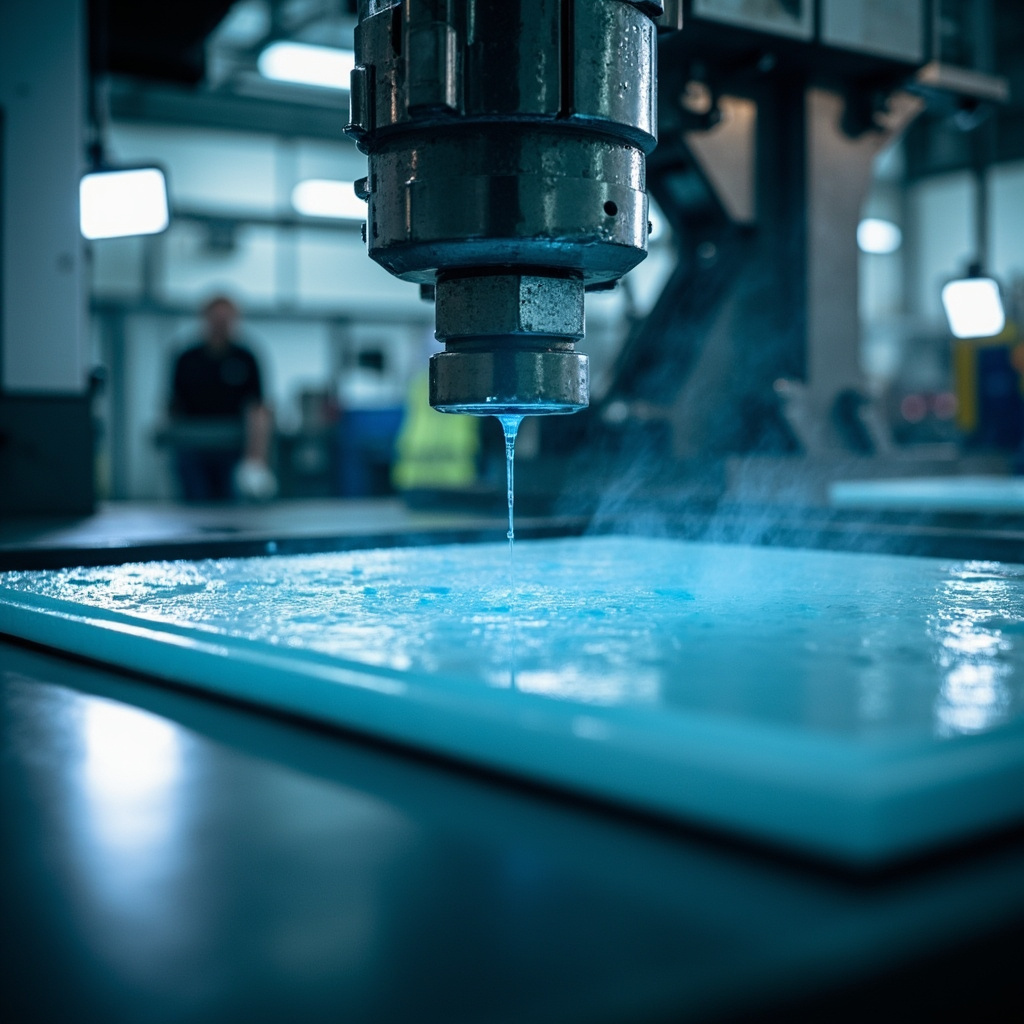
Polysilazane (PSZ) is considered the most promising technical route for the industrialization of nano-ceramic coatings due to its unique chemical conversion pathway. The Si-N active bonds in PSZ gradually convert into Si-O-Si network structures under moisture and heating conditions, and the final coating approaches the chemical composition of pure SiO₂ ceramic, exhibiting extremely high chemical and thermal stability.
The core advantages of PSZ coatings include: (1) the conversion reaction (moisture curing) can initiate at room temperature without the need for high-temperature equipment; (2) the converted coating exhibits high density and few pinholes (compared to the sol-gel route, its volume shrinkage is much lower, approximately 10%–15% vs 50%–70%); (3) excellent adhesion to metal substrates (Si–OH forms chemical bonds with –OH on the metal surface).
II. Engineering Analysis of the Five Key Transitions
Leap One: Substrate Pretreatment — From "Clean Is Good Enough" to "Molecular-Level Cleanliness"
The adhesion of nano-ceramic coatings mainly comes from chemical bonding (rather than mechanical anchoring), so the requirements for the substrate surface condition are much higher than those for traditional coatings. Experience shows: The influence weight of substrate pretreatment quality on the final coating performance exceeds 50%.
| Treatment Method | Surface Roughness Ra (μm) | Water Contact Angle | Surface Energy (mN/m) | Application Scenario | Equipment Investment (10k CNY) |
|---|---|---|---|---|---|
| Solvent Wiping | Original | > 60° | < 40 | Laboratory samples only | 0 |
| Sandblasting Sa 2.5 | 3-8 | Original metal | Original metal | Industrial part pre-treatment | 5-20 |
| Sandblasting + Plasma Cleaning | 3-8 | < 10° | > 70 | High-requirement industrial parts | 20-50 |
| Sandblasting + Acid Pickling + Plasma | 2-5 | < 5° | > 72 | Precision optical / semiconductor grade | 50-100+ |
Leap 2: Pot Life — from "minutes-level" to "hours-level"
The pot life of sol-gel systems is typically the major bottleneck for industrial applications. The hydrolysis and condensation reactions of small-molecule precursors such as TEOS/TMOS proceed continuously at room temperature, causing the coating viscosity to increase over time and eventually form an irreversible gel.
Engineering Strategies for Extending Pot Life:
- Two-component online mixing: Store the hydrolysate and polycondensation catalyst separately, and mix them online before spraying (similar to two-component polyurethane equipment)
- pH control: Maintain the sol system pH at 2-3 (away from the isoelectric point pH 5-6), using electrostatic repulsion to delay gelation
- Low-temperature storage: Control the coating storage tank at 5-10°C, which can effectively slow down the reaction rate (Arrhenius law: reaction rate decreases by approximately 50% for every 10°C drop)
- Solvent dilution: Maximize solvent content within the acceptable solids range (Pot Life is usually most stable when solids are 5%-15%)
Leap 3: Curing Temperature Window — From "Muffle Furnace" to "In-line Production"
Laboratory nanoceramic coatings are typically cured slowly in a muffle furnace at a heating rate of 2–5°C/min for a total duration of 2–8 hours. Industrial production lines require the cycle to be completed within minutes to tens of minutes, with entirely different temperature windows and heating rates. Rapid heating may cause: solvent bumping (bubbling), overly fast sol gelation (increased internal stress leading to cracking), and non-uniform through-thickness curing (skin effect).
Production line adaptive curing solution: IR gradient heating (divided into 3-4 stages, with a temperature difference of 50-100°C between each stage) + holding stage, total time can be compressed to 15-30 minutes while maintaining basically unchanged coating performance.
Leap Four: Film Thickness Uniformity — from "Dip Coating" to "Precision Spraying"
The most common method for depositing nanocoatings in the laboratory is dip coating, where film thickness is precisely controlled by the withdrawal speed. However, industrial parts have complex shapes, making dip coating unsuitable. Spraying is the inevitable choice for industrialization, yet the spraying behavior of nano-sol systems differs significantly from that of conventional coatings:
- The nano-sol has extremely low viscosity (1–10 mPa·s, close to water), and the atomized droplets are very fine.
- Low solids content results in an extremely thin wet film per coat (2–10 μm wet film), making it difficult to visually assess film thickness uniformity.
- Droplets may become over-dry before reaching the substrate ("dry spray"), resulting in powdery deposition rather than a continuous film.
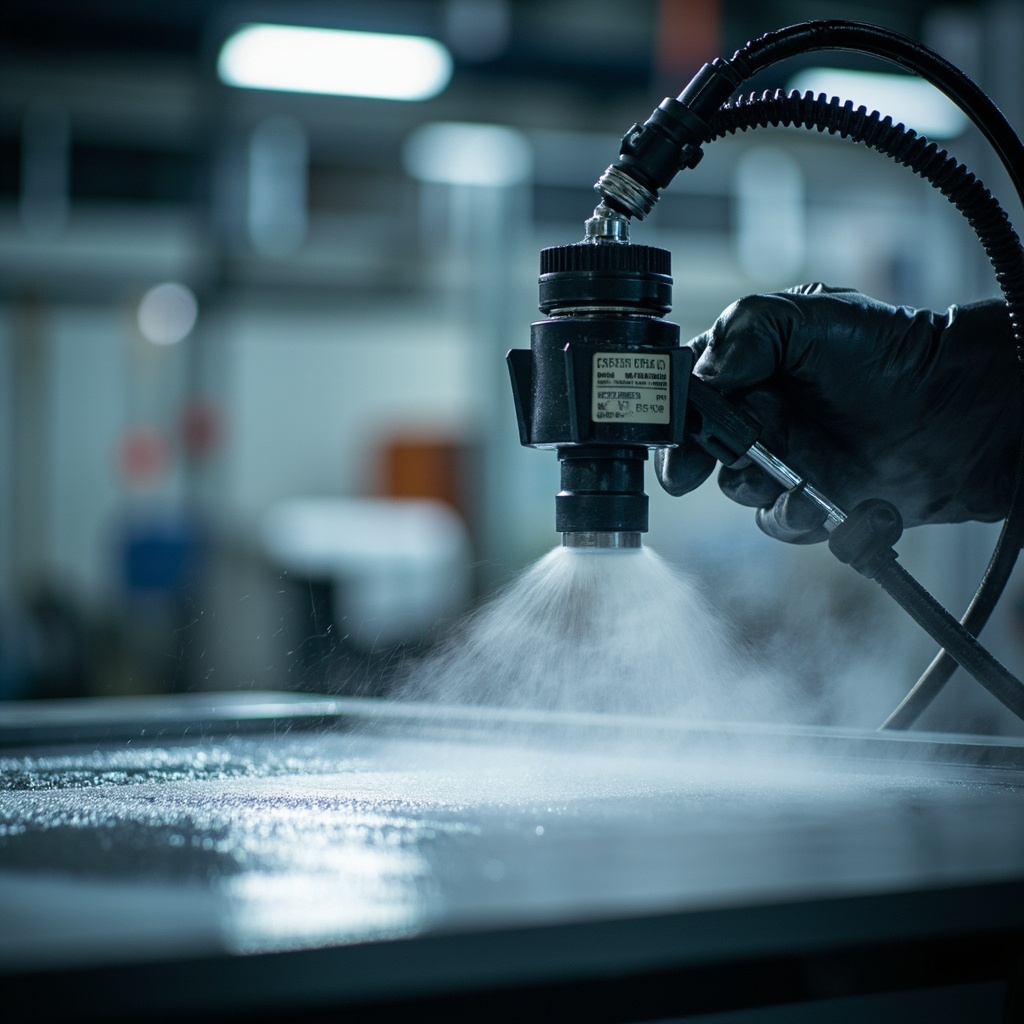
Precision Spray Control Parameters: Use HVLP (High Volume Low Pressure) spray gun, nozzle 0.8-1.2mm, spray pressure 0.1-0.2 MPa, spray distance 15-20 cm, with robotic automatic trajectory control (repeat positioning accuracy ± 0.1mm).
Leap 5: Long-term Service Validation — from "Laboratory Acceleration" to "Field Evidence"
The weakest link of nano-ceramic coatings is the lack of sufficient long-term service data. Traditional coatings (such as epoxy and polyurethane) have undergone more than 50 years of engineering validation, while the large-scale industrial application of nano-ceramic coatings has been less than 15 years. To establish credible long-term service data, systematic work needs to be carried out in the following dimensions:
- Correlation model between laboratory accelerated aging and field exposure (establishing acceleration factor)
- Multi-scenario field coupon testing (chemical plants, offshore platforms, roads and bridges)
- Post-service sampling for SEM/TEM microstructural morphology analysis (tracking the evolution of nanostructures)
- Decay curve fitting of key performance (predicting effective service life)
III. Typical Industrial Application Scenarios
3.1 Anti-corrosion for Inner Walls of High-temperature Petrochemical Pipelines
In refining units, the inner walls of process pipelines operating at 200–400°C are subject to high-temperature sulfur corrosion and naphthenic acid corrosion, and conventional organic coatings have completely failed in this temperature range. Nano-ceramic coatings (PSZ route, cured at 300°C) can provide a dense ceramic protective layer of 10–30 μm and remain intact under long-term service conditions at 400°C. After a refinery applied PSZ nano-ceramic coating to the tube bundle of the overhead exchanger of its atmospheric and vacuum distillation unit, the tube bundle service life was extended from 12 months to over 36 months.
3.2 Precision Mold Release Coatings
Injection molds and die-casting molds require durable release performance and wear-resistant protection on their surfaces. Nano-ceramic coatings (metal alkoxide hybrid system, cured at 200°C) can achieve: water contact angle ≥ 105°, pencil hardness 8H–9H, coefficient of friction ≤ 0.15, and temperature resistance ≥ 500°C (short-term 600°C). The coating thickness is only 3–8 μm, which does not affect mold dimensional accuracy, and the number of release cycles can exceed 100,000.
3.3 Non-stick and Scratch-resistant Coatings for Kitchen Appliances
Nano-ceramic non-stick coatings are an environmentally friendly alternative to traditional PTFE coatings. The sol-gel SiO₂ system forms a dense inorganic network after curing at 250–300°C, and with the addition of functional silanes (e.g., 1H,1H,2H,2H-perfluorooctyltriethoxysilane) can achieve non-stick performance comparable to PTFE, while offering far superior scratch resistance (pencil hardness 6H–7H vs. PTFE's 2H–3H).

FAQ: Engineering of Nanoceramic Coatings
Q1: What is the difference between nano-ceramic coatings and traditional "ceramic paints"?
Traditional ceramic paints usually refer to coating systems that use inorganic silicates (such as potassium/sodium silicate) as binders and ceramic powders as fillers. Such coatings contain a large amount of micron-scale fillers and have poor uniformity. Nano-ceramic coatings specifically refer to coatings that build inorganic network structures at the molecular/nano scale via sol-gel or precursor polymer (such as polysilazane) routes, and contain no or very little micron-scale fillers. The latter are far superior to the former in density, uniformity, and performance.
Q2: How long does the curing of polysilazane (PSZ) coating take?
The curing of PSZ is divided into two stages: (1) Moisture curing (room temperature, 1-4h) — the coating becomes surface-dry and touchable; (2) Thermal conversion (200-800°C, 0.5-2h) — Si-N converts into Si-O-Si network, forming a dense ceramic layer. For scenarios requiring full curing at room temperature, amine catalysts can be selected to shorten the full room-temperature curing time to 24-48h (no high-temperature step required, but with slightly lower ceramicization degree).
Q3: What are the requirements for substrate roughness for nano-ceramic coating?
The ideal substrate roughness Ra should be in the range of 2-5 μm. Too smooth (Ra < 0.5 μm) will result in poor mechanical interlocking, while too rough (Ra > 10 μm) will cause the coating at wave peaks to be too thin or even exposed. For high-precision applications (e.g., optical molds), using plasma cleaning to increase surface energy can compensate for insufficient roughness.
Q4: Can nano-ceramic coatings be colored?
Yes, but special attention is needed. Traditional organic pigments decompose at high temperatures (above 300°C), so coloring of nano-ceramic coatings typically uses inorganic pigments (such as iron oxide red/black, cobalt blue, titanium nickel yellow, chromium oxide green) or nano-scale metal oxides. The addition of pigments reduces the density and hardness of the coating, and the addition amount is usually controlled within 5%-15% of solid content.
Q5: How is the stability of sol-gel coatings during storage and transportation ensured?
(1) Prepare using anhydrous solvents (e.g., anhydrous ethanol, isopropanol, PGMEA); (2) Storage tanks must be sealed with nitrogen (to prevent moisture from air from entering); (3) Control transportation and storage temperature at 5-15°C; (4) The shelf life of single-component sol is typically 3-6 months (refrigerated at 5°C); it is recommended to use two-component (hydrolysis solution + catalyst packaged separately) to extend the shelf life to 12 months.
Q6: How does the cost of nano-ceramic coatings compare to traditional coatings?
In terms of material cost, the material cost of nano-ceramic coatings (especially the PSZ route) is about 3-10 times that of traditional high-performance coatings (200-1000 RMB/kg vs 30-100 RMB/kg). However, due to the extremely thin film thickness (3-20 μm vs 100-300 μm), the cost difference per actual coated area narrows to 1.5-3 times. At the same time, considering the extended maintenance cycle and reduced downtime losses, the full life-cycle cost may be lower than traditional solutions in certain scenarios.
Q7: Can nano-ceramic coatings be used on flexible substrates?
Pure inorganic nano-ceramic coatings have extremely low elongation at break (typically < 1%) and are not suitable for flexible substrates that require bending. However, through an organic-inorganic hybrid approach (e.g., adding 20%-50% organosiloxane or polyurethane prepolymer), the elongation at break can be increased to 5%-20% for semi-flexible applications. For fully flexible applications, organic coating systems are still recommended.
Q8: How to measure the actual film thickness of nano ceramic coatings?
Since the film is extremely thin (1-20 μm), conventional magnetic induction or eddy current thickness gauges (accuracy ± 2-5 μm) are no longer suitable. Recommended methods: (1) Spectroscopic ellipsometer — accuracy up to 0.1 nm, suitable for transparent coatings; (2) Profilometer (contact stylus profiler) — scan after creating a step at the coating edge; (3) SEM cross-section analysis — the most direct destructive verification method; (4) XRF (X-ray fluorescence) thickness measurement — indirect measurement based on elemental content.
Q9: What substances are released by polysilazane during the curing process? Are there any safety risks?
The main products released by PSZ during moisture curing are ammonia (NH₃) and a small amount of hydrogen (H₂); during the thermal conversion stage, trace organic silicon fragments may also be released. Therefore, for industrial applications, the curing area requires effective ventilation (air changes ≥ 15 times/h) and ammonia concentration monitoring (alarm threshold ≤ 25 ppm, OSHA PEL standard). The fully cured coating is chemically inert SiO₂, with no harmful emissions.
Q10: Causes and solutions for cracks in nano-ceramic coatings?
Cracks are the most common defect in nano-ceramic coatings. The root cause is that the tensile stress generated by curing shrinkage of the coating exceeds its tensile strength. Solutions: (1) Reduce single-pass film thickness (≤ 5 μm/pass, with multiple passes of coating); (2) Lower the heating rate (≤ 5°C/min); (3) Add toughening components (e.g., 5%–10% nano-SiO₂ particles as stress dispersion points); (4) Add drying control chemical additives (DCCA) such as DMF or NMP to the sol formulation to reduce capillary stress.
Q11: How compatible is the nano-ceramic coating with organic coatings? Can a composite system be formed between the two?
Nano-ceramic coatings can serve as a primer for organic coatings (providing excellent adhesion and an anti-corrosion barrier), as a topcoat (providing hardness and scratch resistance), or as an intermediate layer. For example: a composite coating system of blasted substrate + nano-ceramic primer (10 μm) + epoxy micaceous iron oxide intermediate paint (80 μm) + polyurethane topcoat (50 μm) demonstrated superior performance to pure organic systems in salt spray testing. The key is to ensure that the nano-ceramic coating surface has sufficient roughness or active groups for the subsequent coating to adhere to.
Q12: How is the chemical medium resistance of the nano ceramic coating?
Fully converted nano SiO₂ ceramic coating has extremely excellent chemical resistance: resistant to concentrated sulfuric acid (98%, room temperature), concentrated nitric acid (65%, room temperature), sodium hydroxide (20%, 60°C), and most organic solvents. However, it is sensitive to hydrofluoric acid (HF) and strong alkalis (pH > 13, high temperature) — HF directly dissolves SiO₂ to form H₂SiF₆, and strong alkalis react with SiO₂ via neutralization at high temperature.
Related Reading
Summary
Nanoceramic coatings are evolving from "lab curiosities" into "reliable choices for industrial protection". The key to success lies in acknowledging and systematically addressing the five critical barriers in engineering deployment, rather than simply replicating lab formulations onto production lines. Kexin New Materials has years of engineering experience in both polysilazane and sol-gel technology routes, providing enterprise customers with complete solutions spanning material R&D, production-line adaptation, and on-site verification.