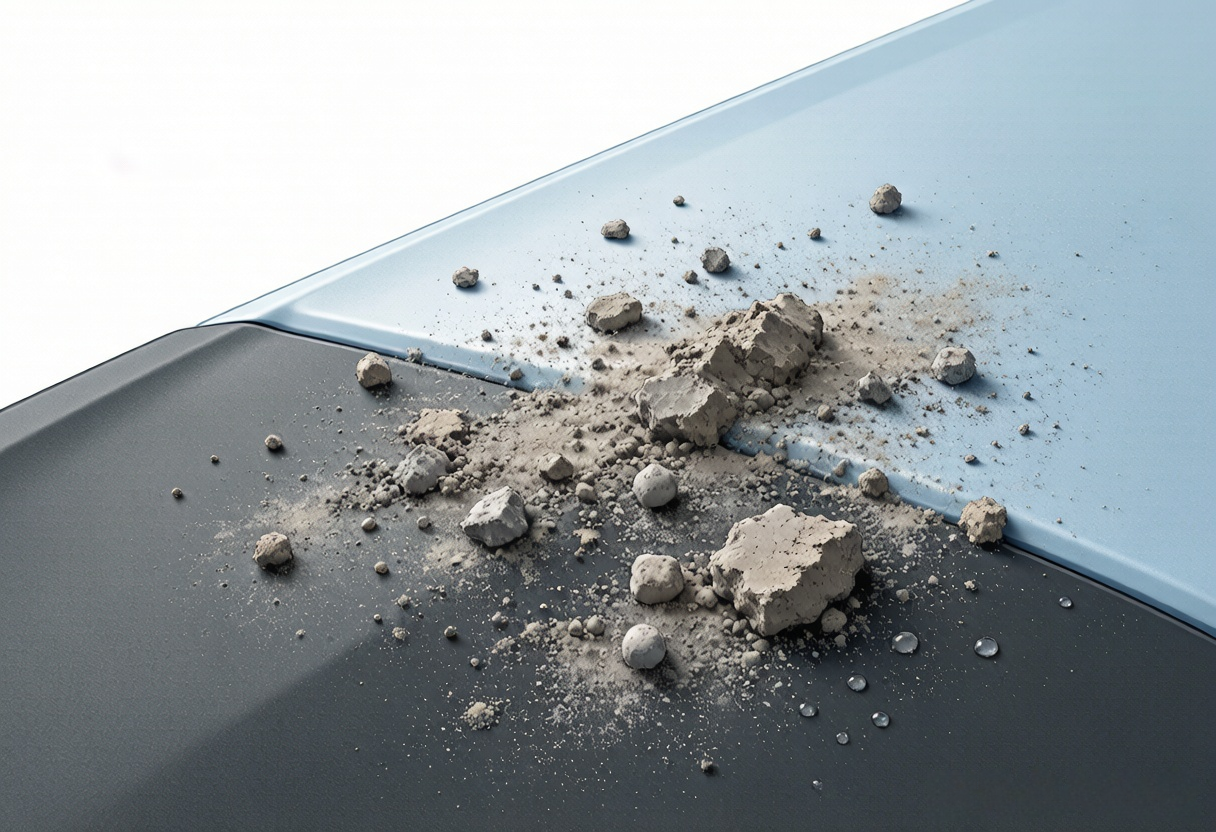
Freshly sprayed paint may look acceptable from a distance, but up close it's covered with "sesame seed" spots or even shrinks into small craters (fish eyes) — most likely a cleanliness and contamination issue.
I. Particles (Dust Specks)
Dust in the air and clothing fibers fall onto the wet film, and after curing form raised particle spots. The root cause is an unclean spraying environment, insufficient filtration, or inadequate personnel protection.
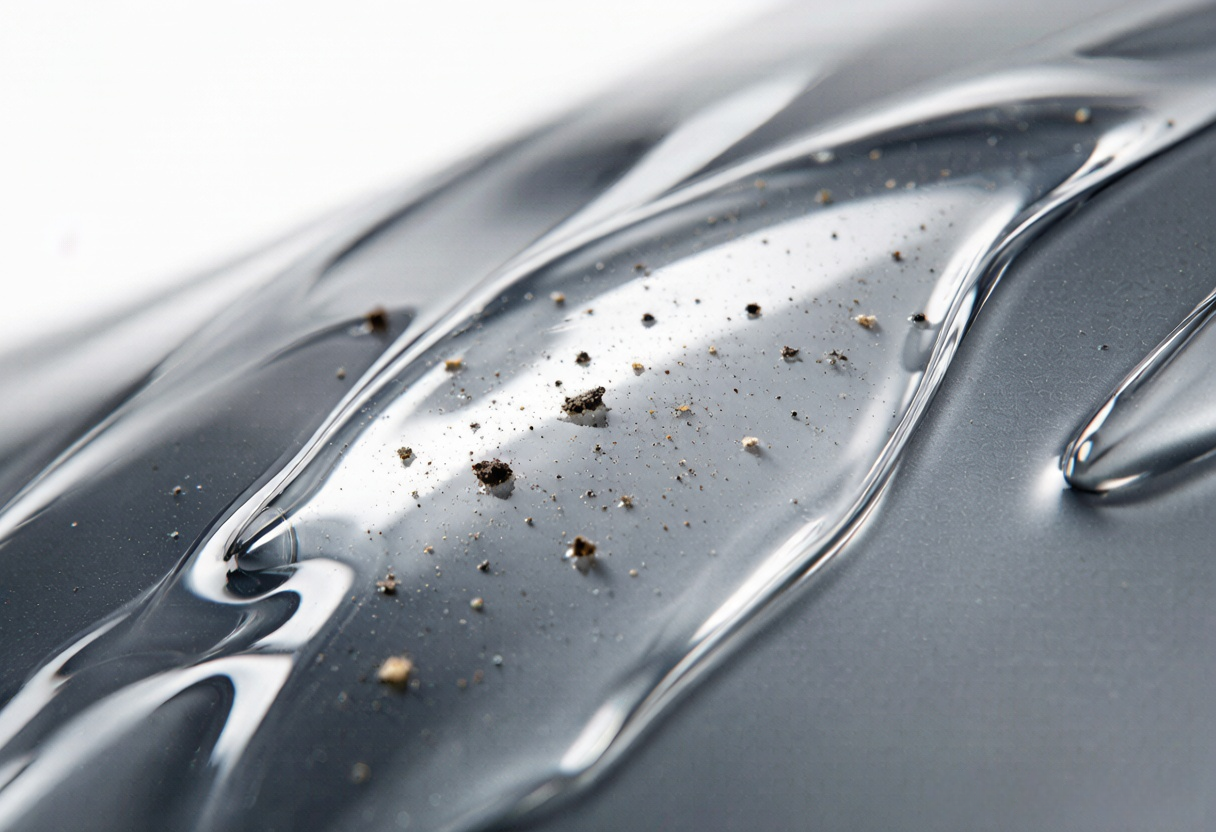
II. Fish eyes (cratering)
Substrate or compressed air contains oil/water/silicone, causing uneven surface tension of the paint film, and the wet film locally retracts into small holes, namely fish eyes. The more obvious the oil stain points, the larger the shrinkage cavities.

III. Key Control Points
| Problem | Prevention & Control |
|---|---|
| Particles | Keep baking room clean, use three-stage filtration, wear anti-static clothing |
| Fish eyes | Thorough degreasing, oil-water separation of air source, add anti-oil agent |
Summary
Pinholes come from environmental dust settling on the wet film, while fish eyes result from oil and water on the substrate or in the air source causing the paint film to retract and form craters. Prevention relies on a clean spray booth, oil-water separation at the air source, thorough degreasing, and anti-silicone additives; if already occurred, sand and repaint and eliminate the contamination source.
Frequently Asked Questions (FAQ)
{ "@context": "https://schema.org", "@type": "FAQPage", "mainEntity": [ {"@type":"Question","name":"How do paint surface particles come about?","acceptedAnswer":{"@type":"Answer","text":"The spraying environment is not clean; dust and fibers in the air land on the uncured paint film and form raised particle spots after curing, which are solved by paint booth filtration and protection."}}, {"@type":"Question","name":"What causes fish eyes (cratering)?","acceptedAnswer":{"@type":"Answer","text":"The substrate or compressed air carries oil, water, or silicone contaminants, causing uneven surface tension of the paint film and local retraction of the wet film into small holes, namely fish eyes."}}, {"@type":"Question","name":"How to prevent fish eyes?","acceptedAnswer":{"@type":"Answer","text":"Thoroughly degrease before spraying, ensure the compressed air is clean after oil-water separation, add anti-oil agent (cratering agent) to the coating if necessary, and investigate the pollution source."}}, {"@type":"Question","name":"Can particles be removed by polishing?","acceptedAnswer":{"@type":"Answer","text":"Minor surface particles can be removed by polishing; if the particles are deeply embedded or accompanied by fish eye cratering, sanding and repainting are required."}}, {"@type":"Question","name":"Why do fish eyes reappear after repair?","acceptedAnswer":{"@type":"Answer","text":"Because the pollution source is not eliminated—such as failure of the air source oil-water separator or residual oil on the substrate; if the source is not addressed, they will recur repeatedly."}} ] }