Introduction: Behind the "odor" of painting workshops lies millions of tons of VOC emissions every year
Entering the painting workshop—the pungent smell of solvents—this is VOC (volatile organic compounds)—toluene, xylene, butanol, butyl acetate, acetone—they not only pollute the atmosphere (forming photochemical smog and PM2.5 precursors)—but are also valuable chemical resources (one ton of mixed solvent is worth 5,000–8,000 yuan). China's painting industry emits >2 million tons of VOC annually—equivalent to burning over 10 billion yuan of solvent resources every year. VOC treatment should not merely be "destruction" but a circular economy model of "recovery + reuse." The special difficulty of VOC treatment in painting workshops lies in—large air volume (spray booth exhaust >100,000 m3/h)—low concentration (VOC 50–500 mg/m3)—if directly incinerated—huge energy consumption—no economic viability. Therefore, combined processes of "concentration + combustion" or "adsorption + recovery" are the industrial standard path.
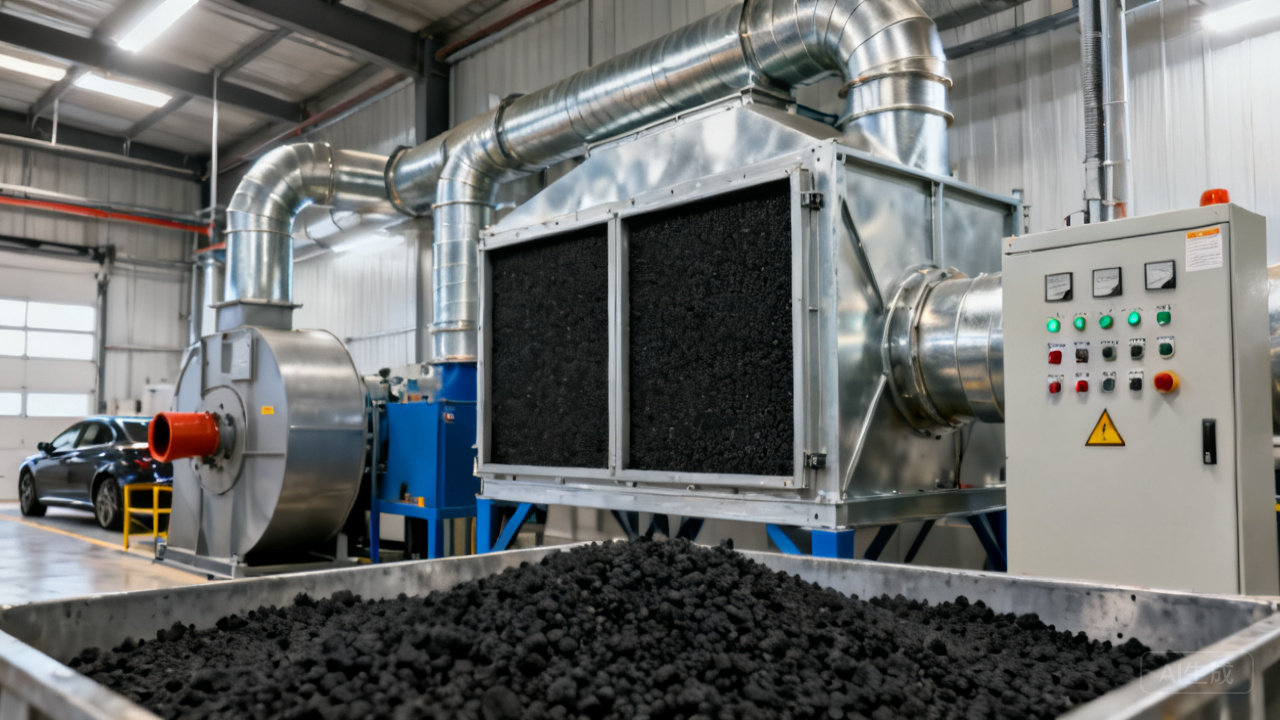
The VOC treatment in the painting workshop employs a combination process of physical (adsorption/condensation) and chemical (oxidative incineration) methods—combined with concentration (zeolite wheel/activated carbon—concentrating low-concentration VOCs by 10-15 times) and recovery (solvent distillation and rectification—purity >98% for reuse)—to treat volatile organic compounds such as toluene, xylene, esters, and ketones emitted during the painting production process—reducing them to comply with national emission standards (GB 37822-2019—NMHC 80%)—while maximizing the recovery of valuable solvent resources—achieving an environmental engineering system with the dual goals of "compliant emission + resource reuse".
I. Comprehensive Comparison of Four Major VOC Treatment Technologies
| Technology | Principle | Applicable Concentration (mg/m3) | Removal Rate (%) | Investment (10k CNY) | Operating Cost (CNY/10k m3) | Solvent Recovery | Disadvantages |
|---|---|---|---|---|---|---|---|
| Activated Carbon Adsorption + Desorption + Condensation | Physical adsorption → steam desorption → condensation → liquid separation recovery | 50-500 | 90-98 | 50-200 | 5-15 | Recoverable (purity >95% — mixed solvent) | Activated carbon lifespan <2 years — difficult separation of mixed solvents |
| Zeolite Rotor + RTO | Zeolite adsorption concentration → >760°C thermal oxidation → CO2+H2O | 50-500 (after concentration >1000) | >99 | 200-800 | 3-8 (waste heat recovery offsets most energy consumption) | Not recoverable (already oxidized) | Complex equipment — large footprint — startup requires natural gas assistance |
| Condensation Method (Cryogenic) | Cool to -70 to -120°C → VOC liquefaction separation | >1000 (high concentration) | 70-95 | 100-500 | 20-50 (high liquid nitrogen/electricity consumption) | Recoverable (high purity — optimal for single component) | Only suitable for high concentration/high value solvents — high energy consumption |
| Biofiltration (Biofilter) | Microbial degradation of VOC → CO2+H2O+biomass | <200 (low concentration — water-soluble VOC) | 70-95 | 20-80 | 1-3 (very low) | Not recoverable | Only suitable for low concentration/water-soluble — not suitable for ketones/aromatics |
FAQ
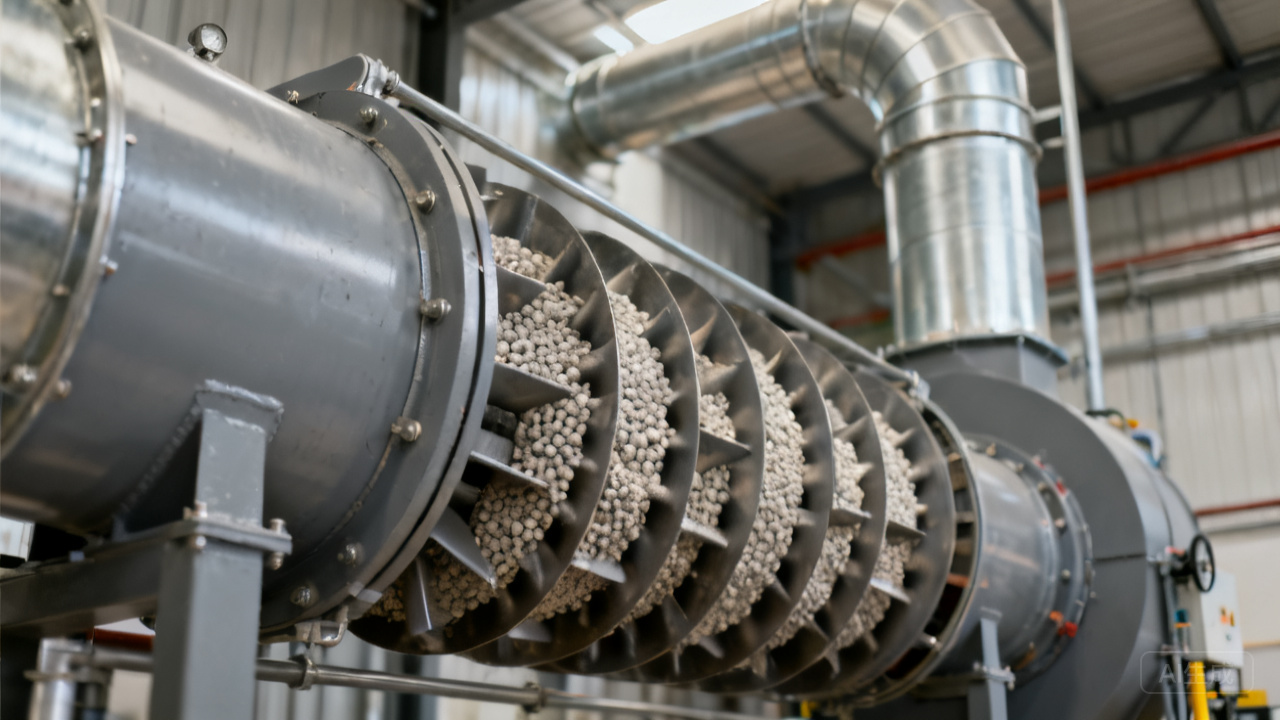
Q1: Zeolite rotor + RTO—why has it become the "standard configuration" for VOC treatment in automotive painting lines?The VOC characteristics of automotive painting lines are—large air volume (>100000m3/h—including spray booth + flash-off + baking exhaust)—low concentration (VOC 50-300mg/m3)—direct incineration in RTO consumes huge amounts of natural gas (50-100m3/h natural gas—annual operating cost >2 million yuan)—no economic viability. The zeolite rotor (hydrophobic zeolite—adsorption performance unaffected by water vapor—can desorb at >200°C—more suitable than activated carbon for painting exhaust) concentrates low-concentration VOC by 10-15 times—the concentrated "small air volume (5000-10000m3/h)—high concentration (1000-3000mg/m3)" is sent to RTO—at 760-850°C high temperature—VOC is oxidized to CO2+H2O—removal rate >99%. The honeycomb ceramic regenerator of RTO recovers combustion heat—heat recovery efficiency >95%—the concentrated small air volume requires only a little natural gas to maintain combustion—operating cost drops significantly. "Zeolite concentration → RTO—solves the fundamental contradiction of large air volume and low concentration of painting VOC—is currently the most mature and economical combined solution".
Q2: Activated carbon adsorption recovery — why is the theoretical recovery rate >90% — but actually only 50-70%?In the four steps of activated carbon adsorption recovery, there is loss at each step: (1) Adsorption — part of the VOC is squeezed out by water vapor in the activated carbon bed due to competitive adsorption — leading to premature breakthrough; (2) Steam desorption — 120-140°C steam flushes the VOC out of the carbon — but some high-boiling-point VOCs (e.g., butyl carbitol — boiling point >230°C) are not completely desorbed under 120°C steam — remaining in the carbon — the adsorption capacity of the carbon decays progressively; (3) Condensation — the VOC + water vapor mixed gas is cooled — the organic phase and water phase separate — but water-soluble solvents (e.g., butanol/acetone) partially dissolve in water — entering wastewater — recovery loss; (4) Separation — what is recovered is a mixed solvent — the proportion of each component differs from the original formulation — cannot be directly reused in coating production — can only be used as equipment cleaning solvent (value halved). The actual recovery rate depends on the uniformity of the VOC — single-component solvent recovery rate >90% — mixed solvent recovery rate is only 50-70%.
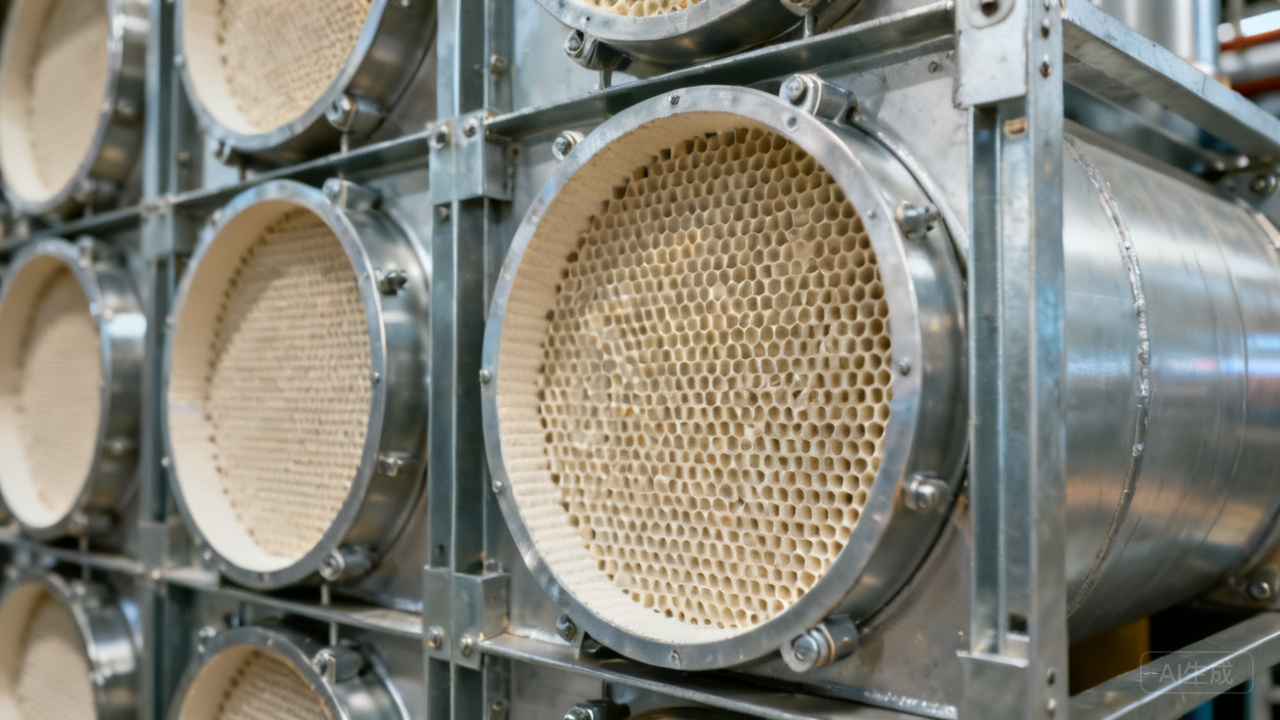
Q3: RTO's regenerative ceramic — why does it need to be replaced every six months to a year?RTO's honeycomb ceramic regenerator endures severe thermal cycling at high temperatures of 760-850°C (airflow direction switches every 1-2 minutes — temperature difference >200°C). Over time — (1) thermal stress causes ceramic cracking — fragments block airflow channels — bed pressure drop rises from 3000Pa — fan energy consumption surges; (2) trace silicon/phosphorus/metal elements in VOC form glassy melts on the ceramic surface at high temperature — clog micropores — heat exchange efficiency drops from >95% to <85%; (3) tar from incomplete combustion forms carbon deposits on the ceramic surface — further deteriorating heat exchange. The replacement cycle depends on VOC cleanliness — if coating VOC contains high-boiling-point resin mist or silicone leveling agents — ceramic life may be F7 grade — removing paint mist and particles) — to protect the regenerative ceramic.
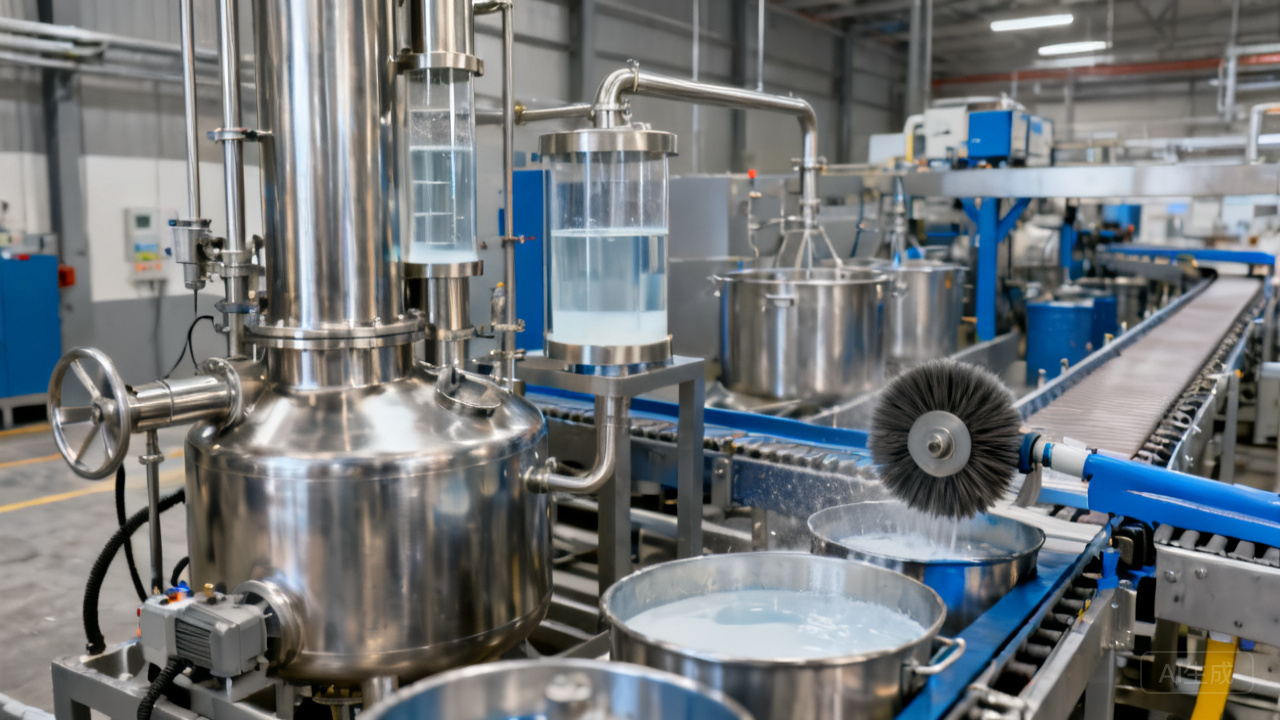
Q4: Economics of solvent recovery—under what circumstances is "recovery more profitable than incineration"?The economics of solvent recovery depend on three factors: solvent value × recovery rate × recovery purity - recovery cost. Single-component high-value solvents (e.g., NMP/N-methylpyrrolidone—>20,000 RMB/ton—electronics industry)—recovery value far exceeds recovery cost—"not recovering = burning money". Mixed low-value solvents (e.g., xylene/butanol mixture—>6,000-8,000 RMB/ton)—cannot be directly reused after recovery—can only be used as cleaning solvent (value halved)—economy barely breaks even or slightly loses. If a coating factory uses a single cleaning solvent (e.g., only xylene for cleaning)—after recovery it is directly reused in the cleaning process—closed-loop circulation—optimal economy—"single solvent = recoverable—mixed solvent = hard to recover—this is—the—first principle—of solvent recovery".
Related Reading
Summary
The four major technical pathways for VOC treatment in painting workshops—activated carbon adsorption recovery (physical—recoverable solvents—suitable for single-solvent systems), zeolite wheel + RTO (chemical oxidation—>99% removal—standard for automotive lines—non-recoverable), deep cryogenic condensation (high-value/high-concentration—high operating cost), and biological method (low-concentration/low-cost—unsuitable for painting)—each have their applicable scenarios and economic boundaries. Zeolite concentration + RTO resolves the essential contradiction of "large air volume and low concentration," and is currently the most mature and economical solution. Kexin New Materials provides customers with process design, equipment selection, and solvent recovery solutions for VOC treatment in painting workshops: "Waste gas is not waste—it is solvent resource placed in the wrong position."