Introduction: Powder Coatings — The Beautiful Misconception That "Solvent-Free Equals Defect-Free"
Powder coatings contain no solvent and are often considered to "lack the defects of solvent-based coatings." However, defects in powder coatings such as craters, pinholes, orange peel, particles, and under-curing not only exist just the same, but also introduce unique new failure modes due to the special application method of powder coatings (electrostatic spraying → baking and melt leveling → crosslinking curing). Systematic troubleshooting of 12 common defects—from powder manufacturing to spraying parameters to baking curve—is a shared technical need of both powder coating workshops and powder coating factories.
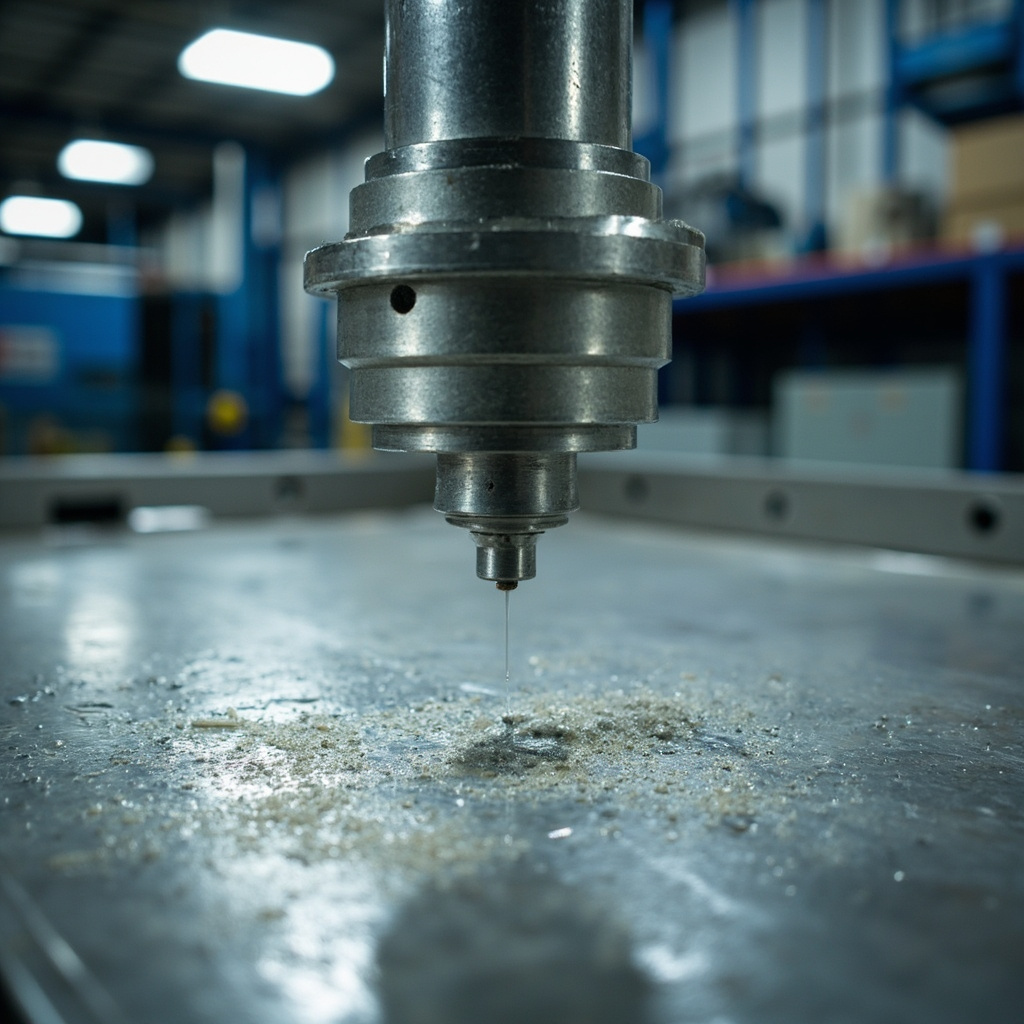
I. Quick Diagnostic Table for 12 Types of Defects
| Defect | Appearance | Most Likely Cause (First Check Item) | Quick Correction |
|---|---|---|---|
| 1. Cratering | Circular depression / visible or invisible contaminant at center | Compressed air contains oil / water | Check oil-water separator + replace filter element |
| 2. Pinholes | Dense tiny through-holes (diameter <0.5mm) | Powder moisture content exceeds standard (>0.5%) | Dry powder at 60-80°C for 1-2h |
| 3. Orange peel | Wavy uneven surface | Powder gelation time too long / insufficient leveling | Increase curing temperature by 5-10°C |
| 4. Particles | Raised hard particles on surface | Impurities / dust mixed into powder | Check powder sieve residue (>120 mesh) |
| 5. Loss of gloss | Gloss lower than standard (>20GU drop) | Over-baking / temperature too high | Lower PMT by 5-10°C |
| 6. Color difference | Color inconsistent with standard panel | Pigment variation between powder batches | Compare L*a*b* values of two powder batches |
II. Overview of Technical Parameter Comparison
| Technical Indicator | Standard Requirement | Premium Level | Test Method |
|---|---|---|---|
| Adhesion | ≥3MPa | ≥5MPa | ISO 4624 Pull-off Method |
| Salt Spray Resistance | ≥500h | ≥1000h | ASTM B117 |
| Weather Resistance (QUV) | ≥1000h Gloss Retention >50% | ≥3000h Gloss Retention >80% | ISO 16474-3 |
| VOC Content | Complies with GB Standard | 50% below limit | GB/T 23985 |
| Application Window | 5-35°C | -10~40°C (wide temperature range) | TDS Recommended Conditions |
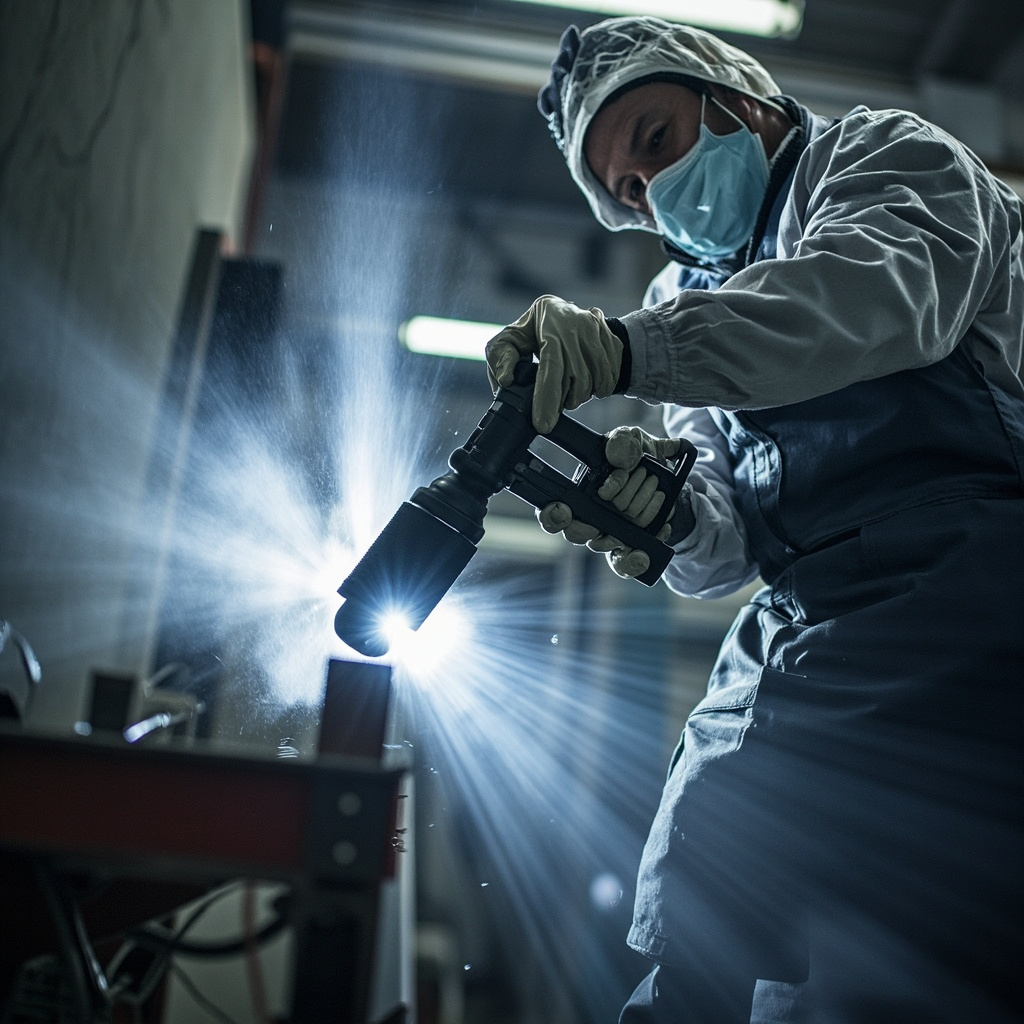
Technical refinement: Optimization of extruder screw configuration and torque monitoring
The screws of the twin-screw extruder are of modular design. Technicians reconfigure screw elements (conveying/kneading discs/reverse threads) according to product type. For epoxy systems, kneading disc/conveying = 40/60 is recommended (stronger shear/ensure uniform dispersion of dicyandiamide); for polyester/TGIC, 30/70 is recommended (moderate shear/prevent premature reaction).
The extruder "torque monitoring" with stable torque indicates good material melting. Equipped with torque sensor + PLC real-time trend analysis, it can automatically alarm or stop when abnormalities occur—preventing >200kg of material from being wasted under poor extrusion conditions.
Industry Case: 300,000 RMB in Scrap Caused by Extruder Temperature Runaway
A powder coating plant—extruder melt zone temperature sensor fault (reading 15°C lower than actual)—PLC erroneously increased heating power—actual melt zone >135°C—exceeded dicyandiamide pre-reaction trigger temperature (>130°C)—entire batch of >500kg powder underwent irreversible pre-reaction—gel time shortened from 120s to 300,000 RMB. Lesson: temperature sensors calibrated every 3 months—replace if deviation >3°C.
FAQ
Q1: Are the mechanisms of "cratering" in powder coatings and solvent-based coatings the same?Not exactly the same. The main cause of cratering in solvent-based coatings is low surface energy contaminants (silicone oil/oil stains) in the liquid coating, which cause the coating to shrink from the contaminated point toward the surrounding area—a liquid-solid interface process. Powder coating cratering occurs during the melt leveling stage (120-180°C)—where the viscosity of the molten powder is >1000 Pa·s—the driving force for cratering is much smaller than that of liquid coatings—the contaminants causing powder cratering are usually found in compressed air (containing oil/water) and steel substrates (stamping oil/cutting fluid).
Q2: How do electrostatic spraying voltage and gun distance affect leveling/orange peel?Excessively high voltage (>100kV) → powder becomes overly charged → strong electrostatic repulsion between powder particles → loose powder deposition on the workpiece → the powder layer collapses during melt leveling, producing orange peel. Lowering the voltage to 60-80kV makes the powder deposit denser (similar to a "vibration compaction" effect) → improves leveling. Gun distance too close (<20cm) → excessive powder thickness in the same area → excessive self-weight of the powder layer before leveling → produces orange peel.
Q3: Why are "pinholes" in powder coating more common in thick coatings (>120μm)?The thicker the powder layer → the longer the path for internal air and moisture to escape upward during the melting stage → more bubbles are "frozen" in the viscous melt (no time to fully escape) → pinholes form after curing. Recommendations for thick coating application: (1) apply in two passes + intermediate pre-baking (semi-cure/expel gas); (2) pre-dry the powder at 60°C before use.
Q4: Why do cast iron parts frequently develop pinholes in powder coating?The porous structure of cast iron (Porosity/porosity 5%-15%)—air trapped in the pores expands when heated during baking → breaks through the coating → pinholes. Solutions: (1) Preheat the casting to 150-180°C → hot spray the powder → "hot state spraying" allows pore gas to escape before the powder melts rather than being sealed under the coating; (2) Pre-seal the casting pores with a pore sealer (Pore Sealer).
Q5: How do the "Gel Time" and "Flow" of thermosetting powder affect orange peel?Gel Time——The time (in seconds) for the powder to gel (lose fluidity) from melting at the curing temperature. Gel time too short (120s) → coating over-levels → sagging on vertical surfaces. It is recommended to control the gel time at 60-90s, combined with appropriate melt flow (Flow/inclined plane flow >20mm)——the two together determine the leveling quality of the coating.
Q6: How do storage conditions of powder coatings affect coating defects? Greatly! Powder stored in humid conditions (RH>70%) absorbs moisture → water evaporates during baking → pinholes and bubbling. Long-term storage at temperature >30°C → partial pre-reaction of powder (slow reaction of thermosetting resin + curing agent) → shortened gel time → orange peel. Standard storage conditions for powder coatings: <25°C / RH<60% / sealed packaging / away from light / shelf life 12 months (epoxy/polyester) to 6 months (polyurethane).
Q7: How are the "texture/wrinkle" effects of powder coating produced? Texture and wrinkles are caused by a mismatch in curing rates between the coating surface and the underlying layer—the surface cures first to form a "skin" → the interior continues to cure and shrink → the skin is squeezed to form texture. Texture powders are decorative coatings intentionally manufactured by exploiting this effect. Smooth powders (requiring a smooth surface) must avoid texture—the resin/curing agent system needs to match a consistent curing rate (surface and bulk cure synchronously).
Q8: How to control the color difference ΔE≤1.0 between different batches of powder coatings?(1) Pigment pre-dispersion — mix the pigment with part of the resin before melt extrusion to make high-concentration color masterbatch — reduce pigment dispersion differences between batches; (2) Detect the L*a*b* values of each batch of powder with a spectrophotometer — compare ΔE with the previous batch — batches with ΔE>1.0 are suspended from use / formula adjusted; (3) Produce the full batch of powder for large customer orders in one go (no multi-batch splicing) — this is the most reliable way to avoid batch color difference.
Q9: Impact of Reclaimed Powder on coating quality? The particle size distribution of reclaimed powder differs from that of virgin powder—fine particles are extracted (into the recovery system) → coarse particles remain on the workpiece → coating leveling deteriorates. Moreover, dust/fibers/trace amounts of different-colored powder from previous batches mix into the reclaimed powder → causing particles and color contamination. The mixing ratio of reclaimed powder to virgin powder is typically ≤30%—for high-decorative (automotive/home appliance) coatings, ≤15% is recommended.
Q10: What will be the competitive landscape between powder coatings and liquid coatings in future industrial painting?Powder coatings' advantages (zero VOC / single-coat thick application / no solvent cost / powder recovery rate >95%) continue to expand under environmental regulations and cost pressures—powder coatings' share in global industrial painting is expected to rise from 15% in 2025 to >25% by 2035. However, there are core scenarios where powder coatings cannot replace liquid coatings: (1) thin coatings (90GU/20°). Powder + liquid in parallel—complementary rather than substitutive—is the future of painting workshops.
FAQ: In-Depth Technical Q&A Supplement
Q11: How do the differences in domestic and international standards for this technology affect product export?Domestic standards (GB) differ from ISO/ASTM standards in test methods and acceptance criteria. For example, salt spray testing—GB/T 1771 (equivalent to ISO 7253) has test conditions basically consistent with ASTM B117—but the rating systems (ISO 4628 vs ASTM D610/D714) differ—when providing test reports for exported products, the corresponding international standards must be indicated simultaneously, otherwise overseas customers cannot make a comparative assessment. It is recommended to list both GB and ISO/ASTM dual-standard indicators in the TDS (Technical Data Sheet) of exported products—to enhance the trust of international customers.
Q12: How to verify the long-term service performance of this technology in actual engineering?Laboratory accelerated testing (salt spray/QUV/cyclic corrosion) provides comparative data—but cannot fully replace actual outdoor exposure testing. Recommendations—(1) Set up outdoor exposure racks at both the factory location and typical customer locations (e.g., coastal C5-M/industrial C4)—conduct annual inspections of coating appearance/adhesion/film thickness changes—establish a company-owned outdoor service database; (2) Collaborate with universities/research institutes—combine enterprise data with academic research—enhance data credibility.
Q13: What should SMEs pay attention to when purchasing related raw materials/equipment?(1) The batch stability of suppliers is more important than unit price—it is recommended to require suppliers to provide COA data for >10 batches—and evaluate batch variation (CpK); (2) For equipment procurement, visit peers who have used the equipment for >2 years to understand the long-term reliability and after-sales service quality of the equipment—rather than relying only on the demonstration data from equipment suppliers; (3) For critical raw materials (resin/curing agent)—maintain at least 2 qualified suppliers to guard against single-supply risk.
Q14: What is the current state and trend of digital transformation in this field?The digital transformation of the coatings industry is evolving from “point-based applications” (automation of individual equipment/processes) to ”system integration” (full-chain ERP+MES+PMS). Currently, the digitalization of small and medium-sized coatings factories has the ”highest ROI investment”: automatic batching systems + digitalization of quality control data—payback period of 1–3 years—which is the prioritized recommended direction. Future trend—AI + sensors enabling real-time optimization of process parameters—further reducing quality variation between batches.
Q15: How can a newly entered coating engineer quickly master this technology?(1)Combine theory and practiceDo not only read literature without touching actual production—nor rely solely on experience without studying theory;(2)Establish a “failure case archive”Every customer complaint/production anomaly/coating failure—record the root cause and resolution process—this is the most effective learning material;(3)Learn from suppliersTechnical personnel from resin/additive/pigment suppliers are the carriers of ”tacit knowledge” in this field—communicate more with them about solutions to specific problems.
Related Reading
Summary
Systematic troubleshooting of 12 common defects in powder coatings follows a three-tier diagnostic chain of "powder quality → application parameters (electrostatic voltage / gun distance / recycled powder ratio) → curing curve (PMT / time / temperature uniformity)". Cratering (oil in compressed air) and particles (powder contaminants) are the two most frequent defects. Kexin New Materials provides customers with complete technical support covering powder coating products, application parameter optimization, and defect troubleshooting.