Spray gun selection and parameter settings (air pressure, fluid output, fan pattern)

2026-07-12 · Category: Technical Knowledge, Paint & Coatings

🌐 This article was automatically translated from Chinese. Please refer to the original Chinese version if needed. · View original (Chinese)
.kx-article{max-width:860px;margin:0 auto;background:#ffffff;color:#232a33 !important; border-radius:16px;padding:32px 30px 40px;box-shadow:0 8px 40px rgba(0,0,0,.25); font-family:-apple-system,"Segoe UI","PingFang SC","Microsoft YaHei",sans-serif;line-height:1.9;font-size:16px} .kx-article *{box-sizing:border-box} .kx-article h1,.kx-article h2,.kx-article h3,.kx-article p,.kx-article li,.kx-article td,.kx-article th,.kx-article strong, .kx-article .summary,.kx-article .summary p,.kx-article .summary strong, .kx-article .note,.kx-article .note p,.kx-article .kxbox-brand, .kx-article .related,.kx-article .related li,.kx-article .kx-foot, .kx-article .kxqa-q,.kx-article .kxqa-a{color:#232a33 !important} .kx-article h1{font-size:28px;line-height:1.35;font-weight:800;margin:0 0 18px;color:#1a1d21 !important} .kx-article .lead,.kx-article p{margin:14px 0} .kx-article .cover{width:100%;border-radius:14px;box-shadow:0 6px 24px rgba(0,0,0,.15);margin:6px 0 26px;display:block} .kx-article h2{font-size:22px;font-weight:700;margin:40px 0 16px;padding-bottom:10px;border-bottom:2px solid #eceff3;position:relative;color:#1a1d21 !important} .kx-article h2::before{content:"";position:absolute;left:0;bottom:-2px;width:64px;height:2px;background:#e8720c} .kx-article h3{font-size:18px;font-weight:700;margin:26px 0 12px;color:#2a2f36 !important} .kx-article strong{color:#111418 !important;font-weight:700} .kx-article img.inline{width:100%;border-radius:12px;box-shadow:0 4px 16px rgba(0,0,0,.12);margin:22px 0 8px} .kx-article figcaption{color:#7a828d !important;font-size:13px;text-align:center;margin:6px 0 24px} .kx-article table{width:100%;border-collapse:collapse;margin:20px 0;font-size:14.5px;background:#fff;border-radius:10px;overflow:hidden;box-shadow:0 2px 12px rgba(0,0,0,.06);border:1px solid #eceff3} .kx-article th,.kx-article td{padding:12px 14px;text-align:left;border-bottom:1px solid #eceff3;vertical-align:top} .kx-article th{background:#2a2f36;color:#ffffff !important;font-weight:600;font-size:14px} .kx-article tr:last-child td{border-bottom:none} .kx-article tbody tr:nth-child(even){background:#fafbfc} .kx-article .note{background:#eef6ff !important;border-left:4px solid #0a67d0;padding:14px 18px;border-radius:0 10px 10px 0;margin:22px 0} .kx-article .note strong{color:#0a4a97 !important} .kx-article .kxbox-brand{background:#fff3e8 !important;border-left:4px solid #e8720c;padding:16px 18px;border-radius:0 10px 10px 0;margin:22px 0} .kx-article .kxbox-brand strong{color:#5a4632 !important} .kx-article ul{margin:12px 0;padding-left:22px} .kx-article li{margin:8px 0} .kx-article .kxqa-item{background:#fbfcfd;border:1px solid #eceff3;border-radius:12px;padding:16px 20px;margin:14px 0} .kx-article .kxqa-q{font-weight:700;color:#e8720c !important;font-size:16px;margin-bottom:8px} .kx-article .kxqa-a{color:#3a4048 !important;display:block;margin:0} .kx-article .related{background:#fff !important;border:1px dashed #e8720c;border-radius:12px;padding:16px 22px;margin:26px 0} .kx-article .related h3{margin:0 0 6px;color:#e8720c !important} .kx-article .summary{background:linear-gradient(135deg,#fff3e8,#ffe9d6) !important;border-radius:12px;padding:20px 22px;margin:26px 0} .kx-article .summary h3{margin:0 0 10px;color:#1a1d21 !important} .kx-article .kx-foot{margin-top:34px;padding-top:18px;border-top:1px solid #eceff3;text-align:center;color:#8a929d !important;font-size:13px} .related{margin:30px 0 6px;} .related h3{font-size:18px;color:#1C1917;margin:0 0 12px;padding-left:10px;border-left:4px solid #F97316;} .related ul{list-style:none;margin:0;padding:0;} .related li{margin:0 0 9px;padding-left:16px;position:relative;} .related li:before{content:"203A";position:absolute;left:0;color:#F97316;font-weight:700;} .related a{color:#F97316 !important;text-decoration:underline !important;font-weight:600;} .related a:hover{color:#EA580C !important;} .kx-article{max-width:860px;margin:0 auto;background:#ffffff;color:#232a33 !important; border-radius:16px;padding:32px 30px 40px;box-shadow:0 8px 40px rgba(0,0,0,.25); font-family:-apple-system,"Segoe UI","PingFang SC","Microsoft YaHei",sans-serif;line-height:1.9;font-size:16px} .kx-article *{box-sizing:border-box} .kx-article h1,.kx-article h2,.kx-article h3,.kx-article p,.kx-article li,.kx-article td,.kx-article th,.kx-article strong, .kx-article .summary,.kx-article .summary p,.kx-article .summary strong, .kx-article .note,.kx-article .note p,.kx-article .kxbox-brand, .kx-article .related,.kx-article .related li,.kx-article .kx-foot, .kx-article .kxqa-q,.kx-article .kxqa-a{color:#232a33 !important} .kx-article h1{font-size:28px;line-height:1.35;font-weight:800;margin:0 0 18px;color:#1a1d21 !important} .kx-article .lead,.kx-article p{margin:14px 0} .kx-article .cover{width:100%;border-radius:14px;box-shadow:0 6px 24px rgba(0,0,0,.15);margin:6px 0 26px;display:block} .kx-article h2{font-size:22px;font-weight:700;margin:40px 0 16px;padding-bottom:10px;border-bottom:2px solid #eceff3;position:relative;color:#1a1d21 !important} .kx-article h2::before{content:"";position:absolute;left:0;bottom:-2px;width:64px;height:2px;background:#e8720c} .kx-article h3{font-size:18px;font-weight:700;margin:26px 0 12px;color:#2a2f36 !important} .kx-article strong{color:#111418 !important;font-weight:700} .kx-article img.inline{width:100%;border-radius:12px;box-shadow:0 4px 16px rgba(0,0,0,.12);margin:22px 0 8px} .kx-article figcaption{color:#7a828d !important;font-size:13px;text-align:center;margin:6px 0 24px} .kx-article table{width:100%;border-collapse:collapse;margin:20px 0;font-size:14.5px;background:#fff;border-radius:10px;overflow:hidden;box-shadow:0 2px 12px rgba(0,0,0,.06);border:1px solid #eceff3} .kx-article th,.kx-article td{padding:12px 14px;text-align:left;border-bottom:1px solid #eceff3;vertical-align:top} .kx-article th{background:#2a2f36;color:#ffffff !important;font-weight:600;font-size:14px} .kx-article tr:last-child td{border-bottom:none} .kx-article tbody tr:nth-child(even){background:#fafbfc} .kx-article .note{background:#eef6ff !important;border-left:4px solid #0a67d0;padding:14px 18px;border-radius:0 10px 10px 0;margin:22px 0} .kx-article .note strong{color:#0a4a97 !important} .kx-article .kxbox-brand{background:#fff3e8 !important;border-left:4px solid #e8720c;padding:16px 18px;border-radius:0 10px 10px 0;margin:22px 0} .kx-article .kxbox-brand strong{color:#5a4632 !important} .kx-article ul{margin:12px 0;padding-left:22px} .kx-article li{margin:8px 0} .kx-article .kxqa-item{background:#fbfcfd;border:1px solid #eceff3;border-radius:12px;padding:16px 20px;margin:14px 0} .kx-article .kxqa-q{font-weight:700;color:#e8720c !important;font-size:16px;margin-bottom:8px} .kx-article .kxqa-a{color:#3a4048 !important;display:block;margin:0} .kx-article .related{background:#fff !important;border:1px dashed #e8720c;border-radius:12px;padding:16px 22px;margin:26px 0} .kx-article .related h3{margin:0 0 6px;color:#e8720c !important} .kx-article .summary{background:linear-gradient(135deg,#fff3e8,#ffe9d6) !important;border-radius:12px;padding:20px 22px;margin:26px 0} .kx-article .summary h3{margin:0 0 10px;color:#1a1d21 !important} .kx-article .kx-foot{margin-top:34px;padding-top:18px;border-top:1px solid #eceff3;text-align:center;color:#8a929d !important;font-size:13px} .related{margin:30px 0 6px;} .related h3{font-size:18px;color:#1C1917;margin:0 0 12px;padding-left:10px;border-left:4px solid #F97316;} .related ul{list-style:none;margin:0;padding:0;} .related li{margin:0 0 9px;padding-left:16px;position:relative;} .related li:before{content:"203A";position:absolute;left:0;color:#F97316;font-weight:700;} .related a{color:#F97316 !important;text-decoration:underline !important;font-weight:600;} .related a:hover{color:#EA580C !important;}

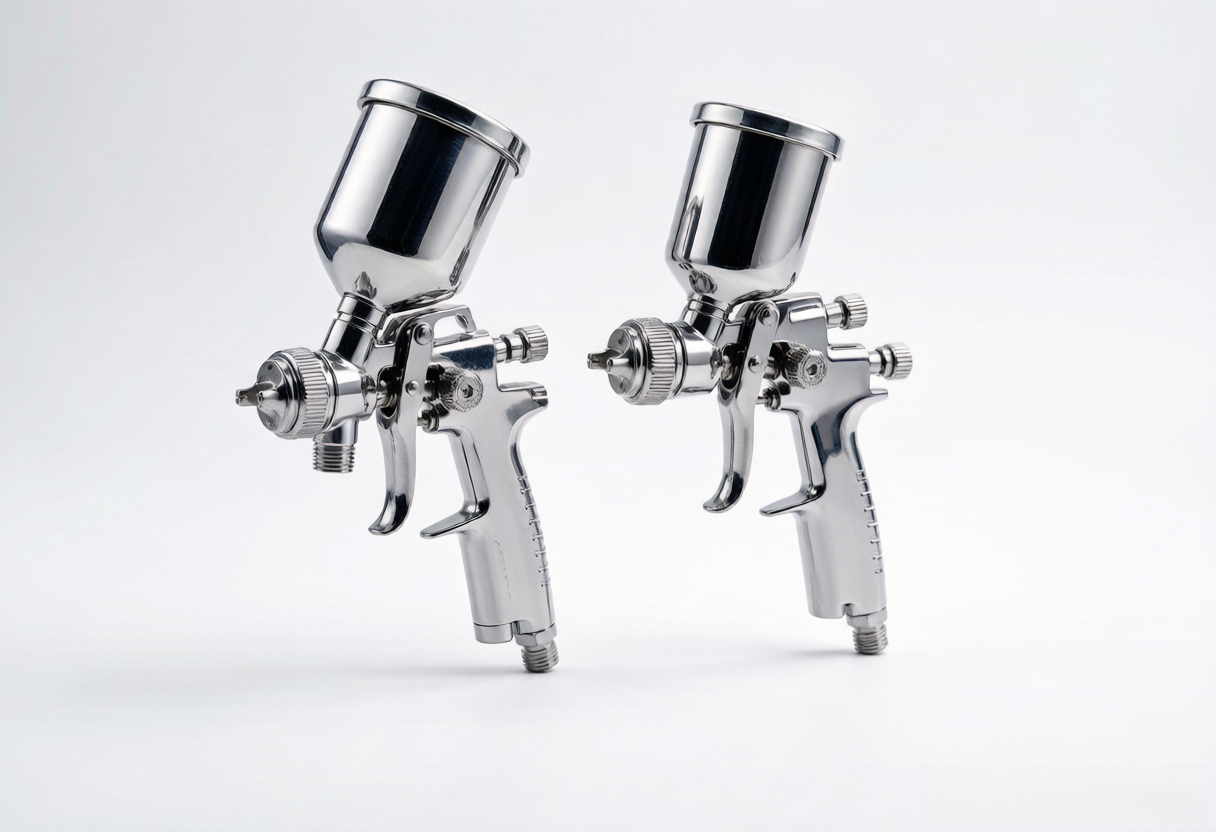
Automotive Refinish Spray Gun: Schematic of Gravity-fed and Siphon-fed, HVLP and LVLP Spray Gun Types

A spray gun is the "pen" of painting construction. A suitable spray gun with correct parameters can make the paint surface smooth and even; otherwise, orange peel, sagging, and particles will follow one after another. This article explains selection clearly from two dimensions: feed method and atomization technology, and provides the adjustment logic for air pressure, fluid output, and fan pattern.

In a nutshell: Gravity-fed/suction-fed determines material supply, HVLP/LVLP determines atomization efficiency; set the three major parameters (air pressure/fluid output/fan pattern) according to the coating, then combine with proper gun movement to get a good finish.

I. Feed Method: Gravity-fed vs. Suction-fed

Type Principle Features
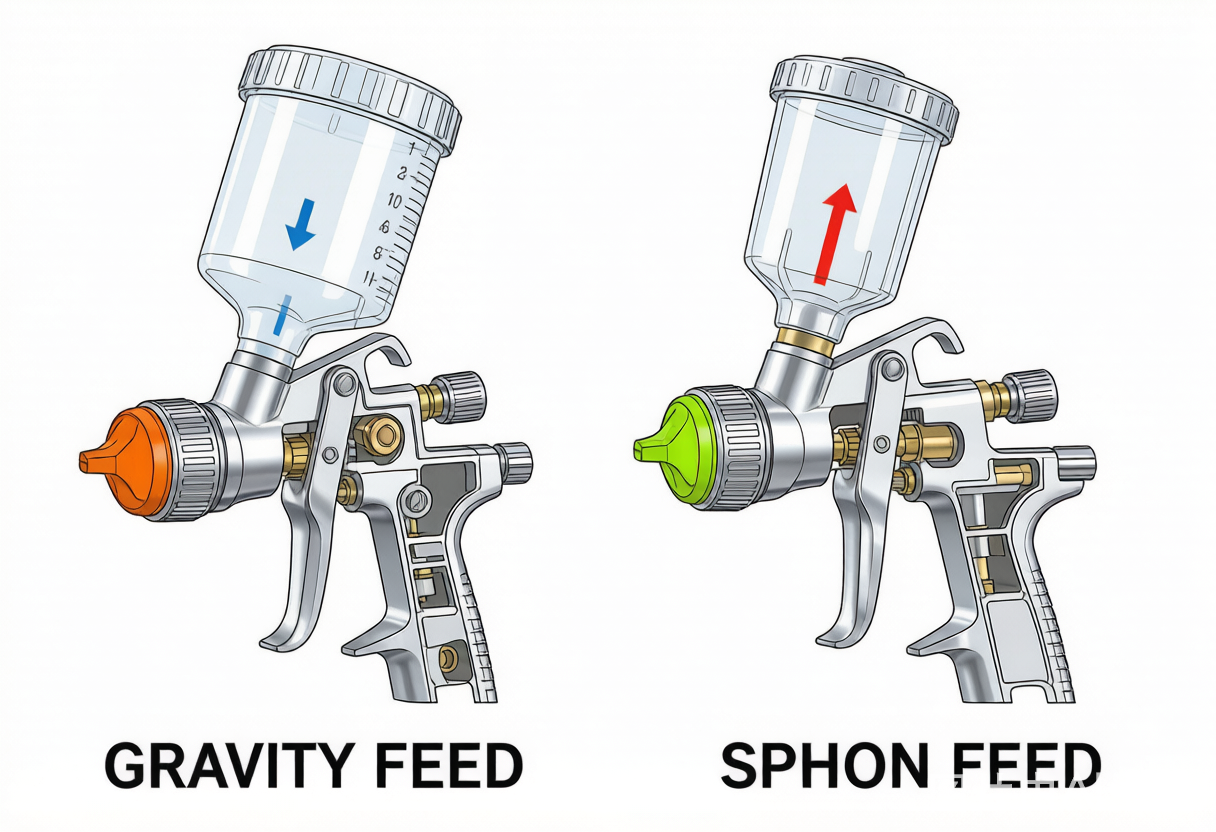
Gravity-fed Paint cup on top, relying on gravity + suction Stable paint output, paint-saving, easy to clean
Suction-fed Paint cup below, relying on airflow suction Large capacity, suitable for prolonged operation
Schematic comparison of structure and feed method between gravity-fed and suction-fed spray guns
Figure: The difference in feed structure between gravity-fed (cup on top) and suction-fed (cup below) spray guns.

II. Atomization Technology: HVLP vs LVLP

  • HVLP (High Volume Low Pressure): High transfer efficiency (>65%), less paint rebound, eco-friendly and paint-saving, mainstream for repair.
  • LVLP (Low Volume Low Pressure): Requires less compressed air, suitable for small compressors, and friendly to delicate parts.

III. How to Adjust the Three Major Parameters

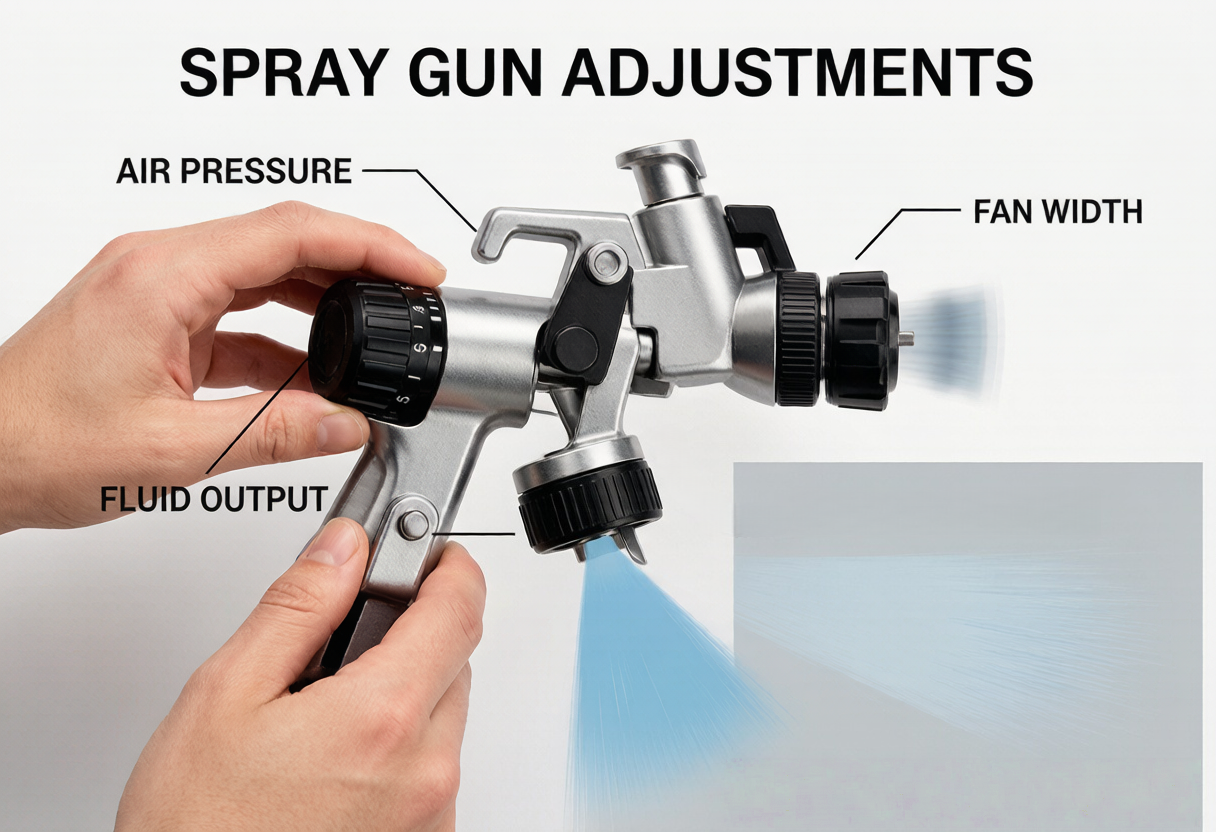
  • Air pressure: Refer to coating recommendations (clearcoat often 2–3 bar, basecoat lower); too high easily causes dry spray, too low causes sagging.
  • Paint output: Controlled by knob, matched with air pressure and gun movement speed, for even application.
  • Fan width: The larger the fan width, the wider the single pass; after adjustment, use a test spray panel to check whether the spray pattern is symmetrical.
Illustration of spray gun air pressure, fluid output, and fan pattern three-parameter adjustment and test spray pattern inspection
Figure: After adjusting the three parameters, be sure to test spray—check that the pattern is symmetrical, edges are soft, and there is no center buildup.
Application key points: Each time you change paint or brand, re-test spray; use clean, dry compressed air (with oil-water separation); clean the spray gun immediately after use to prevent curing and clogging.

Summary

Spray gun selection depends on feed type (gravity/suction) and atomization (HVLP/LVLP); construction quality relies on air pressure, fluid output, and fan pattern matched to the coating and verified by test spraying. Only with clean air supply and timely cleaning can a stable orange-peel-free, sag-free finish be achieved.

Frequently Asked Questions (FAQ)

How to choose between HVLP and LVLP?
HVLP offers high transfer efficiency, saves paint, and is eco-friendly, making it the mainstream for repair work, but it requires a larger air source; LVLP consumes less air, making it suitable for small compressors and fine parts. Choose based on air source capacity and type of work.
Which is better, gravity-fed or siphon-fed?
Gravity-fed provides stable paint output, saves paint, and is easy to clean, suitable for fine touch-ups; siphon-fed has a larger cup capacity and allows continuous spraying for extended periods, suitable for large areas. Neither is absolutely superior—it depends on the working conditions.
What pressure should a spray gun generally be set to?
There is no universal value; follow the coating manufacturer's recommendation. Clear coats are often at 2–3 bar, while base coats are usually lower. Too high causes dry spray, too low causes sagging; always test spray first to confirm the spray pattern.
Why test spray every time you change paint?
Different coatings have different viscosities and solvent evaporation rates, requiring re-matching of pressure/paint output/fan width. Test spraying reveals issues like asymmetric pattern, dry spray, or buildup before working on the actual part, avoiding wasted pieces.
Why clean the spray gun immediately after use?
Residual coating will cure and clog the nozzle and needle valve, affecting next time's atomization precision. Especially two-component (2K) coatings become extremely hard to clean after curing, so they must be thoroughly cleaned with compatible solvent promptly after use.
Kexin New Materials · Automotive Coating Technology Library | This article is technical Q&A content, for reference in selection and construction

{ "@context": "https://schema.org", "@type": "FAQPage", "mainEntity": [ {"@type":"Question","name":"How to choose between HVLP and LVLP?","acceptedAnswer":{"@type":"Answer","text":"HVLP offers high transfer efficiency, saves paint, and is eco-friendly, making it the mainstream for repair work, but it requires a larger air source; LVLP consumes less air, suitable for small compressors and fine parts. Choose based on air source capacity and type of work."}}, {"@type":"Question","name":"Which is better, gravity-fed or siphon-fed?","acceptedAnswer":{"@type":"Answer","text":"Gravity-fed provides stable paint output, saves paint, and is easy to clean, suitable for fine touch-ups; siphon-fed has a larger cup capacity and allows continuous spraying for long periods, suitable for large areas. Neither is absolutely superior; it depends on the working conditions."}}, {"@type":"Question","name":"What pressure should the spray gun generally be set to?","acceptedAnswer":{"@type":"Answer","text":"There is no universal value; follow the coating manufacturer's recommendation. Clear coat is often at 2–3 bar, base coat is usually lower. Too high causes dry spray, too low causes sagging; always test spray first to confirm the spray pattern."}}, {"@type":"Question","name":"Why test spray every time you change paint?","acceptedAnswer":{"@type":"Answer","text":"Different coatings have different viscosities and solvent evaporation rates, requiring re-matching of pressure/paint output/fan width. Test spraying can reveal issues like asymmetric pattern, dry spray, or buildup before working on the actual part, avoiding wasted pieces."}}, {"@type":"Question","name":"Why clean the spray gun immediately after use?","acceptedAnswer":{"@type":"Answer","text":"Residual coating will cure and clog the nozzle and needle valve, affecting next time's atomization precision. Especially two-component (2K) coatings become extremely hard to clean after curing, so must be thoroughly cleaned with compatible solvent promptly after use."}} ] }