Introduction: Sagging – the "Relentless Hand" of Gravity
The sagging that occurs on vertical surfaces after two-component coating mixing—a defect where the coating flows downward under gravity, forming tear-track-like marks is the second most common defect in painting workshops (second only to orange peel). The root cause of sagging is that the thixotropy of the coating after mixing has not been fully established, i.e., insufficient "induction time" was given before spray application to allow the pre-reaction between the base paint and hardener to build the thixotropic structure required to resist sagging.
I. Sagging Severity Rating (ISO 16862)
| Rating | Description | Sag Length | Judgment |
|---|---|---|---|
| Level 0 | No sag | 0mm | Qualified |
| Level 1 | Very slight sag | <5mm | Acceptable |
| Level 2 | Slight sag | 5-10mm | Unqualified——Local repair |
| Level 3 | Obvious sag | 10-20mm | Unqualified——Full sanding and repainting |
| Level 4 | Severe sag | >20mm or flowing to the bottom | Seriously unqualified |
II. Comparison of Key Indicators between HDI Trimer and TDI Adduct
| Indicator | HDI Trimer | TDI Adduct |
|---|---|---|
| NCO Content (%) | 21-23 | 12-14 |
| Free Monomer (%) | <0.3 | <0.5 |
| Viscosity (mPa·s/25°C) | 1500-3500 | 1000-2500 |
| Yellowing Resistance (QUV 3000h) | Excellent (Δb<2) | Poor (Δb>10) |
| Application Scenarios | Outdoor weather-resistant topcoat | Indoor/primer/intermediate coat |
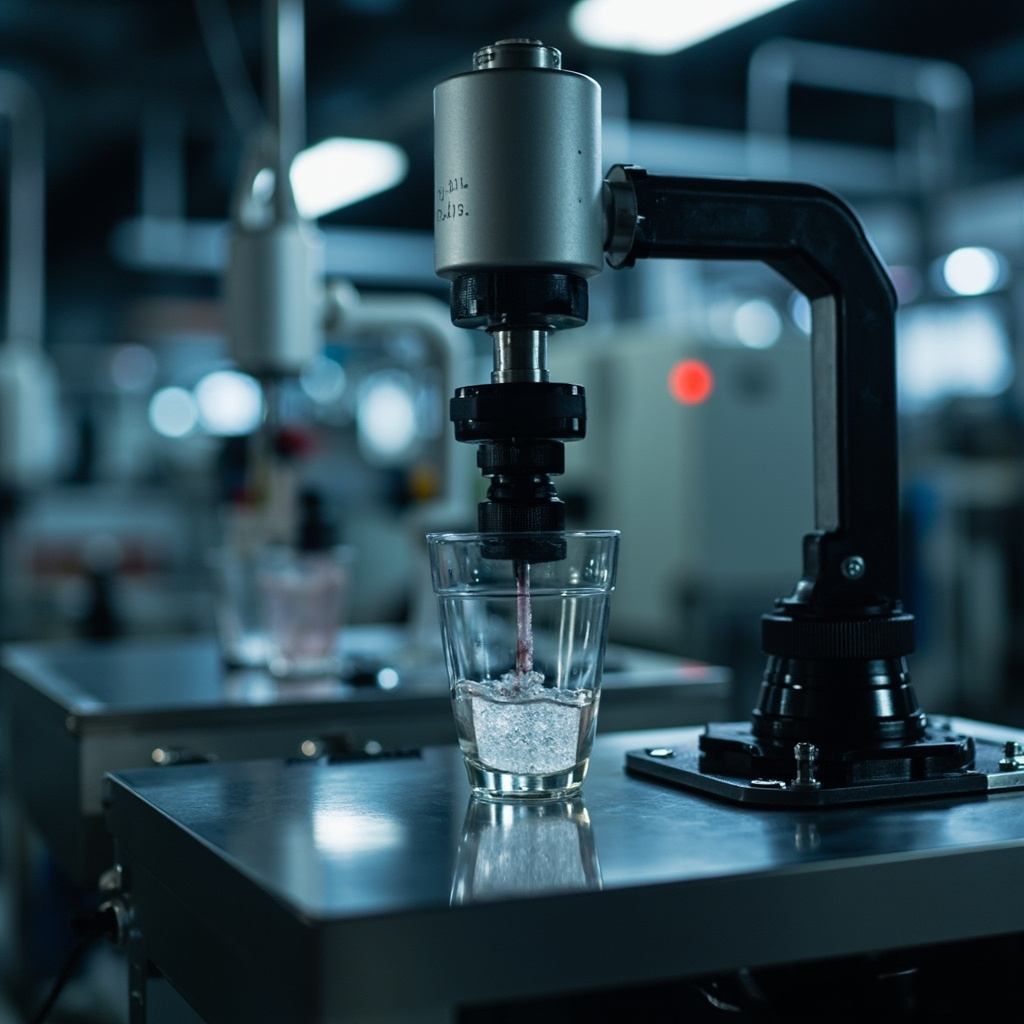

Technical Deepening: Engineering Safety and Scale-up Effects of Reactor Temperature Control
The "temperature runaway" of a reactor is the most dangerous accident in chemical production—uncontrolled reaction temperature → exponential acceleration of reaction rate (Arrhenius law) → more heat generated → further temperature rise → forming a positive feedback loop. Three layers of protection to prevent temperature runaway—(1) PLC temperature control + full cooling water flow (automatic); (2) Safety valve/rupture disc (mechanical protection); (3) Emergency terminator injection (benzoyl chloride/chemical termination).
Engineering challenges of the "scale-up effect" in reactors — the heat transfer capacity of a 5000 L reactor is only 1/10 to 1/20 of that of a 100 mL laboratory flask — an exotherm peak easily controlled in the lab may evolve into a thermal runaway in the production reactor. Scale-up strategy: reduce the heating rate (0.5 °C/min in production vs. 2 °C/min in the lab) + segmented feeding (add in 3–5 batches) + use a reaction calorimeter (RC1) to pre-measure the heat transfer demand of the production-scale reactor.
Industry Case: The 1-Million-Yuan Cost of a Runaway Reaction Incident in Curing Agent Synthesis
A curing agent plant—TDI adduct synthesis—operator increased the heating rate from the standard 1°C/min to 3°C/min—temperature surged to >110°C—safety valve lifted—reactants ejected (containing TDI vapor + solvent)—workshop TDI concentration instantly exceeded the limit—workers urgently evacuated—entire batch >2000kg scrapped + safety valve replaced + workshop line halted for 3 days—total loss >1 million RMB—lesson: "Reactor temperature control parameters are a safety red line—must never be compressed."
FAQ
Q1: What exactly is being "cured" during the curing time?In the first 15–30 min after mixing the main paint (containing hydroxyl resin) with the curing agent (containing -NCO groups), an initial pre-reaction occurs—the resin molecular chains are preliminarily extended (molecular weight increases) and branched via the -NCO/-OH reaction. This process raises the coating viscosity from an initial 20–25s (Zahn cup #4) to 30–40s, while establishing thixotropy—which is key to anti-sagging. Spraying before sufficient curing time = applying uncured low-viscosity coating = high risk of sagging.
Q2: Effect of ambient temperature on curing time?For every 10°C increase in temperature, the curing reaction rate approximately doubles (Arrhenius law). In summer (35°C), the curing time can be shortened to 5-10 min; in winter (10°C), the curing time needs to be extended to 40-60 min. Visual determination of curing completion: a significant increase in stirring resistance of the coating (judged by feel), and slight signs of thickening appearing on the coating surface (not gelling).
Q3: What is the Thixotropic Index?TI = ratio of low-shear viscosity (at 0.1 rpm) / high-shear viscosity (at 10 rpm). TI > 3 = strong thixotropy (suitable for thick coating/vertical surfaces), TI 1.5-3 = moderate thixotropy (general purpose), TI < 1.5 = Newtonian fluid (high sagging risk). In coating formulations, TI is established by adding thixotropic agents (organobentonite/fumed SiO₂/polyamide wax).
Q4: How to urgently remedy sagging that has already occurred (coating not yet dry)? Stop spraying immediately → Use a brush or short-nap roller to gently even out the sagging area from bottom to top (push the sagging paint back up to its original position) — this operation is only effective when the coating is still wet (within <5 min). If sagging appears after the coating has surface-dried → the only solution: sand off the sagging protrusion → repaint.
Q5: How long can a two-component coating be left after mixing (beyond Pot Life)?Absolutely do not exceed the Pot Life—the Pot Life is the maximum time the coating remains in an applicable state (usually 2-4h/23°C); beyond this, the coating viscosity becomes too high to apply and the coating performance has already begun to deteriorate (partially gelled internally). Ensuring sag resistance while not exceeding the Pot Life is the balancing art of application time management.
Q6: Impact of spraying method (airless/air/air-assisted airless) on sagging?Airless spraying (high pressure/high flow) results in a large single-coat wet film thickness (100-150μm) — highest sagging risk. Air spraying (low pressure/low flow) gives a moderate wet film thickness (50-80μm) — medium sagging risk. Air-assisted airless (AA) spraying is a compromise — recommended for vertical thick-coat applications combined with higher thixotropic coating formulations. HVLP spray gun (high volume low pressure) yields the smallest wet film thickness — lowest sagging risk but requires more coats.
Q7: How to reduce sagging risk through coating formulation?(1)Add thixotropic agents (organobentonite 0.5-1.5% / fumed SiO₂ 0.3-1.0% / polyamide wax 0.5-2.0%); (2)Increase the low-shear viscosity of the coating (does not flow when at rest but viscosity decreases under high shear (during spraying) — ideal thixotropic behavior); (3)Use high-solids resin systems (solid content >70% — high solids inherently have high viscosity and low flowability).
Q8: What is the best anti-sag spraying strategy for large vertical surfaces (e.g., tank exterior/ship hull)?(1)Cross-coat method: First pass horizontal direction → flash off for 2-3 min → second pass vertical direction; (2) Control each coat's wet film thickness at <100 μm (complete in 2-3 coats total); (3) Spray from top to bottom (to prevent overspray from above falling onto uncured lower film and causing particles).
Q9: What is the difference between sagging, "tearing", and "dripping"?Sagging: large-area continuous downward flow (overall excessive film thickness + insufficient thixotropy); Tearing: localized thin-streak downward flow marks (originating from a drop or impurity in the coating); Dripping: large paint droplets falling downward caused by spraying too thick or too close (improper application operation). The common point of the three is gravity-driven downward flow, but the severity and root causes differ.
Q10: How to standardize the verification of sag resistance before applying two-component coatings?Sag test panel: On a vertically placed steel plate, apply stripe bands of increasing wet film thickness such as 10μm/20μm/30μm… (using a multi-groove sag test applicator) → after drying, observe the sagging of bands at different film thicknesses → determine the maximum safe sag-free wet film thickness for this batch of coating. This is a mandatory sag verification test before construction (simple and fast but rarely done—because construction units consider it a "waste of time" and often end up paying a much higher price for rework).

FAQ: In-Depth Technical Q&A Supplement
Q11: How do the differences in domestic and international standards for this technology affect product export?Domestic standards (GB) differ from ISO/ASTM standards in test methods and acceptance criteria. For example, salt spray testing—GB/T 1771 (equivalent to ISO 7253) has test conditions basically consistent with ASTM B117—but the rating systems (ISO 4628 vs ASTM D610/D714) differ—export products must also indicate the corresponding international standards when providing test reports, otherwise overseas customers cannot make a comparative assessment. It is recommended to list both GB and ISO/ASTM dual-standard indicators in the TDS (Technical Data Sheet) of export products—to enhance the trust of international customers.
Q12: How to verify the long-term service performance of this technology in actual engineering?Laboratory accelerated testing (salt spray/QUV/cyclic corrosion) provides comparative data—but cannot fully replace actual outdoor exposure testing. Recommendations—(1) Set up outdoor exposure racks at both the factory location and typical customer locations (e.g., coastal C5-M/industrial C4)—conduct annual inspections of coating appearance/adhesion/film thickness changes—establish a company-owned outdoor service database; (2) Collaborate with universities/research institutes—combine enterprise data with academic research—enhance data credibility.
Q13: What should SMEs pay attention to when purchasing related raw materials/equipment?(1) The batch stability of suppliers is more important than unit price—it is recommended to require suppliers to provide COA data for >10 batches—and evaluate batch variation (CpK); (2) For equipment procurement, visit peers who have used the equipment for >2 years to understand the long-term reliability and after-sales service quality of the equipment—rather than relying only on the demonstration data from equipment suppliers; (3) For key raw materials (resin/curing agent)—maintain at least 2 qualified suppliers to guard against single-supply risk.
Q14: What is the current state and trend of digital transformation in this field?The digital transformation of the coatings industry is evolving from “point-based applications” (automation of individual equipment/processes) to ”system integration” (full-chain ERP+MES+PMS). Currently, for small and medium-sized coatings factories, the digitalization with the ”highest ROI investment” is automatic batching systems + digitalization of quality control data — with a payback period of 1-3 years — which is the prioritized recommended direction. Future trend — AI + sensors enabling real-time optimization of process parameters — further reducing quality variation between batches.
Q15: How can a newly entered coating engineer quickly master this technology?(1)Combine theory and practiceDo not only read literature without touching actual production—nor rely solely on experience without studying theory;(2)Establish a “failure case archive”Every customer complaint/production anomaly/coating failure—record the root cause and resolution process—this is the most effective learning material;(3)Learn from suppliersTechnical personnel from resin/additive/pigment suppliers are carriers of "tacit knowledge" in this field—communicate more with them about solutions to specific problems.
Related Reading
Summary
The root cause of sagging in two-component coatings can be traced to two critical time points: (1) After mixing—insufficient curing/induction time (recommended 15–30 min at 23°C) results in inadequate thixotropy development; (2) During application—wet film thickness exceeds the coating's sag resistance limit (the safe limit must be verified using a sag test panel). For vertical surface spraying, the cross-spray method (horizontal + vertical) is recommended, with single-pass wet film thickness controlled at 3 [units]. Kexin New Materials provides customers with customizable two-component coating products with adjustable thixotropy and application technical support.