# UV-Curable Wood Coating — Efficiency, Eco-Friendliness and Process Boundaries
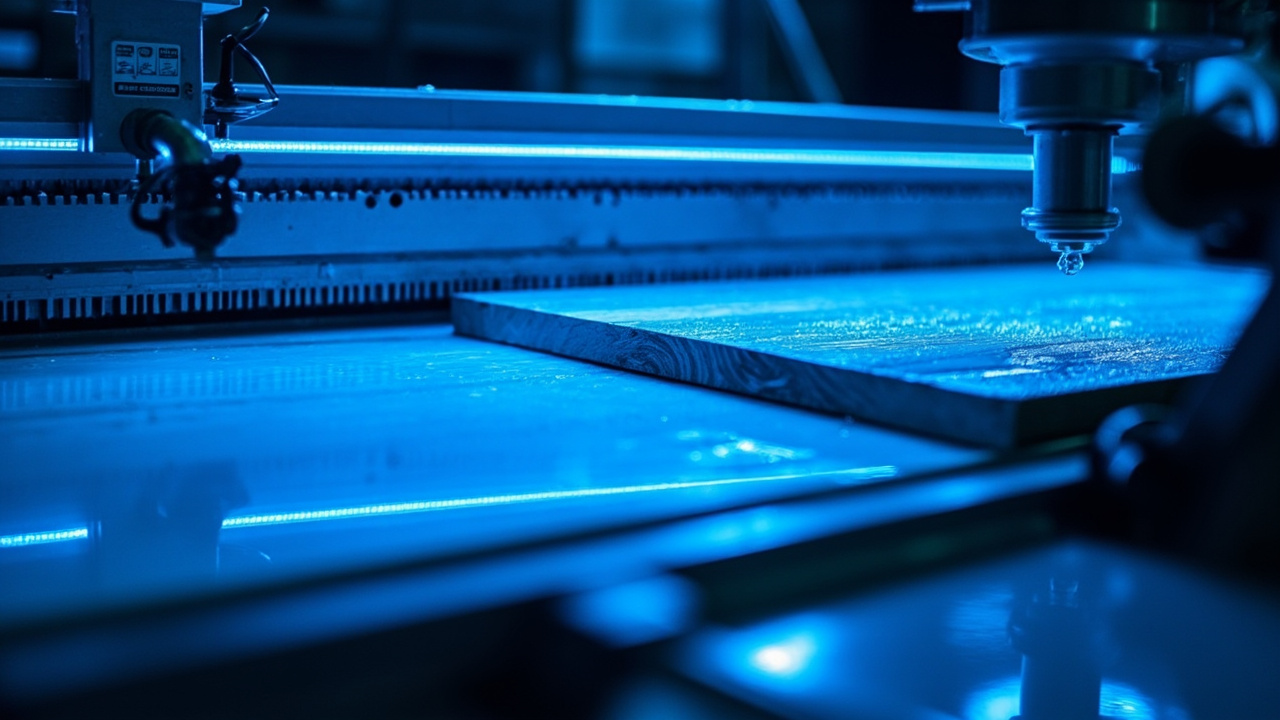
In the green transformation of wood coatings, UV (ultraviolet) curing technology represents a unique and radical route. Unlike water-based coatings, which reduce VOC by "replacing solvent with water," UV curing simply "eliminates solvent" — using 100% solid active components that instantly polymerize and crosslink under ultraviolet light, emitting almost no volatile organic compounds. This "second-level curing" characteristic makes UV wood coating an efficiency engine for customized furniture, flat cabinet doors, and factory-floor flooring. According to industry monitoring, the application share of UV-curable coatings in the customized furniture sector had risen to 31% by 2025 and will continue to climb.
From a broader perspective, UV is the most extreme yet most efficient of the three "solvent-free" technical paths for wood coatings (water-based, radiation curing, powder). Water-based still needs to "evaporate water," powder must "melt under heat," while UV relies on "photon-initiated polymerization," compressing drying from "minutes to hours" down to "seconds." This fundamental physical difference determines UV's irreplaceable efficiency advantage on regular flat parts, and also sows its inherent boundary of high sensitivity to light geometry. Understanding this symbiotic "advantage–boundary" relationship is the core thread of this article.
But UV is not without boundaries. Ultraviolet light can only cure surfaces that are "exposed to light"; shadowed areas, irregular-shaped parts, thick films, and dark substrates can all become process blind spots. Issues such as photoinitiator migration and yellowing, surface tackiness caused by oxygen inhibition, and insufficient adhesion also require systematic formulation and process countermeasures. More critically, UV's economy is highly dependent on production volume and workpiece regularity — it is a sharp tool for "mass-scale flat parts," but not a panacea for small-to-medium batch irregular parts. This article objectively dissects the capability boundaries of UV-curable wood coatings from principles, processes, equipment, economy to common problems, neither mythologizing nor belittling it, to help furniture factories and coating engineers make rational technical choices. Under the 2026 industrial coordinates of tightening mandatory national standards and water-based crossing 50%, recognizing UV's boundaries is more valuable than chasing its speed.
I. What Is UV-Curable Wood Coating: Principles and Essence
UV curing is a radiation curing technology whose essence is to use ultraviolet light (typically the 200–400 nm band) to excite photoinitiators in the coating, generating active free radicals or cations, which then trigger polymerization and crosslinking of the resin system, turning it from liquid to solid film within seconds or even sub-seconds. Unlike conventional thermal curing that relies on temperature to evaporate solvent, UV curing hardly depends on volatilization, thus allowing solid content to approach 100%.
1.1 Free-Radical Acrylate vs Cationic Epoxy
The mainstream chemical systems of UV wood coatings are divided into two categories: free-radical and cationic, with significant differences in mechanism and applicable scenarios:
– Free-Radical Acrylate: Based on acrylate oligomers (such as epoxy acrylate, polyurethane acrylate, polyester acrylate), combined with reactive diluent monomers and free-radical photoinitiators (such as 1173, 184, TPO, etc.). Ultraviolet light excites the photoinitiator to cleave and generate free radicals, attacking acrylate double bonds to undergo chain-growth polymerization. Its characteristics are extremely fast curing (often less than 1 second), high hardness, good abrasion resistance, and low raw material cost, making it the absolute mainstream of wood UV today. Drawbacks include obvious oxygen inhibition (surface prone to tackiness), relatively high shrinkage (affecting adhesion), and some photoinitiators carry migration and yellowing risks. – Cationic Epoxy: Based on epoxy acrylate or alicyclic epoxy resin, combined with cationic photoinitiators (such as iodonium salts, sulfonium salts). Ultraviolet light excites the generation of strong acid, initiating epoxy ring-opening polymerization. Its advantages are almost no oxygen inhibition, low shrinkage, good adhesion to plastic and metal, and sustainable post-curing, suitable for occasions with high adhesion requirements; drawbacks are slower curing than free-radical type, high raw material cost, and sensitivity to moisture (humidity terminates cationic polymerization), thus mostly used in wood for special primers or local reinforcement.
The table below compares the performance and applicable boundaries of the two systems:
| Dimension | Free-Radical Acrylate | Cationic Epoxy |
|---|---|---|
| Initiation Mechanism | Photoinitiator cleavage generates free radicals | Photo-generated acid initiates epoxy ring-opening |
| Curing Speed | Extremely fast (<1 sec common) | Slower, requires post-curing |
| Oxygen Inhibition Effect | Obvious, surface tacky | Almost none |
| Shrinkage | Larger (3%–8%) | Low (<2%) |
| Adhesion (to difficult substrates) | Average, needs primer | Better |
| Yellowing Tendency | Some photoinitiators have | Lower |
| Cost | Low, mainstream | High, special use |
| Typical Wood Use | Topcoat, primer, filling | Special primer, plastic/metal adhesion layer |
1.2 Chemical Basis of 100% Solid Content and Near-Zero VOC
Traditional solvent-based coating relies on 30%–70% organic solvents to carry the resin to the wood surface, and when drying, these solvents volatilize into the air as VOCs; water-based coating uses about 70% water as the medium. Although water is not counted as VOC, it still needs to be volatilized off and consumes energy for drying. UV coating is different—its "medium" itself is a polymerizable reactive diluent monomer (such as acrylate monomers like TPGDA, HDDA, TMPTA), and under ultraviolet light these monomers all participate in film formation, leaving no "waste" that needs to volatilize. Therefore, compliant UV wood coating can have VOC as low as nearly the detection limit, which is the fundamental reason why it can readily meet the stringent limits of GB 18581-2025 and the subsequent GB 30981.2-2025, and avoid SVOC and biocide control.
It should be noted that "near-zero VOC" is established on the premise of formula compliance. If volatile additives are added to the UV system, or residual unreacted monomers migrate, there may still be odor and health risks. Therefore, low-migration photoinitiators, low-skin-irritation monomers, and strict residual control are the technical focus of high-end UV products.
1.3 Curing Speed and Energy Efficiency
The "second-level" advantage of UV curing is its core difference from thermal curing. On a typical production line, workpieces passing under UV lamps need only a few seconds to become dry to touch, increasing the production speed of industrial wood coating by about 37%–38%. In terms of energy consumption, UV curing replaces the huge latent heat demand of "evaporating solvent/water" with the precise energy input of "photon-initiated polymerization", and the energy consumption per unit area is significantly lower than that of long-time hot-air drying water-based lines. This is also why on large-scale flat panels, the comprehensive cost of UV can be lower than that of solvent-based.
2. Application Process System: Roller Coating, Curtain Coating and Spray Coating
The application of UV wood coating is highly equipment-dependent, with three mainstream processes, each having its own applicable boundaries. It should be emphasized that in the UV system, "process" is not an after-the-fact step, but a front-end variable determined simultaneously with the formula. The same UV coating, when applied by roller coating, can yield a mirror-smooth cabinet door; when spray-coated on irregular parts, it may show orange peel and sagging; when curtain-coated, it can achieve high fullness but is difficult to change color. Therefore, process selection directly determines coating utilization, appearance grade, and unit cost—it is both a technical and an economic issue. Many UV projects fail not because the coating is poor, but because the process is mismatched with the workpiece shape. The following breaks down the three mainstream processes and the pore-filling primer step one by one.
2.1 Roller Coating
Roller coating is a process that uses a coating roller to uniformly transfer UV coating to a flat surface, suitable for large-area continuous coating of flat furniture panels, door panels, and flooring. Its advantages are precise coating amount, high coating utilization (minimal waste), high speed, and easy integration with UV lamp groups into a continuous line; the drawback is high requirements for panel flatness, and difficulty in handling irregular shapes and edges. Roller coating is the mainstream method for UV on customized furniture flat panels, often used together with putty roller coating for pore filling.
2.2 Curtain Coating
Curtain coating is a process where the coating flows uniformly from a curtain knife, and the panel passes through the curtain to form a continuous liquid film. The coating thickness is controllable, no air is entrained, and fullness is high, making it suitable for topcoats with high requirements for gloss and feel. The disadvantages are a complex coating circulation system, troublesome color change and cleaning, suitability only for regular flat panels, and sensitivity to viscosity and temperature.
2.3 Spray Coating
UV can also be spray-coated (including air spray, air-mix spray, electrostatic spray), suitable for irregular parts, carvings, and edge touch-up. Spray coating offers high flexibility, but coating utilization is lower than roller/curtain coating, and the atomization and leveling window must be controlled (UV coating has low viscosity and fast leveling, with strict parameter requirements). In customized furniture, spray coating is mostly used for irregular areas not covered by roller/curtain coating and for on-site repair painting.
2.4 Putty Pore Filling (Nail Hole Filling) and Primer
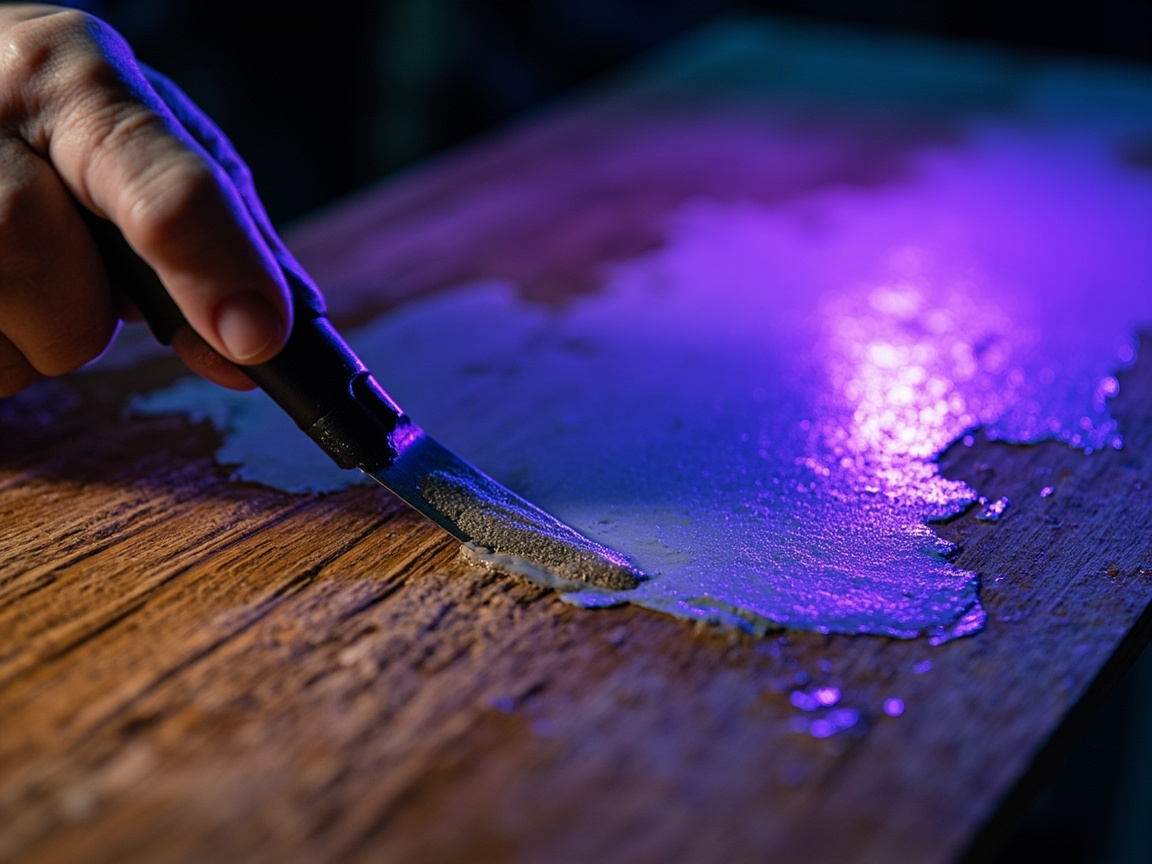
Wood is a porous material; ducts, nail holes, and joints must be filled first, otherwise the topcoat cannot achieve a smooth mirror finish. In the UV system, UV putty (a high-solid, low-shrinkage pore-filling material) is first applied by roller or knife coating to fill pores, then UV pre-cured and sanded, followed by UV primer. Nail hole filling is a key quality control step—insufficient filling causes sag, over-filling causes sand-through. The role of the primer is to seal the wood, provide interlayer adhesion and sandability; UV primer usually contains more fillers to balance sanding and filling. Whether sealing is thorough directly determines the fullness of the subsequent topcoat and whether problems such as grain raising and tannin bleed occur.
The table below summarizes the comparison of four processes:
| Process | Applicable Workpiece | Coating Utilization | Speed | Fullness | Main Limitations |
|---|---|---|---|---|---|
| Roller Coating | Flat panel, door panel, flooring | High (little waste) | Very fast | Medium | Flat surface only, edges difficult |
| Curtain Coating | Regular flat panel topcoat | Medium (circulation loss) | Fast | High | Difficult color change, flat panel only |
| Spray Coating | Irregular, carving, touch-up | Lower (overspray) | Medium | Medium | Low utilization, strict parameters |
| Vacuum Coating | Profiles, sections 360° | Relatively high | Fast | Medium | Dedicated for equipment |
III. Light Source Debate: LED-UV vs Mercury Lamp
UV curing requires a light source. Traditionally, mercury lamps (medium-pressure mercury lamps, mainly emitting around 365nm) are used, while today LED-UV (wavelength mainly 395nm) is rapidly penetrating the market. Each has its pros and cons. A often-overlooked point here is: the light source wavelength must match the absorption peak of the photoinitiator in the coating, otherwise "the lamp is on but the coating won't cure". For example, classic initiators 1173 and 184 have maximum absorption at 300—350nm, which are more suitable for the 365nm mixed spectrum of mercury lamps; whereas 395nm LED-UV requires matching special initiators sensitive to long wavelengths (such as some TPO derivatives or macromolecular initiators). Wavelength mismatch makes even the strongest lamp futile, which is also why the "lamp-material synergy" of UV lines is more important than simply stacking power.
– Mercury lamp: Mature technology, high power, good deep curing, strong penetration on thick films and dark substrates; drawbacks are warm-up needed for startup, short lifespan (about 1000—2000 hours), contains mercury requiring recycling, high heat requiring water cooling, ozone generation requiring exhaust, and high energy consumption. – LED-UV: Cold light source, instant on/off, long lifespan (tens of thousands of hours), low energy consumption, no ozone, narrow band can precisely match photoinitiators; drawbacks are single-unit power and penetration depth inferior to mercury lamps, weak curing ability on dark/thick films, expensive initial equipment, and requires a photoinitiator system sensitive to 395nm.
The trend is a hybrid arrangement of "LED-UV as primary, mercury lamp for reinforcement": LED-UV for energy saving on flat light-colored parts, mercury lamp for penetration on thick films or dark parts. As LED power increases and low-cost photoinitiators are developed, the share of LED-UV will continue to rise, consistent with the industry-wide direction of energy saving and carbon reduction.
IV. Breaking Through Flat Surfaces: 3D/Irregular Part UV and Electron Beam
The biggest shortcoming of UV is "straight-line propagation, shadows not illuminated". Ultraviolet light travels in straight lines and projects into dark zones when blocked; the workpiece's own shape is a "shield", and deep grooves, inner cavities, back sides, and stacked contact surfaces are naturally in light-blind areas. This is the physical root of UV being locked in the "flat panel high efficiency" ceiling. To break through the flat limitation, the industry explores two paths:
– 3D/irregular part UV: Through deformable reflectors, multi-lamp multi-angle arrangement, workpiece flipping and robot-held lamps, let UV light cover carvings, grooves and side edges as much as possible. Combined with low-viscosity fast-leveling coating, UV coating can be achieved on irregular furniture (such as hollow screens, embossed doors), but the equipment is complex, cycle time is limited, and cost is higher than flat panel lines. – Electron beam (EB) curing: Electron beam has strong penetration, unaffected by shadow and oxygen, requires no photoinitiator (relies on high-energy electrons to directly break bonds and initiate), can cure thick films, dark and opaque coatings, and does not depend on substrate light transmission. EB equipment requires huge investment (vacuum and shielding needed), mostly used for special films, coils and high-end flooring; in wood coating it is a frontier direction, representing the ultimate solution of "shadow-free curing".
For most custom furniture factories, the pragmatic route is still "flat parts UV, irregular parts water-based or solvent-based as supplement", rather than blindly adopting 3D/EB.
V. Equipment Investment and Production Line Layout
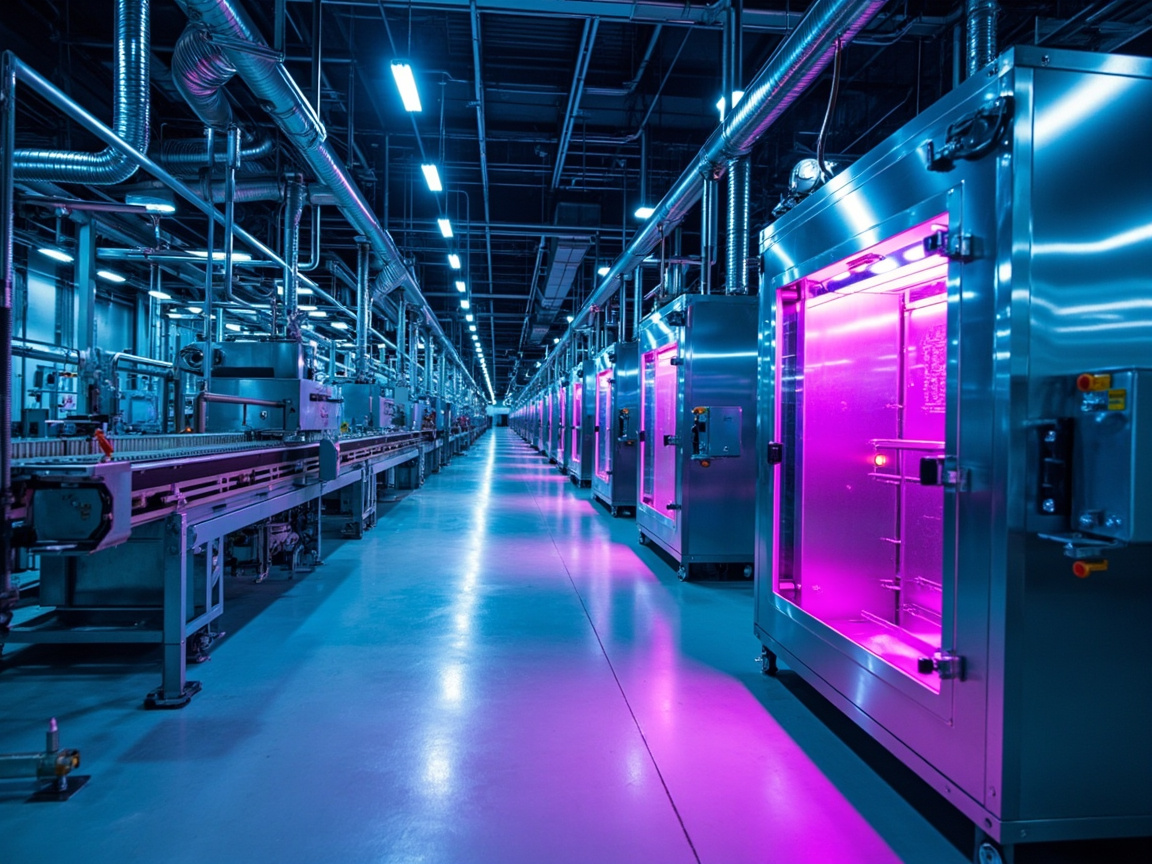
A typical UV flat panel coating line includes: infeed dust removal → putty roller coating/scraping → UV pre-curing → sanding → primer roller coating → leveling → UV curing → sanding → topcoat roller coating/curtain coating → leveling → UV main curing → cooling and unloading. This line can be understood as a "takt machine": the dwell time of each section is precisely designed according to line speed, and any jam or acceleration in any section transmits to the whole system. Therefore, the first principle of layout is not "how advanced the equipment is", but "whether the takt can be stable and consistent". Layout key points:
– Takt matching: Speeds of each section need to be unified, usually 6—15 meters/minute, depending on film thickness and lamp power. – Dust removal and cleanliness: UV coating is thin and fast, dust spots become defects immediately, infeed filtration level must be high. – Lamp group configuration: According to "pre-curing + main curing" two stages, main curing power needs to match line speed and film thickness. – Safety: UV radiation needs shielding, mercury lamp ozone needs exhaust, operation area equipped with interlock. – Flexibility: Reserve irregular touch-up stations and water-based backup line to handle multiple varieties.
Equipment investment is significantly higher than a simple spray line (including roller coater, curtain coater, multiple UV lamp groups, sanding and conveying systems), but unit area coating and energy consumption are low, lead time is short, and yield is high; after scaling up, payback period is controllable.
VI. The Economic Account: Return of UV in Custom Furniture Batch Lines
UV penetration rate in custom furniture reaches 31%, the fundamental reason being "the numbers work out". Taking a flat cabinet door factory with annual coating of millions of square meters as an example, the economy of UV solution comes from:
– Coating savings: 100% solid content means almost no volatile loss, coating utilization is over 30% higher than solvent-based spraying. – Energy and man-hours: Second-level curing replaces long-time drying ovens, energy consumption and work-in-process occupation drop significantly. – Lead time and turnover: Production line speed increases by about 37%—38%, order delivery cycle shortens, capital turnover accelerates. – Rework reduction: Uniform film thickness, fewer defects, rework rate lower than manual solvent-based spraying. – Compliance dividend: Near-zero VOC avoids treatment and discharge costs, meets strictest national standards and export certification.
Although equipment CAPEX is high, the above savings often cover the investment within two to three years. For small and medium batch factories, a light-asset model of "water-based supplement + outsourced UV" is more suitable, or first adopt a partial UV line (such as topcoat only) to test the waters.
VII. Common Defects (Orange Peel, Cratering, Adhesion, Yellowing, Shadow Area Non-curing) and Countermeasures
Defects of UV wood coating are mostly related to the mechanism, systematic identification and countermeasures are as follows:
| Defect | Typical Cause | Countermeasure |
|---|---|---|
| Orange peel (orange peel-like surface) | Viscosity too high, insufficient leveling, premature lamp curing, uneven coating | Reduce viscosity, extend leveling, adjust lamp power and distance, optimize roller coating pressure |
| Cratering (fish eye) | Substrate oil/release agent, incompatible additives, dust, silicone contamination | Strengthen dust removal and degreasing, change compatible wetting agent, control environmental cleanliness |
| Poor adhesion | Oxygen inhibition surface tacky, high shrinkage, insufficient substrate sealing, interlayer contamination | Use adhesion primer, control film thickness, sand between layers, select low-shrinkage system |
| Yellowing | Poor weather resistance of photoinitiator/resin, phenolic antioxidant migration, excessive mercury lamp heat | Use low-yellowing initiator, add UV absorber, control lamp temperature, select aliphatic PUA |
| Shadow area non-curing | UV light blocked, oxygen inhibition, insufficient lamp power | Multi-lamp multi-angle, add supplementary light, adjust formulation, convert irregular shapes to water-based/solvent supplement |
| Surface tackiness (oxygen inhibition) | Oxygen inhibition at surface of free-radical system, film too thin | Add wax/amine surface curing promoter, increase film thickness, nitrogen protection or cationic system |
| Bubbles/pinholes | Low viscosity entrains air, curing before leveling insufficient, high moisture content in wood | Defoam, extend leveling, control substrate moisture content, reduce coating speed |
| Poor sandability | Primer crosslinking too high, insufficient filler, over-curing | Adjust primer formulation, control curing degree, select easily sandable filler |
The core of these countermeasures is to treat "formulation—equipment—substrate—environment" as a system to adjust, rather than replacing materials in isolation.
VIII. Comparative Positioning with Water-based and Solvent-based
UV is not meant to replace water-based and solvent-based, but to layer and synergize with them. Rather than asking "which is best", it is better to ask "which has the highest comprehensive cost-performance on the workpieces and output of the present utility model". The positioning of the three is as follows:
| Dimension | UV curing | Water-based | Solvent-based |
|---|---|---|---|
| VOC | Near zero | Low (water as carrier) | High |
| Curing speed | Seconds level | Slow (requires drying) | Medium (solvent evaporation) |
| Applicable shape | Mainly flat/regular | Any (including irregular) | Any |
| Hardness/wear resistance | High | Medium—High (PUD good) | High |
| Equipment investment | High (line + lamp) | Medium (drying room) | Low (spraying only) |
| Shadow/thick film | Limited | Unlimited | Unlimited |
| Comprehensive cost (scale) | Low | Medium | Medium—High (compliance costly) |
| Typical use | Flat-panel cabinet doors, flooring factory-finished | Doors and windows, children's furniture, on-site | High-end fullness, special scenarios |
In practice, "water-based sealing primer + UV filling + UV topcoat" or "UV base + UV topcoat, with water-based touch-up for irregular shapes" are the mainstream combinations for custom furniture, balancing sealing, efficiency, and boundaries.
IX. Limitations and Boundaries: Complex Shapes, Thick Films, Shadows
It must be objectively acknowledged that UV has its boundaries, to avoid technological superstition:
– Complex shapes: Carvings, deep grooves, and inner cavities are difficult for ultraviolet light to reach, resulting in uneven curing or even non-curing, requiring a switch to light-reachable designs or water-based/solvent touch-up. – Thick films: Thick films demand high UV penetration depth; the deep layers of free-radical systems may be under-cured; EB can solve this but at high cost. – Shadow areas: Stacked workpieces, fixture obstructions, and shadow areas on the back cannot be cured by direct UV light, which is a fatal point that production line design must avoid. – Dark/opaque coatings: Pigments (especially titanium white, carbon black) absorb UV, reducing curing efficiency, requiring higher lamp power or special initiation systems. – Substrate limitations: Wood that is heat-sensitive or contains polymerization-inhibiting substances (such as some hardwoods containing tannins, oils) requires thorough sealing.
Only by recognizing the boundaries can UV be used on the "right workpieces" to maximize its efficiency and environmental value.
Furthermore, the industry has developed a set of "design for UV" mitigation ideas: at the product design stage, minimize deep grooves, inner cavities, and stacking structures so that UV light can reach most surfaces; process parts that must use irregular-shaped techniques (carvings, lines) separately from flat panels, rather than forcing one line to handle everything; for unavoidable shadows, use flippable fixtures, multi-angle lamp arrays, or inert gas (nitrogen) protection to suppress oxygen inhibition and improve curing uniformity; introduce dual-cure reinforcement in thick-film scenarios. The common point of these ideas is—not expecting UV to break physical limits, but resolving boundary issues in advance from the systematic level of "product design—fixtures—formulation—process". This also explains why factories that successfully implement UV are often those with good "design and process coordination", rather than those that simply bought the most expensive lamp arrays.
X. Selection and Implementation Suggestions
For furniture factories and engineers, UV implementation suggestions are as follows. These are not textbook slogans, but a "pitfall-avoidance checklist" distilled from numerous success and failure cases: most UV project failures do not root in equipment cost, but in "applying full line without part separation, applying topcoat without sealing, discussing appearance without dust control, discussing cost savings without calculating volume". Treating the six points below as a pre-launch checklist can avoid the vast majority of common pitfalls.
– Separate parts first: Disassemble the product into "UV-compatible flat parts" and "irregular parts needing touch-up", and design processes separately. – Base before top: Use UV putty and primer to solve pore filling and sealing, then apply topcoat, to avoid later defects. – Light source combination: Use LED-UV for energy saving on light-colored flat panels, supplement with mercury lamps for thick dark films. – Formulation synergy: Choose low-yellowing, low-migration, low-skin-irritation photoinitiator systems to meet children's and export compliance. – Environmental control: Dust removal, temperature and humidity, and cleanliness are invisible variables determining UV success or failure. – Progressive investment: Small and medium factories can start with partial UV lines or outsourcing to control risk.
Industrial coating participants such as Kexin New Materials (Guangdong) Co., Ltd. also provide supporting systems for UV and water-based coordinated industrial coating, helping manufacturing enterprises balance efficiency, compliance, and cost.
XI. In-depth Principles: Chain Segments of Free-Radical Polymerization and Oxygen Inhibition
To truly master UV coating, one must understand the invisible microscopic process of polymerization. The curing of free-radical acrylates is a chain reaction of "light—free radical—chain growth": UV photons hit photoinitiator molecules, causing them to homolyze and produce two free radicals; the free radicals immediately attack the double bonds of acrylate monomers, opening them and becoming chain-end free radicals themselves, continuing to attack the next monomer, forming a continuously growing polymer chain; polymerization stops only when two chain free radicals meet and couple-terminate, or when chain transfer occurs to another molecule. The entire chain completes in milliseconds to seconds.
There are two unavoidable "enemies" here. One is oxygen inhibition: Oxygen in the air is a strong quencher of free radicals; surface free radicals are preferentially consumed by oxygen, forming peroxy radicals, which suppresses surface polymerization, resulting in "surface tackiness"—the film is dry but sticky to the touch. This is also the root cause why free-radical UV must rely on a certain film thickness, wax layer shielding, or nitrogen protection to mitigate. The other is shrinkage stress: As acrylate double bonds change from independent molecules to a cross-linked network, the intermolecular distance shortens, with volume shrinkage of about 3%—8%, generating internal stress on hardwood or poorly adherent substrates, weakening interlayer adhesion. Cationic epoxy, being ring-opening polymerization with small volume change, happens to have an advantage in adhesion.
Understanding these two points makes it clear why "using a system with good adhesion for primer, fast-curing acrylate for topcoat, and adding wax to the surface to prevent oxygen inhibition" has become a classic combination—it is not empiricism, but the inevitability of mechanism.
XII. Key Process Parameters: Viscosity, Coating Weight, Leveling, and Lamp Power
The repeatability of UV coating depends on the disciplined control of a set of adjustable parameters:
– Viscosity: Roller-coated UV paint viscosity is usually controlled at 30—120 seconds (Zahn cup #4, 25℃); too low levels too fast and tends to be thin, too high causes orange peel. Curtain coating viscosity is higher and requires constant temperature to prevent fluctuation. – Coating weight: Primer about 15—30g/㎡, topcoat about 20—40g/㎡, depending on fullness requirements; uneven coating directly manifests as poor gloss and orange peel. – Leveling time: After roller/curtain coating, 8—30 seconds of leveling is needed before entering the lamp; insufficient leveling causes orange peel and trapped bubbles. The leveling section is often equipped with infrared or hot air micro-heating to promote leveling. – Lamp power and line speed: UV lamp power (W/cm) and line speed (m/min) together determine exposure dose (mJ/cm²). Insufficient exposure causes under-curing (tacky, not wear-resistant), excess causes yellowing and substrate heating. Typical topcoat requires 80—300mJ/cm², to be determined by actual formulation testing. – Lamp distance: The distance from lamp to workpiece affects irradiation intensity, usually 10—15 cm; too close causes overheating, too far causes insufficient dose.
These parameters are not guessed, but calibrated with the "dose—performance" curve and re-verified when changing color or season. Writing parameters into the work instruction is the prerequisite for stable qualification of UV lines.
XIII. Standard Operation for Putty Pore Filling and Nail Hole Repair
Pore filling is the most easily underestimated yet most appearance-determining process in UV wood coating. Open-grain wood (such as oak, ash, oak) has coarse vessels, while closed-grain wood (such as cherry, maple) has fine vessels, requiring different filling strategies. Standard operation is as follows:
1. Substrate sanding: Use 180—240 grit sandpaper to remove burrs and machining marks; open-grain can first be coated with sealer to reduce grain raising. 2. Putty filling: Apply UV putty (high solids, low shrinkage, easy sanding) by roller or scraper, pressing key into vessels and nail holes; nail holes (assembly screw holes) require manual filling to ensure fullness. 3. Pre-cure and sanding: Putty is pre-cured by low-power UV (not completely dry for sanding), sanded with 240—320 grit to remove excess putty, retaining filling inside vessels. 4. Primer: Apply UV primer for sealing, cure again, sand (320—400 grit), providing interlayer adhesion and sandability. 5. Topcoat: Finally apply UV topcoat, main cure for final appearance.
The consequence of poor filling is vessel depression, nail hole collapse, and uneven gloss after topcoat; over-filling causes sand-through and base exposure, wasting material. The proficiency of this process is the watershed distinguishing "can coat" from "coat well".
XIV. Key Parameter Comparison between LED-UV and Mercury Lamps
Putting the key parameters of the two light sources side by side makes selection clearer:
| Parameter | Mercury lamp (medium pressure) | LED-UV |
|---|---|---|
| Main emission wavelength | About 365nm (with multiple lines) | About 395nm (narrow band) |
| Startup | Requires several minutes preheat | Instant on |
| Lifespan | About 1000—2000 hours | Approx. 10,000–20,000 hours |
| Energy consumption | High (including ballast and water cooling) | Low (energy saving 50%–70%) |
| Ozone | Generated, requires ventilation | None |
| Heat generation | High, requires cooling | Low, cold light source |
| Penetration / thick film | Strong | Weaker (improves with higher power) |
| Contains mercury | Yes, requires recycling | No |
| Initial equipment | Lower | Higher |
| Compatible photoinitiator | Conventional 365nm type | Requires 395nm sensitive type |
Production lines often use mercury lamps for "main curing" to ensure penetration, and LEDs for "pre-curing/light-colored parts" to save energy; a hybrid layout balances efficiency and compliance. As 395nm high-power LEDs and matching photoinitiators mature, the share of LEDs will continue to rise, aligning with the industry-wide decarbonization trend.
15. Engineering Reality of Electron Beam (EB) Curing
Electron beam curing is an "upgraded version" of UV: high-energy electron beams (typically 150–300 keV) directly bombard the coating, causing molecular ionization to generate active species that initiate polymerization, requiring no photoinitiator, unrestricted by oxygen or shadowing, and capable of curing thick films and opaque coatings. For wood coatings, EB theoretically solves all boundary issues of UV—deep grooves, back sides, dark colors, and thick films can all be cured.
But the engineering reality is extremely high barriers: EB equipment requires vacuum environment or inert gas, heavy shielding protection (radiation safety), investment at the tens of millions level, and is only suitable for continuous coil/flat-sheet high-speed production lines. Currently, EB in the wood sector is mostly used for high-end flooring and specialty boards, being frontier rather than widespread. For most furniture factories, the pragmatic path remains UV-primary with EB on watch, leaving irregular shapes to water-based/solvent补位.
16. Scale and Payback Logic of Production Line Investment
The equipment investment scale for a medium-sized UV flat-line (including dust removal, putty roller coating, dual-stage UV, sanding, primer/topcoat roller coating and curtain coating, main curing, conveyance) is typically in the millions of yuan, far higher than a manual spraying line, but far lower than a full-plant fully automatic solution. The payback logic lies not in "saving equipment" but in the combined dividends of "saving coating + saving energy + saving labor + saving rework + saving compliance":
– Coating utilization improvement can reduce coating consumption by over 30%; – Second-level curing minimizes work-in-process and energy consumption; – Shortened lead time improves cash flow; – Near-zero VOC avoids treatment facilities and discharge fees; – Higher yield reduces rework material and labor.
Empirically, when annual coating area reaches several million square meters and products are mainly flat regular parts, the incremental investment in a UV line can be recovered within 2–3 years. This is also the underlying calculation for leading custom furniture companies to dare heavy UV line investment.
17. Economic Calculation: An Account of a Flat Cabinet Door Factory
Take a custom cabinet door factory in South China with annual coating of about 6 million square meters as an example (illustrative calculation, not real financial report): before renovation, solvent-based PU/PE line, comprehensive coating utilization about 65%, coating+solvent cost per sqm about X yuan, oven energy and hazardous waste disposal counted separately, rework rate about 5%. After switching to "water-based primer + UV topcoat": UV 100% solid content raises coating utilization to over 95%, coating cost per sqm drops; oven time reduced from tens of minutes to seconds, energy drops significantly; rework rate down to within 2%; VOC treatment and hazardous waste costs nearly zero. Although new equipment depreciation is added, the savings in coating, energy, hazardous waste and rework within two years cover the capital expenditure, with clear net profit from the third year.
This account shows: UV's economy is not "cheap coating" but the realization of "full-chain efficiency and compliance dividends". For enterprises with high share of flat regular parts, UV is a deterministic cost-reduction and profit-increasing option; for those with high share of irregular shapes, the补位 cost needs careful evaluation.
18. Deep Dive into Defect Mechanisms: From Symptoms to Root Causes
The previous section gave a defect countermeasure table; here we further dig into the root causes of several high-frequency problems, so engineers can "target the symptom" rather than "trial and error":
– Orange peel: Essentially "curing faster than leveling". When lamp power is too high or the leveling section is compressed, the coating is locked before it spreads flat, leaving roller marks and ripples. The root cause is leveling–curing tempo mismatch, not coating defect. – Cratering / fish eye: Surface tension imbalance. When local low-surface-energy contaminants (oil, silicone, mold release, hand sweat) exist, the coating cannot spread there and retracts into round pits. Root cause is cleanliness and degreasing; changing material is often ineffective. – Poor adhesion: Often superposition of "interlayer contamination + shrinkage stress". Unswept sanding dust, interlayer silicone contamination, or overly crosslinked primer causing poor interlayer bite, all lead to delamination. Root cause is process衔接, not solvable by a single adhesion promoter. – Yellowing: Photochemical degradation. Aromatic polyurethane acrylates, certain cleavage-type initiator fragments, phenolic antioxidants (yellowing-prone BHT type) show color under UV and heat. Root cause is resin/initiator selection; need to switch to aliphatic system and low-yellowing initiator. – Shadow non-cure: Geometric optics problem, not formulation problem. No free-radical system can save a back side completely shielded by fixtures; must avoid via structural design or switch to non-UV process.
Reading defects as "mechanism signals" enables shifting from repeated trial-and-error to getting it right once.
19. Compliance Perspective: Impact of New National Standards on UV Systems
Although UV coatings are inherently low-VOC, they are not a compliance "get-out-of-jail-free card". GB 18581-2025 implemented July 2025 and the subsequent GB 30981.2-2025 effective June 1, 2026, add controls on SVOC, biocides and auxiliary materials (putty, curing agent, thinner, color paste) for wood coatings. Specific impacts on UV systems include:
– Photoinitiators and residual monomers: Although not volatile as VOC, their migration and skin irritation are concerns; export markets (EU REACH, US EPA) limit specific initiators, requiring low-migration, low-irritation types and controlled residues. – UV putty and primer: As "auxiliary materials" brought into mandatory regulation, their VOC and hazardous substances must also meet standards; cannot have "compliant main material, excessive auxiliary". – SVOC concept: Although UV has minimal volatiles beyond water/active monomers, if the formula contains aids that need to volatilize, it may still fall under SVOC control, requiring elimination at the formula source. – Children and contact types: Topcoats for wood coatings in close human contact have stricter limits on migratable elements and PAHs; UV products need supporting test evidence.
Therefore, leading UV suppliers are making "low-migration initiator + SVOC-free aids + full-chain auxiliary compliance" the product baseline, rather than merely claiming "zero VOC".
20. Future Technology Directions: Dual Curing and Water-based UV
UV technology is still evolving; two directions deserve special attention:
– Dual curing (hybrid curing)Combining UV free-radical/cationic with moisture curing, thermal curing, or anaerobic curing—first rapid UV shaping, then relying on the second mechanism to "chase shadow areas for completion"—solves non-curing in shadow zones and thick films. For example, "UV + PUD moisture curing": UV surface-dries in seconds, PUD subsequently fully crosslinks, balancing efficiency and shadow-free results. – Water-based UV (UV-water hybrid): First use water dispersion to carry the resin, reducing viscosity and odor; after application, UV cure. Combines the low-viscosity, easy-application benefits of water-based with the high efficiency of UV, especially suitable for spraying irregular parts. Its VOC is extremely low, with no active monomer odor, making it a promising route for children's furniture and complex parts. – Cationic/free-radical hybrid: Use cationic systems to compensate for free-radical's weak adhesion and oxygen inhibition, improving interlayer strength on difficult-to-adhere substrates. – Bio-based acrylates: Replace petrochemical monomers with plant-oil-derived monomers, responding to the demands of "de-petrochemical" and bio-based carbon content.
These directions indicate: UV will not stop at "flat-panel high efficiency", but will continue to erode the former territory of solvent-based coatings with the goals of "shadow-free, irregular-shape capable, more eco-friendly".
21. Record of Production Line Retrofit from Solvent-based to UV
Taking the retrofit of a custom furniture factory in East China as an example, one can see the real pace of UV implementation. The factory originally used solvent-based PU primer + PE topcoat, facing pressure from local VOC collection treatment and low-VOC centralized procurement clauses from fine-decoration clients. The retrofit was in three steps:
Step 1 (0–3 months): Retain the original spraying line, only introduce "UV putty roller coating + UV primer + UV topcoat" three-stage on the flat-panel cabinet door line; irregular parts still use solvent-based touch-up. This phase focused on standardizing the filling and sanding processes, solving grain raising and nail-hole sinking.
Step 2 (3–9 months): Replace some mercury lamp pre-cure sections with LED-UV, reducing energy consumption and ozone; build supporting dust removal and constant-humidity leveling rooms to improve environmental cleanliness, reducing rework rate from about 5% to about 2%.
Step 3 (9–18 months): Co-build "cost per ton of coating + first-pass yield" settlement with the coating supplier, turning UV from a "procurement item" into a "service item"; and launch water-based primer to replace solvent-based touch-up, further reducing VOC from irregular parts.
After the retrofit, flat-panel part VOC emissions dropped about 90%, single-line delivery cycle shortened about 30%, and solvent, hazardous waste, and rework savings within two years covered the equipment investment. This factory's path shows: UV retrofit need not be achieved overnight; it can advance steadily at the pace of "flat panels first, irregular parts phased out, gradual lamp source transition, service binding".
22. Storage, Safety, and Occupational Health of UV Coatings
Although UV coatings are near-zero VOC, they are not "harmless chemicals"; their safety points are often overlooked:
– Skin irritation and sensitization: Acrylate monomers (especially low molecular weight such as HDDA, TPGDA) are irritating and sensitizing to skin; operations require nitrile gloves, avoid direct contact; if contaminated, wash promptly with soap and water, do not rub with solvent (promotes penetration). – UV radiation protection: UV lamp radiation is harmful to eyes and skin; lamp boxes must be shielded, with door interlocks and emergency stops; operation areas equipped with UV-protective goggles and face shields, strictly no direct viewing of lit lamps. – Mercury lamps and ozone: Mercury lamps generate ozone, requiring exhaust to outdoors and periodic concentration testing; spent lamps recycled as mercury-containing hazardous waste, not discarded casually. – Storage: UV coatings should be stored away from light, cool (usually 5–35°C), sealed to prevent natural light triggering pre-curing; products containing photoinitiators are sensitive to sunlight, warehouses need UV shielding. – Fire: Although no solvent volatilization, some monomers are flammable, still keep away from fire, anti-static. – Residue control: Under-cured coatings may release residual monomers; finished products must be fully cured and ventilated; children's and bedroom articles need low-migration formulations and testing endorsement.
Writing occupational health and safety into SOP is the hidden foundation for long-term stable operation of UV lines, and a necessary condition for enterprises to pass social responsibility and compliance audits.
23. Performance Evaluation Methods for UV Wood Coatings
Whether a UV coating is "dry or not, good or not" cannot be judged by feel, but by standardized testing. Common methods include:
– Hardness: Pencil hardness (GB/T 6739) or Buchholz indentation (GB/T 9275); UV acrylate topcoat often reaches F–2H, high-crosslink systems higher. – Abrasion resistance: Taber abrasion (GB/T 17657) evaluated by weight loss or rotations; UV, due to dense crosslinking, often outperforms same-thickness water-based. – Adhesion: Cross-cut method (GB/T 9286) and pull-off method, evaluating interlayer and substrate adhesion, the most common UV failure indicator. – Yellowing resistance: Xenon lamp or UV weathering chamber acceleration, comparing gray scale; low-yellowing formulations should be ≥ grade 4; export products often require stricter. – VOC and SVOC: Testing methods per GB 30981.2-2025; although UV is near-zero VOC, report must still be issued for compliance. – Residual monomers: Gas chromatography (GC) to measure unreacted acrylate monomer residue, key evidence for low migration and odor control. – Migratable elements and PAHs: For coatings in close human contact (children, toys), additional testing per contact-class requirements.
Making these tests into a "per-batch sample retention + periodic external testing" system is the foundation for UV products to build client trust, and a necessary action to meet green benchmark certifications (e.g., GREENGUARD, French A+).
24. Quantitative Perspective on UV vs. Solvent-based Cost Comparison
For intuitive comparison, the table below gives a quantitative perspective for flat-panel cabinet doors under two routes (illustrative values, actual varies by scale and electricity price):
| Cost Item | Solvent-based PU/PE | UV Curing | Description |
|---|---|---|---|
| Coating Utilization Rate | About 60%–70% | About 90%–95% | UV no volatile loss |
| Drying Energy Consumption | High (oven tens of minutes) | Low (seconds) | UV energy mainly lamp electricity |
| Work-in-Process Occupation | High | Low | Fast cure, fast turnover |
| Rework Rate | About 4%–6% | About 1%–3% | UV film thickness uniform |
| VOC treatment/hazardous waste | Significant | Near zero | Large difference in compliance cost |
| Equipment CAPEX | Low | High | UV line includes lamp groups |
| Comprehensive unit cost (scale) | Medium—High | Low—Medium | The larger the scale, the more UV saves |
The core conclusion of this table is: the savings of UV do not lie in the "coating unit price", but in the "full-chain efficiency + compliance exemption". When output crosses the threshold, the comprehensive cost advantage of UV amplifies with scale, which is also the economic root cause of its continuously rising penetration in customized furniture (reaching 31% in 2025). For production lines with insufficient output, CAPEX and utilization rate will weaken the advantage, so rational evaluation rather than blind following is recommended.
25. Typical Formulation Composition of UV Wood Coating
Only by understanding the formulation can you communicate effectively with suppliers. The mass composition of a typical free-radical UV wood coating is roughly: oligomer (oligomeric resin) 40%—60%, reactive monomer (diluent) 20%—40%, photoinitiator 3%—6%, additives (leveling, defoaming, adhesion, wax, UV absorber) 1%—5%, fillers and pigments added according to coverage and application. The role of each component is as follows:
| Component | Typical proportion | Function | Selection points |
|---|---|---|---|
| Oligomer (epoxy/polyurethane/polyester acrylate) | 40%—60% | Determines hardness, wear resistance, main skeleton of adhesion | Aliphatic PUA low yellowing, epoxy good adhesion |
| Reactive monomer (TPGDA/HDDA/TMPTA, etc.) | 20%—40% | Adjust viscosity, participate in crosslinking | Select low-irritation, low skin sensitization varieties |
| Photoinitiator (1173/184/TPO/cationic salt) | 3%—6% | Absorbs UV to generate active species | Low yellowing, low migration, match lamp source wavelength |
| Additives (leveling/defoaming/wax/UV absorber) | 1%—5% | Appearance, feel, weather resistance | Compatible, low SVOC, no harmful additives |
| Filler/pigment | As needed | Filling, covering, color | controls matching with substrate adhesion |
The core contradiction in formulation selection is the triangle of "performance—safety—cost": pursuing high hardness often sacrifices flexibility and adhesion, pursuing fast curing often sacrifices leveling and low yellowing, and pursuing low irritation often sacrifices curing efficiency. A mature formulation is the balance point of this contradiction, not the extreme of a single indicator. For furniture factories, rather than formulating on their own, it is better to clearly state the requirements (substrate, film thickness, takt time, compliance level), and let suppliers with R&D and testing capabilities provide an integrated "formulation + process" solution.
26. Conclusions for Decision Makers
Condense the full text into three sentences for decision makers of furniture factories and coating enterprises: First, UV is the optimal solution for efficiency and environmental protection in flat regular-part coating, with penetration in customized furniture reaching 31% and still rising, and comprehensive cost lower than solvent-based coating after scaling; Second, UV has rigid boundaries—shadows, irregular shapes, thick films, dark colors—which must be supplemented by "water-based/solvent backup + dual curing + EB foresight", and technical superstition must be avoided; Third, the new national standard brings auxiliary materials and SVOC into strict regulation, and UV's compliance advantage must be consolidated by "low-migration initiator + SVOC-free additives + full-chain testing", rather than a slogan of "zero VOC".
For resource-limited factories, the safest entry path is "UV for flat parts first, water-based coating for irregular parts as supplement, mixed LED and mercury lamp light sources, and service-based settlement co-built with suppliers." The endgame of the industry does not belong to those who blindly chase novelty, but to the long-termists who have calculated efficiency, boundaries, and compliance clearly. UV is precisely such a technology that is "both radical and respects boundaries"—used well, it is an accelerator for green transformation; used aggressively, it also leaves uncured hidden dangers in the shadows. Rationality is the only way to harness it. For furniture factories standing at the crossroads of production line upgrading, the safest posture is neither the gamble of "all in UV" nor the wait-and-see of "sticking with solvent-based coating," but to use flat parts as the pivot, water-based coating as the supplement, and compliance as the bottom line, progressively turning UV into a computable, replicable, and scalable core competitiveness. Time will prove that whoever calculates this arithmetic problem of "efficiency and boundaries" to the extreme will hold the initiative of coating in the next decade.
27. Terminology Mini-Dictionary: Key Words You Must Know to Understand UV
To facilitate non-professional readers and cross-post communication, key terms are organized as follows:
– Photoinitiator: A "switch" substance that absorbs UV light and generates active species to initiate polymerization, determining curing speed and yellowing. – Free radical/cationic: Two different polymerization initiation mechanisms; the former is fast but oxygen-sensitive, the latter is slow but has good adhesion. – Oxygen inhibition: The phenomenon where oxygen in the air inhibits surface free radical polymerization, causing surface tackiness. – Exposure dose (mJ/cm²): The ultraviolet energy received per unit area, a criterion for whether curing is sufficient. – Reactive diluent monomer: An acrylate small molecule that acts as both solvent and film former, with extremely low volatility. – Dual curing: A hybrid technology that adds another mechanism (moisture/heat) to UV to complete shadows and thick films. – LED-UV/mercury lamp: Two types of ultraviolet light sources; the former is energy-saving cold light, the latter has strong penetration. – Electron beam (EB): High-energy electrons initiate polymerization, a frontier curing not limited by shadows and oxygen. – Grain raising: Wood vessels swell and become fuzzy due to water; UV often needs water-based sealer primer first. – SVOC: Semi-volatile organic compounds, a newly added control item in the new national standard, which UV must also eliminate at the source.
28. List of Common Application Scenarios for UV Wood Coating
Different scenarios have different adaptability to UV; quick reference is as follows:
– Flat cabinet doors/panels: Most suitable, roller coating + UV topcoat, excellent in both efficiency and appearance. – Factory-produced wood flooring: High-wear-resistant UV, extremely high efficiency, mainstream for flooring factories. – Indoor flat wood doors: Suitable, pay attention to edge touch-up. – Lines/profiles: Vacuum coating UV can be used for 360° wrapping of cross-sections. – Irregular carved furniture: Limited, suitable for water-based/solvent supplement or 3D-UV. – Children's furniture flat parts: Suitable and compliant, use low-migration formulations. – Wooden toys: Flat parts suitable, must meet strict contact standards. – Outdoor wood structures: UV weather resistance is generally poor; for outdoor, prefer wood wax oil or weather-resistant water-based coating.
The essence of this list is still "use the right process on the right workpiece." UV is not a universal paint, but a flat-part high-efficiency paint—only by recognizing this can it truly create value for the production line.
FAQ
1. Is UV-cured wood coating really zero VOC? Compliant UV coating uses polymerizable reactive monomers as the medium, with almost no volatile solvent; VOC can be as low as the detection limit, making it a veritable near-zero VOC system; but the premise is that the formulation uses low-migration photoinitiators and low-irritation monomers, and controls residues, otherwise there may still be odor and health risks.
2. How to choose between free radical and cationic UV? Free radical acrylate cures extremely fast, low cost, high hardness, and is the mainstream for wood UV; cationic epoxy is not affected by oxygen inhibition, has low shrinkage and good adhesion, but is slow and expensive, mostly used for special primers or occasions with high adhesion requirements. Most furniture can just choose the free radical system.
3. Will LED-UV completely replace mercury lamps? The trend is an increasing share of LED-UV, but mercury lamps still have an advantage in penetration for thick films, dark and opaque coatings. The pragmatic solution is a hybrid light source of "LED-primary, mercury-lamp-reinforced," rather than a one-size-fits-all replacement.
4. How to solve uncured shadow areas? Rely on multi-lamp multi-angle arrangement, workpiece flipping, adding supplementary light and adjusting formulation (improving initiation efficiency, reducing oxygen inhibition); for structural shadows (deep grooves, inner cavities, stacked back sides), water-based or solvent-based coating should be used as supplement, rather than forcing UV.
5. Why do orange peel and craters appear in UV coating? Orange peel is mostly due to high viscosity, insufficient leveling or premature curing by lamp; craters are mostly due to substrate oil, dust, silicone contamination or incompatible additives. The countermeasure is to strengthen dust removal and degreasing, optimize leveling and lamp distance, and select compatible wetting agents.
6. How does yellowing occur, and can it be avoided? It comes from insufficient weather resistance of photoinitiators and resins, migration of phenolic antioxidants or overheating of mercury lamps. It can be mitigated by switching to low-yellowing initiators, adding UV absorbers, controlling lamp temperature, and selecting aliphatic polyurethane acrylate systems.
7. Is it suitable for small and medium furniture factories to adopt UV lines? It depends on scale. When the annual coating volume reaches millions of square meters, the comprehensive cost of UV lines is significantly lower than solvent-based coating; small and medium batches are more suitable for "water-based supplement + outsourced UV" or first launching a partial UV line to test the waters.
8. Which is more frontier, UV or powder wood coating? UV has been scaled for flat parts of customized furniture; powder wood coating is zero VOC but still in the cultivation period for MDF low-temperature curing and irregular processing. The two are complementary: UV solves efficiency, powder solves solvent-free and profiles.
9. What is dual curing, and what problem does it solve? Dual curing combines UV (rapid shaping) with another mechanism (such as moisture curing, thermal curing): UV seconds-level surface drying locks the shape, and the second mechanism then completes the crosslinking of shadow areas and thick films. It directly targets the fatal flaw of UV "not curing where not illuminated," and is an important direction for UV of irregular parts, typically such as "UV + water-based polyurethane dispersion moisture curing" hybrid system.
10. What is water-based UV, and how is it different from ordinary UV? Water-based UV first uses water dispersion to carry the resin; during application it is like water-based paint with low viscosity and easy spraying, low odor, and then ultraviolet curing after application, combining the easy application of water-based with the high efficiency of UV. It is especially suitable for spraying irregular parts and children's furniture, with extremely low VOC and no reactive monomer odor, and is a potential route that balances "irregular + eco-friendly."
11. Do UV putty and UV primer also need to be compliant? Yes. GB 30981.2-2025 brings auxiliary materials such as putty, curing agent, thinner, and color paste into mandatory supervision; the VOC and harmful substances of UV putty and primer must also meet standards. In reality, the loophole of "compliant main material, excessive auxiliary material" is common; the new standard precisely blocks this gap, and when selecting, be sure to request full-chain test reports.
12. Why is UV difficult to cure for dark or white coatings? Pigments absorb or scatter ultraviolet light: high-hiding pigments such as titanium white strongly reflect/absorb UV, carbon black almost fully absorbs, causing the dose reaching the deep coating layer to drop sharply, leading to under-curing. The countermeasure is to increase lamp power, extend exposure, select special initiation systems sensitive to visible light, or reduce coating thickness and cure in multiple passes.
13. What preparations should furniture factories make before adopting UV lines? At least four things: first, evaluate the proportion of "UV-able flat parts" in the product structure; if low, heavy investment is not appropriate; second, renovate the workshop for cleanliness and dust removal, as UV has zero tolerance for dust spots; third, train process and equipment personnel, and write parameters into work instructions; fourth, co-build formulation-equipment synergy with coating suppliers, rather than purchasing separately.
14. Will the "near-zero VOC" of UV coating have odor? Possibly. Odor comes from residual reactive monomers, photoinitiator fragments or additives, not VOC itself. High-quality UV uses low-odor monomers and low-irritation initiators, controls residues and cures fully, so odor can be extremely low; but inferior or under-cured products may still have odor, requiring dual verification of "odor + residue detection," not just looking at VOC values.
15. What can industrial coating companies like Kexin New Materials provide in UV? Industrial coating participants represented by Kexin New Materials (Guangdong) Co., Ltd. usually provide supporting solutions in UV and water-based synergistic industrial coating systems, helping furniture and building material manufacturing enterprises balance efficiency, compliance and cost, including formulation selection, process parameters and auxiliary material compliance support, and are one of the collaborators for enterprises' green transformation.
Further Reading
- Wood Coating Industry Panorama: Water-based, UV Curing and Customized Furniture Wave
- Formulation Science and Application of Water-based Wood Coatings
- Kexin New Materials Industrial Protective Coating Product System
- How to Choose Water-based Paint and Oil Paint: A Decision Guide on Composition, Performance and Scenarios
- Implementation of Water-based Paint in Wood Door/Cabinet/Customized Furniture Factories: Takt, Yield and Cost
- Water-based Paint Dries Slowly and Fears Moisture? Practical Countermeasures for Temperature and Humidity Control and Driers