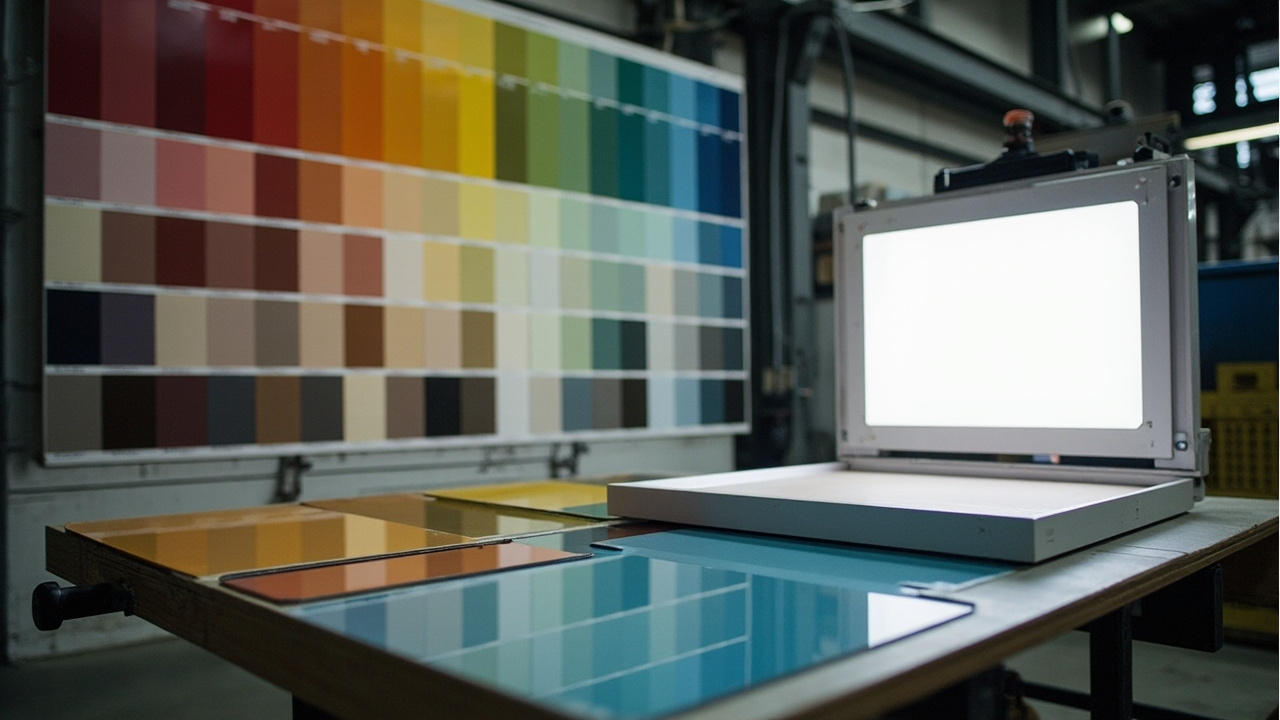
Keeping both "color" and "gloss" stable at the same time with water-based coating is where many furniture factories are most prone to failure, from trial samples to mass production. Solvent-based systems rely on strong solvents to evenly blend pigments and resins and have fast surface drying, making color difference and gloss relatively easy to control; in water-based systems, water evaporates slowly, and emulsion particle size and surfactants both participate in film formation, so slight carelessness leads to floating color and flooding, different colors within the same batch, and a matte surface with bright and dark patches. This article starts from the underlying logic of color management and gloss control, separately breaks down the stability key points of solid color paint, varnish transparent staining, matte and high gloss under water-based systems, and provides a control checklist that factories can implement.
As a coating supplier with long-term service to furniture and woodwork enterprises, Kexin New Materials (kexinMaterials) provides an integrated solution from color paste, dispersion to matting support for water-based wood coating color adjustment and clear coat systems; many of the control methods in this article also come from the experience of its front-line color-mixing workshop. In the selection stage, you can first refer to our wood coating product system and lock in the corresponding product families according to the four target categories of "solid color / varnish / matte / high gloss".
I. Why water-based color adjustment is harder than solvent-based
First clarify the difficulties, then prescribe the right remedy:
- Slow water evaporation, long film-forming window: Pigment particles have more time to "swim" in the wet film, and are easily pushed to the surface by surface tension gradients (floating color) or agglomerate (flooding).
- Interference from emulsion and surfactants: Water-based systems contain emulsion particles and various additives, whose interactions with pigments and dispersants are complex; improper handling causes flocculation, coarsening, and poor color development.
- Amplified application variables: Every change in dilution ratio, film thickness, drying speed, and substrate water absorption rate can cause color difference ΔE and gloss to fluctuate; problems "covered up" by fast solvents in solvent-based systems are exposed in water-based systems.
- Sensitivity to color assessment conditions: The wet-dry film color difference of water-based coating (lighter and darker after drying) is more obvious than solvent-based; if not color-matched under unified light source and standard base color, it is very easy to be "looks the same, different after drying".
In one sentence: water-based color adjustment is not just "add color paste and stir evenly", but locking down pigment dispersion, system compatibility, and application parameters all at once.
II. Foundation of color management: have a ruler first, then talk about control
Without quantification there is no stability. The factory should at least establish three basics:
- Consensus on three color elements: Hue (H), saturation (C), lightness (L). When communicating, don't just say "a bit redder", say "hue shifted yellow by 2 degrees, lightness reduced by 3".
- Color difference ΔE: Use a spectrophotometer to give values; generally furniture requires ΔΕ≤1.5 (hard to distinguish by naked eye), strict control items require ≤1.0. Set the threshold first, then talk about "stable or not".
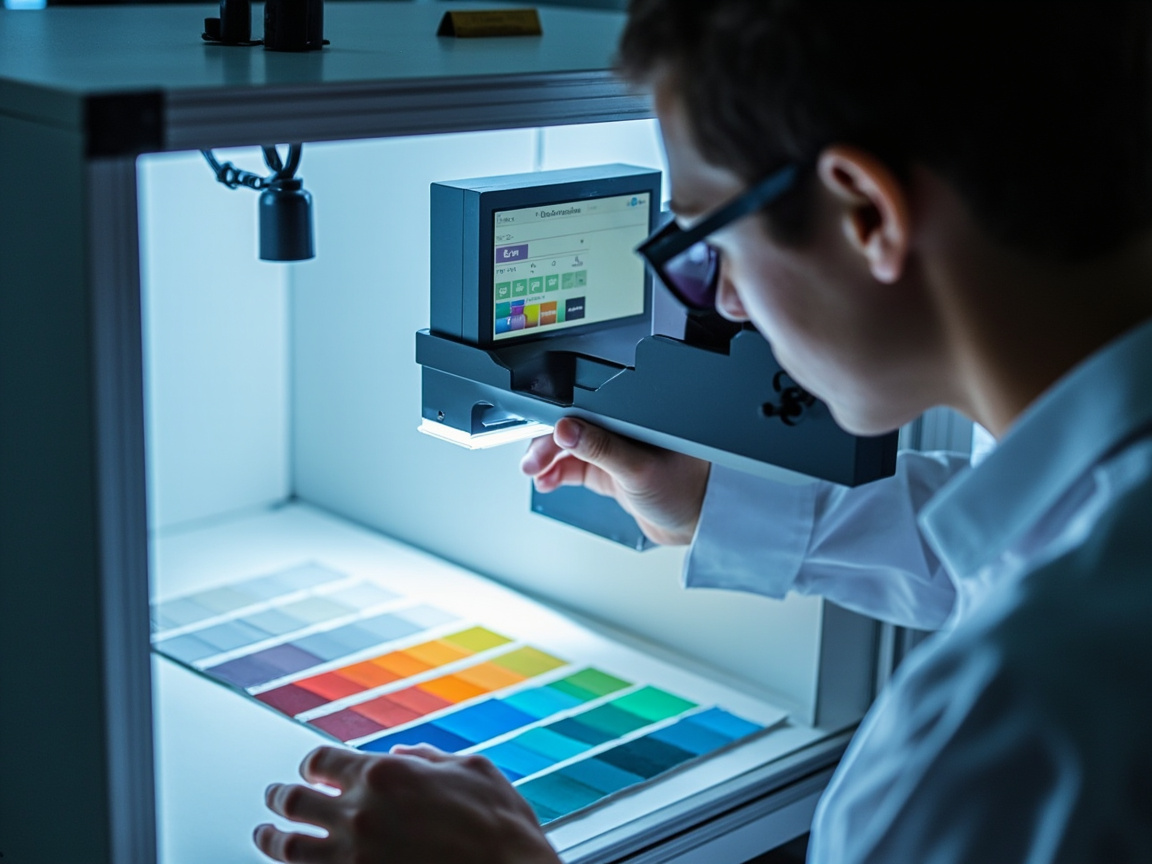
- Standard color assessment conditions: Fixed light source (e.g., D65 daylight, TL84 commercial light), fixed observation angle and background (neutral gray), fixed film thickness and substrate. The same panel under yellow light and daylight can differ by a color shade; if conditions are not unified, all "color differences" are noise.
III. Pigment dispersion: the foundation of water-based color adjustment
Whether the color is stable or not, 70% depends on dispersion. The core of water-based dispersion is to break open pigment agglomerates and stabilize them to prevent re-flocculation.
3.1 Difficulties of water-based dispersion
- Hard to wet: Water has high surface tension and is difficult to wet organic pigment surfaces; efficient wetting agents are needed to first "pull the pigment into the water phase".
- Flocculation and coarsening: If the dispersant type or dosage is wrong, pigment particle charge is unstable and steric hindrance is insufficient, causing re-agglomeration, shown as darker color, poor color development, and color shift after storage.
- Floating color and flooding: Different pigments (e.g., titanium white and organic red) have different density, particle size, and surface energy, and migrate at inconsistent speeds during slow evaporation, causing streaks or surface color shift in the dry film.
3.2 Dispersants and grinding
- Select polymeric dispersant (anionic / nonionic / comb-type) according to pigment type; dosage determined by color development and heat storage tests, not the more the better.
- Use sand mill / bead mill to grind pigments to suitable fineness (usually ≤15–20 μm, darker and transparent colors finer); substandard fineness directly causes color difference and rough gloss.
- The pH, non-volatile content, and compatibility of color paste must match the main paint; purchased color paste must undergo compatibility trials to avoid "good paste, but flowers after mixing in".
IV. Color paste system: self-mixing or factory-matched
Factories commonly take two paths:
| Route | Advantage | Risk | Applicable |
|---|---|---|---|
| Manufacturer pre-tinted paint | Stable batch, fast color match, clear responsibility | Low color-change flexibility, MOQ | Large batch fixed color |
| In-house self-mixing (base paint + color paste) | Flexible color change, small batch quick response | Depends on dispersion and color-matching capability | Custom, multi-color, small batch |
| Purchased universal color paste | Low cost, many varieties | High compatibility risk with main paint | Requires strict verification |
Suggestion: use manufacturer pre-tinted for large batch fixed colors, and small batch base paint + verified compatible dedicated color paste for custom multi-color. Regardless of which, color paste should be archived (batch number, fineness, ΔE baseline) to achieve "traceable batch change, checkable when problem occurs".
V. Color difference control of solid color paint
Solid color (e.g., white, gray, Morandi color) is the highest-volume production color in furniture factories; control points:
- Consistent substrate: Same-color parts must use same substrate, same pretreatment, same sealing primer, otherwise substrate color absorption difference directly brings face paint color difference. Poor water-based sealing primer can make pine and oak differ by half a color shade.
- Consistent film thickness: Solid color paint coverage relies on film thickness; spray film thickness fluctuation of ±5 μm can make lightness jump. Use mixed-air / electrostatic to reduce film thickness variance, which is more fundamental than adjusting color paste.
- Constant dilution: Each batch diluted with deionized water at same ratio and recorded; more water → thinner film → higher lightness, lower saturation, and faster drying prone to flooding.
- Wet-dry color match baseline: Establish "wet film — standard dry film" reference panel; color match based on dry film spectro value to avoid being deceived by wet film.
- Batch retention sample: Keep dry film standard sample per batch; next batch color-matched against "previous batch dry film" rather than against a color card from ten years ago each time.
VI. Varnish and transparent staining: reveal wood grain while staying stable
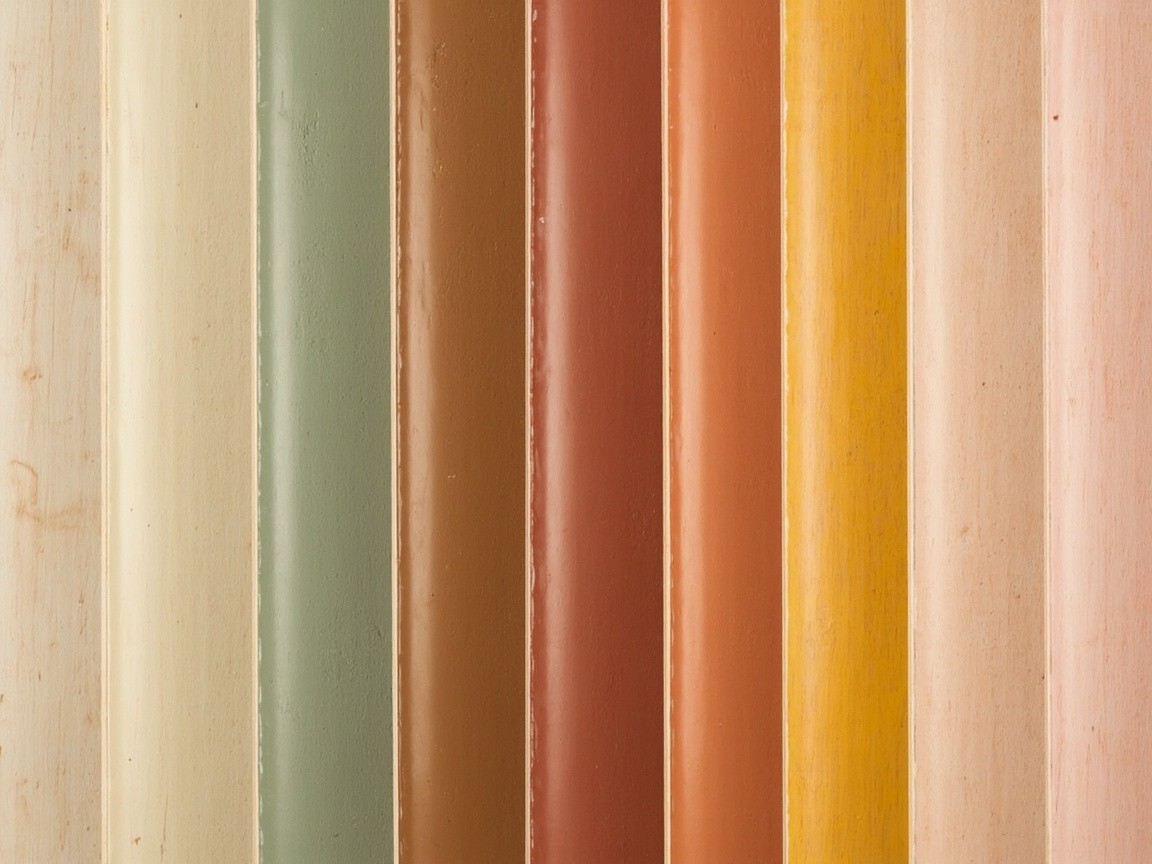
Varnish (transparent paint) and transparent staining (open / semi-open effect showing wood grain) are more demanding on uniformity, because the base wood grain itself is a variable.
- Uniform substrate staining: First do unified bleaching / color correction or base dyeing to make wood color of different parts similar, otherwise "two colors on same panel" after varnish topcoat.
- Transparent color paste development: Transparent iron oxide, transparent organic pigments need good dispersion to develop color evenly; flocculation immediately shows as flooding.
- Gloss and yellowing of varnish itself: Yellowing resistance and transparency of water-based varnish depend on resin (e.g., acrylic / polyurethane system); the transparency and color retention of wood grain after topcoat rely on resin selection, not color adjustment.
- Interlayer compatibility: Base staining — primer — topcoat compatibility must be verified to avoid topcoat solvent / water phase "biting" out the base layer color.
For transparent effects with high requirements on topcoat hardness and clarity, refer to the polyurethane wood coating (PU wood coating) topcoat approach to select resin system; for flat transparent parts emphasizing both efficiency and environmental protection, also evaluate UV-curable wood coating stable topcoat.
VII. Gloss control: how to stabilize matte, semi-gloss, high gloss
Gloss is determined by "surface micro-smoothness" — the flatter the brighter, the rougher the matte. Key factors affecting surface smoothness in water-based systems:
7.1 Principle of matting powder
Matte relies on adding silica matting powder (fumed / precipitated), which suspends on the paint film surface to form micro-roughness and scatters incident light to reduce gloss. Key points:
- Particle size and pore volume: Coarse particle size has strong matting but rough feel and easy settling; fine particle size feels good but weak matting. Select grading according to target gloss.
- Dispersion and anti-settling: Matting powder easily settles, needs anti-settling additives and appropriate shear, otherwise "top bright bottom matte", different barrels with different gloss.
- Recoatability
7.2 Gloss Levels and Typical Applications
| Gloss (60° angle) | Type | Typical Application | Control Focus |
|---|---|---|---|
| ≥85 | High gloss | Piano, high-end mirror furniture | Extremely smooth surface, no orange peel or particles |
| 60–85 | Semi-gloss/satin | Modern minimalist furniture | Fine-tuning of matting powder, stable film thickness |
| 30–60 | Eggshell/soft sheen | Bedroom, children's furniture | Matting powder gradation, anti-settling |
| ≤30 | Full matte | Nordic, open effect | Strong matting, balance of feel and anti-settling |
| ≤10 | Ultra-matte/skin feel | High-end customization, touch surfaces | Special matte structure + tactile additive |
7.3 Variables Affecting Gloss Consistency
- Film thickness: For the same matting formula, increased film thickness → higher gloss (matting powder is "buried"), and film thickness fluctuation directly becomes gloss fluctuation.
- Drying speed: Too fast surface skinning while interior uneven → orange peel reduces gloss and is uneven; too slow gives good leveling but easily disturbed by dust or secondary disturbance.
- Water dilution and additives: Excess water changes resin/matting powder distribution; wrong leveling agent or feel agent addition raises overall gloss or causes hazing.
- Substrate flatness: The flatness of substrate and primer is directly transferred to topcoat; uneven base cannot be glossy even if bright in spots.
8. Quantitative Impact of Construction Variables on Color Difference and Gloss
List the most common "hand shake" variables as a reference for troubleshooting:
| Variable | Change Direction | Impact on Color | Impact on Gloss |
|---|---|---|---|
| Water dilution ratio | Increase | Thin film → lightness up, saturation down | Usually reduces gloss, prone to blooming |
| Film thickness | Increase | Better coverage, lightness slightly down | Gloss up (matting buried) |
| Drying speed | Too fast | Prone to floating color and blooming | Orange peel, uneven gloss |
| Environmental humidity | Too high | Slow drying, color shift risk | Surface gloss loss, whitening |
| Substrate water absorption | Uneven | Color difference within same batch | Local gloss difference |
| Spray gun distance | Unstable | Film thickness fluctuation → color difference | Gloss fluctuation, orange peel |
Conclusion: More than 80% of color difference and gloss problems are due to "out-of-control construction parameters", not wrong color paste. The factory should turn each item in the above table into a checklist item.
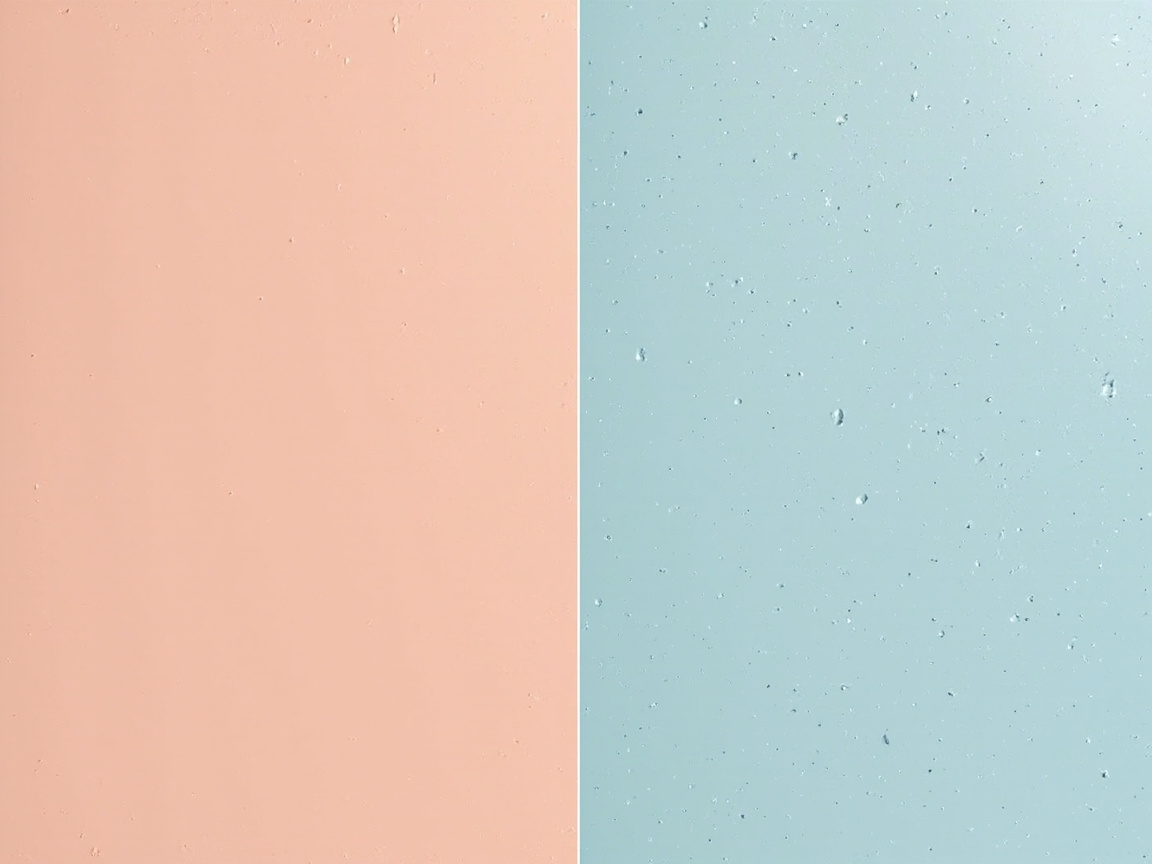
9. Common Color Tuning and Gloss Defect Reference
| Defect | Manifestation | Main Cause | Countermeasure |
|---|---|---|---|
| Floating color | Surface biased to one hue | Difference in pigment migration speed | Adjust dispersant, control drying |
| Blossoming | Stripes/cloud spots | Flocculation, uneven color development | Re-disperse, stabilize system |
| Same-batch color difference | One piece two colors | Uneven film thickness/substrate | Control thickness, unify base |
| Large wet-dry difference | Accurate when wet, off when dry | Long film-forming window | Establish dry film standard |
| Uneven gloss | One spot bright one spot dark | Film thickness/matting settling | Anti-settling, control thickness |
| Matte blooming | Mottled matte surface | Matting powder settling/poor dispersion | Gradation, strengthen shear |
| High-gloss orange peel | Orange peel surface not bright | Atomization/poor leveling | Adjust leveling, change spray method |
10. Hardware Configuration of Factory Color Tuning Workshop
To stabilize color tuning and gloss, it is recommended to equip at least:
- Color assessment light box (D65/TL84/CWF multi-light source), fixed color comparison conditions.
- Spectrophotometer, giving L*a*b* and ΔE, replacing "looks about right by naked eye".
- Standard color panel library: Dry film standard samples archived by color number + batch, periodically reviewed for aging and discoloration.
- High-precision weighing and paint mixing equipment: Color paste measured to gram level, eliminating "drip by feel".
- Temperature and humidity controllable sample room: Small samples consistent with production line environment, avoiding accurate small sample but off production line.
Upgrade color tuning from "master's eyes" to a system of "instrument + standard + record", so that multi-color customization can be both fast and stable.
11. Cooperation with Kexin New Materials
Kexin New Materials (kexinMaterials) adds value in color tuning and gloss control by "front-loading variables into the formula": providing verified compatible dedicated color pastes and base paint packages, reducing the compatibility risk of factory self-mixing; providing graded matting and anti-settling solutions separately for matte/high gloss, ensuring batch-to-batch gloss consistency; and through the package of "standard color panel + color comparison method + construction parameter card", transforming the yield of the color tuning workshop from experience dependence to parameter control. For customized multi-color furniture factories, this "color paste—base paint—process" integrated supply is easier to compress ΔE and gloss fluctuation into the customer-acceptable range than fragmented procurement.
12. Common Color Tuning and Gloss Misconceptions
Misconception 1: Add color paste if color is wrong. Many "color differences" are caused by film thickness, substrate or drying; adding color paste only pushes the system more unstable, should first check construction parameters.
Misconception 2: Matte means add more matting powder. Excessive matting powder causes rough feel, easy settling, poor recoating; should be solved by gradation and anti-settling, not blindly adding more.
Misconception 3: Naked eye color comparison is enough. Under different light sources, human eye judgment error is huge; must use light box + spectrophotometer to quantify ΔE, otherwise continuous complaints.
Misconception 4: Accurate small sample means accurate production line. Small sample and production line differ in environment, film thickness, drying; must re-check under production line conditions and keep standard dry film samples.
Misconception 5: Varnish has no color difference. The transparency, yellowing and uniform clear coating of varnish directly affect wood grain presentation, also need to control resin selection and construction consistency.
13. Prevention and Review Process for Color Difference Complaints
Even with a stable system, customized furniture may occasionally have color difference complaints. The key is to turn "post-hoc argument" into a closed loop of "pre-event prevention + post-event attribution":
- Order lock sample: Before signing, both parties sign and seal the dry film standard sample as the only acceptance benchmark, avoiding "memory color" disputes.
- Batch sample retention and traceability: Retain dry film samples for each batch, record color paste batch number, film thickness, environmental parameters; quickly locate whether the problem is color paste, construction or substrate.
- Complaint attribution table: Upon receiving color difference complaint, first fill the table — same batch or cross batch, same panel or cross panel, visible under what light source, actual ΔE measured, then decide whether it is formula, process or color comparison condition issue.
- Correct rather than cover up: If confirmed caused by film thickness, control thickness; if substrate, unify base; if color paste, re-disperse; rather than blindly adding color paste to mess up the system.
- Feedback into standard: After each complaint review, update process card and standard sample library, so similar problems do not happen again.
The value of this process: color difference complaints change from "metaphysical quarrel" to "data attribution", both factory and customer can accept quantifiable conclusions.
14. Water-based Control of Special Effects: Skin Feel, Satin and Metallic Flash
In addition to conventional solid color and varnish, modern furniture also commonly has several special effects, with different control focuses:
- Skin feel/soft feel effect: Achieved by special matte structure and tactile additives for "baby skin" feel; difficulty lies in dispersion stability of tactile additives and balance with stain resistance — too little no feel, too much easily absorbs stains and leaves marks. Needs matching easy-clean clear coat layer.
- Satin/eggshell: Gloss in 30–60 range, most demanding on matting powder gradation and film thickness uniformity, a "slightly off means failure" range, must rely on parameter control not feel.
- Metallic flash (water-based aluminum powder/pearlescent): In water-based systems, aluminum powder is prone to oxidation and gas generation, and is difficult to orient; dedicated coated aluminum paste and orientation additives are required, and stirring shear must be controlled to avoid breakage; during application, spray gun distance and pass speed directly determine the uniformity of the metallic flash.
- Gradient / color-corrected open effect: Relies on base staining + transparent color multi-layer color correction; demands extremely high uniformity of each layer and interlayer compatibility; suitable for high-end customization but slow yield ramp-up, requiring step-by-step SOP standardization.
The common point of these effects is: the more "high-end", the more they rely on parameterized control, and the less they can be delivered by "master craftsmen relying on feel". Before accepting such orders, factories should first clarify the process card on a pilot line, then move to mass production.
15. Color Paste Storage and Batch Management
Color paste itself is also a "raw material that changes", and if management is not in place, all previous stability is in vain:
- Light-proof and constant-temperature storage: Color paste is affected by light, heat, and freeze-thaw, causing flocculation and sedimentation; the warehouse should be controlled at 5–35℃ and avoid sunlight and freeze-thaw cycles.
- First-in-first-out and shelf life: Color paste has a shelf life; near-expiry paste shows reduced color development and compatibility, so it must be issued by batch number on a first-in-first-out basis, eliminating "old paste on new line".
- Rewarming and stirring before use: Color paste taken directly from cold storage for paint mixing has incorrect viscosity and dispersion state; it should be rewarmed and stirred at low speed before metering.
- Batch binding and sample retention: Retain a small sample of each batch of color paste; when color deviation occurs, it can be compared to determine whether it is a new paste issue or an application issue, shortening root-cause time.
Managing color paste as a "chemical raw material" rather than "pigment water" is the hidden basic skill for stable color matching.
16. Impact of Automatic Color Matching and Robotic Spraying on Color Consistency
When factories adopt automatic color dispensers and spraying robots, color consistency undergoes a qualitative change:
- Metering accuracy: Machines precisely pump color paste to gram level per formula, eliminating random errors of manual droppers, and ΔE fluctuation is significantly narrowed.
- Film thickness stability: Robot pass speed, distance, and overlap rate are constant; film thickness variance is far lower than manual, directly suppressing color difference and gloss fluctuation caused by film thickness.
- But more picky about substrate: Machines do not "see" the workpiece; uneven substrate water absorption and inconsistent pretreatment will be faithfully amplified, so the prerequisite for automation is SOP-izing the pretreatment.
- Recipe digital assetization: Color matching recipes are deposited in digital form, reproducible across personnel or line changes, which is the key to scaling multi-color custom factories.
Automation is not "stable once bought", but transforming manual experience into replicable digital processes; the prerequisite is still that all the basic controls mentioned earlier are in place.
17. Common Standards and Responses for Customer Color Inspection
Custom furniture often encounters customers bringing physical objects (fabric swatches, stone, competitor panels) for comparison; such "cross-material color matching" is most prone to disputes:
- Metamerism across materials: The spectral reflection of fabric vs. coating, stone vs. coating differs; they may match under one light source but deviate under another, so explain in advance and lock the acceptance light source.
- Sealed sample as evidence: Use the dual-signed dry film standard sample as the sole acceptance basis, stating the light source and ΔE threshold, to avoid "by memory".
- Quantify acceptance range: Write "about the same" as ΔE≤1.5 (or customer-specified value); only beyond threshold is judged unqualified, reducing subjective disputes.
- Small sample and production line same conditions: The sealed sample must be made under film thickness, substrate, and drying conditions close to the production line, otherwise the sample itself is not representative.
Writing the color inspection rules into contract attachments and process cards can greatly reduce the communication cost of color-difference complaints.
18. Daily Error-Proof Management in the Color Matching Workshop
No matter how good the system, it fears daily slack; it is recommended to make error-proofing a habit:
- Double-sign color paste labels: Name + batch number double-sign, to prevent whole-batch floating caused by taking wrong paste.
- Cleaning record per batch for paint mixing tank: Prevent color cross-contamination, especially residual is a hidden pollution source when switching from dark to light.
- Daily check of light booth: Do not compare under aged or faulty light source, avoiding "looks right under broken lamp, deviates under customer lamp".
- Periodic re-check of standard samples: Dry film samples age and discolor; redo when expired, otherwise the sealed sample itself is distorted.
- Small trial before any change: Before changing supplier, batch, or formula, do small trial verification before going online; do not gamble with mass production.
These "small things" add up to the underlying discipline of multi-color custom factories not crashing, cheaper than any high-end equipment.
19. Cross-Department Collaboration on Color Matching and Gloss
Stable color matching is not the sole responsibility of the coating department: R&D defines formula and standard samples, production manages application parameters, QC manages color comparison and sample retention, sales manages sealed samples and complaint scripts. The four departments communicate in the same L*a*b* and ΔE language to turn "color difference" from buck-passing into quantifiable collaboration. Many factories have strong technology yet still constant complaints; the problem lies in no unified data baseline between departments, with front-end sealing and back-end production each saying their own, finally blaming the formula.
FAQ
1. Why is water-based paint more prone to floating and flooding than solvent-based?
Because water evaporates slowly and the film-forming window is long, pigment particles stay longer in the wet film, plus emulsion and surfactants participate in film formation; different pigments migrate at inconsistent speeds causing floating and flooding. The core is good pigment dispersion and system compatibility.
2. Must factories buy a spectrophotometer for color matching?
Strongly recommended. Human eyes have large errors under different light sources; the spectrophotometer gives L*a*b* and ΔE to quantify "color difference" to an acceptable threshold (e.g., ΔE≤1.5), which is the basis for stable delivery of multi-color customization.
3. How to fix matte paint with uneven gloss (one spot bright, one dark)?
Mostly due to matting powder settling or uneven film thickness. Countermeasures: select suitable graded matting powder, add anti-settling additive and strengthen dispersion shear; meanwhile reduce spray film thickness variance, avoiding burying matting powder in thick areas causing brightness.
4. Solid color paint differs within same batch, what to check first?
Check in order: whether substrate and pretreatment are consistent, whether sealing primer is unified, whether spray film thickness is stable, whether water dilution ratio is consistently recorded, whether color comparison uses dry film. Most color differences come from film thickness and substrate, not color paste.
5. Water-based paint has large wet/dry film color difference, which to use for comparison?
Use dry film spectro value as standard. Water-based paint generally becomes lighter and darker after drying; establish a "wet film — standard dry film" reference board, use dry film standard sample for comparison and retention, avoid being misled by wet film.
6. High gloss not bright, always orange peel, what to do?
Orange peel mostly from poor atomization or insufficient leveling, too fast surface dry. Can switch to mixed-air spray to improve atomization, adjust leveling agent and evaporation gradient, control film thickness and ambient temperature/humidity, and ensure substrate and primer flatness pass to topcoat.
7. Is it safe to use external universal color paste for self-matching?
Risk exists. Mismatch of pH, dispersant, compatibility between paste and main paint causes flocculation and flooding. External paste must pass compatibility small trial and heat storage verification; prioritize manufacturer-validated dedicated paste.
8. How to avoid "two colors on same panel" in clear coat transparent staining?
First do unified base stain/color correction to converge wood color, then use well-dispersed transparent color paste, and verify base—top compatibility without biting. Uneven wood grain itself is the main cause of transparent effect color difference.
9. More matting powder means more matte, can it be added indefinitely?
Not recommended. Excess reduces feel, easily settles, affects recoat adhesion and interlayer bonding; target gloss should be controlled via particle size grading, anti-settling, and application film thickness together.
10. Same panel looks different under different light sources, normal?
Normal, called "metamerism / conditional match". So must use standard color light booth under fixed light source for comparison, and rely on spectro data, not single-environment naked eye judgment.
Further Reading
- Formula Science and Application Implementation of Water-based Wood Coatings: From the underlying logic of resin and pigment dispersion, complements the formula basis of color stability in this article.
- High-end Solid Wood Furniture Nano Water-based Coating: Balance of Wear Resistance and Clarity: For high-transparency high-gloss solid wood effects, understand advanced points of clear coat and wood grain presentation.
- How to Select Water-based Industrial Coatings under Oil-to-Water Shift: Resin Systems and Applicable Conditions: Extend color and gloss control thinking from wood to industrial coating, building cross-scenario selection framework.
- Automotive Coating Color and Effects: Metallic Paint, Pearl Paint and Flip-Flop
- Automotive Coating Drying and Curing: Room Temperature, Baking, Infrared and Pot Life