Introduction: Waterborne conversion—not as simple as "replacing solvent with water"
Waterborne coatings (water as the main diluent—VOC<50g/L or <5%)—not simply "replace the solvent of solvent-based coatings with water"—(1)Water has extremely high surface tension (72mN/m)
—far higher than organic solvents (xylene 28 / butanol 25 / butyl acetate 25 mN/m)—the difficulty of wetting on substrates for waterborne coatings is >2 times that of solvent-based
—require wetting agents to reduce surface tension from >40 to <30mN/m; (2)Water has extremely high latent heat of evaporation (2260J/g—more than 5 times that of xylene)
—slow drying "sagging"—require rheological additives to impart high thixotropy—high shear during spraying—low viscosity (atomization)—after adhesion low shear—high viscosity (no sagging); (3)Water is a "culture medium" for microorganisms
—bacteria/mold in the can—require bactericides—BIT/MIT, etc. Additives needed for waterborne coatings—from wetting and dispersing to defoaming to leveling to rheology to film formation to in-can preservation six major categories / >20 types—far more complex than solvent-based coatings "waterborne = additive-based"
.
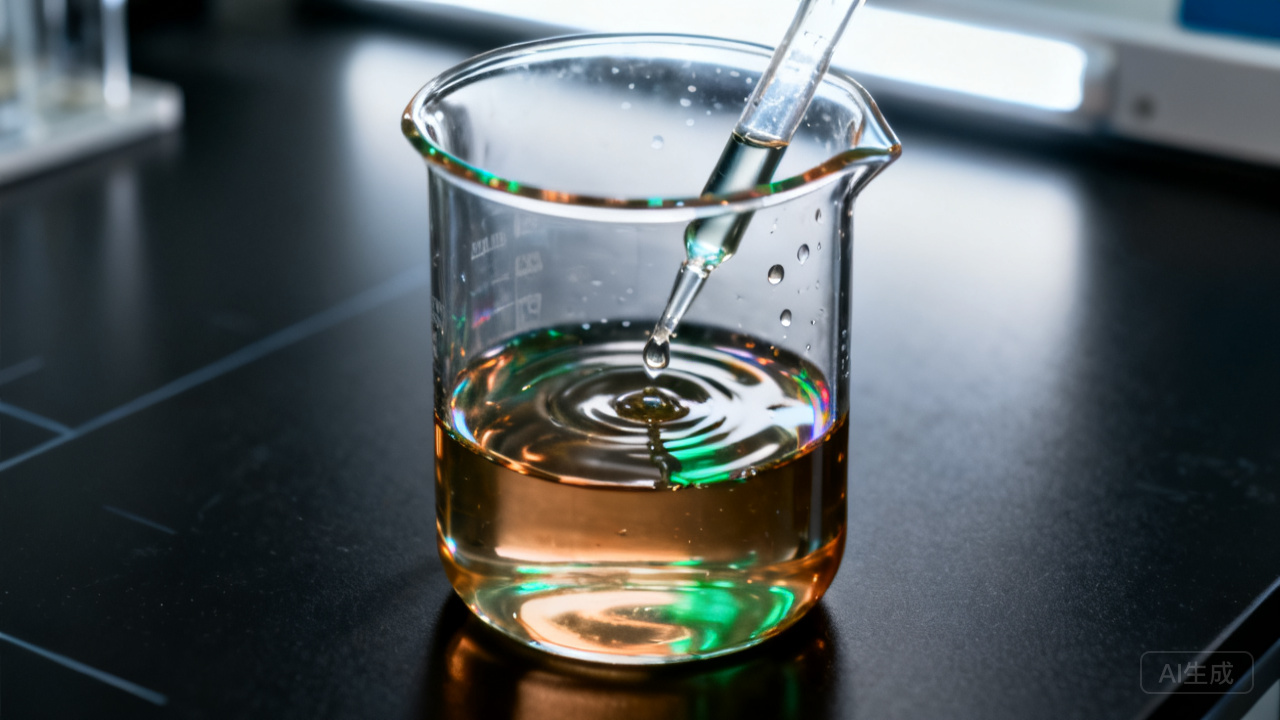
The waterborne coating additive system is a set of synergistic formulation systems using water as the medium—through six types of functional additives: wetting and dispersing agents (reducing pigment/substrate interfacial tension), defoamers (breaking/inhibiting foam), leveling agents (eliminating surface tension gradients/orange peel/cratering), rheology modifiers (adjusting high/medium/low shear viscosity—controlling sag/leveling/anti-settling balance), coalescing agents (lowering MFFT—aiding film formation), and biocides (in-can preservation/dry-film mildew resistance)—to compensate for water's "inherent shortcomings" (high surface tension/high latent heat of evaporation/microbial growth)—enabling the application properties, storage stability, and film performance of waterborne coatings to reach or surpass those of solvent-based coatings.
I. Core Chemistry and Selection Matrix of Six Categories of Waterborne Additives
| Additive Type | Representative Chemical Structure | Addition Level (wt%) | Addition Stage | Key Test Indicators | Negative Effects of "Excess" |
|---|---|---|---|---|---|
| Wetting and Dispersing Agent | Sodium polyacrylate / polyurethane / polyether siloxane | 0.2-2.0 | Before grinding | Dispersion fineness (<10μm) / viscosity reduction / rub-out test | Reduced water resistance / difficult defoaming |
| Defoamer | Mineral oil / silicone / molecular defoamer | 0.05-0.5 | Before grinding + let-down | Bubble elimination speed / cratering / gloss | Cratering / poor interlayer adhesion |
| Leveling Agent | Polyether siloxane / fluorocarbon acrylate | 0.1-0.5 | Last (after let-down) | Leveling grade (1-10) / orange peel / slip | Poor interlayer adhesion / poor recoatability |
| Rheology Modifier | HEUR / HASE / bentonite / fumed SiO₂ | 0.1-2.0 | Let-down stage | KU / ICI / thixotropic index (TI) | Excess HEUR → difficult defoaming / reduced gloss |
| Coalescing Agent | Texanol / DPnB / TPM | 2-10 (on emulsion solids) | Last (after let-down) | MFFT reduction / open time / hardness development | VOC exceedance / residue → long-term tackiness |
| Biocide | BIT / MIT / CMIT | 0.05-0.3 | Before grinding | In-can challenge test / dry film mildew resistance | MIT sensitization / CMIT exceedance (labeling / regulatory risk) |
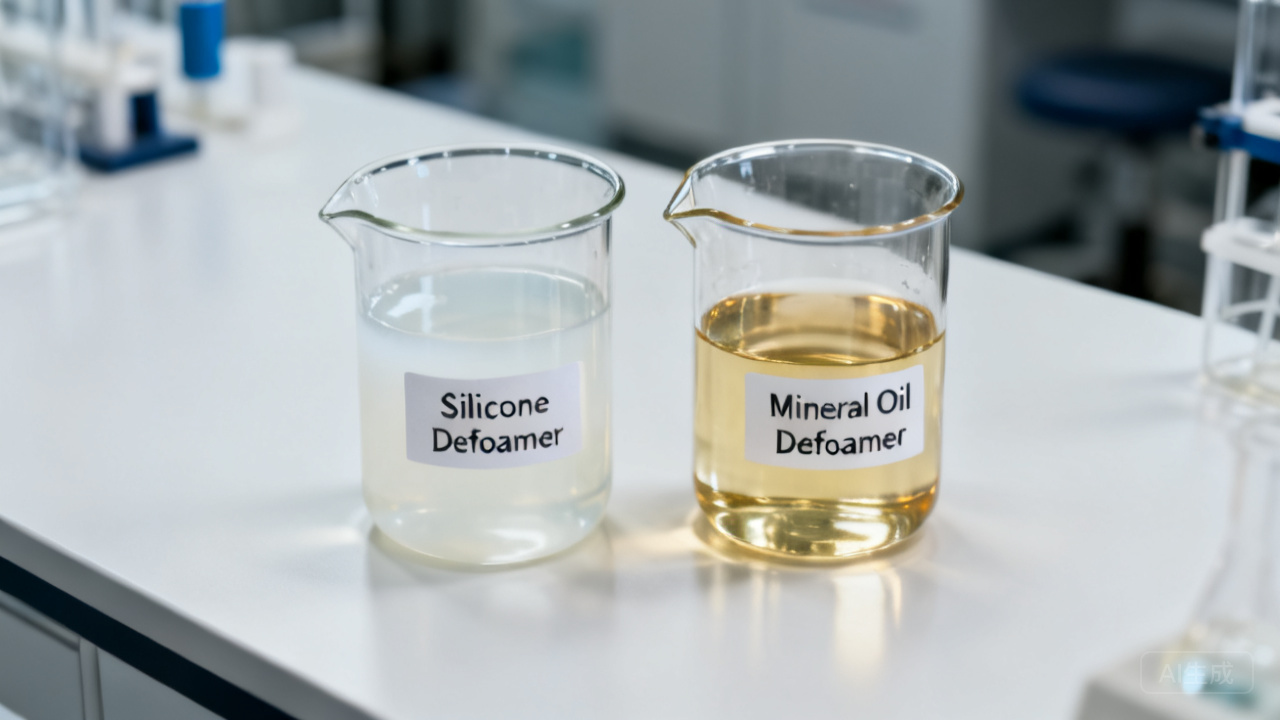
II. The "Golden Triangle" of Waterborne Defoamers: Defoaming Power / Compatibility / Durability
| Defoamer Type | Defoaming Power | Compatibility | Persistence | Unit Price (RMB/kg) | Typical Scenarios |
|---|---|---|---|---|---|
| Mineral Oil (Paraffin + Hydrophobic SiO₂) | Medium | Good (Low cratering risk) | Poor (>1 week half defoaming power) | 20-50 | Architectural Latex Paint / Low Cost |
| Silicone (PDMS / Silicone Oil) | Strong (>10× mineral oil) | Poor (High cratering risk "Poor control = total failure") | Medium | 80-200 | Waterborne Industrial Coatings (Acrylic/PU) / High Gloss |
| Molecular Defoamer (Polyether-modified Siloxane) | Medium-Strong | Excellent (Self-emulsifying / No cratering) | Excellent (Molecular-level dispersion / No aggregation deactivation) | 150-350 | Waterborne Automotive OEM / High-demand Systems |
FAQ
Q1: Why must the "anchoring group" of a wetting dispersant be "chemically matched" with the pigment?
Dispersant moleculeanchoring group (binds to pigment surface—amino/carboxyl/phosphate/sulfonic acid) + solvating chain (compatible with water/resin—polyether/polyacrylic acid/PEG)
. "Anchor-solvate" model—(1) anchoring group adsorbs on pigment surface—(2) solvating chain extends into water/resin medium—formingsteric hindrance layer
—prevents two pigment particles from approaching each other—prevents flocculation. Anchoring group must match the chemical nature of pigment surface—(a) TiO₂/inorganic pigments (surface hydroxyl -OH/acidic)carboxyl (-COOH) or phosphate (-PO₃H₂)—strong adsorption
—polyacrylic acid dispersant (contains abundant COOH)—>TiO₂—match; (b) carbon black (graphite layers—low polarity—requiresanchoring group containing aromatic/condensed rings
—π-π stacking—polyurethane dispersant (contains aromatic diisocyanate/TDI/MDI)—>carbon black—match; (c) phthalocyanine blue/organic pigments (surface polarity moderate—requiresanchoring group containing amide (-CONH-) or amino (-NH₂)
—hydrogen bonding—polyurethane/polyamide dispersant). Anchoring group mismatch—dispersant "does not adsorb" on pigment—flocculation persists—entire dispersion fails.
Q2: The "cratering" risk of silicone defoamers — why do poorly compatible defoamers instead have "strong defoaming"?
Silicone (PDMS/polydimethylsiloxane)has extremely low surface tension (≈20mN/m) — incompatible with aqueous systems
(water surface tension 72 — PDMS 20 — Δγ=52 — incompatible — surface enrichment — forms independent phase") — (1) Defoaming process — PDMS droplets on the coating surface"tear open" the bubble film with extremely low surface tension — bubble bursts — defoaming
— lower surface tension — stronger defoaming (incompatibility = strong defoaming); (2) Cratering — PDMS droplets remain in the coating — their extremely low surface tension causesthe surrounding coating to "flow" outward from the PDMS droplet due to surface tension gradient, forming a "depression" (crater)
— poorer compatibility — deeper crater. This is the "contradiction" of defoamersdefoaming power↑ — compatibility↓ — cratering risk↑
— need to find a balance among the three — molecular defoamers (polyether-modified siloxane "self-emulsifying" particle size <1μm — cratering risk from incompatibility greatly reduced "medium-strong defoaming — but excellent compatibility — no cratering") — this is the "optimal solution" for defoamers.
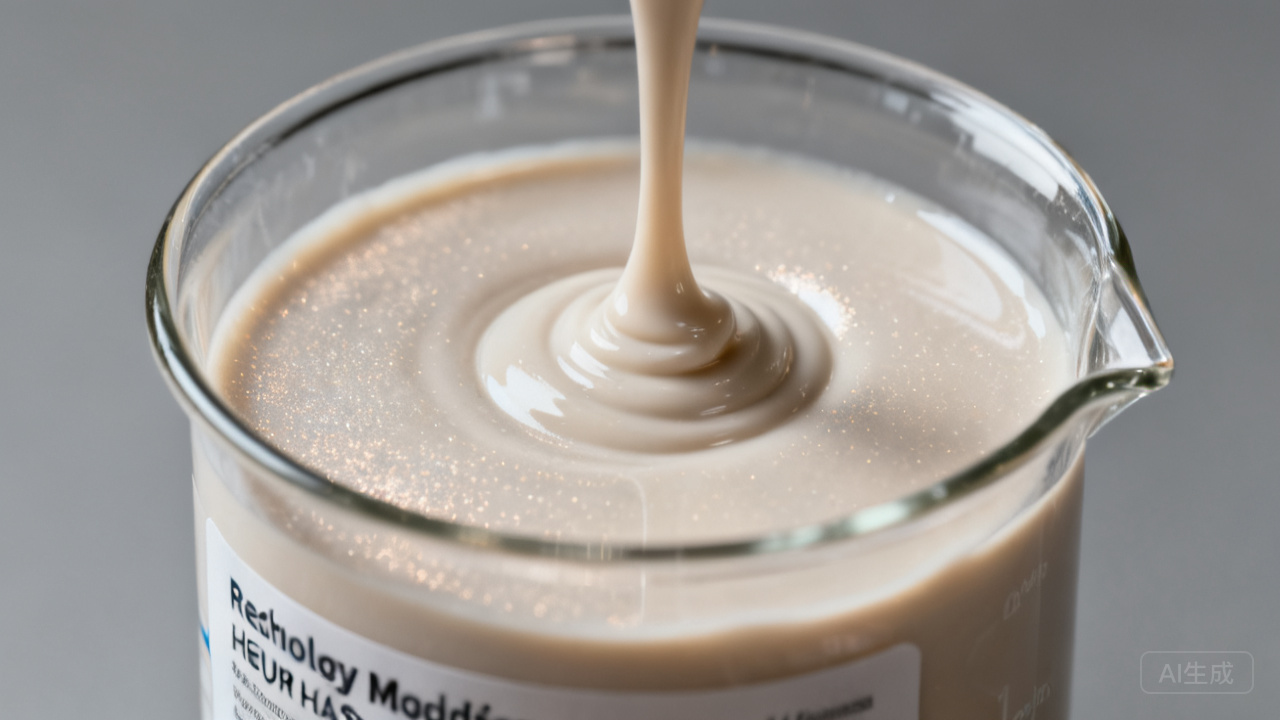
Q3: How do the "hydrophobic end groups" of HEUR associative thickeners reduce viscosity (ICI) under high shear while increasing viscosity (sag control) under low shear?
HEUR (hydrophobically modified ethoxylated urethane) molecules consist of PEG long chains (hydrophilic—soluble in water/solvated chains) + hydrophobic alkyl groups at both ends (e.g., C12-C18 "hydrophobic end groups")
——In coatings——(1) Low shear (0.01-1s⁻¹/standing still or sagging) hydrophobic end groups form "micelles" or "bridges" with hydrophobic regions on latex particles/pigment surfaces
——Both ends of one HEUR molecule adsorb simultaneously onto two latex particles, forming a "bridge" and producing a weak network (physical crosslinking)—high low-shear viscosity—anti-sag/anti-settling
; (2) High shear (>1000s⁻¹/spraying/brushing)——High shear force "rips off" the hydrophobic end groups from latex particle surfaces, the bridging network is destroyed—PEG chains align in the flow direction—low viscosity
——Coatings atomize evenly or brush smoothly. HEUR's "hydrophobic end groups/shear rate" reversible switch low shear→"bridging" (high viscosity)—high shear→"desorption" (low viscosity) "shear thinning"
——This is the core "intelligence" of HEUR and also why it is more advanced in rheology than traditional HEC (hydroxyethyl cellulose/no association/only aqueous-phase thickening).
Q4: Why is Texanol the "standard" coalescing agent for latex paint, and what is the mechanism of "MFFT reduction"?
Texanol (2,2,4-trimethyl-1,3-pentanediol monoisobutyrate — molecular weight 216 / boiling point 255°C) dissolves inside the polymer particles in the emulsion
— lowers the Tg (glass transition temperature) of the polymer — (1) Tg decreases by 10-20°C → MFFT (minimum film forming temperature) decreases accordingly
— originally MFFT>20°C hard emulsion (exterior architectural walls — need high Tg to ensure anti-soiling) — add >5% Texanol (based on emulsion solids) — MFFT drops to 10°C); (2) Texanol boiling point 255°C — much higher than water (100°C) after water evaporates — Texanol remains in the coating
— continues to soften polymer particles — promotes particle fusion — forms a continuous dense film after film formation — Texanol slowly evaporates (>several weeks) — coating Tg recovers — paint film hardens
— this is the "temporary plasticizing effect of coalescing agents". Texanol is "insoluble in water — >99% distributed in the polymer phase (insoluble in water — does not evaporate with water) — high film-forming efficiency — the gold standard for latex paint coalescing agents".
Q5: BIT (1,2-benzisothiazolin-3-one) vs. MIT/CMIT — why is BIT "safer" for in-can preservation?
BITmolecular weight 151 — weakly acidic (pKa≈7.0) — broad-spectrum (bacteria/mold/yeast) bactericide — irreversible reaction with nucleophiles (protein -SH) — causes enzyme inactivation — cell death
. BIT vs MIT differences — (1) BITskin sensitization far lower than MIT
— MIT is classified by EU CLP regulation as Skin Sens. 1A (H317/strong sensitizer) — limit in rinse-off products <15 ppm (500 ppm) — higher safety; (2) BIT haswider pH stability
(pH 2-12 — MIT at pH>8 — rapidly hydrolyzes — loses efficacy "water-based coatings pH≈8-9 — BIT stable — MIT already ineffective") — water-based coatings — BIT first choice — CMIT/MIT second (only acidic/neutral systems — water-based coatings rarely use MIT — alkaline instability + sensitization); (3) BIT"slow-release" bactericide — not instantly depleted
— provides 6-12 months in-can protection — MIT "fast kill — but poor persistence" (3-6 months). BIT is themainstream choice for in-can preservation of water-based coatings
— MIT is only used as a second bactericide for "rotation to prevent resistance."
Q6: "Additive antagonism" in water-based coatings—defoamer + leveling agent = surface defects?
Additives each have their own function—but "mixing does not necessarily lead to synergy—they may 'conflict' (antagonize) with each other"
. Classic antagonistic combinations—(1) Silicone defoamer (>0.3%) + polyether siloxane leveling agent (>0.5%)—the silicone oil (PDMS) in the defoamer and the siloxane in the leveling agent (the two are incompatible—surface tension difference causes "local drainage" and the coating shows "fish eyes" (Fisheye)—circular craters with diameter 0.5–5mm
)—solution: use "molecular defoamer" (polyether-modified siloxane—chemically similar to leveling agent—compatible—no antagonism) + reduce defoamer dosage (<0.1%)
; (2) HEUR thickener (>1%) + polyether siloxane leveling agent (>0.3%)—the PEG chains in HEUR molecules form "micelles" with the PEG chains in the leveling agent, the leveling agent is "encapsulated" and loses effectiveness—poor leveling
—solution: use HASE thickener (hydrophobic alkali-swellable—no PEG "micelle" interference with leveling agent)
. The "synergy" of additives needs to be determined one by one through "DOE (Design of Experiment)"
—rather than "empirical addition"—DOE uses >10 experiments to determine the optimal combination and avoid antagonism.
Q7: Why does the "thixotropy" of fumed silica increase with higher specific surface area (>200m²/g)?
Fumed SiO₂ (generated in oxyhydrogen flame—SiCl₄+O₂+H₂→SiO₂+HCl—forming nano-SiO₂ primary particles—7-40nm primary particles—200m²/g specific surface area)—primary particles via hydrogen bonds (surface silanol Si-OH/Si-OH—between adjacent particles—forming a loose "3D network")—the network traps large amounts of liquid—system viscosity ↑↑
; (1) Larger specific surface area more surface silanol (Si-OH) groups—denser hydrogen bond network—stronger thixotropy
; (2) At rest (low shear)—hydrogen bond network intact "traps water" high viscosity prevents settling (pigment does not sink)
; (3) Stirring/spraying (high shear)—shear force breaks hydrogen bonds network collapses—water released—viscosity drops sharply (>10x) "thixotropy" coating flows/atomizes
; Shear stopped—hydrogen bonds reform (>seconds to minutes)—network recovers viscosity recovers "anti-sag"
—this is the fumed SiO₂—from spraying (low viscosity)→adhesion (high viscosity) process
key thixotropic contribution. Selection of specific surface area—Aerosil 380 (380m²/g)—strongest thixotropy—used for high pigment volume concentration (PVC>50%); Aerosil 200 (200m²/g)—general anti-settling.
Q8: "Edge Crawling" in water-based coatings — relationship with surface tension gradient?
Edge crawling — the coating at the edge — film thickness is thinner than the center — even exposing the substrate
— the reason is — at the edge (the boundary with the substrate) the surface tension gradient — edge region — solvent/water evaporates faster — surface tension increases — coating from the center (lower surface tension) flows to the edge (higher surface tension) — edge builds up thickness — center becomes thinner instead
. This is actually reverse leveling caused by the "Marangoni effect"
— water-based coatings (water has high latent heat of vaporization — edge evaporation is especially fast — surface tension gradient hypothesis) — are more severe than solvent-based (fast evaporation but small surface tension gradient — because solvent evaporates uniformly). Solutions — (1) add polyether siloxane leveling agent — reduce surface tension — while homogenizing the surface tension gradient — suppress Marangoni flow; (2) use slow-evaporating solvent (e.g., DPnB — extend "open time" to allow surface tension to homogenize)
; (3) substrate pre-wetting — pre-soak edges with diluted wetting agent aqueous solution — reduce evaporation rate difference
.
Q9: The "open time" of coalescing agents—its importance for brushing water-based wood coatings?
Open time—the period from brushing to "touch dry"—within this time—brush marks and lap joints can self-level and disappear
. Water-based wood coatings—fast water evaporation + substrate (wood—absorbs water—bottom layer water is drawn away—surface water also evaporates) extremely short open time (15-30min)
—brush marks left by brushing—no time to level—already "dry" paint film shows obvious combing texture. Extending open time—(1) coalescing agents with high boiling point (>200°C) such as DPnB/TPM—slow evaporation—stay in coating for 30-60min—polymer particles remain "soft"—extend open time to >10-15min
; (2) "slow-drying water" (DPM/dipropylene glycol methyl ether) in the formula—slow-drying solvent
—also extends open time. But excessively long open time dust adhesion/sagging
—need to balance between the two architectural—open time >10-15min (acceptable—can repair brush marks)—furniture (factory—UV/spraying—no need for long open time)
.
Q10: Why is the "addition order" of water-based additives such that dispersant is added before grinding while defoamer is added after grinding?
Addition order of water-based coating additives——(1) Before grindingWater + wetting dispersant + defoamer (>50% amount——"foam suppression" during grinding) + pigment/filler
——High-speed dispersion/grinding (>2000rpm/bead mill)——Depolymerize pigment to fineness <10μm; (2) After grindingEmulsion (added before dilution——prevent emulsion from breaking during grinding——>40°C/high shear——emulsion break)
; (3) DilutionRemaining defoamer (>50%——but need to control to avoid inducing craters) + leveling agent (cannot be added too early——may be adsorbed and失效 during grinding——add at dilution) + rheological additive (HEUR/bentonite——add at dilution——if added before grinding——high shear degradation——PEG chain scission——permanent viscosity loss) + coalescing agent (last——prevent premature volatilization)
. "Order" (a) Dispersant must be before grinding——no dispersant in pigment agglomerates——grinding cannot deflocculate"grinding efficiency = 0"
; (b) Part of defoamer added before grinding——suppress large bubbles generated during grinding (mechanical stirring——air entrainment——bubbles——suppress——otherwise slurry volume expands >50%——grinding efficiency drops sharply); (c) Leveling agent and remaining defoamer——add at dilution——avoid "grinding adsorption" (competitive adsorption on pigment surface——dispersant detaches——flocculation)". Wrong order——not just poor performance——but "system collapse".
Related Reading
Summary
The "inherent defects" of waterborne coatings (high surface tension / high latent heat of evaporation + microbial environment) are compensated one by one by six major categories of additives (wetting & dispersing / defoaming / leveling / rheology / film-forming / biocidal — >20 types). The chemical structure, site of action, and addition timing of each additive must be holistically coordinated at the formulation level — rather than "treating the head for a headache and the foot for a sore foot." HEUR (hydrophobic end-groups — high-shear thinning — excellent sag resistance / leveling combined), molecular defoamers (polyether-modified siloxane — balancing defoaming power + compatibility), and Texanol (MFFT reduction >20°C — film formation — low residue) are benchmark technologies in modern waterborne coating additives. Kexin New Materials provides customers with full-spectrum waterborne coating additive screening, DOE formulation optimization, and application technical support — from lab to production line.