Introduction: Wind Turbine Blades — Leading Edges Pitted by Rain Erosion — The Ultimate Test for Coatings
Wind turbine blades (length >80-120 m) have a blade tip linear speed exceeding 300 km/h in operation—raindrops strike the leading edge at bullet-like velocity—long-term rain erosion wears away the leading-edge coating—the exposed FRP substrate is further eroded—the aerodynamic profile of the blade is destroyed—power generation efficiency drops by 5-20%. Meanwhile, offshore wind power must also withstand salt spray (Cl- >100 mg/m²·day) and intense UV (>2000 h/year of sunlight). Wind blade coatings must combine: extreme rain-erosion resistance (resistance to high-speed water droplet impact), excellent flexibility (coating does not crack under blade bending deformation >1-3 m), superior weather resistance (QUV >5000 h / 25-year design life), and heavy-duty corrosion protection (offshore C5-M/CX environments).
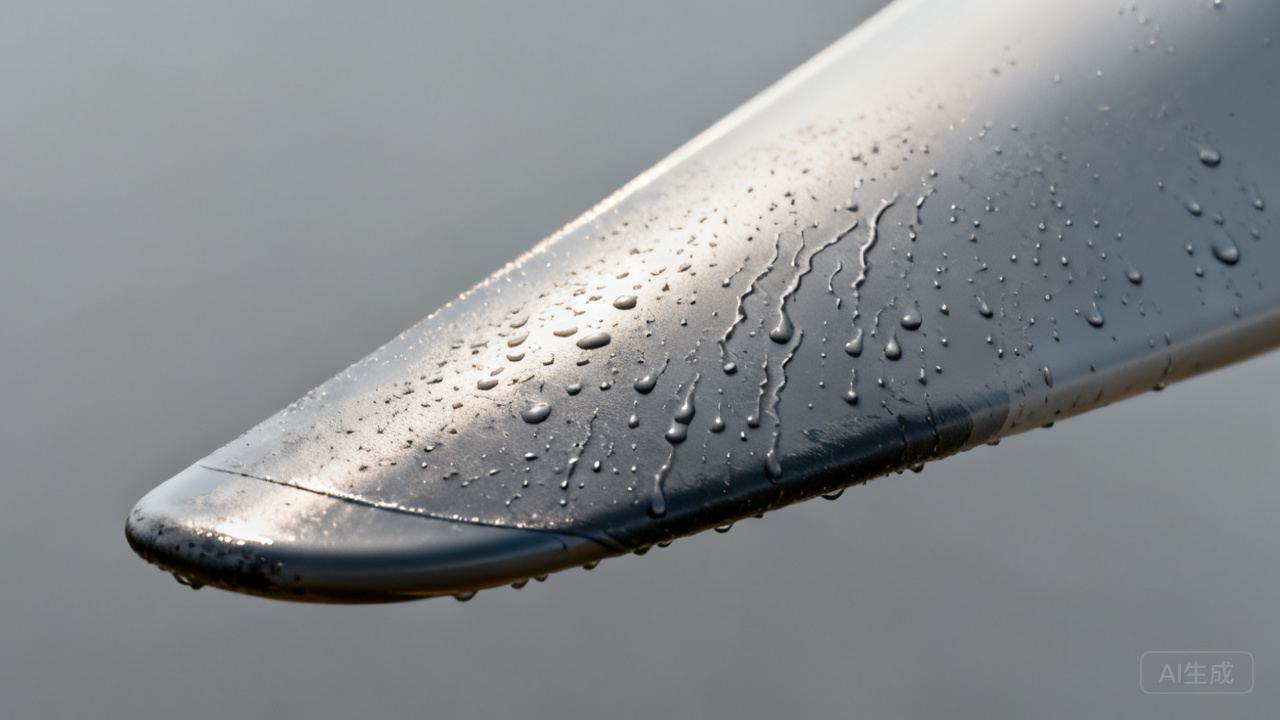
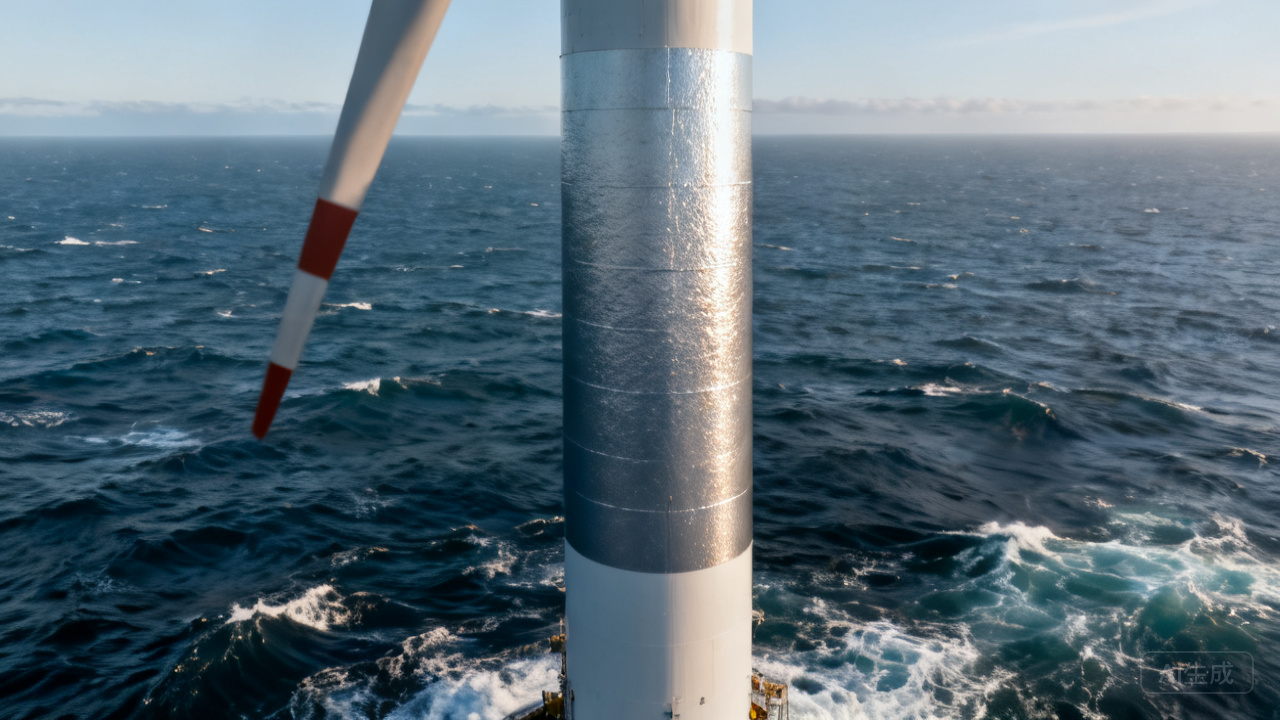
The wind turbine blade coating system consists of three parts: blade leading-edge protection coating (LEP—polyurethane/polyurea elastomer—rain erosion resistance + flexibility), blade main body topcoat (polyurethane/polysiloxane—weather resistance/UV protection), and tower anti-corrosion coating (epoxy zinc-rich + epoxy glass flake + PU topcoat—ISO 12944 CX)—meeting the stringent requirements of no coating detachment and no reduction in power generation efficiency within the 25-year design service life of the blades.
FAQ
Q1: LEP (Leading Edge Protection) coating — why is polyurea more rain-erosion resistant than polyurethane? The essence of rain erosion is the water hammer effect caused by high-speed water droplet impact — water droplets strike the coating at >300 km/h — generating instantaneous impact pressure >100 MPa. Polyurea (isocyanate + amine — extremely fast reaction 200-500% — tensile strength >15-25 MPa — tear strength >80-120 N/mm — in rain erosion testing (rotating arm / water droplet jet / >300 m/s / >100 h) — the mass loss of polyurea is <1/3-1/5 of that of polyurethane.
Q2: Why do wind turbine blade coatings need to be ultra-flexible — must the coating not crack when the blade bends >3m?Wind turbine blades bend and deform >1-3m (tip displacement) under strong winds — the coating must deform synchronously with the substrate. If the coating's elongation at break is 50-100% (far higher than ordinary industrial coatings <5-10%) — this is the fundamental reason why the flexibility of blade coatings must exceed the standard.
Q3: Offshore wind turbine tower anti-corrosion — what are the similarities and differences with offshore platform anti-corrosion?Same: both require a three-layer system of ISO 12944 CX grade epoxy zinc-rich + epoxy glass flake + PU topcoat. Different: wind turbine towers are dynamic structures — subject to wind-induced vibration year-round — coatings require additional flexibility and fatigue resistance (OEM requires >10^7 cycles without coating cracking) — a requirement not present for offshore platforms (static structures).
Related Reading
Summary
Wind turbine blade coatings — leading edge LEP (polyurea elastomer / rain erosion resistance / elongation >200%) + main topcoat (super weather-resistant / 25-year design life) + tower anti-corrosion (ISO 12944 CX) — three-piece synergistic protection. Kexin New Materials supplies wind power coating products and rain erosion test data — letting your blades fight wind and rain for 25 years without retreating.