
A wood wax oil finish is a semi-open coating material for wood: vegetable oil is the carrier, natural or synthetic wax is the surface component, and the blend moves into the porous structure of the wood by capillary action while only a small amount of wax remains on the surface. It forms no continuous, sealed lacquer film, and its protective capacity is decided jointly by the oil that enters the wood and the wax that stays on top. Whether a given wood wax oil can be used, how long it will last, and when it should be touched up are questions answered not by hand feel or smell but by four measurable criteria: penetration depth, water uptake rate, water contact angle, and rewetting after drying.
The rework scene on a furniture plant floor usually looks like this: three months after an oak dining table is delivered, a white ring from a cup base has crept into the grain; after a single season, an outdoor planter grays and its fibers fuzz up wherever rainwater sat on it; and the same batch of panels shows dry, pale shrinkage lines at the joints during the northern heating season. What these three failures have in common is not "not enough oil was applied" but a penetrating finish being accepted as if it were a film-forming clear coat - judging a system that by definition never forms a continuous film by film thickness, gloss, and hiding power. The acceptance criteria were wrong from the very start.
TL;DR: eight takeaways for production scheduling and QC
- Wood wax oil is not accepted by film thickness. Accept it on four criteria: entry depth, surface wax loading, water uptake rate, and contact angle. Film thickness is a metric of film-forming systems.
- Indoor wood wax oil is judged technically against the forestry-industry recommended standard LY/T 2709-2016 (issued 2016-07-27, effective 2016-12-01); wood wax oil for protecting outdoor timber structures follows JG/T 434-2014 (issued 2014-06-12, effective 2014-12-01).
- Drying times per published data: touch-dry ≤ 4 h, hard-dry ≤ 24 h (23 °C, 50% relative humidity); at 10 °C or under high humidity, budget 2–3 times the window, or the next coat will pick up tack.
- The scale for water repellency follows published summaries of the EU EN 927 series: water uptake of 30–175 g/m² for dimensionally stable applications, 30–250 g/m² for limited dimensionally stable ones, and >30 g/m² for non-dimensionally stable; the caps on the combined weathering score are 7, 12, and 19, respectively.
- Contact angle is valid only as a before/after comparison within the same batch: published static water contact angles for untreated wood sit roughly in the 40°–80° band, and wax modification can lift them to about 100°; comparing raw values across different sources tells you nothing.
- Test heat resistance and hot cup marks as dry heat per GB/T 4893.3 / EN 12722; published practice commonly grades at 70 °C / 15 min and at 80 °C. A white mark on a dining table or countertop is a fail.
- The sand-free recoat window depends on whether the surface wax layer is still continuous: zones that lost gloss early can be revived by wiping with a lint-free cloth dampened with the same wood wax oil; a fully exhausted layer needs mechanical cleaning first.
- Maintenance cadence, order-of-magnitude reference from public sources: re-wax indoor countertops and dining tables every 12–18 months and floors every 24–36 months; outdoor components every 12–24 months, completed before the rainy season.
1. What wood wax oil is: the divide between a penetrating finish and a film-forming coating
For film-forming coatings - waterborne acrylics, PU clear coats, UV-cured lacquers - the protective body sits above the wood: resin particles coalesce into a continuous film that holds back water and stains, and the price is that the film itself ages, scratches, and peels, so repairs normally mean sanding the old film off.
Wood wax oil works in the opposite direction. Vegetable oils - refined linseed oil, tung oil, catalpa oil, perilla oil and other drying or semi-drying oils - travel inward through vessels, pits, and cell lumens, oxidatively crosslinking in the shallow zone of the wood; waxes - carnauba, beeswax, candelilla, or Fischer-Tropsch and microcrystalline waxes - stay on the surface and at the pore mouths after wipe application, providing hand feel, water repellency, and mild abrasion resistance. So "film thickness" simply does not apply to a wood-wax layer; what engineering has to watch is entry depth, surface wax loading, and the water and wear performance derived from them.
1.1 Where the wax and the oil each remain
Failures are easier to diagnose when you read a wood wax oil finish as a two-layer structure: the inner oil-modified layer governs resistance to water-induced swelling, cracking, and discoloration; the outer wax layer governs touch, water beading, and light scratch resistance. A thin wax layer loses repellency quickly, but it can be renewed spot-wise by wiping. An oil layer that crosslinks poorly shows up as whitening, blistering, and long-lasting tack. "Repellency dropped" and "the surface feels rough" on the same panel have completely different causes - and completely different remedies.
1.2 Why "no film" does not mean "no protection"
The rate at which wood gains and loses moisture drives dimensional change, and dimensional change drives cracking and pale open joints. Once the oil enters the shallow zone, it occupies part of the hydrophilic sites and builds hydrophobic barriers inside the pore channels: the water uptake rate falls, and swelling follows it down. In published research, poplar and radiata pine vacuum-impregnated with molten high-melting Fischer-Tropsch wax cut total water uptake by roughly 70% and total moisture uptake by roughly 50%, while the dynamic water contact angle rose to about 100° and held steady (Journal of Northeast Forestry University, 2018, Vol. 46, No. 10). Treat that as an order-of-magnitude reference for how wax/oil modification changes the wood-water interaction; note that it belongs to an impregnation-modification system, is not identical to a surface-wiped wood wax oil, and can only serve as a directional criterion.
| Comparison dimension | Wood wax oil (penetrating) | Film-forming clear coat (waterborne/PU/UV) | How to read it |
|---|---|---|---|
| Where the protection sits | In the shallow pore channels of the wood plus wax on the surface | A continuous film on the wood surface | The former is judged by entry depth; the latter by film thickness and adhesion |
| Failure mode | Repellency decay, graying, localized dry shrinkage exposing pale wood | Peeling, cracking, wear-through, delamination in sheets | A penetrating system does not "shed a layer"; a film-former releases in detachable sheets |
| Repair route | Clean, then re-wax locally by hand; usually sand-free | The old film must be sanded off before a full re-coat | This is the main advantage of wood wax oil on the engineering side |
| Acceptance metrics | Water uptake rate, contact angle, rewetting after drying, touch-dry and hard-dry times | Film thickness, adhesion, gloss, hardness | The two metric sets must never be mixed |
| Appearance | Open grain, low gloss, touchable wood feel | High gloss to matte selectable, strong hiding | Open-grain requirements suit the penetrating system better |
Further reading: Open time and leveling of waterborne wood coatings - the constraints that open time, leveling, and temperature/humidity impose on film-forming systems follow an entirely different logic from penetrating systems.
2. Four substrate variables that control penetration
The same wood wax oil can differ by more than a factor of two in entry depth across three substrates. What the shop floor has to control is not "one more coat" but the four variables below.
2.1 Earlywood vessels and latewood tracheids
In ring-porous woods (oak, ash), earlywood vessel diameters reach several hundred micrometers: they take up oil fast and hold a large single-pass load, but if the pore openings are not filled, wax preferentially plugs them and reads as dark specks. Diffuse-porous hardwoods and softwoods (birch, rubberwood, pine, spruce) have fine, evenly distributed channels, so uptake is shallow and steady, which suits thin coats built up over several passes. When one batch mixes species, application rate and drying time must be managed by group instead of scheduling everything against a single parameter. On process selection, see: Oak open grain and pore filling: choosing a waterborne filler.
2.2 The coupling of moisture content, surface energy, and viscosity
Contact-angle measurement studies show that wood moisture content is not decisive for surface tension itself, but a high-moisture surface gives a lower water contact angle and better wetting; because earlywood is rougher, the Owens/Wendt calculation returns a markedly higher surface tension for earlywood than for smooth latewood; liquid penetration slows as viscosity rises, and latewood cells, smaller in diameter than earlywood vessels, resist penetration more. On the line this reduces to three statements: a substrate that is too dry actually wets poorly, and one that is too wet keeps the oil out; when viscosity is high (cold weather, heavy body), thin it or warm it; pore-plugging sanding dust turns "the oil went in" into "the oil sits on the surface." For the moisture-control framework, see: Wood moisture content and furniture coating: equilibrium moisture content, gradient control, and defect prevention.
The remaining two variables: first, old coatings and glue lines - UV-cure residues, silicone-based polishes, and squeezed-out edge glue all form barriers at the pore mouths and must be removed completely before rework; second, the application method - brushing, wiping, and spraying deliver very different oil volumes per unit area, and in wipe application the "wipe off the excess" step is not waste but the key operation that keeps the surface layer from going thick and tacky.
3. How to measure water repellency: uptake rate, contact angle, and rewetting
"Waterproof" in the context of wood wax oil splits into three separate questions: how fast liquid water enters (water uptake rate), whether water beads on the surface (contact angle), and whether the finish recovers after drying (rewetting and reversibility).
3.1 Static and dynamic contact angles
The static angle is read from a photograph of a deposited drop; the dynamic angles (advancing and receding) describe how readily water rolls off and the hysteresis involved. Wood is porous and rough, so a static reading falls rapidly with time because oil and water are soaking inward at the same time; reporting only "the angle 2 s after deposition" is not comparable. For any process comparison, state the measurement time (e.g., 5 s, 30 s, 60 s), the ambient temperature and humidity, and whether the panel was sanded. Under published conventions, static water contact angles of untreated wood mostly fall in the 40°–80° range and vary widely with species and measurement time, so the value should not serve as a single-point criterion; it is fit only for before/after comparison within the same batch.
3.2 Water uptake rate and rewetting after drying
The steadier criterion is the water uptake rate: seal the edges and back of a test panel with wax or epoxy so that only the coated face meets the water, then log the mass change over time. In the EU EN 927 series used for exterior wood coating systems, Part 5 specifies the water uptake/permeability determination, which pairs with Part 3 natural climate aging as the two mandatory tests; published summaries give uptake limits for the three application categories - 30–175 g/m² for dimensionally stable, 30–250 g/m² for limited dimensionally stable, and >30 g/m² for non-dimensionally stable - with weathering score caps of 0.3–1.0 for blistering, 0.7–3.0 for cracking, 0.3–1.3 for delamination, 1.0 for adhesion, and combined-score caps of 7, 12, and 19. Indoor furniture work can use the national-standard set instead: GB/T 4893.1 (resistance of furniture surfaces to cold liquids) and GB/T 4893.3 (resistance to dry heat), paired with GB/T 1733 (water-immersion method).
Many factories skip the rewetting-after-drying step: immerse the panel for 24 h, take it out, dry it under standard conditions for 24–48 h, then look for residual whitening, raised fibers, or uneven gloss. The pass criterion for a penetrating finish should be "water marks reversible or slight." Irreversible whitening usually means the oil crosslinked insufficiently or the surface wax layer lacks continuity and density, so water molecules entered the gaps between wax crystals and scatter light.
| Test item | Common method/standard | Typical values (published) | Engineering reading |
|---|---|---|---|
| Static water contact angle | Sessile drop, goniometer | Untreated wood roughly 40°–80°; wax-modified up to about 100° | Before/after comparison within one batch; do not compare values across sources |
| Water uptake (permeability) | EN 927-5; GB/T 1733 | Dimensionally stable 30–175 g/m²; limited stable 30–250 g/m² | Set the band by application category; outside the band is not a pass |
| Cold liquid resistance | GB/T 4893.1; EN 12720 | 0–5 rating scale, ≥ grade 4 typically required | Watch three things: water marks, whitening, gloss loss |
| Dry heat resistance (hot cup mark) | GB/T 4893.3; EN 12722 | Published practice commonly 70 °C / 15 min, graded at 80 °C | Key item for dining tables and countertops |
| Rewetting after drying | Custom cycle (24 h immersion + 24–48 h drying) | Enterprise specs usually record "no obvious whitening / no raised fibers" | Separates reversible from irreversible water damage |
| Natural climate aging | EN 927-3; GB/T 1865 (xenon arc) | Published convention: 24-month exposure; ΔE ≤ 3.0 as the color-shift criterion | Mandatory for outdoor parts; can be scaled down indoors |
| Item | LY/T 2709-2016 (indoor wood wax oil) | JG/T 434-2014 (wood wax oil for timber protection) | Remarks |
|---|---|---|---|
| Administration and status | Forestry-industry recommended standard, administered by the National Wood Standardization Technical Committee | Construction-industry standard issued by the ministry in charge of housing and urban-rural development | Both are voluntary standards; on the engineering side they are routinely written into tender specifications |
| Scope | Indoor furniture, solid wood flooring, whole-house millwork, handicrafts | Protection of bamboo and wood materials in timber structures and decoration | Exterior-specific wood wax oils are mostly qualified against JG/T 434-2014 |
| Issue and effect | Issued 2016-07-27, effective 2016-12-01 | Issued 2014-06-12, effective 2014-12-01 | Quote the year of the edition actually in force |
| Classification | Three types: clear oil, tinted oil, hard wax oil | Classified by timber-protection use | Hard wax oil is the usual choice for countertops and flooring |
| Drying time | Touch-dry ≤ 4 h, hard-dry ≤ 24 h (23 °C, 50% relative humidity) | Determined per GB/T 1728-1979 | Extends several-fold under cold, humid conditions |
| Solid content | Clear oil ≥ 30%, tinted oil ≥ 35% (published interpretation) | Non-volatile matter determined per GB/T 1725 | Feeds directly into spread-rate and material-budget calculations |
| VOC limit | ≤ 300 g/L (published interpretation) | Bound by the GB 18581-2020 harmful-substance framework | Verify limit wording against the standard text itself |
The LY/T 2709-2016 limits in the table above are taken from published interpretations of the standard by third-party testing bodies and standards-information platforms, not from an extract of the standard text; where contract acceptance or type testing is involved, the currently effective standard text and a CMA/CNAS laboratory report are the reference. For the overall harmful-substance limit framework, see: Harmful substance limits in wood coatings: GB 18581 parameters, testing, and the waterborne compliance route.
4. Key figures and unit conventions
The figures below come from published interpretations of the forestry and construction industry standards, summaries of the EU standards, third-party testing-house material, and open academic literature. They establish order-of-magnitude references for scheduling and acceptance; they do not replace the standard texts or measured reports.
- Drying time: published LY/T 2709-2016 figures are touch-dry ≤ 4 h and hard-dry ≤ 24 h at a reference environment of 23 °C and 50% relative humidity; when the temperature falls to 10 °C or the humidity rises to 80%, reserve a drying window 2–3 times longer.
- Non-volatile matter (solid content): ≥ 30% for the clear type and ≥ 35% for the tinted type (published interpretation), measured by GB/T 1725; solid content directly caps the surface wax loading a single pass can deliver.
- Spread rate: published figures for wipe systems are about 8–14 m²/L per coat, and hard wax oils commonly reach 24 m²/L per coat; across one batch, species and pore openness can scatter real coverage by as much as ±30%, so quotations and material budgets must be based on a small-sample trial.
- Natural wax content: typical wax levels in wood wax oil formulas run about 5%–30% (published testing-industry figures give an all-category range of 0.5%–40%); too little leaves the surface rough to the touch and repellency short, too much smears unevenly and turns tacky.
- Oil characteristic values: iodine value 80–200 g/100 g, acid value 0.1–30 mg/g, saponification value 170–220 mg/g (published testing figures). A low iodine value suggests an adulterated or over-hydrogenated base oil; a high acid value suggests rancidity; both surface as slow drying and later tack return.
- Wax melting points: carnauba wax 82–86 °C, beeswax about 62 °C (published figures). Beeswax-heavy formulas show white cup marks in the 70 °C dry-heat grade far more often.
- Water uptake: published summaries of the EU EN 927 series give three limit bands - 30–175 g/m² for dimensionally stable, 30–250 g/m² for limited dimensionally stable, and >30 g/m² for non-dimensionally stable applications.
- Environmental limits: the published reading of LY/T 2709-2016 sets VOC ≤ 300 g/L, the sum of benzene + toluene + ethylbenzene + xylene ≤ 100 mg/kg, and soluble heavy metals lead ≤ 90 mg/kg, cadmium ≤ 75 mg/kg, chromium ≤ 60 mg/kg, mercury ≤ 60 mg/kg.
- Application environment window: published product data give an applicability range from +5 °C to +35 °C; the substrate moisture content should sit near its equilibrium value - too wet and the oil cannot enter, too dry and the panel absorbs the charge instantly and keeps brush marks.
- Weathering color shift: the published pass figure for exterior grades under accelerated weathering is ΔE ≤ 3.0 with no chalking and no cracking; methods can follow GB/T 1865 xenon arc or EN 927-6 fluorescent UV with water.
5. Abrasion, staining, and heat: how cup marks are tested
A wood-wax layer has no scratch resistance in the "hardness" sense. Its wear performance comes from two things: the wax layer lowering friction, and the oil binding the fibers so they raise less. Evaluate abrasion, stain resistance, and heat resistance as three separate items; do not let one stand in for all three.
5.1 Abrasion and the "no show-through" reading
Industry practice is a Taber-type abrasion tester (per the ASTM D4060 method family) with CS-10 wheels run to a set number of revolutions, reading the revolutions at which there is still "no show-through and no obvious fiber raising." Pendulum hardness (per the ISO 1522 / GB/T 1730 method family) on a penetrating system is good only for batch-to-batch consistency monitoring, never for cross-system comparison - wax is a viscoelastic material, and pendulum readings swing with ambient temperature. For tabletops and flooring, write acceptance clauses on both metrics: revolutions plus a visual rating of fiber raising.
5.2 Cup marks: dry heat, damp heat, and cold liquids read three ways
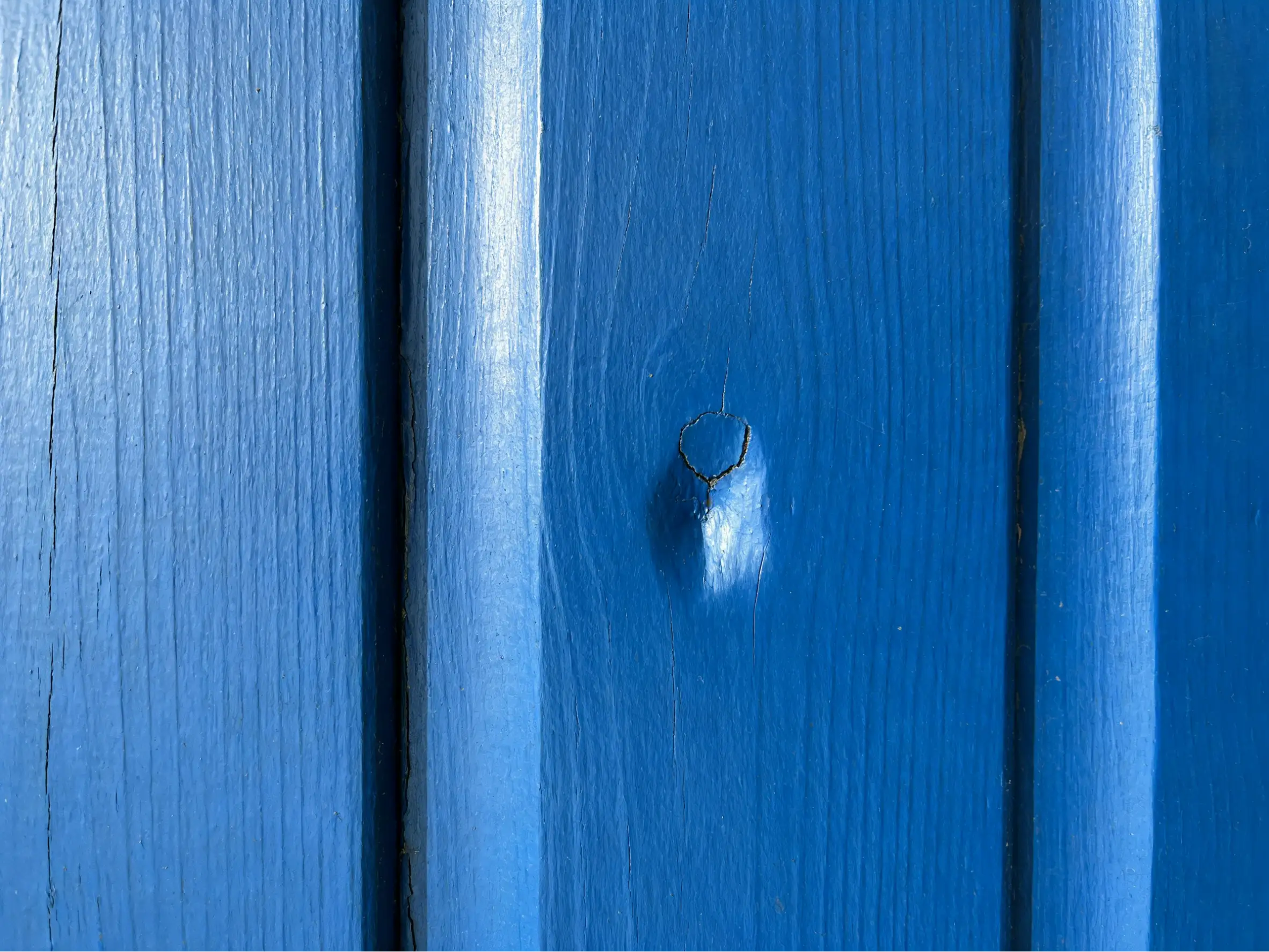
The white ring under a cup base stacks three mechanisms: heat softens the wax, vapor condenses at the interface, and alternating hot and cold contact changes the pressure at that interface. The three matching tests are dry heat (GB/T 4893.3 / EN 12722), damp heat (EN 12721-type methods), and cold liquids (GB/T 4893.1 / EN 12720). Published conventions commonly run dry heat from 70 °C / 15 min up to graded 80 °C, rate 0–5, and furniture surfaces are typically required to reach ≥ grade 4; cold liquids - coffee, alcohol, vinegar, detergent - act for 1 h to 24 h at 23 ± 2 °C and are read 16–24 h after recovery.
One trap in reading cup marks: a white ring is either "wipeable" or "soaked in." The wipeable kind is light scattering from the microstructure of the surface wax - restore it with a warm cloth or by re-wiping a small amount of the same wood wax oil. The soaked-in kind means vapor has lifted the shallow wood fibers; dry the area first and only then recoat, otherwise you seal the moisture in and invite a second whitening. For the systematic comparison of stain- and chemical-resistance methods, see: Stain and chemical resistance of furniture coatings: test methods and formulation logic.
| Failure sign | Main cause | Verification action | Handling convention |
|---|---|---|---|
| White cup ring (wipeable) | Wax softening plus condensate at the interface scattering light | Dry heat 70 °C / 15 min, read the grade 16 h after recovery | Light re-wipe with the same wood wax oil; no sanding needed |
| White mark with raised fibers (irreversible) | Vapor lifted the shallow fibers; the oil crosslinked insufficiently | 24 h immersion + 24–48 h drying cycle | Dry first, knock the surface back lightly, then add one coat |
| Tacky, never hardening | Excess wipe-on loading, cold and humid air, low iodine-value base oil | Time touch-dry/hard-dry plus a block-and-tack check | Extend the window to 48–72 h and reduce the coat build |
| Gray patches, fuzzy grain | UV-degraded lignin, surface wax exhausted | Read ΔE and the chalking grade after accelerated weathering | Clean and re-wax; outdoor parts on a scheduled maintenance cycle |
| Color blotches, uneven depth | Mixed species, different vessel openness, dust-plugged pores | Same-batch sample comparison plus a color-evenness check | Schedule by group; lay a sealing / tone-evening base first |
| Pale open joints from dry shrinkage | Substrate moisture out of balance with the delivery environment | Re-measure the moisture-content gradient | Re-humidify to balance, then recoat; do not simply fill the gap |
6. Sand-free recoating: the window and its limits
The real value of wood wax oil on the engineering side is a maintenance path that never removes the old film. A failed film-forming clear coat must be sanded off before it is rebuilt; a penetrating system whose surface is spent can be renewed along the original path, oil plus wax. But this path is not unconditional, and its boundary is whether the wax layer is still continuous.
Conditions for a sand-free recoat: no chalking on the surface, no grease buildup, no silicone polish residue, and the grain pores not plugged with filler. The operation is clean - dry - thin wipe - buff even, with a lint-free cloth or a white non-woven pad, and the oil charge per pass stays clearly below the initial coat. Where there are obvious dents, wear-through to bare wood, or an unknown legacy coating system (PU or UV underneath), the sand-free recoat does not hold; run a small-area compatibility trial first.
On timing, published product data give 12–24 h as the recoat interval for the same product, light service 24 h after hard-dry, and full cure in 5–7 days (21 °C, 50% relative humidity). On the maintenance side there is no hard window - revive early gloss loss whenever it appears; the shorter the interval, the smaller the oil charge per pass and the lower the tack risk. For the tack-versus-recoat-window logic, see how the film-forming side handles it: Anti-blocking and recoat windows for waterborne wood topcoats.

Tinted wood wax oils need extra attention: a recoat re-activates the pigment that has already penetrated and deepens those spots. For color-sensitive orders, qualify the recoat procedure together with the initial-coat sample, and check the tone-evening base at the same time: Staining solid wood furniture: dye penetration, blotch control in softwood, and lightfastness.
7. Indoor versus outdoor: care cycles driven by different failure physics
Indoor and outdoor maintenance cycles are not the same thing measured in two durations; they are two different failure mechanisms. Indoors you watch wear and staining; outdoors you watch ultraviolet, water, and thermal cycling. Applying indoor rules of thumb to outdoor work usually shows up the difference within a year.
The dominant outdoor failure is photo-degradation of lignin: ultraviolet light discolors the wood surface and raises its fibers, and the coating loses its bonding base and thins out. The EU EN 927 series makes natural climate aging of exterior wood coatings (EN 927-3; published summaries cite a 24-month exposure on Scots pine substrates) and water uptake (EN 927-5) the two mandatory tests, then splits applications by dimensional stability into three categories - dimensionally stable (window frames, doors), limited dimensionally stable (exterior cladding), and non-dimensionally stable (fences, garden furniture). The non-dimensionally stable category is allowed greater moisture exchange, so its uptake limit carries only a floor, and these components depend on periodic recoats rather than a heavy film. For the full failure path and acceptance wording covering indoor countertops, dining tables, and flooring, see: Coatings for outdoor wooden furniture: lignin photo-degradation, mold protection, and film-retention cycles.

| Service scenario | Dominant failure | System direction | Inspection and recoat cadence |
|---|---|---|---|
| Dining tables, kitchen countertops | Cup marks, grease staining, hot water | Hard wax oil with a higher wax level | Re-wax every 12–18 months; treat white marks the moment they appear |
| Cabinet doors, desktops | Hand marks, light abrasion | Clear oil or tinted oil | One light wipe-on revival every 18–24 months |
| Solid wood flooring (residential) | Foot-traffic wear, embedded grit | Hard wax oil, thin coats in several passes | Full maintenance every 24–36 months; high-traffic zones every 12–18 months |
| Bathroom and near-water kitchen parts | Repeated wetting, mold spots | Fully crosslinked oil layer plus scheduled re-waxing | Inspect at 12 months; pair with ventilation to lower humidity |
| Outdoor furniture, garden structures | UV, rainwater, temperature swings | Exterior-specific product (mostly to JG/T 434-2014) | Inspect before the rainy season; recoat every 12–24 months |
| Exterior cladding, timber screens | Weathering, graying, moisture exchange | Non-dimensionally stable direction | Inspect every 24 months; group by surface area and orientation |
The cycle figures are inspection checkpoints, not promised service lives. Build the actual schedule around orientation, rainfall, cleaning frequency, and foot traffic: an unshaded south-facing outdoor component can carry several times the ultraviolet load of a shaded one, and commercial flooring usually needs its re-wax cadence halved against the residential reference.
8. VOC, hazardous substances, and the boundary of safety wording
"Natural" is not the same as "compliant," and "plant-oil-based" does not license a contact-safety claim. In B2B delivery this part is the easiest for sales language to stretch; engineering has to pull it back inside the verifiable range.
What is verifiable is the limits-and-methods layer: VOC by GB/T 23986 gas chromatography (the counterpart of the ISO 11890 series), free formaldehyde commonly by the acetylacetone spectrophotometric method, soluble heavy metals by ICP-OES/ICP-MS after an acidic simulated extraction, and moisture by the Karl Fischer method (GB/T 6283). Base-oil identity is fingerprinted by fatty acid methyl ester gas chromatography (GB/T 17376, GB/T 17377), which can identify tung oil cut with cheaper oils. The whole limit framework is bound by GB 18581-2020, the standard for limits of harmful substances in wood coatings.
What is not verifiable - and must never be claimed on your own authority - covers four areas. First, food contact: tableware or cutting boards coated with wood wax oil that are to be used for food contact require migration testing under the destination market's food-contact regulations and the corresponding conformity documentation; until that testing is done, the only permissible wording is "suitable for protecting wood surfaces." Second, children and toy applications: toys carry their own migratable-elements regime (for example EN 71-3 or the GB 6675 series), and a wood-coating limits report cannot substitute for it. Third, articles in long-term skin contact (musical instruments, tool handles) should be verified separately against dedicated coating saliva-and-sweat resistance methods (for example the DIN 53160 family). Fourth, mold and antibacterial performance: without data generated to a recognized antibacterial evaluation method (for example the ISO 22196 method family), no antibacterial or anti-mold efficacy wording may appear.
Certification names likewise cannot be assembled by guesswork: LY/T 2709-2016 and JG/T 434-2014 are product technical standards - not environmental certifications and not quality certifications. In report references, write only the standard number, the edition, the test items, and the measured values; never write "compliant with a certification."
9. Ordering and acceptance: how to write the B2B technical clauses
To turn every criterion above into deliverable contract language, write the clauses in three stages - sample approval, in-process control, arrival acceptance - so nobody argues about looks after delivery.
- Sample approval: fix the substrate species and moisture-content range, the spread rate (m²/L), the number of coats and the interval between them, and the cure conditions (temperature, relative humidity, time), then seal and retain reference panels; give subjective items such as "grain openness" and "hand feel" physical touch samples that are signed off and sealed.
- In-process control: fix the on-site temperature and relative-humidity window, the hard-dry timing checkpoints for each coat, the rework triggers (defined responses to tack, whitening, or fiber raising), and fold the recoat procedure into the process card.
- Arrival acceptance: replace appearance disputes with reproducible metrics - the cold-liquid rating, the dry-heat (cup mark) condition and rating, the abrasion revolutions with a "no show-through" reading, the appearance record after a water-uptake or rewetting cycle, plus third-party laboratory data where needed.
- Technical documentation: ship with the composition and limits test report, the safety data sheet (SDS), batch physical data (viscosity, non-volatile matter, drying time), and the application instructions.
Kexin New Materials (Guangdong) Co., Ltd. provides technology and supply support to furniture factories, millwork contractors, and coating subcontractors. Cooperation is organized as B2B project delivery, trade terms are agreed on an EXW / FOB basis, and sample approval, sealed reference samples, and arrival acceptance follow the three-stage clauses above.
Frequently asked questions (FAQ)
How long does a wood wax oil finish repel water? Why is it no longer water-repellent after a year?
The honest question is "how long does the repellency last," not "how long is it waterproof." The repellency of wood wax oil comes mainly from the surface wax, a viscoelastic film that wiping, cleaning, ultraviolet light, and thermal cycling steadily consume; field measurements commonly show the contact angle falling back after 12–18 months. Do not watch the clock - watch the symptom: once a water drop stops beading and starts to spread, it is time to re-wax. The touch-up needs no sanding; clean, dry, and wipe on a thin layer. To stretch the interval, choose a hard wax oil with a higher wax level and cut back the use of strong alkaline cleaners. Treating a penetrating finish as a sealed lacquer is the starting error behind every failed durability judgment.
Can wood wax oil be over-coated with a film-forming clear coat?
Direct stacking is not recommended; the risks come from oil migration and interlayer adhesion. Unreacted vegetable oil and wax in a wood wax oil keep migrating toward the interface, and the clear film above tends to lose gloss, turn tacky, wrinkle in patches, or delaminate between layers. In the reverse direction, wood wax oil cannot enter old furniture already carrying PU, UV, or waterborne films - it simply floats on the surface and stays tacky. The engineering route is a small-area compatibility trial with a 7–14 day observation, logging gloss, hand feel, and interlayer adhesion. Where a hybrid build is genuinely needed, use a dedicated sealer-base plus topcoat pairing rather than freely stacking a commercial wood wax oil as a primer. Details: Open time and leveling of waterborne wood coatings.
Will coarse open grain like oak pool water and go dark under wood wax oil?
It can, and that is the direct consequence of open grain vessels. The earlywood vessels of ring-porous woods have large bores; if they are not filled, water and dirt settle inside the channels, showing as dark specks, blackening on wetting, and pale wax pooled at the pore mouths during application. Three remedies: a partial seal with a filler or putty first (keeping part of the grain tactility), more coats so the oil wraps the pore walls continuously, or a switch to diffuse-porous or softwood substrates. For acceptance, write the "visual grade of wax accumulation at the pore mouths" and the "color-dot reading 24 h after water immersion" into the clauses instead of just "clear grain definition." Process detail: Oak open grain and pore filling: choosing a waterborne filler.
Why does winter application always stay tacky and refuse to dry?
Cold slows three processes at once: evaporation of the solvent/carrier, oxidative crosslinking of the vegetable oil, and crystallization of the wax. The published touch-dry ≤ 4 h and hard-dry ≤ 24 h are based on 23 °C and 50% relative humidity; budgeting 2–3 times the window at a 10 °C shop temperature is common practice. Applying a heavier wipe only makes it worse, because a thick layer is even more oxygen-starved inside. Actionable countermeasures: keep the shop above 15 °C, increase ventilation, cut the oil charge per pass, where necessary move to a higher-iodine-value formula or one with a drier package, and log the touch-dry/hard-dry checkpoints part by part. Winter orders should also write the recoat interval into the process card so crews do not chase summer cycle times out of habit.
How can I quickly tell whether my wood wax oil has been cut with petroleum resin?
On site, without instruments, there are three weak indicators: the drying curve (product cut with poor-grade petroleum resin or excess mineral oil often passes 48 h to hard-dry, or stays tacky indefinitely), the sanding feel (a normal wax oil should sand off as a free powder; heavy paper loading means the wax crystal structure or the filler is abnormal), and odor persistence (the off-note of a synthetic ester or mineral-oil system lingers for days). But these only flag an anomaly; they cannot convict. The dependable route is to send the sample out: fingerprint the base oil by fatty acid methyl ester gas chromatography (GB/T 17376, GB/T 17377), match it against the iodine value, acid value, and saponification value, then check non-volatile matter and wax content. Retained per-batch samples with proper sample-ID management are how subcontract shops avoid disputes.
Does exterior wood wax oil have to follow JG/T 434-2014?
Decide by the use first, then by the standard. The scope of LY/T 2709-2016 is indoor furniture, flooring, whole-house millwork, and handicrafts; wood wax oil for protecting outdoor timber structures corresponds to JG/T 434-2014, Wood wax oil finish for wood structures, which references film flexibility, impact, mold resistance, and block-and-tack test methods (GB/T 1731, GB/T 1732, GB/T 1741, GB/T 1762). For orders bound for the EU or tied to European systems, align the requirements with the three application categories of the EN 927 series and its two mandatory tests, natural climate aging and water uptake. In tender clauses, write "standard number + edition + required tests + pass values" directly, instead of "meets prevailing industry practice."
After a wood wax oil finish, when can items be placed on the surface or a rug laid over it?
Three checkpoints. Light use: about 24 h after hard-dry the piece can be used normally, but avoid dragging hard objects across it. Full cure: published product data commonly give 5–7 days (21 °C, 50% relative humidity), at which point the wax crystals are stable and everyday cleaning and placement are safe. Covering: during the cure period, do not keep non-breathable tablecloths, rugs, or plastic film over the surface - covering creates local oxygen starvation and condensation, showing up as dull patches or tack return. Cold, humid sites stretch all three checkpoints. For dining tables and countertops, run one more dry-heat (cup mark) verification after full cure, confirm there is no white-mark risk from hot containers before formal delivery, and file that verification record with the handover documents.
References and basis of the figures
The data and criteria in this article come from the sources below; where contract determination is involved, rely on the standard texts and the actual test reports:
- LY/T 2709-2016, Wood wax oil, a forestry-industry recommended standard issued 2016-07-27 and effective 2016-12-01, administered by the National Wood Standardization Technical Committee; the classifications and figures quoted here come from published interpretations by third-party testing bodies and standards-information platforms, not from the standard text itself.
- JG/T 434-2014, Wood wax oil finish for wood structures, a construction-industry standard issued 2014-06-12 and effective 2014-12-01; its referenced test methods include GB/T 1723, GB/T 1725, GB/T 1726-1979, GB/T 1727, GB/T 1728-1979, GB/T 1731, GB/T 1732, GB/T 1741, and GB/T 1762.
- GB 18581-2020, Limits of harmful substances in wood coatings, serving as the overall constraint framework for total harmful substances in wood coatings.
- The EN 927 series, Paints and varnishes - coating materials and coating systems for exterior wood: Part 1 application categories and test classification; Part 2 performance specification (current editions are the 2021, 2022, and 2023 national adoptions); Part 3 natural climate aging; Part 5 water uptake/permeability; Part 6 artificial climate aging (fluorescent UV with water); Part 13 impact resistance. The uptake ranges and weathering score caps quoted here come from public summaries on standards platforms and by testing houses and must be verified against the formal texts.
- GB/T 4893.1, methods of testing the resistance of furniture surfaces to cold liquids, and GB/T 4893.3, methods of testing the resistance to dry heat; plus the EN 12720, EN 12721, and EN 12722 family of furniture surface resistance methods.
- Published academic literature: Journal of Northeast Forestry University, 2018, Vol. 46, No. 10, on the physical and mechanical properties of wood treated with high-melting-point paraffin (Fischer-Tropsch waxes 2120 and 3105H), reporting water and moisture uptake cut by roughly 70% and 50%, dynamic water contact angle rising to about 100°, bending strength up by as much as 62%, and surface strength up by as much as 30% as order-of-magnitude references.
- Published research on contact angles and liquid penetration: measurement of wood surface tension and wettability (Zisman and Owens/Wendt methods), explaining the earlywood-latewood difference and the effect of viscosity on penetration; and Olsson and Sandberg's observation that contact angles of linseed oil finishes on Norway spruce fall rapidly with time, showing that penetration dominates the early behavior.
- Published product data: wipe-system spread rate of 8–14 m²/L per coat, hard wax oil about 24 m²/L, drying 12–24 h, full cure 5–7 days, application temperature from +5 °C to +35 °C; recoat interval for waterborne hard wax oil no shorter than 2–4 h.
Basis of the figures: (1) all standard limits quoted in this article are transcribed from published material; wherever "published figures / published interpretation / published summary" is noted, the value has not been verified against the standard text and must not stand alone as an acceptance basis; (2) magnitudes differ across sources, and where a dispute arises a CMA/CNAS-accredited laboratory report and the standard text prevail; (3) this article makes no certification, food-contact safety, or antibacterial/anti-mold efficacy claim; (4) care cycles and windows are engineering rule-of-thumb ranges; actual performance depends on substrate species, moisture content, ambient temperature and humidity, and service load, and must be confirmed on a small-sample trial.
Last updated: 2026-11-05
Author: Kexin New Materials (Guangdong) Co., Ltd.
Scope note: this article addresses technical procurement for furniture manufacturing, millwork engineering, and coating subcontracting; supply and trade terms are agreed on an EXW / FOB basis, and sample approval, sealed reference samples, and arrival acceptance follow the three-stage clauses set out above.