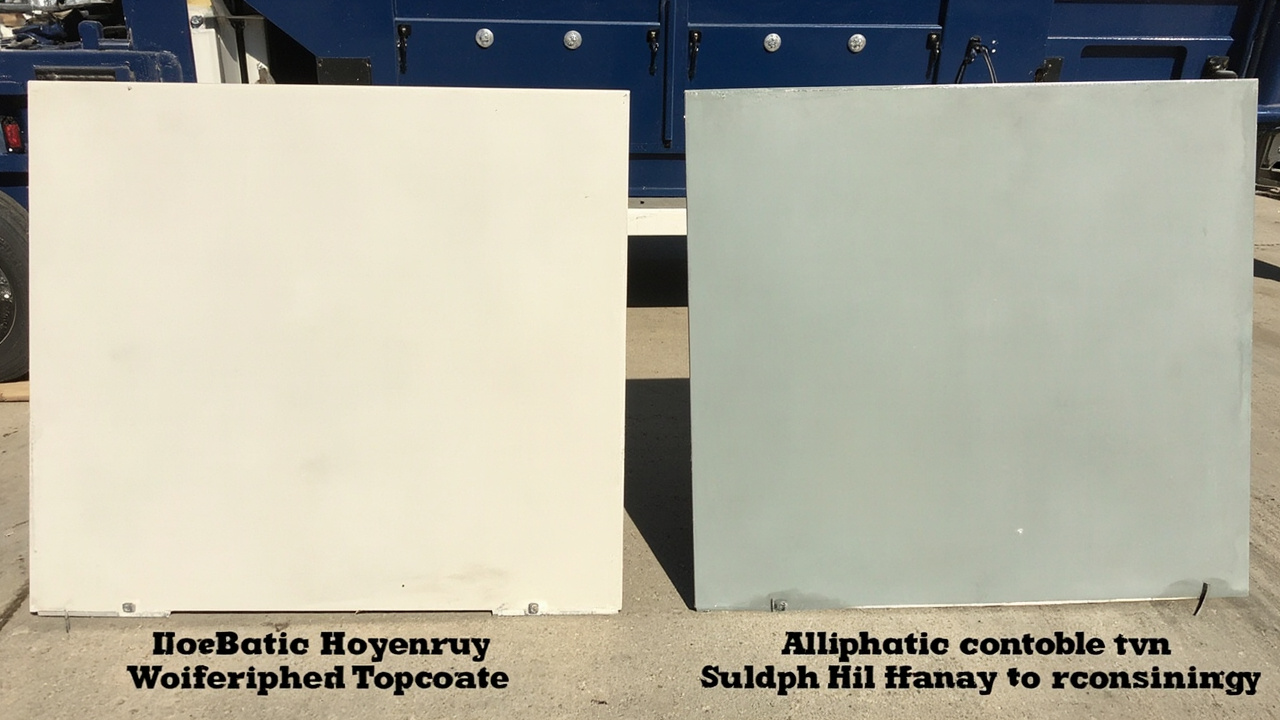
Aliphatic polyurethane and aromatic polyurethane both have "polyurethane" on the surface, yet their performance differs vastly—one can retain gloss outdoors for ten years, while the other yellows and chalking within two years by the window. This difference is not formula mysticism, but rather whether the curing agent's molecular structure "contains an aromatic ring" determines its chemical fate under UV. In engineering material selection, confusing the two is a high-frequency accident: mismatching an aromatic topcoat that should have been the cheaper aromatic for outdoor use, or conversely spending several times more on aliphatic for indoor non-exposed scenarios, are both unprofessional. To make the right judgment, one must return to the chemical nature of isocyanates.
As a technical supplier of industrial protective coating, Kexin New Materials (kexinMaterials) has accumulated a large amount of comparative data on the application of aliphatic and aromatic polyurethane systems. This article will systematically break down the fundamental differences between these two types of polyurethane from molecular structure, weathering mechanism, performance matrix, cost boundary to selection decision, helping you turn "expensive or not" into "right or not" in formulation and procurement.
I. The Essence of Classification: Whether the Isocyanate Has an Aromatic Ring
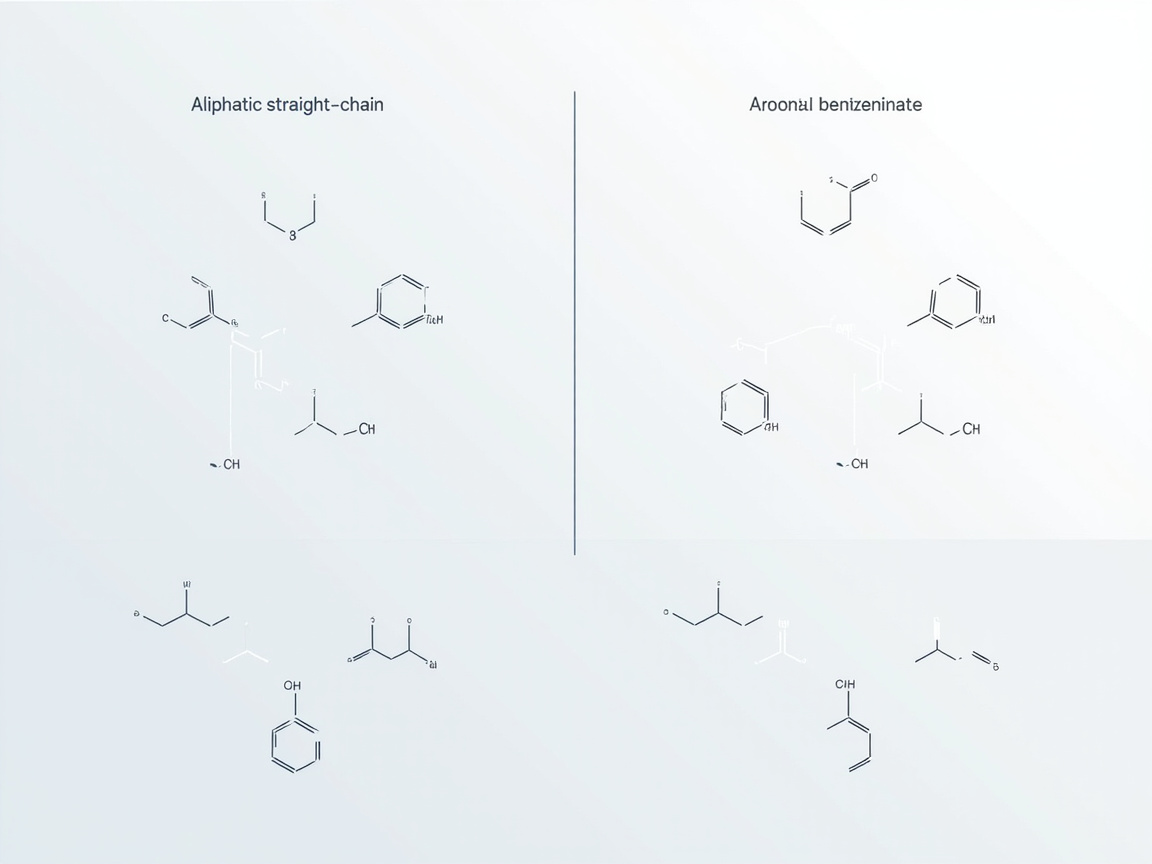
Polyurethane is formed by the reaction of polyisocyanate (—NCO) with polyol (—OH). What determines the aliphatic/aromatic property is whether the isocyanate monomer contains a benzene ring (aromatic structure):
- Aromatic isocyanates: TDI (toluene diisocyanate), MDI (diphenylmethane diisocyanate), PAPI (polymethylene polyphenyl isocyanate). The molecule contains a benzene ring, with low cost, high reactivity, and often superior hardness and chemical resistance.
- Aliphatic isocyanates: HDI (hexamethylene diisocyanate), straight-chain aliphatic.
- Alicyclic isocyanates: IPDI (isophorone diisocyanate), HMDI (hydrogenated MDI), H12MDI. Contain alicyclic rings but no aromatic conjugated benzene ring; weathering behavior close to aliphatic, often grouped into the "non-yellowing" category.
The industry habitually refers to "aliphatic + alicyclic" collectively as non-yellowing polyurethane, contrasted with aromatic. ISO 12944-5 explicitly requires the use of weather-resistant (i.e., non-yellowing) polyurethane for weather-resistant topcoats, essentially excluding aromatic.
II. Chemical Fate Under UV: Why Aromatic Yellows
UV photon energy is sufficient to break or excite certain chemical bonds. The benzene ring in aromatic isocyanates has strong absorption around 300 nm; upon UV excitation, photo-oxidation occurs: the benzene ring oxidizes to form quinone structures, azo bonds, conjugated double bonds and other chromophores, manifesting macroscopically as yellowing, chalking, and gloss loss. This process is irreversible cumulative damage outdoors.
Aliphatic and alicyclic lack such easily excited conjugated aromatic rings, with weak UV absorption and slow photo-oxidation, retaining gloss and color outdoors long-term. According to ISO 11341 (xenon arc weathering) and GB/T 1865 tests, aliphatic PU topcoats can still maintain high gloss retention after 1000–2000 h aging, while aromatic often noticeably yellows and chalks within hundreds of hours.
It should be noted: photo-oxidation comes not only from the curing agent; resins (e.g., polyesters with unsaturated bonds), residual amine catalysts, and additives also contribute to yellowing. But the curing agent type is the primary variable—choosing the wrong type, no other optimization can save it.
III. Performance Matrix: Where Exactly Do the Two Types of Polyurethane Differ
Apart from weather resistance, the two types have systematic differences in multiple properties:
| Dimension | Aliphatic/Alicyclic PU | Aromatic PU |
|---|---|---|
| Yellowing resistance | Excellent (non-yellowing) | Poor (prone to yellowing) |
| Weathering gloss retention | Excellent (outdoor suitable) | Poor (chalking) |
| Hardness | Medium–High (IPDI high) | High (MDI high) |
| Flexibility | Excellent (HDI flexible) | Medium |
| Chemical resistance | Good | Excellent (partial) |
| Cost | Higher | Low |
| Typical use | Outdoor topcoat/clear coat | Indoor/primer & intermediate coat/dark color |
It can be seen that aromatic is not "comprehensively inferior"; it has advantages in hardness, partial chemical resistance, and cost, only with the fatal shortcoming of weather resistance. Therefore, engineering often uses "division of labor": aromatic for indoor non-exposed primer/intermediate coats or dark-colored parts, aliphatic exclusively for outdoor weather-resistant topcoats and clear coats.
IV. Aliphatic Representatives: HDI and IPDI
HDI (hexamethylene diisocyanate): aliphatic straight-chain diisocyanate; its polyfunctional trimer is the mainstream curing agent for wood, automotive, and floor clear coats. Advantages: flexible, weather-resistant, excellent gloss retention; disadvantage: high vapor pressure, strong respiratory sensitization (according to OSHA, HDI PEL = 0.02 ppm), respiratory protection mandatory during application. Related safety and mixing ratio see whitelist 2K polyurethane varnish.
IPDI (isophorone diisocyanate): alicyclic, two —NCO with different reactivity (primary/secondary), allowing design of drying curve; hardness and chemical resistance slightly higher than HDI, equally excellent weather resistance. Commonly used in industrial baking paint, wood, flooring.
HMDI/hydrogenated MDI: alicyclic, balance of flexibility and weather resistance, used in systems requiring both elasticity and weather resistance (such as the elastic PU of this batch's polyurethane floor elastic coating).
V. Aromatic Representatives: TDI and MDI
TDI (toluene diisocyanate): high reactivity, low cost, curing agent for flexible foam, elastomers, some indoor coatings. But high vapor toxicity, severe yellowing, prohibited for clear and outdoor topcoats.
MDI (diphenylmethane diisocyanate): high reactivity, high hardness, used in structural adhesives, composites, some industrial paints and rigid PU. Poor weather resistance, needs to avoid light and outdoor.
In engineering配套, aromatic is often used as indoor topcoat over epoxy zinc-rich/intermediate paint, or industrial coatings where appearance is not required. Once it involves "visible and exposed to sun", aliphatic is mandatory.
VI. Cost Boundary: Whether the Expensive Should Be Spent
Aliphatic curing agents (especially HDI trimer) are significantly more expensive than aromatic, material cost can differ several times. The economic logic of selection is:
- Outdoor/transparent/light color/high decoration → yellowing irreversible, rework expensive, must use aliphatic; the extra cost is far less than rework and brand loss;
- Indoor non-exposed/dark color/opaque industrial parts → aromatic sufficient, no need for premium;
- Transition zone (semi-outdoor, near window) → cautious, UV still strong, recommend aliphatic or shielding design.
A common misconception is "using aliphatic throughout the system is more high-end". In fact, primer/intermediate coats inside are not exposed to UV, using aromatic or epoxy is more economical, only the outermost weather-resistant layer needs aliphatic—this is the cost philosophy of ISO 12944配套 "primer (epoxy/zinc-rich) + intermediate (epoxy micaceous iron oxide) + topcoat (aliphatic PU)". For the intermediate layer, refer to this batch's epoxy micaceous iron oxide intermediate paint.
VII. Mixing and Mismatch Risks
The two types of polyurethane cannot be mixed arbitrarily:
- Different brands, different types of curing agents —NCO reactivity, equivalent, solvent system differ, mixing easily causes gloss loss, non-drying, interlayer peeling;
- Aromatic varnish mistakenly used as outdoor topcoat, inevitably yellowing and chalking;
- Aliphatic topcoat over incompatible lower layer, may delaminate due to poor interlayer adhesion.
During selection, treat "topcoat weather-resistant type" as a hard constraint of the system, written into the technical specification to avoid on-site substitution.
VIII. Standards and Verification
Verifying weather-resistant type relies on standard tests:
- Xenon arc weathering: GB/T 1865 / ISO 11341, measure gloss retention (GB/T 9754) and color difference (GB/T 11186);
- Fluorescent UV: ISO 4892-3 / ASTM G154 (QUV);
- Yellowing rating: Δb yellowing index;
- VOC: GB 30981-2020, both types are limited, aliphatic high-solid also needs compliance.
Suppliers should provide corresponding aging reports and curing agent type declaration. According to ISO 12944-5, weather-resistant topcoat must be weather-resistant polyurethane (aliphatic/alicylcic), which is the bottom line of compliant selection.
IX. Synergistic Positioning with Epoxy
Aliphatic PU topcoat is often applied over epoxy systems: epoxy primer/intermediate provides adhesion, barrier, alkali resistance; aliphatic PU top provides weather-resistant gloss retention. This "epoxy primer + aliphatic PU topcoat" is a classic combination for heavy anti-corrosion and flooring. But if the outdoor substrate is a concrete expansion activity zone, rigid epoxy+PU may still crack, requiring elastic layer transition (see this batch'sElastic epoxy expansion joint treatment).
X. Selection Decision Checklist
- Outdoor / strong light / transparent / light color? → If yes, must use aliphatic;
- Indoor, not sun-exposed / dark color / industrial → can use aromatic to reduce cost;
- System division: internal layers may use epoxy / aromatic, only topcoat aliphatic;
- Require curing agent type declaration + aging report;
- Construction protection: HDI is sensitizing, use respirator;
- VOC compliance with GB 30981, no exemption due to type change.
Kexin New Materials (kexinMaterials) clearly marks the isocyanate type and weather resistance grade of each layer in the配套 scheme, making "aliphatic topcoat" a hard specification for outdoor projects, to avoid on-site misuse causing whole-batch yellowing and rework.
XI. Market and Grade Knowledge of Isocyanate Raw Materials
Common industrial aliphatic isocyanates: HDI trimer (e.g., Desmodur N series concept), IPDI trimer or biuret (e.g., Z series concept); aromatic: TDI (2,4/2,6 isomers), MDI (pure MDI and polymeric MDI). Thousands of grades but clear classification: for weather-resistant transparent clear coat choose HDI/IPDI, for indoor structural parts choose TDI/MDI. When purchasing, require supplier to specify isocyanate type, —NCO content and equivalent, and write into technical agreement, to avoid vaguely calling it polyurethane while hiding aromatic inside.
XII. Solid Content and VOC Reality of Aliphatic Polyurethane
Aliphatic HDI system has low viscosity and is easy to make high solid content, being the mainstream of low-VOC weather-resistant topcoat; but high solid content does not mean zero VOC, still must check against GB 30981-2020 limits. Water-based aliphatic PU further reduces VOC, suitable for indoor. When selecting, put weather resistance grade + VOC limit + single-coat DFT side by side, cannot only stare at weather resistance while ignoring environmental compliance.
XIII. Risks of Mixed Curing and Correct Compatibility
Different isocyanates must not be mixed: activity, equivalent, solvent, functionality vary, mixing easily causes loss of gloss, non-drying, interlayer peeling. Correct approach is to select primer/intermediate/topcoat within same supplier system, or cross-system only after sufficient compatibility verification. Topcoat change (e.g., aliphatic change supplier) must redo interlayer adhesion (GB/T 5210) and aging verification, cannot rashly replace just because both are PU.
XIV. Engineering Definition of Weather Resistance Grade
Per ISO 12944-5, weather-resistant topcoat must be weather-resistant type (e.g., aliphatic PU); per ISO 11341 aging hours can be roughly graded. High-decoration, long-life, outdoor exposure projects should require supplier to provide gloss and color retention report for corresponding aging duration (e.g., 1000–3000 h xenon lamp), turning weather resistance from slogan into acceptable indicator.
XV. Hardness and Flexibility Distribution of Aliphatic and Aromatic Polyurethane
Among aliphatic, HDI tends flexible, IPDI tends hard; among aromatic, MDI structure hard, TDI reacts fast. Through soft-hard segment ratio, molecular weight, crosslink density, can adjust between Shore A 60 to D level. Select hardness by abrasion and impact needs, not harder the better—too hard easily cracks, too soft easily scratches.
XVI. Quantitative Interpretation of Weather Resistance Testing
ISO 11341 xenon lamp and GB/T 1865 use irradiance, temperature-humidity cycle to simulate outdoor. Report looks at gloss retention (GB/T 9754), Δb/ΔE (GB/T 11186) change with aging time. For example, after 2000 h gloss retention >80% is excellent. Write "hours + indicator threshold" into acceptance, then weather resistance is comparable and accountable.
XVII. Health Classification and Labeling of Polyurethane Curing Agents
HDI, IPDI, TDI, MDI mostly belong to hazardous health substances, classified and labeled per GB 30000 series, including skin sensitization, respiratory hazard. Transport and storage per hazardous chemicals management. Purchase must obtain MSDS, construction per MSDS with protection. Compliance is not only safety, but also hard threshold for bidding and export.
XVIII. Trade-off Model of "Weather Resistance" and "Cost" in Selection
Build simple scoring: weather resistance weight × outdoor exposure degree + cost weight × budget tightness. Outdoor high exposure and high decoration → aliphatic mandatory; indoor dark → aromatic can save; critical scene (near window light color) lean aliphatic. Use model instead of guess, reduce rework and dispute, also easy to explain price difference reasonability to owner.
XIX. Chemical Resistance Boundary of Aliphatic Polyurethane
Aliphatic does not mean resistant to all chemicals. For strong alkali, strong solvent, high-temperature media, PU still limited; chemical resistance weaker than epoxy. So outdoor equipment surface uses aliphatic PU for weather resistance, media-contact tank interior still uses epoxy or lining. Weather resistance and chemical resistance division is compatibility design common sense, cannot misuse because "high-grade".
XX. Reasonable Use of Aromatic Polyurethane
Aromatic TDI/MDI high hardness, partly good chemical resistance, low cost, suitable for indoor non-sun-exposed structural parts, dark industrial parts, soft foam elastomer, adhesive. Avoid its weather resistance short board, instead most economical. Engineer per "whether sees light" one-cut division, neither waste aliphatic nor misuse aromatic.
XXI. Storage Stability Difference of Two PU Types
Aliphatic HDI trimer relatively stable but fear moisture; aromatic TDI vapor pressure high, toxicity large, easily yellowing, storage stricter. Both must seal cool, avoid moisture heat, open use soon. Inventory turnover and FIFO is basic management to avoid deterioration and yellowing risk.
XXII. Green Alternative Direction of PU System
Water-based PU, high-solid PU, bio-based polyol, UV-curable PU are carbon reduction directions. Water-based suitable for indoor complex parts, UV suitable for flat efficient, bio-based reduces fossil dependence. Selection puts carbon and VOC side by side, meets downstream customer ESG requirements. Trend clear, but must evaluate process maturity.
XXIII. Hydrolysis and Humid-Heat Resistance of Aliphatic PU
Aliphatic PU good weather resistance, but long-term humid-heat still hydrolyzes. Tropical, coastal high-humidity environment must select high hydrolysis-resistant grade formula, and control film thickness. Humid-heat resistance and weather resistance are two dimensions, outdoor humid area needs both to be stable. Selection see ISO 6270 humid-heat data.
XXIV. Equivalent Calculation Practice of Isocyanate
—NCO equivalent = 42.02 × 100 / —NCO%. E.g., —NCO 16.5%, equivalent≈254.8 g/eq. Match polyol per NCO/OH=1.0–1.1. Master algorithm can independently check supplier ratio, not misled by "volume ratio". Engineer write equivalent into technical agreement.
XXV. Recoating and Maintenance Compatibility of PU Coating
Old PU surface recoating must confirm original type and adhesion, aliphatic can cover aliphatic; aromatic covered by aliphatic may bite bottom, must test. Recoating interval too long must scuff. Maintenance compatibility is often ignored pit in O&M stage, early selection should leave margin.
XXVI. Division of Two PU in Automotive and Industrial Parts
Automotive exterior, aircraft skin use aliphatic for gloss retention; interior parts, structural adhesive, soft foam use aromatic to reduce cost. Division clear, cross-use must fail. Purchase per "whether sees light, whether high decoration" one-click judge, reduce misselection.
XXVII. Regulatory Evolution and Response of PU System
REACH, GB 30981, VOC charging continuously tighten, free —NCO and specific solvents restricted. Supplier must provide compliance declaration and test. Downstream export enterprise must track regulation more. Response relies on high-solid, water-based, low-free system, layout ahead rather than passive rectify.
XXVIII. Temperature Boundary of Aliphatic PU
Aliphatic PU long-term use temperature about -40–120℃, beyond chain segment degradation, performance decay. High-temp segment needs heat-resistant PU or silicone system. Temperature boundary decides usability in outdoor high-temp area (e.g., skylight, exhaust pipe vicinity). Selection must see working temp upper limit, not only weather resistance.
XXIX. Modified Weather Resistance of Aromatic PU
Can add UVA/HALS to delay aromatic yellowing, but treat symptom not root, outdoor still not recommended. Modification only suitable for indoor strong light or temporary structure. Understand modification limit, avoid misled by "improved weather resistance" propaganda. Weather resistance root in isocyanate structure, not additive remedy.
XXX. Recycling and Disposal of Two PU
PU hard natural degrade, disposal per coating waste management; water-based system lower hazard but still waste disposal. Recycling is ESG link, selection can forward consider disposal cost and compliance. Green selection not only see construction, also see full life cycle end.
XXXI. Decision Tree Summary of PU Selection
Decision tree: outdoor sees light? Yes→aliphatic; No and need cost-down→aromatic; high decoration light color? Yes→aliphatic. Tree makes selection seconds-answer, reduce internal debate and rework. Decision tree is compression of this article framework, convenient for on-site quick judge.
XXXII. Wear Resistance of Aliphatic PU
Aliphatic polyurethane wear resistance at upper-middle level, per GB/T 1768 test can meet most decoration and light-medium load topcoat. Its advantage not extreme wear, but wear and weather resistance both. For high wear scene can add aggregate boost. Understand wear positioning, avoid using it as pure wear paint for heavy forklift lane, role mismatch must fail.
XXXIII. Cost Model of Aromatic PU
Aromatic raw material low cost, high hardness, suitable for indoor non-sun-exposed structural parts and dark industrial parts. Cost model shows: in no-light scene use it most economical. But once mistaken into outdoor, rework cost far exceeds material difference. Cost model helps decision, also draws un-savable boundary, save money on blade not mismatch.
XXXIV. Supply Chain Base of Two PU
Supply chain sees raw material availability and price stability. Aliphatic HDI/IPDI high tech threshold, supply relatively concentrated; aromatic TDI/MDI large capacity, price stable. Supply chain is selection base, shortage risk must evaluate. Key project should choose stable supply system, and write alternative into technical plan, ensure continuous construction.
XXXV. Compliance Checklist of PU Selection
Compliance checklist includes: VOC limit (GB 30981), safety label (GB 30000), MSDS, occupational health measures. Checklist prevents violation, also protects construction personnel safety. Export project also track REACH etc. Compliance not burden, but market threshold; put checklist upfront, project can smoothly deliver and accept.
XXXVI. Humid-Heat Performance of Aliphatic PU
Aliphatic good weather resistance, but long-term humid-heat still hydrolyzes. Tropical and coastal high-humidity environment must select high hydrolysis-resistant grade formula and control film thickness. Humid-heat resistance and weather resistance are two dimensions, outdoor humid area needs both. Selection see GB/T 1740 or ISO 6270 humid-heat data, not only xenon aging one item.
XXXVII. Independent Check of Isocyanate Equivalent
—NCO equivalent equals forty-two point zero two times one hundred divided by content percent. Master algorithm can independently check supplier ratio, not misled by volume ratio. Engineer write equivalent into technical agreement, change curing agent recalc. Independent check is technical control, avoid led by vague ratio, ensure complete crosslink.
38. Repair Compatibility of Polyurethane Coating
When repainting old polyurethane topcoat, the original type and adhesion must be confirmed. Aliphatic can be overcoated on aliphatic; overcoating aliphatic on aromatic may cause lifting/solvent attack, and testing is required. If the recoat interval is excessively long, abrading treatment is necessary. Repair compatibility is a pitfall often overlooked during the operation and maintenance phase; early-stage material selection should leave margin, so later maintenance proceeds smoothly and passive rework is reduced.
39. One-Sentence Distinction Between Two Types of Polyurethane
Whether it is exposed to outdoor light, and whether it is high-decorative light color, is the one-sentence distinction for deciding aliphatic or aromatic. For light exposure or light color, choose aliphatic; for no light exposure and cost reduction, choose aromatic. The one-sentence distinction lets the site answer in seconds, reducing internal disputes. Though simple, the distinction is experience condensed from thousands of selection errors, worthy of being posted at review meetings.
40. Synergistic Use Scenarios of Two Types of Polyurethane
In the same project, aliphatic and aromatic can be used synergistically: outdoor surfaces use aliphatic for weather resistance, indoor structures use aromatic to reduce cost. Synergy leverages respective strengths for overall optimization. Synergy must be verified by interlayer small samples to avoid uncontrolled mixing. Understanding synergy turns material selection from either-or to combination punches, ensuring performance while controlling cost. Synergistic thinking is a sign of mature selection.
41. Annual Review of Polyurethane Selection
Each year, review selection failures and successes: which misused aromatic outdoors, which had ratio errors. The review feeds back into the template, making the next year more accurate. Review is the iteration engine of the framework, letting experience settle. Write the review into the quality system to form a closed loop. Although annual review takes time, it continuously lowers error rates and is, in the long run, one of the most cost-effective selection investments.
42. Decorative Value of Aliphatic Polyurethane
Aliphatic retains gloss and color, staying bright under long-term outdoor exposure, with high decorative value. For high-decorative buildings and exposed equipment, this value cannot be ignored. Decoration and weather resistance share the same origin; choosing aliphatic kills two birds with one stone. Understanding decorative value helps better explain the price difference to owners. Decoration is not vanity, but part of asset appearance and brand image, and should be given reasonable weight in selection.
43. Supplementary Notes on Common Misconceptions in Polyurethane Selection
Supplementary misconceptions: thinking aliphatic is omnipotent, thinking all polyurethanes are chemical-resistant, ignoring VOC while only focusing on performance. Supplements make the framework more complete. Misconceptions mostly stem from treating one type as the whole, with one-sided cognition causing mismatch. Add supplements to the checklist to step on fewer pits in selection. The more complete the cognition, the steadier the decision. Supplement is the last piece of the experience closed loop; only when completed does the system appear complete and reliable.
44. Closing Reminder for Polyurethane Weather-Resistant Selection
Closing reminder: outdoor light exposure must use aliphatic, indoor cost reduction may use aromatic, changing curing agent requires recalculating equivalent and small-sample verification. Three sentences cover the vast majority of mistakes. Post the reminder on the wall as a mantra, so everyone on site can recite it. Weather-resistant selection is not complex; the difficulty lies in discipline execution. Incorporate the reminder into pre-shift meetings, low cost high return, a key tiny link in quality culture.
FAQ
Q: What is the most fundamental difference between aliphatic and aromatic polyurethane?
A: Look at whether the isocyanate contains a benzene ring. Aromatic (TDI/MDI) contains benzene rings, undergoing photo-oxidative yellowing and chalking under UV; aliphatic (HDI) and cycloaliphatic (IPDI/HMDI) have no conjugated aromatic rings, with superior weather resistance and gloss retention. This is the chemical root of weather-resistance difference.
Q: Why must aliphatic polyurethane topcoat be used outdoors?
A: Strong outdoor UV excites aromatic benzene ring photo-oxidation, yellowing and chalking within hundreds of hours, irreversible. Aliphatic lacks this structure, and per ISO 11341 aging test retains gloss long-term, being the only polyurethane type suitable for outdoor weather-resistant clear coating.
Q: Is aromatic polyurethane completely useless?
A: No. It has high hardness, partly excellent chemical resistance, and low cost, suitable for indoor non-exposed primer/intermediate coats, dark industrial parts, flexible foam elastomers. Its shortcoming is only weather-resistant yellowing; division of labor is most economical.
Q: Which is better, HDI or IPDI?
A: Both are non-yellowing. HDI has superior flexibility and weather resistance, mainstream for wood and automotive transparent clear coat; IPDI has slightly higher hardness and chemical resistance, commonly used in industrial baking paint. Choose by hardness/flexibility needs; both usable outdoors.
Q: Can aliphatic be replaced by aromatic outdoors to save money?
A: No. Outdoor aromatic will inevitably yellow and chalk; rework and brand loss far exceed material price difference. For outdoor/transparent/light-color scenarios, aliphatic is an unavoidable cost.
Q: Is it necessary to use aliphatic for indoor dark parts?
A: Unnecessary. Dark color is insensitive to yellowing and indoor light is weak, aromatic is sufficient and more economical. Only when near-window strong UV or high-decorative light color is present is aliphatic needed.
Q: How to verify the supplier's claim of aliphatic?
A: Require curing agent type declaration + xenon lamp/QUV aging report, check gloss retention and Δb. Per ISO 12944-5, weather-resistant topcoat must be weather-resistant polyurethane, which can be written into technical specification for constraint.
Q: Can the two types of polyurethane be mixed?
A: No. Different —NCO activity, equivalent, and solvent systems may cause loss of gloss, non-drying, interlayer peeling if mixed. Cross-brand and cross-type mixing is strictly prohibited; follow TDS compatibility.
Q: Key safety points for aliphatic polyurethane construction?
A: HDI vapor causes respiratory sensitization, irreversible; require ventilation + respirator (OV/P100 or PAPR) + nitrile gloves + goggles; prohibit sanding uncured film.
Q: Is aliphatic polyurethane also subject to VOC limits?
A: Yes. GB 30981-2020 sets VOC limits for all industrial protective coatings; even high-solid aliphatic must comply. In selection, weather resistance and VOC are reviewed in parallel.
Further Reading
- Epoxy Micaceous Iron Intermediate Coat: Understand the shielding role of the intermediate layer in the "epoxy primer/intermediate + aliphatic PU topcoat" system.
- Polyurethane Varnish Yellowing Resistance: From the varnish perspective, deep dive into yellowing mechanism and light stabilization system, a transparent clear coat extension of this article.
- Epoxy and Polyurethane Selection Guide: Systematically compare trade-offs of epoxy and polyurethane in various conditions, building a complete material selection framework.