In industrial floor coatings and heavy-duty anti-corrosion engineering, the concrete substrate is always "moving": temperature changes cause thermal expansion and contraction, structural loads produce deflection, settlement brings micro-displacement, and drying shrinkage forms cracks. Rigid epoxy floor coating has high hardness and strong adhesion, yet it hardly follows these displacements—once the substrate opens at expansion joints, construction joints, or cracks, the rigid paint film brittle-fractures and delaminates at stress concentration points. This is the value of "elastic epoxy": without sacrificing epoxy's strong adhesion and chemical resistance, it lowers the coating modulus through flexible curing agents, allowing it to "move along without cracking." This article systematically breaks down the mechanism, material pairing, construction process, and selection boundaries of elastic epoxy in expansion joint treatment, helping you turn floor "cracking" from an inevitable consequence into a controllable variable.
As a technical supplier of industrial protective coatings, Kexin New Materials (kexinMaterials) has a mature formulation route in the flexibilization modification of epoxy systems (especially polyether amine systems). The mechanisms and processes described in this article are derived from actual engineering and public standards, for reference in selection and construction.
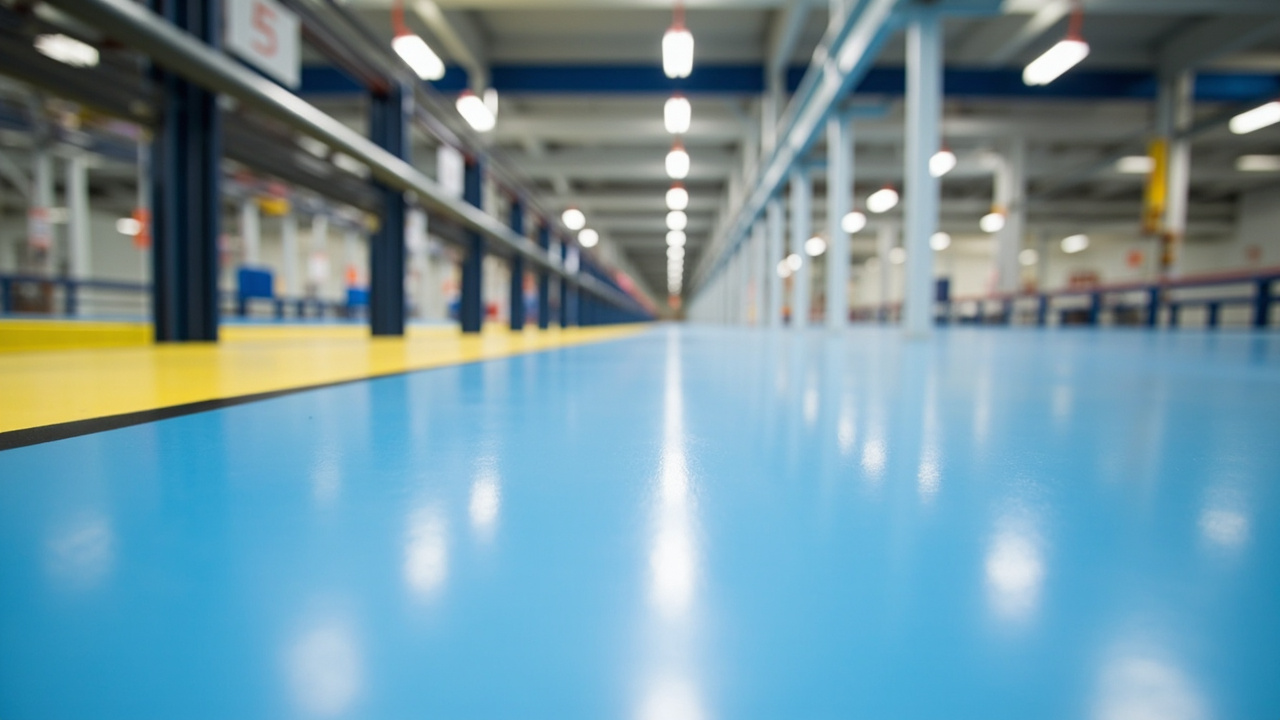
I. Why rigid epoxy cracks along expansion joints
To understand elastic epoxy, one must first understand the failure mode of rigid epoxy. Ordinary bisphenol A epoxy cured with amines or polyamides has high crosslink density, high glass transition temperature (Tg), and high tensile modulus, with elongation at break typically only 1%–3% (per GB/T 528 / ASTM D412 approach, measured with tensile specimens). This means: when the substrate opens beyond a few millimeters at the expansion joint and the paint film's elongation capacity cannot keep up, stress accumulates at the joint mouth and the paint film is "torn open."
The designed opening of concrete expansion joints often far exceeds 3%. According to GB 50037 "Code for Design of Building Ground" and engineering experience, industrial floor expansion joint spacing is generally 6–12 m, and joint mouth displacement under temperature cycles can reach several millimeters or even tens of millimeters; if combined with settlement or non-uniform shrinkage, local displacement is even greater. If rigid epoxy is left untreated, it will almost inevitably show "V-shaped" or "linear" cracking at the joint mouth, and then media invade through the cracks, cause under-film corrosion, and entire sheets shell off.
The conclusion is clear: expansion joints, construction joints, and through-cracks are nodes in the floor system that "must be flexibly treated." Elastic epoxy (and the polyurethane elastic layer coordinated with it) is born for these nodes.
II. Where does the flexibility of elastic epoxy come from: polyether amine curing
The flexibility of epoxy does not come from "using less curing agent," but from "changing the curing agent." The key to whether the cured epoxy is hard-brittle or flexible lies in the existence of soft segments in the crosslinked network.
The most commonly used and most mature flexible epoxy curing agent is polyetheramine (PEA), such as the D-series and T-series in the JEFFAMINE series (Huntsman's public trade name). Its molecular backbone is a long chain of ether bonds of polyethylene oxide/polypropylene oxide (—CH₂—CH₂—O— repeating units), with primary amines at both ends. The curing mechanism is still the ring-opening addition of epoxy groups and amine hydrogens, but the ether chain itself is extremely flexible and rotatable, and when embedded in the 3D network it is equivalent to introducing a "spring" into the rigid epoxy skeleton.
Characteristics of polyether amine cured epoxy:
- Tensile elongation can be greatly improved, from 1%–3% of the rigid system to the 20%–80% level (varies with PEA ratio and molecular weight, per product TDS);
- Toughness and impact resistance are improved, less prone to brittle fracture under impact;
- Good low-temperature flexibility, does not become brittle at low temperature;
- Still retains the strong adhesion and chemical resistance foundation of epoxy, especially alkali resistance.
It must be emphasized: elastic epoxy is "relatively flexible-elastic," not "rubber." Its tensile strength is lower than rigid epoxy and its modulus is lower, so it is generally not used as a large-area topcoat, but for expansion joint filling, fine crack sealing, and node layers requiring crack-following resistance. Large-area load-bearing topcoats still require rigid or high-strength systems; the elastic layer only solves the "moving" places.
III. Standard practice for expansion joint treatment: flexible base + rigid surface
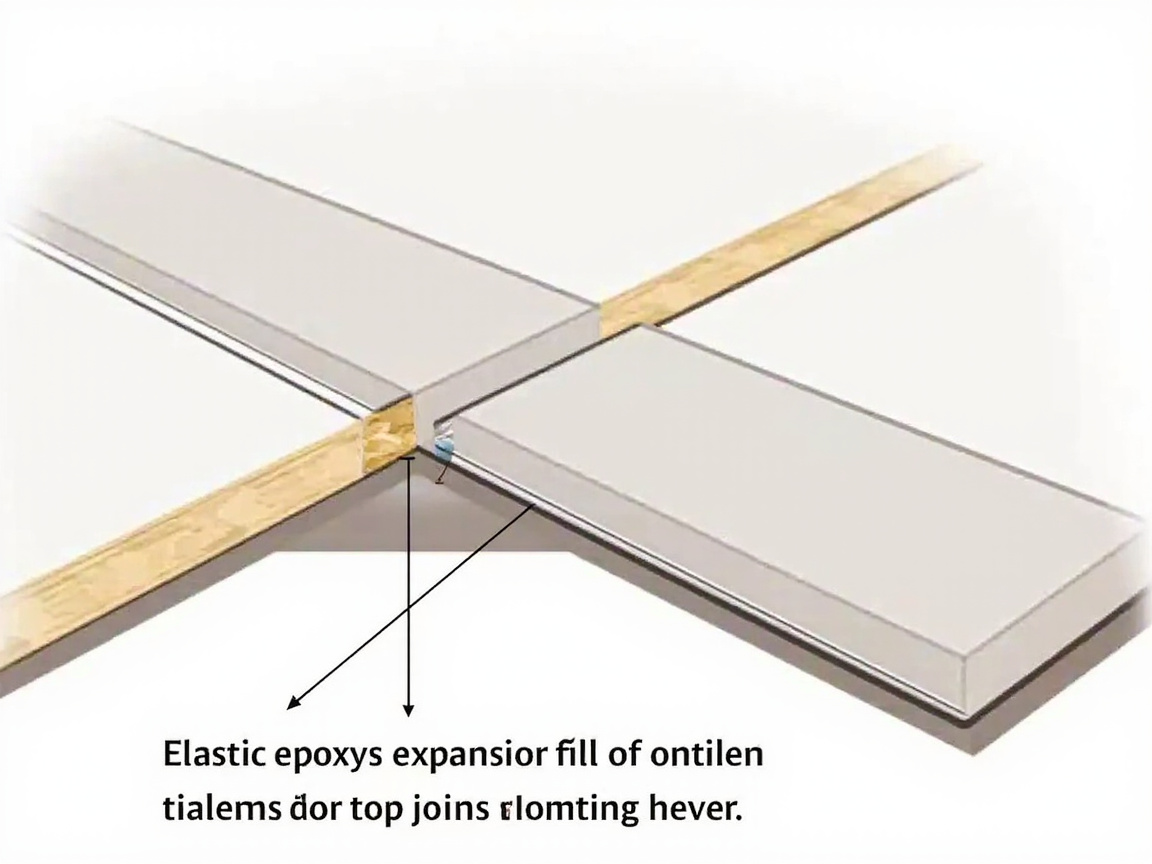
The core idea of expansion joint treatment is "rigid-flexible combination"—use elastic material inside the joint to absorb displacement, and use rigid topcoat over the joint to restore flatness and wear resistance, with a "non-stick release" design between the two to avoid tensile cracking.
The typical process layers are as follows (taking heavy-load plant floor as an example, referring to the general requirements for monolithic surface layers in GB 50209 "Code for Acceptance of Construction Quality of Building Ground" and epoxy floor industry practice):
- Grooving and cleaning: Cut a V-shaped or U-shaped groove along the original expansion joint, clean dust, oil, and loose layers to ensure the interface is clean and dry (moisture tolerance depends on the selected material).
- Backer material (peanut / foam rod): Embed a closed-cell foam rod at the bottom of the joint to control the construction depth of the elastic sealant and avoid three-sided bonding (only let the sealant adhere to the two side walls, forming a scalable "constrained seal").
- Elastic base filling: Inject elastic epoxy or polyurethane elastic sealant (displacement capacity ≥ 25%, per JC/T 1015 and ISO 11600 elastic sealant approach), fill the groove fully, not higher than the substrate top surface.
- Stitch reinforcement (optional): Paste fiberglass cloth or apply a thin layer of elastic epoxy over the elastic layer to disperse joint mouth stress.
- Rigid topcoat coverage: Apply rigid epoxy or polyurethane topcoat as a whole, crossing the joint mouth; at this time the elastic body is below the joint mouth, and the rigid paint film above is "supported" by the elastic body, the substrate displacement is absorbed by the elastic body, and the rigid topcoat is not torn open.
- Surface finishing: Make wear-resistant, anti-slip, or self-leveling topcoat as required by the overall floor.
The table below gives a comparison of treatment key points for different joint types:
| Joint type | Displacement characteristic | Recommended elastic material | Rigid topcoat treatment | Key control |
|---|---|---|---|---|
| Expansion joint (temperature joint) | Periodic opening/closing, large amount | Elastic epoxy or PU sealant (displacement 25%) | Overall coating across joint, not cut | Backer controls depth, avoid three-sided adhesion |
| Construction joint | Mainly shrinkage, small amount | Elastic epoxy thin fill | Overall coating | Clean thoroughly, strong adhesion |
| Through-crack (active) | Continuous micro-opening | Elastic epoxy + fiberglass reinforcement | Paste cloth across joint then topcoat | Judge activity, stop movement first or leave it |
| Hairline crack (static) | Basically immobile | Can seal with primer penetration, no need for elastic | Direct topcoat | Confirm non-active |
IV. Synergy of elastic epoxy and polyurethane elastic layer
When stronger displacement following is needed (such as outdoor floors, parking ramp, sports venues), elastic epoxy is often coordinated with polyurethane elastic layer. The division of labor between the two:
- Elastic epoxy: Stronger adhesion, better compatibility with epoxy primer/middle/topcoat, good chemical resistance foundation, suitable for "joint filling + stitch reinforcement" as the flexible node inside the rigid system; it solves "where in the epoxy system can move."
- Polyurethane elastic layer (see epoxy and polyurethane selection): Elongation at break can reach 200%–400% (aliphatic PU, per product TDS), better elasticity and resilience, more suitable for large-area elastic topcoat, elastic coverage of expansion joints, and venues requiring shock absorption and impact resistance.
A common combination in practice: epoxy primer + elastic epoxy/PU stitch treatment + epoxy mortar/self-leveling leveling + polyurethane elastic topcoat (or epoxy topcoat). This "epoxy base, elastic joint treatment, PU topcoat" combination balances adhesion, chemical resistance, wear resistance, and displacement following.
Note: The interlayer compatibility of elastic epoxy and polyurethane must be verified (whether it will bite the base or delaminate). Same-system or compatibility-verified pairings are safer. For system-level selection of epoxy and polyurethane, further refer to the epoxy and polyurethane selection guide (https://www.psste.com/epx-selection/), and the special description of polyurethane elastic floor (https://www.psste.com/epx-pu-floor/).
V. Elastic epoxy curing agent selection and ratio
The performance of elastic epoxy highly depends on the curing agent. In addition to polyether amine (PEA), there is a class of flexible amine adducts / polyamide-modified amines that can also provide certain flexibility, but the elongation and low-temperature flexibility are usually inferior to PEA. Selection looks at three points:
- Required elongation: Large joint displacement, choose high PEA ratio; only for fine crack prevention, medium-low ratio is sufficient.
- Pot life and workability: Polyether amine reactivity is relatively mild, pot life is longer, but low-temperature curing is slow; if necessary, pair with low-temperature curing agent (refer to epoxy curing agent selection https://www.psste.com/epx-curing-agent/).
- Moisture tolerance and substrate condition: Joints are often damp, so choose moisture-curing or high moisture-tolerant formulations.
In terms of mixing ratio, flexible epoxy is also a two-component system and must be weighed strictly according to the equivalent ratio (EEW/AHEW). See the two-component coating mixing ratio (https://www.psste.com/epx-mix-ratio/). If excess flexible curing agent is added, unreacted amine will remain, causing tackiness and reduced chemical resistance; if insufficient, crosslinking will be inadequate and strength low. Always follow the mass ratio in the product TDS, and do not estimate by volume.
VI. Common Construction Misconceptions
- Misconception 1: Directly using rigid epoxy for joint sealing. Rigid epoxy filling the expansion joint solid seals the "part that should move", and the joint paint film will inevitably crack with temperature changes.
- Misconception 2: Applying elastic layer too thick or bonding on three sides. If the elastic sealant adheres to the joint bottom, it will be "pulled apart" during movement. Backer foam rod is key.
- Misconception 3: Sealing active cracks without assessment. For through-cracks still active, structural causes (settlement, load) should be evaluated first; elastic treatment can only "absorb" limited displacement and cannot replace structural reinforcement.
- Misconception 4: Incompatible interlayers. Applying incompatible topcoat directly over flexible epoxy may cause lifting and delamination. Do a small sample verification.
VII. Key Points for Testing and Acceptance
For acceptance of flexible epoxy/elastic joint treatment, besides overall floor coating adhesion (GB/T 5210 pull-off method), abrasion (GB/T 1768), hardness (GB/T 6739 pencil hardness), the following for "elasticity" itself should be noted:
- Elongation at break / Tensile strength: Prepare samples and test per GB/T 528 / ASTM D412 to verify flexibility meets standard;
- Sealant movement capability: Per JC/T 1015, ISO 11600 approach, check class (e.g., 25LM);
- Site observation: Whether joint mouth cracks or debonds after temperature change.
Kexin New Materials (kexinMaterials) provides an integrated solution for flexible epoxy and joint treatment from bottom filling, over-joint reinforcement to top layer. It is recommended to first make a 1–2 m² sample in key plants, and confirm no cracking after one temperature cycle before large-area application.
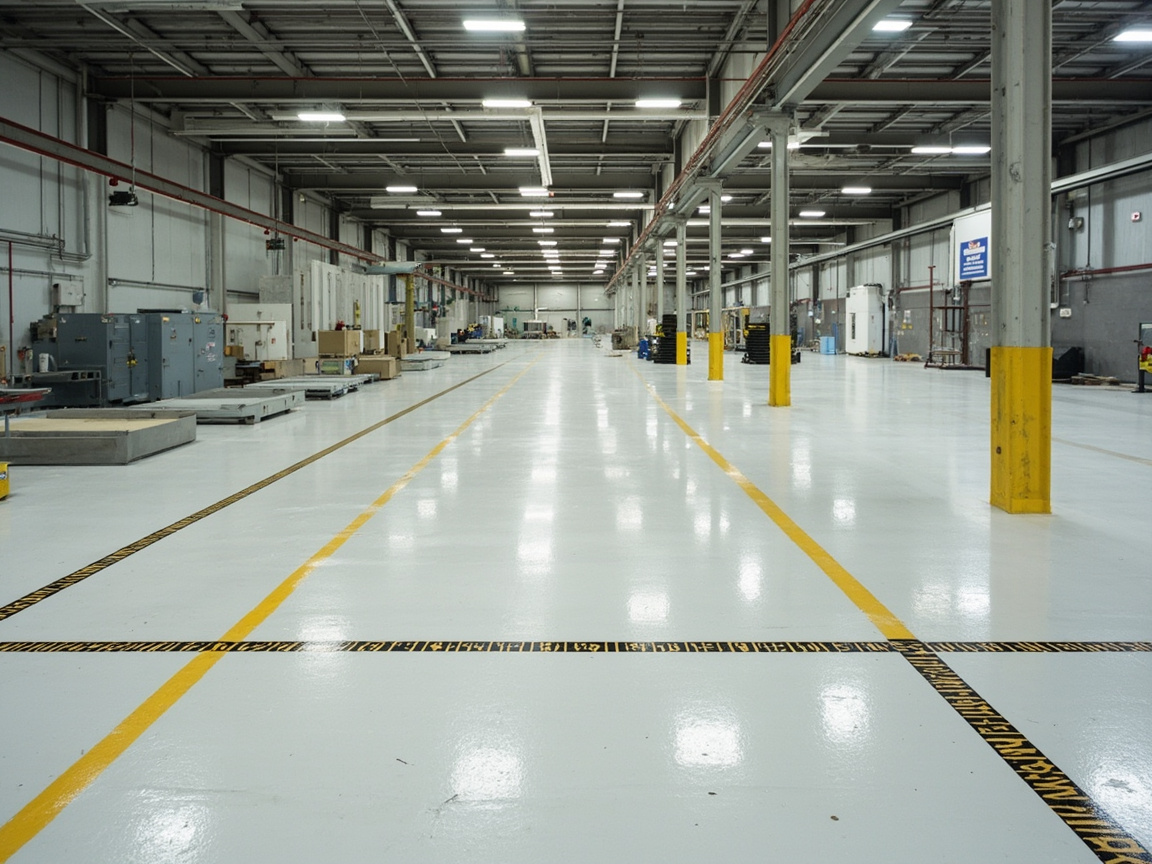
VIII. Summary of Selection Boundaries
Flexible epoxy is not an "all-purpose paint"; its positioning is very clear:
- Applicable: expansion joints, construction joints, fine cracks, nodes requiring anti-cracking follow-up, and flexible layers compatible with rigid epoxy;
- Not applicable: large-area high-load wear-resistant topcoat (still use rigid epoxy/PU), main anti-corrosion layer in strong corrosion environment (upgrade to phenolic epoxy or lining, see epoxy chemical resistance https://www.psste.com/epx-chemical-resistant/);
- Synergy: Combined with polyurethane elastic layer to cover complete needs from "joint filling inside" to "elastic topcoat".
With "rigid-flexible combination", floor coating cracking is controllable, and both service life and appearance can be achieved.
VIII (Supplement). On-site Construction Pace of Flexible Epoxy
Flexible epoxy joint filling construction should proceed by grooving—cleaning—backing—priming—injecting—curing—topcoating. Backer foam rod diameter should be about 1.3 times the joint width to ensure compressed fit; use dedicated caulking gun to inject sealant continuously to avoid air entrapment; after completion, allow sufficient curing time before applying rigid topcoat to prevent uncured movement causing topcoat defects. Kexin New Materials (kexinMaterials) recommends making a 1 m sample for key joints first, and promote after confirming no cracking through temperature change.
IX (Supplement). Flexible Epoxy Matching with Crack Width
Fine cracks (0.3 mm and still moving) require elastic filling + over-joint glass fiber reinforcement; structural cracks should be structurally reinforced first then flexibly sealed. Width determines process: the wider, the more backing is needed to control depth and elastic volume, avoiding three-side bonding of sealant being pulled apart. Misjudging width is a common cause of joint treatment failure.
X (Supplement). Durability and Maintenance of Flexible Epoxy
Elastic layer durability depends on material elongation retention and interfacial adhesion. UV slowly ages flexible epoxy surface; outdoors should add aliphatic PU topcoat protection; regularly inspect joint mouth for debonding and cracking, and promptly refill local failures. Maintenance cost is far lower than overall rework, so joints should be listed as key regular inspection points for floor coating.
XI (Supplement). Cost Boundary of Flexible Epoxy
Flexible epoxy unit price is higher than ordinary epoxy, but extremely low compared to the cost of crack rework and whole-sheet shelling. Decision should be based on full life cycle: floors with many active joints, saving elastic treatment will surely pay rework bills. Treat it as insurance rather than extra cost, and selection is more rational.
XII. Material Performance Indicators and Acceptance of Flexible Epoxy
Besides conventional adhesion (GB/T 5210), abrasion (GB/T 1768), flexible epoxy acceptance focuses on elongation at break and tensile strength (GB/T 528 / ASTM D412) to verify flexibility meets standard; sealant types refer to JC/T 1015, ISO 11600 for movement class (e.g., 25LM). On site, after one temperature cycle confirming no cracking and no debonding at joint mouth, it is qualified.
XIII. Process Connection between Flexible Epoxy and Polyurethane Elastic Layer
Typical process: epoxy primer → elastic epoxy/PU joint filling inside + over-joint reinforcement → epoxy leveling → aliphatic PU or epoxy topcoat. If two flexible materials are directly stacked, confirm compatibility, no mutual dissolution, no lifting; using compatible primer at interface is more stable. Process card notes each layer thickness, interval, temperature and humidity to reduce on-site randomness.
XIV. Identification and Treatment Priority of Active Joints
First identify whether the joint is active: observe historical crack direction, make displacement marks to measure changes, check structural settlement records. High activity ones prioritize elastic treatment + structural assessment; static fine cracks can be simplified. Mistaking active joint as static is the root cause of repeated rework. Identification first, material later; order cannot be reversed.
XV. Example of Compatible Material List for Flexible Epoxy
A set of joint treatment materials: closed-cell backer foam rod, primer (epoxy or dedicated primer), flexible epoxy sealant, over-joint glass fiber cloth, rigid topcoat (epoxy or PU). List notes each layer thickness, interval, temperature and humidity window. Start work only when materials are complete, to avoid on-site material shortage causing failure. Kexin New Materials (kexinMaterials) provides joint treatment material kits with pre-verified compatible parameters.
XVI. Environmental Window for Flexible Epoxy Construction
Flexible epoxy construction is best at 10–30℃, relative humidity <85% (see TDS), base surface no standing water no oil stains. Low temperature slows reaction, high temperature shortens pot life; high moisture must select moisture-curing type or dehumidify. Environmental window written into process card, on-site record temperature and humidity as quality traceability basis.
XVII. Quality Inspection Checklist for Flexible Epoxy
Inspection items: joint cleanliness, backer fit, continuous void-free filling, curing degree, complete over-joint reinforcement, no cracking on topcoat. Acceptance by visual + pull-off (interface) + re-inspection after temperature change. Checklist inspection turns joint treatment from "by feel" to "by standard", guaranteeing durability.
XVIII. Flexible Epoxy Joint Treatment in Underground Garage
Underground garages have many expansion joints and large traffic vibration; rigid epoxy directly covering joints will surely crack. Use flexible epoxy filling + over-joint reinforcement + epoxy/PU topcoat to absorb vibration and prevent cracks. Joints at ramp and parking space boundaries are key. Garage joint treatment is the most frequent scenario for flexible epoxy, process must be standardized.
XIX. Selection Boundary between Flexible Epoxy and Expansion Joint Sealant
Flexible epoxy suits nodes inside epoxy system, strong adhesion; polyurethane sealant has higher elongation, suits large displacement outdoors. The two can be selected by joint displacement: small displacement use flexible epoxy, large displacement outdoors use PU sealant. Clear boundary avoids early failure from mismatch.
XX. Common Construction Errors of Flexible Epoxy
Errors: no backing three-side bond, joint not cleaned poor adhesion, air entrapment in filling, topcoat before curing, no PU protection outdoors. List them on wall one by one to eliminate. Error set comes from on-site review, the cheapest quality textbook.
XXI. Flexible Epoxy Joint Treatment in Clean Room
Clean room joints must be smooth dust-free, easy to clean; flexible epoxy filling then topcoat meets hygiene requirements. Joint is dirt hiding risk point in clean area, only good treatment passes hygiene audit. Clean joint treatment is key detail of hygiene-grade floor coating, not omitable.
XXII. Low-temperature Flexibility Retention of Flexible Epoxy
Flexible epoxy remains flexible at low temperature, relying on low glass transition temperature of PEA ether bond. Low-temperature flexibility ensures cold region joints do not crack. Cold region projects must verify low-temperature elongation at break, not just room temperature data. Low-temperature flexibility is regional adaptation indicator of flexible epoxy.
XXIII. Life Synergy between Flexible Epoxy and Overall Floor Coating
Elastic joint treatment extends overall floor coating life, avoiding chain delamination from joint cracking. Synergy is system engineering: good joint then long surface. Include joints in floor coating life design, not post-hoc patching. Synergy thinking is core of durable floor coating.
XXIV. Cost Composition Perspective of Flexible Epoxy
Cost includes material, labor and later maintenance. Although elastic material unit price is higher than ordinary epoxy, it avoids crack rework and whole-sheet shelling, later maintenance cost drops significantly. Amortize cost over full life cycle, elastic treatment often saves more. Perspective on composition allows rational view of unit price difference, making project-beneficial trade-offs.
XXV. Acceptance Sample Block Practice for Flexible Epoxy
Acceptance uses same-batch sample block for temperature cycle, observe whether joint mouth cracks or debonds. Sample block ages with operating environment, as life warning. Sample block method turns abstract flexibility into measurable evidence, acceptance has basis. Standardized practice, objective reference when dispute. Small sample block is physical voucher of quality contract, worth serious execution.
XXVI. Construction Training Key Points for Flexible Epoxy
Training focuses on three things: backing controls depth to prevent three-side bond, continuous void-free filling, no topcoat before curing. Doing these three right, failure rate drops sharply. Training uses on-site error set as textbook, turns specification into action. People are final executor of joint treatment quality, training investment extremely low but return extremely high, should be pre-required before process.
XXVII. Life Synergy between Flexible Epoxy and Overall Floor Coating
Elastic joint treatment extends overall floor coating life, avoiding chain delamination from joint cracking. Synergy is system engineering: good joint then long surface. Include joints in floor coating life design, not post-hoc patching. Synergy thinking is core of durable floor coating, also reflects protective system view. Ignoring joints, even best topcoat hardly escapes early damage.
XXVIII. Details of Flexible Epoxy in Clean Room
Clean room joints must be smooth dust-free, easy to clean; flexible epoxy filling then topcoat meets hygiene requirements. Joint is dirt hiding risk point in clean area, only good treatment passes hygiene audit. Details determine clean grade compliance. Write joint treatment into clean engineering specification, control pollution from source, ensure production and product safety.
XXIX. Low-temperature Flexibility Verification of Flexible Epoxy
Flexible epoxy must remain flexible at low temperature, relying on low glass transition temperature of polyetheramine ether bond. Cold region projects must verify low-temperature elongation at break, not just room temperature data. Low-temperature flexibility is regional adaptation indicator, north-south selection may differ. Verification uses low-temperature tensile specimen, data supports cold region application confidence, avoids cold brittle failure.
XXX. Application Summary of Flexible Epoxy
Flexible epoxy specifically treats cracking at active joints, relying on a polyether amine flexible network to absorb displacement. It works in concert with rigid epoxy and polyurethane elastic layers to form a floor system that combines rigidity and flexibility. Application is summarized as: fill within the joint, reinforce across the joint, topcoat the surface, and protect outdoors. The four-step method covers most joint scenarios. Understanding the application logic turns floor cracking from an inevitable consequence into a controllable variable, with significant value.
31. Quick Q&A Reference for Flexible Epoxy
Quick reference: Can rigid epoxy be poured directly? No. Why use backer? To prevent three-sided adhesion. What about active cracks? First structural assessment, then flexible sealing. Outdoors? Add aliphatic topcoat. Condense high-frequency questions into a card for on-site instant answers. Post the quick-reference card on the wall to reduce misoperation. Embed the Q&A as work instructions so joint treatment quality becomes stable and predictable, and the rework rate naturally drops.
32 (Supplement). Displacement Classes of Flexible Epoxy and Sealant Grading
The displacement capability of elastic joint fillers is dual-marked by "displacement + modulus" per ISO 11600 and JC/T 1015, e.g., 25LM means it can withstand 25% tension/compression and is low modulus, while 25HM is high modulus. Grade selection must match the actual joint displacement: for small displacement, a lower grade saves material; for large displacement, a higher grade avoids being pulled apart. In engineering, first measure the actual opening/closing of the joint under temperature cycles—use displacement marks or calipers to track one full cycle and record extremes, then select the sealant grade based on the measured value with a 20%–30% upward margin, rather than applying by experience. Wrong grade selection either wastes material or causes early failure, and is the most easily overlooked technical point in expansion joint treatment. Kexin New Materials (kexinMaterials) recommends simultaneous sample temperature-variation verification for critical joints, grounding grade selection in data rather than estimation. The diameter and compression ratio of the backer foam rod also affect the actually achievable displacement, and the two must be designed jointly. In actual engineering, displacement class review should also incorporate the structural discipline's calculations for settlement and thermal expansion/contraction, avoiding conclusions based solely on material grade. For extra-long plants or outdoor large slabs, estimate the maximum joint width by joint spacing and temperature difference per GB 50037, then back-calculate the required sealant grade. Combining structural calculation with material grade selection is the underlying logic for long-term crack-free expansion joints, and also avoids placing all grade-selection responsibility on the material side while ignoring design-side factors.
Common Questions
Q: How to choose between flexible epoxy and polyurethane elastic sealant?
A: For joint filling, prioritize displacement capability and substrate conditions: polyurethane elastic sealant has higher elongation (up to several hundred percent) and good elastic recovery, suitable for large displacement and outdoor use; flexible epoxy has stronger adhesion, better compatibility with epoxy systems, and better chemical resistance, suitable for joint treatment and across-joint reinforcement within epoxy floor systems. The two can also be used in combination.
Q: Can a rigid epoxy floor be directly laid over expansion joints?
A: Not recommended. Rigid epoxy hardly follows displacement; after covering, the joint mouth will still crack as the substrate opens and closes. The correct approach is to first flexibly fill the joint (flexible epoxy or PU sealant), then use backer to control depth and avoid three-sided adhesion, and finally apply the rigid topcoat as a whole, with the elastic body absorbing displacement.
Q: What is the typical elongation at break of flexible epoxy?
A: It depends on the ratio and molecular weight of the polyether amine (PEA) curing agent. Ordinary rigid epoxy is about 1%–3%, while polyether-amine-cured epoxy can be raised to the 20%–80% range (per product TDS). It is not rubber, but "relatively flexible-elastic," used at nodes rather than large-area topcoats.
Q: Why place a foam rod (backer) when filling expansion joints?
A: The closed-cell backer foam rod controls the application depth of the filler and prevents the filler from bonding to the joint bottom (three-sided adhesion). It only lets the filler adhere to the two side walls, so during displacement it can be stretched like a "constrained seal" without being pulled apart; otherwise it would be pulled off at the bottom and fail.
Q: Can active cracks be directly sealed with flexible epoxy?
A: Don't judge by material alone. First determine whether the crack is still active (settlement, load change). Elastic materials can only absorb limited displacement; for continuously active structural cracks, first conduct structural assessment and arrest/reinforcement, then consider elastic sealing, otherwise it will crack repeatedly.
Q: Can flexible epoxy and rigid epoxy be used directly together?
A: Yes, and this is standard practice—flexible epoxy for joint filling and across-joint reinforcement, rigid epoxy for large-area topcoat. The key is interlayer compatibility and clean interface; it is recommended to first make a small sample to confirm no biting through the base coat and no delamination.
Q: Any special attention to flexible epoxy mixing ratio?
A: Still a two-component equivalent ratio; must weigh by mass ratio per TDS, not by volume. Adding too much flexible curing agent causes tackiness and reduced chemical resistance; too little leads to insufficient crosslinking and low strength. PEA reacts slowly at low temperatures; use low-temperature curing agent if necessary.
Q: For outdoor expansion joints, use flexible epoxy or polyurethane?
A: For outdoor, large-displacement, weather-resistant joints, prioritize aliphatic polyurethane elastic layer or PU sealant (weather-resistant, non-yellowing, see aliphatic and aromatic polyurethane). Flexible epoxy has generally poor weather resistance and is more suitable for node treatment within indoor epoxy systems.
Q: Are flexible epoxy construction requirements for substrate moisture high?
A: Joints are often damp; choose moisture-curing or high moisture-tolerance formulations, and observe specified standing time. The substrate must be free of looseness, oil, and dust; a clean interface is the prerequisite for adhesion.
Q: How to accept/verify that elastic joint treatment is done correctly?
A: Look at three types of evidence: material-level elongation at break/tensile strength (GB/T 528, ASTM D412); sealant displacement class (JC/T 1015, ISO 11600); on-site after one temperature-variation cycle, no cracking or debonding at the joint mouth. For critical plants, it is recommended to first apply a sample for confirmation.
Further Reading
- Epoxy Curing Agent Selection: Trade-offs Among Amines, Polyamides, and Polyether Amines
- Polyurethane Floor Elastic Coating: Mechanism, Weather Resistance, and Impact Resistance
- Epoxy and Polyurethane Selection Guide: A System-Level Decision Framework
Further Reading
- Epoxy Floor Coating System: Complete Compatibility Logic from Primer, Intermediate Coat to Topcoat
- Epoxy Micaceous Iron Oxide Intermediate Coat: MIO Flake Barrier Mechanism and Compatibility Design
- Technical Analysis of Epoxy Zinc-Rich Primer: Zinc Content, Solid Content, and Cathodic Protection Mechanism