Epoxy floor coating systems are the core solution for the protection and decoration of modern industrial and commercial floors. From clean rooms in electronics factories and sterile environments in pharmaceutical and food industries, to high-frequency load areas such as underground parking garages and logistics warehouses, epoxy flooring has become the preferred choice for concrete substrate protection due to its excellent adhesion, chemical corrosion resistance, easy cleaning, and seamless monolithic characteristics. However, many users only focus on "whether the topcoat is glossy and whether the price is high" when purchasing, while ignoring that epoxy flooring is a systematic project composed of multiple layers including primer, intermediate coat, and topcoat. Any mistake in the selection or construction of any layer will lead to chain problems such as shelling, delamination, pinholes, and cracking.
As a technical supplier of industrial protective coatings, Kexin New Materials (kexinMaterials) has accumulated a large amount of frontline data in the design and matching of epoxy floor systems. This article will systematically break down the key technologies of epoxy flooring from system composition, material mechanisms, film thickness design, construction control to standard acceptance, helping you upgrade "experience" to "citable data" in selection and construction, rather than making decisions by feel.
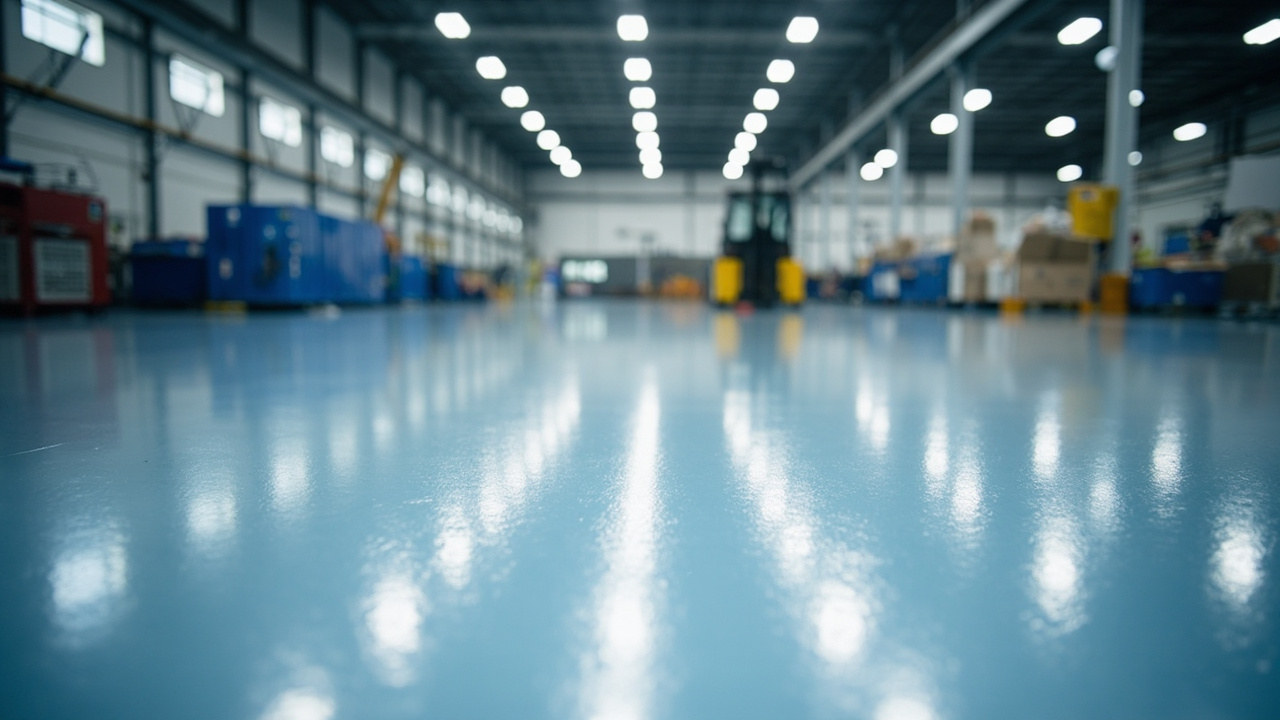
I. Why Epoxy Flooring Has Become the Mainstream for Industrial Floors
Epoxy resin is a thermosetting resin formed by polycondensation of epichlorohydrin and bisphenol A (or phenolic, alicyclic), with highly active epoxy groups (—CH(O)—CH—) at both ends of its molecular chain. When mixed with amine curing agents, the epoxy groups open and undergo addition polymerization with amine hydrogens to form a three-dimensional cross-linked network structure. This cross-linked network brings three characteristics most valued in flooring engineering:
First is extremely high adhesion. The epoxy groups have strong wetting and anchoring capabilities for polar substrates such as concrete and steel. According to the pull-off test of GB/T 5210 "Paints and varnishes — Pull-off test for adhesion", the adhesion between qualified epoxy primer and concrete substrate usually reaches above 1.5 MPa, and some high-penetration primers can even exceed 2.5 MPa, far higher than the physical bonding force of ordinary paint and substrate.
Second is dense shielding. The cross-linked epoxy film has extremely low porosity and can effectively block the penetration of water, oxygen, salt ions, and chemical media, which is the fundamental source of its chemical corrosion resistance and waterproofing. According to the chemical media immersion tests of GB/T 1768 and ISO 2812 series, standard epoxy coatings show significantly better tolerance to neutral salt spray, engine oil, and alkaline solutions than alkyd and acrylic systems.
Third is designable mechanical properties. By adjusting the type of curing agent, filler ratio, and film thickness, the hardness of epoxy flooring (pencil hardness can reach 2H to 3H or even higher according to GB/T 6739), compressive strength (can reach above 80 MPa according to JC/T 1015 and other industry methods), and abrasion resistance (weight loss controllable according to GB/T 1768) can be customized according to working conditions. This is also why epoxy flooring can cover from light-load offices to heavy-load logistics.
It needs to be reminded that epoxy flooring is not "applied in one coat". Concrete substrates are loose and porous with high moisture content. If topcoat is applied directly, not only will adhesion fail to establish, but solvents and moisture will also vaporize under the film to form bubbles. Therefore, epoxy flooring must be constructed in the sequence of "primer—intermediate coat—topcoat", with each layer having a clear division of labor.
II. Division of Labor in the Three-Layer Structure of Epoxy Floor Systems
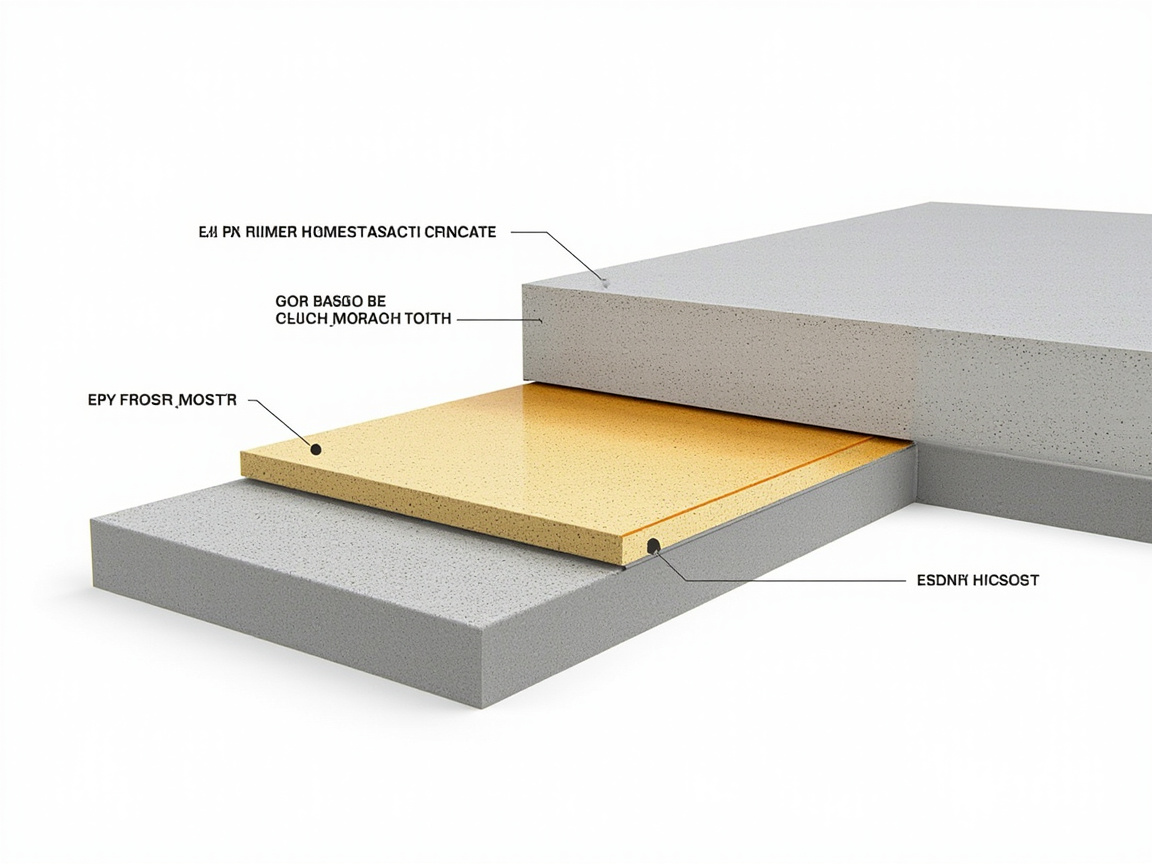
A complete epoxy floor system usually consists of three layers, and sometimes a clear coat or anti-slip layer is added above the topcoat, but the core remains these three layers:
Primer functions to establish adhesion with the concrete substrate and seal substrate pores and stabilize moisture content. The primer is generally a low-viscosity, high-penetration epoxy system with relatively low solid content, which can penetrate into concrete capillary pores to form "anchor bolts". According to engineering experience, the dry film thickness (DFT) of the primer is usually controlled at 30–80 µm, relying on penetration rather than film thickness. Wrong selection or omission of primer is the primary cause of overall shelling of the intermediate and top layers.
Intermediate Coat (Screed / Intermediate) undertakes leveling, thickening, and load-bearing. The intermediate coat is mostly an epoxy mortar or putty layer with added sand and powder. By adding fillers such as quartz sand and calcium carbonate, it reduces cost while improving volume stability and compressive strength. The intermediate coat can be applied in multiple passes, each with DFT ranging from 300–1000 µm, cumulatively reaching 1–5 mm or even thicker, used to fill concrete unevenness and withstand dynamic loads from forklifts and shelves. The flatness of the intermediate coat directly determines the final appearance of the topcoat.
Topcoat is the final use layer and decorative layer. Self-leveling topcoat forms a mirror-flat surface by its own fluidity; roller-applied topcoat forms a uniform thin layer by construction and can be selected as matte, semi-gloss, or high-gloss. The topcoat is responsible for chemical resistance, wear resistance, easy cleaning, and color expression, with DFT usually in the range of 200–1000 µm (self-leveling thicker, roller thinner). For the matching logic between topcoat and intermediate paint, refer to the article Epoxy Micaceous Iron Intermediate Paint in this batch to understand how the shielding-type intermediate layer coordinates with the topcoat.
The relationship among the three layers is "the foundation determines the upper limit": if the primer adhesion is insufficient, the intermediate coat will peel off entirely no matter how thick; if the intermediate leveling is not in place, the topcoat will show pits no matter how glossy. When selecting, be sure to evaluate the system as a whole, rather than comparing the price of a single layer separately.
III. Film Thickness and Load Design: Light, Medium, and Heavy Loads
The film thickness design of epoxy flooring must match the load conditions. According to GB/T 22374 "Coating Materials for Flooring" and industry matching conventions, common load grades and corresponding systems are as follows:
| Load Grade | Typical Scenarios | Recommended System | Total Dry Film Thickness DFT | Intermediate Coat Method |
|---|---|---|---|---|
| Light Load | Offices, showrooms, homes | Primer + thin topcoat | 0.3–0.8 mm | Generally 1 pass of putty |
| Medium Load | Electronics workshops, hospitals, supermarkets | Primer + mortar intermediate coat + roller/self-leveling topcoat | 1.0–2.0 mm | 1–2 passes of mortar |
| Heavy Load | Warehouses, garages, logistics | Primer + thick mortar intermediate coat + self-leveling topcoat | 2.0–5.0 mm | 2–3 passes of mortar with wear-resistant aggregate |
| Extra Heavy Load | Machining, frequent forklifts | Primer + ultra-thick mortar + double topcoat | Above 5.0 mm | High aggregate content mortar |
Film thickness is not the thicker the better. If the intermediate coat is applied too thick in a single pass, internal solvent is difficult to escape, easily producing pinholes and shrinkage stress; if the topcoat is too thick, leveling is difficult and orange peel is likely. In engineering, the principle of "thin layers in multiple passes" is adopted, with each intermediate coat controlled within 1 mm, and the next pass applied after the previous is dry. According to the requirements of GB/T 22374 for floor coating materials, abrasion resistance, compressive strength, and tensile bond strength are all tested on the system as a whole, rather than evaluated separately for a certain layer.
A often overlooked point is "substrate strength". The load-bearing capacity of epoxy flooring is ultimately determined by the composite system of the concrete matrix and the coating. If the concrete itself has insufficient strength (such as below C25, severe sanding), no matter how thick the epoxy is, it will be destroyed together with the substrate. Therefore, before construction, the substrate compressive strength (generally required ≥ 25 MPa) and pull-off strength must be tested, and substrate reinforcement done if necessary.
IV. Concrete Substrate Treatment: 70% of Epoxy Flooring Success Lies Before Construction
There is a saying in the epoxy flooring industry: "Seven parts base, three parts paint". Substrate treatment accounts for the vast majority of success or failure. Concrete substrates need to meet the following prerequisites:
First is strength and flatness. Newly poured concrete needs curing for at least 28 days, with strength above C25, and surface flatness complying with the requirements of GB 50209 "Code for Acceptance of Construction Quality of Building Floor Engineering". Second is moisture content. According to industry specifications and material TDS, epoxy construction requires substrate moisture content usually ≤ 4% (some moisture-sensitive systems require ≤ 6% or use humidity-sensitive primer). Excessive moisture content in the floor will cause water vapor pressure under the epoxy film to rise and bubble and delaminate; the plastic film method (ASTM D4263 principle) or moisture meter is commonly used for determination. Third is cleanliness. Oil, release agents, and curing agents must be thoroughly removed, otherwise the primer cannot wet and penetrate.
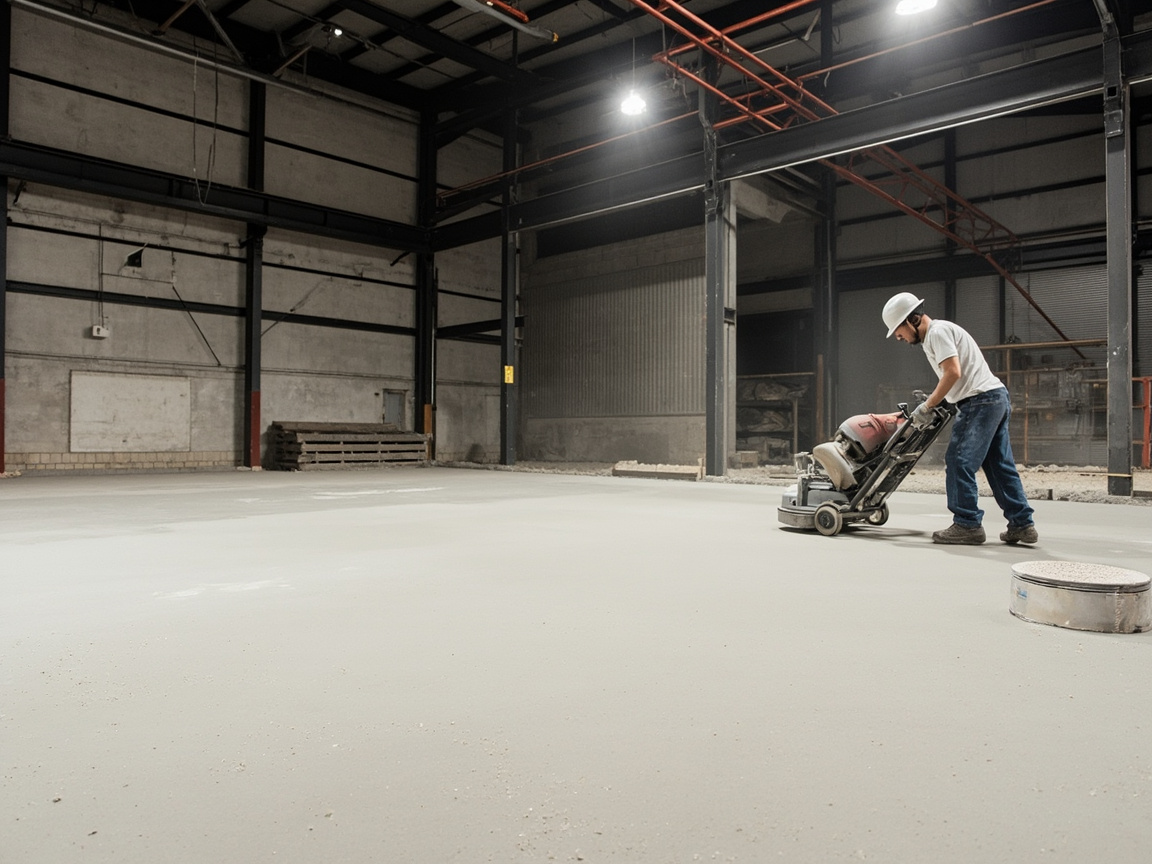
Surface treatment methods include grinding, sandblasting, milling, and shot blasting, aiming to expose fresh concrete surface with certain roughness to form mechanical anchoring. According to the grade thinking of GB/T 8923.1 (equivalent to ISO 8501-1) on steel surface treatment, although concrete has no Sa grade, its cleanliness logic of "grinding to expose aggregate" is consistent: the cleaner and rougher the substrate, the more guaranteed the adhesion. After treatment, an "absorption test" of the epoxy primer should also be performed on the substrate—if the primer is rapidly absorbed dry, it indicates pores are not sealed and need re-coating.
For old floors with severe sanding, it is often necessary to first apply a penetrating hardener or interface agent for reinforcement, then apply the epoxy primer, otherwise the epoxy will "peel off together with the sand". Kexin New Materials (kexinMaterials) when matching floor solutions, lists substrate testing as the first step, providing checklists for moisture content, strength, and flatness and corresponding primer selection suggestions, rather than just selling a bucket of topcoat.
V. Self-leveling and Ordinary Roller Coating: Two Mainstream Topcoat Processes
Epoxy floor topcoats are divided into two categories by construction method: self-leveling (Self-leveling) and roller/trowel applied, with significant technical differences:
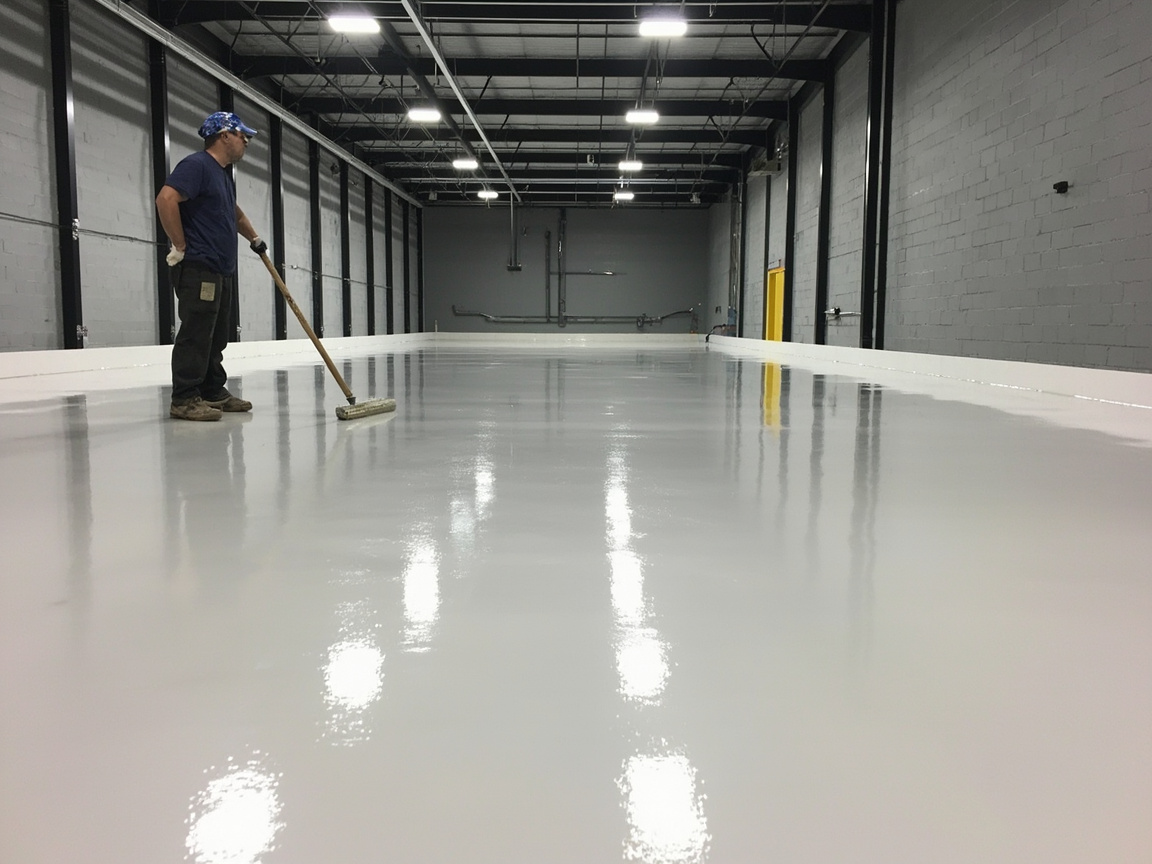
Self-leveling topcoat is a low-viscosity, high-flow epoxy system. After being spread with a trowel during construction, it levels by its own gravity to form a mirror-flat, roller-mark-free surface, with DFT usually 1–3 mm. Advantages are beautiful, easy to clean, seamless, and wear-resistant; disadvantages are high material cost, sensitivity to substrate flatness and construction temperature, and short leveling window. Self-leveling is especially suitable for electronics, pharmaceutical, food, and other places with high cleanliness requirements, and is also the base material for "epoxy colored sand" and "epoxy terrazzo".
Roller-applied topcoat has higher viscosity and thinner film (DFT 200–500 µm), applied by roller, and can be added with anti-slip quartz or texture. Advantages: low cost, fast application, local repair possible, high tolerance to substrate; disadvantages: flatness and gloss inferior to self-leveling, roller marks exist. Roller coating is mostly used for garages, aisles, and general industrial floor coatings.Which process to choose depends on budget, cleanliness level, and load. According to the requirements of GB/T 22374 for wear resistance, impact resistance, and slip resistance (wet slip value according to GB/T 4100 or pendulum friction method) of topcoat, self-leveling excels in wear resistance and cleanliness, while roller coating excels in cost-performance and maintainability. For ramps and garage slopes requiring slip resistance, anti-slip aggregate should be added to the topcoat, and the wet static friction coefficient generally needs to be ≥ 0.5.
VI. Chemical and Medium Resistance: The Foundation of Epoxy Floor Coating Protection
Industrial floor coatings frequently contact media such as engine oil, coolant, acid-alkali cleaners, and food acids; chemical resistance is a core indicator. The chemical stability of the epoxy crosslinked network stems from its saturated C—C main chain and ether bonds, stable against most non-oxidizing media. According to ISO 2812-1 (liquid immersion method) and GB/T 1763 for chemical reagent resistance determination, standard bisphenol A epoxy performs well against the following media:
- Neutral salt spray, deionized water: long-term stable;
- Mineral oil, hydraulic oil, engine oil: stable;
- 10%–30% sulfuric acid, hydrochloric acid (short-term): tolerable, but long-term requires novolac epoxy or vinyl ester;
- Alkali solution (NaOH solution): bisphenol A epoxy has excellent alkali resistance due to ether bond alkali resistance;
- Organic solvents (ketones, esters, aromatics): high sensitivity, long-term contact causes swelling, special systems needed.
It must be clarified: ordinary epoxy is not resistant to strong solvents and strong oxidizing acids. In strongly corrosive environments such as chemical workshops and electroplating areas, novolac epoxy (Novolac Epoxy), vinyl ester (Vinyl Ester), or polyurethane-modified systems should be selected, with corresponding thickness increase. For the deep mechanism of epoxy chemical resistance and medium tolerance table, you can read the Epoxy Chemical Resistance Performance article of this batch, which has a more systematic medium—tolerance matrix.
VII. Construction Environment and Curing Window Control
Epoxy is a two-component reactive film-forming material; environment and mixing ratio greatly affect quality. Recommended construction conditions:
- Ambient temperature 10–30℃, optimal 15–25℃; below 10℃ reaction is extremely slow or even non-curing, above 35℃ pot life drops sharply and leveling is poor;
- Relative humidity ≤ 75% (moisture-sensitive systems ≤ 70%), and substrate temperature at least 3℃ above dew point to prevent condensation;
- Good ventilation but avoid strong direct wind causing surface skinning;
- After mixing, stir thoroughly according to ratio, let stand to defoam (maturation) before use, pay attention to Pot Life limit.
Epoxy curing is clearly governed by temperature. According to general rules of amine curing agents, every 10℃ increase in temperature roughly doubles reaction rate; low winter temperatures require low-temperature curing agents or heating. Insufficiently cured surface will be tacky, low hardness, poor chemical resistance; must wait for full cure (usually 7 days to best performance, according to specified age in GB/T 22374) before putting into use and heavy load.
For new and old concrete joints and expansion joints, epoxy floor coating requires special elastic treatment, otherwise rigid epoxy will crack due to substrate expansion/contraction. The Elastic Epoxy Expansion Joint Treatment article of this batch specifically discusses this critical node.
VIII. Common Defects and Troubleshooting
High-frequency defects of epoxy floor coatings mostly stem from substrate or ratio loss of control:
| Defect | Main Cause | Countermeasure |
|---|---|---|
| Shelling and delamination | High substrate moisture / missed primer / insufficient strength | Control moisture, must apply primer, reinforce substrate |
| Pinholes and bubbles | Intermediate coat too thick / solvent retention / air from stirring | Thin layers multiple passes, defoam, extend leveling |
| Orange peel | Viscosity too high / high temperature / poor leveling | Adjust viscosity, lower ambient temperature, slow curing |
| Whitening and gloss loss | High humidity condensation / insufficient curing | Control humidity, maintain curing period |
| Color difference | Multiple batch topcoat / uneven stirring | Same batch mixing, stir thoroughly |
| Cracking | Substrate expansion/contraction / uneven film thickness / rigid joint | Elastic treatment of expansion joints, control film thickness |
The core of troubleshooting is "return to process". The vast majority of problems can be traced to substrate treatment, ratio, and film thickness, not the coating quality itself.
IX. Standards and Acceptance
Acceptance of epoxy floor coatings should be based on national and industry standards. Core domestic standards include GB/T 22374 "Floor Coating Materials" (specifies physical properties, harmful substance limits), GB 50209 "Code for Acceptance of Construction Quality of Building Ground Engineering", JC/T 1015 "Epoxy Resin Floor Coating Materials", etc. Regarding harmful substances, floor coatings are bound by GB 30981-2020 "Limits of Harmful Substances in Industrial Protective Coatings"; VOC and harmful substances must comply with limits, especially indoor floor coatings also need attention to GB 50325 indoor environmental pollution control of civil building engineering.
Acceptance inspection items usually include: tensile bond strength (GB/T 16777 or pull-off method), abrasion resistance (GB/T 1768), hardness (GB/T 6739 pencil hardness or Shore hardness), compressive strength, surface resistivity (anti-static floor), slip value, appearance and thickness (thickness gauge multi-point detection). Industrial floor coatings generally require tensile bond strength ≥ 1.0 MPa, abrasion weight loss graded by system.
X. Selection Checklist: Turn Parameters into Procurement Specs
To help engineering parties turn this article into procurement and construction specs, it is recommended to form the following checklist:
- Substrate inspection: strength, moisture content, flatness, oil contamination;
- Load grading: light/medium/heavy/extra-heavy, determine total DFT and intermediate coat passes;
- Topcoat process: self-leveling or roller coating, whether anti-slip, anti-static, weather resistance needed;
- Medium environment: list contacted chemical media, accordingly select bisphenol A epoxy, novolac epoxy or polyurethane;
- Construction window: whether temperature humidity controllable, whether low-temp curing agent needed;
- Acceptance standard: clearly reference GB/T 22374, GB 50209 and specific indicator thresholds.
Kexin New Materials (kexinMaterials) delivers with the supporting idea of "substrate diagnosis + system formula + process card" together, giving both materials and reproducible construction boundaries, reducing rework from process loss of control. For projects doing plant floor upgrades and clean workshop construction, this overall support can significantly reduce full-cycle cost.
XI. Anti-static and Conductive Epoxy Floor Coating (Electronics, Pharmaceutical and Explosion-proof Scenarios)
In electronic components, pharmaceutical preparations, lithium batteries and explosion-proof workshops, floor coatings must timely dissipate static charges to avoid discharge damaging sensitive devices or igniting flammable/explosive environments. Anti-static epoxy introduces a continuous conductive phase (conductive carbon black, carbon fiber, conductive mica or metal fillers) into the system to form a conductive network, controlling surface resistance in the range of 1×10⁴–1×10⁹ Ω (according to GB 50515 "Design Code for Conductive (Anti-static) Floor" and SJ/T 11294 concepts). Key construction points: grind and dedust concrete substrate first, apply conductive primer, lay static dissipation copper foil grid and connect to grounding terminal, then apply conductive intermediate coat and anti-static topcoat; the key is that topcoat resistance must match middle and bottom layers, if topcoat is insulating while bottom is conductive, charges still accumulate. Acceptance uses surface resistance meter or megohmmeter for multi-point grid measurement, and per GB 50944 do system grounding resistance test. Such floor coatings must also meet easy cleaning, wear resistance and low dust generation; when selecting, write resistance range, abrasion and flatness into technical specs together.
XII. Old Epoxy Floor Coating Renovation and Defect Repair Decisions
First principle of old floor renovation: first see if substrate is still firm. Use cross-cut method (GB/T 9286) and pull-off method (GB/T 5210) to measure adhesion; those with good adhesion only need grinding roughening, hole filling then recoat topcoat; those with poor adhesion, hollowing or large-area delamination must be milled to solid layer, redo primer-intermediate-topcoat system. Sandy substrate first use epoxy primer oil penetration reinforcement; oil stains first use special cleaner or flame, grinding removal, cannot directly cover. Common defect treatment: pinholes use same-system putty spot fill then grind; light orange peel grind polish, heavy re-coat; cracks per elastic epoxy expansion joint concept slot and flexible fill. Renovation must not directly cover, otherwise old disease will recur, rework cost far higher than doing right once.
XIII. Greenization and VOC Compliance of Epoxy Floor Coating
With implementation of GB 30981-2020 "Limits of Harmful Substances in Industrial Protective Coatings" and GB 50325 "Standard for Indoor Environmental Pollution Control of Civil Building Engineering", VOC and harmful substances of floor coatings are strictly limited. Traditional solvent-based epoxy has high VOC, gradually replaced by solvent-free epoxy, water-based epoxy and high-solid systems. Solvent-free epoxy has almost zero VOC, can thick-coat once, suitable for underground garage and industrial floor coatings; water-based epoxy low odor, safe, suitable for hospitals, schools and food plants, but water/chemical resistance early stage needs curing and more sensitive to construction temp/humidity. When selecting, require supplier provide test report, verify VOC (g/L), benzene series and heavy metals comply with limits. Kexin New Materials (kexinMaterials) provides overall solution from material to construction boundary on low VOC epoxy systems, helping projects balance environmental compliance and service life.
XIV. Slip Resistance and Heavy-load Adaptation of Epoxy Floor Coating
Heavy-load forklift aisles require high compression, wear and impact resistance from floor coatings; use epoxy mortar or self-leveling to increase thickness and aggregate; if slip resistance needed, topcoat mixed with emery or alumina aggregate, wet slip evaluated by pendulum friction method. Frequent forklift turning spots easy to wear, recommend local thickening or wear strips. Select with load grade, forklift type and turning frequency into specs, avoid average film thickness masking local weak points.
XV. Safety and Occupational Health of Epoxy Floor Coating Construction
Solvent-based epoxy contains volatile organic compounds; construction must ventilate, wear respirator and nitrile gloves, no fire; amine curing agents sensitize skin, avoid direct contact; summer enclosed space higher risk. Water-based or solvent-free systems can significantly reduce exposure, first choice for indoor and occupied environments. Safety briefing and emergency plan are engineering bottom line, not to be omitted.
XVI. Acceptance Disputes and Standard Arbitration of Epoxy Floor Coating
Acceptance disputes often appear in film thickness and adhesion: film thickness use magnetic or eddy current thickness gauge multi-point average, adhesion use pull-off method (GB/T 5210) quantitative, abrasion per GB/T 1768, hardness per GB/T 6739. When disputed, both parties retest with same batch sealed sample, standard method prevails. Write acceptance thresholds into contract appendix, can greatly reduce subjective divergence and settlement disputes.
17. Service Life Cycle and Renovation Timing of Epoxy Floor Coating
The designed service life depends on the system and environment: indoor clean epoxy usually 8–15 years, while heavy-load corrosive environments are determined by the medium. End-of-life signs include wear exposing the substrate, delamination, and increased cracks. The renovation timing is determined by inspection data rather than a fixed number of years. It is recommended to establish a floor health record and back-calculate the renovation timing based on the wear rate, so as to ensure production and control costs.
18. Green and Eco-Friendly Certification Trends for Epoxy Floor Coating
Green building material certification, low-VOC labels, and carbon footprint disclosure are becoming thresholds for engineering procurement. Epoxy floor coating suppliers must provide testing and compliance documents, and gradually disclose raw material carbon data. Incorporating eco-friendly certification into bidding conditions forces material upgrades. Project parties should simultaneously request certifications and test reports during material selection to avoid later compliance risks.
19. Green Building Material Certification Path for Epoxy Floor Coating
Green building material certification and low-carbon disclosure are becoming procurement thresholds for government projects and large factories. Epoxy floor coating suppliers must provide test reports and compliance documents, and gradually disclose raw material carbon data. Incorporating eco-friendly certification into bidding conditions forces material upgrades. Project parties should simultaneously request certifications and tests during selection to avoid later compliance risks and enhance the green value of assets.
20. Outlook on Smart Operation and Maintenance of Epoxy Floor Coating
In the future, floors will embed sensors to monitor wear, humidity, and cracks, and combine with digital twins for predictive maintenance. Smart O&M shifts from passive repair to active, extending life and reducing costs. As industrial infrastructure, epoxy floor coating is moving from a single material to a data node. Forward-looking layout of O&M digitalization is the direction for floor management in large parks.
FAQ
Q: What is the difference between epoxy floor coating and polyurethane floor coating, and how to choose?
A: Epoxy has stronger adhesion, hardness, and chemical resistance (especially alkali resistance), suitable for indoor heavy-load and clean workshops; polyurethane has better elasticity, weather resistance, and yellowing resistance, suitable for outdoor and floors with elastic demands. For specific selection, see this batch of Epoxy and Polyurethane Selection Guide.
Q: What should the moisture content of the concrete substrate be controlled to?
A: Most solvent-based epoxy requires substrate moisture content ≤ 4% (more stringent for moisture-sensitive systems), which can be measured by the plastic film method or moisture meter. Excessive moisture is the main cause of bubbling and delamination; must be treated before construction.
Q: Is thicker epoxy floor coating film always better?
A: No. Too thick intermediate coat makes it hard for internal solvent to escape, causing pinholes; too thick topcoat easily causes orange peel and poor leveling. Thin layers in multiple passes should be used according to load grading, with single-layer mortar controlled within 1 mm.
Q: What scenarios are self-leveling and roller-applied topcoat each suitable for?
A: Self-leveling has mirror-smooth and easy-to-clean surface, suitable for electronic, pharmaceutical, and food clean zones, with high cost; roller application has high cost-performance and is repairable, suitable for garage aisles and general industrial floors.
Q: Can ordinary epoxy resist strong acids and strong solvents?
A: Ordinary bisphenol A epoxy resists alkali and mineral oil well, but not strong oxidizing acids and ketone/ester/aromatic solvents. For strongly corrosive environments, phenolic epoxy, vinyl ester, or polyurethane-modified systems should be selected and thickened.
Q: What are the construction temperature requirements for epoxy floor coating?
A: Recommended 10–30℃, optimal 15–25℃; below 10℃ reaction is extremely slow and may not cure, above 35℃ pot life is short and leveling is poor. Low temperature requires low-temperature curing agent or heating.
Q: Why does the floor shell and delaminate?
A: Main causes are high substrate moisture, missed primer application, or insufficient concrete strength. Primer is key to establishing adhesion; missed application or inadequate substrate treatment will inevitably cause delamination.
Q: How long before epoxy floor coating can bear heavy load?
A: Surface dry in a few hours for walking, but full cross-linking curing usually takes 7 days to reach optimal performance; heavy equipment is recommended after 7 days with confirmed hardness and bond strength.
Q: What acceptance tests are needed for epoxy floor coating?
A: According to GB/T 22374, GB 50209, etc., test tensile bond strength, abrasion, hardness, compression, thickness, appearance; anti-static floor adds surface resistance test; indoor focuses on VOC and hazardous substances.
Q: How to treat expansion joints and construction joints to avoid cracking?
A: Rigid epoxy directly covering joints will crack due to substrate movement; elastic epoxy or dedicated joint filler should be used. See this batch of Elastic Epoxy Expansion Joint Treatment.
Further Reading
- Epoxy and Polyurethane Selection Guide: Laterally compares the resistance, elasticity, and weather resistance differences between epoxy and polyurethane floors, establishing a systematic material selection decision framework.
- Epoxy Chemical Resistance: In-depth medium tolerance matrix to help you select epoxy type and film thickness based on the chemical environment contacted.
- Epoxy Micaceous Iron Oxide Intermediate Coat: Understand the synergistic role of barrier-type intermediate layer in protective systems, extending to steel structure anti-corrosion配套 ideas.