Today we will do a popular science explanation about coloring of galvanized workpieces.
In many people's impression, painting galvanized parts is a complicated and difficult thing to control, but in fact, as long as you master the correct steps, it is not difficult to color galvanized workpieces with metal paint.


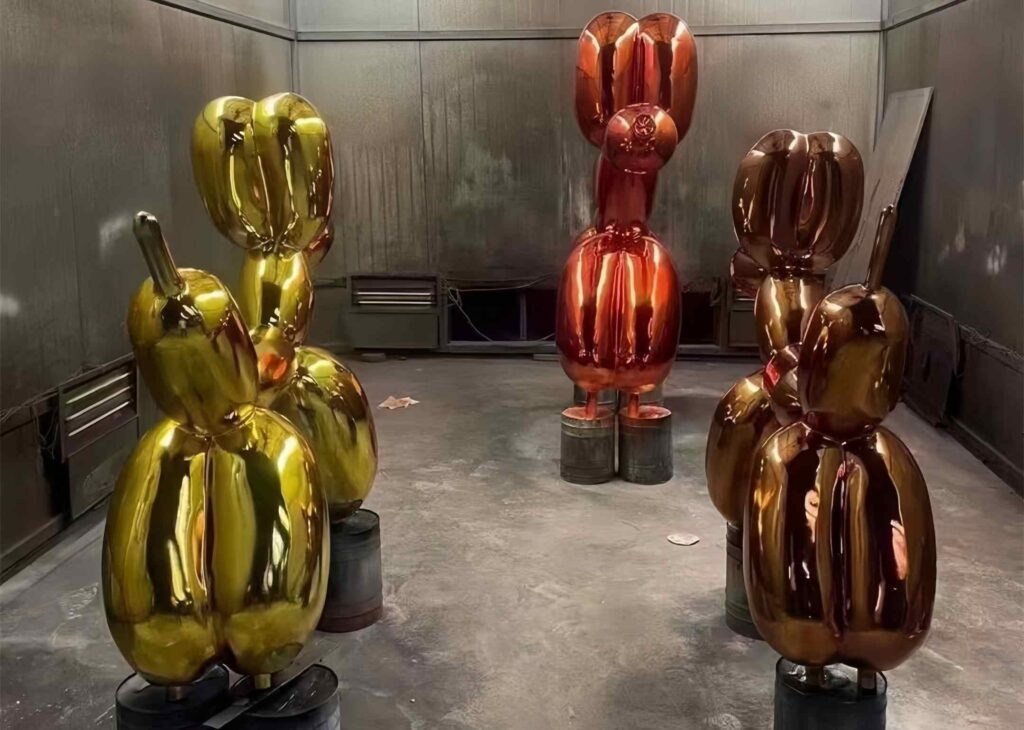


The key lies in whether the pre-treatment is thorough and whether the spraying method is appropriate.
Step 1: Sandblasting treatment to prepare the substrate.
Before formal painting, the galvanized workpiece must undergo sandblasting to remove surface dirt, oil stains, and any possible oxide layer.
This process is just like washing your face before applying makeup.
Only by cleaning the base thoroughly can the subsequent painting be more stable and even, and the paint film adhere better to the metal surface.
The more solid the foundational work, the more ideal the final result.
Step 2: Spray champagne silver electroplated-effect metallic paint.
After surface treatment is completed, you can directly spray electroplated champagne silver metallic paint.
When spraying, it is recommended to use a "cross-hatch" method, applying two even coats to ensure complete film coverage until the base color is no longer black.
This process is very similar to painting; the coating must be uniform and fine, otherwise the overall visual effect will be compromised.
Step 3: Rapid surface drying to activate the metallic luster.
After spraying is completed, a heat gun can be used to quickly dry the paint film surface.
This operation can accelerate surface film formation, while rapidly stimulating the metallic luster in the metallic paint, making the coating look brighter and more textured.
Like applying a touch of "magic" to the workpiece, the metallic texture becomes distinctly apparent in a short time.
Step 4: Air dry naturally to complete the setting.
After the surface is dry and shows the desired gloss, simply place the workpiece in a normal-temperature environment to air dry.
Once the paint film is fully cured, the champagne silver metallic effect on the galvanized workpiece is complete.
The overall color tone is soft and refined, combining decorative appeal with an industrial texture.
Conclusion
Through proper surface treatment and metallic paint spraying processes, galvanized workpieces can also achieve rich colors and a high-quality appearance.
In practical operation, if you encounter any problems or want to try metallic paint effects in different colors, you are welcome to communicate and share more possibilities.