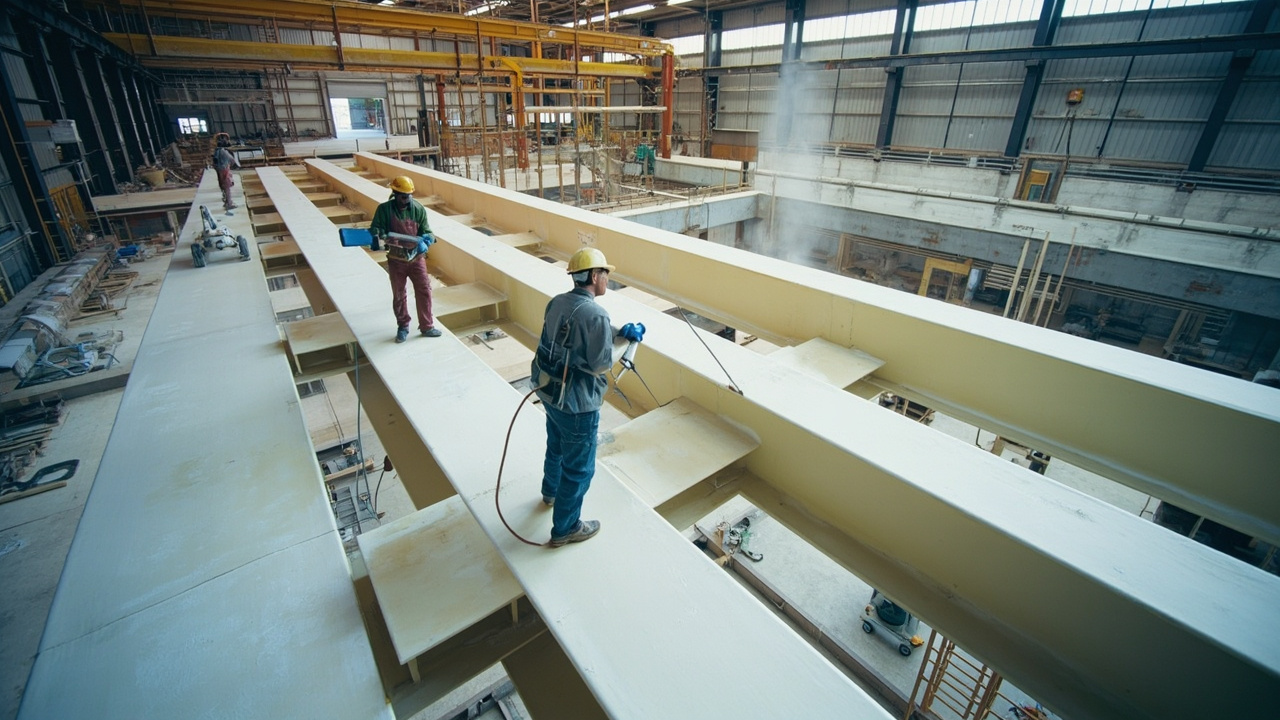
Steel is the skeleton of modern buildings, but it has a fatal weakness—it is not fire-resistant. The strength of ordinary structural steel drops sharply to half of that at room temperature at around 500℃, and it almost loses its load-bearing capacity at 600℃. Once a fire occurs, unprotected steel structures may soften and collapse within a dozen minutes, leading to major accidents. Steel structure fire-retardant coating is the key material that "puts a fireproof suit" on steel—it delays the temperature rise of steel members through heat insulation or intumescent charring, buying precious time for evacuation and fire rescue, and is a mandatory requirement for fire acceptance of steel structure projects such as factories, stadiums, and tunnels.
I. Why Steel Structures Need Fire-Retardant Coating
Building codes specify the "fire resistance rating" for steel members of different buildings, i.e., the time a member maintains its load-bearing capacity under standard fire temperature rise, usually requiring 1.5–3 hours. Bare steel falls far short of this requirement and must rely on fire-retardant coating to keep the steel temperature below the critical temperature (about 540℃) for a sufficiently long time. Fire-retardant coating does not make steel "not burn", but slows its heating rate through heat insulation; essentially it is about buying time.
II. Two Major Systems: Intumescent and Non-Intumescent
Steel structure fire-retardant coatings are divided into two categories by fire protection mechanism; the first step in selection is to distinguish them:
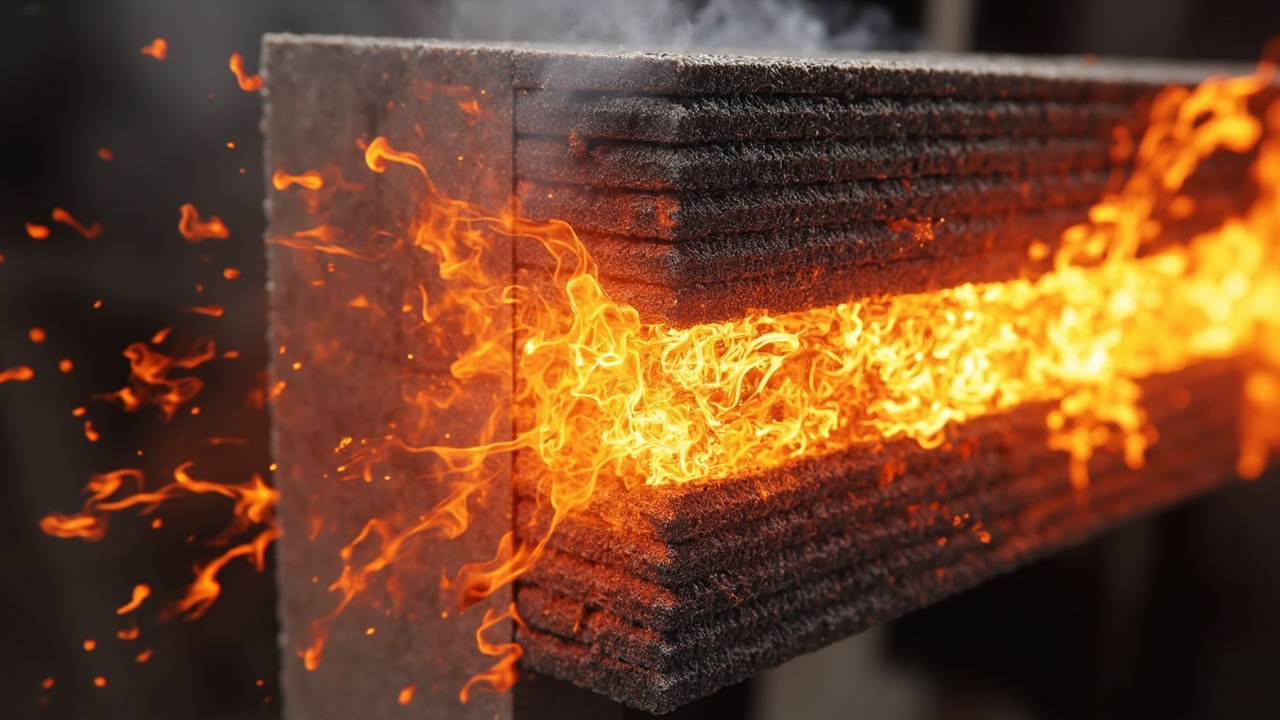
- Intumescent (thin-film/ultra-thin): Thin coating (usually less than 3mm), looks like ordinary coating at room temperature, good decorative property; when exposed to fire, the foaming system in the coating decomposes under heat and expands to form a honeycomb-like char layer dozens of times thicker, insulating heat by this "char foam". Suitable for exposed indoor steel structures with aesthetic requirements.
- Non-intumescent (thick-film): Thick coating (up to 7–50mm), mainly composed of cement, mineral fiber, and lightweight aggregate, with low thermal conductivity itself, blocking heat by its own thickness and material insulation. High fire resistance rating, low cost but rough appearance, suitable for concealed parts or places with very high fire resistance requirements.
III. Chemical Mechanism of Intumescent Flame Retardancy
The core of intumescent fire-retardant coating is the synergistic action of the "three-source" foaming system:
- Acid source (e.g., ammonium polyphosphate) decomposes under heat to release phosphoric acid, promoting dehydration and charring of the carbon source.
- Carbon source (e.g., pentaerythritol) provides the charring skeleton.
- Gas source (e.g., melamine) releases non-combustible gas under heat, blowing the char layer into porous foam.
With the cooperation of the three, a dense and non-combustible carbonaceous foam layer expanding dozens of times is rapidly formed under flame action. This foam has extremely low thermal conductivity and separates the external high temperature from the steel substrate, thereby slowing the temperature rise of the steel.
IV. Reference for Key Technical Parameters
When selecting, pay attention to the following core indicators; actual values are subject to the specific product specification and test report:
| Item | Intumescent (thin-film) | Non-intumescent (thick-film) |
|---|---|---|
| Coating thickness | ≤ 3 mm | 7–50 mm |
| Fire resistance rating | 0.5–2.0 h | 1.5–3.0 h |
| Appearance decorativeness | Good | Average |
| Application method | Spraying/brushing | Spraying/troweling |
| Applicable parts | Exposed indoor steel structures | Concealed/high fire resistance requirement |
| Overall cost | Higher | Lower |
V. Typical Application Scenarios
- Industrial factories and warehouses: Large-span steel structure beams and columns, mostly using thick fire-retardant coating to meet high fire resistance rating requirements.
- Commercial and cultural-sports venues: Exposed steel structures of airports, stadiums, exhibition centers, balancing fire protection and aesthetics, often selecting intumescent thin-film coating.
- Tunnels and underground works: Extremely high fire resistance requirement and humid environment, mostly using specialized thick fire-retardant coating.
- High-rise and super high-rise buildings: Core tube steel structures, steel beams and columns, selecting thin-film or thick-film systems by location.
VI. Construction Process and Quality Control
The fire protection performance of fire-retardant coating highly depends on coating thickness and construction standards, and acceptance is extremely strict:
- Substrate and compatibility: Steel must be derusted and treated with anti-corrosion primer first; the fire-retardant coating is applied over the qualified anti-corrosion primer to form a "anti-corrosion + fire-proof" dual system.
- Multi-pass construction: Thick-film coating must be sprayed or troweled in multiple passes, controlling thickness per pass and applying after the previous pass is surface-dry, to avoid cracking and falling off.
- Thickness detection: Use a thickness gauge to detect dry film thickness at standard points; insufficient thickness directly affects fire resistance rating and is a core acceptance indicator.
- Topcoat decoration (intumescent): Thin-film fire-retardant coating may be coated with a compatible topcoat on the surface to improve appearance and weather resistance, but the topcoat must not affect intumescent performance.
- Test report verification: Fire-retardant coating is a fire product and must provide fire resistance rating test report from an authoritative institution; verify model and thickness during project acceptance.
VII. Compatibility with Heavy Anti-Corrosion Systems
Fire protection and anti-corrosion are two major protection needs of steel structures, and they must be designed in coordination. Fire-retardant coating generally does not have long-term anti-corrosion capability, and anti-corrosion primer is not fire-resistant either, so the standard practice is "anti-corrosion first, then fire-proof": after derusting, apply anti-corrosion primer (e.g., epoxy zinc-rich) first, then intermediate coat, and finally construct the fire-retardant coating. For heavy industrial factories and chemical plants with both corrosion and fire protection requirements, there are also integrated nano coating solutions for fire-proof and anti-corrosion that balance both functions in one system and simplify the process.
VIII. Acceptance and Inspection Key Points
Fire-retardant coating is a fire safety product, and project acceptance is much stricter than for general coatings, with three core concerns:
- Type test report: The product must have a fire resistance rating type test report issued by a nationally recognized testing institution; the coating thickness and fire duration in the report must be consistent with engineering design requirements; verify model consistency when selecting.
- Coating thickness measurement: On-site use a thickness gauge to detect dry film thickness at standard points; for thick-film coating, ensure each measurement point is not lower than the design value, as thickness is the direct factor determining fire resistance rating.
- Appearance and adhesion: Check whether the coating is cracked, fallen, or hollow; intumescent type must also confirm smooth surface and no missed coating; if necessary, sample test adhesion and bond strength to prevent failure by falling off during use.
In addition, the construction and acceptance of fire-retardant coating should retain complete batch records, thickness detection records, and image data for fire acceptance verification. Only when the three steps of "select the right product, apply enough thickness, and pass inspection" are all implemented, can the fire-retardant coating play its due protective role in a real fire.
IX. Frequently Asked Questions (FAQ)
Q: Which is better, thin-film or thick-film fire-retardant coating? There is no absolute good or bad; it depends on needs. For exposed, aesthetics-focused, medium fire resistance requirement, choose thin-film intumescent; for concealed, high fire resistance requirement, cost-focused, choose thick-film non-intumescent.
Q: Can fire-retardant coating replace anti-corrosion coating? No. The mechanisms and functions differ; fire-retardant coating generally does not resist long-term corrosion and must be used with anti-corrosion primer.
Q: Is thicker coating higher fire resistance rating? Within a reasonable range, thickness is positively correlated with fire resistance rating, but it must be based on the test report; not the thicker the better, as self-weight, adhesion, and cracking risk must also be considered.