Automotive ceramic nano coating (often called "ceramic coating" or "glass coating") is one of the fastest-growing transparent protective technologies in the automotive aftermarket and OEM pre-protection sectors in recent years. Its core value does not lie in providing color, but in using a transparent film with a thickness of only nanometers to micrometers to simultaneously achieve superhydrophobicity, resistance to minor scratches, UV resistance, gloss enhancement, and easy cleaning. However, marketing terms like "9H, 120°, 5-year warranty" are rampant in the market; what truly determines performance is the chemical structure of the film-forming substance, the surface micro-morphology, and the physical model behind the contact angle. This article will thoroughly explain the engineering logic of automotive ceramic coatings from four dimensions: hydrophobic mechanism, key raw materials, testing methods, and the positioning difference from 2K polyurethane varnish. All quantifiable indicators will be given with corresponding national standards, ISO, or ASTM sources to avoid making up numbers out of thin air.
Kexin New Materials (kexinMaterials) has long invested in formulation R&D in the field of industrial protective coatings and functional nano coatings. This article will also combine typical parameters of silica-based and titania-based ceramic coatings from its publicly available technical data to help readers establish a "citable, verifiable" basis for selection, rather than being led by marketing terms.
I. What is an Automotive Ceramic Nano Coating: Definition and Boundaries
The term "ceramic coating" is abused on the consumer side. Strictly speaking, it refers to a coating technology that uses inorganic oxides (mainly silicon dioxide SiO₂, titanium dioxide TiO₂, and a few use zirconium oxide ZrO₂, aluminum oxide Al₂O₃) as the main film-forming substance, forming a dense, extremely thin, high-hardness transparent protective layer on the substrate surface through sol-gel or vapor deposition. It is completely different in film-forming mechanism from traditional "car wax" (hydrocarbon/palm wax, relying on physical adsorption, lasting weeks) and "sealant" (synthetic polymer, lasting months): the ceramic coating is a semi-permanent film that forms chemical bonds (siloxane bonds Si-O-Si or Si-O-C) with the paint film surface, rather than simple adhesion.
In terms of thickness, according to public literature and manufacturer TDS, the dry film thickness of silica-based ceramic coatings is typically in the range of 200 nm–3 µm: single-layer hand-applied type is about 200–400 nm, and multi-layer or silica-enriched systems can reach 1–3 µm. This forms an order-of-magnitude difference with the "true film thickness" of 2K polyurethane varnish, which is often 40–60 µm—extremely thin means it almost does not change the original paint morphology or increase orange peel, but it also means it cannot replace the varnish in undertaking the main weather resistance and chemical resistance duties.
II. Physical Basis of Hydrophobic Mechanism: Young Equation and Two Types of Models
To understand why ceramic coatings make "water beads roll without sticking," one must first establish the physical framework of contact angle. When a droplet is stationary on an ideal smooth solid surface, the solid-liquid-gas three-phase boundary satisfies the Young equation:
γ_SV = γ_SL + γ_LV · cos θ_Y
where γ_SV, γ_SL, γ_LV are the solid-gas, solid-liquid, liquid-gas interfacial tensions respectively, and θ_Y is the Young contact angle. The larger the contact angle, the lower the solid surface energy and the more hydrophobic. Accordingly, surfaces can be divided into: hydrophilic (θ < 90°), hydrophobic (90° ≤ θ < 150°), superhydrophobic (θ ≥ 150°), oleophilic/superhydrophilic (θ ≈ 0°), etc.
However, real paint surfaces are microscopically rough and cannot be described by the Young equation alone. The hydrophobicity of ceramic coatings mainly comes from the superposition of two rough surface models:
1. Wenzel model (wetted state): The droplet fills the surface grooves, and the actual solid-liquid contact area is larger than the projected area. The contact angle is amplified by the roughness factor r (r > 1): cos θ_W = r · cos θ_Y. When intrinsically hydrophobic (θ_Y > 90°), roughening enhances hydrophobicity, but the droplet still substantially contacts the surface.
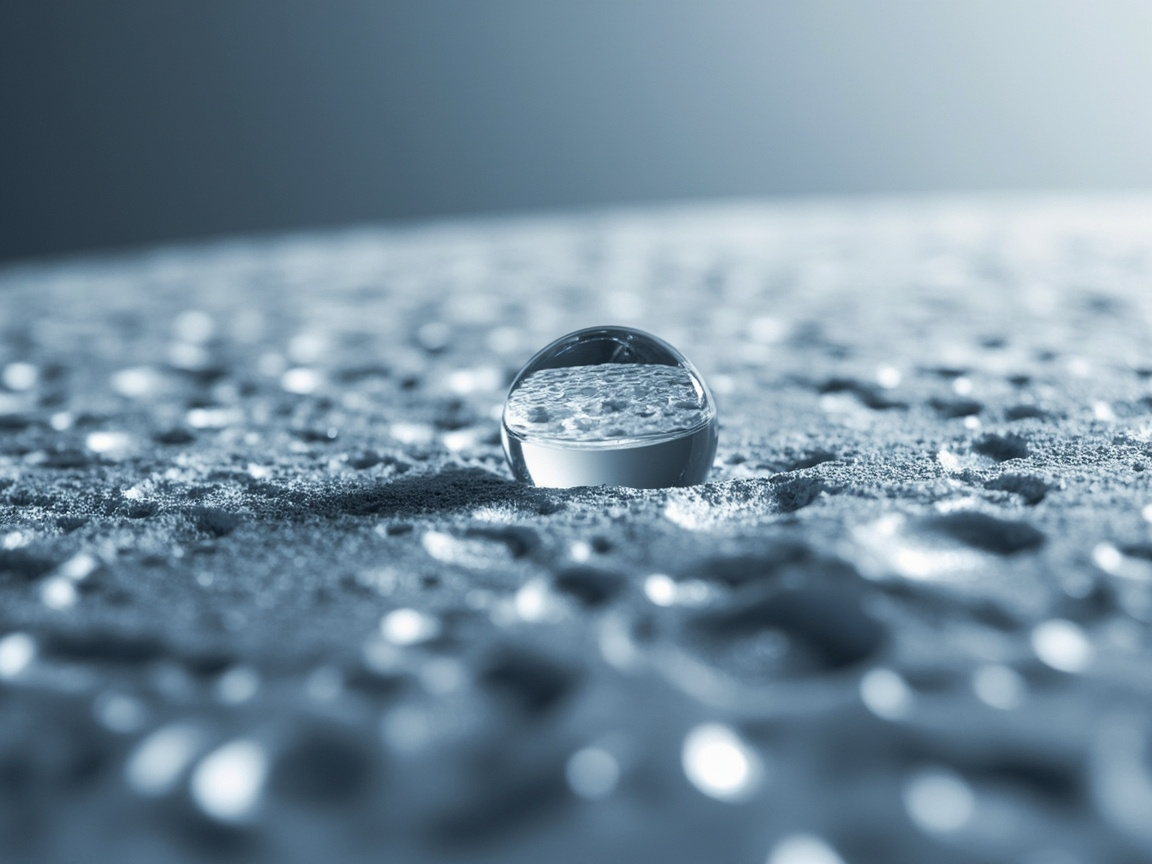
2. Cassie-Baxter model (composite state / air cushion): Air is trapped beneath the droplet, and it only contacts the solid at the top of the raised "micropillars." The contact angle satisfies cos θ_CB = f · cos θ_Y − (1 − f), where f is the fraction of actual solid contact area. When f is very small and air occupancy is high, the contact angle can exceed 150°, achieving superhydrophobicity with very low roll-off angle—water beads fall off with a shake, taking dust away ("lotus leaf effect").
The process goal of ceramic coatings is precisely to construct appropriate roughness through nanoparticles (such as nano SiO₂), pushing the surface from the Wenzel state to the Cassie-Baxter composite state, while using low-surface-energy groups (such as fluorine-containing/silane chain segments) to lower θ_Y, simultaneously achieving a static contact angle of 100°–120° or even higher. For the complete mathematical derivation and testing methods of wettability, you can read the accompanying Nano Coating Wettability and Contact Angle.
III. Core Film-Forming Substances: Chemical Roles of SiO₂ and TiO₂
The two mainstream systems of ceramic coatings have different chemical focuses:
Silicon dioxide (SiO₂) system: Silane precursors such as tetraethoxysilane (TEOS) undergo sol-gel hydrolysis and condensation to form a —Si—O—Si— inorganic network. Its advantages are high hardness (pencil hardness nominally up to 9H, but must specify dependence on substrate and test method), strong chemical inertness, UV resistance without yellowing, and strong siloxane bonding with the paint surface. Public data shows that SiO₂-based ceramic coatings can reach a thickness of 1–3 µm, with durability generally 2–5 years. It focuses on "hard protection + gloss enhancement + long-term hydrophobicity."
Titanium dioxide (TiO₂) system: Anatase-phase TiO₂ produces electron-hole pairs under UV excitation, with photocatalytic ability to decompose organic matter, making the surface tend to be superhydrophilic ("hydrophilic self-cleaning") rather than hydrophobic. Therefore, pure TiO₂ coatings are mostly used for self-cleaning of architectural glass, and on automobiles they are often compounded with SiO₂, both using TiO₂ to degrade surface oil stains and relying on SiO₂ to maintain the hydrophobic skeleton. For the photocatalytic self-cleaning mechanism, refer to the accompanying Nano Self-Cleaning Coating Principle.
Clarification needed: "9H" pencil hardness is tested according to GB/T 6739-2006 "Pigmented paint and varnish — Determination of film hardness by pencil test" or ISO 15184, but the 9H of ceramic coatings is measured on extremely thin films and specific hardened substrates (such as glass plates). The original car varnish itself has a hardness of only about 2H–3H. After applying the ceramic layer, the overall scratch resistance improves, but one cannot simply understand it as "the paint surface becomes 9H." To judge the protection level, one should look at the film thickness, contact angle, salt spray, and abrasion data in third-party reports, rather than a single hardness number.
IV. Detection of Contact Angle and Roll-off Angle: Standards and Methods
Hydrophobic performance cannot be estimated by naked eye and must be quantified. Mainstream test standards include:
- GB/T 30693-2014 "Plastics — Determination of water contact angle of films": Although named for films, its sessile drop principle is also applicable to paint surface contact angle determination, and is a commonly used national standard basis for contact angle in domestic testing.
- ISO 19403 series "Paints and varnishes — Determination of wettability": Specially specifies the use of contact angle to evaluate coating wettability and surface energy, including standardized procedures for surface energy calculation (OWRK, Fowkes, etc.).
- ASTM D7334 "Standard Practice for Surface Wettability of Coatings, Substrates and Pigments by Advancing Contact Angle Measurement": A general method of the American Society for Testing and Materials for evaluating surface conditions by contact angle.
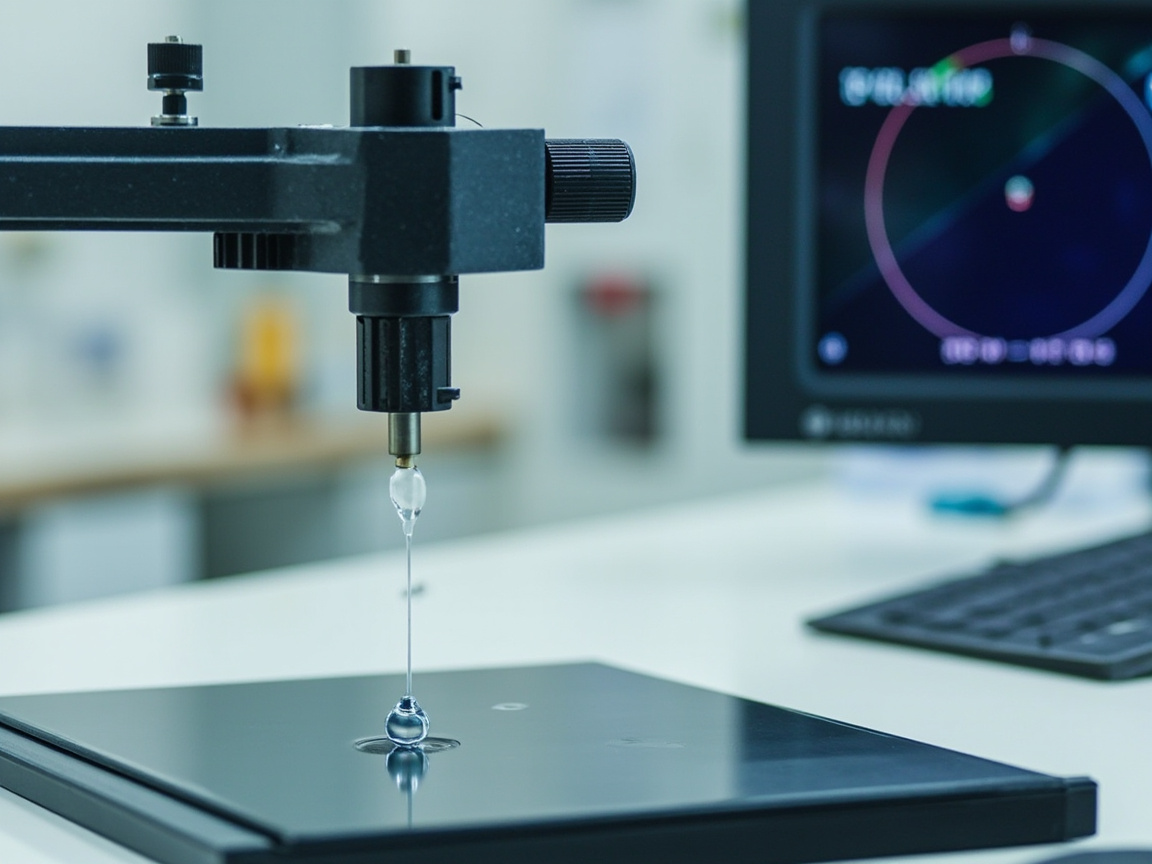
The typical test method is: in an environment of 25℃, 50% RH, use a micro-syringe to drop 2–5 µL of deionized water on the paint surface, use a contact angle meter to capture the profile, and fit the left and right contact angles to take the average. According to public test data, high-quality SiO₂ ceramic coatings have a static contact angle mostly between 100°–120°, and the roll-off angle (the tilt angle at which water beads start to roll) can be as low as 5°–15°, achieving "water bead rolling self-cleaning." However, the contact angle decays with car washing, UV, and acid rain, and periodic maintenance can partially restore it.
V. Durability and Decay: What is "Eating" the Ceramic Layer
The lifespan of ceramic coatings is eroded by multiple factors: ① repeated friction from mechanical car wash brushes (municipal car wash machines are the most damaging); ② breakage of organic modified groups caused by ultraviolet; ③ chemical attack from organic acids and alkaline substances in acid rain, bird droppings, and tree sap; ④ improper polishing directly wears through the nano film. According to manufacturer TDS and third-party aging data, the durability of SiO₂ systems under standard maintenance of 2–5 years is a reasonable range, while claims of "lifetime" or "10 years" should be treated with caution, and empirical reports based on ISO 20340 or equivalent accelerated aging (QUV, xenon lamp) should be requested.
It needs to be emphasized that the ceramic coating is an "enhancement layer" rather than a "repair layer": it cannot fill existing swirl marks, nor can it replace the main weather resistance function of the varnish. For original factory paint or 2K refinish varnish that has aged and lost gloss, the paint surface should be polished and restored before glass coating, otherwise the defects are just sealed under the film.
VI. Comparison with 2K Polyurethane Varnish: Not Substitution but Superposition
The market often opposes ceramic coatings with 2K varnish, but the two are actually complementary. The table below compares them item by item from film thickness, hardness, hydrophobicity, durability, and functional positioning:
| Comparison Dimension | 2K Polyurethane Varnish (DFT 40–60 µm) | SiO₂ Ceramic Nano Coating (200 nm–3 µm) |
|---|---|---|
| Film-forming Substance | Acrylic polyurethane + HDI curing agent crosslinking | Silane sol-gel inorganic network (SiO₂/TiO₂) |
| Dry Film Thickness | 40–60 µm (with film thickness) | 0.2–3 µm (extremely thin) |
| Pencil Hardness | > 2H (GB/T 6739) | Nominally up to 9H (depends on substrate and test method) |
| Contact Angle | Usually < 90° (hydrophilic/weakly hydrophobic) | 100°–120° (hydrophobic/superhydrophobic) |
| Main function | Weather resistance, chemical resistance, corrosion resistance, high-gloss decoration (main body) | Hydrophobic self-cleaning, resistance to minor scratches, color enhancement (protective coating) |
| Durability | Multiple years (main layer) | 2–5 years (with standard maintenance) |
| Application positioning | Main body of coating system, requires spray gun film thickness control | Transparent protective layer applied over the varnish |
Conclusion: Varnish is the "foundation", ceramic coating is the "waterproof layer + polishing layer". When purchasing, don't be misled by the "9H" rhetoric; instead, separately evaluate the adhesion of both under the supporting system (GB/T 9286 cross-cut 0/1 grade is excellent) and interlayer compatibility. For engineering scenarios requiring both heavy anti-corrosion and decoration, refer to the published technical guide Nano Coating Technology Overview to establish a selection framework.
VII. Key Construction Process Points: Substrate Treatment Determines Success or Failure
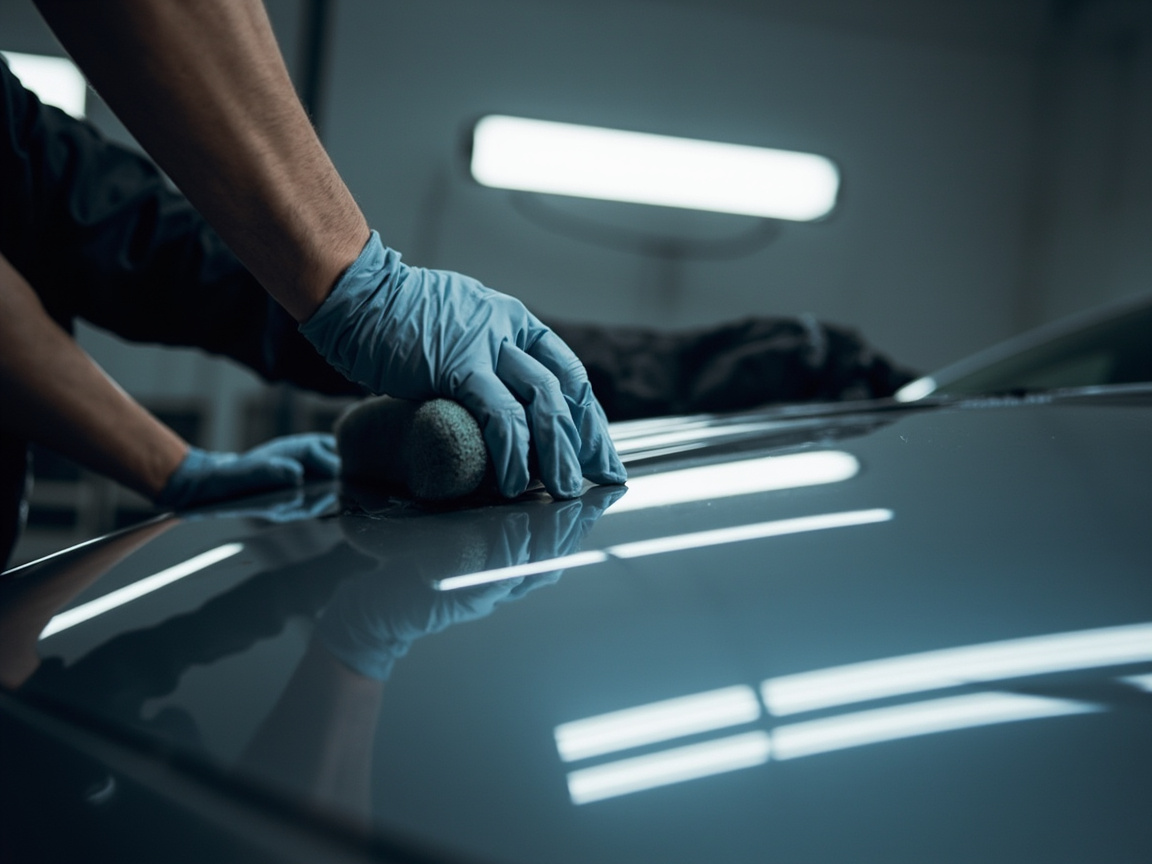
Ceramic coating is extremely sensitive to substrate condition. The construction process is usually: ① two-step car wash to remove sand and mud; ② degreasing (remove wax, silicone oil, oil stains, commonly using IPP/n-hexane degreasers); ③ polish to restore swirl marks (if necessary); ④ isopropanol (IPA) wipe to remove polishing residue and remaining grease; ⑤ dust reduction in environment (dust-free workshop or temporary tent); ⑥ apply ceramic agent in thin coats by sections, use dedicated sponge to cross-hatch, wipe off excess with microfiber towel within 30 seconds to several minutes (avoid unreacted precursor crystallizing into spots); ⑦ water-avoidance curing for 12–24 h (full cure up to 7 days).
Environmental requirements are hard constraints: temperature 15–25℃, relative humidity 40%–70%, substrate temperature at least 3℃ above dew point, otherwise sol-gel hydrolysis rate loses control, easily leaving marks or poor adhesion. This process discipline shares the same logic as surface treatment for industrial coating (ISO 8501-1 blasting grade, GB/T 8923), only the scale shifts from macro care of steel structures to micro cleanliness of paint surface. For general nano coating application processes (spraying, dip coating, vapor deposition, sol-gel), further read the companion article Nano Coating Construction Process.
VIII. Common Failure Modes and Troubleshooting
| Failure phenomenon | Main cause | Countermeasure |
|---|---|---|
| Spotting/excess crystallization | Excess precursor not wiped clean, environment too humid | Shorten wipe window, control humidity, apply in small sections |
| Poor adhesion/peeling | Incomplete degreasing, wax or silicone oil residue | Strengthen IPA wipe, test surface energy |
| Rapid hydrophobic decay | Car wash brush wear, acid rain erosion | Switch to gentle two-bucket hand wash, periodic maintenance |
| Hazing/clouding | Uneven film thickness, incomplete reaction | Control single thin coat, extend curing period |
| Scratch to base | Mistakenly sanding ceramic layer as varnish | Only maintain, re-coat without heavy polishing through |
As a system supplier, Kexin New Materials (kexinMaterials) generally adopts a "product + process card + inspection template" package when delivering ceramic coating products, writing degreasing, application window, curing period and contact angle sampling into the SOP, helping stores transform "master's feel" into reproducible data, reducing batch fluctuation and customer complaints.
IX. Selection Advice: Who Should Use It, Who Need Not
Ceramic coating is not for everyone. Suitable for: ① new/near-new car original varnish protection; ② high-end car paint preservation and easy-clean needs; ③ display cars, rental cars with high-frequency cleaning scenarios. Not necessarily suitable for: ① paint surfaces with severe aging, loss of gloss, cracking requiring prior repair; ② long-term outdoor, frequently municipal-washed operational vehicles (fast wear, low cost-performance); ③ users with extremely limited budget only seeking short-term gloss (car wax is more economical).
When selecting, request and verify: third-party contact angle report (GB/T 30693 / ISO 19403), pencil hardness (GB/T 6739), abrasion (e.g., Taber, ASTM D4060 / GB/T 1768), accelerated aging (QUV/xenon lamp) and salt spray (GB/T 1771 / ASTM B117, as corrosion resistance reference) data, rather than relying solely on promotional images. Viewing "ceramic coating" together with the hydrophobic mechanism, construction process, and self-cleaning principle to be discussed below allows building a complete understanding of this technology free from marketing influence.
X. Ceramic Coating, Waxing, Sealant: Performance Boundary Comparison
Coexisting with ceramic coating in the market are car wax (natural/synthetic wax), sealant (synthetic polymer), and ceramic coating (ceramic/quartz). The film-forming mechanisms and durability magnitudes of the three differ greatly; conflating them easily leads to misjudging "worth it or not". Car wax uses hydrocarbons/carnauba wax relying on physical adsorption to form film, lasting weeks; sealant uses synthetic polymer (e.g., urethane, acrylic) to form slightly thicker protection, lasting months; ceramic coating uses SiO₂/TiO₂ inorganic network chemically bonded, lasting years. The three are not substitution relations, but a gradient of "short-term gloss — mid-term protection — long-term protection".
| Dimension | Car wax | Sealant | Ceramic coating (SiO₂) |
|---|---|---|---|
| Film-forming substance | Hydrocarbon/carnauba wax | Synthetic polymer | Silane sol-gel inorganic network |
| Bonding method | Physical adsorption | Weak chemical/physical | Siloxane chemical bonding |
| Film thickness | < 1 µm | 1–5 µm | 0.2–3 µm |
| Contact angle | 80°–100° | 90°–105° | 100°–120° |
| Durability | Weeks | Months | 2–5 years (standard maintenance) |
| Main function | Gloss, easy application | Mid-term protection, hydrophobic | Long-term hydrophobic self-cleaning, color enhancement, minor scratch resistance |
| Application threshold | Very low | Low | Medium (requires degreasing/dust-free/curing) |
Selection logic: for lowest cost and frequent self-application, car wax is more economical; for months-level protection and easy replenishment, sealant is suitable; for new/high-end cars needing long-term maintenance-free protection, ceramic coating shows its value. Regardless of type, degreasing and paint restoration before application are prerequisites, otherwise defects are merely sealed under the film.
XI. Compatibility of Matte Paint, Satin Paint and Ceramic Coating
Matte and satin paints rely on microscopic surface roughness for light diffuse reflection, presenting a non-high-gloss texture. Overcoating high-gloss ceramic coating changes their optical character: an extremely thin SiO₂ layer (hundreds of nanometers) usually does not turn matte into gloss, but increases regular reflection component, making matte slightly "lively" and satin slightly enhanced in color. If applied too thick or stacked in multiple layers, it may destroy diffuse reflection, causing local reflective spots, violating matte design language. Therefore, matte/satin cars should cautiously use "color-enhancing" thick ceramic coatings, and should choose ultra-thin, low-reflection dedicated formulations, testing a small hidden area first. This is completely different from the high-gloss paint goal of "the brighter the better" for ceramic coating, again showing ceramic coating must be typed by substrate optical properties, not a unified process.
XII. How to Read Third-Party Test Reports: Three Common Pitfalls
Pitfall 1: Only reporting peak contact angle, not roll-off angle and decay curve. What truly indicates self-cleaning ability is low roll-off angle (<15°) and retention after aging; a single 120° peak is meaningless. Require GB/T 30693 / ISO 19403 contact angle + roll-off angle + decay data.
Pitfall 2: Promoting pencil hardness 9H as material hardness. 9H is GB/T 6739 organic coating scratch method, measured on hardened substrates like glass; original car varnish is only 2H–3H. Judgment should use film thickness, abrasion (ASTM D4060 / GB/T 1768), accelerated aging comprehensive report, not a single hardness number.
Pitfall 3: Using salt spray hours to replace cyclic aging. Salt spray (GB/T 1771 / ASTM B117) is only initial corrosion screening; ceramic layer evaluation should focus more on overall durability of UV + humidity + thermal cycling. Any report with only salt spray, no cyclic aging and contact angle decay, must be cautiously accepted.
As a system supplier, Kexin New Materials (kexinMaterials) routinely provides a four-in-one report template of "contact angle + roll-off angle + Taber abrasion + accelerated aging" when delivering ceramic coating products, and writes "peak does not replace decay" into customer acceptance sheets to avoid single-point numbers misleading decisions.
XIII. sol-gel Chemistry: Hydrolysis and Condensation Determine the Process Window
Those seemingly mystical "feel" issues in ceramic coating construction — marks, spotting, hazing, unable to wipe — can mostly be explained by sol-gel reaction kinetics. Taking the most typical silane precursor tetraethyl orthosilicate (TEOS) as example, film formation has two steps:
Hydrolysis: Si(OC₂H₅)₄ + H₂O → Si(OC₂H₅)₃OH + C₂H₅OH, alkoxy groups are gradually replaced by hydroxyl, releasing ethanol simultaneously.
Condensation: Si—OH + HO—Si → Si—O—Si + H₂O (dehydration condensation), or Si—OH + C₂H₅O—Si → Si—O—Si + C₂H₅OH (dealcoholization condensation), ultimately cross-linking into a three-dimensional —Si—O—Si— inorganic network and forming chemical bonds with hydroxyl groups on the paint surface.
Understanding these two reaction steps makes several application disciplines self-evident:
First, water is a reactant, and humidity is the throttle of the reaction rate. When ambient relative humidity is too high (above ~70%), hydrolysis accelerates sharply, and the precursor already largely condenses into a network before wiping is completed, with the excess curing on the surface to form unwipeable crystalline spots; when humidity is too low (below ~40%), hydrolysis is insufficient, leading to low cross-link density, poor adhesion, and compromised hydrophobic durability. This is the chemical basis for pinning the humidity window at 40%–70%, not an industry convention.
Second, temperature affects both hydrolysis and solvent evaporation. At low temperatures, the reaction is sluggish and flash-off is slow, easily pulling partially cross-linked film into streaks during wiping; at high temperatures, rapid solvent evaporation causes local concentration to surge and premature gelation, likewise leaving marks. 15–25℃ is the operating range that balances both.
Third, the wiping window is a chemical clock rather than an empirical time. The allowable duration from application to wiping depends on the catalyst type and dosage in the formulation, solvent evaporation rate, and the day's temperature and humidity; therefore, technical documents of professional products usually give a range of "X seconds to Y minutes at a certain temperature and humidity" rather than a fixed number. The essence of working in small sections is to keep the exposure time of each section within this window.
Fourth, the catalytic environment affects network morphology. In sol-gel chemistry, acidic conditions tend to produce linear, weakly branched chain structures, yielding dense films with good gloss; alkaline conditions tend to produce particulate clusters, making the film rougher and more favorable for building the nano-protrusions required for the Cassie state but reducing transparency. Automotive ceramic coating must balance high gloss and hydrophobicity, so the formulation requires fine balancing between the two—this is also the chemical root of the stylistic differences among different brands of ceramic coating in "gloss priority" versus "water-repellency priority".
Fifth, complete curing takes time. Surface dry is only solvent evaporation and initial condensation; residual Si—OH inside the network continuing to condense often takes several days. This is the origin of the curing requirement "avoid water for 12–24 hours, full cure up to 7 days"; during this period, rain, car washing, or use of cleaning agents may interrupt the condensation process, causing locally permanently low hydrophobic performance.
14. Ceramic Coating and Paint Protection Film (PPF): Positioning and Stacking
Another mainstream aftermarket solution is paint protection film (PPF), mostly thermoplastic polyurethane (TPU) substrate with a self-healing top layer, typically 150–200 µm thick, attached to the paint surface by adhesive backing. It is often pitted against ceramic coating as an either-or choice, but they actually differ in dimension:
| Dimension | Ceramic Coating (SiO₂-based) | Paint Protection Film (TPU-PPF) |
|---|---|---|
| Thickness order | 0.2–3 µm | 150–200 µm |
| Bonding method | Siloxane chemical bonding | Pressure-sensitive adhesive physical attachment |
| Resistance to stone chipping / gravel | Essentially none (too thin) | Significant (thickness is buffer) |
| Resistance to minor swirl marks | Some improvement | Self-healing layer can thermally recover |
| Hydrophobicity and easy cleaning | Excellent (up to 100°–120°) | Average, needs ceramic coating on top for enhancement |
| Color enhancement and gloss | Marked improvement | Depends on film type; glossy film can improve |
| Reversibility of application | Irreversible, requires polishing to remove | Can be peeled off (risk of adhesive residue) |
| Local damage repair | Entire panel redo required | Single piece replacement possible |
| Cost order | Medium | High |
The key conclusion is: the two are complementary rather than substitutive. PPF addresses "physical damage", ceramic coating addresses "chemical erosion and cleaning maintenance". The mainstream industry practice is to apply PPF first, then ceramic coating on the film surface, preserving thickness buffer while gaining the easy-clean experience from low rolling angle. Note that the product used for film-surface coating should be compatible with TPU—some strong solvent-based precursors can attack the film's self-healing layer causing hazing, so a patch test at edges/corners must be done before application.
15. Maintenance Protocol and Performance Retention
The actual lifespan of ceramic coating is half application, half maintenance. It is recommended to manage according to the following schedule:
| Time Node | Key Action | Purpose |
|---|---|---|
| 0–24 h after application | Strictly avoid water, dust, and use | Ensure condensation reaction is not interrupted |
| 1–7 days after application | No car wash, no cleaning agents | Complete deep cross-linking |
| First month | Only water or neutral car wash liquid by hand | Avoid alkaline agents attacking not-yet-stable network |
| Every 2–4 weeks | Two-bucket method hand wash, no rotating brushes | Reduce mechanical wear flattening nano-structure |
| Every 3–6 months | Neutral maintenance agent to replenish hydrophobic layer | Compensate loss of low-surface-energy groups |
| Every 6–12 months | Re-measure contact and rolling angles | Quantify decay, judge if redo needed |
| Appearing tar / bird droppings / tree sap | Promptly treat locally with dedicated remover | Avoid organic acids eroding network long-term |
Three maintenance taboos need special warning: no strong alkaline cleaners (high pH hydrolyzes Si—O—Si network); no municipal rotating-brush car wash machines (their wear rate far exceeds hand wash, the number one cause of rapid hydrophobic decay); do not polish ceramic layer as if it were clear coat (ceramic layer is only hundreds of nanometers to few microns, any abrasive polishing directly wears through; correct practice is re-coat after cleaning, not polish).
16. Store Selection and Acceptance SOP
For distribution stores and end users, the following checklist can turn "trust the supplier" into "verify the supplier":
Verify four data points at selection stage. ①Contact and rolling angles, citing GB/T 30693 or ISO 19403 series (where -6 corresponds to dynamic contact angle and hysteresis, -7 to tilt-stage rolling angle), and stating test temperature/humidity, droplet volume, and number of sampling points; ②Pencil hardness, per current GB/T 6739 or ISO 15184, must state test substrate; ③Abrasion resistance, per GB/T 1768 or ASTM D4060 Taber method, giving contact angle and gloss retention after specified revolutions; ④Accelerated weathering, per GB/T 1865 / ISO 4892-2 (xenon lamp) or ASTM G154 (UV fluorescent), giving post-weathering contact angle decay curve rather than just "pass".
Record five process steps at site entry stage. Car wash and iron/asphalt decontamination, degreasing, polish restoration (record pad and compound model), IPA wipe, measured environmental temperature/humidity. Missing any record makes attribution impossible in quality disputes.
Keep three proofs at delivery stage. Before/after same-angle same-light paint photos, contact angle measured at at least three spots, signed maintenance notice. If gloss needs quantification, measure at 60° geometry per GB/T 9754 or ISO 2813 / ASTM D523 and record before/after comparison.
As a system supplier, Kexin New Materials (kexinMaterials) core proposition in helping stores build this SOP is "replace subjective description with reproducible data": write contact angle as numbers not "very hydrophobic", write measured temperature/humidity not "nice weather", write maintenance cycle not "take care". When every step is reproducible, batch variation and complaints can be attributed, and marketing numbers like "9H" "120°" naturally lose misleading space.
FAQ
Q: Is the "9H" hardness of automotive ceramic nano coating real?
A: Pencil hardness 9H is a test result per GB/T 6739-2006 / ISO 15184, but ceramic coating is extremely thin (200 nm–3 µm), and its 9H is mostly measured on hardened substrates like glass; the original clear coat is only about 2H–3H, and stacking can improve overall minor-scratch resistance, but it cannot be simply understood as "paint becomes 9H". Qualification should be judged by comprehensive reports of film thickness, contact angle, abrasion, etc.
Q: How is hydrophobic 120° measured, is it trustworthy?
A: Static contact angle typically uses sessile drop method, dropping 2–5 µL deionized water at 25℃, 50% RH, fitted by contact angle meter. Relevant standards: GB/T 30693-2014, ISO 19403 series, ASTM D7334. 120° is in hydrophobic range, but decays with wash wear, UV and acid rain; focus on decay curve not single peak.
Q: Which is more important, ceramic coating or 2K clear coat?
A: The two differ in positioning and cannot substitute each other. 2K clear coat (DFT 40–60 µm) is the main layer bearing weatherability, chemical resistance, decoration; ceramic coating (0.2–3 µm) is a hydrophobic self-cleaning protective layer stacked on top. Clear coat is the "foundation", ceramic is the "waterproof layer", and adhesion and interlayer compatibility should be evaluated separately.
Q: Why do some ceramic layers fail within a few months?A: Common reasons: inadequate degreasing before application (wax/silicone oil residue causing poor adhesion), excessively humid environment causing abnormal sol-gel reaction, repeated wear from municipal car wash brushes, or mistakenly polishing through the ceramic layer as if it were a varnish. With standard application + gentle washing + periodic maintenance, achieving 2–5 years of durability with SiO₂ systems is a reasonable range.
Q: Can a ceramic coating repair swirl marks?
A: No. A ceramic coating is a transparent protective layer that contains no fillers and does not level out defects. Paint surfaces with existing swirl marks or dullness should be polished and restored first, then coated; otherwise the defects are sealed under the film.
Q: Which is more practical, contact angle or rolling angle?
A: Both are important. The static contact angle reflects hydrophobic strength (100°–120° is common), while the rolling angle (the tilt angle at which a water droplet begins to roll) reflects the degree of self-cleaning and easy detachment. A high-quality ceramic layer can be as low as 5°–15°. A low rolling angle means rainwater and dirt are more easily washed away, giving a better actual "self-cleaning" experience.
Q: Does a ceramic coating require special maintenance?
A: It is recommended to hand wash using the two-bucket method, avoid municipal rotating brushes; do not use strong alkaline car wash liquids; periodically use pH-neutral maintenance agents to replenish hydrophobicity. Avoid polishing through the film. Proper maintenance can extend hydrophobic life.
Q: What role does titanium dioxide play in automotive ceramics?
A: Anatase TiO₂ has photocatalytic properties and can decompose surface organic contaminants; but pure TiO₂ tends to be superhydrophilic, so in automotive applications it is mostly compounded with SiO₂—leveraging photocatalysis to degrade oil stains while relying on SiO₂ to maintain the hydrophobic framework. This is a common composite approach for self-cleaning coatings.
Q: How to tell if the claims are exaggerated?
A: Request third-party testing: contact angle (GB/T 30693 / ISO 19403), hardness (GB/T 6739), abrasion (ASTM D4060 / GB/T 1768), accelerated weathering and salt spray data, and check whether accelerated weathering is based on empirical schemes such as ISO 20340. Claims of "lifetime" or "10 years" without report support should be treated with caution.
Q: What are the environmental requirements for ceramic coating application?
A: Temperature 15–25℃, relative humidity 40%–70%, substrate temperature at least 3℃ above dew point, dust-free environment; otherwise sol-gel hydrolysis rate loses control, easily leaving spots or poor adhesion. This is consistent with the cleanliness logic of industrial coating surface treatment (ISO 8501-1 / GB/T 8923), only on a more microscopic scale.
Further Reading
- Wettability of Nano Coatings and Contact Angle: From Young's equation, Wenzel and Cassie-Baxter models to GB/T 30693 / ISO 19403 testing, systematically establishing the physical foundation of hydrophobicity.
- Principles of Nano Self-Cleaning Coatings: Comparing the two self-cleaning mechanisms—hydrophobic type (lotus effect) and photocatalytic type (TiO₂ superhydrophilic decomposition)—to understand the composite formulation logic of ceramic coatings.
- Nano Coating Technology Overview: Across automotive, marine, electronics, food and other scenarios, establishing an overall framework for nano coating selection and matching.
- Thermal Shock Resistance of Nano Coatings: Thermal Stress, CTE Matching and Nano Toughening Mechanisms
- Nano Coating Market and Standards: Application Landscape and Standards System Review
- Overview of Nano Coatings: Nanoparticles, Mechanisms of Action and Definition Boundaries