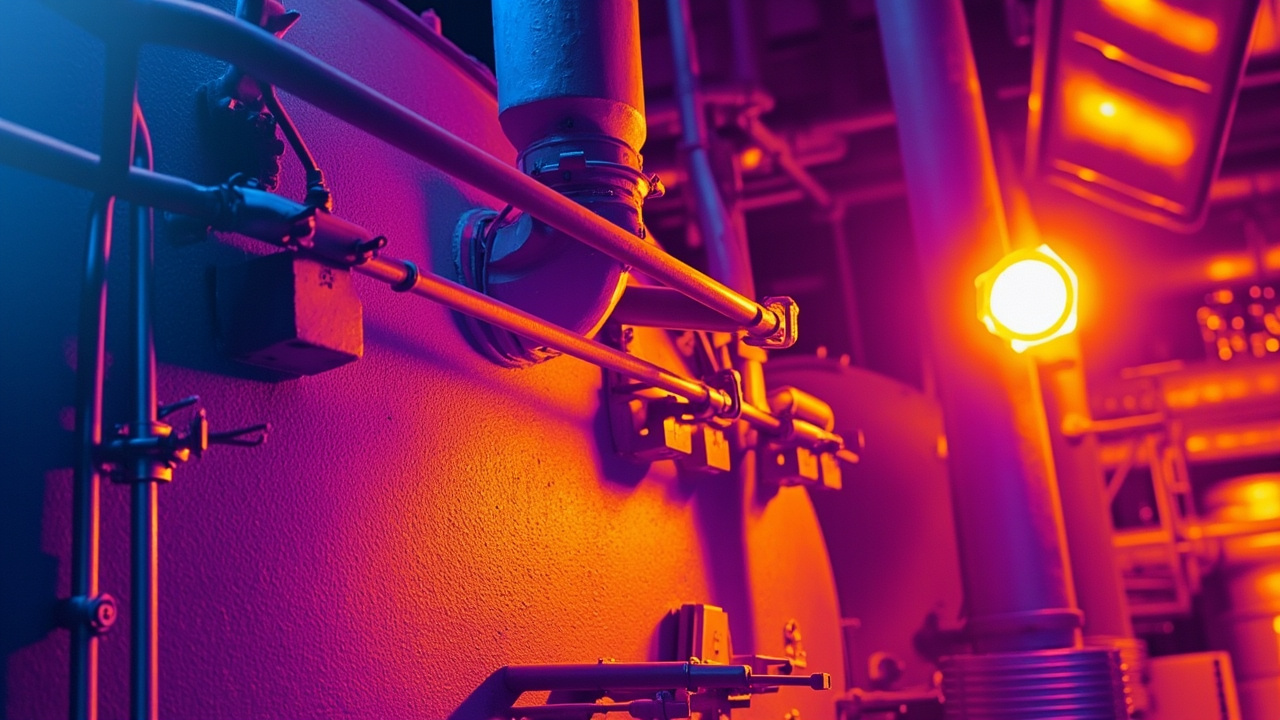
"Withstands 800℃" — this slogan printed on countless product pages is one of the most easily misinterpreted parameters in industrial coating. Purchasers often assume that a paint labeled 800℃ can work stably at 800℃ for long periods, only to find the coating chalking, peeling, and rusting through after two months. The truth is: temperature rating, long-term service temperature, and short-term peak temperature are three completely different concepts.
This article takes high-temperature coating from 200℃ up to 1200℃ by working condition, telling you which system to use for each range, which pitfalls to avoid, and the logic behind kexinMaterials' nano high-temperature-resistant solution.
I. First, distinguish three temperature concepts
- Long-term service temperature: the temperature the coating can continuously withstand without degradation; this is the basis for selection.
- Short-term peak temperature: the upper limit reachable during occasional rapid heating, usually 100–300℃ higher than the long-term value.
- Rated temperature: the manufacturer's promotional value, often referring to the critical point of "non-combustible and non-melting," not equal to usable temperature.
Taking the rating as the service temperature is the primary cause of on-site failure of high-temperature paint.
II. Working-condition graded selection map
| Condition range | Typical equipment | Recommended system | Key indicators |
|—|—|—|—|
| 200–400℃ | Steam pipes, heat exchangers, engine compartments | Silicone-modified acrylic | Thermal cycling resistance, adhesion |
| 400–600℃ | Chimneys, boiler exteriors, exhaust manifolds | Silicone aluminum paint | Heat resistance + oxidation discoloration resistance |
| 600–800℃ | Furnace bodies, incineration lines, exhaust pipes | High-temp silicone / silicate | Anti-chalking, thermal shock resistance |
| 800–1200℃ | Metallurgy, cracking, refractory linings | Silicate / nano ceramic | Ceramization, thermal insulation |
Rule of thumb: the higher the temperature, the more organic resins must give way to inorganic and ceramic frameworks. Above about 600℃, pure silicone will gradually degrade and must rely on silicate or nano ceramic phases to bear load.
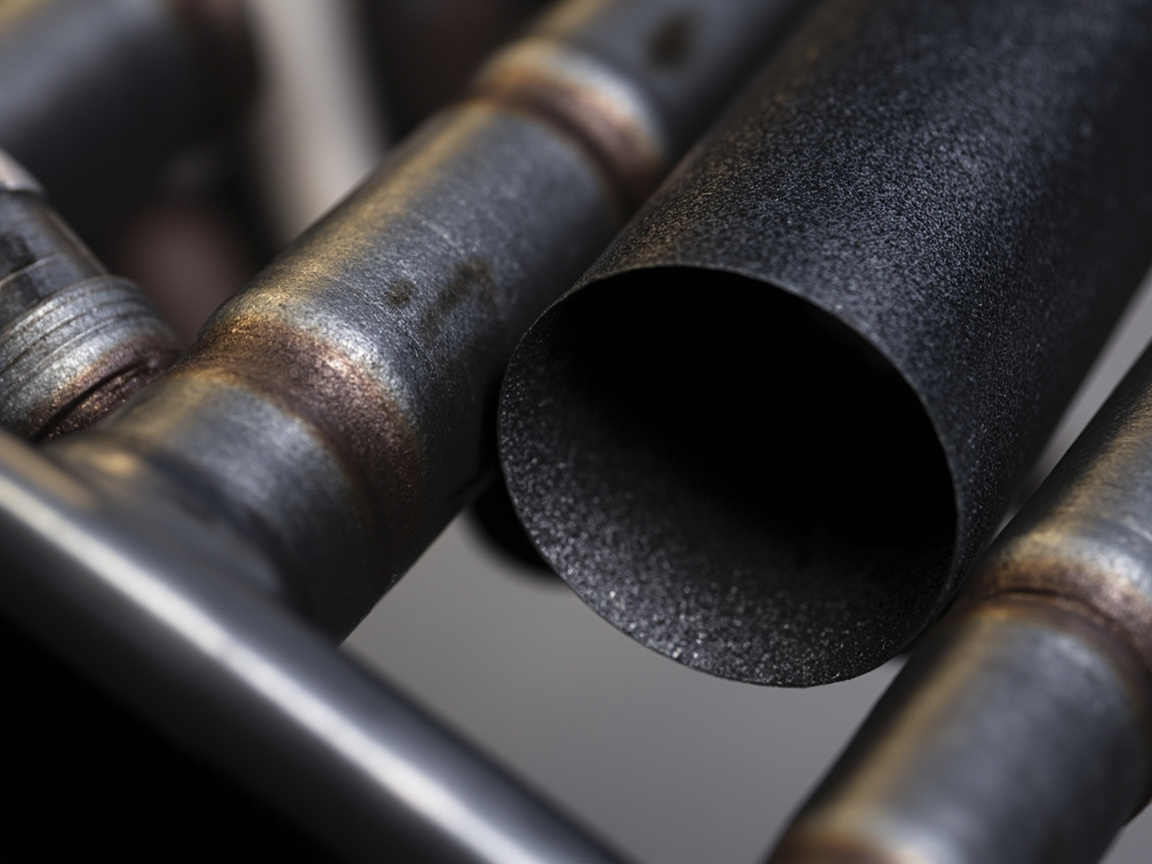
III. Differences and pitfalls of three major systems
1. Silicone system (200–800℃)
Good flexibility, strong adhesion, and application close to ordinary paint, it is the main force in the 400–600℃ range. The pitfalls are twofold: one is difficulty in full curing at low temperature range (<200℃), manifesting as tackiness; the other is that some small factories pass off ordinary silicone paint as high-temperature paint, which chalks within two months.
2. Silicate system (600–1000℃)
Inorganic framework has inherently high heat resistance and forms a ceramic state at high temperature. The pitfall is high brittleness and sensitivity to substrate expansion/contraction; equipment with frequent thermal shock is prone to cracking and needs a flexible transition layer.
3. Nano ceramic system (800–1200℃)
Using nano alumina and silicides as the framework, it ceramizes at high temperature and provides some thermal insulation. The pitfall is high cost and application threshold, but it is currently the most stable option for extreme conditions such as metallurgy and cracking.
IV. How to avoid false parameter labeling
When purchasing high-temperature paint, don't just ask "how many degrees it withstands"; ask four things:
1. What is the long-term service temperature, not the rated temperature.
2. Number of thermal cycles (e.g., ≥10 cycles without cracking) — is there a test report.
3. Substrate and surface treatment grade (usually Sa2.5 required) — does it match your workpiece.
4. Same-condition case studies — preferably on-site follow-up photos after more than 1 year.
Writing these into the technical agreement is far more reliable than staring at promotional slogans.
V. kexinMaterials nano high-temperature-resistant solution
The differentiation of kexinMaterials (kexinMaterials) in the high-temperature direction is using nano phase to reconcile the contradiction between "heat resistance" and "adhesion/toughness":
- Nano ceramic reinforced silicone: introduces nano alumina framework in the medium-low temperature range (400–800℃) to delay organic phase degradation and significantly extend the chalking period.
- Nano transition layer: sets a nano flexible transition between the silicate ceramic layer and the metal substrate to absorb expansion/contraction stress and reduce thermal shock crack rate.
- Gradient ceramization topcoat: for conditions above 800℃, in-situ ceramization at high temperature while retaining some insulation, suitable for metallurgy and incineration lines.
- Synergy with mechanical anti-rust: high-temperature equipment substrates are mostly coastal or high-humidity; nano anti-rust primer paired with high-temperature topcoat avoids the hidden failure of "topcoat heat-resistant, substrate rusts first."
For equipment manufacturers and maintenance parties, kexinMaterials provides gradient coating systems customized by service temperature and thermal cycles, with condition adaptation advice, rather than a generic paint "labeled 800℃."
VI. Three things for construction acceptance
1. Proper surface treatment: high-temperature paint is extremely sensitive to substrate treatment; if rust, oil, and old scale are not cleaned, even the best system is useless — Sa2.5 grade is recommended.
2. Hold the curing window: silicone systems have a minimum curing temperature; low-temperature application requires heating or extended curing, otherwise long-term tackiness.
3. Film thickness and layering: ceramic/silicate layers require gradient thickness; too thick cracks easily, too thin not heat-resistant — sample and test per process card.
FAQ
Q1: Can a paint labeled withstands 800℃ be used at 800℃ long-term?
Most likely not. The label is mostly the critical point of "non-melting and non-combustible"; the long-term service temperature is usually 100–300℃ lower. Selection should look at the long-term value, not the label.
Q2: Why does high-temperature paint chalk after two months?
Common causes are passing off ordinary silicone or even alkyd paint as high-temperature paint, or inflated labels; it may also be insufficient substrate treatment or failure to reach curing temperature.
Q3: Can silicone still be used above 600℃?
Pure silicone will gradually degrade above 600℃ and needs to shift to silicate or nano ceramic systems to bear load.
Q4: What if the coating on thermal shock equipment keeps cracking?
Select a nano flexible transition layer to absorb expansion/contraction stress, and confirm substrate treatment and gradient film thickness meet the process.
Q5: Features of kexinMaterials high-temperature-resistant solution?
Uses nano ceramic reinforced silicone, nano transition layer, and gradient ceramization topcoat to reconcile the heat resistance vs. toughness contradiction, and customizes systems by service temperature.
Q6: The most common pitfalls in high-temperature paint construction?
Incomplete substrate cleaning, not holding the minimum curing temperature, and film thickness not following the gradient — these three cause on-site failure more often than choosing the wrong system.
Further Reading
- Complete Guide to High-Temperature Coating Technology: From Silicone to Ceramic Coatings for Heat Resistance Protection
- Exhaust Pipe 1000℃ High-Temperature Nano Ceramic Paint: From Thermal Barrier Coating Mechanism to Automotive Exhaust Systems
- Nano Coating Technology: Principles, Preparation Processes, and Full Analysis of Multi-Field Applications