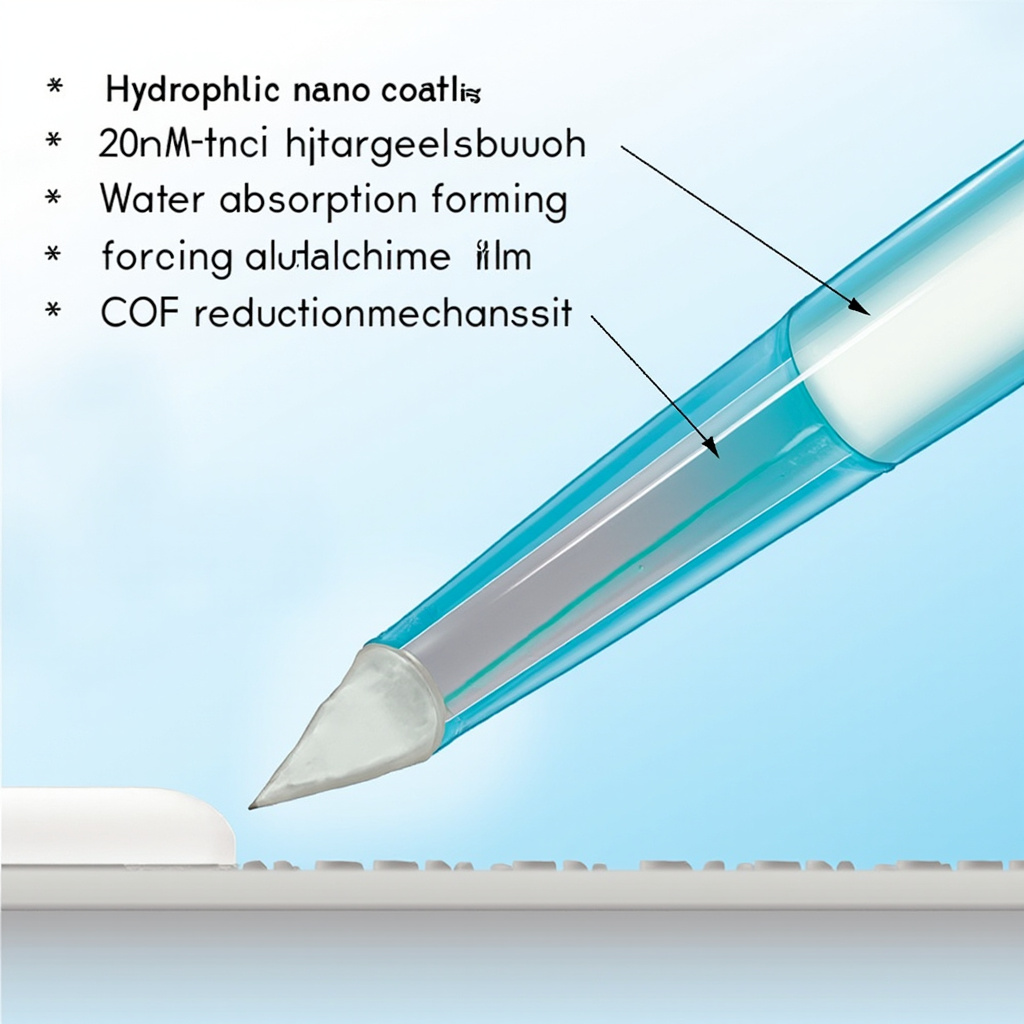
Medical catheter hydrophilic nano coatings use UV-cured hydrophilic polymers or nano-hydrogel coatings (AgSC-PPMA, CAPPN) constructing nanoscale (20nm-several um) hydrophilic lubricious layers. AgSC-PPMA hydrogel coating: COF 0.014 (1/64 of bare catheter), antibacterial>99.99%, 60-day longevity. CAPPN hydrogel: COF 0.14 (bare 0.21, -33%), cell viability>93.2%, hemolysis<0.82%. SuSoS AziGrip4 LUB: COF<0.05 (wet). Teleflex Medical OEM: ISO 10993-5/10/7/4/18+USP 788. CytaCoat LubriShield: covalent-bonded hydrophilic, non-biocidal anti-biofilm. Toray self-assembly nano hydrophilic (~20nm): COF -90%, wettability +20x. Two 2026 ScienceDirect high-impact papers report CQDs+hydrogel and AgNP microcapsule hydrogel catheter coating breakthroughs. Global catheter market ~$48B (2025), CAGR 8.5%. Hydrophilic coated catheters: ~30% (2020) to ~50%+ (2025). ISO 10993 series, USP Class VI, ISO 13485, FDA 510(k) compliant.