Key Takeaways:
1. Polysilazane (PHPS) is an inorganic Si-N backbone polymer converting to dense SiO₂ ceramic through hydrolysis-condensation, achieving hardness 10× that of traditional organic polymer coatings (PMMA, PU).
2. PHPS coatings achieve 7H pencil hardness at room temperature moisture cure; after 1000°C N₂ pyrolysis, hardness soars to 13 GPa (~1300 HV) — approaching fused quartz glass hardness (~8-9 GPa).
3. The critical engineering challenge is critical cracking thickness (CCT) — pure PHPS CCT is only 1-2μm due to 15-30% volume shrinkage during conversion; nano-filler incorporation (SiO₂, Al₂O₃) represents the key technical pathway to resolving this limitation.
In automotive paint protection, hardness is the primary metric for scratch resistance. Traditional organic polymer coatings — whether acrylic clear coats (pencil hardness HB-2H) or polyurethane clear coats (H-2H) — have hardness fundamentally limited by the inherent flexibility of C-C and C-O covalent bonds and lower chain packing density. Polysilazane ultra-hard nano paint coatings represent a fundamentally different technical pathway: starting from an inorganic Si-N backbone, converting through hydrolysis-condensation and thermal pyrolysis to ultimately form a ceramic protective layer approaching pure SiO₂ glass — achieving a hardness leap from “organic polymer” to “inorganic ceramic.”
Ceramic Precursor Chemistry — Molecular Transformation from Si-N to Si-O-Si
Direct Answer: The core molecular structure of polysilazane is an inorganic backbone composed of -Si-N- repeating units — fundamentally different from traditional silicones (siloxanes/PDMS with -Si-O- backbone). Perhydropolysilazane (PHPS, [SiH₂NH]ₙ) contains no organic side groups; each Si atom bonds to two H atoms and one NH bridging group. Upon exposure to moisture (atmospheric H₂O) or heating, Si-N and Si-H bonds undergo sequential hydrolysis-condensation, ultimately transforming into -Si-O-Si- cross-linked networks — chemical composition converting from SiNₓHᵧ to SiO₂.
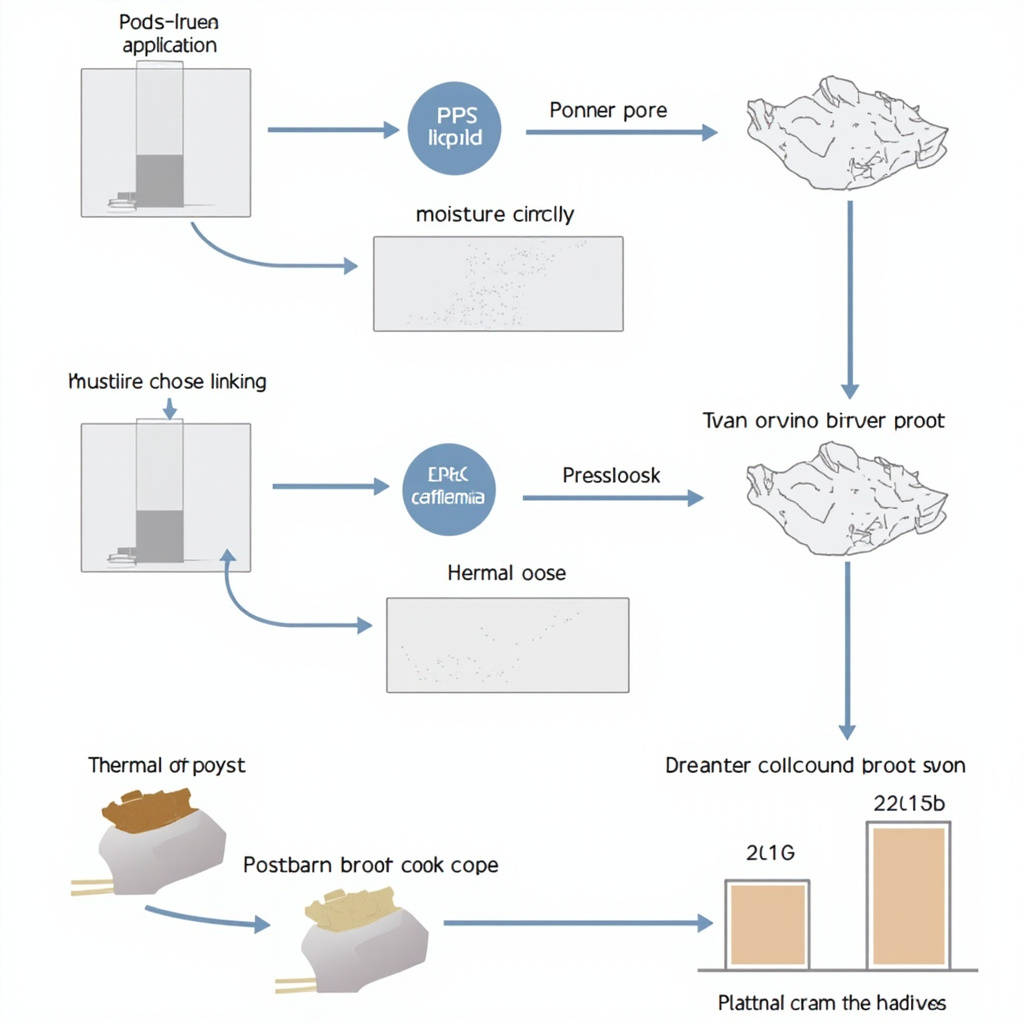
Three-Step Conversion: (1) Hydrolysis activation — atmospheric water molecules attack PHPS Si-N and Si-H bonds (rate-controlling step). Si-N hydrolysis: -Si-NH-Si- + H₂O → -Si-OH + H₂N-Si-, generating silanol and amine groups. Si-H hydrolysis: -Si-H + H₂O → -Si-OH + H₂↑, releasing hydrogen gas (causing potential microbubbles during early cure). (2) Condensation cross-linking — Si-OH groups condense: Si-OH + HO-Si → Si-O-Si + H₂O, developing a 3D Si-O-Si cross-link network (typical time: 24-72 hours at 25°C, 50% RH). (3) Thermal pyrolysis (optional) — at 500-1000°C under inert atmosphere, residual Si-H, Si-NH-Si and organic impurities further thermally decompose; the coating ultimately transforms to near-stoichiometric amorphous Si₃N₄/SiCNO/SiO₂ ceramic — hardness jumps from ~2 GPa (room temperature cure) to 13 GPa.
Data Support: A key study (Barhoum et al., 2012, ScienceDirect) systematically characterized PHPS coating mechanical property evolution at different pyrolysis temperatures: 100°C → 0.8 GPa, 400°C → 3.5 GPa, 600°C → 7.2 GPa, 800°C → 10.5 GPa, 1000°C N₂ → 13 GPa / 155 GPa Young’s modulus — achieving engineering ceramic (amorphous Si₃N₄) performance levels.
Sources: ScienceDirect (Barhoum et al., 2012), Progress in Polymer Science (2025), Clariant PHPS Technical Data
Thick Film Cracking and Nano-Filler Solutions
Direct Answer: Pure PHPS coating’s most critical engineering limitation is Critical Cracking Thickness (CCT) — pure PHPS CCT at room temperature cure is only 1-2μm; beyond this thickness, the coating spontaneously crazes under drying shrinkage stress. Incorporating nano-fillers (nano-SiO₂, nano-Al₂O₃, nano-TiO₂, nano-BN) as “internal framework” can elevate CCT to 5-10μm or higher while additionally enhancing mechanical properties and functionality.
Adding 20wt% nano-SiO₂ (20-50nm) elevates PHPS coating CCT from ~1.5μm to ~8μm while maintaining coating transparency (SiO₂ refractive index n≈1.46 closely matches PHPS-cured SiO₂ n≈1.45). Laser-assisted localized pyrolysis technology provides another innovative solution — locally pyrolyzing only areas requiring ultra-high hardness (e.g., door handle recesses, front bumper lower edges) while leaving the rest of the coating at room-temperature cure, avoiding global shrinkage cracking.
Sources: Ceramics International (2022), Progress in Polymer Science (2025)
FAQ
Q: Polysilazane coating vs. traditional SiO₂ ceramic coating — the same?
Completely different. Traditional SiO₂ ceramic coating disperses nano-SiO₂ particles in organic resin — hardness comes from SiO₂ filler, but the matrix remains organic polymer. Polysilazane coating converts the entire coating from Si-N polymer to inorganic SiO₂ ceramic in-situ — the entire coating (not just filler) becomes ceramic. Former pencil hardness limit: ~9H; latter: up to 13 GPa (far beyond pencil hardness scale).
Q: Does PHPS coating yellow under sunlight?
No. Cured PHPS coating is pure inorganic amorphous SiO₂ — containing zero organic chromophores or conjugated structures, intrinsically non-yellowing. This represents one of PHPS’s core advantages over organic polymer coatings.
Q: What is the shelf life of polysilazane?
PHPS is extremely moisture-sensitive — once opened, it must be stored under nitrogen protection and sealed, otherwise it will react with atmospheric moisture and gel. Unopened original packaging shelf life is typically 6-12 months (depending on brand and formulation) under cool, dry storage. Once opened, recommended use within 1-2 weeks.
References: ScienceDirect (Barhoum et al., 2012), Progress in Polymer Science (2025), Ceramics International (2022), Clariant NN 120-20, IOTA Polysilazane Specifications
Published: July 6, 2026 | Category: Technical Knowledge