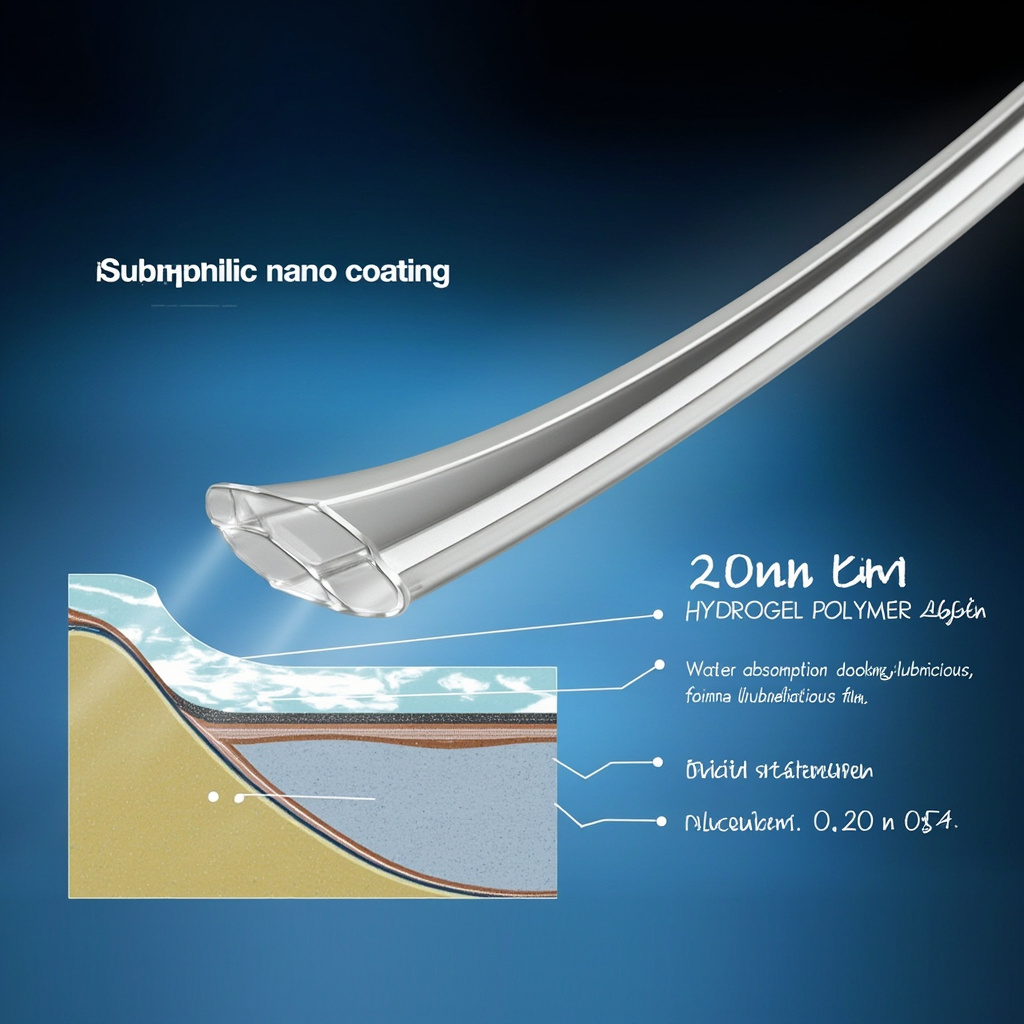
Medical catheter ultra-slippery hydrophilic nano-coatings construct a nanoscale (20 nm to several μm) hydrophilic lubricating layer on the catheter surface via UV-cured hydrophilic polymers (polyvinylpyrrolidone, PVP) or nanohydrogel coatings (AgSC-PPMA, CAPPN). The AgSC-PPMA hydrogel coating has a coefficient of friction (COF) as low as 0.014 (1/64 of the bare catheter), with antibacterial efficacy >99.99% sustained for 60 days. The CAPPN hydrogel (CQDs-PAA-PEG-PNIPAM): COF 0.14 (bare 0.21, reduced by 33%), cell viability >93.2%, hemolysis rate <0.82%. SuSoS AziGrip4 LUB: COF 20-fold. In 2026, two high-impact ScienceDirect papers reported the latest technological breakthroughs in carbon quantum dot plus hydrogel catheter coatings and Ag nanoparticle microcapsule hydrogel coatings. The global medical catheter market was approximately USD 48 billion in 2025 (CAGR 8.5%), with hydrophilic-coated catheters increasing from ~30% in 2020 to ~50%+ in 2025. Compliant with ISO 10993 series, USP Class VI, ISO 13485, and FDA 510(k) catheter coating guidance.