"Self-cleaning" is the most talked-about function of nano coatings—rain washes it clean in an instant, glass stays dust-free, and exterior walls need no cleaning. But self-cleaning is not a single mechanism; rather, it follows two physicochemical paths: one is superhydrophobicity (lotus effect), which relies on micro-nano roughness + low surface energy to roll dirt away with water droplets; the other is photocatalytic superhydrophilicity (TiO₂ type), which relies on UV excitation to decompose organic matter and let a water film spread to wash away dust. The two are opposite in direction (one repels water, the other attracts it) yet achieve the same end by different means. This article systematically explains the mechanism, materials, standards, and selection comparison; all quantifications correspond to real standards such as ISO 27448, JIS R 1705, and GB/T 23764. For the physical basis of hydrophobicity, first read the companion article Nano Coating Wettability and Contact Angle.
Kexin New Materials (kexinMaterials) provides two types of self-cleaning solutions in functional coatings—hydrophobic and photocatalytic. This article also incorporates the R&D principle of "selecting the path according to working conditions" from its public technical materials, helping customers avoid the misconception of "one self-cleaning solution fits all."

I. Path One: Superhydrophobic Lotus Effect (Water-Repellent Self-Cleaning)
The lotus effect originates from its surface micro-nano bilayer structure (micrometer papillae + nano wax crystals), satisfying the Cassie-Baxter composite state: air is trapped beneath the water droplet, contacting only at the papilla tips, with contact angle > 150° and rolling angle < 10°; the water droplet rolls like a "ball," carrying away dust and sand. Artificial superhydrophobic coatings replicate this structure:
- Low-surface-energy chemistry: introduce low-energy groups such as —CF₃ and —Si—CH₃ to lower the intrinsic contact angle θ_Y (see Nano Coating Wettability).
- Micro-nano rough structure: use nano SiO₂, nano Al₂O₃, or etching to construct roughness, pushing the surface from Wenzel to Cassie state.
Dirt mostly consists of hydrophilic particles that do not substantially contact the substrate when landing on a superhydrophobic surface, but are merely "picked up" by rolling water droplets, achieving "rain self-washing." Automotive ceramic coating, hydrophobic building exterior walls, and fabric water-repellent treatment belong to this category (see Automotive Ceramic Hydrophobic Mechanism).
1.1 Three Equations: From Young to Wenzel to Cassie
To understand why "low surface energy" alone is insufficient, the three classic models must be linked together:
- Young's equation describes the intrinsic contact angle θ_Y of an ideal smooth surface, determined by the balance of three interfacial tensions: solid-gas, solid-liquid, and liquid-gas. Purely relying on chemistry (fluorine-containing, silane-containing groups) to lower surface energy, the theoretical upper limit of water contact angle on a smooth surface is around 120°—this is why "changing only chemistry, not structure, cannot produce superhydrophobicity."
- Wenzel model describes the "wetted state" where liquid completely fills the rough valleys: cosθ* = r·cosθ_Y, where r is the ratio of actual area to projected area (r ≥ 1). Its conclusion is "roughness amplifies the original tendency": intrinsically hydrophobic becomes more hydrophobic, intrinsically hydrophilic becomes more hydrophilic. But in the Wenzel state, liquid is embedded in grooves, with large contact angle hysteresis and pinned, non-rolling droplets.
- Cassie–Baxter model describes the "composite state" where liquid rests on top of protrusions with air trapped below: cosθ* = f·cosθ_Y + f − 1, where f is the fraction of actual solid-liquid contact area. The smaller f (the higher the air cushion ratio), the larger the apparent contact angle, the smaller the hysteresis, and the easier the droplet rolls off.
Superhydrophobic self-cleaning truly relies on the Cassie state. Once pressure, vibration, condensation, or wear pushes liquid into the grooves, the system collapses from Cassie to Wenzel; the contact angle may remain high, but the droplet no longer rolls—self-cleaning function fails. This also explains a common phenomenon: "water beads beautifully on the sample panel, but after a few months outdoors it holds water and dust."
1.2 Metrics More Important Than Contact Angle: Rolling Angle and Contact Angle Hysteresis
Industry promotion generally reports only the static contact angle, but what determines "whether dirt can be carried away" is actually a dynamic parameter:
- Contact angle hysteresis: the difference between advancing angle θ_adv and receding angle θ_rec. The smaller the hysteresis, the easier the droplet detaches from the surface.
- Rolling angle / sliding angle: the surface tilt required for a droplet of a certain volume to start rolling. The common criterion for superhydrophobicity is static contact angle >150° and rolling angle <10°.
- The "rose petal effect" is a counterexample: some micro-nano structured surfaces also exceed 150° static contact angle, but with extremely strong adhesion, the droplet does not fall even when inverted. Such surfaces have a "qualified" contact angle yet cannot self-clean at all—selecting based only on static contact angle will lead to pitfalls.
Therefore, when procuring superhydrophobic self-cleaning coatings, one should request both static contact angle and rolling angle (or contact angle hysteresis) data, and specify the test liquid (deionized water), droplet volume, test temperature, and test method (ISO 19403 series / GB/T 30693).
1.3 Material Implementation Paths and Durability Shortcomings
Constructing micro-nano dual-scale roughness + low-surface-energy modification, industry mainly has four routes: nanoparticle (SiO₂, Al₂O₃, TiO₂) accumulation into a rough layer followed by silane/fluorosilane grafting; phase separation or pore formation to create porous structures; etching/anodizing to directly create micro-nano morphology on the substrate; and sol-gel one-step method to simultaneously form film and create roughness.
The common weakness of the four routes is durability:
- Mechanical wear: the micro-nano protrusions themselves are extremely small in scale; any wiping or sand-dust scouring will first wear away the "nano-level" structure, and the Cassie state collapses accordingly.
- UV aging: organic low-surface-energy groups break chains under UV and free radicals, causing surface energy to rise. Systems with siloxane (Si—O—Si, high bond energy, UV-resistant) as the skeleton generally have better weather resistance than purely organic systems.
- Pollutant coverage: oily stains will "fill" the air cushion, and at this point the superhydrophobic surface becomes even harder to clean.
- Regulatory constraints: long-chain perfluorinated compounds are already restricted by international conventions (PFOA was listed in Annex A of the Stockholm Convention on Persistent Organic Pollutants in 2019, PFOS in Annex B in 2009), and the industry is rapidly shifting to short-chain fluorinated systems and silane/organosilicone systems. When selecting, confirm the supplier's chemical compliance statement.
II. Path Two: TiO₂ Photocatalytic Superhydrophilicity (Decomposition Self-Cleaning)
The second path is exactly the opposite—it makes the surface hydrophilic, relying on chemical decomposition rather than physical rolling:
- Photocatalytic decomposition: under UV excitation (λ < 387 nm), anatase TiO₂ generates electron-hole pairs, which react with surface water/oxygen to produce active species such as ·OH and ·O₂⁻, oxidatively decomposing surface organic dirt (oil stains, bird droppings, organic dust).
- Superhydrophilization: under illumination, the TiO₂ surface forms oxygen vacancies and a hydroxylated layer, with water contact angle approaching 0°; water droplets spread into a film rather than beading; this water film isolates dirt from the substrate and washes away dust with gravity/breeze—i.e., "hydrophilic self-cleaning."
Therefore, pure TiO₂ coating is "hydrophilic cleaning," suitable for glass curtain walls, solar panels (reducing shading dust accumulation), and tunnel tiles. Its activity must be proven by specific standards: ISO 27448 "Fine Ceramics (Advanced Ceramics, Advanced Technical Ceramics) — Test Method for Self-Cleaning Performance of Semiconducting Photocatalytic Materials — Measurement of Water Contact Angle", Japan's JIS R 1703-1/-2 (Test methods for self-cleaning performance of photocatalytic materials: Part 1 Measurement of water contact angle, Part 2 Methylene blue decomposition method), and domestic GB/T 23764-2009 "Test method for self-cleaning performance of photocatalytic materials" (this standard is modified from JIS R 1703-1:2007), etc. For the general mechanism of TiO₂ photocatalysis, extend reading to the material cluster Nano TiO₂ Photocatalytic Self-Cleaning.
2.1 Bandgap and Quantum Efficiency: Why It Must Be UV
The bandgap of anatase TiO₂ is about 3.2 eV, corresponding to an excitable wavelength upper limit of about 387 nm; rutile is about 3.0 eV, corresponding to about 413 nm. According to Planck's relation, photon energy must be no less than the bandgap to excite valence band electrons to the conduction band, which physically limits "only the UV segment in natural light (accounting for a few percent of surface solar irradiance energy) participates in photocatalysis." This hard constraint brings three engineering conclusions:
- Indoors, in shade, or inside tunnels without sufficient UV, pure TiO₂ self-cleaning basically fails, unless equipped with artificial UV light sources (such designs do exist in tunnel lighting).
- Cloudy days still have UV scattering; photocatalysis does not drop to zero completely, but the rate decreases significantly, and self-cleaning effect fluctuates with season and orientation.
- Glass absorbs part of the UV; photocatalytic coating installed on the inner side of glass is far less efficient than on the outer side.
If the excited electron-hole pairs recombine in the bulk, no chemical effect is produced. Therefore, technical routes to improve activity basically revolve around "suppressing recombination and extending carrier lifetime": anatase/rutile mixed phase (bandgap misalignment at phase boundaries promotes charge separation, a classic idea for P25-type commercial powders), noble metal deposition (Pt, Au as electron traps), compounding with narrow-bandgap semiconductors, and element doping.
2.2 Visible-Light Response: The Gains and Costs of Doping
To break through the UV limitation, the industry has tried using non-metallic doping such as N, C, S to introduce impurity energy levels in the band gap, shifting the absorption edge to the visible light region. What needs to be clearly recognized is:- Doping broadens the spectral response, but often simultaneously introduces recombination centers, and the quantum efficiency per photon may decrease;
- Activity data of visible-light-responsive products must specify the light source spectrum and irradiance; otherwise, data from different manufacturers cannot be compared horizontally;
- The current GB/T 23764-2009 explicitly does not apply to photocatalytic self-cleaning materials "used in dark environments and visible-light-responsive types", which means visible-light-type products need to choose alternative methods or supplement third-party empirical evidence.
2.3 The "reversibility" of photo-induced superhydrophilicity and dark recovery
The superhydrophilicity of TiO₂ is not a permanent property, but is photo-induced and reversible: under UV irradiation the surface becomes hydroxylated and the water contact angle approaches 0°; after being moved to a dark place for a period of time, the contact angle will gradually rise again. This phenomenon has two direct impacts in engineering:
- Testing must specify the complete sequence of "dark treatment—light irradiation—measurement". The test procedures of ISO 27448 and GB/T 23764 are designed around this point: first use a specified method to cover the surface with organic matter (forming an initial high contact angle), then irradiate under specified UV irradiance, and record the decline curve of the contact angle with cumulative irradiation dose.
- When comparing different products, the irradiance (mW/cm²) and cumulative irradiation dose (e.g., J/cm² or kJ/m²) must be checked. Reporting only "contact angle 5° after 24 h irradiation" without giving irradiance makes the data untrustworthy.
2.4 Photocatalysis is more than self-cleaning: three types of activity must be evaluated separately
The performance standard of photocatalytic materials is "scenario-specific", and mixing them up causes misunderstanding:
| Function | Main test object | Representative standard |
|---|---|---|
| Self-cleaning | Surface organic soiling and water contact angle | ISO 27448, JIS R 1703-1/-2, GB/T 23764-2009 |
| Air purification | Gaseous pollutants such as NO, acetaldehyde, toluene, formaldehyde | ISO 22197 series, GB/T 23761-2009 |
| Water purification / activity characterization | Degradation of aqueous dyes such as methylene blue | ISO 10678, GB/T 23762-2009 |
| Antibacterial / antifungal | Bacteria, mold | ISO 27447, GB/T 23763-2009, JIS R 1705 (antifungal activity) |
A special reminder of a high-frequency miscitation: JIS R 1705 is the "test method for antifungal activity of photocatalytic products under light irradiation", which belongs to the antibacterial category and is not a self-cleaning test standard; for self-cleaning, JIS R 1703-1/-2 or ISO 27448 should be cited. Using the wrong standard number will be directly judged as false technical documentation in formal tender technical reviews.
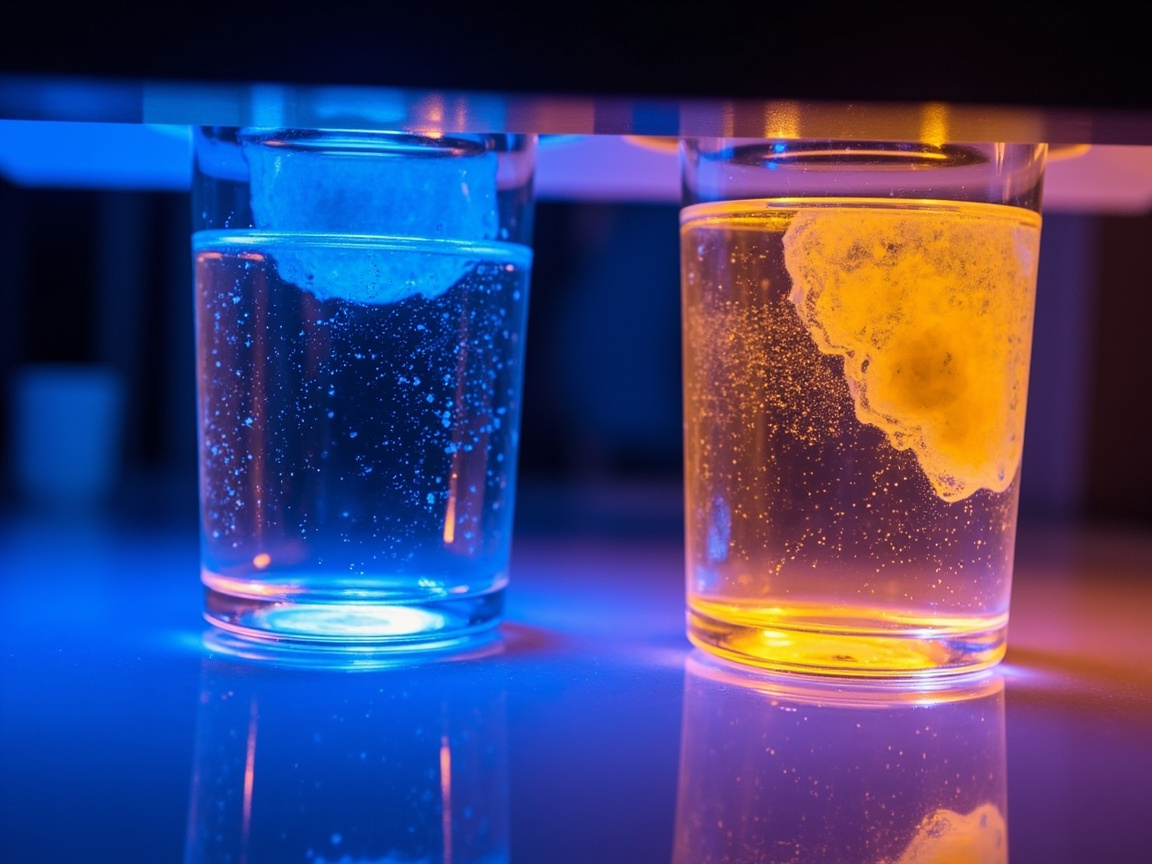
III. Comparison of two paths: water-repellent vs hydrophilic
| Dimension | Superhydrophobic (lotus effect) | Photocatalytic (TiO₂ superhydrophilic) |
|---|---|---|
| Surface state | Contact angle >150°, water-repellent | Contact angle≈0° under light, hydrophilic |
| Cleaning mechanism | Water droplets roll off taking away dirt | Photodecompose organic soiling + water film washes away |
| Key material | Nano SiO₂/Al₂O₃ + low-energy groups | Anatase TiO₂ |
| Energy demand | None (relies on rain/rinse) | Requires UV (natural light contains UV) |
| Main failure | Structural wear, low-energy group breakage | Failure without UV, activity decay |
| Typical application | Automotive, exterior walls, textiles | Glass curtain walls, photovoltaics, tunnel bricks |
| Standard proof | Contact angle/rolling angle (ISO 19403/GB/T 30693) | ISO 27448 / JIS R 1703-1/-2 / GB/T 23764 |
Conclusion: The two are complementary rather than mutually exclusive. Indoor UV-free places (such as car interiors, pipes) are suitable for hydrophobic types; outdoor glass/photovoltaics with UV are suitable for photocatalytic types; sometimes a composite (TiO₂ decomposition + SiO₂ skeleton hydrophobicity) achieves both.
3.1 Adaptation differences of the two paths to "soiling types"
On the same exterior wall, the difficulty of removing dust, rain marks, oil fume, moss, bird droppings, and graffiti is completely different. Classifying soiling by the two dimensions of "organic/inorganic" and "particulate/film-like", the division of labor between the two paths becomes immediately clear:
| Soiling type | Typical source | Superhydrophobic path | Photocatalytic path |
|---|---|---|---|
| Inorganic particulate dust | Dust, sand | Good effect (rolls off with water droplets) | Medium effect (relies on water film rinsing) |
| Hydrophilic slurry | Rain-splashed muddy water | Good effect | Medium effect |
| Oily organic soiling | Vehicle exhaust, oil fume | Poor effect (oil fills air cushion) | Good effect (can be oxidatively decomposed) |
| Biological soiling (moss, mold) | Damp shaded side | Poor effect | Good effect (also antibacterial) |
| Protein soiling such as bird droppings | Outdoor | Medium (still needs rinse after drying) | Good (slow decomposition) |
| Inorganic scale/salt efflorescence | Hard water evaporation | Poor | Poor (photocatalysis does not decompose inorganic matter) |
This table clarifies a fundamental misconception: photocatalysis can only oxidatively decompose organic matter, and is completely ineffective against inorganic deposits such as scale, salt efflorescence, and metal rust; while the resistance of superhydrophobicity to oil stains is far less ideal than advertised. Any product claiming "one spray, permanently clean" can be directly disproved with this table.
3.2 Composite path: how to coexist structurally
The strong oxidizing property of TiO₂ decomposes organic matter in direct contact with it, including the coating's own organic binder phase and surface low-surface-energy organic groups. Therefore, "both hydrophobic and photocatalytic" is not a simple blend, but requires structural isolation:
- Layered structure: Inorganic SiO₂ skeleton as a transition layer for isolation, with TiO₂ distributed in the outermost layer or in island-like distribution;
- Coating modification: SiO₂ or Al₂O₃ coating on TiO₂ particles to reduce the degradation rate caused by direct contact (this is also a common practice for many "weather-resistant" titanium dioxide pigments);
- Inorganic binder phase: Use inorganic film formers such as silicate and silica sol overall to fundamentally avoid decomposition of the organic binder phase.
The cost is increased process complexity and cost, and the hydrophobicity is partially offset by photocatalytic hydrophilicization. When selecting, "composite" should be regarded as a solution for special needs, not as inherently better by default.
IV. Performance quantification: how to test self-cleaning
Self-cleaning cannot be judged by "looks clean", it must be quantified:
- Contact angle/rolling angle: For superhydrophobic, static CA >150° and rolling angle <10° per ISO 19403 / GB/T 30693.
- Photocatalytic activity: ISO 27448 and GB/T 23764-2009 measure the change of water contact angle with UV irradiation (self-cleaning performance); JIS R 1703-2 and ISO 10678 use methylene blue decomposition to characterize activity; air purification types have separate ISO 22197 series and GB/T 23761-2009.
- Accelerated aging: Retest activity or CA after UV/humid-heat cycles to evaluate durability.
According to public literature, commercialized TiO₂ self-cleaning glass can maintain activity for several years under continuous UV, but activity drops sharply in shaded and indoor UV-free places—therefore "self-cleaning" must specify the lighting conditions of use, and cannot be claimed broadly.
4.1 Elements a credible self-cleaning report should contain
Regardless of which path is taken, to judge whether a report is "citable", check whether these items are complete:
| Element | Superhydrophobic path | Photocatalytic path |
|---|---|---|
| Standard number and version | ISO 19403-x / GB/T 30693 | ISO 27448 / GB/T 23764-2009 / JIS R 1703-x |
| Sample and substrate | Consistent with actual substrate | Consistent with actual substrate |
| Test medium | Deionized water, specify droplet volume | Specified organic covering |
| Environmental conditions | Temperature, humidity | Temperature, humidity, irradiance (mW/cm²) |
| Timing | Standing time, number of measurement points | Dark treatment time, cumulative irradiation dose |
| Dynamic indicators | Advancing/receding angle or rolling angle | Contact angle decline curve vs. irradiation dose |
| Durability data | Re-measurement after aging/abrasion | Re-measurement of activity after aging |
| Issuing organization | CNAS/CMA qualification preferred | CNAS/CMA qualification preferred |
Photocatalytic reports lacking "irradiance" and superhydrophobic reports lacking "rolling angle" both belong to incomparable data—they may be genuine, but cannot be used for horizontal comparison.
4.2 Outdoor Durability Evaluation: Accelerated Aging and Real-Condition Exposure
There is a gap between laboratory data and outdoor performance, so two types of supplementary evidence are needed:
- Accelerated aging: Xenon lamp or fluorescent UV aging (e.g., GB/T 1865, GB/T 14522 and other artificial weathering series methods), re-measure contact angle or photocatalytic activity after cycling. Note that there is no universal conversion factor for acceleration ratio; claims like "1000 hours equals X years" should be treated with caution.
- Real-condition exposure: Hang panels at representative climate sites according to GB/T 9276 "Test method for natural weathering exposure of coatings", and periodically retrieve and re-measure. For architectural exterior wall products, the stain resistance can also be evaluated with reference to GB/T 9780 "Test method for stain resistance of architectural coating films"; this indicator is closest to the user perception of "self-cleaning".
- Re-measurement after abrasion: This is mandatory for superhydrophobic. Taber abrasion (GB/T 1768 / ASTM D4060) or reciprocating friction with specified load followed by rolling angle measurement can be used to assess the wear life of the micro-nano structure.

V. Material and Formulation Key Points
Superhydrophobic route process pitfalls: ① Low-energy groups are prone to UV cleavage; a stable siloxane skeleton is required; ② Micro-nano structure fails upon abrasion; wear-resistant substrate or protective top layer is needed; ③ Difficult wetting during application (cratering); primer/activation required (see nano coating application process).
Photocatalytic route process pitfalls: ① TiO₂ simultaneously catalyzes the degradation of organic resins, so the coating must use a photolysis-resistant inorganic/ceramic binder phase to avoid self-decomposition; ② Activated only by UV; visible-light activity requires doping (N, C doping or composite narrow-bandgap semiconductor) but with efficiency-cost trade-off; ③ Nano dispersion and adhesion (see the dispersion logic in nano wear-resistant hard coating).
VI. Common Failures and Countermeasures
| Failure | Cause | Countermeasure |
|---|---|---|
| Hydrophobic failure | Structure flattened, groups cleaved | Wear-resistant top layer, avoid strong abrasion |
| Ineffective photocatalysis | No UV / activity decay | Switch to visible-light doped or hydrophobic type |
| Coating self-degradation | Resin not photolysis-resistant | Use ceramic/inorganic binder phase |
| Cratering / poor adhesion | Low surface energy hard to wet | Primer, plasma activation |
As a system supplier, Kexin New Materials (kexinMaterials), when delivering self-cleaning solutions, first clarifies "whether the working condition has UV, whether it is wear-resistant, and what the substrate is", then determines hydrophobic or photocatalytic type, and attaches corresponding standard (CA/rolling angle or ISO 27448/JIS R 1705) reports—never hyping a single route as universal.
VII. Typical Application Scenarios and Engineering Key Points
7.1 Photovoltaic Modules: The Benefit of Self-Cleaning Is Directly Reflected in Power Generation
Dust accumulation (soiling) on the module surface blocks incident light, causing considerable power generation loss, especially severe in arid, dusty and agricultural burning areas. The value of self-cleaning coating lies in reducing cleaning frequency and water consumption, rather than "never needing washing". Engineering notes:
- The coating must pass module-level weathering and mechanical load tests, and must not impair glass transmittance and long-term module reliability (the module itself is designed and certified for safety per IEC 61215 / IEC 61730 series).
- Anti-reflection (AR) coating and self-cleaning function are often integrated into the same layer; both transmittance gain and self-cleaning indicators must be checked to avoid sacrificing transmittance for hydrophobicity.
- Tilt angle is critical: at low tilt, water film/droplets cannot fully flow down, and self-cleaning effect is significantly weaker than at high tilt.
7.2 Building Curtain Walls and Exterior Wall Coatings: Stain Resistance Is Closer to Acceptance Than "Self-Cleaning"
Curtain wall glass is suitable for photocatalytic type (sufficient outdoor UV, mainly organic stains and rain marks); exterior wall coatings more often use the "low surface energy + high hardness" stain-resistant route, with acceptance mostly by GB/T 9780 stain resistance test. Owners should be reminded that north facades and eave-under areas (rain shadow zones) not reached by rainwater washing are where self-cleaning performs worst; drainage lines and drip grooves should be handled at the design stage rather than relying on the coating.
7.3 Tunnels and Underground Spaces: Light Source Determines the Route
Pollution on tunnel tile surfaces is mainly automobile exhaust organics and carbon black, very suitable for photocatalytic decomposition; but natural UV inside tunnels is zero, so it must rely on UV component in the lighting system or dedicated UV lamps. If the lighting scheme contains no UV, one should revert to the "easy-to-clean high-hardness low-surface-energy" route, solved by mechanical washing.
7.4 Fabrics and Exterior Trim: Water Repellency Is Not Equal to Self-Cleaning
Fabric water repellency (water and oil repellent finishing) shares the mechanism with superhydrophobic self-cleaning, but the fabric surface structure decays quickly under washing and friction, requiring durability evaluation by wash cycles, and specifying "water repellency grade" rather than vaguely claiming self-cleaning.
7.5 Indoor Air Purification Coatings: Belong to a Different Set of Indicators
Indoor photocatalyst coatings mainly target decomposition of formaldehyde, VOC and odors, belonging to "air purification" rather than "self-cleaning"; evaluation should follow ISO 22197 series or GB/T 23761-2009. Using air purification data to prove self-cleaning, or vice versa, is standard misuse. Meanwhile, actual efficiency under indoor visible light is often far lower than under laboratory UV conditions; lighting requirements must be stated truthfully in promotion.
VIII. Maintenance and Failure Judgment: Self-Cleaning Is Not Maintenance-Free
Kexin New Materials (kexinMaterials) provides a maintenance protocol when delivering self-cleaning solutions, because improper maintenance is the main source of "human-induced failure" of self-cleaning coatings:
- No strong alkali and abrasive cleaners: Low surface energy layer and micro-nano structure are rapidly destroyed; one improper cleaning may offset years of weathering design.
- No close-range direct high-pressure water jet: Mechanical impact collapses the Cassie structure.
- Photocatalytic surface must stay "exposed to light": After installing sunshades, advertising films or long-term thick dust, UV cannot reach and activity fails.
- Periodic re-measurement rather than visual inspection: It is recommended to re-measure annually with a portable contact angle meter or standard water drop method, together with appearance records, far more objective than "looks okay".
- Failure judgment thresholds should be written into the contract: e.g., "rolling angle exceeding X° judged as hydrophobic failure", "photocatalytic surface contact angle not dropping to Y° under specified irradiation dose judged as activity failure", to avoid later disputes.
IX. Relationship with Automotive Ceramic Coating
Automotive ceramic coating belongs to the superhydrophobic route (SiO₂ skeleton + low-energy groups); its "self-cleaning" is rainwater rolling off carrying dust, not light decomposition. Claiming "coating decomposes stains" confuses the two routes—ceramic coating mainly repels water and enhances gloss, stubborn organic stains still rely on car washing. Understanding this distinction allows building accurate expectations for the "self-cleaning" of automotive ceramic coating.
X. Selection Checklist and Decision Tree
To select a self-cleaning coating, answer four questions first: ① Is there UV (determines if photocatalysis is usable); ② Is it wear-resistant (determines hydrophobic structure life); ③ Substrate and application conditions (determines binder phase and process); ④ Acceptance standard (hydrophobic by CA/rolling angle, photocatalytic by ISO 27448 / JIS R 1703-1/-2 / GB/T 23764). Aligning "route + standard + working condition" makes self-cleaning not a gimmick.
Expanded by decision tree as follows:
| Q1: UV reachable? | Q2: Main pollutant? | Q3: Mechanical condition? | Recommended route | Acceptance core |
|---|---|---|---|---|
| Yes (outdoor sunny) | Organic-dominated | No friction (glass, curtain wall) | Photocatalytic type | ISO 27448 / GB/T 23764 |
| Yes (outdoor sun-facing) | Inorganic dust-dominated | Rain washing available | Superhydrophobic type or composite | Sliding angle + stain resistance GB/T 9780 |
| Yes | Organic + inorganic mixed | Light friction | Composite type (inorganic binder phase) | Dual indicators in parallel |
| No (indoor/shaded/tunnel without UV lamp) | Any | Any | Superhydrophobic/easy-clean type | CA + sliding angle + abrasion resistance |
| No | Organic-dominated and must decompose | Any | Equip UV light source or switch to mechanical cleaning | Light source scheme first |
| Any | Inorganic scale/salt efflorescence | Any | Neither of the two paths applies | Use anti-scaling/easy-clean design instead |
The last row is worth emphasizing: when the contaminant is inorganic deposition, the "self-cleaning coating" itself is not the correct solution; one should return to water treatment, drainage design, or easy-to-clean surface approaches. Assigning problems that should not be solved by coating to the coating is the most hidden cause of self-cleaning project failure.
FAQ
Q: How many mechanisms do self-cleaning coatings have?
A: Two main paths: superhydrophobic "lotus effect" (micro-nano roughness + low-energy groups, water droplets roll off carrying dirt) and TiO₂ photocatalytic "superhydrophilic" (UV decomposes organic dirt + water film washes away). One repels water, one attracts water; different routes to the same end, with different applicable conditions.
Q: Why is TiO₂ self-cleaning "hydrophilic" rather than "hydrophobic"?
A: Anatase TiO₂ excited by ultraviolet generates ·OH etc. to decompose surface organic dirt, while surface hydroxylation makes the water contact angle approach 0° and spread into a film that isolates and washes away dust. It relies on "hydrophilic spreading + photolysis", not water-repelling rolling beads.
Q: Is photocatalytic coating useful indoors without sunlight?
A: Basically ineffective. TiO₂ requires λ<387 nm ultraviolet activation; activity drops sharply indoors, in shade, or in tunnels without UV. For such scenarios, use superhydrophobic type or visible-light-responsive doped type (efficiency/cost trade-off).
Q: What standards prove self-cleaning?
A: For superhydrophobic, look at contact angle >150°, sliding angle <10° (ISO 19403 / GB/T 30693); for photocatalytic, look at ISO 27448 (water contact angle method for self-cleaning performance), JIS R 1703-1/-2 (water contact angle method / methylene blue decomposition method), GB/T 23764-2009 "Test method for performance of photocatalytic self-cleaning materials". Note that JIS R 1705 is an antifungal activity test method and cannot be used to prove self-cleaning. "Self-cleaning" without report support should be treated with caution.
Q: What is the engineering difference between Wenzel state and Cassie state?
A: In Wenzel state, liquid fills the rough grooves; the contact angle is amplified but hysteresis is large and water droplets are pinned and do not roll. In Cassie state, liquid rests on top of protrusions with an air cushion below; sliding angle is small and water droplets roll off easily. Self-cleaning relies on Cassie state; pressure, condensation, or abrasion can collapse it into Wenzel state, manifesting as "contact angle still okay but water does not roll".
Q: Why does relying only on static contact angle lead to wrong product selection?
A: There exists a "rose petal effect" surface: static contact angle also exceeds 150°, but adhesion is extremely strong and water droplets do not fall even when inverted, completely unable to self-clean. One must simultaneously request sliding angle or contact angle hysteresis (difference between advancing and receding angles), and specify droplet volume and test method.
Q: Can photocatalysis decompose scale, salt efflorescence, and rust?
A: No. The active species of photocatalysis oxidize organic matter, and are ineffective against inorganic deposits (calcium carbonate scale, salt efflorescence, metal oxide rust). Such pollution should be addressed through water treatment, drainage design, or easy-clean surfaces, not by expecting self-cleaning coating.
Q: Are visible-light-responsive photocatalytic coatings trustworthy?
A: The technical route is real (non-metal doping such as N, C red-shifts the absorption edge), but doping often introduces recombination centers and reduces quantum efficiency, and GB/T 23764-2009 explicitly does not apply to visible-light-responsive materials. When purchasing, one must require specification of light source spectrum, irradiance, and third-party empirical data; otherwise data are not comparable.
Q: Is the "self-cleaning" of automotive ceramic coating photocatalytic?
A: No. Automotive ceramic coating belongs to the superhydrophobic path, relying on rainwater rolling off to carry away dust and enhancing water repellency; stubborn organic dirt still relies on car washing, not photodecomposition. Calling coating "decomposes stains" confuses the two paths.
Q: Will photocatalytic coating decompose itself?
A: Yes, if the binder phase is ordinary organic resin. Therefore, photocatalytic coating must use photo-resistant ceramic/inorganic binder phase to avoid TiO₂ catalyzing the degradation of itself. This is the core formulation difficulty of this path.
Q: Why is the abrasion resistance of superhydrophobic coating poor?
A: Its self-cleaning relies on micro-nano rough structure; once worn flat, Cassie state collapses and reverts to Wenzel infiltrated state, and hydrophobicity and self-cleaning drop sharply. One must pair with a wear-resistant top layer or select weather-resistant substrate, and avoid strong abrasion conditions.
Q: Can the two paths be combined?
A: Yes. For example, TiO₂ decomposes organic dirt + SiO₂ skeleton maintains hydrophobicity, combining "decomposition + water repellency". But the process is complex, and cost and activity need trade-offs; judge by working condition whether it is worth it.
Q: Does self-cleaning coating need maintenance?
A: Yes. Superhydrophobic relies on periodic recheck of contact angle and gentle cleaning to preserve structure; photocatalytic needs surface unobstructed, keeping UV reachable, and excessive dust still blocks light and reduces efficiency. Neither is "permanently maintenance-free".
Q: How to choose hydrophobic or photocatalytic type?
A: Answer four questions: whether there is UV (determines if photocatalytic can be used), whether it is wear-resistant (determines hydrophobic lifespan), substrate and construction (determines binder phase), acceptance standard (CA/sliding angle vs ISO 27448). For outdoor UV-exposed glass/photovoltaics choose photocatalytic; for indoor/pipelines/exterior walls with wear choose hydrophobic.
Further Reading
- Nano coating wettability and contact angle: Understand the Cassie-Baxter state behind superhydrophobic self-cleaning and the quantification methods of contact angle/sliding angle.
- Automotive ceramic nano coating hydrophobic mechanism: See the real positioning of the superhydrophobic path in automotive ceramic coating and the boundary of "self-cleaning".
- Nano TiO₂ photocatalytic self-cleaning: From a material cluster perspective, delve into the band structure and photocatalytic decomposition mechanism of anatase TiO₂.
- Nano coating market and standards: application map and standards system overview
- Nano coating overview: nanoparticles, mechanism of action and definition boundaries