
As new energy vehicles and energy storage stations roll out at an unprecedented pace, what truly determines the safety and lifespan of a battery pack is often not the cell itself, but the barely visible "coating armor" wrapped around the surfaces of cells and structural components. At the Shenzhen International Battery Technology Exchange Conference (CIBF2026) in May 2026, over 3,000 new energy enterprises and 400,000 professional visitors focused precisely on the protective boundaries from cells to energy storage systems—insulation, fire resistance, and thermal conductivity. These three demands are pushing coatings from a "back-end process" to a key position that "defines product reliability."
I. Why do battery packs need "coating protection"?
Lithium batteries face three severe tests during operation. The first is electrical insulation: under 800V or even higher voltage platforms, a reliable insulation barrier must be established between cell casings, liquid cooling plates, busbars, and flat-wire motor windings; any partial discharge may trigger thermal runaway. The second is fire retardation and flame retardancy: once a single cell undergoes thermal runaway, the coating needs to contain the flame and high temperature within the smallest range, buying time for occupant escape and firefighting. The third is thermal management: cells generate large amounts of heat during charge and discharge, and the thermal conductive coating on the liquid cooling plate surface must establish a low-resistance channel between the cell and coolant, keeping the temperature difference within 3℃, to avoid local overheating that accelerates degradation. Once thermal runaway spreads inside the pack, the risk of whole-pack destruction and fire rises sharply—this is the fundamental reason protective coatings are pushed to the foreground.
Traditional solutions each have shortcomings. Blue film (PET wrapping film) requires window cutting, manual application, short insulation life at folded seams, risk of adhesive failure with pressure-sensitive adhesive, and lower yield for large-size cells; powder coating has high overall cost, large coating thickness variation, astonishing energy consumption in high-temperature ovens, and heavy environmental assessment pressure. It is precisely these pain points that have given rise to three new technology routes: UV light-curing insulation, insulating powder, and fire-retardant thermal insulation coating.
II. Three technology routes, each with its own strengths
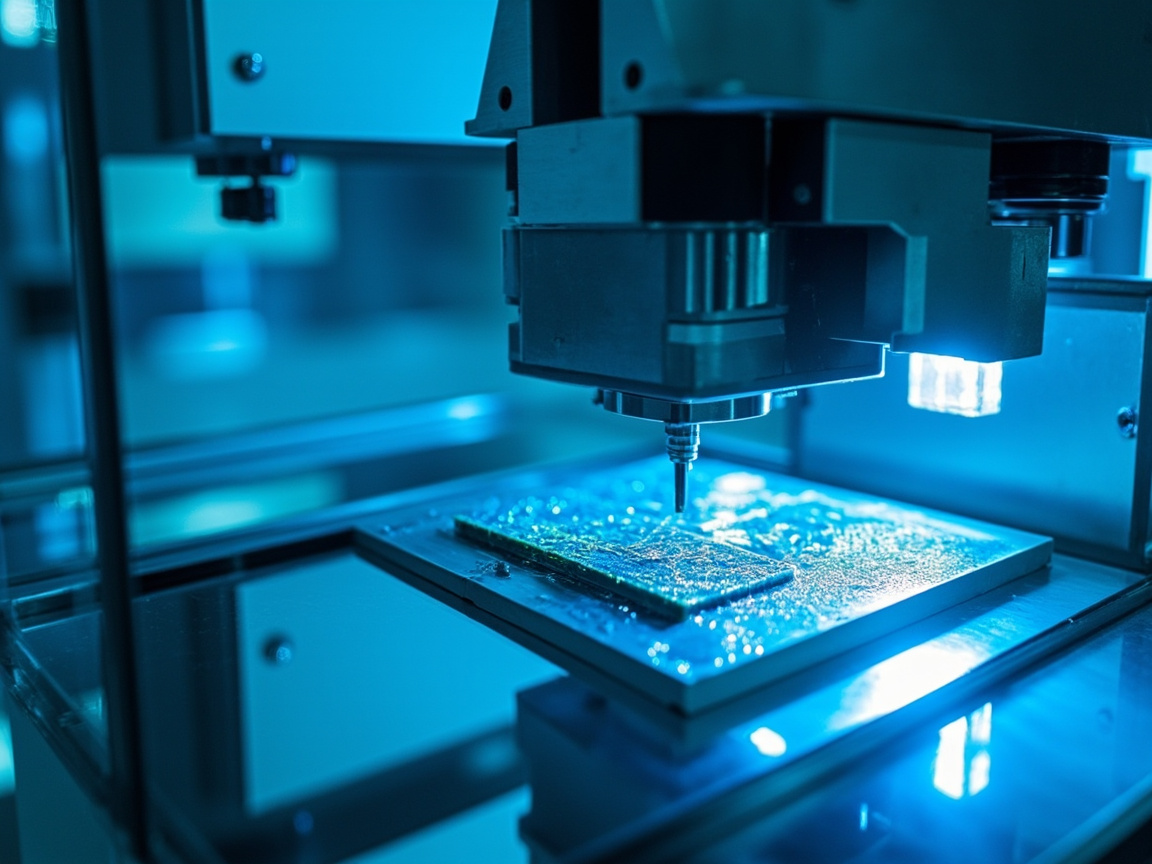
UV light-curing insulating coating was the biggest highlight of this exhibition. It uses ultraviolet irradiation to trigger decomposition of photoinitiators, completing cross-linking and film formation in seconds (some solutions under 5 seconds), improving efficiency by more than 10 times, and being 100% solid content with zero VOC emissions. According to frontline data, mature UV insulation systems can have insulation withstand voltage greater than 6kV, shear strength of about 12–15MPa, and pass 85℃ boiling water and 1000-hour salt spray verification. More critically, it supports robotic inkjet printing, with coating accuracy up to ±0.1mm, material utilization above 95%, naturally adapting to CTP/CTB integrated battery architectures, and through low-temperature curing (some systems 80℃ for 30 seconds) can reduce energy consumption by another 60%, avoiding damage to active materials such as lithium manganate from high temperatures.
Insulating powder coating, with its advantages of 100% solid, zero VOC, and recyclability, has become the preferred choice for energy storage cabinets and new energy equipment casings. For long-term outdoor operation, anti-corrosion and weather-resistant powders meeting C3/C4/C5 corrosion grades, combined with functional powders such as insulation, flame retardancy, and thermal conductivity, can comprehensively meet the electrical safety requirements of energy storage equipment, while balancing appearance and cost.
Fire-retardant thermal insulation coating is the safety bottom line. Taking passive fire-retardant coatings such as NP350 as an example, it combines fire retardation and flame resistance, high insulation, high adhesion, and resistance to high-low temperature shock, and has been applied in mainstream commercial vehicle models. In battery trays and energy storage boxes, the fire-retardant thermal insulation layer and insulation layer together form a three-layer protection system of "cell + pack + electronics," upgrading the coating language from mere "anti-corrosion decoration" to "safety definition."
III. From "back-end process" to "key variable defining reliability"
Sherwin-Williams showcased at CIBF2026 four major series: UltraCure® UV light-curing, Perclad® EV high-temperature insulating liquid, Powdura® EV insulating powder, and fire-retardant thermal insulation coating, with withstand voltage ratings exceeding 4000V, certified by UL94-V0 and UL1446, demonstrating reliable protection under harsh conditions in electrolyte resistance, edge coverage, stone impact resistance, and high-temperature resistance. Nippon Paint launched UV insulating coating based on self-developed resin and NP350 fire-retardant coating, achieving 50 microns in a single spray, requiring only UV curing and avoiding high-energy high-temperature baking. Three Trees' newly developed UV-system battery insulating coating, through synergy of graphene nanoplatelets (GnP) and boron nitride, achieves thermal conductivity of 1.5W/m·K (7 times higher than traditional blue film), breakdown voltage of 25kV/mm, and no swelling after 1000-hour electrolyte immersion, directly targeting partial discharge protection needs of 800V high-voltage systems; its dendritic hyperbranched resin, with 8–12 hydroxyl groups at the terminals, forms hydrogen bonding with the cell aluminum shell, improving adhesion to 5B (cross-cut method), solving the chronic problem of edge warping in traditional UV coatings.
With the implementation of the 2026 new national standard GB38031—2025, high-thermal-conductivity UV coating is upgrading from a "technical selling point" to an "industry standard," and the industry estimates market penetration had exceeded 30% by 2025. This means coating protection is no longer just "applying a layer of paint," but a part of the battery pack's forward design—at the cell finalization stage, the coating solution must be collaboratively defined for insulation spacing, thermal conduction paths, and fire compartments.
IV. Batch protection challenges for energy storage containers
Compared with vehicle battery packs, energy storage stations pose superimposed difficulties of "batch + outdoor + long cycle" for coating. Energy storage cabinets are placed outdoors year-round, facing C5 (very high) corrosion environments, and the cabinet must meet electrical safety of insulation and flame retardancy, while resisting salt spray, acid rain, ultraviolet, and sand erosion. Functional powder coatings (insulation/flame retardancy, conductive/anti-static, thermal conductivity/heat dissipation) are becoming the mainstream choice for energy storage equipment. Leading enterprises have taken the lead in compiling standards such as "Quality Technical Requirements for Powder Coating of New Energy Industry" and "Quality Technical Requirements for Powder Coating of Energy Storage Cabinets," using standards to lead quality. For coating enterprises, whoever can provide a complete solution of "primer powder + top powder integration" that also balances anti-corrosion, insulation, and thermal conductivity holds the entry ticket to energy storage scale-up.
More complex is the blocking of thermal runaway propagation paths. Battery modules inside energy storage compartments are tightly arranged; if a single-point failure spreads along the compartment it will trigger chain combustion, so the fire-retardant thermal insulation coating of compartment walls, module brackets, and cable trays must be designed in coordination with the cell's own insulating thermal conductive coating, forming a three-level protection of "cell—module—compartment." This also forces coating enterprises to provide whole-case capability from materials to coating process packages, rather than a single product.
V. Entry opportunities for industrial coating enterprises
For enterprises deeply engaged in industrial coating such as Kexin New Materials (Guangdong) Co., Ltd., batteries and energy storage are an incremental market with triple thresholds of "high performance + low VOC + multi-function." It has a material foundation in the thermal conduction network construction of nano coating technology, and the resin synthesis and modification capability of its industrial paint system is precisely the core for UV insulation and fire-retardant thermal insulation coating development. Integrating insulation, fire retardation, and thermal conductivity into one automated sprayable coating solution is a realistic path for small and medium coating enterprises to avoid head-on competition with giants and build a moat in niche scenarios. The process closed loop of pre-treatment (laser cleaning + plasma activation), precision spraying (±0.1mm), and online high-voltage insulation testing (2700–5000V DC) will also become hard indicators of delivery reliability. As small and medium battery factories and energy storage integrators generally lack coating verification capability, the value of a coating partner that can provide one-stop support from formulation, sampling to bench testing is being repriced.
VI. Standards, certification, and cost accounting
For technology to land, standards and certification cannot be avoided. Automotive-grade insulating coatings generally require passing UL94-V0 flame retardancy, UL1446 electrical insulation, and the mandatory clauses of GB38031—2025 for power battery safety; bench tests such as seawater and electrolyte immersion, edge coverage, and stone impact resistance are mandatory thresholds before OEM adoption. For coating enterprises, whether they can provide a complete certification package and batch consistency reports often determines order attribution more than a single performance indicator.
The cost side also needs clear accounting. Comparing high-thermal-conductivity UV coating with traditional PET blue film: the former has a unit cost of about 2.5 yuan/㎡ (including equipment depreciation), the latter about 1.2 yuan/㎡ (including adhesive), seemingly blue film is cheaper; but the UV solution's automated spraying efficiency reaches 500 pieces/hour (manual lamination only 50 pieces/hour), with comprehensive yield of 99% (blue film 85%), after diluting labor, takt, and rework costs, the full life cycle is actually more economical. This is a typical example of coating shifting from "material cost" to "total process cost."
Further reading: Automotive Refinish Paint Color Matching Tips: Metallic Particles and Pearl Powder · Differences and Selection between 1K and 2K Color Bases · Industrial Paint System Product Center