While nanomaterials bring performance leaps, they also introduce safety issues not present in traditional bulk materials due to their "small size, high surface energy, and high biological accessibility." Inhalation of nano dust, skin contact with nano dispersions, and environmental release of nanoparticles all require establishing a defense line between "innovation" and "responsibility." MSDS/SDS (Material Safety Data Sheet / Safety Data Sheet) and systematic occupational exposure control are the baseline for the compliant application of nanomaterials and a reflection of corporate social responsibility. This article systematically explains the safety logic and practical operations of nanomaterials from exposure pathways, standard frameworks, engineering controls to waste management, helping R&D, production, construction, and EHS personnel establish an implementable protection system, rather than staying at the vague panic of "nanomaterials are dangerous."
As a supplier of nano functional coatings, Kexin New Materials (kexinMaterials) takes "safety data first" as a hard threshold for the launch of nano products: each nano slurry/powder is equipped with an SDS, and provides dust protection and emergency response recommendations, so that downstream users obtain usable safety basis when they get the product. This article follows the effect framework of Overview and Classification of Nanomaterials, specifically clarifies the safety logic, standards, and practical operations of nanomaterials, and also echoes the most important harm-reduction engineering means of "turning bare powder into stable slurry" in Nanoparticle Dispersion Stability.

I. Why Nanomaterials Require Special Safety Attention
According to the "surface effect" in Overview and Classification of Nanomaterials, nanoparticles have an extremely high proportion of surface atoms, high surface energy, and strong biological activity. This brings a dual nature: high activity is beneficial in function, but in terms of safety it means three differences:
- High biological accessibility: Small size easily crosses biological barriers (alveolar entry into blood, penetration through broken skin), and potential toxicological behavior differs from bulk;
- High mobility: Easily suspends in air to form inhalable aerosols, or migrates in water/environment;
- Surface chemistry dominates toxicity: Surface modifications (such as Ag⁺ leaching, fluorinated groups) often determine the hazard profile more than the "core composition."
Therefore, one cannot assume "nano SiO₂ dust is safe" just because "bulk SiO₂ is non-toxic"—scale changes exposure and toxicological pathways, which is the underlying reason for nano safety issues. The scale effect makes the same chemical composition in nano state exhibit different inhalation deposition sites, leaching rates, and accumulation behaviors from the bulk, and risk must be examined using "nano form" rather than "chemical name."
II. Main Exposure Pathways and Risk Classification
Identifying exposure pathways is the first step in protection design, with priority from high to low as follows:
- Inhalation (primary): Dry powder operation, spraying, and grinding of uncured nano coating generate inhalable particles/aerosols, depositing in alveoli and even entering blood. Nano SiO₂, TiO₂, ZnO, Ag dust are all subjects of concern.
- Skin contact: Intact skin barrier blocks nanoparticles well, but broken skin and long-term immersion in nano dispersions may penetrate; certain nanomaterials (such as those with sensitizing groups) can cause dermatitis.
- Eye contact: Dust/liquid droplets irritate conjunctiva, requiring goggles or face shield protection.
- Ingestion: Via hand-to-mouth or contaminated diet, relatively secondary in industrial scenarios but needs control, key is to prohibit on-site eating and drinking.
- Environmental release: Production wastewater, waste residue, wear and wash-off bring into water/soil, toxic to aquatic organisms (especially Ag⁺).
Need to clarify: Most engineered nanomaterials (SiO₂, TiO₂, ZnO) have very low risk in the "immobilized in cured coating" state—hazard mainly lies in the "processing of free nano powder/uncured slurry." Therefore, the focus of safety management is "production process and construction," not "cured finished paint film." Investing protection resources in high-exposure steps such as feeding, dispersion, spraying, and grinding is far more scientific than vaguely fearing finished coatings, and more cost-effective.
III. MSDS/SDS: The Compliant ID of Nanomaterials
SDS is compiled according to GHS (Globally Harmonized System of Classification and Labelling of Chemicals), commonly called MSDS/Safety Technical Data Sheet in Chinese. For nanomaterials, SDS should especially include:
- Section 1 Identification: Clearly state "nano form," mark CAS and nano wording (e.g., nano-TiO₂);
- Section 2 Hazard classification: Classify according to GHS (e.g., specific target organ toxicity, aspiration hazard, skin irritation), nano form may change classification;
- Section 7 Handling and storage: Dust prevention, ventilation, no dust raising;
- Section 8 Exposure controls: OEL (Occupational Exposure Limit), engineering controls (local exhaust/enclose), PPE (respirator, gloves, goggles, protective clothing);
- Section 11 Toxicology: Acute/chronic toxicity, particle size related data (if any);
- Section 12 Ecology: Biodegradation, aquatic toxicity (Ag especially needed);
- Section 13/14 Waste/Transport: Classify as hazardous or general solid waste.
On the standard side: SDS compilation refers to GB/T 16483 "Safety Data Sheet for Chemical Products—Content and Order of Sections", GB/T 17519; GHS implementation follows China's "Rules for Classification and Labelling of Chemicals" series (GB 30000 series). Nano-specific health risk assessment can refer to GB/T 38409 and ISO/TS 12901 (Occupational Risk Management of Nanomaterials), ISO/TR 13346, etc. Writing these standards into the enterprise's SDS compilation process is the common basis for compliant export and domestic launch of nano products, and also key evidence for responding to customer audits and regulatory inspections.

IV. Occupational Exposure Control: Hierarchy of Engineering + PPE
The control hierarchy (from high to low effectiveness) is the basic principle of occupational safety, and one must never rely solely on masks:
- Substitution/harm reduction: Prioritize stable dispersed slurry over bare powder to reduce dust sources; evaluate substitution for fluorinated/highly toxic nano bodies;
- Engineering control: Enclosed operation, local exhaust ventilation (LEV), fume hood, negative pressure weighing room; wet method instead of dry method;
- Administrative control: Limit exposure time, training, warning signs, no eating/drinking/smoking;
- PPE (last line of defense):
- Respiratory: Particulate masks at least P2/N95, high concentration or unknown use P3/half mask with P100 or PAPR (powered air-purifying respirator); nano dust not relying on ordinary gauze;
- Hands: Nitrile/neoprene gloves (note material compatibility, latex ineffective for some nano liquids);
- Eyes: Goggles/face shield;
- Body: Lab coat/overalls, remove when leaving, do not take out.
Note: Coexisting substances such as isocyanates (e.g., two-component coatings) have additional sensitization risks, requiring comprehensive protection (refer to automotive paint isocyanate protection logic). The core idea of hierarchical control is "eliminate or reduce exposure at the source," PPE is only the bottom-line, least reliable one, because non-standard mask wearing and filter failure can breach the defense. Truly reliable is to change bare powder to slurry, and open operation to enclosed ventilation, so that workers simply do not contact high-concentration aerosols.
V. Safety Profile of Major Nanomaterials (Qualitative)
Different nanomaterials have different hazard profiles and cannot be generalized:
- Nano SiO₂: Inhaled dust is a respiratory hazard (similar to inhalable amorphous silica), protect as dust; low risk after immobilization. Amorphous SiO₂ differs from crystalline quartz, but dust still needs control.
- Nano TiO₂: IARC lists "TiO₂-containing dust" as Group 2B (possibly carcinogenic to humans, inhalation route), so dust protection is necessary; cured paint film low risk. Operate powder with P2 or above.
- Nano ZnO: Dust can cause "metal fume fever"-like symptoms, respiratory irritation; low risk after immobilization.
- Nano Ag: Ag⁺ is toxic to aquatic organisms, strictly control environmental release; human inhalation needs dust prevention, silver has accumulation concern.
- Carbon nanomaterials (CNT/graphene): Fibrous CNT has asbestos-like fibrosis concern (research stage), need strict inhalation control; operate as wet and enclosed as possible.
These are all concerns of the "dust/free-state processing stage," risk drops significantly after being cured in coating—this is exactly why nano coating finished products are much safer than bare powder, and why suppliers should prioritize delivering "already dispersed stable slurry" rather than "bare nano powder." Writing risk classification into SDS and training materials allows front-line employees to clearly know "which step is most dangerous, what to wear," avoiding indiscriminate over-protection or under-protection.
VI. Risk Assessment and Standard Framework Table
The safety management of nanomaterials requires a set of comparable standards and method matrices:
| Dimension | Focus | Reference Standard/Method |
|---|---|---|
| Hazard Identification | Nano morphology, leaching, fibrillation | ISO/TS 12901, GB/T 38409 |
| Exposure Assessment | Aerosol concentration, particle size distribution | Relevant occupational exposure monitoring methods |
| SDS Preparation | Nano labeling, PPE | GB/T 16483, GB 30000 series, GHS |
| Occupational Limits | OEL (if nano-specific) | National OELs; if absent, strictly control as similar dust |
| Waste Disposal | Nano release in wastewater/solid waste | According to hazardous waste classification and local regulations |
| Product Compliance | VOC/heavy metals | GB 30981-2020, GB 24409-2020 |
This table links the entire chain of "from hazard to compliance": first identify hazards from nano morphology, then measure exposure concentration, based on which prepare SDS, set limits, manage waste, and finally return to the product's own VOC and heavy metal compliance. Any missing link will create a loophole in safety management. Enterprises need not build all capabilities at once, but should clarify "which link is currently missing and when to supplement", rather than running naked for a long time.
VII. Practical Key Points for Production, Construction and Waste Disposal
To implement safety on site, it must be specific to actions:
- Production end: Nano powder feeding in enclosed/negative pressure, weighing in fume hood or isolator, floor easy to clean (anti-static, wet moppable), set signs and training; use paste formulation for dispersion to reduce dust.
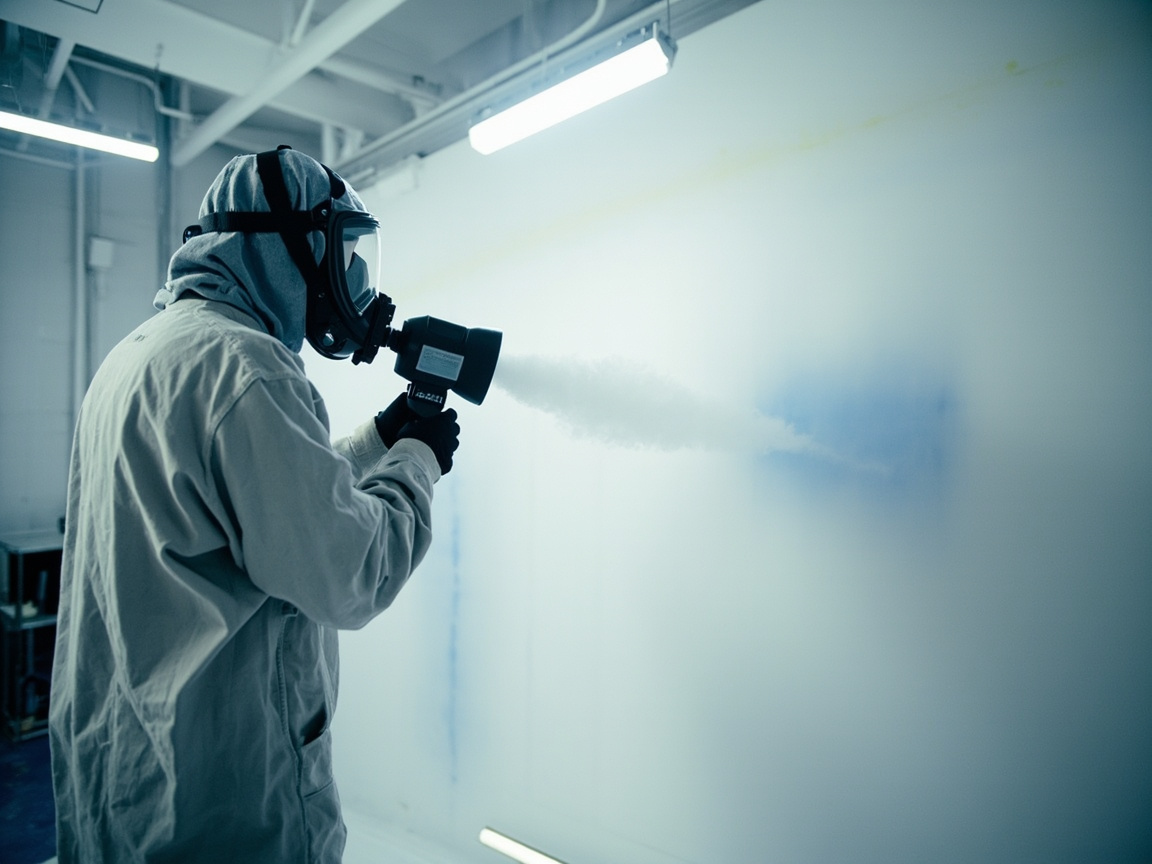
- Construction end: Spray nano coating in ventilated spray booth with respirator; prohibit sanding uncured film (generates nano dust); waste paint and drums as hazardous waste.
- Waste end: Wastewater containing Ag/ZnO treated to reduce free ions before discharge; waste powder/residue classified as local hazardous or general solid waste, no random dumping; total environmental release control.
- Traceability: Retain SDS, batches, exposure monitoring records to support compliance audit.
Kexin New Materials (kexinMaterials) provides SDS and a "Safe Use Instruction Card" with its nano products, specifying dust protection, emergency response (e.g., eye rinse, move to fresh air if inhaled) and waste classification, writing safety responsibility into the deliverable rather than just delivering a bottle of coating. This "deliver safety package upon delivery" approach frees downstream users from the dilemma of "guessing how to protect themselves", and also reduces compliance risk across the supply chain.
VIII. Common Misconception Analysis
The most common cognitive misconceptions in engineering and R&D need to be clarified one by one:
Misconception 1: Finished nano coating is as dangerous as bare nano powder. Wrong. Nano particles in cured paint film are fixed by resin, with extremely low release and exposure; hazard mainly lies in processing and spraying of bare powder/uncured paste.
Misconception 2: Ordinary gauze mask can block nano dust. Wrong. Nano aerosol penetrates ordinary gauze; at least P2/N95, use P3/PAPR at high concentration.
Misconception 3: SiO₂ is non-toxic so nano SiO₂ is also safe. Wrong. Scale changes exposure and toxicological pathway; dust must still be protected as respiratory hazard.
Misconception 4: Nano Ag is antibacterial so harmless. Wrong. Ag⁺ is toxic to aquatic organisms and has accumulation concern; environmental and wastewater release must be strictly controlled.
Misconception 5: Whether SDS notes nano or not doesn't matter. Wrong. Nano morphology may change hazard classification and PPE; SDS must label nano and give corresponding protection, as required by GHS/GB 30000.
Misconception 6: Nano particle release from cured coating is negligible, so no protection needed during construction. Wrong. Danger lies in spraying and sanding uncured film, where particles are free; must be protected as free nano material, not as finished coating.

IX. Exposure Monitoring and Occupational Health Records
Relying only on "wearing a mask" does not equal safety; monitoring and verification are necessary:
- Aerosol sampling: Use particle sampler to measure workshop nano dust concentration, combine with particle size spectrum to judge if in inhalable/respirable range;
- Personal dose: Equip high-risk posts with personal sampling pumps to quantify individual exposure;
- Health surveillance: Establish occupational health examination records for long-term contact personnel, focusing on respiratory tract and skin;
- Trend management: Archive monitoring data by month/process, identify rising concentration signs and rectify.
The value of monitoring is to turn "whether protection is effective" from subjective judgment into objective data. When a process shows persistently high concentration, it indicates engineering control failure, and one should return to source measures of "enclosure/ventilation/paste formulation" rather than just giving workers more expensive masks. This "data-driven rectification" closed loop is the mature form of occupational safety management and most cost-effective.
X. Supply Chain Safety Information Transmission
Nano safety is not one enterprise's matter, but a responsibility transmission throughout the supply chain:
- Upstream: Nano powder supplier should provide particle size, morphology, surface modification and toxicology summary to facilitate downstream SDS preparation;
- Midstream (coating plant): Make stable paste from bare powder, prepare complete SDS, attach safety instruction card with goods;
- Downstream (constructor): Implement engineering control and PPE per SDS, and classify waste to qualified handlers;
- Regulation and audit: Retain full-chain records to respond to inspections and customer audits.
Transparent transmission of safety information in the supply chain avoids the break of "upstream unaware of hazard, downstream unaware of how to protect". As a nano coating supplier, Kexin New Materials (kexinMaterials) makes SDS and safety instruction card standard deliverables, precisely to let information not stop at factory exit but reach the spray gun of the constructor. This responsibility extension is an important management feature distinguishing nano materials from traditional materials.
XI. Regulatory Trends and Compliance Outlook
Global regulation of nano materials is moving from "voluntary disclosure" to "mandatory labeling":
- EU REACH has specific information and registration requirements for nano morphology;
- China aligns with GHS via GB 30000 series, SDS nano labeling gradually standardized;
- Some fields (food contact, toys, cosmetics) have stricter restrictions on nano materials.
The trend is "nano transparency": write scale attributes into safety documents like chemical composition. Enterprises should early turn nano labeling, hazard classification, exposure data into standard actions, rather than cram when regulation lands. For export enterprises, early alignment with ISO/TS 12901 and other international standards reduces compliance friction. Treating safety compliance as part of product competitiveness, not mere cost, is the fundamental cognition for nano material enterprises to go steady and far.
XII. Respiratory Protection Grading for Nano Dust and Filter Selection
Respiratory protection cannot be "one-size-fits-all"; it should be graded by exposure concentration and risk level, which is the premise of PPE effectiveness:
- Low exposure/routine inspection: Particulate mask P2 (equivalent N95) suffices, tight fit to face, no leakage;
- Medium exposure/weighing dispersion: P3 or half-mask with P100 filter, higher filtration efficiency;
- High exposure/powder feeding, spraying: Powered air-purifying respirator (PAPR) or supplied-air, full facepiece for eye-face protection;
- Unknown concentration: Protect at highest grade and quantify via monitoring ASAP.
Filters should be particulate-specific (not organic vapor), replaced regularly with replacement time recorded. Mask is not "just wear it"; fit test, facial hair and wearing posture all affect actual protection factor. Enterprises should provide fit-test for high-risk posts and write respirator maintenance into management system, avoiding "fake protection" like overdue filter, leaking mask. Linking respiratory protection grading with monitoring data upgrades from "wear by feel" to "wear by data".
XIII. Emergency Response for Leakage, Fire and Personal Exposure
Emergency plan for nano material site must be specific to actions, not vague:
- Dust leakage: Ventilate first, do not raise dust, collect with wet mop or dedicated vacuum (with HEPA), prohibit sweeping to lift;
- Liquid paste leakage: Contain and collect with absorbent material, dispose per SDS classification;
- Eye contact: Immediately rinse with clean water for at least 15 minutes, send to doctor with SDS;
- Inhalation discomfort: Move to fresh air, keep calm, oxygen and send to doctor if necessary;
- Skin contact: Remove contaminated clothes, rinse with soap water, see doctor if allergic;
- Fire: Most nano pastes contain solvent, extinguish as flammable liquid, beware toxic smoke, cool container with water.
The contingency plan must be consistent with the SDS, and emergency cards should be posted on-site, with flushing and adsorption materials prepared. Drills are more important than paper plans—regularly have frontline employees walk through the "leak—collection—reporting" process, so they won't panic when a real incident occurs, and to avoid turning a small leak into a major exposure due to improper handling.
14. Training, Capacity Building, and Customer Audits
The last piece of the safety management puzzle is people:
- Pre-job training: Explain why the nano form is special, where the exposure points are in this position, what to wear, and how to respond to emergencies;
- Regular refresher training: Timely remedial training after changes in regulations, products, or processes, and retain sign-in and assessment records;
- Capacity building: Cultivate internal EHS personnel who understand SDS, monitoring, and standards, and can independently conduct compliance self-assessments;
- Customer audits: Downstream customers often require SDS, batch, monitoring, and training records; archiving them in advance can greatly shorten the audit period;
- Continuous improvement: Convert each monitoring anomaly and each leak review into corrective actions, with closed-loop management.
By building up the capabilities of "people", safety no longer depends on individual responsible persons. As a link in the supply chain, Kexin New Materials (kexinMaterials), while providing SDS and safety instruction cards, also recommends that downstream parties incorporate training and monitoring into their systems, so that protection evolves from "a piece of paper at delivery" to "a daily conscious action on-site". This co-building of capabilities is the fundamental guarantee for the long-term safe application of nano materials.
15. The Interface Between Nano Safety and Product Compliance
Nano material safety is not isolated; it is closely connected to the environmental compliance of the product itself:
- VOC limits: Solvent-containing nano coatings are subject to GB 30981-2020 "Limit of Harmful Substances in Industrial Protective Coatings"; topcoat types are mostly ≤ 420 g/L, and third-party reports should be verified;
- Heavy metal limits: Some nano metal oxides (such as systems containing lead, cadmium, chromium VI) are subject to GB 24409-2020 "Limit of Harmful Substances in Vehicle Coatings", etc.; restricted elements should be avoided at the formulation selection stage;
- Labeling and classification: Follow the GB 30000 series for GHS labels; the nano form must be clearly stated on the label to prevent downstream misuse;
- RoHS/REACH: Export products must also comply with restricted substance lists; nano silver and certain nano fillers may trigger specific clauses.
Managing "safety" and "compliance" as the same set of delivery documents can avoid the fragmentation of "safety done well but environmental standards not met" or "environmental standards met but SDS not labeling nano". Suppliers should archive VOC, heavy metal testing, and SDS nano labeling together before leaving the factory, so that downstream users receive a complete, auditable, and traceable compliance package, rather than a few scattered reports.
16. How SMEs Can Start Nano Safety Management at Low Cost
Many SMEs worry that nano safety is "too costly to invest in", but it can actually be implemented step by step, without needing to be perfect from the start:
- Step 1 (zero cost): Change bare powder to already dispersed stable slurry, immediately greatly reducing the dust source—this is the most cost-effective step;
- Step 2 (low investment): Install fume hoods or local exhaust at weighing and feeding points, equip P2 masks and protective clothing, and establish management systems such as no eating, drinking, or smoking;
- Step 3 (medium investment): Compile SDS with nano labeling, and conduct exposure monitoring and health records;
- Step 4 (continuous improvement): Introduce PAPR, HEPA vacuuming, wastewater treatment, and align with ISO/TS 12901 for systematic management.
The key is to "get moving first": many risks can be eliminated largely by slurry conversion plus ventilation, and the rest can be gradually strengthened as the business scales. The cost of waiting and not changing is far higher than the cost of step-by-step investment—once an exposure accident occurs or a customer audit fails, the loss is far more than just a few sets of ventilation equipment. Treating safety as a progressive capability rather than a one-time project, SMEs can also use nano materials innovatively and responsibly.
17. Archiving and Audit Traceability of Safety Data
All safety actions ultimately must be "provable"; archiving and traceability are an indispensable closed loop:
- One file per item: Retain SDS, test reports, and batch numbers for each batch of nano raw materials/slurry, corresponding to the finished product batch;
- Process records: Operation and protection records for each link of weighing, feeding, spraying, and disposal are archived by shift;
- Monitoring files: Aerosol concentration, personal dose, and health check results are preserved long-term;
- Audit preparation: Customer audits and regulatory inspections often require data from the recent three years; pre-classifying and storing them allows instant retrieval;
- Correction traces: Each anomaly and correction forms a closed-loop document, proving the system is continuously running rather than being a mere formality.
By precipitating data into an asset, enterprises have confidence when facing inspections and disputes, and can also turn safety performance into customer trust and bidding advantages. The safety management of nano materials is, in the final analysis, a discipline of "speaking with evidence"—whoever builds the evidence chain first will walk more steadily between innovation and responsibility.
FAQ
Q: Why do nano materials require more safety attention than bulk materials?
A: Due to small size, high specific surface area, and high biological accessibility, they are easily inhaled into the bloodstream, easily suspend and migrate, and surface chemistry dominates toxicity. One cannot assume the nano state is safe just because the bulk is non-toxic; scale changes exposure and toxicological pathways, and risks must be examined by "nano form" rather than "chemical name".
Q: Are nano coating finished products dangerous?
A: In the cured paint film, nano particles are fixed by the resin, with extremely low release and exposure, and the risk is far lower than that of bare powder/uncured slurry. The hazard mainly lies in processing links such as feeding, spraying, and sanding uncured films, which require targeted protection; the finished coating itself need not cause excessive panic.
Q: What should MSDS/SDS specifically write for nano materials?
A: It should label "nano form", correctly classify according to GHS, give dust prevention/ventilation/PPE recommendations in the handling and exposure control sections, and provide particle size related data (if available) in the toxicology and ecology sections. Compilation refers to GB/T 16483 and GB 30000 series; nano-specific references include GB/T 38409 and ISO/TS 12901.
Q: What mask should be used to protect against nano dust?
A: At least a P2/N95 particulate mask; for high concentration or unknown, use P3, half-mask with P100, or powered air-purifying respirator (PAPR). Ordinary gauze masks are ineffective. Also wear nitrile gloves, goggles, and protective clothing, and note that engineering controls take priority over PPE.
Q: Why is nano TiO₂ classified as Group 2B?
A: IARC lists TiO₂-containing dust as possibly carcinogenic to humans (2B, inhalation route), so powder handling requires dust prevention. The risk is low after being cured in coatings; the key is to control aerosols in processing, not to ban finished products containing TiO₂.
Q: How to control the environmental risk of nano Ag?
A: Ag⁺ is toxic to aquatic organisms and of accumulation concern. Production/construction wastewater should be treated to reduce free silver ions before discharge, waste residue classified as hazardous waste, and random dumping prohibited; total release should be controlled. Environmental release control needs to be advanced to the wastewater treatment stage more than human inhalation.
Q: What are the special risks of carbon nanotubes (CNT)?
A: Fibrous CNT have asbestos-like fibrotic inhalation concerns (research stage) and inhalation must be strictly controlled: wet state, enclosed, PAPR. Avoid dry dust generation during operation, and include related processes in key monitoring and enhanced PPE scope.
Q: Which standards are related to nano safety?
A: SDS compilation GB/T 16483, GB 30000 series (GHS); health risk assessment GB/T 38409; occupational risk ISO/TS 12901, ISO/TR 13346; product VOC/heavy metals GB 30981-2020, GB 24409-2020. Stringing these standards into a matrix can cover the whole chain from hazard to compliance.
Q: How to dispose of waste nano materials?
A: Waste powder/residue classified as local hazardous or general solid waste; wastewater containing Ag/ZnO treated to reduce free ions; waste paint and buckets as hazardous waste. Retain traceability records to support compliance audits, prohibit random dumping, and include total environmental release in control.
Q: How can enterprises implement nano safety in daily management?
A: Establish a "substitution/engineering/administration/PPE" hierarchical control, prioritizing slurry conversion and enclosed ventilation; compile SDS with nano labeling and deliver with goods; conduct exposure monitoring and health records; transparently transmit safety information in the supply chain. Run the data-driven correction closed loop, so safety is controllable, auditable, and sustainable.
Further Reading
- Overview and Classification of Nano Materials: Understand why surface effects give nano materials both high activity and high biological accessibility, which is the underlying reason for safety issues.
- Characterization Methods of Nano Materials: Use TEM/DLS/Zeta to confirm particle size and dispersion, which is also the methodological basis for aerosol particle size monitoring in exposure assessment.
- Dispersion Stability of Nano Particles: Making nano powder into stable slurry (rather than bare powder) is itself the most important engineering control means for dust reduction and hazard mitigation.
- Nano Antibacterial Materials (Ag/ZnO): Mechanism, Synergy, and Coating Applications Nano SiO₂ Hydrophobic Modification: From Hydrophilic Surface to Superhydrophobic Coating
- Industrial Paint Application: Airless Spray Parameters, Film Thickness Control and Coating Interval