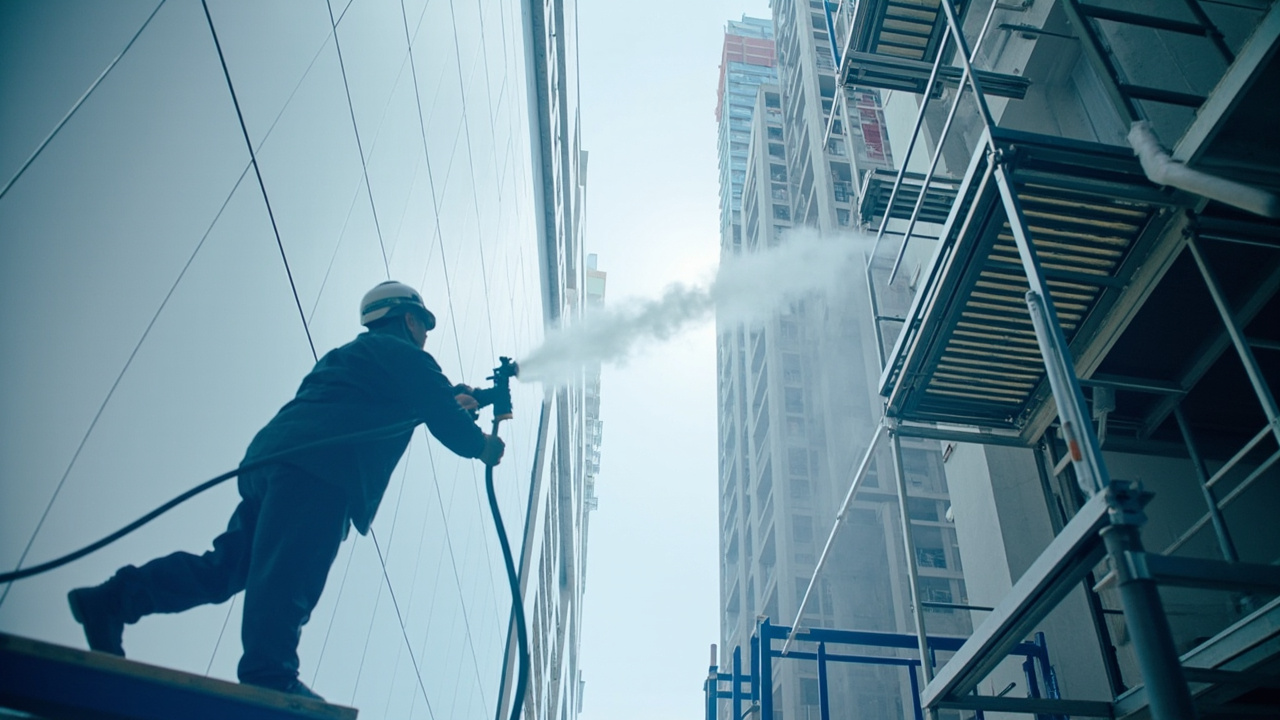
In the maintenance of modern building exterior walls, once high-rise curtain walls and large-area decorative surfaces are contaminated, the cleaning cost and the risk of high-altitude operations are both extremely significant. In recent years, more and more engineering parties have turned their attention to nano paint—a type of coating modified with nano-scale particles, which, relying on its two major characteristics of self-cleaning and weather resistance, is gradually entering the coating systems of residential, commercial complexes, and public buildings. This article systematically reviews the application key points of nano paint on building exterior walls from six dimensions: mechanism, indicators, standards, construction, maintenance, and failure investigation, and provides a selection comparison to help engineers and designers establish a practical judgment framework. It needs to be specifically noted that all specific values in this article are cited from public technical archives and national/industry standards for easy verification and traceability.
I. Technical Logic of Using Nano Paint for Building Exterior Walls
To understand why nano paint is suitable for exterior walls, one must first ground the term "nano" in verifiable mechanisms rather than speaking in generalities. The definition of the general properties of nano coatings in research archives is clear: at least one phase has a dimension in the 1–100 nm range; common nanoparticles include TiO₂, SiO₂, ZnO, Ag, Cu, CaCO₃, etc., and their effects come from small-size effects, surface effects (high specific surface area), and quantum-size effects (Archive V.1). What truly determines exterior wall performance mainly lies in the following two technical routes.
The first is nano TiO₂ photocatalytic self-cleaning. According to research archives (V.3), nano TiO₂ generates photogenerated electrons/holes under ultraviolet excitation, which can degrade organic pollutants attached to the paint film surface, achieving self-cleaning and also possessing certain antibacterial capabilities; at the same time, light exposure makes the surface hydrophilic (photo-induced superhydrophilicity), allowing water films to spread and carry away dust. This mechanism naturally fits building exterior walls—facades are exposed to sunlight for long periods, with abundant ultraviolet resources, so the self-cleaning effect can be sustained. However, the archives also solemnly remind of a boundary that must be faced in engineering: nano TiO₂ may catalyze the aging of adjacent organic resins, so when used on exterior walls, TiO₂ usually needs to be encapsulated to constrain the photocatalytic activity to the surface pollutant degradation layer, avoiding damage to the resin body.
The second is hydrophobic SiO₂ and ceramic-based nano composite shielding. Research archives (V.5, V.2) point out that nano SiO₂/TiO₂/clay lamellae can improve the shielding property of the coating and reduce water and oxygen permeability; represented by YC-8703 hydrophobic self-cleaning nano composite ceramic coating, its hydrophobic angle is about 110°, hardness 6–7H, long-term service temperature covers -50℃—400℃, bonding strength with substrate greater than 4 MPa, and it has acid-alkali-salt spray resistance. Although this type of material is labeled for industrial/multi-substrate use, its temperature span and hydrophobic performance can be fully extrapolated to building exterior wall weather-resistant scenarios—especially on facades with large day-night temperature differences, coastal high humidity, and heavy industrial pollution, the dense ceramicized film layer has more advantages than traditional organic film formation.
From a materials science perspective, Kexin New Materials (kexinMaterials) engineering experience in nano-modified resin systems shows that the success or failure of exterior wall nano paint often does not lie in "whether nano particles are added," but in the dispersion stability of the particles: nano particles are highly prone to agglomeration due to high surface energy, and must be controlled through surface modification, dispersants, and ultrasonic processes, otherwise the particle size fails and performance drops to zero. This is also why the archives list "agglomeration" as the primary challenge of nano coatings (V.1).
To clarify "hydrophobic," one more basic concept must be added: the evaluation of hydrophobic degree is not a single value, but a combination of contact angle (CA) and sliding angle (SA). According to research archives (VI.5), contact angle and sliding angle jointly determine hydrophobic and self-cleaning effects—the larger the contact angle and the smaller the sliding angle, the easier water droplets roll off and carry away dirt. The 110° hydrophobic angle of YC-8703 is a measured value obtained with a contact angle meter (Archive V.2), while the common 120° in promotions mostly appears in automotive Si-based ceramic coatings (such as Onyx Nano Shield, Archive VI.1); the two have different substrates and working conditions, and cannot be compared out of context. In addition, hydrophilic and hydrophobic are two parallel self-cleaning routes: TiO₂ takes the photo-induced hydrophilic path (water film spreads to carry away dirt), while hydrophobic ceramic takes the water droplet rolling path (small sliding angle carries away dirt), and their construction and maintenance logic therefore differ.
From the market status, the archives (VI.6) remind that terms like "nano" and "9H" are abused; when selecting exterior wall nano paint, one cannot just look at promotional words, but should request third-party test reports beyond calculation sheets: film thickness (step profiler/nm–µm, Archive V.6), contact angle, salt spray (GB/T 1771), abrasion (GB/T 1768), and other hard indicators. For engineering procurement, "traceability" is far more important than "sounds impressive." In particular, one must distinguish "laboratory ideal substrate" from "field real substrate"—high hydrophobicity measured on metal plates does not equal the same performance on rough concrete facades; acceptance must be based on actual facades or same-material samples.
II. Key Performance Indicators, Aging Standards, and Environmental Limits
The core test of exterior wall coatings is "hanging on the wall for a long time without falling off, getting dirty, or discoloring." Here, qualitative descriptions must be translated into detectable and judgeable indicators.
Artificial weathering is an unavoidable threshold. According to research archives (I), building-related artificial weathering uses GB/T 1865 (xenon lamp), supplemented by GB/T 23987 (UV) and ASTM G154, ISO 11507; in judgment, after 1000h aging, color change ≤ grade 2 and chalking ≤ grade 1 are common passing lines. For nano exterior wall paint, if the TiO₂ photocatalytic route is adopted without encapsulation, resin premature aging is often exposed in this item, so aging tests should be conducted simultaneously with photocatalytic activity evaluation.
Adhesion determines "whether it stays on." According to GB/T 9286-1998 (ISO 2409, ASTM D3359), the cross-cut method is graded 0–5, with grade 0/1 being excellent (falloff ≤5%). Exterior wall substrates are mostly concrete, mortar, tiles, or existing coatings, with complex surface conditions, so adhesion is a must-confirm item before construction.
Hydrophobic performance is evaluated by contact angle, as mentioned above; in terms of pencil hardness, according to GB/T 6739 (ISO 15184), exterior wall nano ceramicized film layers can reach 6–7H (YC-8703, Archive V.2), significantly higher than ordinary exterior wall latex paint (mostly in B–HB range), with better wind-sand abrasion resistance. But the archives also warn: the so-called "9H" mostly refers to pencil hardness and is highly dependent on substrate and test conditions, and should not be mythologized out of context (VI.6).
Gloss and mechanical properties cannot be ignored either. According to GB/T 9754 (ISO 2813, ASTM D523), 60° gloss high gloss ≥85 GU; according to GB/T 1731, GB/T 1732 (ASTM D2794), flexibility (bending diameter ≤2mm) and impact (≥50cm) reflect the film's crack resistance and impact resistance. Exterior walls are subject to wind vibration, temperature difference expansion/contraction, and foreign object impact, so these two indicators are especially important for nano ceramic films.
Environmental limits are increasingly tightening. According to research archives (I), the harmful substance limits for architectural wall coatings execute GB 18582-2020, with water-based interior wall VOC ≤50–80 g/L; VOC determination references GB/T 23985-2009, GB/T 23986-2009 (GC-MS), ISO 11890, ISO 17895. Although exterior wall paint and interior wall paint have different limit calibers, green building material evaluation and public building procurement generally refer to the above framework; nano exterior wall paint should actively align with the low VOC direction in formula selection, especially the water-based nano dispersion system. For the environmental trade-offs in primer system selection, refer to the comparison framework of How to choose water-based paint and oil-based paint.
For coastal or high-humidity projects, neutral salt spray is evaluated according to GB/T 1771-2007, ASTM B117, DIN EN ISO 9227; usually 500h without blistering and single-side rust ≤1–2mm is the baseline (Archive I), and heavy anti-corrosion can reach 1000–3000h. If an exterior wall nano ceramic layer claims salt spray resistance, it should provide a third-party report for the corresponding duration, rather than a verbal promise; at the same time, salt spray and aging should be evaluated separately, because salt spray resistance does not mean UV resistance, and their mechanisms are different.

III. Comparison of Exterior Wall Applications of Different Nano Modification Routes
For the convenience of engineering selection, the following table makes a side-by-side comparison of three common exterior wall coating routes in terms of mechanism, key indicators, applicable scenarios, and precautions. Among them, nano-type data are cited from research archives, and traditional exterior wall paint is described by general standards.
| Modification Route | Core Mechanism | Key Indicators (Source) | Typical Applicable Scenarios | Engineering Precautions |
|---|---|---|---|---|
| Nano TiO₂ Photocatalytic Self-cleaning Paint | UV-excited photogenerated electrons/holes degrade organics, photo-induced hydrophilicity | Requires UV excitation; self-cleaning depends on sunlight (Archive V.3) | South-facing facades with sufficient light, around glass curtain walls | TiO₂ must be encapsulated to prevent catalytic aging of adjacent resin |
| Hydrophobic SiO₂ / Ceramic-based Nano Composite (e.g., YC-8703) | Low surface energy hydrophobicity + dense ceramic shielding | Hydrophobic angle about 110°, hardness 6–7H, temperature resistance -50~400℃, bonding strength >4 MPa (Archive V.2) | Large day-night temperature difference, coastal high humidity, heavy industrial pollution areas | Substrate needs sandblasting Sa2.5 or above (46-mesh white corundum optimal) |
| Traditional Silicone-acrylic / Acrylic Exterior Wall Paint | Organic film-forming physical shielding | Artificial weathering GB/T 1865 1000h color change ≤ grade 2, chalking ≤ grade 1 (Archive I) | General climate, budget-sensitive projects | No self-cleaning ability, requires regular manual cleaning |
From the comparison, it can be seen that the premium of the nano route concentrates on the two ends of "less cleaning" and "resistance to extreme climate": photocatalysis solves "can clean itself when dirty," and hydrophobic ceramic solves "dirt cannot stick + longer weather resistance." If the project is in a mild climate and cleaning is convenient, traditional exterior wall paint remains an economical choice; if the facade is difficult to access or the environment is harsh, the life-cycle cost of nano paint may instead be more advantageous.
What needs to be added is that the above three types of routes are not mutually exclusive. In actual engineering, a "composite route" is common: a hydrophobic ceramic base coat is overlaid with a TiO₂ photocatalytic topcoat, which both uses the ceramic to shield against weathering and uses photocatalysis to maintain surface cleanliness. However, this composite has extremely high requirements for interlayer compatibility, and it must be ensured that the base ceramic layer is not reversely aged by the upper photocatalytic layer. The warning in Archive (V.3) regarding TiO₂ potentially catalyzing the aging of adjacent resins is particularly critical here—the composite system should provide an interlayer aging compatibility report; otherwise, it is better to construct the layers independently with sufficient transition zones rather than blindly apply overlapping coats.
IV. Exterior Wall Construction Process and On-site Quality Control
No matter how good the material is, poor construction will waste all previous efforts. Combining the YC-8703 process parameters provided in the archive with general exterior wall painting specifications, the construction of nano exterior wall paint should be executed according to the following procedure, with accompanying on-site quality control.
Step 1, Substrate Evaluation and Treatment. Concrete and mortar walls should first have their moisture content and alkalinity confirmed; efflorescence, sanding, and hollowing must be pre-treated. For metal components or existing tiles and glass curtain walls, referring to YC-8703 requirements, the substrate should be sandblasted to above Sa2.5 (46-mesh white corundum is optimal) to obtain a stable adhesion platform. This again echoes the ISO 12944 compatibility principle in Archive (I): the substrate treatment grade directly determines the upper limit of durability of the supporting system. If the old coating is intact, a compatibility test must be done to avoid mutual dissolution or peeling between the new nano layer and the old layer.
Step 2, Environmental Window Control. According to the general requirements for industrial paint in Archive (II.5), the construction temperature should be 5–35℃, relative humidity ≤80%, and substrate temperature at least 3℃ above the dew point. Exterior wall operations are greatly affected by weather; construction should be avoided in rain, condensation, and strong windy/sandy conditions, otherwise the hydrophobic film layer is prone to entrapping contaminants or producing pinholes. Direct sunlight on the substrate in summer causing excessively high temperatures will also lead to fast surface drying and poor leveling; it is advisable to choose shaded faces or early morning construction.
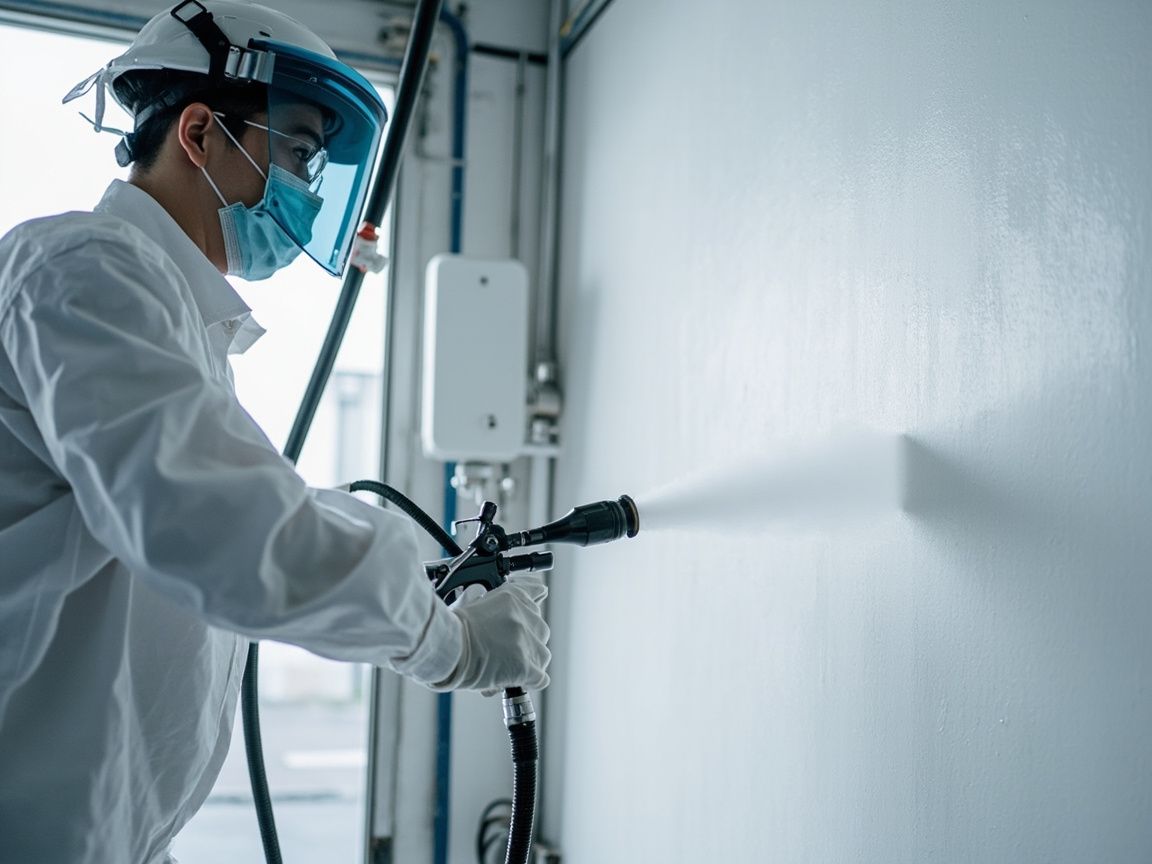
Step 3, Painting Method and Film Thickness. YC-8703 recommends a spray thickness of 50–100 µm; surface dry in about 2h, hard dry in 24h, ceramicized in 7 days, or accelerated curing by baking at 150℃ for 30 min (Archive V.2). For large-area exterior wall construction, airless spray is preferred; small areas or touch-ups may use roller coating, but roller coating has higher requirements for nano dispersion uniformity and must be operated at a constant speed strictly per the process. After each coat, it is recommended to use a wet film gauge to control thickness, avoiding uneven thickness that causes curing stress cracking.
At the equipment level, exterior wall nano paint is sensitive to atomization fineness: if the spray pattern of the nano dispersion system is too coarse, the risk of particle agglomeration increases and orange peel on the film surface is likely. It is recommended that the pressure and nozzle orifice of airless spraying be strictly calibrated according to the technical data sheet, and the wet film state be confirmed on the first piece; roller coating is only recommended for small-area repair, and the roller fleece should be fine and short to reduce bubble introduction. For single-component ceramic-based systems (such as YC-8703), attention should also be paid to using up quickly after opening to avoid re-agglomeration of the nano slurry from long standing.
Seasonal construction should also be noted: low winter temperatures (near the 5℃ lower limit) will prolong surface drying and ceramicization; if necessary, use YC-8703's 150℃ bake for 30 min accelerated curing (Archive V.2), but on-site vertical surfaces are difficult to bake, so work should be suspended in severe winter; summer high-temperature substrates can reach above 60℃, and spraying is prone to dry spray and orange peel, so shaded periods should be selected and dilution and atomization appropriately adjusted. In addition, although the stain resistance of exterior wall coatings is mostly covered by industry standard methods, nano hydrophobic/hydrophilic routes can use contact angle and rolling angle for quick self-inspection: dropping water with a dropper on site to observe spreading or rolling off can preliminarily judge whether the film activity is online, serving as a low-cost means for daily patrol inspection.
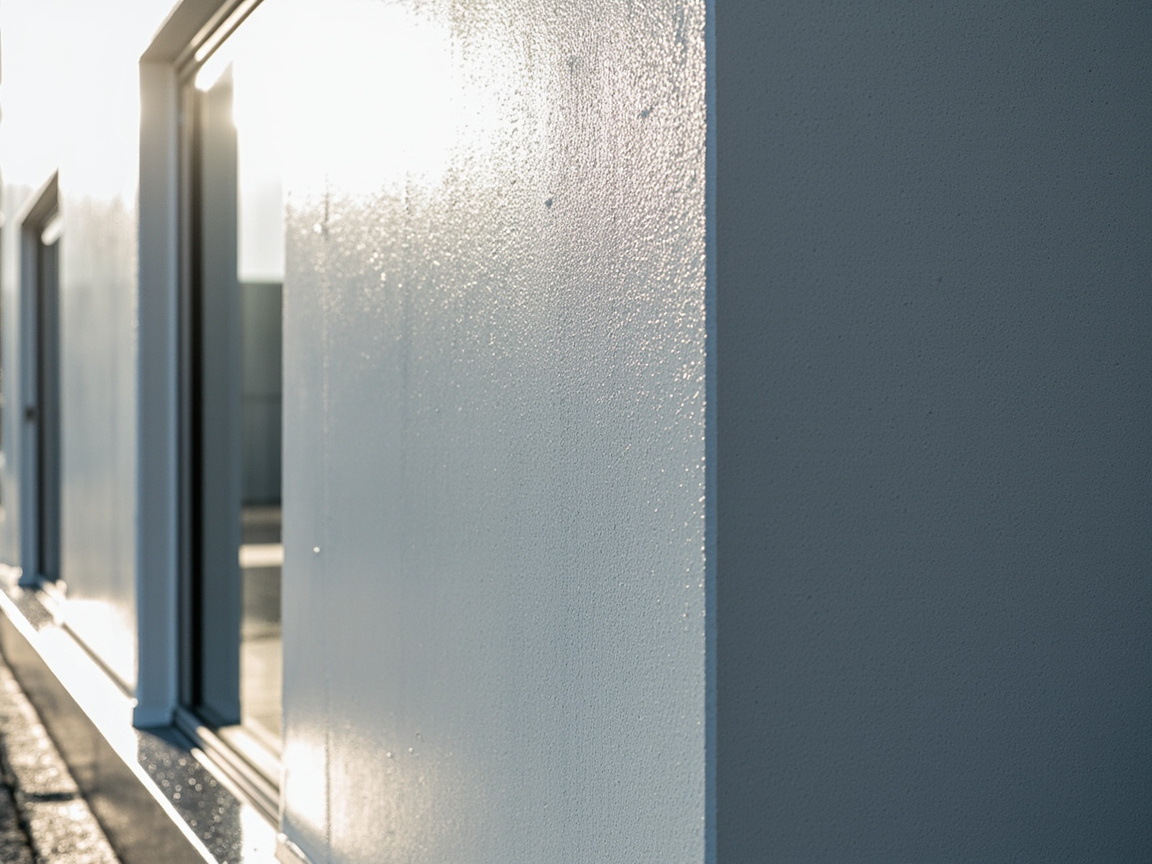
Step 4, Curing and Water Avoidance. The hydrophobic performance of the nano ceramic coating is not fully established before hard drying; in the early stage, rain wash and trampling contamination should be avoided; during the 7-day ceramicization period, touching the vertical surface should be minimized. On-site quality control should include: cross-cut adhesion random inspection (GB/T 9286), contact angle random inspection (confirming hydrophobic compliance), film thickness random inspection, and retaining samples for later comparison.
Regarding the choice of water-based or solvent-based system for the base layer, the engineering party may refer to the comparison framework of How to Choose Between Water-based and Oil Paint at the scheme stage, and then make a decision based on facade accessibility and environmental limits. If a water-based nano dispersion system is adopted, the drying and curing rhythm can be further read in Drying and Curing of Water-based Paint, where the temperature/humidity window and surface-dry/hard-dry management logic also apply to exterior wall nano paint on site.
V. Maintenance, Service Life, and Common Failure Troubleshooting
Nano exterior wall paint is often misinterpreted as "apply once and never maintain", which does not match engineering reality. Even if photocatalytic self-cleaning can degrade organic stains, inorganic dust, cement slurry, and metal rust streaks will still accumulate and require periodic low-pressure water rinsing. The effective life of the hydrophobic ceramic film layer is related to UV dose, thermal cycling, and mechanical wear; Archive (VI.6) also reminds that there is market abuse of "9H" and "nano", and selection must look at third-party test reports, film thickness, contact angle, and salt spray/abrasion data rather than marketing jargon.
The common types of failure on site and troubleshooting ideas are as follows:
- Local peeling / poor adhesion: mostly due to insufficient substrate treatment (not reaching Sa2.5 or efflorescence not cleaned), condensation caused by substrate temperature below dew point during construction, or poor compatibility with old coating. First do cross-cut (GB/T 9286) to locate the range, then trace back the treatment process.
- Early chalking / discoloration: if an unencapsulated TiO₂ photocatalytic system is used, it may be due to catalytic aging of the resin; the encapsulation process and GB/T 1865 aging report should be checked.
- Hydrophobic failure (water beads do not roll): commonly seen when the surface is covered by inorganic dust or contaminated during construction. First rinse with low-pressure water; if still no improvement, it may be insufficient film thickness or uneven dispersion, requiring local touch-up.
- Pinholes / sagging: excessive environmental humidity, fast surface drying under direct sunlight, or improper spraying parameters. Should return to environmental window and spraying process for re-control.
In engineering operation and maintenance, it is recommended to establish a "inspect every two seasons" system: do a facade inspection before the rainy season and before winter each year, using standard samples to compare discoloration, chalking, and hydrophobic decline. Daily cleaning uses a low-pressure water gun (≤5 MPa) with neutral detergent; strong acids, strong alkalis, and wire brushes are prohibited to avoid damaging the ceramicized film layer or accelerating the potential aging of resin by TiO₂. When the local hydrophobic angle drops below 90° or chalking reaches grade 2, small-area recoating should be arranged rather than waiting until large-area failure occurs. For renovation of existing old coatings, an "interlayer compatibility" test must be done before directly overcoating with nano paint: apply a small area test coat on the old layer, cure for 7 days, then do cross-cut and pull-off adhesion to confirm no biting-through and no cratering before full construction; if the old layer has chalking, it must be thoroughly sanded to the solid layer first, otherwise the new layer will peel off together with the old layer.
From the perspective of life cycle cost (LCC), the premium of nano exterior wall paint is mainly reflected in the material end, but what is saved is long-term cleaning and renovation costs. For high-rise facades where scaffolding is difficult to erect, a one-time hydrophobic/self-cleaning solution is often more economical than "cheap paint + frequent cleaning"; while for low-rise easily maintainable buildings, traditional exterior wall paint still has cost performance. In decision-making, the "implicit benefit of reduced high-altitude operation risk from decreased cleaning frequency" should be included as implicit benefit, rather than merely comparing unit prices. In addition, the designed life of the nano ceramic layer is usually longer than that of organic exterior wall paint, and the renovation stage can also reduce waste generation, contributing positively to green building material evaluation.
For colored nano exterior wall paint, attention should also be paid to pigment weather resistance and clear coat logic: if the hydrophobic ceramic layer is colored, its UV resistance depends on the pigment itself rather than the nano filler; dark facades absorb more heat and have more severe thermal shock, so material selection should require GB/T 1865 aging reports for the corresponding dark color to avoid the hidden risk of "white compliant, dark cracking". If a layered scheme of "transparent nano clear coat + ordinary pigmented paint base" is adopted, the weather resistance of the base and the hydrophobicity of the clear coat should be verified separately; the aging rhythm of the two layers needs to match, otherwise a perceptual mismatch of intact clear coat but faded base color will occur.
In selection, it is recommended to judge by the three dimensions of "environmental severity × cleaning accessibility × budget cycle":
- High pollution + difficult cleaning (e.g., viaduct sides, plant facades): prioritize hydrophobic ceramic-based nano composites, with YC-8703 type 110° hydrophobic, 6–7H hardness, temperature resistance -50~400℃ indicators as bottom-line requirements;
- Strong sunlight + glass curtain wall: TiO₂ photocatalytic self-cleaning may be considered, but encapsulation process and aging test reports must be confirmed;
- Conventional climate residences: traditional exterior wall paint or low-addition nano-modified paint is sufficient; leave the budget for substrate treatment.
For projects requiring industrial-grade support and on-site technical assistance, Kexin New Materials (kexinMaterials) provides a complete scheme from substrate treatment advice to nano ceramic coating selection, especially with mature cases in facade weather resistance projects in high-humidity and large-temperature-difference regions. It needs to be emphasized that the dispersion stability of nano particles is key to the implementation of such projects; if ordinary construction teams lack experience in ultrasonic dispersion and surface modification, they should prioritize single-component, pre-dispersed stable finished systems to reduce on-site failure risk.
VI. Project Acceptance and Third-party Report Interpretation
Whether exterior wall nano paint is good or not ultimately comes down to acceptance. It is recommended that the engineering party incorporate the following checklist into contract appendices and incoming re-inspection:
- Cross-cut adhesion report (GB/T 9286): on-site random inspection of grade 0/1 is excellent, ≤5% fall-off allowed before large-area construction;
- Contact angle report (contact angle meter): hydrophobic route should reach the claimed angle (e.g., 110°, YC-8703, Archive V.2), with rolling angle attached to substantiate self-cleaning;
- Artificial weathering (GB/T 1865): 1000h color change ≤ grade 2, chalking ≤ grade 1 as bottom line; stringent projects may raise to 2000h;
- Pencil hardness (GB/T 6739): 6–7H for ceramicized film layer is a reasonable range; beware of "9H" claims detached from substrate;
- Film thickness report (step profiler): confirm designed DFT is reached (e.g., YC-8703 spray 50–100 µm, Archive V.2);
- VOC and hazardous substances: refer to GB 18582-2020 framework and GB/T 23985/23986 for determination.
When reading third-party reports, focus on three points: first, whether the testing body holds CMA/CNAS accreditation; second, whether the test substrate matches the actual facade (hydrophobicity measured on metal panels does not mean equal performance on concrete); third, whether the sample condition is "fully cured after drying" (YC-8703 requires 7 days for ceramic conversion, file V.2). Hardness and hydrophobicity measured on uncured samples will both be on the high side and constitute invalid data.
File (VI.6) points out that the nano coating field has no single global mandatory standard, and mostly references existing coating/material standards (ISO 12944, GB/T, etc.). This means "compliance" itself requires both supplier and buyer to agree on which standard to reference; the contract should specify the standard number and acceptance threshold to avoid later disputes. For food contact or special environments (e.g., hospitals, schools), additional specialized testing for food grade (SGS/FDA, referencing YC-8703 food-grade positioning, file V.2) or antibacterial (nano Ag/ZnO, file V.4) can be added.
Final reminder to contractors: acceptance is not the endpoint, but the starting point of maintenance. It is recommended to keep one "standard sample" per facade, constructed in the same batch and cured under the same conditions as the site, as a baseline for future aging comparison. Once chalking or hydrophobicity drop appears in a certain area, the sample can be used to judge whether it is material intrinsic degradation or local contamination/application deviation, enabling precise scheduling of recoating rather than full-wall rework.
VII. Frequently Asked Questions
Q: Can nano paint really achieve "self-cleaning", or is it just a gimmick?
A: Self-cleaning is a real mechanism, but it comes in different routes. TiO₂ photocatalysis degrades organics via UV and hydrophilizes to wash away dust (file V.3); hydrophobic SiO₂/ceramic relies on low surface energy to let water droplets roll off and carry away dirt (YC-8703 hydrophobic angle approx. 110°, file V.2). Both require suitable environments: photocatalysis needs sunlight, hydrophobic needs a certain slope for droplets to roll. Flat surfaces still need auxiliary rinsing and are not absolutely maintenance-free.
Q: For architectural exterior walls using nano paint, which test indicators matter most?
A: At least four: artificial weathering (GB/T 1865, 1000h color change ≤ grade 2, chalking ≤ grade 1), cross-cut adhesion (GB/T 9286, grade 0/1 is excellent), contact angle (hydrophobic angle e.g. 110°), pencil hardness (GB/T 6739, e.g. 6–7H). Salt spray (GB/T 1771) should also be checked for coastal projects. For environmental aspects, refer to the hazardous substance framework of GB 18582-2020.
Q: Will nano TiO₂ photocatalysis age the exterior wall paint itself?
A: Possibly. The file clearly states nano TiO₂ may catalyze aging of adjacent organic resins, so qualified products apply a coating treatment to TiO₂, limiting activity to the surface degradation layer. When purchasing, always request the coating process description and aging comparison report.
Q: How extreme a temperature can hydrophobic ceramic nano paint withstand?
A: Taking YC-8703 as an example, long-term service temperature is -50℃—400℃, and it resists thermal shock from cold-hot cycles (file V.2), covering the vast majority of temperature differential conditions for building facades, including severe northern winters and summer sun exposure.
Q: To what extent must the substrate be prepared before application?
A: Referring to YC-8703 requirements, metal/ceramic tile/glass etc. should be blasted to Sa2.5 or above (46-mesh white corundum optimal); concrete walls should first address efflorescence, sanding, and hollowing. Adhesion is the prerequisite for exterior wall durability; insufficient preparation grade will directly reduce the lifespan of the entire system.
Q: How to choose between nano paint and traditional silicone-acrylic exterior wall paint?
A: For mild climate, easy cleaning, and budget-sensitive cases, choose traditional exterior wall paint; for hard-to-reach, heavily polluted, and large temperature-differential facades, nano paint is more cost-effective over the full lifecycle due to self-cleaning and weather resistance. See the comparison table in Chapter 3 above for details.
Q: What safety precautions for nano particle application?
A: File (V.7) warns that nano particles can be inhaled into the lungs, with potential inflammation/fibrosis risk; liquid formulations are usually inert after curing, but spraying dust and uncured slurry require NIOSH particulate respirators to avoid releasing nano powder into the environment.
Q: Which is better, hydrophobic angle 110° or the advertised 120°?
A: The higher the value, the stronger the hydrophobicity, but the test method (contact angle meter) and substrate condition must be considered. YC-8703's 110° is a measured hydrophobic angle (file V.2); 120° is common in automotive Si-based ceramic coatings (e.g., Onyx Nano Shield, file VI.1). The substrates and conditions differ, so comparing numbers out of context is inappropriate.
Q: How to interpret environmental limits for exterior wall nano paint?
A: Limits for hazardous substances in architectural wall coatings follow GB 18582-2020; VOC is determined by GB/T 23985/23986 (GC-MS). Although exterior and interior wall scopes differ, public building procurement widely references the above framework, and nano exterior wall paint should proactively align with the low-VOC water-based direction.
Q: Why is rain exposure not recommended for hydrophobic film in early stage?
A: The nano ceramic coating has not yet fully established hydrophobic performance before drying; YC-8703 has approx. 2h surface dry, 24h hard dry, 7 days ceramic conversion (file V.2). Early rain wash may bring in contaminants or affect ceramic conversion, so water avoidance during curing is needed.
VIII. Further Reading
- Key Points for Water-based Industrial Coating Selection —— An industrial painting framework from substrate preparation to配套 system, which can be cross-referenced with exterior wall nano paint solutions.
- How to Choose Between Water-based and Solvent-based Paint —— Helps you make foundational system judgments between environmental limits and application accessibility.
- Drying and Curing of Water-based Coating —— Temperature and humidity windows and surface-dry/hard-dry management, equally critical for exterior wall site application.