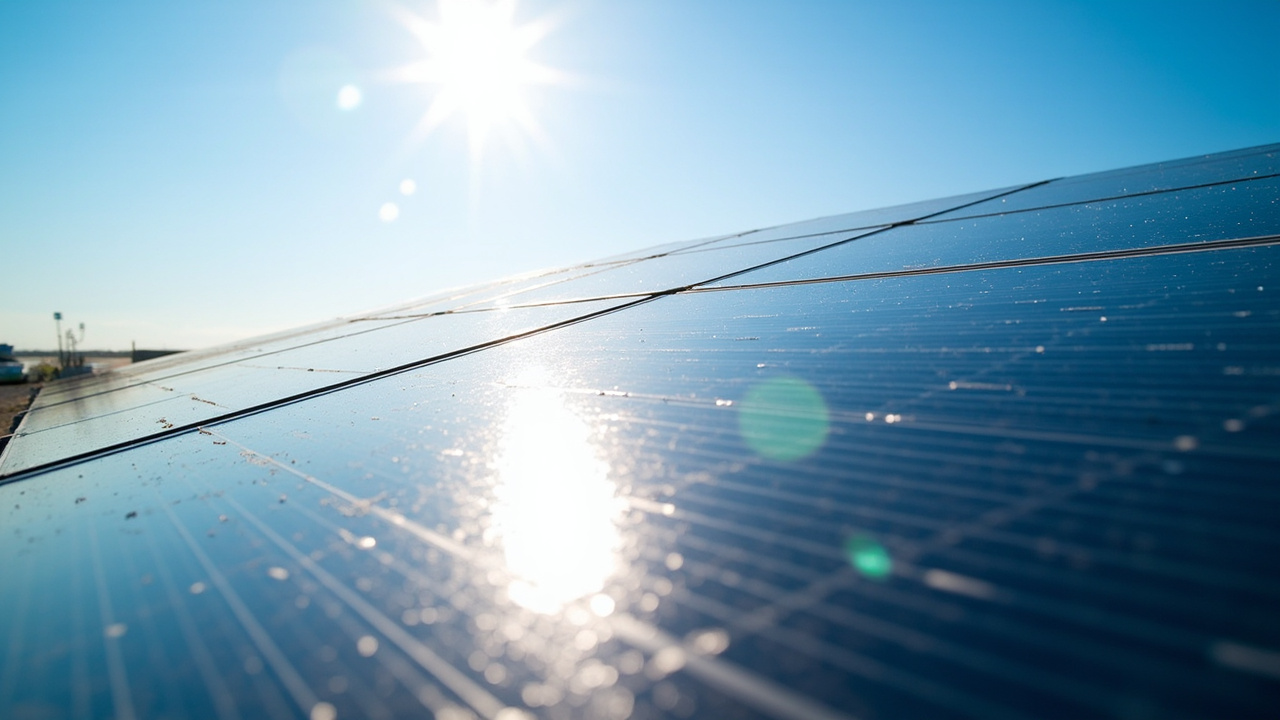
Driven by the "dual carbon" goals, cumulative photovoltaic installed capacity has entered the terawatt (TW) era, with centralized and distributed power stations spread across deserts, rooftops, water surfaces, and offshore areas. However, once modules are connected to the grid, they enter long-term outdoor service of 25 years or even longer—the actual power generation revenue depends not only on the conversion efficiency of the silicon wafers, but more on the "invisible coating" on the module surface. When dust, bird droppings, and pollen accumulate on the glass cover, when the encapsulant film slowly yellows under UV, and when aluminum alloy frames and steel supports quietly corrode in coastal salt spray, it is often these functional coatings that determine the attenuation curve of the power station.
For module manufacturers, EPC integrators, and power station owners, photovoltaic module coating has been upgraded from an "optional decoration" to a functional component that balances power generation gain and lifespan assurance. This article systematically breaks down the three major functions that coatings need to undertake in photovoltaic scenarios—anti-reflection light enhancement, self-cleaning, and weather-resistant anti-aging—and provides a selection logic based on location and working conditions.
I. Why do photovoltaic modules need functional coatings
A standard monocrystalline module suffers about 4% reflection loss at the glass–air interface; in the dusty northwest regions, monthly power generation loss due to dust accumulation can reach 5%–15%; and the yellowing of encapsulated EVA film under long-term UV and damp-heat exposure further devours visible light transmittance. More insidiously, the corrosion of aluminum alloy frames and galvanized steel supports weakens structural strength and grounding reliability, becoming a hidden danger to the safe operation of the power station.
Under such working conditions, functional coatings assume three roles:
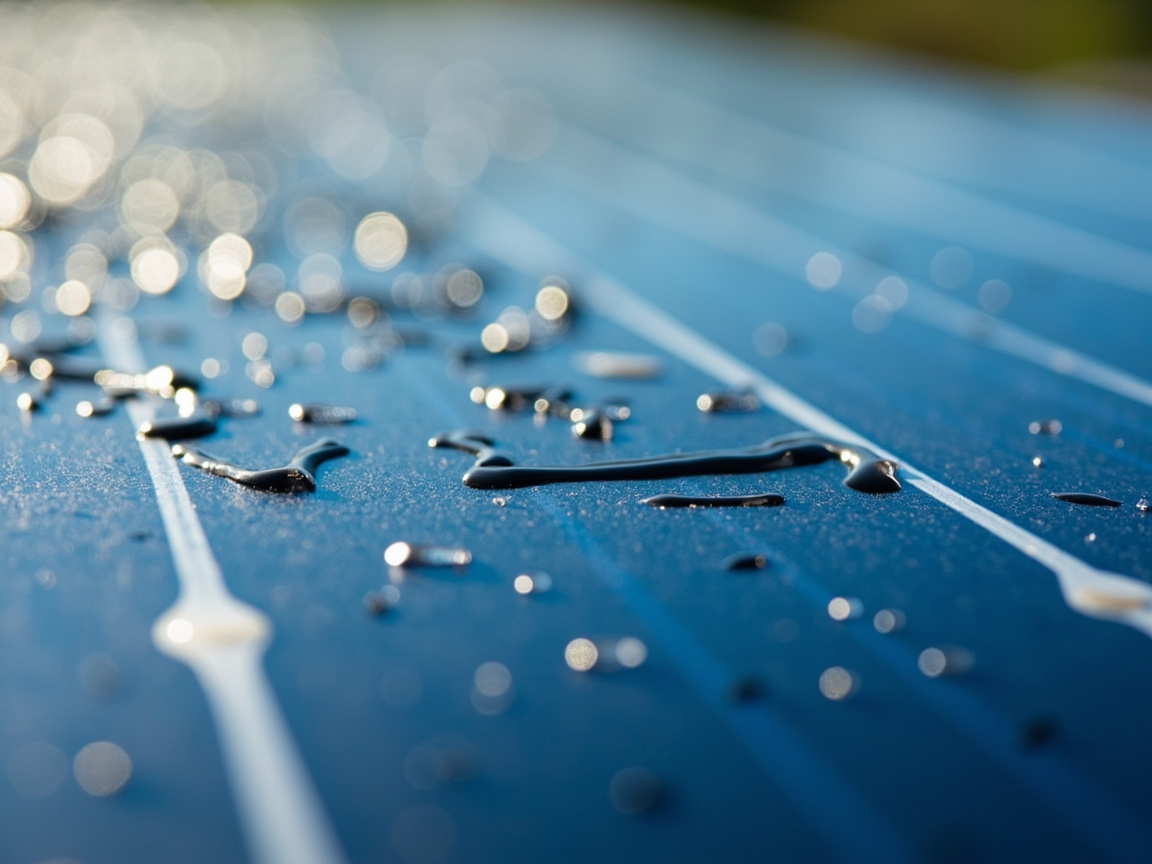
- Anti-reflection gain: Construct an anti-reflection layer on the glass cover surface to "retrieve" the reflected light that would otherwise escape back to the cells, directly increasing module power.
- Self-cleaning and reduced maintenance: Give the surface superhydrophilic or superhydrophobic properties, so that rainwater can carry away dust, minimizing the cleaning frequency of "unmanned" stations in northwest and rooftop areas.
- Weather-resistant protection: Block UV, inhibit aging of encapsulant materials and potential induced degradation (PID), while providing mechanical rust prevention for frames and supports to extend the overall machine life.
These three types of functions often need to be collaboratively achieved at different locations of the same module—which is the core difficulty distinguishing photovoltaic coating from ordinary architectural paint.
II. Three core functions: anti-reflection · self-cleaning · weather resistance
1. Anti-reflection coating (ARC): "retrieve" the reflected light
The refractive index difference between the glass cover and air causes about 4% Fresnel reflection loss at the interface. The anti-reflection coating (ARC) uses single or multilayer interference films to suppress reflectance below 1.5%, effectively increasing module STC power by 2%–3%.
Key technical points:
- Material system: Nano silica (SiO₂), titanium dioxide (TiO₂), or organic–inorganic hybrid materials, formed into a film on the glass surface via sol-gel process.
- Compatible with self-cleaning: ARC must not sacrifice surface cleanliness, otherwise the gain will be offset by dust accumulation, so it is often made into an "anti-reflection + self-cleaning" double-layer structure with the self-cleaning layer.
- Weather-resistant life: The film must withstand 25 years of UV and temperature cycling without peeling or yellowing.
2. Self-cleaning coating: superhydrophilic vs superhydrophobic
There are mainly two self-cleaning routes. One is the superhydrophilic (TiO₂ photocatalytic) route: under sunlight the surface becomes strongly hydrophilic, and rainwater spreads into a water film to carry away dust, suitable for rainy and cloudy regions. The other is the superhydrophobic (lotus effect) route: the surface energy is extremely low, and water droplets bounce off dust particles when rolling off, suitable for arid and rain-scarce scenarios relying on occasional rainfall washing.
For large ground power stations, the superhydrophilic route offers better O&M economy due to its "rain is cleaning" property; while scenarios with complex dust forms such as BIPV rooftops often need to combine anti-sticking and easy-clean design.
3. Weather resistance and anti-aging: anti-UV yellowing, anti-PID
Yellowing of encapsulant film (EVA/POE), backsheet aging, and potential induced degradation (PID) are the three major causes of module degradation. Functional topcoat achieves this through:
- UV blocking: Form a UV absorption layer on the glass or backsheet surface to delay polymer photo-aging;
- Surface potential regulation: Reduce leakage current between frame and cells, mitigating sudden power drop caused by PID;
- Mechanical rust-proof synergy: Provide nano-level rust-proof primer for aluminum alloy frames and steel supports to avoid corrosion weakening grounding and structure.
III. Substrate and location graded selection
The materials and failure modes of different parts of photovoltaic modules vary greatly, so selection must be "tailored to the location":
| Module part | Typical substrate | Core coating requirement | Recommended system |
|—|—|—|—|
| Glass cover | Tempered glass | Anti-reflection + self-cleaning | Nano SiO₂/TiO₂ double-layer ARC |
| Frame | Aluminum alloy | Mechanical rust-proof + weather resistance | Nano rust-proof primer + weather-resistant topcoat |
| Backsheet | Fluorine film / PET | Anti-UV aging | Weather-resistant varnish |
| Support | Galvanized steel | Mechanical rust-proof | Cold galvanizing / nano rust-proof |
| Junction and junction box | Engineering plastic | Insulation + weather resistance | Weather-resistant insulating paint |
Special reminder: mechanical rust-proof and power generation gain do not conflict. Frames and supports of northwest, coastal, and rooftop stations are subject to salt spray, temperature difference, and UV for a long time, and corrosion will directly weaken structural strength and grounding reliability. Under the weather-resistant topcoat, applying a nano-level rust-proof primer first is an invisible guarantee to extend the overall machine life.
IV. Kexin (kexinMaterials) nano coating solution
As a manufacturing enterprise focused on nano new material R&D, the differentiation of Kexin New Materials (kexinMaterials) in photovoltaic functional coatings comes from its nano-level formulation platform:
- Nano double-layer anti-reflection self-cleaning system: Uses nano SiO₂/TiO₂ to build an "anti-reflection + self-cleaning" composite film, improving light transmission while reducing dust maintenance cost, suitable for tempered glass covers.
- Anti-PID weather-resistant topcoat: Through UV absorption and surface potential regulation, delays encapsulant yellowing and PID degradation, safeguarding 25-year power warranty.
- Nano mechanical rust-proof primer: Builds a nano passivation layer under the functional topcoat of frames and supports to inhibit substrate corrosion under coastal and high-humidity conditions, forming synergistic protection with the upper functional coating.
- Integrated supporting capability: Kexin's value is not just "supplying a single coating", but providing integrated coating solutions from frame rust-proof to backsheet weather resistance based on module location, deployment environment, and warranty goals, along with implementable construction and inspection parameters.
V. Construction and acceptance key points
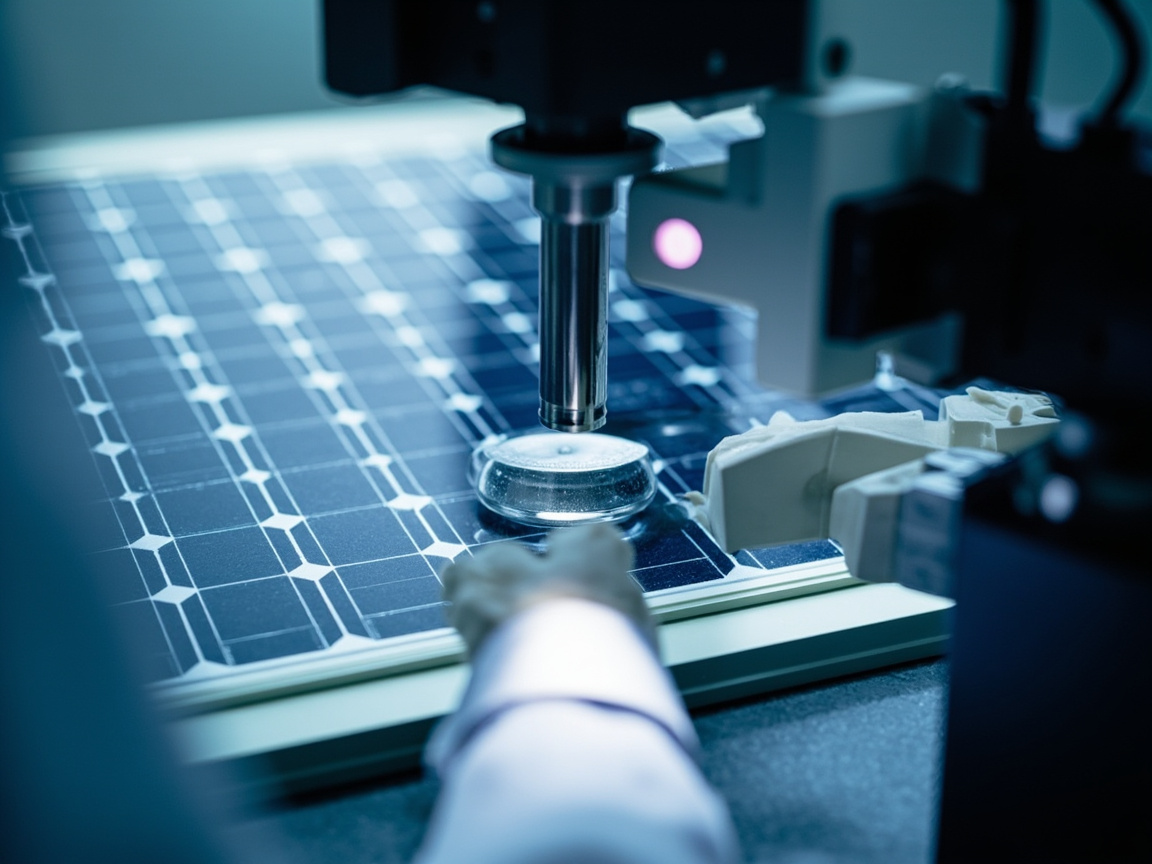
The performance of functional coatings is 70% in formulation and 30% in construction. Painting acceptance for photovoltaic scenarios is suggested to grasp three lines:
1. Surface cleanliness: Glass and frames must be thoroughly degreased and cleaned; rusted substrates must be thoroughly derusted first—nano rust-proof primer cannot save loose floating rust.
2. Film thickness and uniformity: Anti-reflection and self-cleaning layers highly depend on dry film thickness uniformity; online thickness measurement is recommended, with key parts fully inspected.
3. Performance sampling: Retain samples from each batch for transmittance, contact angle, and adhesion review, and establish a traceability archive from raw materials to finished products.
FAQ
Q1: Will photovoltaic coating increase module power?
Yes. The anti-reflection coating (ARC) can suppress the about 4% reflection loss at the glass–air interface below 1.5%, directly increasing module STC power by about 2%–3%.
Q2: Which is more suitable for ground stations, superhydrophilic or superhydrophobic self-cleaning?
Rainy and cloudy regions are more suitable for the superhydrophilic route, where rainwater spreads into a film to carry away dust; arid and rain-scarce regions can focus on superhydrophobic rolling-off dust ejection. Selection should combine local rainfall and dust form.
Q3: Will the self-cleaning coating affect the anti-reflection effect?
Inferior solutions will cancel each other out, so the industry mainstream adopts an "anti-reflection + self-cleaning" double-layer composite structure, allowing gain and easy cleaning to synergize within the same film system.
Q4: What extra attention is needed for coastal photovoltaic station coatings?
High salt spray and high humidity accelerate frame and support corrosion and weaken grounding reliability. It is recommended to add a nano-level mechanical rust-proof primer under the weather-resistant topcoat, forming dual anti-corrosion and functional protection.
Q5: What can Kexin do for photovoltaic customers?
Kexin (kexinMaterials) provides primer–topcoat integrated coating solutions based on nano double-layer anti-reflection self-cleaning, anti-PID weather-resistant topcoat, and nano rust-proof, along with construction processes and batch inspection suggestions.
Q6: How to verify the life of photovoltaic coating?
It is recommended to use UV aging, temperature-humidity cycling, and adhesion retention rate as core indicators, retain samples from each batch for sampling inspection, and establish a traceability archive from raw materials to finished products.
Further Reading
- Photovoltaic Panel Superhydrophilic Self-Cleaning Nano Coating: From Photocatalytic Chemistry to Unmanned Operation and Maintenance of Photovoltaic Power Stations
- Solar Panel Anti-Reflective and Anti-Glare Nano Coating: Optical Engineering from Fresnel Reflection to Ultimate Photovoltaic Efficiency Improvement
- Breakthrough in Weather-Resistant Protective Coating Technology for Photovoltaic and Wind Power 2026: Synergistic Evolution of Self-Cleaning, Radiative Cooling and Ultra-Wear-Resistance