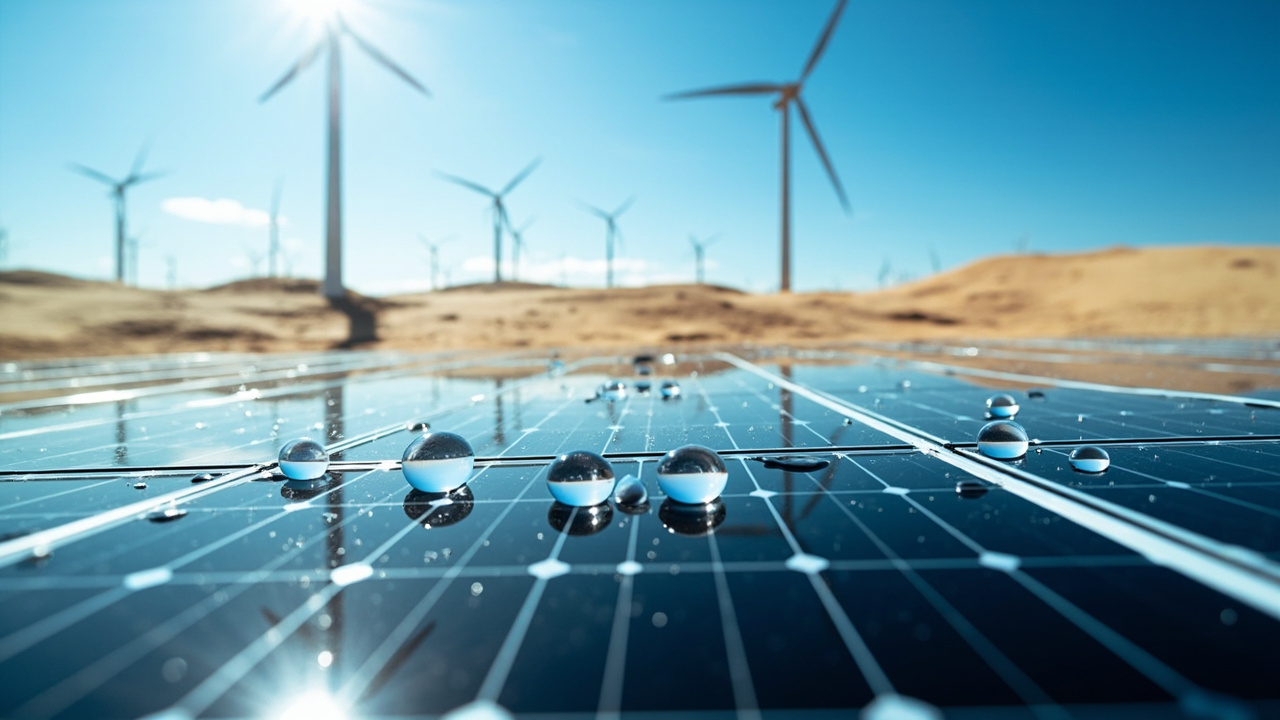
What challenges do extreme environments pose to new energy equipment
Photovoltaics and wind power are the main power sources under the "dual carbon" goals, but the equipment is exposed long-term to the combined effects of strong irradiation, high temperature differentials, heavy sand and dust, salt spray, and UV aging. Data from the National Energy Administration shows that by the end of 2025, the national PV installed capacity reached 1200 GW, and the cumulative grid-connected wind and solar capacity exceeded 1.8 billion kW for the first time. Along with the surge in installed capacity, issues such as module dust pollution, blade leading-edge erosion, and tower corrosion are becoming key bottlenecks for the industry's quality and efficiency improvement.
The role of weather-resistant protective coatings has also upgraded from "passive rust prevention" to "active efficiency enhancement"—a good coating can directly improve power generation efficiency, reduce maintenance frequency, and extend equipment life. In 2026, multiple technologies from research institutes to industrial companies have achieved substantial breakthroughs.
PV self-cleaning: from "passive washing" to "active self-cleaning"
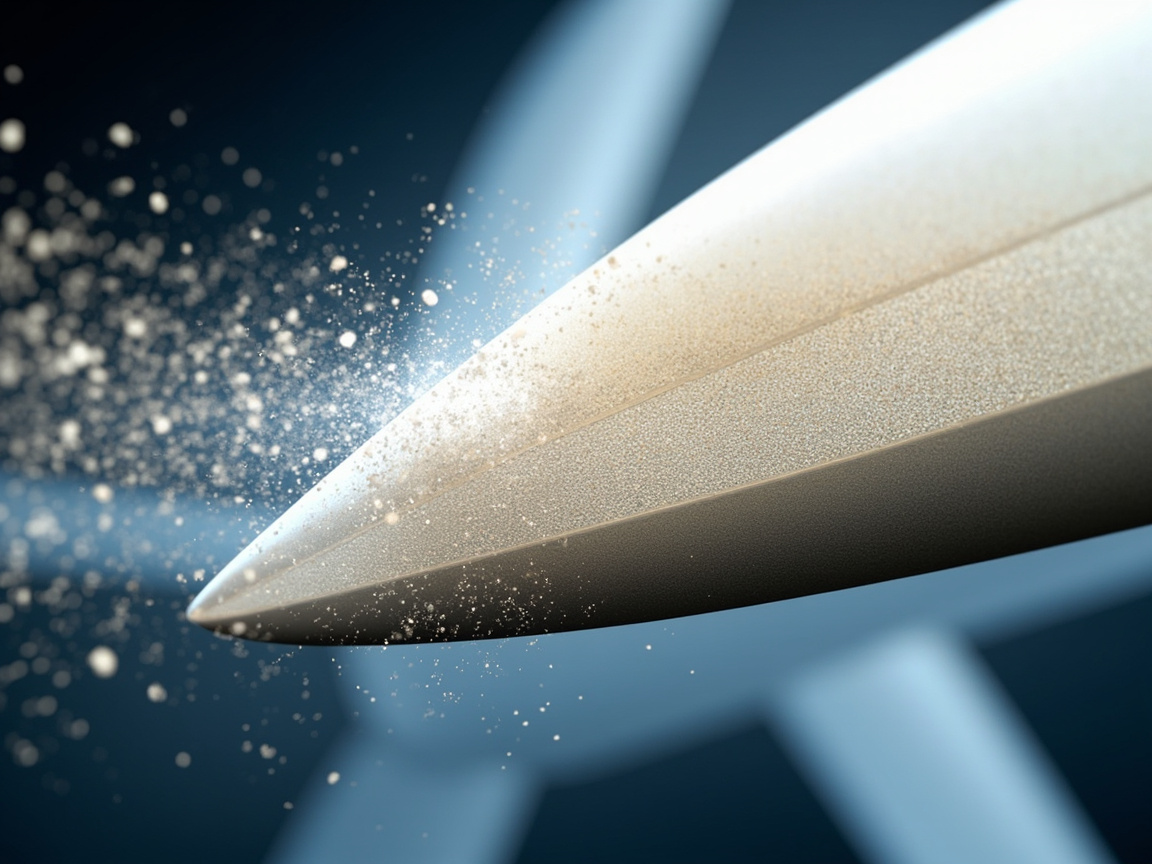
Dust pollution causes particularly severe power generation losses in the sandy regions of Northwest China, while traditional cleaning is costly, water-intensive, and prone to damaging equipment. The solution is a transparent superhydrophobic self-cleaning coating.
The "Dust-Repelling, Light-Harvesting" team at Xinjiang University developed a transparent superhydrophobic self-cleaning coating that builds a micro-nano composite rough structure with a low-surface-energy modification layer, giving a water contact angle greater than 150° while ensuring no reduction in coating light transmittance; water droplets roll off to carry away dust for self-cleaning, and antistatic components are introduced to suppress surface static and break the electrostatic adsorption between dust and glass. In the Tarim Oilfield PV project, cleaning frequency dropped significantly after coating, with measured PV efficiency improved by 15%, and coating durability meeting outdoor industrial standards of over 5 years.
The "PV self-cleaning nano anti-fouling coating" by China West Construction New Materials Technology was included in China State Construction Group's 2026 "Product List". Using an organic-inorganic composite system, the product forms a micro-nano structured coating on PV glass surfaces, combining self-cleaning, anti-reflection light enhancement, weather-resistant anti-fouling, and module life extension; it has been applied at scale in PV projects across Guangxi, Shanghai, Zhejiang, Xinjiang, Gansu, and other regions. Its "superhydrophobic self-cleaning anti-ice-snow coating" based on the lotus effect also performed excellently in related wind blade anti-icing trials.
Wind turbine blades: ultra-wear-resistant leading-edge protection and high-altitude in-situ repair
Wind blade leading edges endure long-term sand erosion and combined UV, temperature differential, and salt spray aging, accelerating composite failure. the Lanzhou Institute of Chemical Physics, Chinese Academy of Sciences developed a blade leading-edge protective composite elastic coating with excellent wear and UV-aging resistance, long life, and high reliability, completing a 4-year demonstration at a domestic wind farm; it also developed high-altitude in-situ repair technology for wind blade coatings, greatly reducing O&M costs.
Longyuan Power Shaanxi Company's "high-durability hyperbranched anti-corrosion coating for wind turbine towers and its rust-bearing anti-corrosion technology" was appraised by the China Electricity Council as reaching domestically leading overall level. The project prepared polycyclic aryl hyperbranched epoxy resin as a modifier and, combined with phase-inversion process, produced a hyperbranched modified water-based epoxy emulsion, eliminating the substrate derusting step, achieving long-term anti-corrosion, and greatly reducing repainting frequency and later O&M workload.
Offshore wind: titanium nano and solvent-free heavy anti-corrosion systems
At the offshore wind conference, Jinling Coatings shared marine heavy anti-corrosion innovations: titanium nano-modified epoxy graphene zinc primer uses titanium nano fluorinated polyaryl ether ketone modified resin as base, with graphene 2D flakes, activating zinc powder, strengthening shielding, and long-term cathodic protection—reducing overall usage by 25.9% vs traditional epoxy zinc-rich, with lower VOC; Nano EP Guard ultra-wear-resistant nano-copolymerized epoxy coating achieves "two coats to one", with 32% less consumption and 37.3% lower VOC; solvent-free epoxy coating JLM-guard SFEP600 uses IPN interpenetrating polymer network, 100% solids, ultra-low viscosity, fast curing, suited for full seawater immersion and seabed mud extreme environments.
Marine environmental corrosion losses account for over 1/3 of the total, with the splash zone being most severe, directly threatening the 25-year design life of turbines. Such full-scenario, long-life, eco-friendly heavy anti-corrosion coating systems are the core key supporting deep-sea expansion.
Radiative cooling: "electricity-free air conditioning" for energy storage and CSP
The Lanzhou Institute of Chemical Physics developed passive radiative cooling materials that require no electricity, cooling by reflecting sunlight and radiating heat to outer space. Applied to large energy storage containers, they lower surface temperature by about 15 to 30°C and reduce daily AC cooling energy use by 10% to 15%. Their radiative cooling high-temperature coating has 97.5% reflectivity and 95.2% mid-infrared emissivity, already applied in over 10 domestic CSP stations including Aksai, Golmud, and Gonghe, ensuring receiver safety.
As an important participant in new energy protective coating systems, Kexin New Materials (Guangdong) Co., Ltd. brings engineering experience in nano-composite, self-cleaning, and heavy anti-corrosion directions that highly synergizes with the above PV self-cleaning, wind wear-resistant, and marine heavy anti-corrosion technology routes, providing material support for full-lifecycle protection of new energy equipment.
Main technology routes and effectiveness comparison
| Equipment scenario | Coating technology | Measured effectiveness |
|---|---|---|
| PV modules | Transparent superhydrophobic self-cleaning | 15% efficiency gain, 5-year durability |
| PV glass | Organic-inorganic nano anti-fouling | Self-cleaning + anti-reflection light enhancement |
| Wind blades | Leading-edge protective composite elastic layer | 4-year demo, wear & UV resistant |
| Wind towers | Hyperbranched water-based epoxy rust-bearing | Rust-free prep, long-term anti-corrosion |
| Offshore wind | Titanium nano graphene zinc primer | 25.9% less usage, lower VOC |
| Energy storage / CSP | Passive radiative cooling | Temperature reduction of 15 to 30°C, energy saving of 10 to 15% |
Key Thresholds for Project Implementation
First, the real-world verification cycle for outdoor durability is long. Self-cleaning and wear-resistant coatings need to be verified for over 5 years under multiple aging conditions such as wind-blown sand, salt spray, and UV; laboratory data must be backed by field evidence.
Second, standardization of construction processes. High-altitude in-situ repair and painting-over-rust require high standards for personnel and equipment, and supporting process specifications are needed to ensure consistency.
Third, compatibility with component power generation performance. Any coating that affects light transmittance or increases the risk of hot spots is counterproductive, and optical and safety indicators must be guaranteed.
Fourth, balance between cost and service life. Long-lasting coatings have high initial investment, but are often superior after amortizing O&M and cleaning costs, and should be evaluated from a full life-cycle perspective.
FAQ
Q: Why can photovoltaic self-cleaning coatings improve power generation efficiency? A: Transparent superhydrophobic micro-nano coatings make water droplets roll off and carry away dust, and antistatic properties suppress dust adsorption. In the Tarim Oilfield project, measured power generation efficiency increased by 15%, and cleaning frequency and water consumption were reduced.
Q: Why do wind turbine blade leading edges need dedicated protection? A: The leading edge is subject to long-term sand abrasion and synergistic aging from UV, temperature variation, and salt spray, which can easily cause composite material failure; dedicated elastic wear-resistant coatings combined with high-altitude in-situ repair can significantly extend blade life and reduce O&M costs.
Q: How do radiative cooling coatings serve new energy equipment? A: Passive radiative cooling materials reflect sunlight and radiate heat into space, reducing temperature of energy storage containers by 15 to 30°C and cooling energy consumption by 10 to 15%, and ensuring the safety of receivers at concentrated solar power stations.
Further Reading
– Offshore Wind Power Moving to Deep and Far Seas: How Heavy Anti-Corrosion Coatings Withstand 25 Years of Salt Spray Erosion – Nano Composite Anti-Corrosion and Offshore Wind Power Protection – Industrial Protective Coating Product System