In heavy-duty anti-corrosion coating systems, epoxy zinc-rich primer has long occupied a "core" position—it is not only a barrier layer, but also directly provides "electrochemical protection" to the steel substrate through the sacrificial anode (cathodic protection) of zinc powder. While solvent-based epoxy zinc-rich is already standard for bridges, ships, and storage tanks, water-based epoxy zinc-rich is an advanced solution that achieves both "low VOC + cathodic protection," aligning with the continuously tightening direction of GB 30981-2020. However, water-based conversion brings a series of unique challenges to the zinc-rich system: water oxidizes zinc powder, how to establish the conductive network, how to keep two-component water-based stable, and why the pot life is shorter. If these challenges are not properly addressed, water-based zinc-rich will not only fail to protect, but will fail prematurely—can swelling, non-drying, zero adhesion, more隐蔽 (hidden) and more troublesome than solvent-based.
Kexin New Materials (kexinMaterials) has done extensive verification on the resin–zinc powder matching of water-based epoxy zinc-rich. This article thoroughly explains its mechanism, formulation difficulties, application, and standards, and aligns with the compatibility requirements in the Steel Structure Anti-rust Engineering Specification, also echoing the underlying logic of "cathodic protection blocking electrochemical reaction" in Steel Rusting Mechanism and Classification, and the emphasis on primer–intermediate–topcoat division of labor in Anti-rust Coating System Compatibility Design.
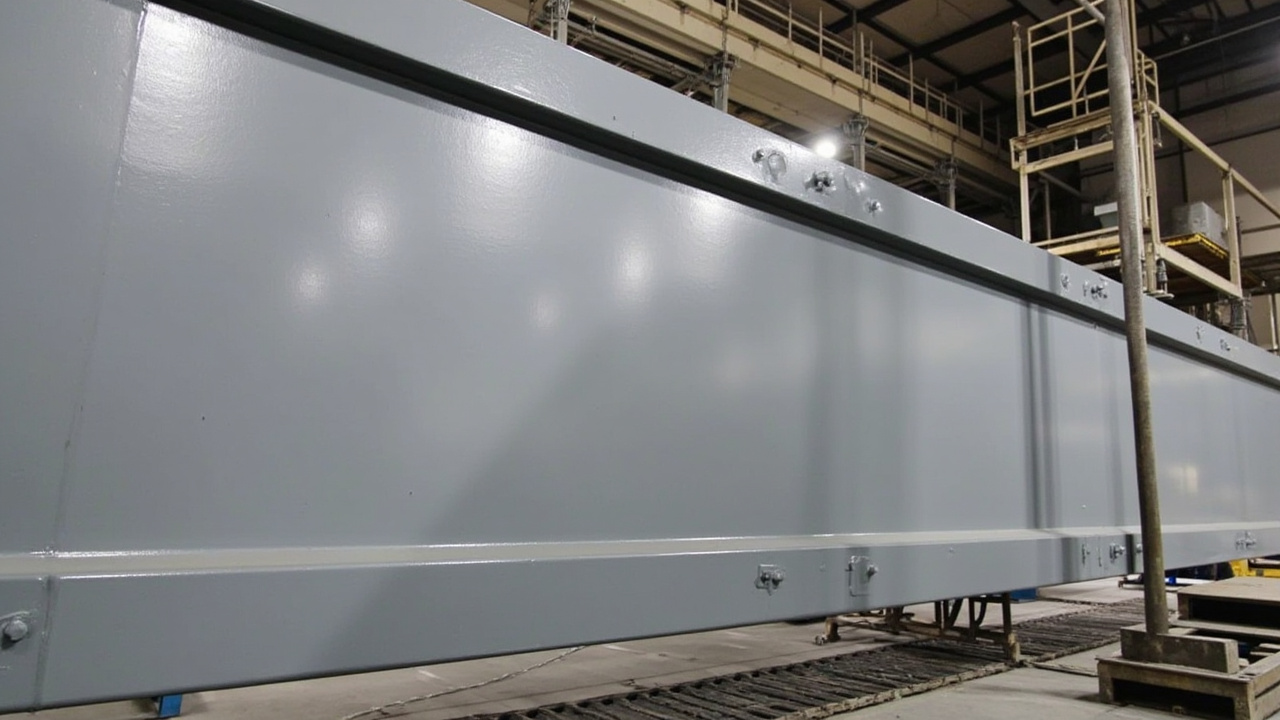
I. Why Epoxy Zinc-rich Is Strong: Sacrificial Anode of Zinc
The core of epoxy zinc-rich primer is not "film blocking water," but electrochemical cathodic protection. The film contains a large amount of zinc powder (pigment volume concentration often above critical), adjacent zinc particles contact each other to form a conductive network and conduct with the steel substrate. When corrosive media penetrate:
Anode (zinc): Zn → Zn²⁺ + 2e⁻ (zinc dissolves preferentially, is "sacrificed") Cathode (iron): O₂ + 2H₂O + 4e⁻ → 4OH⁻ (iron is protected)
The standard potential of zinc is about −0.76 V, iron about −0.44 V; zinc is more active, so zinc corrodes preferentially and the iron substrate remains passive. Zinc corrosion products (zinc oxide, zinc hydroxide, basic zinc carbonate) can also seal coating pores, forming dual protection. This is the fundamental reason why in salt spray tests the zinc-rich primer shows "very small scribe creep (≤ 1–2 mm)"—at the scratch, zinc continues to sacrifice to protect iron, rather than letting iron itself react. This protection is especially valuable when the coating is locally damaged, because the zinc around the damaged point will "actively" protect the exposed iron, compensating for the gap in the barrier layer. It is precisely this characteristic that makes zinc-rich primer an irreplaceable first barrier in heavy-duty anti-corrosion systems.
It should be pointed out that the premise for effective cathodic protection is that zinc particles conduct with each other and with steel, forming a continuous circuit. Once the zinc content is insufficient, the particle size distribution is improper, or the resin wrapping is too thick causing particle insulation, the conductive network breaks and cathodic protection exists in name only. So "high zinc" is not a numbers game, but a conductive network engineering.
II. Zinc Powder Content: Not the More the Better, but "Just Conductive"
The performance of zinc-rich primer highly depends on the conductive network above the critical pigment volume concentration (CPVC) of zinc powder. General industry experience:
- Zinc powder dry film mass content is often required to be high (solvent-based according to HG/T 3668 "Zinc-rich Primer" regulations on zinc content, specific indicators subject to the current version of the standard);
- Water-based systems require rebalancing of zinc content design due to resin water-based conversion and different wrapping methods for zinc powder;
- Too much zinc → high coating brittleness, reduced adhesion, high cost, and large internal stress prone to cracking;
- Insufficient zinc → conductive network breaks, cathodic protection fails, leaving only limited barrier.
Therefore "high zinc" must be supported by a conductive network; isolated high content numbers are meaningless. The zinc powder itself must meet the grade requirements of GB/T 6890 (Zinc Powder); particle size distribution affects packing density and conductive efficiency—too fine zinc powder has large specific surface area and is more prone to react with water to produce gas, too coarse leads to large pores in the conductive network and reduced barrier. The compounding of particle sizes is a detail within details: commonly "large flake size to build skeleton + fine powder to fill gaps" grading, ensuring conduction while reducing pores.

III. Unique Difficulties of Water-based Conversion
Converting solvent-based epoxy zinc-rich to "water-based" is not simply replacing solvent; it must cross three thresholds:
3.1 Reaction of Zinc Powder with Water
Zinc reacts with dissolved oxygen in water: 2Zn + O₂ + 2H₂O → 2Zn(OH)₂, producing hydrogen, causing can swelling, pH rise, and even gelation. Countermeasures include: using flake or granular zinc powder to reduce specific surface area; pre-stabilizing the resin phase (epoxy emulsion or water dispersion wrapping); two-component mix-and-use to shorten zinc–water contact time; adding small amounts of corrosion inhibitor or stabilizer to suppress hydrogen evolution. This is the most tricky and formulation-testing part of water-based zinc-rich, and also the root cause of its short pot life and sensitivity to application.
3.2 Stability of Two-component Water-based
Water-based epoxy is usually "water-based epoxy emulsion (Component A) + water-based amine curing agent (Component B)." Amines are sensitive to water and zinc; the mixing window (pot life) is shorter than solvent-based, and requires higher mixing uniformity. Non-uniform mixing leads to local non-curing or incomplete curing, forming weak links. In addition, the volatility and reactivity of water-based amines are greatly affected by pH and temperature—low temperature in winter slows reaction, high temperature in summer sharply shortens pot life; process cards must mark clear temperature zones and pot life.
3.3 Conductive Network Establishment in Water Phase
After water evaporation, latex or epoxy particles accumulate together with zinc powder; it is necessary to ensure zinc particles contact each other. Film-forming aids, pH, and drying rate all affect final conductivity and barrier. If drying is too fast, particles have no time to fuse and the network is incomplete; if too slow, zinc–water contact time is too long, hydrogen evolution intensifies and flash rust risk rises. In practice, "temperature control, humidity control, thin multi-coat" is used to balance this contradiction.
IV. Formulation Composition
| Component | Function | Formulation Key Points |
|---|---|---|
| Water-based epoxy (Component A) | Film-forming base | Emulsion/water dispersion, low VOC, compatible with zinc |
| Water-based amine curing agent (Component B) | Crosslinking | Matched with epoxy equivalent, controllable pot life, low irritation |
| Zinc powder | Cathodic protection | Meets GB/T 6890, content reaches design, particle size grading |
| Anti-settling agent | Prevent zinc settling | Fumed silica, bentonite, polyamide wax |
| Flash rust inhibitor | Inhibit flash rust | Essential for water-based systems, prevent rust spots during wet film period |
| Film-forming aid | Assist fusion | Control VOC and drying window |
| Corrosion stabilization agent | Suppress hydrogen evolution | Reduce zinc–water reaction activity |
The ratio must strictly follow equivalents (epoxy equivalent : amine hydrogen equivalent); deviation causes non-drying or softening. The addition method of zinc powder is also particular: usually pre-disperse in one component with controlled shear, then add to the other component, to avoid zinc powder reacting and producing gas in one phase for a long time. For storage, Components A and B are packed separately, sealed, and antifreeze; the zinc powder component especially needs anti-settling and anti-caking.
V. Application and Film Thickness
The application discipline of water-based epoxy zinc-rich is stricter than solvent-based:
- Surface treatment: Heavy-duty anti-corrosion requires blasting to Sa2.5 (ISO 8501-1 / GB/T 8923.1), roughness Ry 40–70 µm for mechanical interlocking;
- Mixing: A:B by volume or mass ratio per technical data sheet, mechanical stirring, mix-and-use (pot life often 2–4 h, shortened or extended by temperature);
- Film thickness: Single coat dry film thickness recommended 60–80 µm, total dry film often not exceeding 100–120 µm (too thick prone to cracking, high zinc stress, internal stress cracking and water ingress);
- Environment: 5–35℃, relative humidity ≤ 75–85%, substrate 3℃ above dew point; low-temperature curing water-based amine should be selected for low winter temperature;
- Compatibility: Above zinc-rich must be matched with epoxy intermediate coat (e.g., epoxy micaceous iron oxide, see Anti-rust Coating System Compatibility Design) and weather-resistant topcoat; not directly exposed.
It must be specifically pointed out that zinc-rich primer cannot be used directly as topcoat—the zinc layer and zinc corrosion products have poor weather and chemical resistance, and long-term exposure will chalk and show white rust. It must be covered by intermediate coat and topcoat to form a complete "primer–intermediate–topcoat" system. Many premature failures are not due to poor primer, but "bare use of primer" or "insufficient intermediate barrier causing zinc to deplete prematurely."

VI. Standards and Evaluation
- HG/T 3668 "Zinc-rich Primer": specifies requirements for solid content, zinc content, salt spray resistance, adhesion, etc. of zinc-rich primer (specific indicators subject to current standard version);
- Salt spray resistance: GB/T 1771, high-quality water-based epoxy zinc-rich systems commonly require 480–1000 h scribed creep ≤ 2 mm, with panel surface intact;
- Adhesion: GB/T 9286 cross-cut, GB/T 5210 pull-off (overall evaluation after compatibility with subsequent coats);
- Volatile organic compounds: GB 30981-2020 limits for water-based industrial protective coatings;
- Dry film zinc content: can be verified by chemical analysis (complexometric titration or ignition method) to prevent "nominal high zinc, actual low".
Here it must be emphasized: many suppliers advertise "high zinc content", but lack third-party dry film zinc content testing, and the actual content may be far below the nominal value. In engineering, dry film zinc content testing should be included as an incoming re-inspection item to avoid being misled by false claims. Salt spray reports should also be examined for "whether tested with complete system, whether scribed, and how much creep", as isolated "1000 hours no blistering" without scribing or system has limited reference value.
VII. Common Misconceptions
Misconception 1: The higher the zinc content, the better. Wrong. Beyond the needs of the conductive network, excess zinc reduces adhesion, increases brittleness, raises cost, and cathodic protection does not improve but deteriorates (film easily cracks and lets in water). The key lies in the conductive network, not the absolute content.
Misconception 2: Zinc-rich can be used bare, without topcoat. Wrong. Zinc corrosion products and the zinc layer itself have poor weather resistance; intermediate coat + topcoat must be applied, otherwise it will quickly chalk and fail from white rust.
Misconception 3: Water-based zinc-rich is as easy to apply as solvent-based. Wrong. The water-based system evolves hydrogen, has short pot life, and is more sensitive to temperature and humidity; it must be mixed and used immediately, with controlled environment and film thickness.
Misconception 4: Large scribed creep is no big deal. Wrong. The value of zinc-rich lies in low creep at the scribe; if creep is large, it indicates problems with zinc content, conductivity, or compatibility, and cathodic protection has failed.
Misconception 5: The higher the salt spray hours, the better the coating. Wrong. One must look at "complete system + scribe + creep width"; data from single coat, unscribed tests are easily inflated, and engineering selection should look at system-level results.
Kexin New Materials (kexinMaterials), when delivering water-based epoxy zinc-rich, provides a process card of "blasting grade—mix ratio—film thickness—system" and recommends third-party retesting per HG/T 3668 and GB/T 1771, to avoid selection based solely on manufacturer claims. This "data-driven delivery" significantly reduces engineering risk, turning luck-dependent application into process-dependent quality assurance.
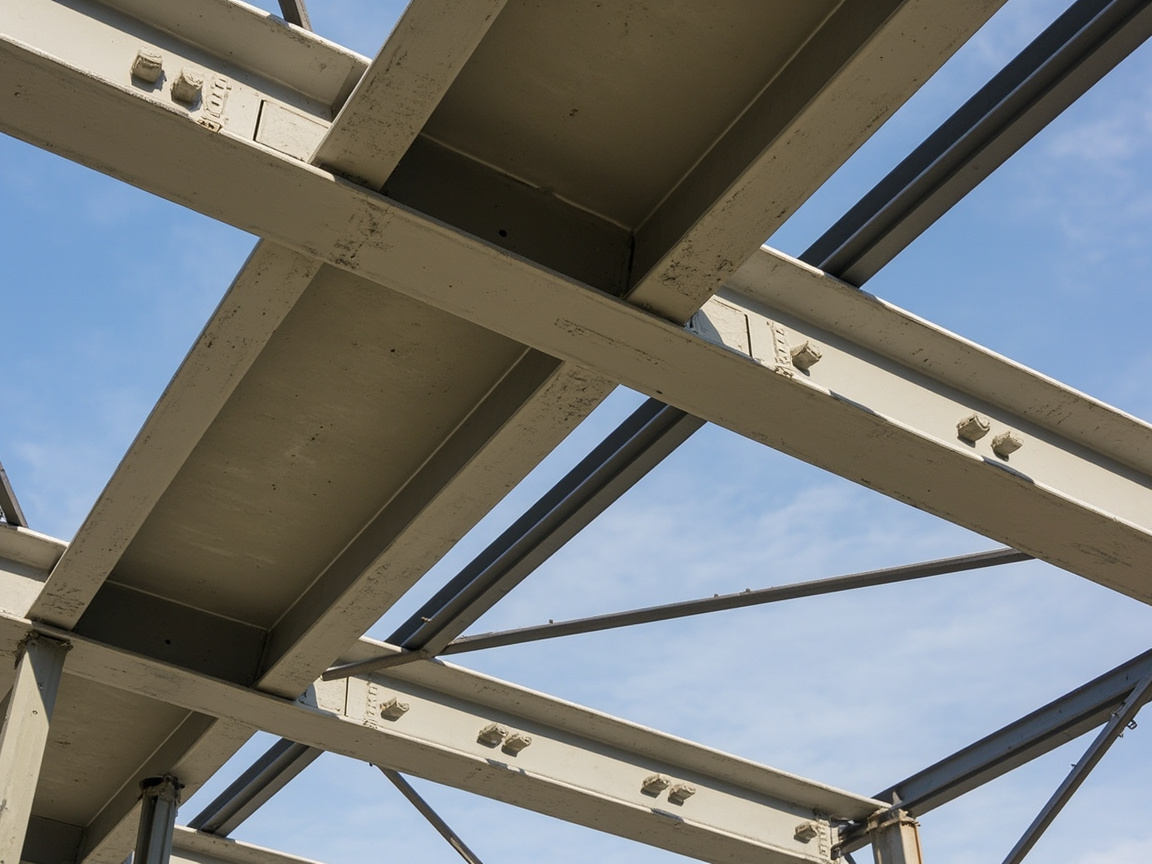
VIII. Positioning Comparison with Other Primers
| Primer type | Protection mechanism | Typical application | VOC orientation |
|---|---|---|---|
| Water-based epoxy zinc-rich | Cathodic protection + barrier | Heavy anti-corrosion C4–C5 | Low |
| Water-based epoxy ester anti-rust | Passivation + barrier | Moderate corrosion C3 | Low |
| Alkyd anti-rust | Barrier + inhibition | Light corrosion C2 | Medium—High |
| Rust converter | Convert active rust | Rusty surface maintenance | Low |
This table shows: primer selection is not about "who is stronger or weaker", but "who matches the condition". Heavy corrosion uses zinc-rich, moderate corrosion uses epoxy ester or zinc phosphate system, light corrosion uses alkyd, and rusty maintenance uses converter. Using the wrong primer in the wrong environment is doomed to fail. For the mechanism of rusty maintenance, refer to Rust Converter Principle and Application.
IX. Suitability and Limitations of Water-based Zinc-rich
Water-based epoxy zinc-rich is suitable for: bridges, wind turbine towers, storage tanks, heavy steel structures in C4–C5 environments, and projects with VOC requirements. It is not suitable for: continuously immersed interiors (zinc cathodic protection efficiency changes in flooded anaerobic environment, and water resistance of water-based system needs verification), single-coat extra-thick application, and uncontrolled outdoor low-temperature high-humidity operations. In these scenarios, revert to solvent-based high-solid or conduct special design.
X. Troubleshooting and Field Experience
Common failures of water-based zinc-rich: can swelling and gas generation (uncontrolled zinc-water reaction), non-curing (wrong mix ratio or low temperature), poor adhesion (insufficient blasting, condensation), cracking (excessive film thickness), white rust (exposure or high humidity), flash rust (rust spots during wet film period). The general rule for troubleshooting: strictly mix per technical data sheet, control film thickness, control environment, and apply compatible coats promptly. Any shortcut taken will manifest as corrosion months to years after application.
Field experience can be summarized in four rules: First, temperature rule—water-based system has a narrower application window than solvent-based; in winter low temperature water evaporates slowly and amine reaction is sluggish, often causing "overnight non-dry"; apply during high-temperature daytime or use low-temperature curing water-based amine, never force-spray below 5°C. Second, mixing rule—two-component pot life is usually 2–4 h and shortens with rising temperature; should "mix small amounts frequently, estimate and mix as needed", first stir zinc powder component thoroughly then add curing agent, mechanically stir 2–3 minutes and let stand to defoam. Third, film thickness rule—single coat too thick causes surface skinning, internal moisture hard to escape, forming hidden bubbles, pinholes or even cracking; prefer two thin coats totaling 60–80 µm. Fourth, traceability rule—batch number, mix ratio, temperature/humidity, film thickness records archived, so problems can quickly locate material, mixing or environmental causes.
Quality traceability should not be overlooked. Because water-based zinc-rich is sensitive to application, once problems occur later, traceability records help quickly locate whether it is material, mixing or environmental cause. Many disputes drag on precisely because no process data was recorded at the time. For safety, zinc powder is combustible, amine curing agent is irritating to skin, so application still requires ventilation, gloves and goggles; cleaning wastewater containing zinc powder and resin should be treated as industrial wastewater, not discharged directly.
XI. Measured Data Comparison between Water-based and Solvent-based Zinc-rich
Only by placing the two types of zinc-rich under the same evaluation framework can the differences be seen clearly rather than being misled by promotion:
| Comparison dimension | Solvent-based epoxy zinc-rich | Water-based epoxy zinc-rich |
|---|---|---|
| Cathodic protection mechanism | Zinc sacrifice (same) | Zinc sacrifice (same) |
| Typical dry film zinc content | High (per HG/T 3668) | High but needs rebalancing of encapsulation |
| Salt spray resistance (system) | 480–1000 h common | Close to solvent-based under sufficient design |
| Pot life | Longer (several hours) | Shorter (2–4 h, more variable) |
| VOC | Medium—High | Low, compliant with GB 30981 trend |
| Application tolerance | Higher | More sensitive to temperature/humidity |
| Long-term immersion | More mature | Needs special verification |
Conclusion: Water-based zinc-rich has clear advantage in "low emission", but stricter application discipline; it should not be treated as a "simpler" version. Selection should look at complete-system salt spray and dry film zinc content retest, not single VOC or hours.
XII. Typical Engineering Application Cases
- Cross-river bridge steel box girder: C4–C5 environment, blasting Sa2.5, water-based epoxy zinc-rich 60–80 µm + epoxy micaceous iron oxide intermediate coat + aliphatic polyurethane topcoat, total DFT about 280 µm, designed for high durability per ISO 12944;
- Coastal wind turbine tower: High salt spray, difficult maintenance, uses zinc-rich primer + high-build epoxy intermediate + polyurethane/fluorocarbon topcoat, focusing on weld seam pre-coating and uniform film thickness;
- Heavy steel structure maintenance in plant: In non-stop production plant, zone construction, control pot life, apply intermediate coat promptly, avoid zinc-rich bare chalking.
The common point of these cases: the primer only solves "first coat cathodic protection", true durability comes from "primer—intermediate—topcoat" system design and strict application.
XIII. Analysis of Common Technical Controversies
Controversy 1: "Water-based is worse than solvent-based, just don't use it." Wrong. Under sufficient design and application, water-based zinc-rich salt spray resistance can approach solvent-based, and VOC is lower, complying with eco-friendly direction; the gap is mainly in application window, not mechanism.
Controversy 2: "High nominal zinc content means safe." Wrong. Third-party retest of dry film zinc content and scribed creep is mandatory; nominal value is not trustworthy.
Controversy 3: "Zinc-rich can be thick-coated to save process." Wrong. Over-thick cracks and lets in water, accelerating corrosion; should be applied in thin coats to reach 60–80 µm.
Kexin New Materials (kexinMaterials) insists on "data first" in projects: first retest zinc content and salt spray on small samples, then scale up application, eliminating controversies in the lab rather than on site.
XIV. Formulation R&D Directions for Water-based Zinc-rich
For better performance, R&D of water-based zinc-rich focuses on four points: First, resin water-borne and zinc powder compatibility, through epoxy emulsion particle size and amine curing agent matching, to reduce hydrogen evolution and extend pot life; Second, zinc powder gradation and conductive network optimization, using large-flake skeleton plus fine powder filling to improve conduction while reducing porosity; Third, flash rust and inhibition synergy, low-toxic flash rust inhibitor with molybdate-type inhibitor to reduce wet-film rust spots; Fourth, low VOC and high-solid balance, using coalescing agent to regulate drying window without exceeding GB 30981 limits. The R&D goal is not "more zinc is better", but "forming the most stable conductive and barrier network within unit film thickness".
XV. Root Cause Analysis of Field Quality Abnormalities
| Abnormal phenomenon | Possible root causes | Verification and disposition |
|---|---|---|
| Swelling can and gas generation after coating | Uncontrolled zinc–water reaction | Check zinc powder specific surface, stabilizer, use immediately after mixing |
| Long-term non-drying, soft | Wrong mixing ratio or low temperature | Re-measure equivalent, raise temperature or change to low-temperature curing agent |
| Poor adhesion, delamination | Insufficient sandblasting, condensation | Check Sa grade, dew point records, re-treat |
| Cracking, pinholes | Excessive film thickness, too fast drying | Control DFT, adjust film-forming additive and number of coats |
| White rust, chalking | Exposed too long, high humidity | Apply intermediate coat and topcoat in time, control humidity |
Root cause analysis should be conducted from the four dimensions of "material—mixing—environment—process", traced back using process records, rather than attributing to a single factor after the fact.
16. Insights from Benchmark Projects of Water-based Zinc-rich Coating at Home and Abroad
Observing benchmark projects in bridges, marine engineering, and energy sectors, the adoption of water-based epoxy zinc-rich coating shows an upward trend, but without exception it is accompanied by strict process discipline. The common experience of these projects is: first, never treat water-based zinc-rich as a "low-threshold version"; its surface treatment grade, film thickness, and coating system are as stringent as solvent-based; second, emphasize small-sample re-testing and sample-led approach, validate in a test section before full rollout; third, bring temperature, humidity, dew point, and pot life into real-time monitoring rather than relying on experience; fourth, value third-party re-verification of dry film zinc content to prevent false nominal highs. These insights show that the value release of water-based zinc-rich depends on "systematic capability", and simply switching to a coating cannot automatically achieve long-term protection. For domestic projects, what to learn is not "use water-based", but "use standardized water-based".
17. Technical Arbitration of Common Acceptance Disputes
Common disputes in acceptance of zinc-rich primer include: whether a slightly low single-point film thickness is acceptable, how much scribe creep counts as failure, and whether adhesion cross-cut paint loss should be blamed on the primer. The arbitration principle should be "return to standards and coating system": film thickness is controlled by both average and minimum point, not point by point; creep is based on the value specified in the design document, and viewed together with the complete system salt spray result; adhesion issues need to distinguish whether it is the primer itself or interlayer incompatibility. Both disputing parties should jointly entrust a third party to re-test according to GB/T 1771, GB/T 9286, GB/T 13452.2, and assign responsibility based on data rather than stance. Establishing this "let standards speak" arbitration habit can significantly reduce engineering disputes and make the specification truly binding.
18. Cost Structure and Life-cycle Economy of Water-based Zinc-rich
The cost of water-based epoxy zinc-rich cannot be judged only by unit price, but by life-cycle economy. In material unit price, water-based zinc-rich is usually higher than ordinary alkyd, close to or slightly higher than solvent-based epoxy zinc-rich; but the comprehensive cost also includes surface treatment, construction efficiency, environmental compliance, and maintenance cycle. The water-based system has low VOC, reducing ventilation and protection investment, and also lowering environmental penalty and occupational health risks; its cathodic protection mechanism brings long life, and in heavy corrosion environments can significantly extend the re-coating cycle, making the cost amortized per year actually advantageous. Conversely, if early failure occurs due to improper construction, the repair cost is extremely high and the unit price advantage disappears instantly. Engineering economic calculation should be based on protection cost per unit area per year, not per liter quote. For owners, the real reason to choose water-based zinc-rich is not cheapness, but more predictable long-term performance and lower full-cycle risk under compliance, which is exactly the quantitative value of the specification.
19. Adaptation of Water-based Zinc-rich in Emerging Scenarios of New Energy and Marine Engineering
With the expansion of new energy and marine engineering, the application scenarios of water-based epoxy zinc-rich continue to broaden. Equipment such as photovoltaic supports, wind turbine towers, energy storage cabinet shells, and marine platforms mostly operate outdoors or in high-salt-spray environments, and are increasingly sensitive to environmental protection and construction safety. The dual advantages of low VOC and cathodic protection of the water-based system fit precisely. But emerging scenarios also have special constraints: construction around energy storage and electrical control equipment is more sensitive to combustible dust and solvents, so the water-based system is safer; offshore wind power has short maintenance windows and harsh environments, requiring higher demands on pot life and system completeness; photovoltaic supports are large in quantity and wide in area, cost-sensitive, requiring a fine balance between long-term performance and cost. The key to adaptation is still to return to mechanism and specification: no matter how new the scenario, the underlying requirements such as sandblasting grade, film thickness, coating system, and environmental boundaries remain unchanged; only the working condition combination and cost weight vary. Fitting new scenarios into the existing specification framework can avoid being misled by new terms.
FAQ
Q: How much worse is the performance of water-based epoxy zinc-rich compared to solvent-based epoxy zinc-rich?
A: The mechanism is the same (zinc sacrifice), but the water-based system has lower construction fault tolerance due to hydrogen evolution, short pot life, and narrow film-forming window. With sufficient design, salt spray resistance (GB/T 1771) can reach 480–1000 h, scribe creep ≤ 2 mm, close to solvent-based; the key is whether zinc content, conductive network, and coating system are in place.
Q: Why can't zinc-rich primer be used alone as topcoat?
A: The zinc layer and zinc corrosion products have poor weather and chemical resistance, and will chalk and white rust under long-term exposure. Zinc-rich is only used as primer, and must be coated with epoxy intermediate coat (e.g., epoxy micaceous iron oxide) and weather-resistant topcoat (aliphatic polyurethane or fluorocarbon paint) above to form a complete system.
Q: What is the general requirement for zinc powder content?
A: Solvent-based zinc-rich often has higher dry film zinc content requirements according to HG/T 3668 etc. (subject to current standards); the water-based system needs to re-balance resin encapsulation and conductive network. More important than content is whether zinc particles form a conductive network—isolated high content is invalid, and dry film zinc content re-test must be done.
Q: Why does water-based zinc-rich easily "swell the can"/generate gas?
A: Zinc reacts with water and dissolved oxygen to form zinc hydroxide and release hydrogen, causing the paint to generate gas, bulge the can, and gel. Using low specific surface zinc powder, resin encapsulation, two-component mix-and-use immediately, and adding stabilizer can suppress it. This is also the root cause of short pot life.
Q: Is thicker zinc-rich primer film better?
A: No. Single coat is often controlled at 60–80 µm, total thickness generally not over 100–120 µm. Excessive thickness causes large internal stress and easy cracking; zinc layer cracking instead lets water in and accelerates corrosion, damaging both barrier and cathodic protection.
Q: How to verify that zinc-rich primer really has "high zinc"?
A: Don't just look at the nominal; send to a third party to determine dry film zinc content by chemical method (e.g., EDTA complexometric titration or ignition loss), and re-test salt spray and adhesion according to HG/T 3668, GB/T 1771, and also check scribe creep width.
Q: Why is the pot life of water-based epoxy zinc-rich short?
A: Water-based amine curing agent is active with both epoxy and zinc powder; after mixing the reaction continues and is affected by water, pot life is often only 2–4 h (depending on temperature). Must estimate usage and mix immediately, discard when overtime, do not reuse or dilute with water to rescue.
Q: Why does the surface of zinc-rich primer sometimes turn white?
A: Mostly due to high construction humidity, surface condensation, or precipitation of zinc corrosion products (basic zinc carbonate), or staying too long before coating. Control relative humidity ≤ 75–85%, timely coating, and ensure ventilation can reduce it. Severe white rust indicates exposed failure.
Q: Can water-based zinc-rich be used in immersed environments?
A: Continuous immersed environments need caution. The efficiency of zinc cathodic protection changes under flooded anaerobic conditions, and the water resistance of the water-based system needs special verification. Immersed parts generally return to solvent-based or solvent-free epoxy system, determined by design specification.
Q: Why is scribe creep a key indicator for zinc-rich?
A: Scribe is the most severe channel artificially creating "coating damage + exposed iron". The value of zinc-rich is exactly here: surrounding zinc sacrifices to protect the iron at the scribe, making creep extremely small (≤1–2 mm). If scribe creep is large, it means cathodic protection fails, which is the core signal of unqualified zinc-rich.
Further Reading
- Anti-rust Coating System Matching Design: Understand the role and film thickness distribution of zinc-rich primer in the "primer—intermediate—topcoat" system.
- Steel Structure Anti-rust Engineering Specification: Surface treatment and acceptance requirements for zinc-rich primer in heavy anti-corrosion engineering.
- Salt Spray Test NSS Judgment Method: Read the scribe creep indicator in the salt spray report of zinc-rich primer.
- Cathodic Protection Mechanism of Epoxy Zinc-rich Primer
- Anti-rust Paint Salt Spray Resistance Test: DIN EN ISO 9227 and GB/T 1771