In the family of anti-rust paints, alkyd anti-rust paint is one of the varieties with the longest application history and the most widespread use. It uses alkyd resin as the film-forming substance, combined with iron oxide red or gray anti-rust pigments. With its good economy, high application tolerance, and low requirements for surfaces and equipment, it has become the default choice for "non-extreme corrosion" scenarios such as factory steel structures, general equipment, and pipe racks. But "cheap and easy to use" does not mean "usable everywhere"—only by correctly understanding its technical parameters and limitations can we avoid applying alkyd anti-rust paint in places where it should not appear. Based on GB/T 25251-2010 and measured data from research archives, this article systematically breaks down the composition, performance indicators, application characteristics, and boundaries of alkyd anti-rust paint.
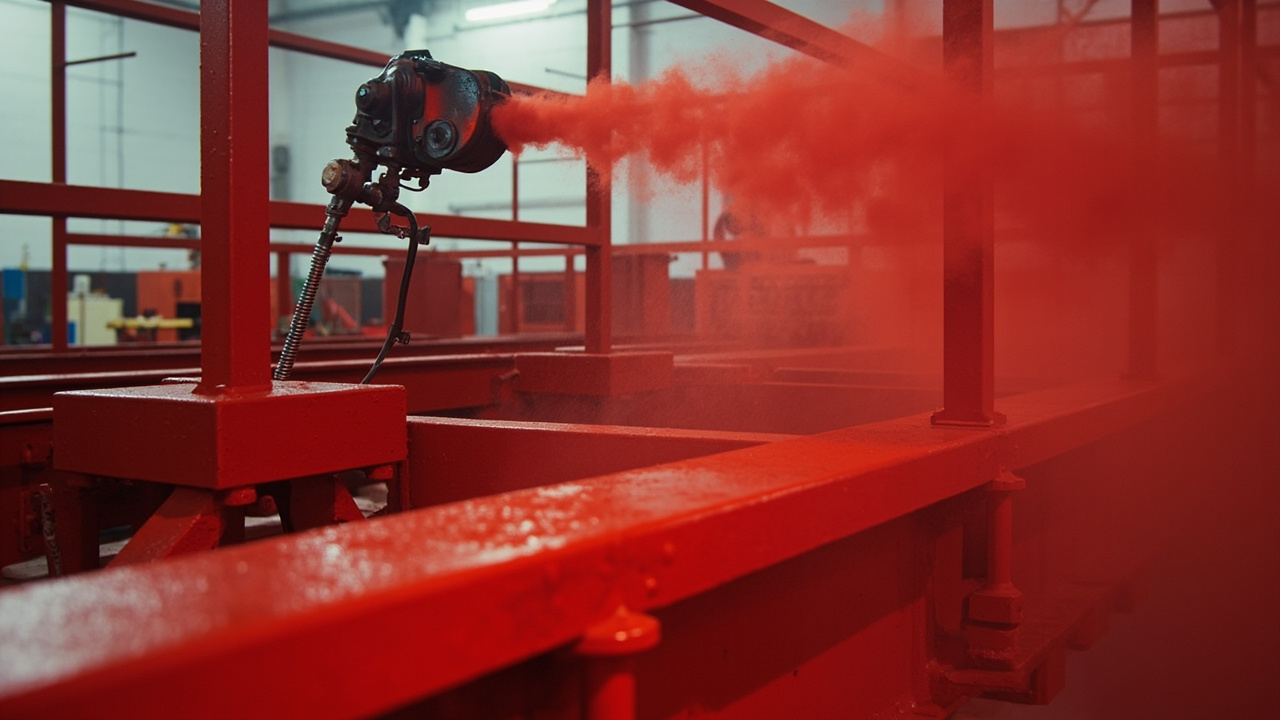
I. Definition and Standard Positioning of Alkyd Anti-rust Paint
"Alkyd anti-rust paint" in China is usually named under the C52/C53 series and is regulated by the relevant system of GB/T 25251-2010 "Alkyd Resin Coatings". According to research archives, its type is "single-component, alkyd resin + iron oxide red/gray anti-rust pigment + filler + 200# solvent gasoline". Single-component means no mixing with curing agent is required; it can be used after opening the can and stirring evenly. This is the fundamental reason for its convenient application and also the biggest structural difference from two-component epoxy/polyurethane systems.
From a mechanistic perspective, alkyd anti-rust paint mainly belongs to a combination of "physical barrier + slight passivation": after the alkyd resin forms a film, it creates a continuous paint film that blocks media; anti-rust pigments such as iron oxide red (Fe₂O₃) provide inert shielding and certain anodic inhibition; gray anti-rust pigments (such as combinations containing zinc phosphate or inert extender pigments) supplement passivation or shielding. It is not a cathodic protection type, so it cannot solely bear the main responsibility for corrosion protection in heavy-duty anti-corrosion.
II. Typical Formula Composition
2.1 Alkyd Resin
Alkyd resin is formed by polycondensation of polyols, polyacids, and fatty acids. The source of fatty acids (drying oil/semi-drying oil) determines its drying method—through air oxidation cross-linking of unsaturated fatty acids in the oil (self-drying type). This is also why alkyd paint has relatively slow surface and hard dry times but requires no external curing agent. The oil length of the resin affects flexibility, weather resistance, and solvent release.
2.2 Iron Oxide Red and Gray Anti-rust Pigments
Iron oxide red (ferric oxide red) is the most classic anti-rust pigment, chemically stable, low-priced, and with strong tinting strength, able to provide good shielding and substrate adhesion. Gray anti-rust paint adjusts extender pigments and inhibitive pigments on the basis of iron oxide red, making the paint film gray and facilitating observation of coverage when subsequently applying topcoat. Research archives list "alkyd resin + iron oxide red/gray anti-rust pigment" as the core composition of this type of paint, indicating that iron oxide red/gray is the signature pigment combination of this category.
2.3 Fillers, Solvents, and Safety Components
Fillers adjust rheology and film thickness; 200# solvent gasoline serves as the dilution and application medium, giving the paint liquid appropriate viscosity. It is precisely this organic solvent system that determines it belongs to flammable organic volatile matter (UN 1263), and application must be ventilated and fire-prohibited—this point is detailed in the safety section later.
III. Key Performance Parameter Table (According to GB/T 25251-2010 and Research Archives)
The table below summarizes the typical technical indicators of alkyd anti-rust paint, all of which are real parameters recorded in research archives and can be used as references for acceptance and selection.
| Item | Typical Indicator (According to GB/T 25251-2010 / Research Archives) | Description |
|---|---|---|
| Paint Base Type | Single-component alkyd resin + iron oxide red/gray anti-rust pigment | No curing agent required, ready to use after opening can |
| Fineness | ≤ 50–60 µm | Reflects pigment dispersion degree, affects appearance and shielding uniformity |
| Container Condition | No hard lumps, easy to stir evenly | Storage stability requirement |
| Salt Water Resistance (3% NaCl, 24h) | No cracking, blistering, peeling | Short-term protection verification by static salt water immersion |
| Surface Dry Time | ≤ 5 h (some products ≤ 2 h) | Time to touch without dust sticking |
| Hard Dry Time | ≤ 24 h | Basic strength for handling/overcoating reachable |
| Surface Treatment | Blasting Sa2.5, roughness 30–75 µm; or power tool St3 | Determines upper limit of adhesion and durability |
| Airless Spray Dilution | 0–5 % | Dilution window for high-pressure airless application |
| Air Spray Dilution | 10–15 % | Dilution window for conventional air spray |
| Roller Coat Dilution | 5–10 % | Dilution window for small-area roller coating |
| Hazard Class | UN 1263, organic volatile, flammable | Transportation and application fire protection requirements |
It should be pointed out that the "salt water resistance 3% NaCl 24h no abnormality" in the table above is a short-term static verification, not equivalent to durability under long-term immersion or marine atmosphere—the alkyd system has limited long-term performance in continuous humidity and salt spray, which is exactly its limitation.
IV. Drying and Overcoating Characteristics
4.1 Interpretation of Drying Time
According to research archives, alkyd anti-rust paint "drying: surface dry ≤ 5h (some products ≤ 2h), hard dry ≤ 24h". The drying here follows the GB/T 1728 method. Surface dry means the paint film surface is non-tacky to dust and can be lightly touched; hard dry means the paint film has basic mechanical strength and can be carefully handled or proceed to the next process. Compared with two-component epoxy (which can achieve hard dry in hours at room temperature) and polyurethane, alkyd hard dry is slower, but this brings greater tolerance to application environment temperature and humidity—it does not rely on the competitive reaction between isocyanate and water, so it is less prone to "blushing" in high-humidity environments.
4.2 Overcoating Interval
The overcoating interval for alkyd paint is usually wide; after the previous coat is reasonably dry, the subsequent alkyd or compatible topcoat can be applied. However, note: if planning to overcoat with a two-component strong-solvent topcoat (such as certain epoxy/polyurethane), there is a compatibility risk (see limitations section), and a compatibility test or intermediate transition layer should be done first.
V. Surface Treatment Requirements
Research archives clearly state: "Surface treatment: blasting Sa2.5, roughness 30–75µm; or power tool St3". Sa2.5 is the "near-white blast cleaning" of ISO 8501-1, requiring the surface to be free of visible oil, grease, dirt, scale, and most rust; roughness of 30–75 µm provides mechanical interlocking anchors, significantly improving adhesion. For sites where blasting is impossible, St3 (power tool thoroughly polished to metallic luster) is the lower limit. It needs to be reminded: the durability upper limit of alkyd anti-rust paint is largely determined by surface treatment—if rust layers and oil stains are not completely removed, even the best paint will fail early.
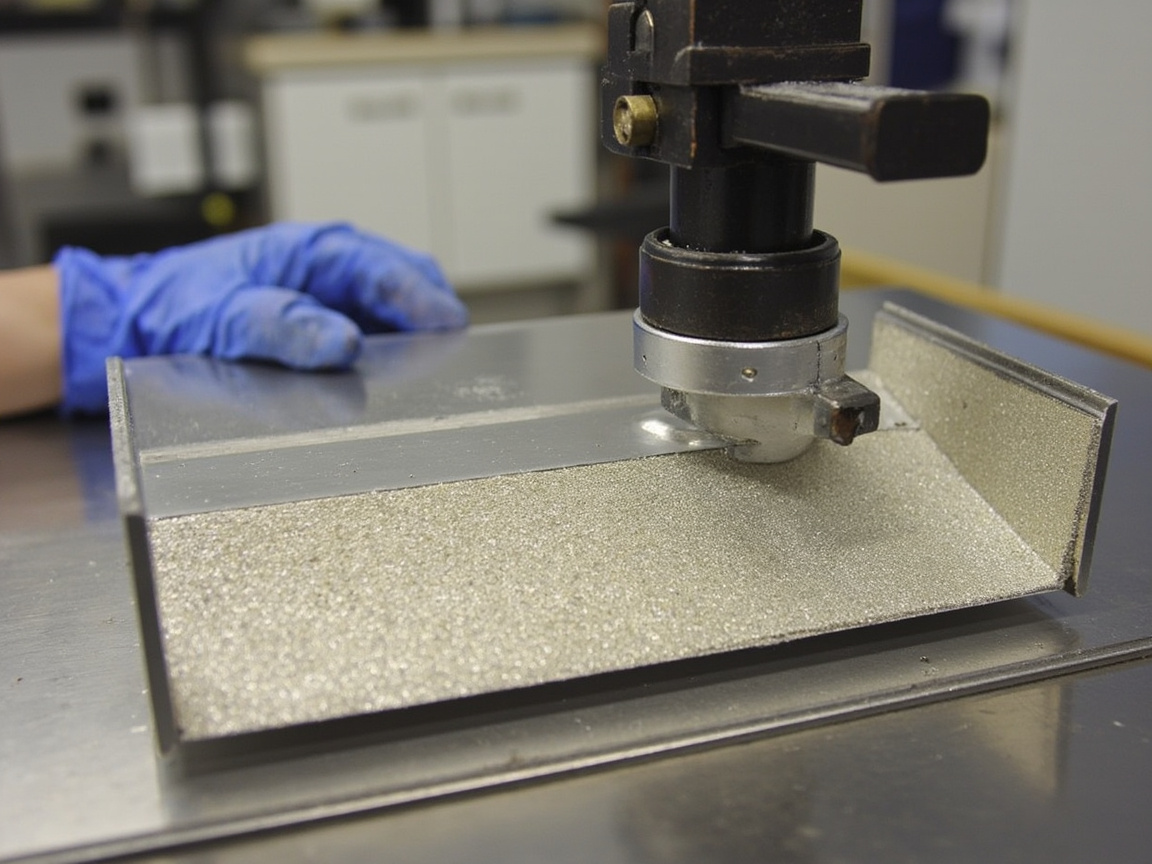
VI. Application Methods and Dilution Windows
Alkyd anti-rust paint is friendly to application equipment; brush coating, roller coating, air spray, and airless spray are all acceptable. Research archives give dilution ratios: airless spray dilution 0–5%, air spray 10–15%, roller coating 5–10%. The significance of this window is:
- Airless Spray has high solid content utilization and easy film thickness control; dilute as little as possible (0–5%) to preserve shielding thickness;
- Air Spray has good atomization but more solvent evaporation, requiring 10–15% dilution to reduce viscosity;
- Roller/Brush Coating is used for small-area repair, with 5–10% dilution to improve leveling.
In terms of application environment, alkyd is not as sensitive to relative humidity as polyurethane, but it is still recommended that the substrate temperature be at least 3℃ above the dew point to avoid condensation; too low temperature will significantly slow down hard dry.
VII. Scope of Application and Typical Scenarios
Based on its mechanism and parameters, alkyd anti-rust paint is suitable for:
- Steel structures, pipe racks, platforms in general atmospheric environments (C2–C3 grades);
- Bottom-layer anti-rust for mechanical equipment, tank exteriors, agricultural machinery, and general equipment;
- Indoor or sheltered environments, as "primer + alkyd topcoat" system;
- Large-area projects with sensitive budgets and non-extreme maintenance cycle requirements.
In light corrosion environments, its cost-performance is outstanding. But when the corrosion grade rises to C4 and above, or involves marine, chemical atmosphere, long-term immersion, it must be upgraded to a heavy-duty anti-corrosion system of epoxy zinc-rich + epoxy micaceous iron oxide + topcoat (see further reading).
VIII. Limitations and Compatibility Boundaries (Key)
Research archives frankly list the limitations of alkyd anti-rust paint: "poor solvent/acid-alkali resistance, slow drying, incompatible with two-component strong-solvent paint". To elaborate:
8.1 Poor Solvent and Acid-Alkali Resistance
The ester bonds of alkyd resin are prone to swelling or saponification degradation in strong solvents and strong acids/bases, so it is not suitable for working conditions contacting oil, solvent, acid-alkali media. If equipment needs chemical resistance, epoxy or polyurethane systems should be selected.
8.2 Slow Drying
In low-temperature and high-humidity environments, alkyd oxidative cross-linking slows down, and hard dry may far exceed 24h, affecting the schedule. This is a common problem of single-component oxidative drying types.
8.3 Incompatible with Two-component Strong-solvent Paint
This is the most easily overlooked pitfall: the alkyd paint film contains incompletely cross-linked oil components. If directly overcoated with a two-component epoxy/polyurethane topcoat containing strong solvents, the strong solvent may "bite the substrate", swell the lower alkyd layer, causing wrinkling and delamination. Kexin New Materials (kexinMaterials) repeatedly emphasizes in compatibility design: if the topcoat is a two-component strong-solvent system, confirm compatibility first or apply a transition sealer; do not stack based on experience.
8.4 Flammable and Fire Protection
Research archive: "Hazchem: UN 1263, organic volatiles, flammable, requires ventilation and no open flame." Alkyd anti-rust paint contains flammable organic solvents such as 200# solvent gasoline; its transportation falls under UN 1263 Class 3 flammable liquids, and construction sites must ensure ventilation, no open flame, and anti-static measures. Compared with water-based systems, this is its safety shortcoming and also the main driving force for water-based substitution.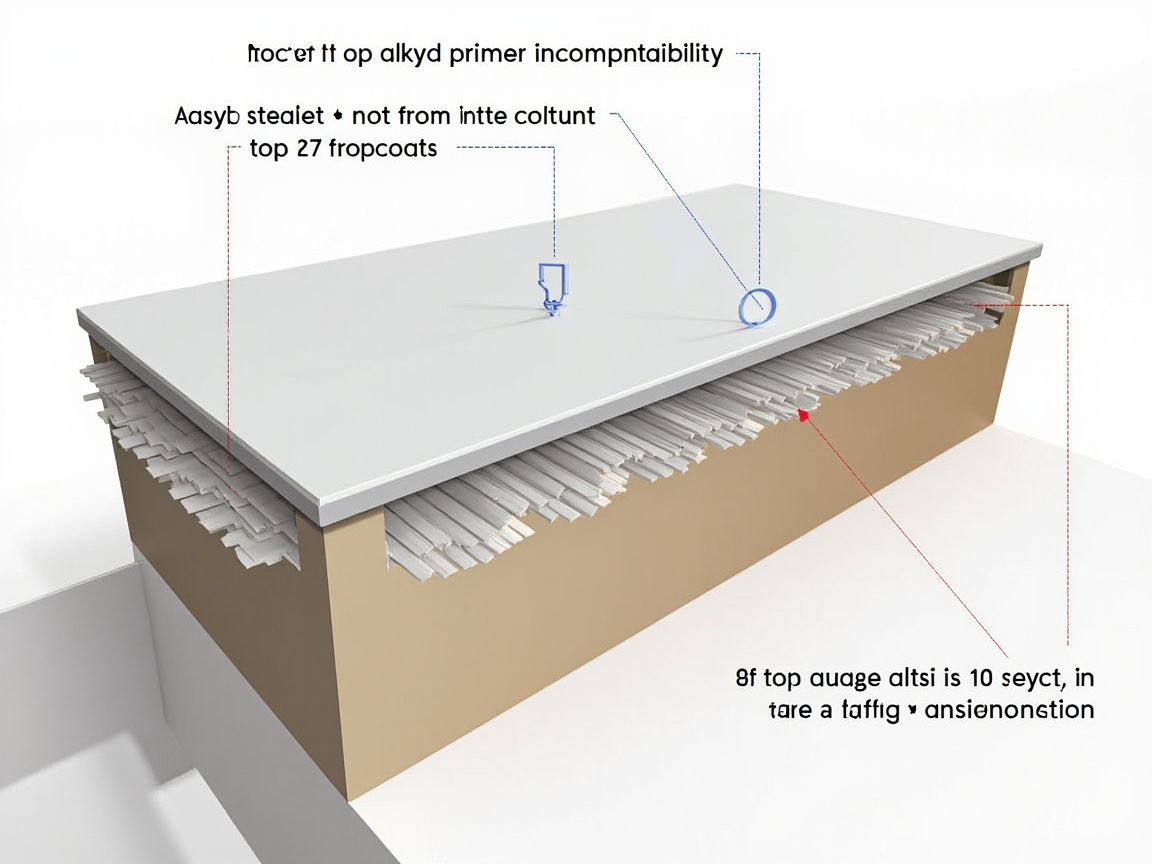
IX. Comparison with Similar Anti-rust Paints
To position alkyd anti-rust paint, one may refer to other alkyd-based products in the research archive: Würth Rust Stop Primer (Würth rust-stop primer, alkyd-based) has, according to its data, salt spray resistance of about 500 h (DIN EN ISO 9227), meets ISO 12944 corrosion grade C3 "high", drying time about 16 h, coverage about 8 m²/can (750 ml); ROSTIO anti-rust primer (synthetic resin/alkyd-based, German) coverage about 8 m²/kg, recoating about 2 h. These data indicate that high-quality alkyd anti-rust primers can also achieve about 500 h salt spray level under moderate corrosion (C3), but for higher levels, the zinc-rich cathodic protection route is still required.
For further reading on water-based vs. oil-based, and how to weigh alkyd against epoxy, see https://www.psste.com/water-based-vs-oil-paint-selection/ and https://www.psste.com/waterborne-industrial-coatings-selection/; for similarities and differences in construction safety, see https://www.psste.com/water-based-paint-safety-myth/.
IX. Relationship between Oil Length of Alkyd Resin and Performance
To understand the performance differences of alkyd anti-rust paint, the concept of "oil length" is indispensable. Oil length refers to the mass proportion of fatty acid (oil) in the alkyd resin: short oil (<40%) has high hardness, average weather resistance, and requires strong solvents; medium oil (40–60%) is balanced overall and most common in anti-rust paints; long oil (>60%) has good flexibility and excellent weather resistance but slow drying and low hardness. Alkyd anti-rust paints under the GB/T 25251-2010 framework mostly adopt medium-oil design to balance drying speed and adhesion. Oil length also determines the thinner: long oil is soluble in 200# solvent gasoline (i.e., the component described in the research archive), while short oil often requires stronger solvents such as xylene. By checking the resin oil length when selecting paint, one can predict its drying, flexibility, and compatibility performance.
X. Coverage Rate and Film Thickness Calculation Example
Taking a single coat of iron oxide red alkyd anti-rust paint as an example, assuming volume solids VS=45% and target dry film thickness DFT=50 µm, the relationship between wet film WFT and dry film is WFT = DFT ÷ (VS/100), i.e., 50 ÷ 0.45 ≈ 111 µm. Theoretical coverage rate (m²/L) is calculated by the general formula = VS(%) × 10 ÷ DFT(µm): 45 × 10 ÷ 50 = 9 m²/L (this is the theoretical value excluding loss). If a 15% loss is allowed, actual coverage per liter is about 9 ÷ 1.15 ≈ 7.8 m². Mastering these numbers allows on-site control of each coat thickness with a wet film gauge, avoiding "looks enough but actually thin".
XI. Common Construction Defects and Troubleshooting
| Defect | Possible Cause | Countermeasure |
|---|---|---|
| Sagging | Over-thinning, excessive wet film | Control thinning within window, apply in multiple passes |
| Slow drying/non-drying | Low temperature, high humidity, poor ventilation | Raise ambient temperature, enhance ventilation |
| Blistering | Substrate moisture, condensation | Substrate temperature above dew point by 3℃, remove moisture |
| Lifting | Overcoating with strong-solvent two-component topcoat | Verify compatibility first or add sealer layer |
| Early rust | Insufficient surface preparation | Blast cleaning Sa2.5, remove all oil and rust |
| Poor hiding | Insufficient film thickness, pigment settling | Stir well, achieve specified film thickness |
XII. Comparison with Water-based Alkyd and Epoxy Primer
Water-based alkyd anti-rust paint reduces VOC and flammability risks through water-based formulation, but its early water resistance is weaker than solvent-based, and it dries slower in cold and humid environments; epoxy zinc-rich primer provides cathodic protection and chemical resistance far superior to alkyd, but is two-component, costly, and demands strict surface preparation. The selection logic is: light corrosion, low cost, easy application → solvent-based alkyd; for low-VOC compliance → water-based alkyd/water-based industrial coating; heavy corrosion, chemical resistance → epoxy zinc-rich system. When upgrading for clients, Kexin New Materials (kexinMaterials) usually first locks down the mechanism using corrosion grade and medium list, then selects the specific system among alkyd/epoxy/water-based, avoiding mismatches of "water-based for the sake of water-based" or "alkyd for the sake of cheap".
XIII. Acceptance, Storage, and Shelf Life
Upon arrival, acceptance checks three things: container condition with no hard lumps and easy to stir (required by research archive), fineness ≤50–60 µm, and color and labeling consistent. After construction, check adhesion by cross-cut per GB/T 9286, verify drying per GB/T 1728, and measure DFT with film thickness gauge. For storage, alkyd paint should be kept at 5–35℃, away from light and heat, sealed to prevent solvent evaporation; the research archive gives no alkyd-specific shelf life, but similar alkyd-based products (e.g., ROSTIO) have a warranty of about 12 months (10–35℃ dark), which can be used as reference. If skinning, gelling, or coarsening occurs beyond shelf life, discontinue use.
XIV. Typical Industry Application Cases
- Plant and Warehouse Steel Structures: General atmosphere C2–C3, iron oxide red alkyd anti-rust paint + alkyd topcoat suffices, low cost and simple maintenance, the high-volume "standard answer".
- Agricultural and Construction Machinery: Outdoor but not long-term immersion, gray anti-rust primer + polyurethane/alkyd topcoat, balancing appearance and rust prevention.
- Tank Exteriors and Pipe Racks: Alkyd system is sufficient in dry atmosphere; if tank top has condensation or medium evaporation, upgrade to epoxy.
- General Equipment Maintenance: After on-site derusting to St3, brush-applied alkyd anti-rust paint is the most economical "emergency" solution, but with limited life and requires periodic repainting.
XV. Transition between Alkyd Primer and Zinc-rich/Epoxy Systems
A common on-site conflict is: wanting to upgrade heavy corrosion protection on old alkyd paint film. The principle is that "weak solvent over strong solvent" carries high risk—directly spraying strong-solvent epoxy/polyurethane over alkyd causes lifting. Two feasible paths: one is to completely blast away the alkyd layer, then apply zinc-rich primer; the other is to first do a compatibility test, confirm no lifting, then thinly apply a transition sealer and gradually upgrade. If the original system is already epoxy, applying zinc-rich or epoxy intermediate coat is usually unobstructed. In short: alkyd and two-component strong-solvent systems should not be directly stacked.
XVI. UN 1263 Transportation and Storage Key Points
The research archive clearly states alkyd anti-rust paint belongs to UN 1263 Class 3 flammable liquid. Transportation requires flammable label, away from heat and oxidizers, vehicle anti-static grounding; storage should be isolated, cool, ventilated, no open flame, equipped with fire extinguishers, separated from food and oxidizers. Construction personnel must wear anti-static clothing and shoes, use explosion-proof electrical appliances, and respiratory protection with organic vapor filter cartridge is preferable (though less stringent than isocyanate systems, solvent inhalation is still harmful). These requirements contrast sharply with water-based systems and are also a practical driver for water-based transition.
XVII. Water-based Trend and Selection Advice
With tightening standards such as GB 30981-2020, water-based alkyd and water-based epoxy anti-rust paints are gradually replacing solvent-based. Water-based alkyd has low VOC and greatly reduced flammability, but early water resistance and low-temperature drying are inferior to solvent-based; water-based epoxy has better chemical resistance but is two-component. Selection still returns to corrosion grade and medium: light corrosion with emphasis on safety compliance, water-based alkyd is viable; heavy corrosion still goes with water-based/solvent epoxy zinc-rich. When upgrading systems for clients, Kexin New Materials (kexinMaterials) first verifies corrosion grade, medium list, and construction conditions, then gives the specific "alkyd/epoxy/water-based" path, avoiding blind substitution leading to early failure.
XVIII. Driers and Oxidative Drying Mechanism
Alkyd anti-rust paint can "self-dry after opening" relying on air oxidative crosslinking of unsaturated fatty acids in the oil, and what accelerates this process is the drier. The research archive lists in the MSDS of ROSTIO anti-rust primer "contains cobalt bis(2-ethylhexanoate) (drier), may cause allergy", which is typical cobalt soap drier of alkyd systems (auxiliary manganese, lead soaps, etc.). Cobalt salt promotes oxidation chain initiation, manganese salt aids inner-film drying, bringing surface dry and hard dry to ≤5h/≤24h. But cobalt compounds have allergenic risk; formulation and construction need skin contact protection; meanwhile excess drier causes wrinkling and reduced weather resistance, strict ratio required.
XIX. Compatibility Matrix with Various Topcoats
Whether "lifting" occurs depends on topcoat solvent strength, judged as follows:
| Topcoat Type | Solvent Strength | Direct Overcoat on Alkyd Primer | Suggestion |
|---|---|---|---|
| Alkyd topcoat | Weak | Feasible | Conventional pairing |
| Acrylic topcoat (weak solvent) | Medium-weak | Mostly feasible | Do small test |
| Chlorinated rubber/vinyl type | Medium | Caution | Test first |
| Two-component epoxy/polyurethane | Strong | Prone to lifting | Add sealer or change primer |
This matrix concretizes the limitation of "incompatible two-component strong-solvent paint": weak-solvent topcoats are naturally compatible with alkyd, while strong-solvent topcoats need transition.
XX. Construction Quality Acceptance Checklist and Cost
On-site acceptance recommendations should be executed according to the checklist: ① Surface treatment reaches Sa2.5/St3 and roughness measured at 30–75µm; ② No hard lumps upon opening the can, easy to stir evenly; ③ Fineness ≤50–60µm; ④ Control wet film thickness with a wet film gauge, measure DFT with a dry film gauge to meet standard; ⑤ Record surface dry ≤5h, hard dry ≤24h; ⑥ 3% NaCl 24h small sample shows no abnormality (optional); ⑦ Confirm compatibility of the system before applying topcoat. In terms of cost, alkyd anti-rust paint has low material unit price, simple construction equipment, and saves labor; the comprehensive initial cost is about 1/2–1/3 of the epoxy system; the trade-off is a short maintenance cycle. When making decisions, calculate the amortized cost per "square meter per year" clearly, which is often closer to the truth than simply comparing unit prices.
21. Painting Tools and Winter Construction
Alkyd anti-rust paint is tolerant of tools: use synthetic bristle brush for brushing, medium-nap roller for rolling, and conventional air spray gun or airless sprayer for spraying. In winter low temperature (85% or there is risk of condensation. Clean tools with 200# solvent gasoline or dedicated thinner, and collect waste liquid as flammable hazardous waste, in line with its UN 1263 property.
22. Product Codes C52/C53 and Color System
Domestic alkyd anti-rust paints are often classified by codes such as C52 (various color alkyd anti-rust paint), C53 (iron oxide red alkyd anti-rust paint), where iron red, gray, red lead (phased out) etc. correspond to different pigment systems. Iron red/gray are the two most commonly used; gray anti-rust is convenient for covering light-colored topcoat, iron red is suitable for dark colors or used alone as primer. When selecting, besides looking at the code, also check compliance with GB/T 25251-2010 and the parameters in this article; different manufacturers of the same code vary greatly in oil length and zinc/zinc phosphate content, so they cannot be equivalently substituted by code alone.
23. Cost Comparison Example with Zinc-rich System
Take 1000 m² steel structure as an example for rough calculation: alkyd anti-rust paint + alkyd topcoat, material about 3–4 yuan/m²·coat, low labor and equipment, initial comprehensive about 15–25 yuan/m², maintenance cycle 3–5 years; zinc-rich primer + epoxy micaceous iron oxide + polyurethane topcoat, material about 8–12 yuan/m²·coat, high requirements for two-component construction, initial comprehensive about 45–70 yuan/m², maintenance cycle 10–15 years. Amortizing the cost to each year, alkyd about 4–8 yuan/m²·year, heavy anti-corrosion about 3–7 yuan/m²·year, long-term may actually be more economical and safer. Therefore, "choose alkyd or zinc-rich" is not a unit price question, but a service life and risk question. When doing techno-economic comparison for clients, Kexin New Materials (kexinMaterials) always insists on first determining the corrosion grade and service life, then deducing the mechanism and system.
24. Storage Stability and Skinning Prevention
Alkyd anti-rust paint contains easily oxidizable oils and organic solvents, and long-term storage tends to cause skinning, settling, and gelling. Key prevention points: seal the can mouth, a thin layer of thinner on the liquid surface can isolate air to prevent skinning; store in a cool place at 5–35℃, away from light and heat, away from fire (UN 1263); turn over regularly to prevent hard pigment settling. If only slight skinning after opening, remove the skin film, stir evenly and filter before use; if overall gelling or coarsening and granulation occurs, discard. The research archive does not separately list the shelf life of alkyd, but similar alkyd-based products have a warranty of about 12 months (10–35℃ away from light), which can be used as a management reference.
25. Construction Differences from Water-based Alkyd
When switching to water-based alkyd anti-rust paint, the construction logic changes significantly: the dilution medium changes from 200# solvent gasoline to water, tools can be washed with water, and fire pressure drops sharply; but drying depends more on temperature and humidity, low temperature and high humidity easily cause flash rust, often requiring flash rust inhibitor; the substrate surface may have a slight water film but no free water. Solvent-based alkyd is insensitive to humidity, dries by oxidation, and equipment requires solvent cleaning and explosion-proof. Both share the same mechanism of barrier + passivation, differing in "carrier and construction boundary"; when selecting, judge the carrier and mechanism separately.
FAQ
Q: What is the difference between iron red and gray anti-rust in alkyd anti-rust paint?
A: Iron red is mainly iron oxide red, with good barrier and adhesion, low cost, and the film is reddish-brown; gray anti-rust adjusts gray extender/corrosion inhibitor pigment on the basis of iron red, convenient for observing coverage during recoating. Both belong to the alkyd anti-rust system, with the same anti-corrosion mechanism of barrier + slight passivation.
Q: According to what standard are surface dry ≤5h and hard dry ≤24h measured?
A: Drying time is determined according to GB/T 1728 method; surface dry means the surface is non-tacky to dust, hard dry means basic mechanical strength to allow handling/recoating. Some fast-dry products can have surface dry ≤2h.
Q: Why can't alkyd anti-rust paint be directly coated with two-component strong solvent topcoat?
A: The alkyd film contains incompletely cross-linked oils; strong solvent epoxy/polyurethane topcoat will swell and "bite the substrate", causing wrinkling and delamination. Compatibility should be verified first or a transition sealer layer added.
Q: Must surface treatment Sa2.5 and roughness 30–75µm be achieved?
A: Blasting Sa2.5 and 30–75µm roughness are recommended grades, determining the upper limit of adhesion and durability; when blasting is impossible, minimum use power tool St3, but durability will decrease.
Q: Can alkyd anti-rust paint be used by the seaside or in chemical plants?
A: Not recommended. Its salt spray and acid-alkali resistance are limited; seaside (C4–C5) and chemical atmosphere should upgrade to zinc-rich primer + epoxy micaceous iron oxide + topcoat heavy anti-corrosion system.
Q: What does fineness ≤50–60µm represent?
A: Fineness reflects the uniformity of pigment dispersion; the finer, the smoother the film and more uniform the barrier; but too fine also increases cost, alkyd anti-rust paint is usually controlled at 50–60µm.
Q: Can 3% NaCl 24h no abnormality indicate good salt spray resistance?
A: This is only short-term static salt water immersion verification, not equal to long-term salt spray. Proper salt spray should be evaluated at 500h level per GB/T 1771-2007; alkyd system has limited long-term salt spray performance.
Q: Is alkyd anti-rust paint a hazardous chemical?
A: Yes. It contains flammable organic solvents, belongs to UN 1263 Class 3 flammable liquid, transportation and construction must be ventilated, fire-prohibited, and anti-static.
Q: Is less dilution better for airless spraying at 0–5%?
A: Airless spraying should use minimal dilution to ensure film thickness and barrier; 0–5% is the window; excessive dilution will thin, bubble, and reduce anti-rust ability.
Q: How to choose between alkyd anti-rust paint and epoxy zinc-rich primer?
A: For general atmosphere and budget priority, choose alkyd; for heavy anti-corrosion, marine, energy facilities, must choose zinc-rich primer to provide cathodic protection, and design according to primer-intermediate-topcoat system.