Solvent vapors, paint mist, and dust in paints can harm the body if inhaled over a long period. Spray painting is both a "skilled job" and a "hazardous job".
In one sentence: Protection = ventilation + respiratory protection (supplied-air mask) + full-body PPE; don't trade your health for a paint finish.
I. Sources of Hazard
Solvent vapor: Irritates the respiratory tract and causes long-term neurological damage.
Paint mist/dust: Inhalation damages lungs, contact with skin causes allergies.
Chemicals: Curing agents, degreasers, etc. are corrosive/sensitizing.
II. Respiratory Protection
During spraying, you must use a supplied-air respirator (air-supplied hose) or a gas mask with organic vapor cartridges; ordinary cotton gauze masks cannot block solvent vapors. Activated carbon cartridges must be replaced regularly.
Figure: The supplied-air mask is the core of respiratory protection for spraying.
III. Ventilation and PPE
Category
Requirement
Ventilation
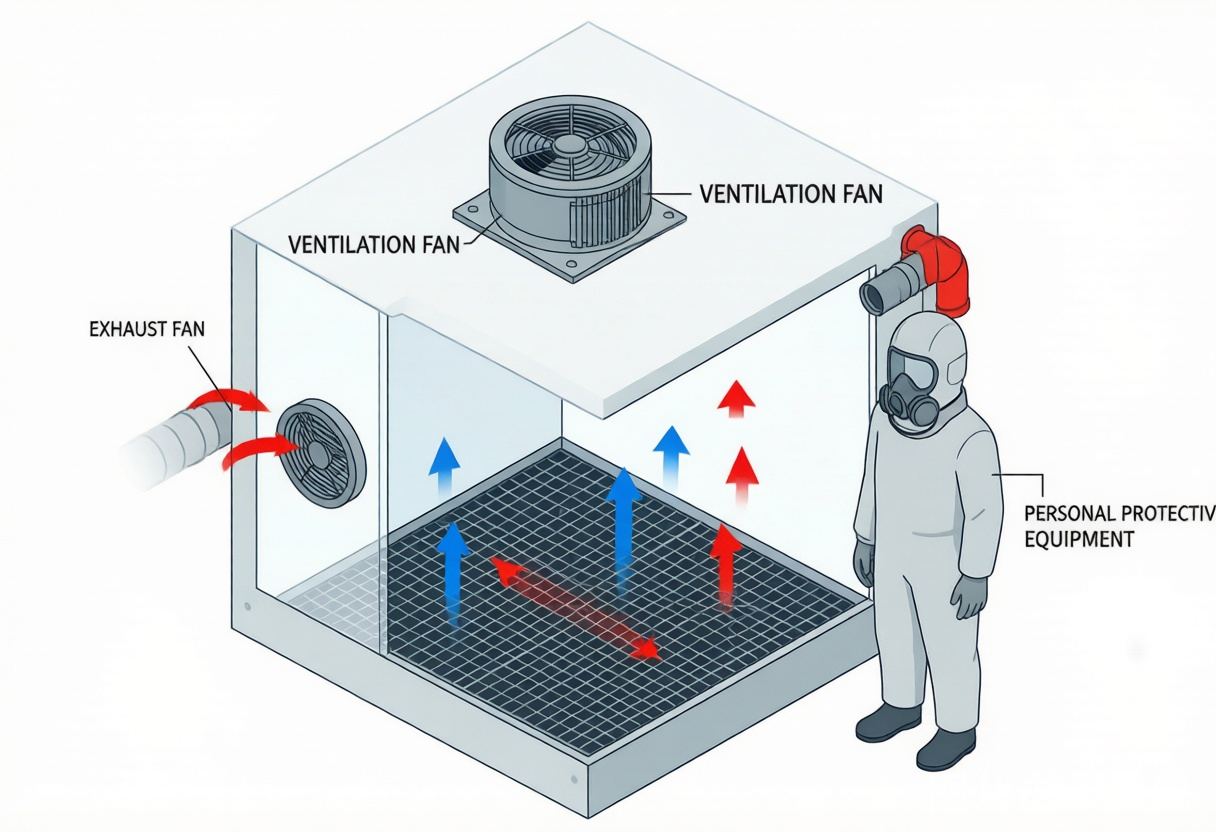
Negative pressure exhaust in spray booth, exhaust gas collection
Respiration
Supplied-air respirator / gas mask
Skin
Chemical-resistant gloves, coverall, goggles
Management
No smoking, no open flame, emergency plan
Figure: Ventilation + full-body PPE form complete protection.
Red line: Smoking and open flames are strictly prohibited in the painting area (solvents are flammable and explosive); if dizziness or nausea occurs, evacuate to ventilated area immediately, do not push through.
Summary
Spray painting hazards arise from solvent vapors, paint mist dust, and chemicals. Protection relies on booth ventilation, supplied-air respirators/chemical cartridges, and PPE such as chemical-resistant gloves and coveralls, while strictly observing no-smoking and no-open-flame red lines. Health takes priority over efficiency.
Frequently Asked Questions (FAQ)
Why is respiratory protection needed when spray painting?
Coating solvent vapors irritate the respiratory tract and may damage the nerves; paint mist and dust harm the lungs. Ordinary masks cannot block them, so an air-supplied mask or a respirator with an organic vapor cartridge must be used.
What is the difference between an air-supplied mask and a respirator?
An air-supplied mask delivers continuous clean air from an external source and offers the most reliable protection; a respirator relies on cartridges for adsorption and requires periodic cartridge replacement, suitable for scenarios where the cartridge has not failed.
Why is open flame strictly prohibited in spray painting areas?
Solvent vapors are flammable and explosive, and can easily ignite or explode upon contact with open flames or static sparks. Therefore, smoking and fire must be banned in spray painting areas and anti-static treatment must be applied.
What to do if skin contacts paint?
Immediately clean with a suitable solvent or hand wash, and wear chemical-resistant gloves when working; if allergic or it gets into the eyes, follow MSDS emergency procedures and seek medical attention.
What does dizziness and nausea indicate?
It may be due to excessive solvent inhalation. Immediately evacuate to a ventilated area and breathe fresh air. Seek medical attention if severe, and do not continue working.
Kexin New Materials · Automotive Coating Technology Library | This article is technical Q&A content, for reference in selection and application
{
"@context": "https://schema.org",
"@type": "FAQPage",
"mainEntity": [
{"@type":"Question","name":"Why is respiratory protection needed when spray painting?","acceptedAnswer":{"@type":"Answer","text":"Coating solvent vapors irritate the respiratory tract and may damage the nerves; paint mist and dust harm the lungs. Ordinary masks cannot block them, so air-supplied masks or respirators with organic vapor cartridges must be used."}},
{"@type":"Question","name":"What is the difference between air-supplied masks and respirators?","acceptedAnswer":{"@type":"Answer","text":"Air-supplied masks deliver continuous clean air from an external source and offer the most reliable protection; respirators rely on cartridges for adsorption and require periodic cartridge replacement, suitable for scenarios where the cartridge has not expired."}},
{"@type":"Question","name":"Why is open flame strictly prohibited in spray painting areas?","acceptedAnswer":{"@type":"Answer","text":"Solvent vapors are flammable and explosive, and can easily ignite or explode upon contact with open flames or static sparks. Therefore, smoking and open flames are strictly prohibited in spray painting areas, and anti-static treatment must be applied."}},
{"@type":"Question","name":"What to do if skin contacts paint?","acceptedAnswer":{"@type":"Answer","text":"Immediately clean with appropriate solvent or hand cleaner, and wear chemical-resistant gloves during work; if allergic reaction occurs or it gets into the eyes, follow MSDS emergency procedures and seek medical attention."}},
{"@type":"Question","name":"What does dizziness and nausea indicate?","acceptedAnswer":{"@type":"Answer","text":"It may indicate excessive solvent inhalation. Immediately evacuate to a ventilated area and breathe fresh air. Seek medical attention if severe, and do not continue working."}}
]
}