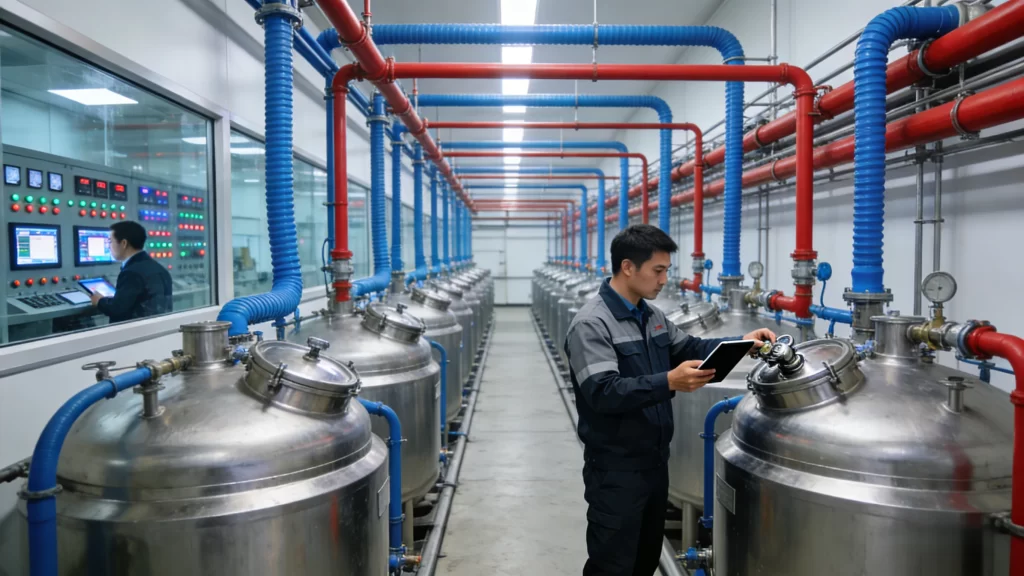
In a modern paint factory, within the tall and bright production workshops, stand rows of silver giant equipment resembling "space capsules". They are not only the most eye-catching sight in the factory, but also the "heart" of the entire production process—these are reaction kettles (sometimes also called reaction tanks or reactors).
What is a reactor?
A reactor is a vessel that provides a controlled environment for physical or chemical reactions, and can be designed as closed or open. In the coatings industry, it serves as the core platform for key processes such as resin synthesis, emulsion polymerization, and pigment pre-mixing.
Structural Overview: A Precision Industrial Device
A general-purpose coating chemical reaction kettle is an exquisite embodiment of engineering.
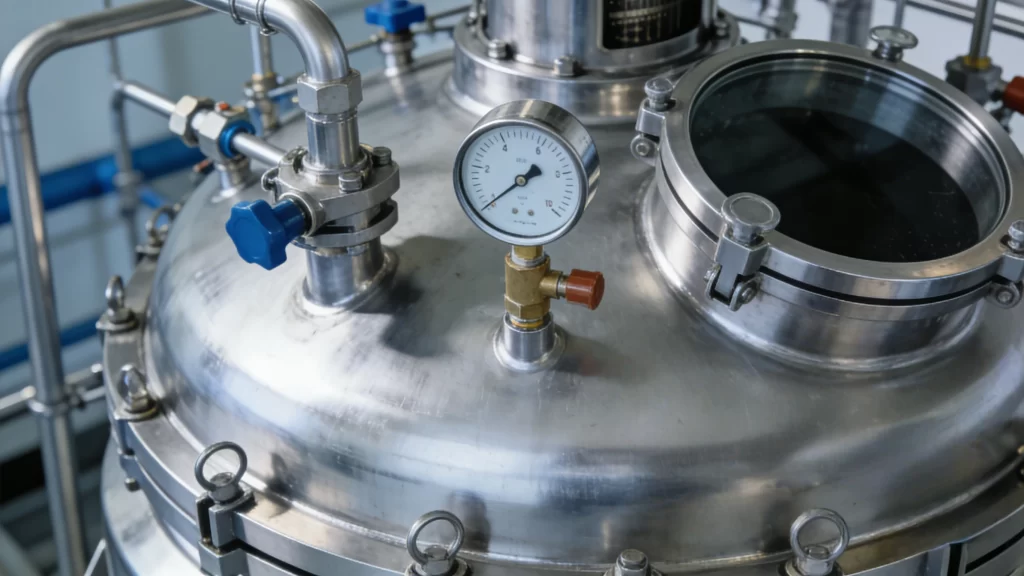
- Reactor Vessel: Usually made of corrosion-resistant stainless steel (e.g., 304/316L), providing a sturdy and pure reaction space.
- Agitation system: Comprising the motor, reducer, agitation shaft, and various types of impellers, it is the "arm" that drives uniform mixing and mass/heat transfer of materials.
- Temperature control system: By circulating steam, heat transfer oil, or cooling water through the jacket or coil surrounding the reactor body, precise control of the reaction temperature is achieved.
- Transmission and Sealing: Ensure stable transmission of mixing power, while preventing leakage through devices such as mechanical seals to guarantee safety and purity.
- Instrumentation and Control: Temperature, pressure, and level sensors are connected to the automated control system, forming the "nerve center" of the equipment and enabling intelligent production.
Core function: The qualitative transformation from raw materials to coating
A reaction kettle is far more than just a mixing vessel; it is a controlled chemical world that directly determines the performance of the final coating:
- Resin Synthesis: Basic oils and monomers undergo polymerization here, and under precise temperature control, "grow" into the resin that determines the skeletal performance of the coating—this is the "soul" of the coating.
- Emulsion polymerization: Water, monomers, and emulsifiers dance together here, and through a complex reaction process, fine and stable acrylic emulsion and others are generated, becoming the base material for environmentally friendly latex paint.
- Pre-mixing and dispersion: It performs an initial yet efficient mixing of pigments, fillers, part of the resin, and additives to form a uniform slurry, laying the foundation for subsequent ultra-fine grinding.
- Tinting and maturation: All components are finally blended here to achieve precise color and viscosity, and undergo a period of "maturation" to make the product performance stable and uniform.



Conclusion: The Birthplace of Excellence Coatings
In summary, the reactor is the core of creation and transformation in paint manufacturing. Every operation of it profoundly affects the paint's adhesion, color, durability, and environmental characteristics. From ordinary liquids and powders to excellent coatings that adhere to walls, furniture, or industrial equipment to provide long-lasting protection, this core transformation journey is accomplished within the reactor. It is the ultimate embodiment of technology, precision, and reliability in the modern paint industry.