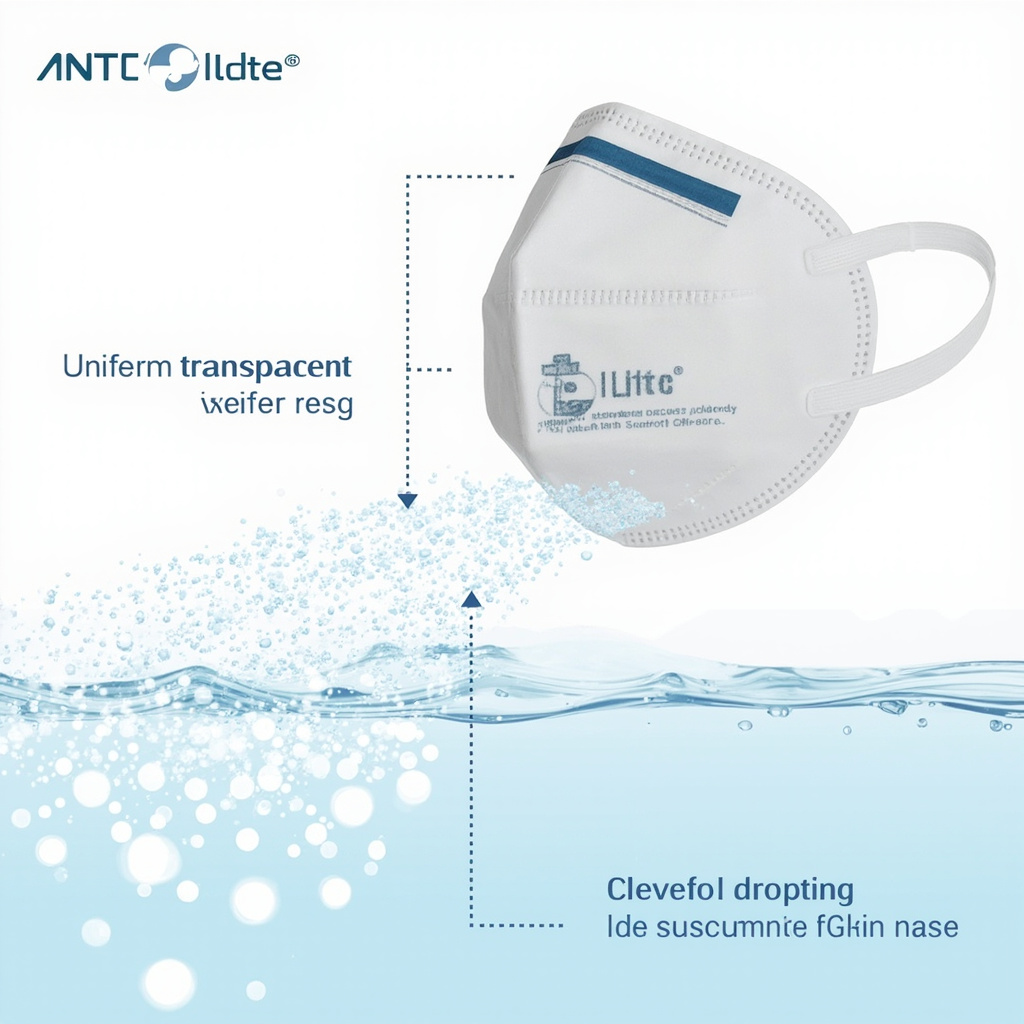
The anti-fog nano-coating for ventilator masks constructs an anti-fog layer on the surface of transparent PC/PMMA mask substrates using nano-TiO2 (anatase, 5–15 nm, photocatalytically induced superhydrophilicity, contact angle 95% RH) condenses into tiny water droplets (<50 μm) on the cold mask surface (15–25°C) — interfering with vision via Mie scattering. The nano-hydrophilic coating reduces the contact angle to <5° — condensed moisture spreads into a uniform water film 90% (GB/T 2410-2008). Anti-fog durability: >500 wipes (wet cloth simulating daily nursing cleaning and disinfection), anti-fog function retained after EO (ethylene oxide) / hydrogen peroxide plasma sterilization. Meets ISO 10993-5 (cytotoxicity) / ISO 10993-10 (skin irritation — mask contacts face >30 min per use — classified as limited contact per ISO 10993-1 — biocompatibility endpoints: cytotoxicity + irritation + sensitization) and ISO 80601-2-12:2020 (ventilator safety standard). AI-assisted respiratory monitoring (accelerated by COVID-19 — camera analyzes mask fogging degree and patient facial expressions to assess respiratory status) further raises the requirement for zero-fog HD vision. The global medical ventilator mask and consumables market will be about USD 2.8 billion in 2025 (CAGR 7.2%).