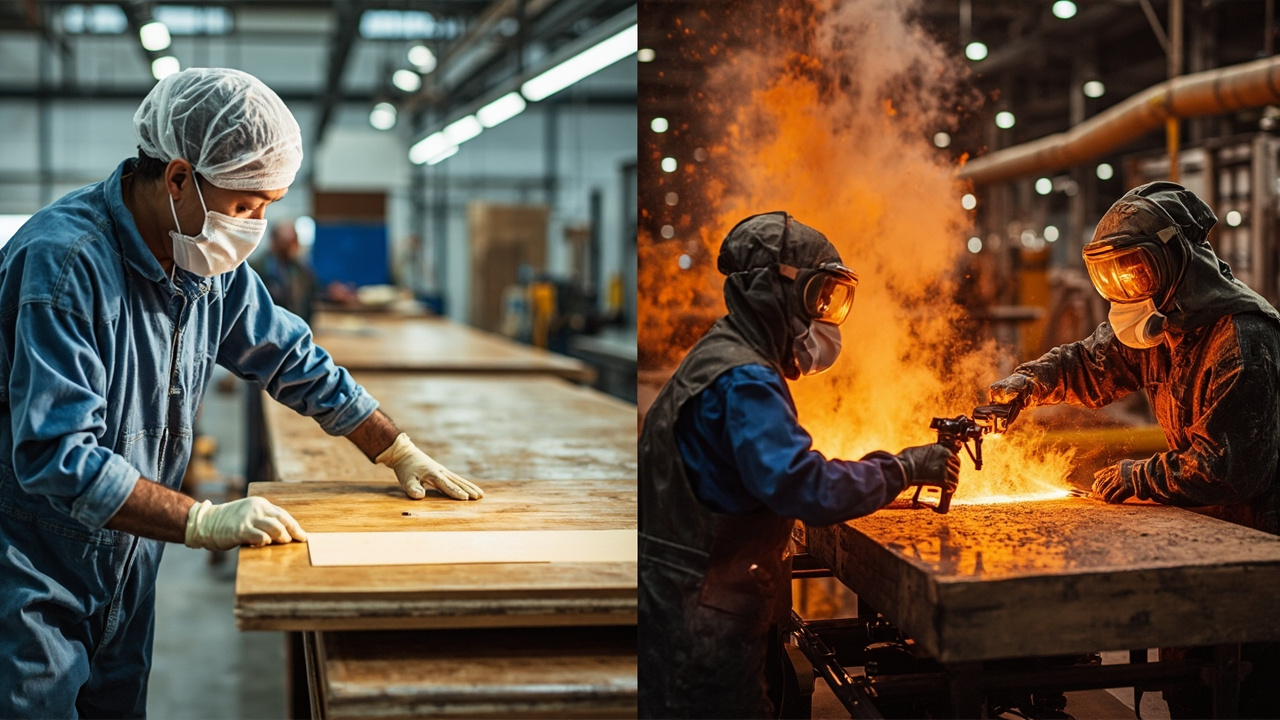
"Differences in application between water-based paint and oil-based paint" is the most frequently asked question when implementing the switch from oil-based to water-based. Many teams assume "change the medium, keep the same application", only to end up with water-based paint blistering, whitening, and poor adhesion, while oil-based paint suffers from slow drying, lifting, and odor complaints. In fact, water-based coatings form a film through water evaporation, while oil-based coatings form a film through solvent evaporation (often accompanied by oxidation or cross-linking reactions). These two completely different drying logics propagate down the entire process chain of "mixing — application — drying — intercoat — environment", and the key operation points of almost every step are different. This article breaks down the full application process of both systems item by item and provides a process card that can be directly used for comparison and execution.
As a supplier offering both water-based wood coatings, water-based industrial coatings, and solvent-based protective systems, Kexin New Materials (kexinMaterials) has mature process support on both application lines. While explaining the general points below, we will also reference our wood coating product system and UV-curable wood coating to illustrate different process boundaries, helping applicators avoid detours.
I. Conclusion First: Two Film-Forming Logics Determine Two Processes
- Water-based paint: water evaporation → particle fusion into film. The resin exists as water-dispersed particles; during application, water or a dedicated water-based diluent is added to adjust viscosity. After application, water gradually evaporates, and the particles soften, deform, and fuse under capillary force and the action of coalescing agents, eventually forming a continuous paint film. It is extremely sensitive to "water" — ambient humidity, substrate moisture content, and water on tools all directly affect film formation.
- Oil-based paint: solvent evaporation → resin film formation (often with reaction). The resin is dissolved in organic solvent; during application, the corresponding diluent is used to adjust viscosity. After application, the solvent evaporates rapidly and the resin comes together to form a film; two-component systems (PU, epoxy) also undergo chemical cross-linking while the solvent evaporates, so solvent evaporation is only the first half of film formation.
In one sentence: The "enemy" of water-based application is water (too much or too slow), and the "enemy" of oil-based application is solvent (too fast flash-off, too slow sagging, and toxic and flammable). All subsequent differences stem from this.
II. Substrate Preparation Comparison: Success or Failure Lies 70% Here
Regardless of water-based or oil-based, substrate preparation determines 70% of the final result, but the focus differs.
| Step | Water-based Paint Application | Oil-based Paint Application |
|---|---|---|
| Degreasing and defatting | Extremely critical; oil directly hinders water-based film formation | Critical, but the solvent itself has degreasing power |
| Moisture content control | Rigid requirement (wood 8%–12%, wall up to standard) | Lower requirement, but too high also affects |
| Sanding roughness | Moderate roughness needed for adhesion | Moderate roughness needed for adhesion |
| Old paint compatibility | Must sand + compatibility test | Must sand + compatibility test |
| Sealing primer | Almost always required (control grain raising, prevent uneven water absorption) | Depends on system; mandatory for heavy anti-corrosion |
| Dedusting | Mainly dry dedusting, avoid bringing water | Both dry dedusting + solvent wipe acceptable |
The special feature of water-based is "afraid of water yet hydrophilic": if the substrate moisture content is too high, water is sealed under the paint film and will inevitably blister and peel later; if the substrate has oil, water-based particles cannot wet and spread, causing craters and loss of adhesion. Therefore, before water-based application, the substrate must be clean, dry, and oil-free — a more rigid threshold than for oil-based.
III. Mixing Step: Adding Water vs Adding Solvent
Water-based paint mixing:
- Use clean water or manufacturer-specified water-based diluent to thin; strictly prohibit mixing with oil-based solvent (will "precipitate" the resin and break the emulsion);
- Water addition is usually 5%–15% (depending on product and spraying method); excess causes "floating color, gloss loss, sagging";
- Stir with a clean stick or low-speed mixer to avoid high-speed incorporation of large air bubbles;
- After mixing, allow to mature for a few minutes, filter, then use; single-component water-based has no strict pot life, but re-stir after standing long to prevent layering.
Oil-based paint mixing:
- Use corresponding diluent (xylene, butyl acetate, 200# solvent naphtha, etc.) to thin; different resins require matching solvents, mismatch causes lifting or insoluble precipitation;
- Two-component oil-based must strictly weigh main agent and curing agent by ratio, mix fresh and use immediately; exceeding pot life causes gelling and scrap;
- Mixing environment must be ventilated, fire-prohibited, anti-static; solvent is flammable and odorous;
- After mixing, stir thoroughly and mature (some systems need "induction period"), then filter and spray.
The core discipline differs: water-based is "control water addition + prevent contamination", oil-based is "control ratio + control solvent + fire and poison prevention".
IV. Application Method Comparison: Adaptability of Brush, Roller, Spray
| Application Method | Water-based Paint Adaptability | Oil-based Paint Adaptability |
|---|---|---|
| Brush | Adaptable, wash with water | Adaptable, but tools need solvent wash |
| Roll | Adaptable, watch for bubbles | Adaptable |
| Air spray | Adaptable, adjust viscosity to prevent sagging | Adaptable, fast flash-off needs gun distance control |
| Airless spray | Adaptable, high efficiency | Adaptable, high efficiency |
| Two-component spray (2K mixed air) | Water-based 2K usable with dedicated equipment | Oil-based 2K mature, needs dynamic mixing |
Water-based paint spraying must pay special attention to sagging caused by "slow flash-off": because water evaporates slowly, spraying too thick at once easily sags; should "spray thin in multiple passes". Oil-based paint spraying must prevent "too fast flash-off" causing orange peel and dry spray — solvent evaporates fast, when gun distance is too far or ambient temperature high, the paint mist half-dries before reaching the workpiece, forming rough orange peel.
Tool cleaning is also completely different: after water-based application, water rinse is enough, no waste solvent on site; after oil-based application, must wash gun and tools with solvent, generating hazardous waste requiring hazardous waste management.
V. Drying Mechanism: Water Evaporation vs Solvent Evaporation + Reaction
This is the root of process differences between the two systems.
Four stages of water-based film formation:
- Initial water evaporation: after application, surface water evaporates first, viscosity rises;
- Particle approach: as water decreases, dispersed particles approach each other;
- Particle fusion: coalescing agent softens particle surface, deforms and fuses under capillary force;
- Complete film formation: continuous paint film forms, then continues to mature and harden.
The whole process highly depends on "water can evaporate smoothly". If ambient humidity is too high (>85%), water vapor in air suppresses surface water evaporation, film stays wet long and easily whitens; if temperature too low (<5℃), water evaporation extremely slow, even ice destroys film formation.
Two paths of oil-based film formation:
- Physical drying type (NC, volatile acrylic): solvent evaporation sets it, fast but low solid content;
- Oxidation/reaction type (alkyd, PU, epoxy): after solvent evaporation, resin cross-links with oxygen or curing agent, forming dense and strong film, but needs time gradient of "surface dry — hard dry — fully cured", two-component also has pot life countdown.
Key difference: Water-based drying is "passively waiting for water to leave", extremely sensitive to ambient humidity; oil-based drying is "solvent leaves + reaction occurs", relatively insensitive to temperature and humidity, but extremely sensitive to ventilation, fire prevention, and ratio.
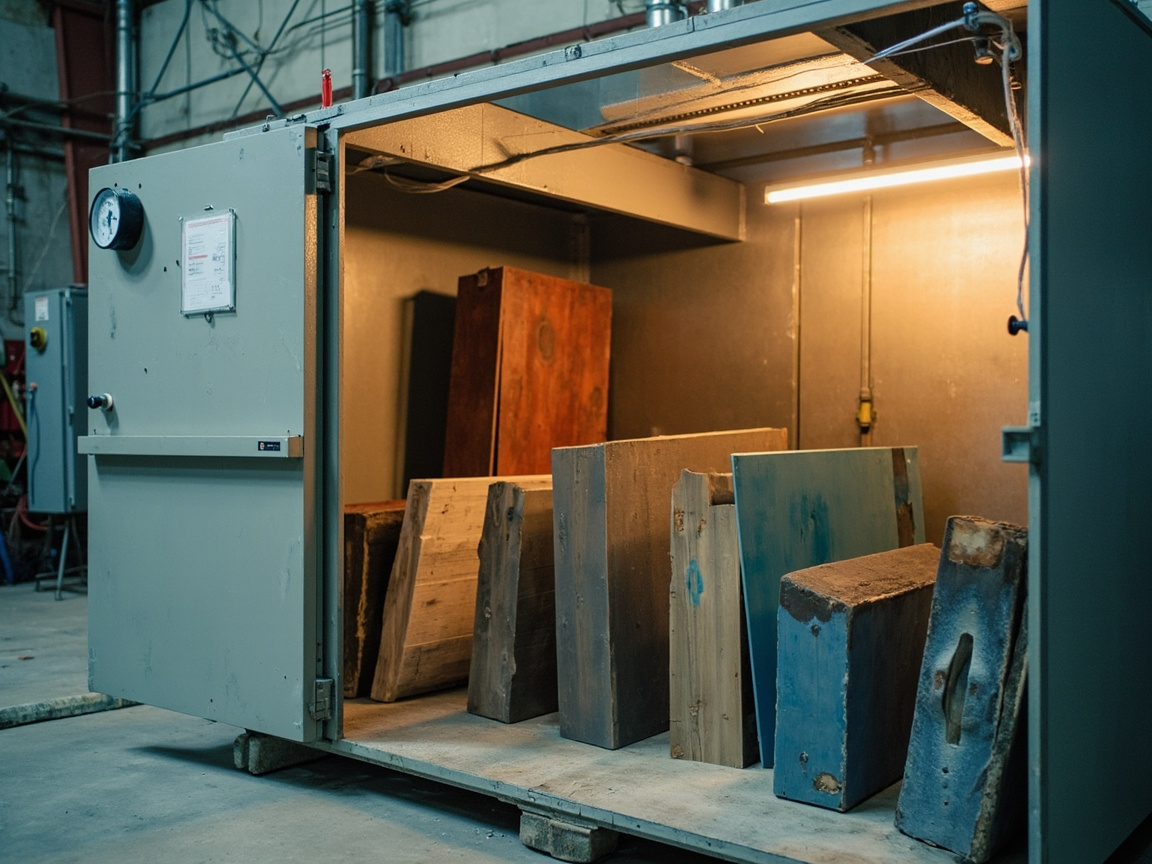
VI. Environmental Requirements: Temperature and Humidity Window Comparison
| Environmental Parameter | Water-based Paint Recommended | Oil-based Paint Recommended |
|---|---|---|
| Temperature | 10–35℃, best 15–30℃ | 5–35℃, two-component slightly wider |
| Relative Humidity | 30%–80%, < 85% | Relatively tolerant, but high humidity also affects |
| Ventilation | Need good but avoid direct blowing causing too fast surface dry | Must force ventilation to exhaust solvent |
| Fire prevention | Water-based essentially has no open flame risk | Strictly control open flame, static electricity, explosion-proof |
| Substrate temperature | Above dew point by more than 3℃ | Above dew point by more than 3℃ |
The "golden window" for water-based construction is temperature 15–30℃, humidity 50%–75%. In high-humidity environments such as plum rain season, return-of-spring humidity, and basements, water-based paint is highly prone to blushing, slow drying, and poor adhesion, which must be mitigated through dehumidifiers, heating, and extended curing. Although solvent-based construction is less sensitive to humidity, the solvent is flammable and explosive, so ventilation and explosion-proof measures are mandatory, and some oxidative types (alkyd) will also significantly slow down in low winter temperatures.
VII. Intercoat Sanding and Recoat Interval
Both systems require "light intercoat sanding to remove particles and enhance adhesion", but the pace differs:
- Water-based paint: Surface dry is relatively fast (0.5–2 hours depending on formulation), but should not be recoated too thickly before full film formation; use 320–600 grit for light intercoat sanding to remove particles, recoat interval depends on surface dry and recoatable time, usually 2–4 hours; ensure no moisture return before recoating.
- Solvent-based paint: Volatile type surface dry is fast but hard dry is slow; two-component has a "recoat window", too early recoat easily causes lifting, too late requires re-sanding; intercoat sanding also 320–600 grit, recoat interval often requires 4–24 hours or even longer, specifically depending on system and temperature.
A common mistake: water-based paint is "looks surface dry" and then immediately thickly coated with the next layer, resulting in the lower layer moisture being sealed, and the entire layer blushing and blistering. The correct approach is to confirm the recoatable time, spray thinly in multiple coats, and lightly sand between coats.
VIII. Pot Life Differences
- Water-based single component: Basically no pot life limit, can be stored sealed after mixing, just stir after long standing; but water-based and 2K water-based must be used up within the specified time.
- Solvent-based two-component: Pot life is a hard constraint. After PU and epoxy are mixed, cross-linking occurs, and exceeding the pot life (from tens of minutes to several hours) will cause viscosity to surge and gel to be scrapped. Construction must "calculate the amount, mix in small batches, and use up within the time limit".
This is also why in factory batch construction, solvent-based two-component often equips "two-component spraying machine (dynamic mixing)" — spray while mixing to avoid waste; water-based single component is much more equipment-friendly.
IX. Equipment and Site Modification: The Hidden Engineering of Oil-to-Water Conversion
Switching from solvent-based to water-based, on the surface is changing paint, behind it is the modification of site and equipment:
- Spray booth and water curtain: Water-based paint overspray can be captured by water curtain, but water quality management and wastewater treatment need attention; solvent-based paint overspray relies on water curtain + activated carbon/catalytic combustion to treat VOC.
- Curing tunnel/drying zone: Water-based volatilizes slowly, often requiring forced drying zone with heating and low humidity (such as IR or hot air), while solvent-based relies more on ventilation to exhaust solvent.
- Wastewater vs waste solvent: Water-based produces a small amount of cleaning wastewater (needs to be treated to standard), solvent-based produces a large amount of hazardous waste solvent (must be disposed of with hazardous waste qualification). The two have different environmental management objects.
- Tools and pipelines: Water-based rinsed with water after use, solvent-based washed with solvent after use; mixed lines must be thoroughly isolated to prevent water-based entering solvent-based system causing demulsification, and solvent-based entering water-based system causing contamination.
For teams wanting to get it right in one step, UV curing wood coating is another path — it turns "slow drying" into "second-level curing", but requires flat workpieces and UV line investment, see our UV curing wood coating solution.
X. Common Construction Defects Comparison and Troubleshooting
| System | High-frequency defect | Main cause | Countermeasure |
|---|---|---|---|
| Water-based | Blushing/whitening | High humidity low temperature, high substrate moisture | Control humidity temperature, dehumidify, extend curing |
| Water-based | Crater/fish eye | Substrate oil stain, surfactant | Thorough degreasing, add leveling agent |
| Water-based | Sagging | Spray too thick at once, too much water added | Spray thinly in multiple coats, control water addition |
| Water-based | Blistering/peeling | High substrate moisture, insufficient sealing | Control moisture content, do sealing primer |
| Water-based | Slow drying | Low temperature high humidity | Heat and dehumidify, forced drying |
| Solvent-based | Orange peel/dry spray | Fast flash dry, far gun distance | Adjust thinner, control gun distance |
| Solvent-based | Sagging | Coat too thick, over dilution | Control thickness, control dilution |
| Solvent-based | Lifting | Lower layer not fully dry, strong solvent | Extend curing, do transition primer |
| Solvent-based | Hidden bubble/pinhole | High substrate moisture, mixing with air | Control moisture, defoam, standardize mixing |
| Solvent-based | Yellowing (aromatic) | Outdoor UV | Change to aliphatic or limit indoor |
This table is a quick-reference dictionary for construction troubleshooting: first locate the system, then match symptoms to find causes.
XI. Construction Points for Different Substrates
Wood:
- Water-based: moisture content 8%–12%, 240–320 grit sanding, sealing primer to control grain raising, topcoat 2–3 thin coats; strictly control environmental humidity.
- Solvent-based: moisture content requirement slightly wider, sand and remove dust, alkyd/PU according to system matching; strictly proportion two-component.
Metal:
- Water-based industrial coating: sandblast/grind rust removal, dry and oil-free substrate, epoxy primer + water-based topcoat, pay attention to intercoat recoat window and curing.
- Solvent-based: sandblast rust removal to specified grade, epoxy/polyurethane matching, use up within two-component pot life, increase thickness for heavy anti-corrosion.
Wall/architectural:
- Water-based latex: substrate moisture content up to standard, scraping leveling, primer + two coats topcoat, temperature humidity window is loose but avoid rainy day construction.
- Solvent-based architectural coating: gradually replaced by water-based, only retained in special weather-resistant parts.
XII. Cooperation with Kexin New Materials: Process Card Delivery
Kexin New Materials (kexinMaterials) while delivering coating, will also output "primer—topcoat—process card", writing the mixing ratio, temperature humidity window, intercoat interval, recoat time discussed in this article as executable parameters, rather than vague talk. For example:
- Water-based wood line: given water addition ratio, spraying viscosity (Coating-4 cup seconds), interval time per layer, curing temperature humidity clear values;
- Solvent-based protective line: given base/curing agent ratio, pot life, thinner model, film thickness and passes.
For factories, getting a "parameterized process card" is more critical than getting a bucket of paint — it turns "master experience" into "standard operation", so stability and yield can go up. Those needing complete wood direction process can further connect with wood coating product system.
XIII. Safety and Occupational Health Differences
- Water-based construction: No solvent protection needed, low odor, but still need ventilation, avoid overspray inhalation; cleaning wastewater must be collected and treated, not directly discharged.
- Solvent-based construction: Solvent flammable and explosive, strictly no open flame on site, need explosion-proof electrical and static grounding; two-component curing agent (such as isocyanate) irritates respiratory tract and skin, must wear防毒 mask, gloves, goggles; waste solvent, waste paint, waste bucket disposed as hazardous waste.
From occupational health and fire risk perspective, water-based construction is more friendly to workers and site, which is also one of the important reasons for many enterprises to convert from oil to water.
XIV. Acceptance and Testing: Use Data to Check
Regardless of water or oil, it is recommended to write the following tests into disclosure and acceptance sheet:
- Surface dry/hard dry time: Record actual drying pace under temperature humidity;
- Film thickness: Wet film gauge/dry film gauge to measure passes and film thickness;
- Adhesion (cross-cut GB/T 9286): Grade 0 best;
- Pencil hardness (GB/T 6739): Reflects scratch resistance;
- Appearance: Even color, no flow marks, no crater orange peel, consistent gloss;
- VOC/harmful substances: Solvent-based focuses on solvent-based limit, water-based checks corresponding water-based standard.
Double archiving "process parameters + test results" can reduce the dispute of "looks about the same, problems after half a year of use".
XV. Implementation Steps for Solvent-to-Water Construction Transition
For factories currently switching from solvent-based to water-based, it is recommended to divide into four steps:
- Select pilot product line: Pick a line with non-extreme conditions and flat batch to convert to water first, verify process;
- Modify site and equipment: Add dehumidification/heating drying zone, isolate water-oil tool pipelines, build wastewater collection;
- Define process card: Solidify parameters with supplier, train workers on the new operation discipline that "water-based is not solvent-based";
- Scale-up and Review: After the pilot yield stabilizes, scale up the application and continuously review the defect library (see Table in Section Ten).
Do not "switch the entire plant to water-based coating all at once," otherwise the process will not be validated and waste paint will require rework, which instead raises costs.
16. Two-Component Spray Equipment Comparison: Water-Based 2K and Solvent-Based 2K
Two-component systems (whether water- or solvent-based) both involve mixing of "base + hardener," but the equipment logic differs:
- Solvent-Based 2K: Mature technology, mostly uses dynamic mixing two-component spray machines (ratio pump + static mixer), mixing while spraying to avoid waste within pot life; high requirements for explosion-proofing and solvent cleaning.
- Water-Based 2K: Can use dedicated water-based two-component equipment; the mixing section must prevent cross-contamination between cleaning water and paint lines; since water-based has no pot-life pressure (single-component is more common), many water-based scenarios actually do not need complex mixing equipment, reducing investment.
- Commonalities: Both require precise ratio, stable feeding, and regular pump ratio calibration; ratio drift directly causes performance fluctuation and is the focus of equipment maintenance.
For factories, solvent-based 2K equipment is more mature but has higher safety costs, while water-based 2K is more friendly but tests formulation and drying support. Before selecting equipment, first determine the system, then match the equipment, to avoid putting the cart before the horse.
17. Special Tips for Winter and Summer Construction
Summer High Temperature and High Humidity:
- Water-based: High temperature accelerates water evaporation but high humidity suppresses it, prone to sagging and blushing; should control film thickness, control humidity, and avoid afternoon high-humidity periods;
- Solvent-based: High temperature makes solvent flash-off too fast, prone to orange peel and dry spray; should adjust to slower-evaporating thinner and control gun distance; for two-component, note shortened pot life and pre-mix in small batches.
Winter Low Temperature:
- Water-based: Below 5℃ water is hard to evaporate or even freezes and destroys film formation; must heat the drying zone, and film-forming aids can be fine-tuned;
- Solvent-based: Oxidative type (alkyd) significantly slows, two-component reaction decelerates; must extend curing, and if necessary add heat to promote curing.
Plum Rain Season / Return-of-Spring Humidity: High-risk window for water-based construction; prioritize dehumidifier + heating, or suspend sensitive processes; solvent-based is relatively insensitive but also control humidity to prevent blushing.
Posting a "temperature-humidity calendar" on the wall is more reliable than judging by experience.
18. Storage and Shelf Life of Water-Based Paint and Solvent-Based Paint
- Water-Based Paint: Freeze protection is key; storage at 5–35℃ is appropriate, freezing will break the emulsion and scrap it; long standing may cause layering, just stir evenly and filter before use; seal after opening to prevent contamination, shelf life usually 12–24 months depending on formulation.
- Solvent-Based Paint: Main paint sealed in cool and ventilated place, away from open flame; two-component hardener easily reacts with moisture in air and fails, must be strictly sealed and moisture-proof, use up quickly after opening, remaining can be nitrogen-filled or inverted to isolate moisture; waste paint and drums disposed as hazardous waste.
Both types are chemicals; keeping out of reach of children and no fire or smoking on site are common bottom lines. Compliant storage also affects "waste cost"—water-based frozen, solvent-based hardener dampened, are all avoidable losses.
19. Spray Parameters Comparison: Viscosity, Gun Distance and Air Pressure
Put the spraying key points of the two systems into comparable parameter specifications (subject to product instructions):
| Parameter | Water-Based Paint | Solvent-Based Paint |
|---|---|---|
| Application viscosity (TU-4 cup) | Usually 20–35 sec, depending on spray method | Usually 15–30 sec, depending on system |
| Gun distance | 15–25 cm, thin coat | 15–30 cm, control flash-off |
| Air pressure | Medium-low, prevent blowing through water film | Medium, control dry spray |
| Gun travel speed | Even, avoid local thickness | Even, avoid orange peel |
| Inter-coat | Light sanding after touch dry | Within window or after sanding |
The biggest taboo in water-based spraying is the combination of "thick" and "slow" causing sagging; solvent-based worst taboo is "fast dry + far gun" causing orange peel. Writing parameters into the process card and calibrating equipment regularly is more stable than relying on feel.
20. Touch-up and Local Repair of Water-Based Paint
Scratches are inevitable in daily use; water-based paint touch-up is relatively friendly:
- Small area can use same-color water-based paint for local spot repair, water wash, no solvent irritation;
- Before touch-up, lightly sand broken edges, remove dust and degrease to ensure adhesion;
- Large area repair recommends whole-surface thin spray to avoid color difference and uneven gloss;
- Good compatibility with water-based, less risk of lifting/solvent attack that occurs when solvent-based is used to repair water-based.
In contrast, solvent-based touch-up must use solvent treatment, pay attention to compatibility with old layer and pot life, more cumbersome on site. Water-based is also an implicit plus in "post-maintenance friendliness."
FAQ
1. What is the most core difference in construction between water-based paint and solvent-based paint?
The core is different film-forming mechanisms: water-based relies on water evaporation followed by particle coalescence to form film, extremely sensitive to humidity and substrate moisture content; solvent-based relies on solvent evaporation (often with oxidation or crosslinking) to form film, relatively insensitive to temperature and humidity, but extremely sensitive to fire/poison prevention and ratio. All construction differences derive from this.
2. Why is water-based paint prone to blushing during construction?
Mostly occurs in high humidity or low temperature environments: slow water evaporation, air moisture suppresses surface evaporation, film stays "un-dry" for long and blushes; excessively high substrate moisture content also seals water under film causing bubbling and blushing. Countermeasures: control humidity and temperature, dehumidify, extend curing, and do good sealing primer.
3. Can water-based paint be diluted indefinitely with water?
No. Water addition usually 5%–15%; excess causes floating color, gloss loss, sagging or even emulsion break. Must use clean water or manufacturer-specified water-based diluent; never mix in solvent-based solvent, otherwise resin precipitates and scraps.
4. What happens if solvent-based two-component ratio is wrong?
Hardener must be strictly proportional; excess causes brittle, easily cracked film and releases more free monomers; insufficient causes incomplete curing and reduced performance. Two-component also limited by pot life; mixed beyond time gels and scraps, must mix small batches for immediate use.
5. Why should water-based paint be sprayed thin in multiple coats?
Because water evaporates slowly, one thick coat easily sags, and lower-layer water is sealed and hard to evaporate. Thin multiple coats controls sagging and ensures each layer fully forms film, a basic discipline of water-based construction.
6. Is there a big difference in tool cleaning between solvent-based and water-based?
Very big. Water-based can be rinsed with water after construction, no waste solvent on site; solvent-based must use solvent to clean gun and tools, generating hazardous waste requiring hazardous waste management. Mixed-line operation must thoroughly isolate the two sets of tools and pipelines.
7. Can water-based paint be applied during high-humidity plum rain season?
Not recommended for direct construction. Should use dehumidifier, heating, extend curing, or wait for window with humidity below 85% and temperature 15–30℃. Otherwise blushing, slow dry, adhesion risks rise significantly.
8. Does water-based paint construction need ventilation?
Yes, but purpose differs from solvent-based: water-based ventilation is to expel moisture, accelerate drying and avoid paint mist accumulation, with basically no open-flame risk; solvent-based ventilation is to expel flammable, explosive and toxic solvents, must be forced and explosion-proof.
9. Can water-based paint be directly applied on old solvent-based paint surface?
Not recommended directly. Must sand to remove gloss, do compatibility test, confirm no cratering, lifting, peeling before deciding system, add transition primer if necessary. Renovation is "judge old layer + verify compatibility + select transition."
10. Can UV curing solve the slow drying of water-based?
For flat batch parts, yes. UV coating cures in seconds, almost no slow-evaporation pain, but needs UV line and flat workpieces, unsuitable for irregular shapes and on-site construction. It is "another process path," not a simple substitute for water-based.
Further Reading
- Formulation Science and Application of Water-Based Wood Coatings: Expands the "four stages of water-based film formation" from this article, supplementing technical details of resin and application.
- Wood Coatings Industry Panorama: Categories, Market and Water-Based Trend: From an industry perspective, the underlying drivers and boundaries of water-oil process substitution.
- Water-Based Refinish Paint Process and Compliance: Full-Process Points from Mixing to Spraying: Extends "full construction process" to refinish paint scenarios, giving practical points balancing compliance and process.
- Industrial Coating Application: Airless Spray Parameters, Film Thickness Control and Coating Interval
- Automotive Coating Application Equipment and Spray Gun Parameters: HVLP, Pressure and DIN4 Viscosity