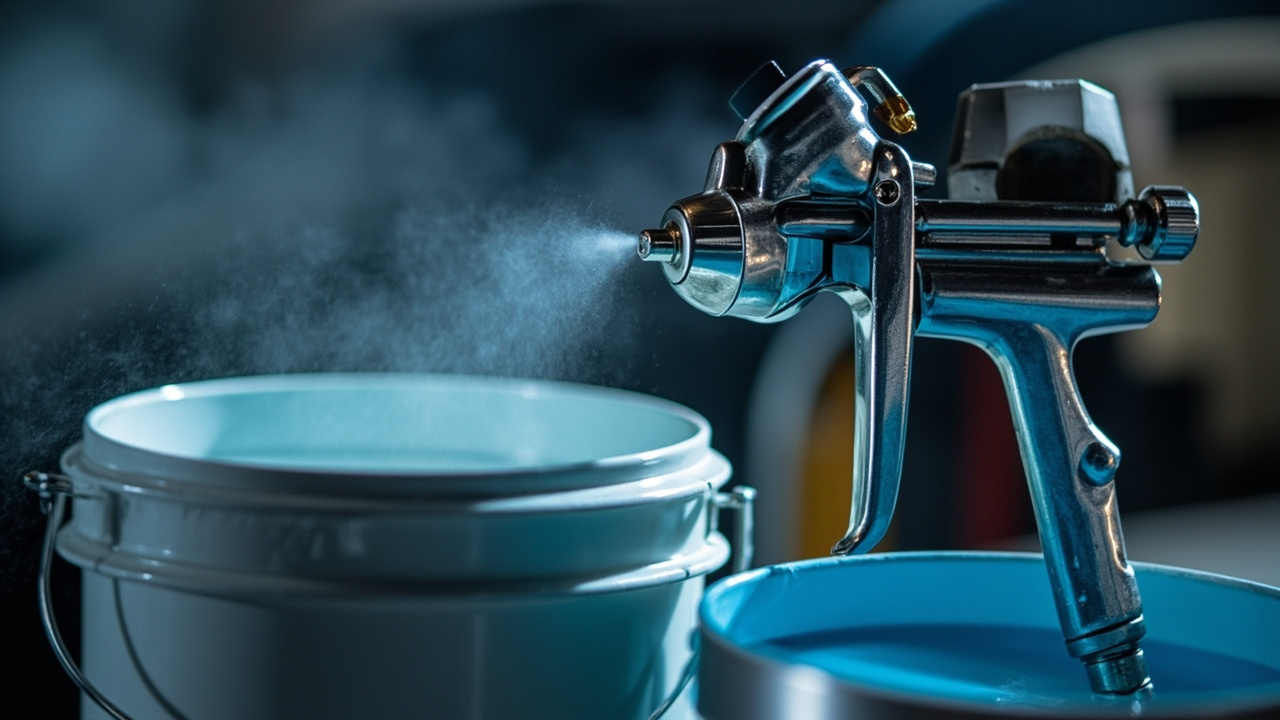
When Regulation Presses the "Solvent Key": Why Waterborne Transition Is Irreversible
The waterborne transition of automotive refnish paint is not merely a technical preference, but an inevitability driven by regulatory pressure. Major global economies continue to tighten restrictions on volatile organic compound (VOC) emissions: the EU's revised VOC emission directive lowers the VOC content limit for refnish paint to 150g/L; China's mandatory national standards set strict VOC limits for vehicle repair coatings, among which "Limit of Harmful Substances in Coatings for Vehicle Maintenance" (GB 38469-2020) stipulates that the total VOC limit for solvent-based refinish topcoat is ≤680g/L and for water-based refinish topcoat is ≤420g/L, while the new regulation effective June 1, 2026 further drastically lowers the VOC limit for automotive refinish basecoat from ≤1000g/L to ≤770g/L; regulations such as Rule 1151 in regions like California, USA impose extremely low VOC requirements on refinish coatings.
Solvent-based refinish paint releases large amounts of VOC during spraying and drying, polluting the environment and threatening the occupational health of technicians. In water-based systems, solvent is replaced by water, and VOC emissions can be reduced by 70% to over 90%, significantly improving workplace safety. For this reason, the adoption rate of water-based refinish coating in professional body repair shops has exceeded 50% (in the US), China's water-based paint penetration is expected to surpass 78% in 2026, and the overall global penetration of water-based/low-VOC technology is approaching the 50% critical point and is projected to move toward 70% by 2030.
The market size also confirms this trend. According to data from the Buyhuasu Research Institute, the global water-based coating market is expected to exceed USD 117.7 billion in 2026, with China accounting for over 45%; the global automotive refinish coating market is projected to grow from USD 10.1 billion in 2025 to USD 10.74 billion in 2026. Under the "dual carbon" goals and green supply chain requirements, the accelerated phase-out of solvent-based products is a foregone conclusion, and waterborne transition is a compliance necessity that repair shops cannot avoid.
The Chemical Core of Water-Based Refinish Paint: Emulsion, PUD and Self-Crosslinking
Water-based refinish paint is not as simple as "dissolving paint in water". Its core is a water-based resin system, mainly comprising three types:
First, water-based acrylic emulsion. Acrylic monomers are dispersed in the aqueous phase through emulsion polymerization, and after film formation it provides fast drying, weather resistance and certain hardness, commonly used in primer, intermediate coat and some solid color topcoats. Its advantages are low cost and fast drying, while its shortcomings are relatively limited chemical resistance and flexibility.
Second, polyurethane dispersion (PUD, Polyurethane Dispersion). Polyurethane is pre-dispersed as nano-scale particles in water, and after film formation it is flexible, wear-resistant, with good gloss and distinctness of image (DOI), making it the mainstay of high-end water-based topcoats. PUD can adjust the hardness-toughness balance through molecular structure design and is also relatively friendly to aluminum flake orientation.
Third, water-based two-component system (2K Waterborne). Composed of hydroxyl acrylic dispersion + hydrophilic modified polyisocyanate curing agent, mixed in proportion before application, with crosslink density close to solvent-based 2K polyurethane, meeting high-end refinish requirements in weather resistance, chemical resistance and scratch resistance. Its difficulty lies in the natural incompatibility of "water and isocyanate" — water consumes the curing agent to generate carbon dioxide, so the mixing ratio, pot life and stirring defoaming must be precisely controlled.
The key technical difficulty lies in: how to achieve good leveling, aluminum flake orientation and intercoat compatibility without adding or with minimal addition of co-solvents. The industry introduces self-crosslinking groups into the dispersion (such as room-temperature or low-temperature self-crosslinking hydroxyl/carboxyl-aziridine or blocked isocyanate systems), optimizes the dosage of coalescing agent (such as dipropylene glycol butyl ether DPnB), and controls the minimum film forming temperature (MFFT, Minimum Film Forming Temperature), enabling water-based paint to form a continuous dense film even in low-temperature environments of repair shops. The role of the coalescing agent is to "soften" the resin particles in the early drying stage so they fuse into a film, then slowly volatilize, therefore MFFT and coalescing agent dosage directly determine the feasibility of low-temperature application.
The varnish layer (clear coat) is another challenge. Early water-based varnish dried slowly and was prone to gloss loss; today's mainstream solution is the combination of "water-based basecoat + high-solid or water-based clear coat", which both maintains the low-VOC bottom line and ensures mirror gloss and weather resistance. Some companies have launched water-based 2K varnish, balancing environmental protection and performance.
In the coating industry landscape of the Pearl River Delta, companies such as Kexin New Materials (Guangdong) Co., Ltd., which focus on industrial and automotive coatings, are leveraging the chemical capabilities accumulated from OEM supply to the refinish and aftermarket. Its engineering experience in low-VOC resins and low-temperature curing systems is highly synergistic at the material fundamental logic with the technical demands of water-based refinish paint for "room-temperature film formation and low-energy consumption drying", providing support for the green upgrade of repair painting.
Application Process: The Rewritten Operation Manual
The application logic of water-based refinish paint is fundamentally different from solvent-based, and it cannot be simply "replacing solvent paint with water-based paint". The typical process is as follows, with key parameters attached.
First, substrate treatment and primer. After the damaged area is sanded (dry sanding to appropriate grit is recommended), degreased, and filled with putty, spray water-based epoxy or water-based polyurethane primer to provide anti-corrosion and intercoat adhesion. Water-based primer has higher requirements for surface cleanliness; grease or silicone contaminants will directly cause craters. The substrate moisture content is recommended to be controlled within a reasonable range (wood substrate empirical value 8%—12%, metal parts emphasize degreasing and derusting), too low or too high will cause adhesion or blushing problems.
Second, water-based pigmented paint (basecoat) spraying. The viscosity of water-based basecoat is greatly affected by temperature and dilution water ratio, and must be strictly adjusted with deionized water and a small amount of co-solvent according to the formula. Spray with multiple thin layers (usually 2 to 3 layers), leaving flash-off time between each layer to allow water to evaporate and the film to approach touch-dry before spraying the next layer. Taking Nippon naxE³ WB water-based automotive refinish paint as an example, the parameters are: 2—3 layers wet spray, film thickness 40—60 microns, application viscosity 16—18 seconds (T-4 cup @20℃), interlayer flash-off 1—2 minutes. This "thin spray, multiple passes" logic is the core discipline of the water-based system.
Third, flash-off and forced air drying. This is the most critical step in the water-based system. Water evaporation requires sufficient airflow, so after spraying, the spray booth strong air (forced air) must be turned on to accelerate flash-off, otherwise residual water will boil after clear coat application, forming "water marks" or gloss loss. In low-temperature environments, 60℃ to 80℃ low-temperature baking or infrared auxiliary drying can be used. The standard for sufficient flash-off is that the paint surface shows uniform matte with no wet reflection.
Fourth, clear coat. After sufficient flash-off, spray high-solid or water-based varnish to provide gloss, weather resistance and scratch resistance. The application parameters of varnish (gun distance, air pressure, gun travel speed) are similar to solvent-based, but attention should be paid to intercoat compatibility with the water-based basecoat. Before varnish, ensure the basecoat has been "matted", otherwise pinholes or gloss loss are likely to occur.
A complete summary of application parameters is shown in the table below.
| Process | Key Parameters | Operation Points | Common Errors |
|---|---|---|---|
| Substrate Treatment | Degreasing, sanding, moisture content control | Thoroughly remove oil and silicone, dry sand or standardized wet sand then dry | Residual silicone oil causes craters |
| Water-Based Primer | According to system ratio, room temp/low temp curing | Even thin spray, interlayer sanding | Uneven film thickness, poor adhesion |
| Water-Based Pigmented Paint | 2—3 thin layers, film thickness 40—60μm, viscosity 16—18s | Interlayer flash-off 1—2 min, dilute with deionized water | Single layer too thick, improper dilution |
| Forced Air Flash-Off | Spray booth strong air, 60—80℃ baking if necessary | Until paint surface is uniformly matte | Insufficient flash-off leaves water marks |
| Clear coat | Per system gun distance/air pressure | Apply after basecoat is matte | Early clear coat spray causes loss of gloss |
| Curing | Room temperature or low-temperature baking cure | Avoid water contact and impact before fully cured | Premature delivery causes defects |
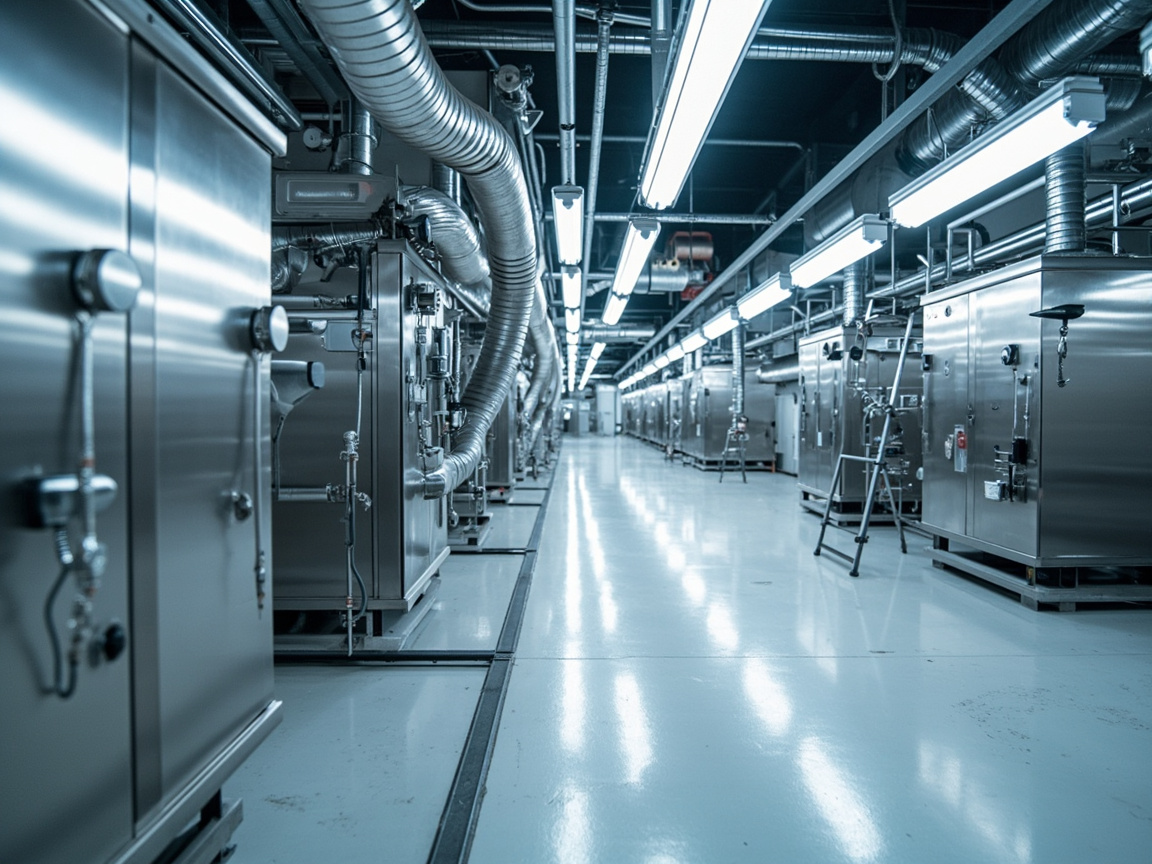
Hard Constraints on Equipment and Environment
Water-based paint has specific requirements for equipment and environment, which is also a threshold for many small repair shops to transform.
Spray guns must be water-based dedicated or thoroughly cleaned neutral guns, to avoid residual solvent contaminating water-based paint and causing gelling; HVLP (High Volume Low Pressure) spray guns are recommended to reduce atomization energy consumption and overspray. Compressed air must undergo efficient oil-water separation (moisture separator), because oil and liquid water in compressed air will directly ruin the water-based paint film—even trace oil stains will leave craters or fish eyes on the paint surface.
The spray booth needs to maintain stable temperature (usually 20℃ to 25℃) and relative humidity (recommended 50% to 70%). Too low humidity causes the film to surface-dry too fast and insufficient leveling; too high humidity makes water difficult to evaporate, extremely slow drying, and prone to blushing. Therefore, water-based refnish workshops often install dehumidification and constant temperature systems, which is a considerable equipment investment. Referring to industry construction guidelines, the suitable construction temperature for water-based coating is 10℃—35℃, relative humidity 40%—80% (above 85% requires forced ventilation and dehumidification); while professional refinish prefers to tighten to the "golden zone" of 20—25℃, 50%—70%. In some enterprise oil-to-water conversion cases, the baking room standard is set to temperature 35—45℃, humidity 40%—60% with drying and dehumidification equipment, which can significantly shorten the waiting time for drying.
Lighting and cleanliness are equally critical: water-based paint has long open time, and insufficient spray booth cleanliness easily causes dust settling to form dust spots; it is recommended to equip efficient filtration and regular water sprinkling cleaning to reduce suspended particles.
Common Defects and Countermeasures
Defects specific to water-based systems require targeted responses; the table below summarizes causes and countermeasures.
| Defect | Cause | Countermeasure |
|---|---|---|
| Blushing | Paint film absorbs water or water retention in high humidity environment, transparent and whitish | Control relative humidity, enhance flash-off and air drying, low-temperature baking if necessary |
| Sagging | Single layer too thick or improper thixotropy adjustment | Spray thin in multiple passes, control viscosity and gun travel speed |
| Poor aluminum flake orientation / abnormal flop | Insufficient flash-off or mismatched clear coat causes aluminum flakes to float disorderly | Ensure basecoat is fully flashed off, use same-system clear coat |
| Crater / fish eye | Residual silicone oil or oil stains on substrate or equipment | Strict degreasing, dedicated equipment, standardized cleaning |
| Dust spots from slow drying | Water-based paint has long open time and easily collects dust | Improve spray booth cleanliness and air drying efficiency |
| Poor adhesion | Incomplete substrate treatment or excessive dilution | Standardized sanding and degreasing, dilute by proportion |
"Blushing" is mostly caused by high humidity, requiring humidity control, enhanced air drying, and low-temperature baking; "sagging" is due to single layer too thick or insufficient thixotropy, should spray thin in multiple passes and control viscosity; "crater" comes from oil stains and silicone oil, requiring strict degreasing and dedicated equipment; "slow drying" brings dust spots, solved by improving spray booth cleanliness and air drying efficiency.
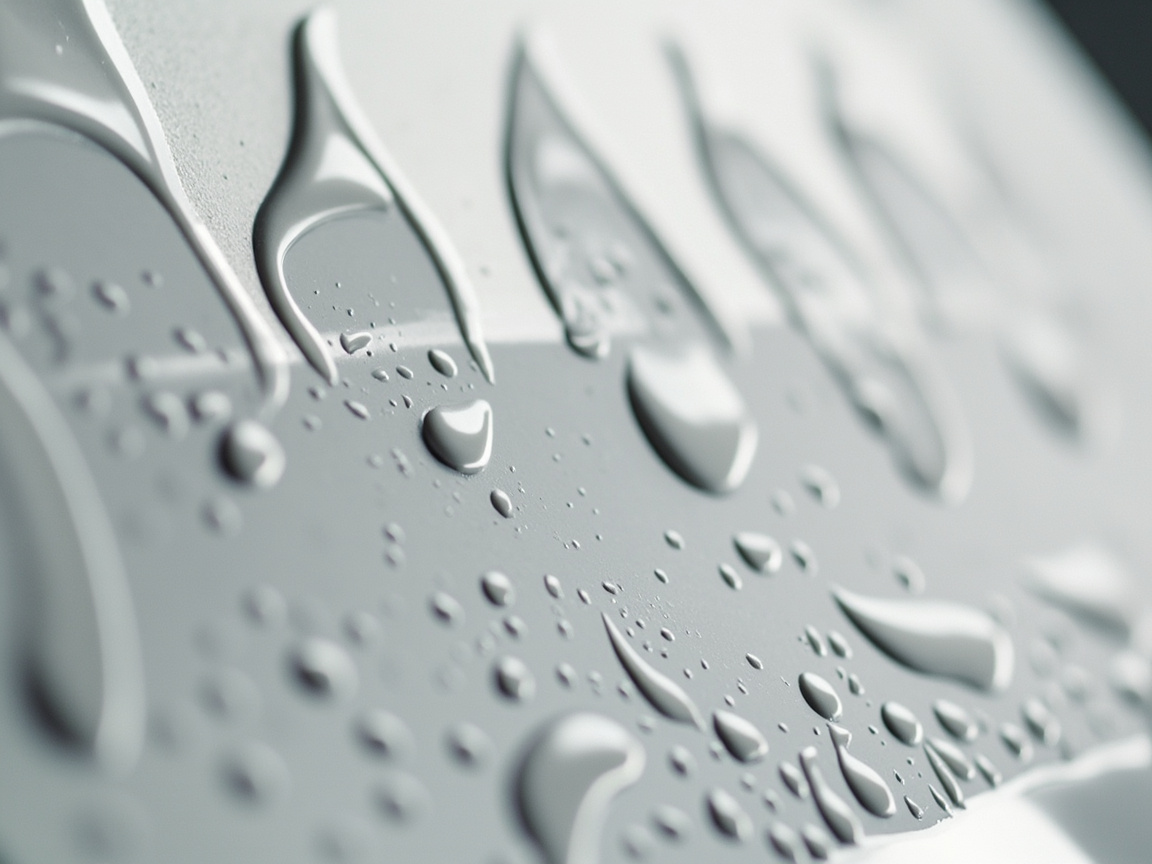
Panoramic Comparison with Solvent-based
| Dimension | Solvent-based refinish paint | Water-based refinish paint |
|---|---|---|
| VOC emissions | High (restricted by regulations, topcoat can reach 680g/L) | Low (reduced by 70% to 90%+, topcoat ≤420g/L) |
| Occupational health | Solvent exposure risk | Significantly improved safety |
| Drying speed | Fast (relies on solvent evaporation) | Relies on water evaporation, requires strong airflow/low-temp baking |
| Equipment requirements | Conventional | Dedicated spray gun, oil-water separation, constant temp & humidity |
| Aluminum flake orientation | Mature | Requires control of flash-off and system compatibility |
| Cost structure | Low material, low equipment | Slightly higher material, high equipment investment |
| Compliance outlook | Restricted and tightening | Long-term certain route |
As can be seen from the comparison, the "cost" of water-based conversion concentrates on initial equipment and process retrofitting, while the "benefit" is compliance certainty, occupational health, and brand premium. For stores planning long-term operation, this is a "ticket" that must be invested sooner or later.
Compliance Standards: A Globally Tightening Timeline
From 2025 to 2026, more than 15 new or revised standards related to coating environmental performance are expected to take effect globally. In China, the mandatory national standard "Limit of Harmful Substances in Coatings Part 2: Industrial Coatings" (GB 30981.2-2025) was released on May 30, 2025, and will be officially implemented from June 1, 2026, integrating and replacing five old standards such as GB 24409-2020 (vehicle coatings) and GB 38469-2019 (marine coatings), restructuring the full-chain compliance system for industrial coatings. Its core changes include:
– VOC limits tightened comprehensively: water-based wood pigmented paint VOC ≤250g/L (drop of about 16%), solvent-based passenger car OEM basecoat ≤750g/L (drop of 10%), solvent-free coating uniformly ≤100g/L; – First addition of SVOC (semi-volatile organic compounds) control, targeting latex and water-based wood coatings, pigmented paint ≤100g/L, varnish ≤150g/L; – Heavy metal grading tightened: coatings in close contact with human body total lead ≤90mg/kg, hexavalent chromium ≤5mg/kg; – Limit APEO (alkylphenol ethoxylates) ≤0.1mg/kg, prohibit asbestos addition, polyurethane curing agent free TDI ≤0.1%; – First inclusion of auxiliary materials such as putty, curing agent, and paint remover into mandatory control.
At the EU level, REACH restrictions on substances such as isocyanates are tightening, the SVHC list has exceeded 230 items, indirectly promoting the replacement of water-based two-component and high-solid systems; US regional rules such as Rule 1151 force formulation innovation with extremely low VOC limits. For Chinese export-oriented repair chains and domestic brands, meeting multi-country certifications (such as GREENGUARD, French A+, EU Ecolabel) has become a prerequisite for entering high-end supply chains.
Specifically: GREENGUARD (now GREENGUARD Gold) focuses on indoor air quality and low chemical emissions; French A+ (Émissions dans l’air intérieur) grades volatile emissions within 28 days based on ISO 16000 series; the EU Ecolabel comprehensively considers VOC, heavy metals, and full-life-cycle impact. Although these certifications mostly target architectural/wood interior use, their "low emission" concept is spilling over to the environmental procurement threshold of the automotive refinish supply chain. Small and medium enterprises without water-based and low-VOC technical capabilities are facing accelerated elimination.
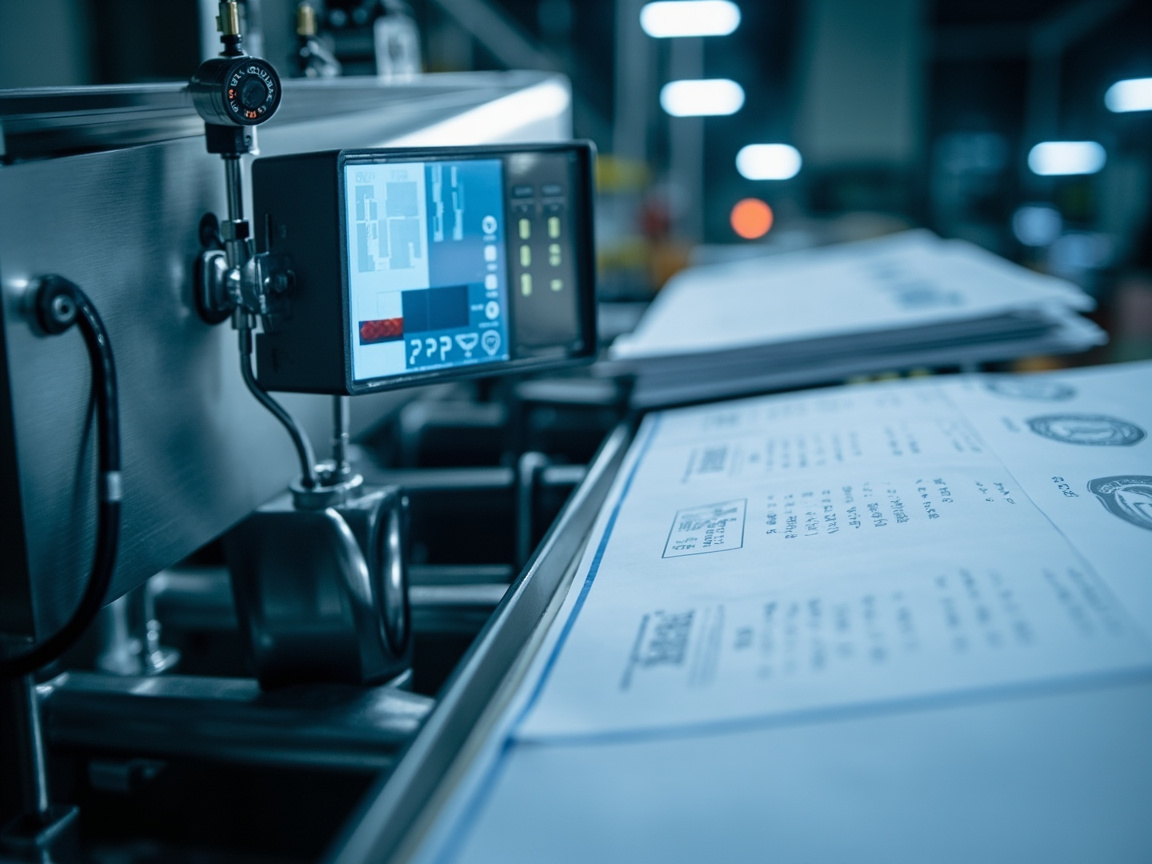
Training and Talent: The Underestimated Bottleneck
The biggest bottleneck in water-based conversion is often not the material, but the people. Technicians are used to the "fast, aggressive, rough" feel of solvent-based, and after switching to water-based they need to re-understand flash-off, humidity, and rheology — with the same gun, water-based paint runs if sprayed too fast, and builds up if too slow; with the same dilution, tap water and deionized water yield drastically different results. Leading companies in the industry solve this gap through certified training systems (such as brand technician schools, practical assessments, digital colorist grades).
According to industry research, technicians with water-based application capability have a clear premium in the job market, and the return on training investment is high. This is also a reflection of the competitive focus shifting from "selling products" to "selling solutions" — what companies provide is not just paint, but the whole set of capabilities and certifications that let stores "use it correctly and well." For store operators, listing "training two water-based skilled workers" in the annual budget determines the success of transformation more than simply purchasing equipment.
Future Trends: Low Energy Consumption, Intelligence, and Closed Loop
The next step for water-based refinish paint is "lower energy consumption + smarter." Low-temperature curing (below 60℃), infrared-assisted drying shorten turnaround; digital color matching is deeply bound with water-based systems to reduce rework; spraying robots are beginning to be piloted in high-end repair centers to overcome human fluctuation with consistent parameters. Oil-to-water conversion solutions from companies such as Nippon show that through baking room retrofitting and temperature-humidity control (35—45℃, 40%—60%), efficient flash-off can be achieved without large-scale equipment updates.
From a broader perspective, water-based conversion is the intersection of the automotive refinish paint's "green, digital, service" triple transformation. It responds to regulation, forces equipment and service upgrades, and ultimately brings fragmented repair stores into a standardized, traceable coating service system. In the future, water-based resins will further evolve toward "lower film-forming temperature, higher early water resistance, more friendly aluminum flake orientation," combined with water-based 2K clear coat and closed-loop recovery (overspray capture and reuse in water), pushing the environmental footprint of refinish coating to a new low.
FAQ
Q: Why must water-based refinish paint have strong-airflow flash-off? A: Water-based paint forms film by water evaporation; residual water will boil under the clear coat and form water marks or loss of gloss. After spraying, the spray booth strong airflow must be turned on to accelerate flash-off; in low-temperature environments, 60℃ to 80℃ low-temp baking or infrared assistance can be used. The sign of sufficient flash-off is a uniformly matte paint surface.
Q: What special equipment requirements does water-based refinish have? A: It requires a water-based dedicated or thoroughly cleaned neutral spray gun, compressed air with efficient oil-water separation, and a spray booth with constant temperature (20 to 25℃) and humidity (50% to 70%). Oil and liquid water in compressed air will directly ruin the water-based paint film, so oil-water separation cannot be omitted.
Q: How to solve common water-based paint blushing and sagging? A: Blushing is mostly due to high humidity, requiring humidity control, enhanced air drying, low-temp baking; sagging is due to excessive single-layer thickness or insufficient thixotropy, should spray thin in multiple passes and control viscosity; craters come from oil and silicone, requiring strict degreasing and dedicated equipment. See the defect-remedy table for details.
Q: What is the compliance bottom line for water-based conversion?A: China's GB 30981.2-2025 will be implemented on June 1, 2026, integrating five old standards and tightening VOC limits, adding new SVOC and heavy metal controls, and including auxiliary materials for the first time; the VOC limit for automotive refinish topcoat will also drop from ≤1000g/L to ≤770g/L in June 2026. Non-compliant products will face compliance risks and market elimination.
Q: What is the biggest bottleneck in water-based conversion? A: It is often not the material but the talent. Technicians need to re-understand flash-off, humidity, and rheology. Leading companies solve the gap through certified training systems, which also reflects the shift in competition from selling products to selling solutions.
Q: Will water-based refinish paint completely replace solvent-based paint in the future? A: Driven by both regulation and health, water-based conversion is a long-term deterministic path, and China's penetration rate had exceeded 78% in 2026. However, in some special working conditions and auxiliary material fields, solvent-based paint will still retain a relatively high limit space. The overall trend is "water-based as the main, high-solid as supplement, solvent-based narrowing".
Blending and Transition Spraying: Seamless Jointing under Water-based Systems
Refinishing is different from full vehicle repainting. Most accident repairs only need to repair local sheet metal parts. How to integrate "small-area repair" into "large-area original factory paint" is the core process of the entire industry—namely blending/transition spraying. The blending logic of water-based systems is consistent with solvent-based, but more sensitive to "interlayer compatibility" and "flash-off rhythm".
The standard blending process is: after completing primer and water-based basecoat in the damaged area, extend 30—50 mm to the surrounding intact paint surface to spray the transition layer (usually with the same color paint plus a small amount of dilution to reduce hiding power), so that the new and old paint gradually blend in the transition zone; then thinly spray a layer of "blending solvent" (special interface agent) in the transition zone to soften the boundary and eliminate joint marks; finally apply clear coat overall. Water-based blending solvent needs to match the system; misuse of solvent-based blending solvent will damage the water-based film and cause lifting or loss of gloss.
The key to success or failure of blending lies in "sufficiently wide transition zone and sufficiently soft boundary". Inexperienced technicians often make the transition zone too narrow, resulting in a light-dark boundary like a knife cut. The water-based system has a longer open time, which instead gives a more leisurely transition space, but also prevents the transition layer from being too thick and sagging. It is recommended to accept the blending under a standard light box from different angles, and use fine sandpaper (such as 1500—2000 grit) to lightly polish the clear coat boundary to eliminate the "step feeling".
Deepening Resin Chemistry: Self-crosslinking Mechanism and Engineering Trade-offs of Film-forming Additives
The previous article mentioned self-crosslinking groups and film-forming additives. Here we further explain their mechanism, because understanding the mechanism can avoid detours when actually switching formulations.
There are two common paths for self-crosslinking. One is "carboxyl-aziridine" or "carboxyl-carbodiimide" room-temperature crosslinking: the resin carries carboxyl groups, and an external crosslinking agent reacts after water evaporation to improve film density and water resistance; the other is "blocked isocyanate" thermal activation crosslinking: the isocyanate is protected by a reversible blocking agent, stable at room temperature (extending pot life), and deblocked at about 60℃ baking to react with hydroxyl groups, forming a crosslinking network close to solvent-based 2K. Water-based 2K two-component is typical of the latter, which balances "stable application period" and "high performance after curing".
The trade-off of coalescing agent is another balancing act. Water-based resin particles need to fuse into a continuous film, requiring a temperature higher than MFFT (minimum film-forming temperature). If the construction environment temperature is lower than MFFT, coalescing agent must be used to "temporarily plasticize" the particles to fuse, and then slowly volatilize. Too little coalescing agent results in discontinuous, brittle film with poor water resistance; too much raises VOC, slows drying, and leaves odor. Therefore, a high-quality water-based system will finely balance "low MFFT resin + low-toxicity high-efficiency coalescing agent + moderate dosage", ensuring low-temperature constructability without breaking the VOC red line. This is also why "the same water-based paint performs differently in different stores"—environment temperature, humidity, and coalescing agent volatilization rate jointly determine the final film.
In addition, water-based resin has requirements for freeze-thaw stability, mechanical stability (no breaking under stirring), and storage period (pH drift). Protective colloids and pH buffer systems are often introduced in the formulation. Stores should avoid freezing below 0℃ and long-term high-temperature exposure when storing water-based paint, and seal after opening to prevent skinning and contamination.
Hidden Engineering of Compressed Air and Spray Booth Systems
Water-based paint is almost harsh on the purity of compressed air. Many "inexplicable craters" root in the air path rather than the paint itself. A qualified water-based spraying air path should include: multi-stage filter (remove particles) → refrigerated dryer (remove liquid water) → adsorption dryer or precision filter (remove oil vapor and residual water) → oil-water separation air tank → terminal filter before spray gun. If any link is missing, the oil film or water droplets in the air will form "oil-water spots" on the surface of the sprayed water-based mist droplets, which become craters or fish eyes after drying.
The spray booth air conditioning determines the "invisible variable" of temperature and humidity. The ideal configuration is an independent constant temperature and humidity unit, which can stabilize the booth at 20—25℃, 50%—70% RH, and have sufficient air changes (usually a certain air volume and filtration level per square meter of floor). For stores with limited budget, at least should be configured: industrial dehumidifier (high humidity season), warm air/infrared assist (low temperature season), and hanging thermometer/hygrometer for real-time monitoring. The "three key points" summarized by Nippon Chugoku in the oil-to-water cases—baking room renovation, temperature and humidity control (35—45℃, 40%—60% with drying and dehumidification), and use of recommended procedures—provide a reusable low-cost renovation path for small and medium stores.
Cost Structure and Investment Recovery of Water-based Refinishing
Discussing water-based conversion cannot avoid "is it expensive". From the perspective of material unit price, water-based paint is usually higher than the same grade solvent-based; but from the full life cycle cost (TCO) perspective, the economy of water-based conversion is often underestimated.
Cost items include: material price difference, water-based dedicated spray gun and oil-water separation, constant temperature and humidity and dehumidification equipment, training and certification, waste treatment (water-based paint sludge disposal cost is lower than hazardous solvent waste). Revenue items include: compliance-avoided fines and closure risks, reduced labor and insurance costs from technician health, VOC reduction bringing environmental assessment and carbon footprint advantages, and the customer unit price increase brought by the "green store" brand premium.
A simplified recovery logic is: multiply the annual accident vehicle repair volume of a single store by "compliance premium per unit / rework reduction after water-based conversion", compare with one-time equipment renovation investment, most medium and large stores can recover the cost within 1—2 operating years. This is also why chains such as Tuhu and brands such as PPG, AkzoNobel, and BASF water-based systems have entered 4S authorization and chain systems—large-scale stores can more easily dilute equipment costs and take the lead in compliance dividends.
Enterprise Practice: Water-based Breakthrough of National Brands
In China's refinish paint market in 2026, national brands are accelerating to catch up with foreign giants. Yatu Hi-Tech has been deeply engaged in the industry for over 30 years. Its SHOWELL positions high-end water-based refinishing, started water-based R&D in 2006, and has entered batch supply and service integration stages with new energy brands such as Avatr and Leapmotor, co-building a national high-quality coating service system with "technical grade" paint standards; its domestic network exceeds 1000 stores, business spreads to nearly 100 countries globally, and passed the Beijing Stock Exchange review in September 2025. Donglai (Onwinsh, 688129) uses the Color Cloud AI intelligent color matching platform and Swiss five-angle colorimeter to enter "digital color mixing", emphasizing "one formula per vehicle". Nippon and ICRO use the "color diagnosis—on-site color matching—full-process color service" model to deliver water-based products and color data services as a package.
These cases jointly point to a trend: water-based conversion is no longer just "changing a paint", but a system capability of "material + equipment + data + service". Whoever can form a closed loop in low-VOC resin, low-temperature fast drying, digital color matching, and technician certification will occupy the first-mover advantage in the window period of tightening compliance.
More Defect Identification: Orange Peel, Pinholes, Blistering and Lifting
In addition to the six major defects mentioned earlier, water-based refinishing also commonly has the following defects, requiring the ability to establish comparative identification.
Orange peel: the paint film surface has orange-peel-like concave-convex ripples, mostly due to high viscosity, too dry spray, too far gun distance, or insufficient clear coat leveling. The countermeasure is to adjust dilution ratio and gun distance, ensure interlayer leveling, and construct clear coat according to recommended parameters.
Pinhole: tiny holes appear on the paint surface, often due to insufficient flash-off, rapid escape of residual water/solvent when applying clear coat, or unclosed micro-pores on the substrate. The countermeasure is sufficient flash-off, proper substrate sealing, and avoid applying clear coat too thick at once.
Blistering: bubbles bulge under the paint film, mostly due to high substrate moisture content, excessive environmental humidity, or overlapping spray before interlayer is dry. The countermeasure is to control substrate moisture content, reduce humidity, and extend interlayer drying.
Lifting: the upper paint softens and wrinkles the lower paint, often due to misuse of incompatible solvent-based products, or too strong blending solvent/diluent. The countermeasure is strict same-system matching and use of dedicated water-based blending solvent.
These defects often occur "in chain"—high humidity causes both blushing and slow drying, and slow drying causes both dust spots and bubbles. Therefore, root cause treatment should return to the trinity of "environment—equipment—process", rather than fixing one by one.
Trend Deepening: Water-based 2K Clear Coat and Closed-loop Recycling
The next stop for water-based refinish paint is high performance and circularization. Water-based 2K clear coat uses blocked isocyanate to decrosslink at low temperature, making the clear coat layer have both low VOC and high weather resistance, high scratch resistance, gradually narrowing the experience gap with solvent-based 2K; low-temperature curing (below 60℃) and infrared assist compress the construction period close to solvent-based rhythm.
In terms of circularization, water capture and recycling technology of overspray paint mist is beginning to enter high-end repair centers: the water-based paint mist captured by the booth water washing system can be reused or compliantly disposed after treatment, reducing both hazardous waste and material loss. Combined with digital color matching to reduce rework and spraying robots to stabilize parameters, water-based refinishing is shifting from "compliance forced" to "efficiency and sustainability both achieved".
From an industry perspective, water-based conversion is a microcosm of China's coating industry transforming from "scale expansion" to "quality improvement". The implementation of the two new national standards accelerates the elimination of low-end capacity; small and medium enterprises without water-based and low-VOC technical capabilities face severe survival pressure; while leading enterprises with technical reserves and rapid service response capabilities will occupy the first-mover advantage in the value reconstruction of the new energy aftermarket.
Global Compliance Timeline: Key Nodes of 2025—2026
Putting fragmented regulations into a timeline can clarify the urgency of the "compliance window". The table below summarizes the core standards and nodes directly related to automotive refinish coatings in recent years.
| Time | Region/Standard | Key Content | Impact on Refinish Paint |
|---|---|---|---|
| 2020 | China GB 38469-2020 | Limits of hazardous substances in coatings for vehicle maintenance (solvent-based topcoat ≤680g/L, water-based ≤420g/L) | Set baseline threshold |
| 2025-05-30 | China GB 30981.2-2025 | Integrates 5 old standards, to be implemented on 2026-06-01; VOC tightened, SVOC and heavy metal control added, auxiliary materials included | Reconstruct full-chain compliance |
| 2026-06-01 | China new regulation takes effect | VOC of automotive refnish paint basecoat reduced from ≤1000g/L to ≤770g/L; mandatory control of auxiliary materials | Solvent-based forced to change formulation |
| 2025—2026 | EU REACH/SVHC over 230 items | Restrictions on isocyanates etc. tightening, VOC directive limits for some industries reduced by about 30% | Forcing water-based/high-solid |
| 2025—2026 | US Rule 1151 etc. | Very low VOC limits, regional differentiation | Formulation innovation pressure |
| Ongoing | GREENGUARD/A+/EU Ecolabel | Low emission and eco-label certification | High-end supporting access certificate |
According to industry statistics, from 2025 to 2026, globally more than 15 new standards or revised versions related to coating environmental performance are expected to take effect; compliance has changed from a "competitive advantage" to an "access certificate". For export-oriented maintenance chains and domestic brands, meeting multi-country certifications has become a prerequisite for entering high-end supply chains.
Regional Market Differences: Imbalance in Compliance Pace
Global water-based transition is not advancing synchronously. Driven by REACH and VOC directives, Europe is fastest in replacing solvent-based with high-solid and UV-curing; North America, with California as a benchmark, forms regional hard constraints through Rule 1151 etc.; China shows a "strong policy push + market stratification" feature — the Yangtze River Delta, Pearl River Delta, and Beijing-Tianjin-Hebei have the strictest environmental enforcement, while third- and fourth-tier cities and county-level stores transform slower due to cost constraints, but the gap will rapidly converge after the new national standards are implemented.
This imbalance brings two business implications: first, water-based products need to provide gradient solutions of "different compliance levels", satisfying strict regions while accommodating cost-sensitive areas; second, the technical accumulation of domestic brands under strict domestic regulation is becoming their bargaining chip to go global and participate in global competition — companies represented by Yatu have proven through practice that independent innovation combined with globalization strategy can break foreign monopoly.
From a regional supply chain perspective, Kexin New Materials (Guangdong) Co., Ltd., relying on Foshan's chemical supporting facilities and export channels, has become a stable force in South China's automotive paint supply.
Standard Light Booth and Color Acceptance Specification
Although water-based refnish reduces VOC, it does not lower the requirement for "no color difference". Standardization of the acceptance stage is the last barrier to avoid disputes. The standard light booth should be equipped with multiple light sources: D65 (simulating noon daylight, 6500K), TL84 (store fluorescent, common in 4S shop showrooms), CWF (cool white fluorescent), A (household incandescent, about 2856K), UV (ultraviolet, inspecting fluorescent brightening and varnish aging). The same repair panel should show no visible color difference under both D65 and TL84, then confirm no metameric jump under A light source.
Acceptance discipline suggestions: ① After repair is completed, let it rest until fully cured (usually 7 days to reach ideal performance, but preliminary acceptance can be done after 24 hours); ② Observe at 45° in the light booth, compare at multiple distances; ③ Invite the car owner to jointly accept under "natural light + garage light" two environments, and keep multi-point color measurement records; ④ For effect colors, be sure to use multi-angle data review rather than naked-eye "close enough". Turning acceptance from "feeling" into "record" can greatly reduce after-sales complaints and rework.
Storage, Batch and On-site Management of Water-based Paint
Often overlooked at the store end is the "on-site management" of water-based paint. Water-based resin is sensitive to freezing; below 0℃ irreversible demulsification may occur, so winter transportation and storage need thermal insulation; after opening, tighten the lid promptly to prevent surface skinning and foreign matter falling in, and mark the opening date. Although different batches of water-based paint are internally controlled by the enterprise, it is still recommended to keep samples for comparison, especially when facing high-visibility colors (white, silver, pearlescent), where batch differences may appear.
The "water" at the tinting site also needs management: dilution should use deionized water rather than tap water; calcium and magnesium ions and chlorine in tap water may interfere with dispersion and affect aluminum flake orientation and gloss; spray guns, containers, and electronic scale trays should be cleaned with clean water after each use to avoid residual curing agent or solvent cross-contamination. These details seem minor individually, but together directly determine whether the water-based system can perform stably.
Synergistic Effect of Water-based Transition and Digital Color Matching
Water-based transition and digitalization are not two parallel lines, but mutually amplifying. The water-based system has higher requirements for construction consistency, and digital color matching (spectrophotometer + AI formula + automatic tinting machine) precisely minimizes the fluctuation of "human": the colorimeter gives objective spectrum, AI recommends initial solution, and the automatic tinting machine dispenses accurately according to the formula, reducing manual weighing errors. After the three form a closed loop, rework rate drops and coating loss reduces (industry reports say digital solutions can reduce material by about 20%), exactly offsetting the slightly higher unit price of water-based materials.
This also explains why leading companies package "water-based products + color cloud service + technician certification" — water-based solves compliance, digital solves efficiency, certification solves talent, the three form a system barrier difficult to imitate at a single point. For repair stores, when choosing suppliers, they should not only compare paint prices, but also evaluate whether they can provide this "system capability".
Water-based Repair Adaptation for Different Substrates
Automotive repair faces far more than just steel plates. The adaptation strategy of water-based systems on different substrates directly determines adhesion and durability.
Steel and galvanized sheet: After sanding and degreasing, water-based epoxy or water-based polyurethane primer can provide good adhesion and anti-corrosion; note that the galvanized layer has low surface energy and is prone to passivation film, so compatible primer should be selected and pre-treatment done well.
Aluminum alloy: New energy vehicles widely use aluminum body and panels. The aluminum surface oxide film is loose, and its thermal expansion coefficient differs from steel; during repair, dedicated aluminum primer (etch primer or water-based epoxy) is needed, and baking temperature controlled to avoid deformation. The orientation performance of aluminum flake paint on aluminum substrate also needs to coordinate with the refractive index of the clear coat.
Plastic parts (bumper, spoiler): Plastics such as polypropylene (PP) have strong polarity and are difficult to adhere; plastic primer (containing chlorinated polypropylene or special adhesion promoter) must be used as base, then water-based pigmented paint applied. Plastic parts have high elasticity, and the topcoat needs sufficient flexibility; the PUD system has advantages here.
Old paint blending: When making a blend on intact old paint, confirm that the old paint is of the same or compatible system; if necessary, first thin-spray an "isolation/transition" layer to prevent lifting. For unknown old paint, small-area test spray and light booth acceptance are necessary insurance.
Special Points for Seasonal Construction
Water-based paint is sensitive to temperature and humidity; four-season construction should be adjusted accordingly.
Winter (low temperature): Main risks are poor film formation, extremely slow drying, sagging and blushing. Countermeasures: raise spray booth temperature above 20℃, use low-temperature fast-dry water-based resin or moderately increase coalescing agent, with 60—80℃ low-temperature baking or infrared assistance; dilution water temperature slightly higher than room temperature can reduce sudden cooling. Do not illegally add solvent for fast drying — this will directly break the VOC limit and destroy the water-based film.
Summer (high temperature and humidity): Main risks are insufficient leveling due to too fast surface drying causing orange peel, and blushing due to high humidity. Countermeasures: control spray booth humidity (dehumidify), reduce single-pass film thickness, appropriately increase viscosity to delay surface drying, ensure sufficient inter-layer flash-off. In southern plum rain season, enable dehumidification units; better slow than rush.
Transition seasons (spring and autumn): Moderate temperature and humidity make them the most suitable seasons for water-based construction, but the day-night temperature difference may still cause condensation; before starting work in the early morning, confirm that the substrate and environment are free of dew.
Quantifying Environmental Benefits: From VOC to Carbon Footprint
The environmental value of water-based conversion goes beyond "less odor". Quantitatively: water-based refinish paint can reduce VOC emissions by over 70%–90% compared to solvent-based; based on annual usage per store, this equates to cutting tens of tons of VOC emissions; harmful solvent concentrations in workplace air drop, directly reducing technicians' occupational disease risks and labor costs.
Further looking at the carbon footprint: although the water-based system may not have lower energy consumption during the resin synthesis stage, by eliminating large amounts of petroleum-based solvents (solvents often account for 30%–50% by volume in formulations), the life-cycle fossil resource consumption and greenhouse gas emissions drop significantly. Under the "dual carbon" goals, water-based refinish paint is being incorporated into the green procurement and ESG disclosure scope of repair chains, becoming a tangible pillar of stores' sustainability narrative rather than a marketing catchphrase.
Industry Reshuffle and the Way Out for SMEs
The new national standards and tightening regulation bring not universal benefit, but divergence. SMEs lacking water-based and low-VOC technical capabilities face accelerated elimination, and industry concentration (e.g., China's refinish paint CR5 at about 54%) is expected to rise further. For small stores and regional coating enterprises, there are three realistic paths: first, "borrow a boat to go to sea" —接入 head brands' water-based systems and color cloud services to obtain compliance capability at minimal cost; second, "specialized, refined, distinctive, and innovative" — build differentiation in regional vehicle models, special substrates, or quick-repair turnaround; third, "joint upgrade" — share investment in constant temperature/humidity and training through regional alliances.
Whichever path, the core understanding should be consistent: water-based conversion is not an optional, deferrable multiple-choice question, but a ticket that must be held by 2026. Early transformers capture compliance dividends; late transformers bear the gap between retrofit costs and shutdown risks.
Rheology of Water-Based Paint and the "Feel" Code
Technicians often complain that "water-based paint is hard to spray", essentially a rheological difference. Water-based paint mostly exhibits pseudoplasticity (shear-thinning) — viscosity drops sharply under high shear from the spray gun, enabling good atomization; at rest viscosity recovers, resisting sagging. Thixotropy (structure slowly recovers after shear) determines anti-sag capability during flash-off. These two traits are regulated by the thickener system (e.g., alkali-swellable ASE, hydrophobically modified urethane HEUR).
Understanding rheology helps explain field phenomena: over-dilution destroys the thickener structure, causing sagging and aluminum powder settling; insufficient stirring leaves thickeners not fully hydrated, worsening atomization; in winter thickeners hydrate slowly, initial viscosity is low and sagging is likely. Therefore "dilute per recommended ratio + stir thoroughly and rest + proper spray gun parameters" is not a slogan, but the operationalization of rheological requirements.
How to Select Water-Based Refinish Paint: Store Decision Checklist
Facing many brands, stores can evaluate by the following dimensions rather than unit price alone:
– Compliance completeness: whether GB 30981.2-2025 and VOC test reports are provided, whether local environmental enforcement requirements can be met; – System completeness: whether primer—pigmented paint—varnish are matched in the same system, whether water-based 2K clear coat option exists; – Low-temperature adaptability: whether film formation is still possible at as low as 10–15℃, whether fast-dry type exists; – Color support: whether digital color measurement and formula cloud, special-effect color coverage are provided; – Service and training: whether technician certification, on-site technical support, and equipment retrofit plans are provided; – Supply chain: local inventory and delivery timeliness, batch stability.
Weighted scoring across these dimensions often shows "low-price solvent-based + high retrofit risk" is less cost-effective than "compliant water-based system + systematic service".
A Reference Case of Water-Based Conversion Retrofit
Take a medium-sized store with about 2,000 accident-repair vehicles per year as an example; its water-based conversion path can serve as reference: initial investment focused on constant temp/humidity units, oil-water separation air lines, and water-based dedicated spray guns (roughly equivalent to several months of material price difference); simultaneously arranged 2 key staff for brand certification training; selected 1 booth for pilot, used 3 months to run the standard "primer—water-based pigmented paint—forced-air flash-off—clear coat" process and accumulate blending experience; then gradually expanded to the whole store. After retrofit, the store's VOC emissions dropped significantly, passed environmental inspection, and due to the "green store" label obtained insurance company and NEV brand designations, with per-vehicle compliance premium covering equipment investment within a year.
This case is not isolated. As chains like Tuhu and brands like PPG, Akzo, BASF, Yatu, Nippon with water-based solutions enter authorized and chain systems, the "equipment—training—certification—designation" closed loop is turning water-based conversion from a cost item into a customer-acquisition item. For stores still watching, the time window is narrowing.
Common Misconceptions About Water-Based Refinishing
Misconception 1: "Water-based paint is just paint diluted with water". Wrong. Water-based paint is a complex resin system with water as dispersion medium; dilution should use deionized water in limited amount; adding tap water or over-diluting arbitrarily destroys stability.
Misconception 2: "Adding solvent to water-based paint in winter dries faster". Wrong. Adding solvent breaches VOC limits, destroys the water-based film, and may cause safety issues; the correct approach is heating, baking, and choosing fast-dry type.
Misconception 3: "Roughly enough flash-off is fine". Wrong. Insufficient flash-off is the number one cause of water-based system failure; residual moisture boils after clear coat, causing loss of gloss, water marks, bubbles.
Misconception 4: "One-time equipment investment means worry-free". Wrong. Oil-water separation filters, filter cotton, dehumidification units all need regular maintenance; air lines and booth status directly determine water-based paint success or failure.
Misconception 5: "Water-based conversion is just to pass inspection". Wrong. Water-based conversion also brings long-term gains in occupational health, brand premium, and insurance designation; it is part of operational capability.
Linkage of Warranty, Insurance, and Water-Based Conversion
In the accident-repair chain, insurance companies are incorporating "green repair" into designation assessment. Stores using compliant water-based systems, with digital color matching and certified technicians, more easily enter insurance recommended lists and gain stable accident-vehicle traffic. Meanwhile, water-based paint's low VOC and low odor yield higher immediate owner satisfaction after delivery, reducing complaints of "strong smell, not reassuring".
At the warranty level, if constructed per spec, the weather resistance, adhesion, and gloss retention of water-based systems can match solvent-based; but warranty prerequisite is "full-process compliance records" — substrate treatment, temp/humidity, flash-off, clear coat parameters, and multi-point color measurement should all be archived. This is both store self-protection and the basis for brands to trace quality and continuously improve formulations. Turning construction into "recordable data" is exactly the new industry standard after water-based and digital superposition.
Future Technology Routes for Water-Based Refinish Paint
Standing at the turning point of China's coating "quality improvement", three clear routes for water-based refinish paint evolution have emerged.
First, lower energy consumption. Develop room-temperature self-crosslinking, lower-MFFT resins so water-based paint forms film quickly even at ambient without baking, further lowering store energy and equipment barriers; infrared and microwave assisted drying will also trickle down from high-end centers to ordinary stores.
Second, higher performance. Water-based 2K clear coat, bio-based polyol replacing petroleum-based raw materials, nano modification improving hardness and scratch resistance will continuously narrow the experience gap with solvent-based 2K; bio-based resin both lowers carbon footprint and fits the "green raw material" narrative.
Third, smarter closed loop. Digital color matching, automatic tinting machines, spraying robots deeply coupled with water-based systems, overspray recovery and wastewater treatment forming a small closed loop, making refinish coating transform from "high-pollution manual work" to "traceable green manufacturing node". Water-based conversion will eventually cease to be a selling point, but the foundational base of the industry.
Summary: Water-Based Conversion Is an Exam of System Capability
Looking back, the process revolution and environmental compliance of water-based refinish paint are essentially an exam of system capability covering "material chemistry—construction process—equipment environment—talent training—commercial service". Single-point breakthrough cannot pass: good paint without constant temp/humidity still blushes and sags; equipment without certified technicians still bites and craters; technology without compliance qualification still cannot get designation.
For repair stores, treat water-based conversion as "three-year operational capability reinvestment" rather than "one-time equipment purchase"; for coating enterprises, upgrade competition from "paint price" to "water-based + digital + service" system delivery. As regulation, market, and technology converge in 2026, water-based conversion has moved from optional answer to mandatory question for the industry. Whoever builds system capability first wins the next leg.
Water-Based Refinish Paint Construction Checklist (Actionable Version)
For store execution, the following checklist covers key control points from start to delivery; recommend printing and posting in the booth:
– Before start: confirm booth temp 20–25℃, humidity 50%–70%; check oil-water separation and filtration status; confirm water-based paint within shelf life, no freezing or skinning; – Substrate treatment: sand to specified grit, thoroughly degrease and de-silicone, putty fill flat; aluminum/plastic parts use corresponding primer; – Primer: thin spray per system ratio, inter-layer sanding, confirm adhesion and sealing; – Pigmented paint: dilute with deionized water per ratio, stir thoroughly and rest; 2–3 thin coats, flash-off between layers to matte; – Flash-off: turn on forced air, if needed 60–80℃ low-temp bake, confirm no wet reflection before clear coat; – Clear coat: matched same system, per recommended gun distance/pressure/speed, avoid one-pass too thick; – Acceptance: light booth multi-light comparison, multi-angle data review, owner dual-environment joint acceptance and archive; – Wrap-up: tools cleaned with water, temp/humidity records archived, retain sample for check.
The value of this checklist lies not in "what is listed" but in "doing it every time". The stability of water-based conversion comes precisely from thousands of faithful executions of the checklist.
Market Data Review: Why Water-Based Is a Deterministic Route
Closing with data makes the irreversible trend clearer. According to GEP Research, 2026 global automotive paint market size is expected to reach USD 58.67 billion (up 7.2% from USD 54.72 billion in 2025), where water-based paint and powder coating penetration in passenger vehicles rose from 52% in 2023 to 68% in 2026; global automotive refinish paint market surpassed USD 20 billion by end-2025, 2026–2030 CAGR expected 4.5%–5.5%, China's 2026 refinish paint market expected over RMB 50 billion.
Meanwhile, China's NEV parc surpassed 60 million in 2026, penetration near 57%, accident and appearance repair demand structurally rising; while regulation's two new national standards accelerate low-end capacity elimination, enterprises without water-based capability see narrowed survival space. Demand expansion, compliance tightening, and technology maturity stack in the same direction, making water-based refinish paint the highest-certainty route among "low VOC, low energy, traceable". For every link of the chain, the question is no longer "whether to go water-based" but "at what speed and what standard to complete water-based conversion".
Terminology Quick Reference: Understanding Water-Based Refinish Paint "Jargon"
For practitioner communication, high-frequency terms: VOC (volatile organic compounds, core regulatory metric), MFFT (minimum film formation temperature, decides low-temp filmability), PUD (polyurethane dispersion, high-end water-based topcoat resin), 2K (two-component, high crosslink density), Q-UV (UV aging test), ΔE (color difference, smaller is more accurate), blending (feather/transition spray), flash-off (flash-off), HVLP (high volume low pressure spray gun), pot life (working time, usable time after two-component mixing). Mastering these terms will significantly improve collaboration efficiency between stores and suppliers, technicians and insurers, and easier to identify "pseudo water-based" "fake low-VOC" rhetoric traps. Recommend stores use this quick reference as new employees' first lesson, letting standard language take root from day one, avoiding rework and misunderstanding breeding in communication gaps.
Three Action Recommendations for Stores
Based on above, three immediately actionable recommendations for stores still at the water-based door. First, do "compliance check-up": verify whether in-use products have GB 30981.2-2025 and VOC test reports, list non-compliant items, schedule replacement timeline. Second, small-step fast-run pilot: pick one booth, two key staff, one brand system, use 3 months to run standard process and blending technique, precipitate internal SOP then expand. Third, turn "green" into customer-acquisition language: display compliance qualification, low-odor delivery, and insurance designation advantage in store, turn water-based conversion from cost narrative to trust narrative.
The common premise of these three suggestions is "don't wait"—the regulatory window is narrowing, early movers get their tickets at a lower total cost, and late movers will be forced to pay the difference between retrofitting and suspension of operations.
From a longer-term perspective, the adoption of water-based refinish paint is not a one-time technology substitution, but a landmark step for the repair industry moving from "extensive manual work" to "green smart manufacturing." What it tests is not only materials and equipment, but also the management resilience and learning capability of the shops. Only by treating every water-based application as a standardized drill will the industry's overall coating quality and environmental level truly leap forward. The water-based transition is an exam whose submission deadline is not a single day, but every day.
Further Reading
- Automotive Refinish Paint Industry Overview: Technical Divide Between OEM Paint and Refinish Paint
- Refinish Paint Color Science: From Spectrophotometer to AI Smart Color Matching
- Green Transition Pathways for Industrial Coating
- Full-Process Comparison of Water-Based and Solvent-Based Paint Application: Mixing, Coating and Drying
- Refurbishing and Converting Old Solvent-Based Paint Surfaces to Water-Based: Compatibility Handling and Pitfall Avoidance Guide
- Water-Based Paint Application Equipment and Tools: Spray Gun Selection, Line Cleaning and Wastewater Treatment
- Automotive Refinish Paint Systems: 2K Solid Color Paint, Basecoat + Clear Coat and Single-Component
- Automotive Paint Application Equipment and Spray Gun Parameters: HVLP, Pressure and DIN4 Viscosity
- Industrial Paint Application: Airless Spray Parameters, Film Thickness Control and Coating Interval