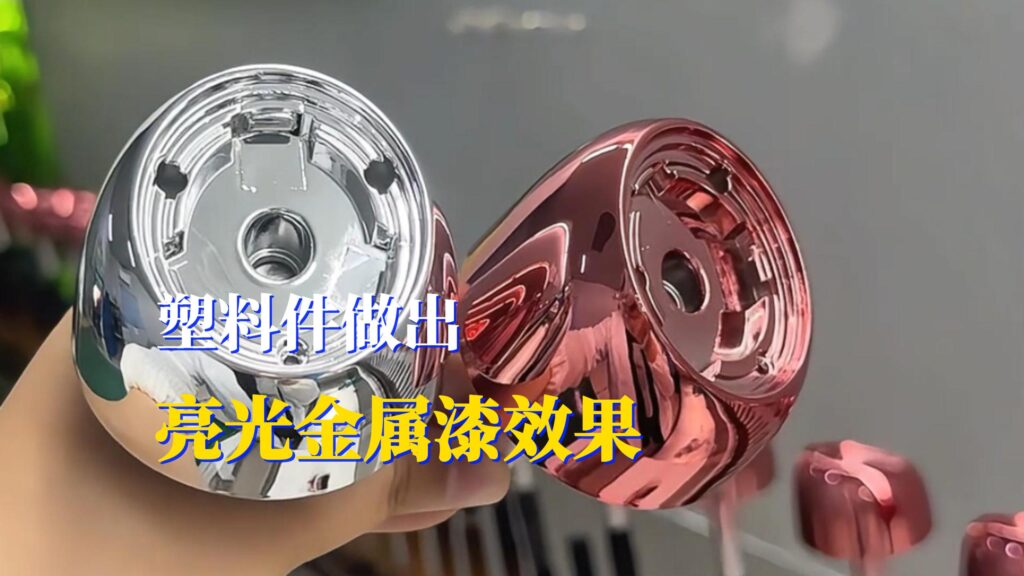
Professionally analyze the technical principles, application processes, and use cases of achieving metallic coating effects with paints; systematically introduce the advantages and value of metallic-coat paints in architectural, industrial, and decorative fields, suitable for high-end projects and commercial spaces.

I. Concept and Market Value of Metallic Coating Effects
As architectural decoration, industrial manufacturing, and home design continue to upgrade, metallic-textured surfaces have become an important trend that emphasizes both high-end visuals and functionality. Although traditional metal sheets or electroplating processes are authentic, they come with high costs, complex installation, and heavy weight. In contrast, achieving metallic coating effects with paint—thanks to advantages such as flexible application, controllable costs, and broad applicability—has gradually become the mainstream solution.
Metallic coating paints combine special resin systems with metallic pigments to simulate the visual and tactile effects of stainless steel, aluminum alloy, copper, iron, titanium gold, etc. on ordinary substrates, and are widely used in building exteriors, industrial equipment, furniture, commercial spaces, and art decoration.
II. Technical Principles of Achieving Realistic Metallic Coating Effects with Paints
The metallic coating effect is not simply "silver paint," but a comprehensive technical system based on optical reflection, pigment arrangement, and coating film structure.
First, metallic effect paints contain high-purity metallic pigments, such as aluminum silver paste, stainless steel powder, copper powder, etc. These pigments are arranged directionally within the coating film, forming a combination of specular and diffuse reflection similar to real metal.
Second, transparent or semi-transparent resin systems provide stable encapsulation for the metallic particles, allowing the coating film to exhibit a sense of depth and three-dimensionality at different angles.
Third, by controlling coating film thickness, pigment density, and surface smoothness through multiple application processes, the metallic coating effect becomes more realistic, refined, and durable.
III. Analysis of Common Types of Paints for Metallic Coatings
Common metal coating paints currently available on the market mainly include the following categories:
- Water-based metal paint: Eco-friendly with low odor, suitable for interior decoration and public spaces
- Solvent-based metallic paint: Strong adhesion, prominent metallic feel, suitable for industrial applications
- Two-component metallic paint: Excellent weather resistance and corrosion resistance, suitable for outdoor and heavy-protection scenarios
- Faux stainless steel coating paint: Can simulate brushed and mirror-finish stainless steel effects
- Liquid Metal Coating System: High metal content, texture close to real metal surface

Different metallic coating paints vary in application methods, visual appearance, and service life, and should be selected appropriately based on the actual service environment.
IV. Standard Construction Process for Achieving a Metallic Coating Effect with Paint
To achieve a stable and realistic metallic coating effect, standardized construction is crucial.
Step 1: Substrate Preparation
The substrate surface must be smooth, dry, and free of oil stains. Substrates such as metal, wood, plastic, and cement require matching corresponding primers.
Step 2: Metallic Base Coat Application
Use a dark color or specialized metallic primer to enhance the three-dimensional reflective effect of the metallic pigments.
Step 3: Metallic Effect Layer Application
Apply by spraying, rolling, or scraping to distribute the metallic pigments evenly and form a natural metallic texture.
Step 4: Protective Topcoat
A transparent protective coating can improve the wear resistance, weather resistance, and oxidation resistance of the metallic coating.
A scientific construction process directly determines the final quality of the metal coating effect.
V. Main Application Scenarios of Metallic Coating Effects
Metal coating paints, combining decorative and functional properties, are widely used in:
- Building exterior walls and curtain wall systems
- Industrial equipment and machinery enclosures
- Commercial space decoration and brand display
- Furniture, cabinets, and custom home furnishings
- Art installations and landscape engineering

Achieving a high-end metallic visual effect without increasing structural load is a key advantage of metallic coating paints.
VI. Comparative Advantages of Metallic Coating Paints over Traditional Metal Finishing Processes
Compared with traditional processes such as electroplating and stainless steel cladding, metallic coating paint is more competitive in terms of cost, construction period, and design freedom.
At the same time, the metallic coating effect can be customized through color adjustment and process variations to meet diverse design requirements.

FAQ Frequently Asked Questions (Chinese)
Q1: Are the metallic coating effects achieved with paint realistic?
A: Using professional metallic coating paint and standard construction can visually and tactilely closely approximate real metal.
Q2: Is the metallic coating paint durable?
A: Two-component or industrial-grade metallic coating paint has good weather resistance and corrosion resistance.
Q3: Which substrates can achieve a metallic coating effect?
A: Substrates such as metal, wood, cement, plastic, and fiberglass can all achieve it.
Q4: Is the metallic coating effect suitable for outdoor use?
A: Choosing a weather-resistant metallic coating system can meet the needs of outdoor use.
Q5: Is maintenance of the metal coating paint complicated?
A: Daily maintenance is simple; normal cleaning is enough to maintain the effect.