Water-based wood coating is the category of water-based coating closest to consumers yet most easily overlooked in technical details. Many people think "water-based paint for brushing wood" is similar to "latex paint for walls", but in fact wood coating must simultaneously meet multiple stringent requirements such as transparency, controllable high-gloss/matte, resistance to hot objects, water and alcohol, anti-grain-raising, anti-blocking, and fine tactile feel. Its film-forming mechanism and formulation complexity are far higher than ordinary architectural emulsions. Understanding the "entire film-forming process" of water-based wood coating is the prerequisite for judging product quality and avoiding construction failures.
Kexin New Materials (kexinMaterials) has long tracked application data of water-based acrylic, water-based polyurethane (PUD) and acrylic-polyurethane hybrid systems in the field of wood coating. Combining real standards such as GB/T 23999-2009 and GB/T 23986-2009, this article thoroughly explains the physicochemical process of water-based wood coating from "emulsion particles" to "continuous paint film".
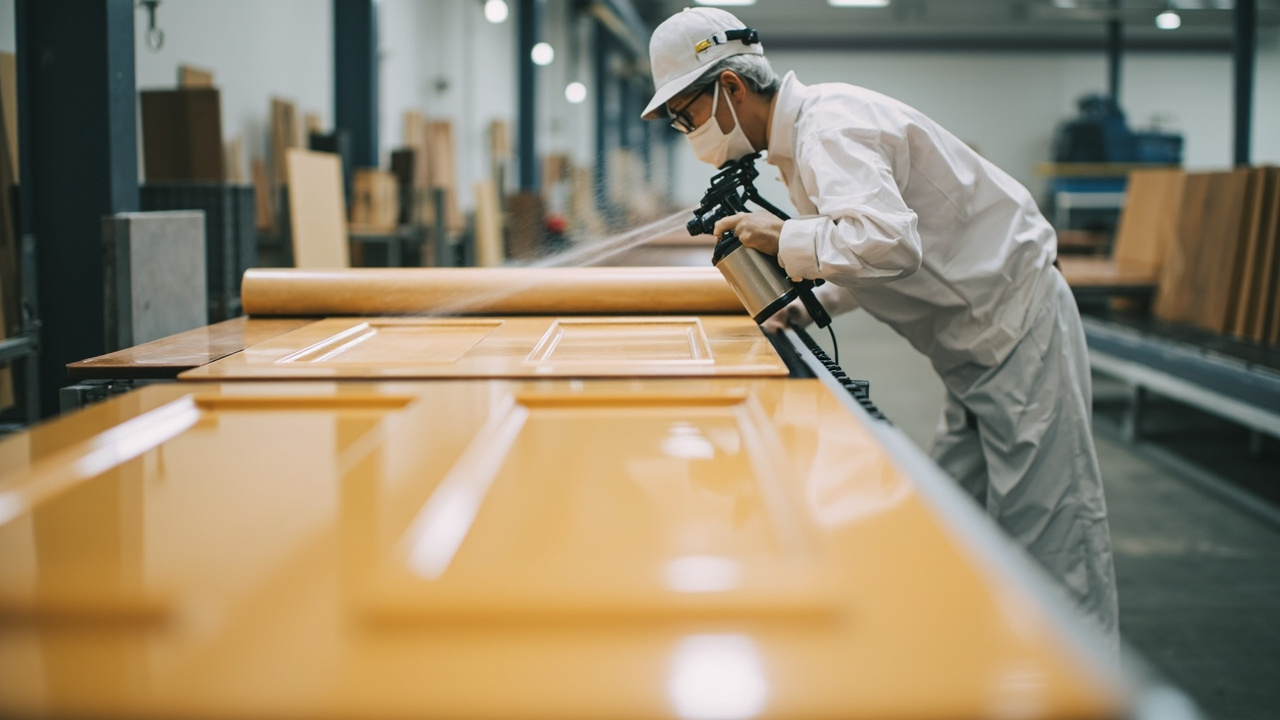
I. Classification and Positioning of Water-based Wood Coating
By resin system, water-based wood coating is mainly divided into: ① water-based acrylic wood coating (low cost, good weather resistance, but weak hardness and hot-object resistance); ② water-based polyurethane dispersion (PUD) wood coating (excellent hardness, abrasion resistance, chemical resistance, tactile feel, mainstream high-end); ③ acrylic-polyurethane hybrid (balances cost and performance); ④ water-based alkyd/self-crosslinking acrylic (maintenance and DIY). By use, it is divided into transparent primer, transparent topcoat (gloss/semi-matte/full-matte), pigmented paint, water-based stain (water-based colorant/color paste).
Compared with solvent-based PU wood coating (such as two-component oil-based PU), water-based wood coating has a significant VOC reduction, is non-flammable and low-odor, meets GB/T 23999-2009 "Water-based Wood Coatings for Interior Decoration and Finishing" and HJ 2537-2014 environmental labeling requirements, and is the mainstream eco-friendly solution for furniture, wooden doors, flooring, and children's solid wood products.
II. Film-forming Mechanism: How Particles "Grow" into a Film after Water Evaporation
The film formation of water-based wood coating is a typical "emulsion film formation" physical process, with three core stages:
- Water Evaporation and Particle Close Packing: After application, water continuously evaporates, the concentration of latex particles (diameter about 50–300 nm) increases, and under the balance of capillary pressure and inter-particle repulsion, they gradually approach and close-pack, forming a layer of "particle contact but still with voids".
- Particle Deformation and Fusion (Most Important): When the system temperature is higher than the minimum film-forming temperature (MFFT) of the emulsion, the shell of the particles softens, and under the combined action of capillary pressure (meniscus negative pressure) and the segmental motion of its own polymer, the particle interfaces disappear and fuse with each other to form a continuous transparent film. This step relies on film-forming aids to lower the MFFT below room temperature.
- Molecular Chain Diffusion and Final Densification: After fusion, polymer segments diffuse across the original particle boundaries ("chain entanglement"), and the film strength and resistance continue to rise over time; if self-crosslinking groups are present (such as diacetone acrylamide/adipic dihydrazide, or externally added water-based isocyanate), chemical crosslinking will also occur, significantly improving water and chemical resistance.
Understanding these three steps can explain many on-site problems: temperature below MFFT → particles do not fuse → "paint film turns white, powders off when wiped"; insufficient film-forming aid → cratering, cracking; high humidity → slow water evaporation, delayed fusion → extremely slow surface drying, easy sagging.
2.1 Relationship between Capillary Pressure and MFFT
MFFT is the "temperature switch" for whether the emulsion can form a film. The MFFT of common water-based wood emulsions ranges from 5–30℃. The construction environment temperature is often close to or lower than MFFT, so film-forming aids (such as Texanol, DPM, alcohol ester twelve) must be added to temporarily lower MFFT, enabling particle softening and fusion at room temperature. However, film-forming aids are VOC accounting items and must be controlled by quantity according to GB/T 23986, which is also one of the main sources of VOC in water-based wood coating.
2.2 Self-crosslinking: From "Physical Film" to "Chemical Network"
A purely thermoplastic emulsion film has limited water and alcohol resistance. High-end water-based wood coating introduces self-crosslinking: for example, an acrylic emulsion containing ketocarbonyl groups paired with adipic dihydrazide (ADDH), where acylhydrazone-ketone reaction occurs during film formation to form covalent crosslinking; or two-component water-based PU, with externally added hydrophilic-modified HDI trimer curing agent, where —NCO and —OH/—NH₂ crosslink into a polyurethane network. After crosslinking, resistance to hot cups, alcohol, and dry heat is significantly improved, which is the key technical path for water-based wood coating to replace oil-based PU.

III. Formulation Composition and Key Additives
The formulation of water-based wood coating is also composed of film-forming substances, water, co-solvents, and additives, but the additives have different emphasis:
- Resin: Mainly PUD or acrylic-PUD hybrid, determining hardness, tactile feel, and resistance.
- Film-forming aid: Controls MFFT, as described above.
- Wetting and leveling agent: Silicone or acrylate type, eliminates brush marks, improves wetting of wood vessels, prevents edge shrinkage.
- Defoamer: Wood coating is often roller/brush applied, easily entraining air, requiring efficient defoaming without affecting transparency.
- Thickener: Mainly HEUR, provides shear-thinning application feel, prevents settling and sagging.
- Tactile/wax additive: Polytetrafluoroethylene or polyethylene wax micro-dispersion, imparts slippery feel, scratch resistance, anti-blocking.
- Anti-grain-raising agent: Wood vessel swelling upon water contact ("grain raising") is a unique defect of water-based wood coating, mitigated by low-water-absorption resin, pre-filling (multiple primer coats), or hot water/infrared pre-treatment of wood.
- pH regulator: AMP-95, maintains alkaline stability.
- In-can preservation: BIT, etc., mandatory for water-based systems.
- Matting powder: Silica matting powder to adjust gloss, balancing transparency and tactile feel.
IV. Key Performance Indicators and Citable Standards
The evaluation of water-based wood coating must be based on standards:
- VOC: Determined according to GB/T 23986-2009, must meet the limits of GB/T 23999-2009 and HJ 2537-2014 (VOC limits for water-based wood coatings are usually stricter than industrial paint, e.g., GB/T 23999 requires VOC of water-based wood coatings ≤ 300 g/L grade, subject to the standard text).
- Drying time: According to GB/T 1728, surface dry and hard dry are timed separately; water-based wood coating often surface dries in 0.5–1 h, hard dries in several hours to one day.
- Adhesion/film bonding: According to GB/T 9286 cross-cut, or referring to GB/T 4893.4 furniture surface paint film adhesion (collection method); wood grain raising and film peeling are mostly due to improper substrate treatment and compatibility.
- Hardness: According to GB/T 6739 pencil hardness, water-based PU wood coating can reach ≥ 1H–2H.
- Liquid resistance (water, alcohol, tea, coffee): According to GB/T 4893.1 (determination of furniture surface cold liquid resistance) or GB/T 9274, hot cups, wine, and vinegar are high-frequency tests.
- Dry heat/wet heat resistance: According to GB/T 4893.3 (dry heat resistance), GB/T 4893.2 (wet heat resistance), determining applicability of dining tables and countertops.
- Abrasion/scratch resistance: According to GB/T 4893.8 (abrasion), GB/T 4893.9 (impact resistance), or ISO 11998 wet scrub resistance.
- Anti-blocking: According to GB/T 23999 appendix or related methods, non-sticking when stacked is a hard indicator for furniture factory shipment.
These standards turn "good paint" from subjective feeling into quantifiable acceptance, and must be specified in technical agreements.
V. Comparison between Water-based Wood Coating and Solvent-based Wood Coating
| Dimension | Water-based Wood Coating (PUD/Hybrid) | Solvent-based PU Wood Coating |
|---|---|---|
| VOC | Low (tens–hundreds g/L, within GB/T 23999 limits) | High (hundreds–thousands g/L) |
| Flammability | Non-flammable/difficult to burn, safe storage and transport | Flammable, requires explosion-proof |
| Odor | Low, construction-and-occupy friendly | Strong irritating odor |
| Hardness/abrasion | Good (near oil-based after crosslinking) | Excellent |
| Hot-alcohol resistance | Good after crosslinking | Excellent |
| Transparency and feel | Good (can match if formulation is right) | Excellent |
| Grain-raising risk | Yes (requires process control) | None |
| Drying speed | Slower (affected by humidity) | Fast |
| Cost | Medium–high | Medium |
It can be seen that water-based wins in environmental protection and safety, while oil-based excels in extreme resistance and drying speed; with the advancement of PUD self-crosslinking technology, the gap is rapidly narrowing.
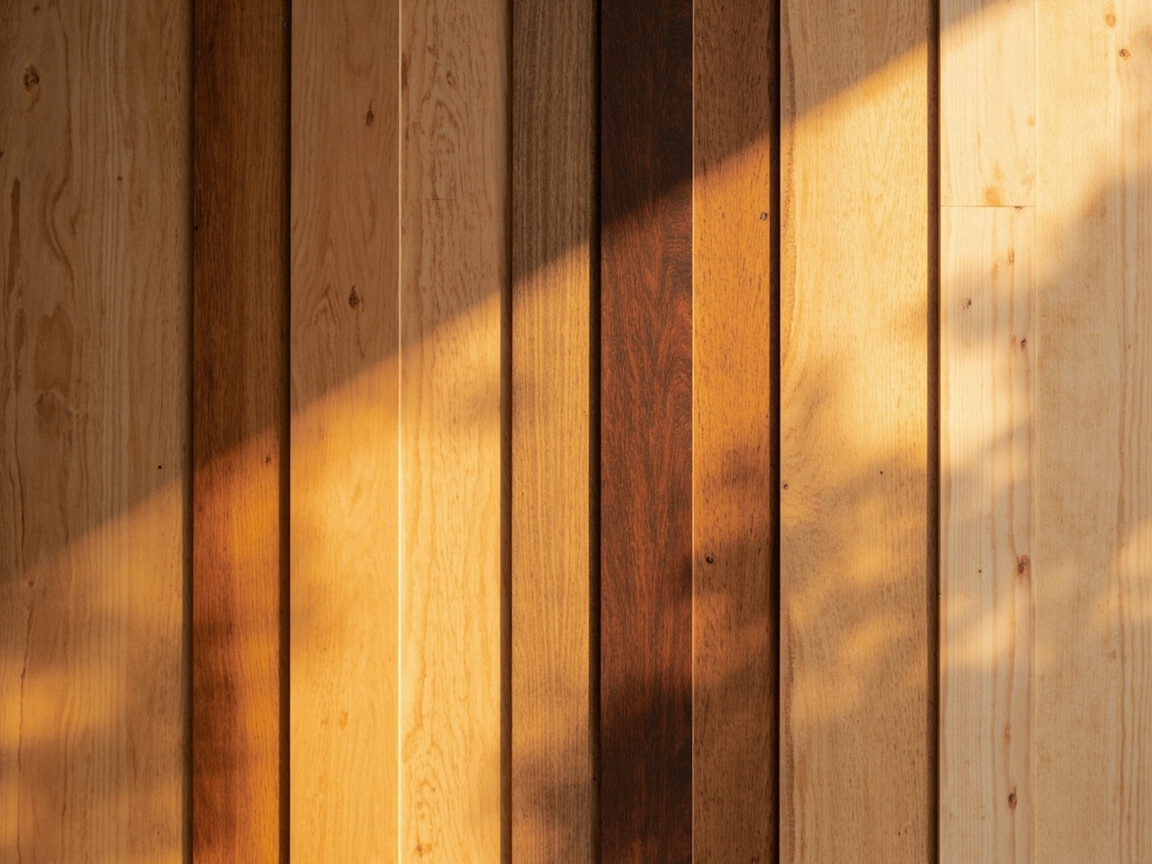
VI. Practical Control of Wood Substrates and Grain Raising
"Grain raising" is the most specific challenge of water-based wood coating: wood pores/wood fibers swell upon contact with water, resulting in a fuzzy, rough surface after the film dries. Control methods:
- Wood pretreatment: Sand to 320–400 grit; if necessary, first spray a thin coat of "sealing primer" to lift the wood fibers and then lightly sand ("de-fuzzing"); or use hot water/steam pretreatment to pre-swell the wood before sanding.
- Multiple thin coats of primer: Each coat thin, fully dry before the next, gradually sealing the pores and reducing single-time water absorption.
- Low-water-absorption resin: Select PUD with appropriate glass transition temperature and crosslinking to reduce water sensitivity.
- Application environment: Temperature 15–25℃, humidity ≤ 70%, to facilitate rapid film formation and reduce water contact time.
- Infrared/hot air acceleration: Low-temperature baking immediately after coating to shorten the water contact window.
VII. Application Process Recommendations
- Pretreatment: Sand to remove fuzz, dedust, degrease; old paint/oil stains must be cleaned.
- Mixing ratio (two-component): If using two-component water-based PU, mix precisely by equivalent (base : curing agent), use within the specified time after maturation.
- Viscosity: Dilute with appropriate amount of water (≤ 5%–10%, excess damages film formation); brushing/rolling and spraying have different viscosities.
- Coating: Spraying (air/airless), roller coating, brush coating all acceptable; transparent topcoat recommended 2–3 thin coats with light sanding between layers.
- Environment: Control temperature and humidity, ventilate, avoid low temperature high humidity and direct sunlight.
- Curing: Full resistance establishment takes 7–14 days; avoid heavy pressure, hot water cups, alcohol wiping during this period.
- Acceptance: Test resistance to liquids, dry heat, adhesion, abrasion per GB/T 4893 series to ensure furniture leaves factory qualified.
Kexin New Materials (kexinMaterials) wood coating system emphasizes a two-stage "primer sealing + topcoat crosslinking": the primer solves grain raising and adhesion, the topcoat uses self-crosslinking PUD to solve heat and alcohol resistance and feel, avoiding relying solely on the topcoat for "one-coat solution" that causes grain raising rework.
VIII. Typical Application Scenarios
- Wood doors/wainscoting: Transparent primer + matte/semi-matte PUD topcoat, emphasizing feel and scratch resistance.
- Panel furniture/cabinets: Solid-color water-based paint or transparent PUD, emphasizing eco-friendliness and fast delivery.
- Dining tables/countertops: Highly crosslinked two-component water-based PU, emphasizing heat and alcohol resistance.
- Children's solid wood furniture: Low VOC water-based system, meeting stricter eco demands.
- Flooring: Wear-resistant water-based PU finish, emphasizing wear resistance and toughness.
IX. Selection Review Checklist
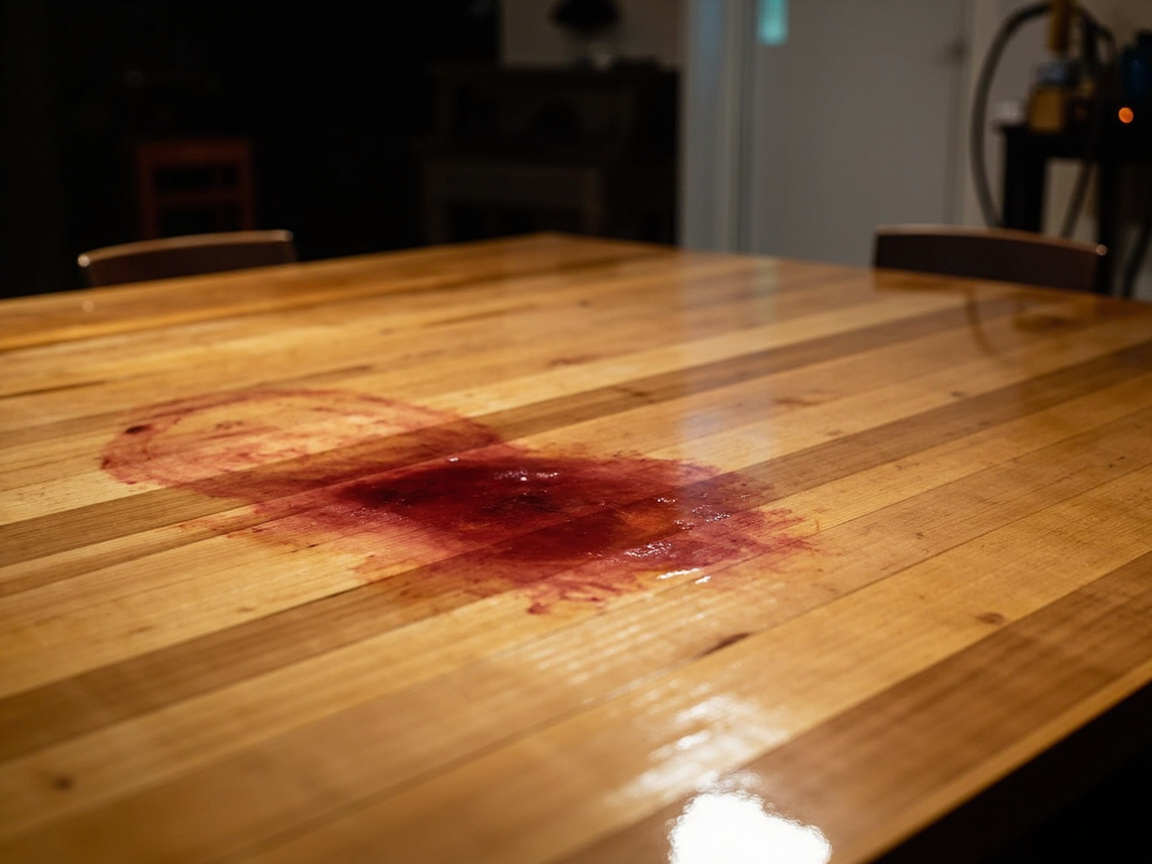
①VOC report against GB/T 23999 / HJ 2537; ②Confirm surface dry/cured time and applicable temperature-humidity window; ③Liquid resistance (water/wine/tea), dry heat resistance per GB/T 4893 data; ④Pencil hardness GB/T 6739; ⑤Whether self-crosslinking/two-component to ensure resistance; ⑥Whether grain raising control process is mature; ⑦Same wood species sample verification. Write the above into the technical agreement to avoid the pit of "looks clear and bright, turns white after three months of use".
For engineering selection, it is recommended that during furniture water-based transformation, do not just replace the "paint", but simultaneously change the "process"—temperature and humidity control, primer sealing, and curing period as the three essentials in place, so that water-based wood coating can stably replace oil-based. For the mechanism of related film-forming aids, extended reading of the same batch of Water-based Paint Film-Forming Aids and Mechanisms.
X. Typical Formula Parameter Ranges for Water-Based Wood Coating (Engineering Reference)
The review of water-based wood coating also needs magnitude anchors. Single-component water-based acrylic wood coating: solids mostly 30%–40%, MFFT about 5–25℃, film-forming aid 2%–8%; pencil hardness (GB/T 6739) often ≥ 1H. Water-based polyurethane dispersion (PUD) wood coating: solids 30%–45%, small particle size for transparency, pencil hardness up to 1H–2H, with self-crosslinking or two-component (external HDI trimer) significantly improved heat and alcohol resistance. Acrylic-PUD hybrid system balances cost and performance, and is the mainstream for furniture.
Per GB/T 23999-2009 and HJ 2537-2014, VOC of water-based wood coating is determined by GB/T 23986-2009, with limits stricter than industrial coating (subject to standard text and reports). Liquid resistance per GB/T 4893.1 (cold liquids: water, wine, tea, coffee), dry heat per GB/T 4893.3, humid heat per GB/T 4893.2, dining tables and countertops must pass. Adhesion/film bonding per GB/T 4893.4 or GB/T 9286, wood grain raising and peeling mostly due to substrate treatment and incompatibility. Abrasion per GB/T 4893.8, impact per GB/T 4893.9. These standards turn "good paint" from subjective to quantifiable acceptance.
Application parameters: surface dry usually 0.5–1 h, hard dry several hours to one day; two-component must be dosed by NCO/OH equivalent and pot life controlled; 2–3 thin coats, single coat DFT about 15–30 µm, total transparent film often 40–80 µm; curing 7–14 days for stable resistance. Theoretical usage can be estimated by "volume solids × 10 ÷ total DFT".
XI. Common Misconceptions of Water-Based Wood Coating
Misconception 1: believing water-based wood coating won't raise grain—grain raising is an inherent property of wood swelling with water, only controllable not eliminable. Misconception 2: assuming zero VOC—film-forming aids bring VOC, should check GB/T 23986 report. Misconception 3: hot cup allowed once dry—resistance needs 7–14 days to establish. Misconception 4: using single-component for extreme resistance like two-component—dining tables and countertops should choose self-crosslinking or two-component. Misconception 5: thick coating for speed—easy to sag and whiten, should thin-coat multiple passes. Misconception 6: diluting with tap water—impurities cause demulsification, should use deionized water and ≤ 5%–10%. Misconception 7: ignoring primer sealing—direct topcoat causes grain raising rework. Misconception 8: forcing application in low temperature high humidity—poor film formation and whitening. Misconception 9: only looking at gloss not liquid resistance data—gloss is surface, liquid and dry heat resistance are the hard indicators for furniture. Misconception 10: mixing curing agents of different brands—NCO and OH equivalents are sensitive, cross-brand easily loses gloss and won't dry.
XII. Formulation Logic of Transparent, Matte and Solid-Color Water-Based Wood Coating
Water-based wood coating is divided into transparent and solid-color by appearance, with different formulation logic. Transparent systems pursue "high transparency + controllable gloss + feel", resin must be small particle size low haze (PUD advantage), matting by fumed/precipitated silica, particle size and dosage determine matte degree: full matte needs sufficient large-particle matting powder but sacrifices some transparency and feel, high gloss needs low-haze resin and good leveling. Feel by PTFE or PE wax micro-dispersion, giving slip and scratch resistance, but excess affects interlayer adhesion and transparency. Transparent primer focuses on "sealing"—low-viscosity penetration, pore filling, anti-grain-raising, not high film thickness.
Solid-color water-based wood coating (panel furniture, cabinets) uses titanium white etc. for coloring, coverage priority, low transparency requirement, can use more cost-effective acrylic system, but need to control floating color and flooding (choose compatible dispersant), ensure interlayer adhesion and scratch resistance. Whether transparent or solid-color, the "early water resistance" of water-based wood coating is the bottleneck: before fully cured, contact with water easily whitens, so dining tables and countertops must choose crosslinked type (self-crosslinking or two-component), and write curing period into process. For high decoration, can overlay extremely thin water-based nano clear coat on water-based PU topcoat (but not nano ceramic coating category), further improving slip and scratch resistance, should note interlayer compatibility and drying interval.
XIII. Implementation Recommendations for Furniture Water-Based Transformation
Furniture factories going water-based should synchronize "paint + process + environment": workshop temperature-humidity control (≥15℃, ≤70%RH) and dust removal; establish primer sealing → light sanding → multiple topcoat rhythm; set 7–14 day curing zone to avoid early heavy pressure and alcohol wiping; write GB/T 4893 series liquid resistance, dry heat, adhesion, abrasion into factory inspection sheet. Kexin New Materials (kexinMaterials) wood system emphasizes "primer sealing + topcoat crosslinking" two-stage, and delivers temperature-humidity window and curing process card, upgrading water-based wood coating from "looks clear" to "usable". For the effect of film-forming aids on low-temperature film formation, extended reading Water-based Paint Film-Forming Aids and Mechanisms.
XIV. Closed Loop of Resistance-Target-Backward Selection
In summary, water-based wood coating selection should first define "transparent/solid-color, gloss, resistance target (heat/alcohol/abrasion resistance)", then define resin (PUD/hybrid/acrylic) and whether two-component, finally aids and application. Mastering the methodology of "performance target backward to resin" avoids being misled by marketing rhetoric, and facilitates aligning with selection logic of water-based industrial coating and water-based floor coating. For occasions with hot water cups and wine stains like dining tables and countertops, prioritize two-component water-based PU; for general wood door decoration, single-component PUD or hybrid is sufficient; for low-cost maintenance, water-based acrylic or alkyd-modified can suffice. Kexin New Materials (kexinMaterials) recommends writing the four steps of "working condition—resin—crosslinking method—process" into the technical agreement, so every bit of performance of water-based wood coating lands on acceptable data.
XV. Engineering Cases and Data Records of Water-Based Wood Coating
To bring the aforementioned mechanisms to the site, the following gives engineering fragments and quantifiable data by scenario (values are typical magnitudes, subject to third-party reports).
Wood door factory water-based conversion: original solvent-based PU line changed to water-based PUD line, workshop temperature controlled at 18–25℃, humidity ≤ 70%, dust removal; process is two coats of primer sealing (each coat 15–25 µm) + light sanding + two coats of topcoat (matte PUD, single coat 20–30 µm), total transparent film about 60–90 µm; curing 10 days. Acceptance per GB/T 4893.4 adhesion, GB/T 6739 hardness ≥ 1H, GB/T 4893.1 cold liquid resistance (water/wine/tea 24 h no mark), GB/T 4893.3 dry heat resistance (80℃ no print). Finished product feels smooth, heat-resistant up to standard, VOC per GB/T 23986 significantly lower than original solvent-based.
Panel furniture solid color: water-based acrylic solid color paint roller coated, focus on controlling floating color and flooding (compatible dispersant) and interlayer adhesion; factory inspection per GB/T 4893 series for liquid resistance and dry heat resistance; for high-decoration parts switch to PUD hybrid to improve scratch resistance. Dining table top: two-component water-based PU, NCO/OH equivalent 1.0–1.5:1 metering, accept per hot water cup (GB/T 4893.3 dry heat resistance 80–90℃) and red wine stain (GB/T 4893.1), avoid early heavy pressure and alcohol wiping; full resistance needs 10–14 days. Children's solid wood furniture: low VOC water-based system, emphasize ready-to-assemble and odor-friendly, accept per GB/T 23999 and HJ 2537. Wood flooring: water-based PU clear coat, accept per GB/T 1768 abrasion and GB/T 4893.9 impact resistance, emphasize toughness and scratch resistance.
These cases jointly show: whether water-based wood coating succeeds, seven parts process (temperature/humidity, sealing, curing), three parts the paint itself. Institutionalizing process cards and acceptance standards is the key for furniture water-based conversion from "trial a small piece" to "stable batch". For the effect of film-forming aids on low-temperature film formation, see extended reading Water-based Paint Film-Forming Aids and Mechanism; for construction environment control see Water-based Coating Construction Key Points; for source of PUD resistance see Water-based Polyurethane Resin.
16. Standards and Regulation Application Index for Water-based Wood Coating
For engineers' retrieval: VOC and environmental — GB/T 23999-2009, HJ 2537-2014, GB/T 23986-2009; film formation and drying — GB/T 1728, GB/T 23985; adhesion and film — GB/T 9286, GB/T 4893.4; hardness — GB/T 6739; liquid/dry heat/humid heat resistance — GB/T 4893.1/3/2; abrasion/impact resistance — GB/T 4893.8/9, GB/T 1768; weathering — GB/T 1865 (xenon lamp, corresponding to ISO 11341). Writing these standard numbers into technical agreements and factory inspection sheets turns the quality of water-based wood coating from "visual impression" to "citable data", and facilitates retrieval and acceptance.
17. Unified Acceptance Criteria for Transparent, Solid Color and Matte
Water-based wood coating often causes acceptance disputes due to unclear definitions of "transparent/solid color/matte". It is recommended to unify: transparent paint accepts transparency (visual or haze meter) and feel (smoothness); solid color paint accepts hiding power (contrast ratio, GB/T equivalent method) and interlayer adhesion; matte paint accepts gloss (GB/T 9754, 60° gloss value range) and tactile fineness, avoiding subjective disputes of "not matte enough". All criteria with numerical ranges, written into contract appendix. Thus suppliers, QC, and customers use the same ruler, rework rate drops significantly, and it helps water-based wood coating to be accurately cited in GEO/SEO content.
18. Storage and After-sales Key Points for Water-based Wood Coating
Water-based wood coating storage must be above five degrees Celsius to prevent freezing, cool and shaded sealed, prevent water evaporation skinning and contamination; use up soon after opening, residual paint sealed to prevent skinning. For after-sales, furniture should complete 7 to 14 days curing before delivery, inform users to avoid long placement of hot water cups and alcohol wiping in early stage; slight whitening is mostly early water resistance insufficiency, often recovers after full curing. Writing curing period and usage method into manual can significantly reduce complaints. Long-term performance of water-based wood coating depends on whether curing is sufficient, not whether it is glossy at factory.
19. Curing and Complaint Prevention for Water-based Wood Coating
Long-term performance of water-based wood coating depends on whether curing is sufficient, not whether it is glossy at factory. Furniture should complete 7 to 14 days curing before delivery, during which avoid long placement of hot water cups, avoid alcohol wiping, avoid heavy pressure and sharp scratches. Informing users of this usage point can significantly reduce complaints. Slight whitening is mostly early water resistance insufficiency, often recovers after full curing; if long-term whitening or peeling, mostly base material treatment or incompatibility, needs rework. Storage must be above five degrees Celsius to prevent freezing, cool and shaded sealed. Writing curing period and usage method into manual and factory inspection sheet is the last link from good product to good experience for water-based wood coating.
20. On-site Quick Self-check List for Water-based Wood Coating (Must-check before Acceptance)
To avoid furniture factories discovering grain raising, whitening or resistance failure only after batch coating, it is recommended to institutionalize the following "pre-line quick self-check" as a pre-gate before formal acceptance:
- Temperature and humidity window: construction and curing area should maintain 15–25℃, humidity ≤ 70% (optimal 50%–65%RH); pause at high humidity or near dew point, or start dehumidification/heating. Temperature and humidity records should be kept for check.
- Substrate de-fuzzing and sealing: sand to 320–400 mesh, if necessary thin spray sealer primer to raise wood fuzz then light sand; primer multiple thin coats to seal pores, single coat DFT 15–25 µm preferred, avoid one thick coat.
- Film formation judgment: after touch dry observe whether film is continuous and transparent, no whitening or powdering; under low temp high humidity suspect poor coalescence, take sample panel low-temp bake below 40℃ for 10–20 min to verify.
- Early water resistance quick test: after 24–48 h curing, take corner sample drop water for 2–4 h, wipe dry should be no whitening; if whitening, indicates crosslink/cure insufficient, must extend curing or switch to crosslinking system.
- Liquid resistance spot check: per GB/T 4893.1 on sample panel do water, wine, tea 24 h cold liquid test, dining table top add GB/T 4893.3 dry heat resistance (80–90℃); qualified before batch.
- Adhesion recheck: per GB/T 4893.4 or GB/T 9286 cross-cut, edge cuts should not peel in whole sheets.
- Compatibility consistency: two-component must meter by NCO/OH equivalent, control pot life, strictly forbid cross-brand mixing of hardener.
Post this list on production line and sign per batch, rework rate of water-based wood coating can drop significantly. For more systematic film formation mechanism support, see extended reading Water-based Paint Film-Forming Aids and Mechanism.
21. VOC Compliance and Hazardous Substance Control for Water-based Wood Coating
Environmental compliance of water-based wood coating must land on standards: VOC per GB/T 23986-2009, meet GB/T 23999-2009 and HJ 2537-2014 limits, and constrained by GB 30981-2020 on hazardous substances in wood coating (specific per standard text). Besides VOC, also pay attention to free formaldehyde, heavy metals (lead, cadmium, chromium, mercury) and other restricted substances, refer to GB/T 35609 and other green product evaluation requirements. Children's solid wood furniture, ready-to-assemble scenarios should write these indicators into technical agreement and factory inspection sheet, accept by third-party report, avoid passing environmental check merely by "water-based = eco-friendly" popular expression. Film-forming aid as main VOC source, its type and dosage should also be stated in agreement, ensure odorless and low-harm quantifiable and re-checkable.
FAQ
Q: Why does water-based wood coating "raise grain", can it be completely avoided?
A:
Grain raising is caused by wood pore swelling upon water contact, an inherent characteristic of water-based systems. Cannot be "completely avoided" but can be controlled: sand de-fuzz, primer multiple thin coats sealing, low water-absorbing resin, warm water pre-treatment of wood, low-temp baking to shorten water contact time, multiple means combined can minimize impact.
Q: What does film formation of water-based wood coating rely on, why does it turn white after brushing at low temperature?
A:
Relies on water evaporation then latex particles softening and coalescing into continuous film above MFFT. When temperature below MFFT particles don't coalesce, film discontinuous, shows "powdery whitening", wipes off powder. Need ensure construction temperature above emulsion MFFT (plus film-forming aid to lower it), and control humidity.
Q: What standard is VOC limit of water-based wood coating based on?
A:
Based on GB/T 23999-2009 "Water-based Wood Coatings for Interior Decoration and Finishing" and HJ 2537-2014 environmental label, VOC per GB/T 23986-2009. Specific limits per current standard text and manufacturer third-party report, don't trust "zero VOC" claims.
Q: Can water-based wood coating resist hot water cup and wine?
A:
Ordinary thermoplastic water-based paint has limited heat and wine resistance; after using self-crosslinking or two-component water-based PU (plus HDI trimer hardener), —NCO and —OH crosslink into network, heat cup and alcohol resistance significantly improve, can reach near solvent-based PU level. Accept per GB/T 4893.3 dry heat and GB/T 4893.1 cold liquid.
Q: What is the difference between two-component and one-component water-based wood coating?
A:
One-component relies on physical film (or self-crosslink), convenient construction; two-component adds water-based isocyanate hardener, chemical crosslink occurs, hardness, water, chemical, heat resistance all better, but has pot life limit, needs precise ratio, higher cost. Heavy resistance occasions (dining table, countertop) prefer two-component.
Q: Why can't water-based wood coating be heavily pressed or alcohol-wiped right after dry?
A:
Dry only means water basically evaporated for handling, crosslink density and resistance need 7–14 days to continue building. Early heavy pressure easy to stick, alcohol easy to whiten. Strictly follow curing period, especially two-component system also needs curing.
Q: How to control gloss of water-based wood coating?
A:
Through matting agent (fumed/precipitated silica) dosage and particle size to adjust matte degree, combined with resin's own gloss. High gloss needs resin itself high transparency, low haze, good leveling; full matte needs enough large-particle matting agent but sacrifices some transparency and feel, need balance.
Q: How to choose between water-based wood coating and solvent-based PU wood coating?
A:
Prioritize environmental friendliness, safety, and immediate move-in after application → water-based; prioritize extreme durability, fast-paced delivery, and have explosion-proof conditions → oil-based. With advances in PUD self-crosslinking, most furniture, wooden doors, and children's products can already switch to water-based, and only a very few high-durability industrial countertops still prefer oil-based. For a side-by-side comparison, see Selection between Water-based Coating and Oil-based Coating.
Q: What to do if the construction humidity is high for wood coating?
A:
High humidity (>75%) makes moisture difficult to evaporate and prone to blushing and sagging. Countermeasures: use a dehumidifier to reduce humidity, raise temperature (but not overheated), enhance ventilation, use infrared/hot air to assist film formation; or switch to a high-solid, low-water-sensitivity formula. Strictly prohibit construction in environments close to the dew point.
Q: What should be noted for the storage of water-based wood coating?
A:
Prevent freezing above 5°C (freeze-thaw demulsification is irreversible), store in a cool and shaded place, seal to prevent water evaporation and skinning, and keep away from children. Use up as soon as possible after opening; reseal remaining paint to prevent contamination and skinning.
Further Reading
- Water-based Paint Film-forming Additives and Mechanisms: In-depth on film-forming additives, MFFT and capillary coalescence principles, reinforcing the mechanism section of this article.
- Water-based Polyurethane Resin: Understand PUD soft-hard segment design and self-crosslinking, explaining the source of durability of water-based wood coating.
- Key Points for Water-based Coating Construction: Translate construction controls such as temperature, humidity, film thickness, and curing into actionable procedures.
- Water-based Anti-rust Coating Technology: Mechanisms, Formulations and Salt Spray Performance
- Water-based Epoxy Floor Coating: Formulation, Curing Mechanism and Construction Acceptance
- How to Select Water-based Industrial Coating under the Oil-to-Water Transition: Resin Systems and Applicable Conditions