Rusting of steel in the natural environment is an inevitable thermodynamic tendency; the essence of industrial coating is to use an "artificial barrier + chemical intervention" to isolate steel from water, oxygen, and electrolytes, and to actively slow down electrochemical corrosion. Under the pressure of environmental regulations (GB 30981-2020) in recent years, water-based anti-corrosion coating has rapidly gained popularity, but it is by no means as simple as "replacing the solvent in solvent-based anti-rust paint with water"—the high surface tension of water, the difficulty of spreading on metal substrates, and the sensitivity of water-based systems to flash rust all make water-based anti-rust a category with extremely high technical barriers.
Kexin New Materials (kexinMaterials) has accumulated a large amount of salt spray data in the fields of water-based epoxy zinc-rich, water-based acrylic anti-rust, and water-based rust stabilization. This article, in combination with standards such as GB/T 1771-2007 and ISO 12944-2018, breaks down the "protection language" of water-based anti-rust clearly.
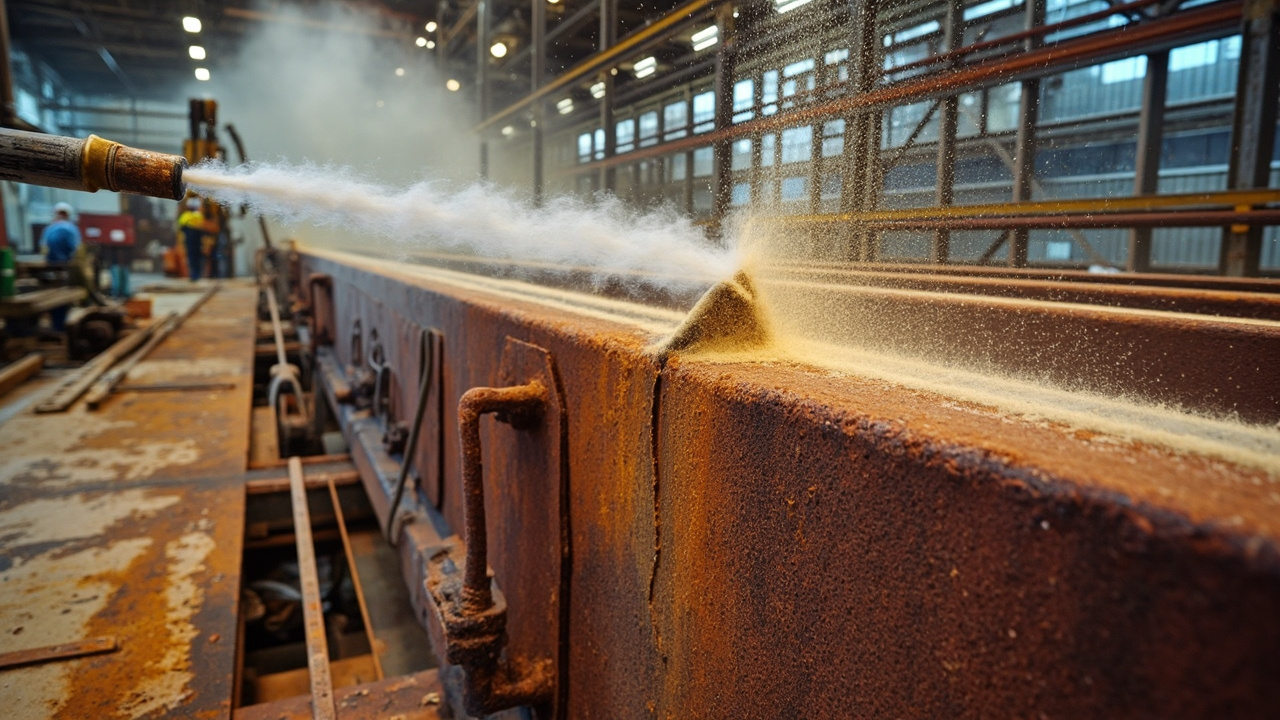
I. Steel Corrosion and the Positioning of Water-Based Anti-Rust
Steel corrosion is an electrochemical process: at the anode Fe → Fe²⁺ + 2e⁻, at the cathode O₂ + 2H₂O + 4e⁻ → 4OH⁻, generating Fe(OH)₂ which is further oxidized into rust (Fe₂O₃·xH₂O). Anti-corrosion coating blocks this cycle through four mechanisms:
- Barrier: A dense paint film blocks water, oxygen, and ions from reaching the metal. Flake fillers (micaceous iron oxide, glass flakes, aluminum powder) lengthen the penetration path of corrosive media ("maze effect").
- Passivation: Anti-rust pigments (zinc phosphate, aluminum tripolyphosphate, molybdate) react with the metal to form a stable protective film (phosphating film/oxide), inhibiting anodic dissolution.
- Cathodic Protection: Active metal zinc powder (zinc-rich primer) acts as a sacrificial anode, preferentially corroding itself to protect the iron substrate until the zinc layer is depleted.
- Rust Stabilization/Conversion: Rust converters transform loose Fe₂O₃ into stable complexes (e.g., tannic acid reacts with iron to form black ferric tannate), or rust stabilizers passivate active rust, facilitating application over rust.
Water-based anti-rust paint often combines multiple mechanisms: water-based epoxy zinc-rich = barrier + cathodic protection; water-based zinc phosphate primer = barrier + passivation; water-based rust conversion primer = rust stabilization + barrier.
II. Typical Water-Based Anti-Rust Systems
2.1 Water-Based Epoxy Zinc-Rich Primer
Water-based epoxy (self-emulsifying 2nd generation) dispersion + water-based amine curing agent + high-content zinc powder (metallic zinc content often ≥ 60%–80% of dry film, subject to product and ISO 12944 compatibility). Mechanism is mainly cathodic protection with barrier as secondary. Advantages: strong adhesion to blasted steel, extremely high salt spray resistance (up to thousands of hours), good compatibility with subsequent epoxy/polyurethane; disadvantages: high zinc content leads to porous film requiring topcoat sealing, high demands on application and mixing, and prone to missed spots on complex areas such as welds.
2.2 Water-Based Acrylic Anti-Rust Primer
Water-based acrylic emulsion + non-toxic anti-rust pigments such as zinc phosphate/aluminum tripolyphosphate. Mechanism is mainly barrier + passivation, heavy-metal free. Advantages: single-component, easy application, fast drying, moderate cost, eco-friendly; disadvantages: weaker salt spray resistance than epoxy zinc-rich, suitable for C2–C4 low-to-medium corrosion.
2.3 Water-Based Alkyd/Modified Anti-Rust Paint
Water-based alkyd or styrene/acrylic modified, single-component, good leveling, acceptable adhesion, suitable for general industrial maintenance and machinery appearance (C2–C3). Early weak water resistance and slow drying were its shortcomings, requiring modification to reinforce.
2.4 Water-Based Rust Conversion/Rust Stabilization Primer
Contains tannic acid, phosphoric acid, oximes, etc., applied directly on rusted surfaces; after converting/stabilizing active rust it forms a primer layer. Suitable for on-site maintenance where complete blasting is impossible, but requires stable rust layer, controllable thickness, and accompanying sealing.
III. Flash Rust: The Specific Enemy of Water-Based Anti-Rust
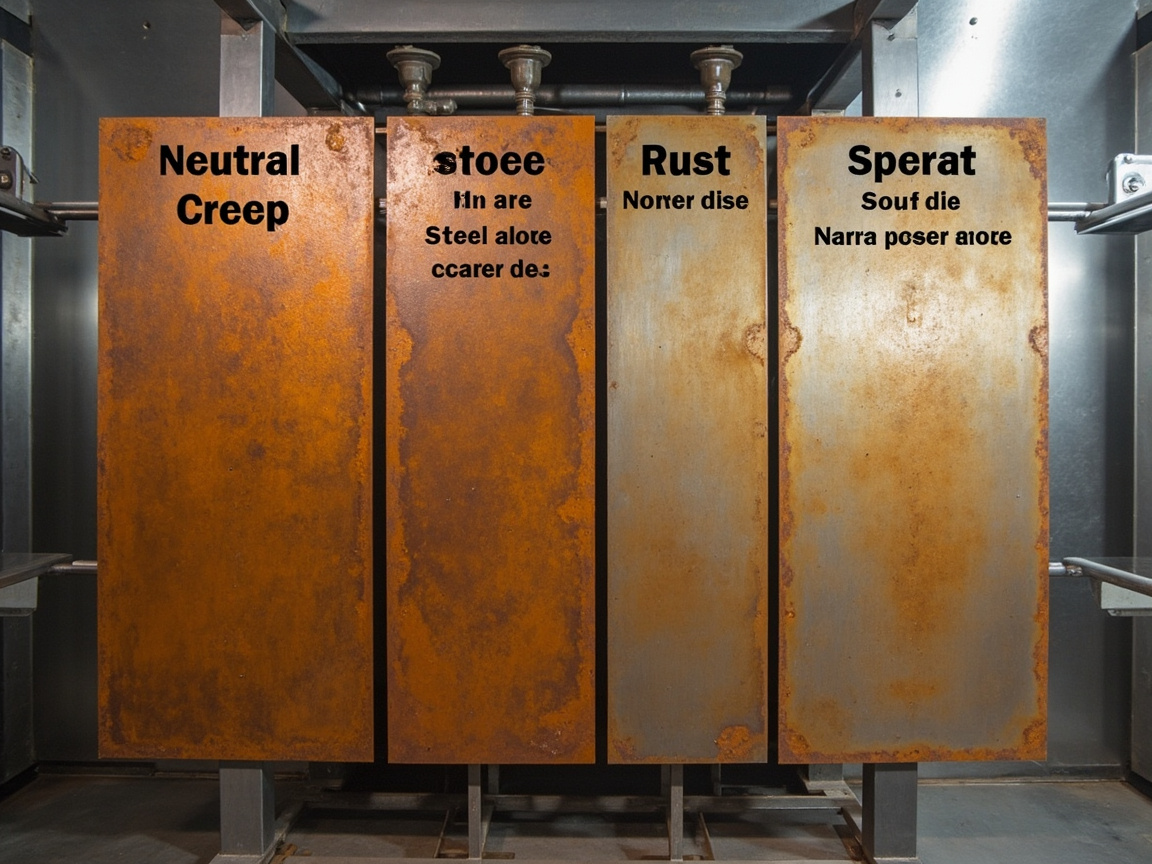
Water-based anti-rust paint has a problem that solvent-based does not—Flash Rust: after water-based paint is applied to a steel surface, water wetting instantly triggers rapid pitting corrosion at the interface, leaving reddish-brown rust spots after drying. The cause is water acting as an electrolyte accelerating local electrochemical corrosion, most severe when the substrate is unclean, the environment is highly humid, and before the film has formed.
Countermeasures: ① substrate cleaning and appropriate roughness; ② add flash rust inhibitors (such as sodium nitrite, molybdate, organic zinc complexes, vapor phase inhibitors) to form a protective film at the interface to delay flash rust; ③ film formation as soon as possible (add film-forming aids, control temperature and humidity); ④ avoid application in high-humidity environments. Flash rust inhibitor selection must balance effectiveness with VOC/toxicity compliance (sodium nitrite is controversial, tendency toward molybdenum-based/organic-based).
IV. Key Performance Indicators and Standards
- Neutral Salt Spray Resistance: Per GB/T 1771-2007, assess rust creep from scribe (mm) and blistering grade; water-based epoxy zinc-rich can reach hundreds to over a thousand hours (subject to report). ISO 9227 corresponds to the neutral salt spray method.
- Adhesion: Per GB/T 9286 cross-cut / GB/T 5210 pull-off, metal substrate is a hard threshold.
- VOC: Per GB/T 23986, meet the limits for water-based industrial protective coating in GB 30981-2020.
- Dry Film Zinc Content: Determined by relevant chemical methods (e.g., GB/T 6890 related to zinc powder, or manufacturer method) for metallic zinc content of zinc-rich primer.
- Water Resistance/Salt Water Resistance: Per GB/T 9274 or ISO 2812.
- Corrosion Grade Compatibility: Per ISO 12944-2 define C2–C5 grades, then select compatible system and total dry film thickness.
- Scribe Corrosion Creep: After salt spray per ISO 12944-9 or GB/T grading, a core criterion for zinc-rich primer.
Looking at "salt spray hours + scribe creep" together is more scientific than hours alone, because zinc-rich primer often shows "rust creeps only after zinc is sacrificed", so high hours with large creep is not necessarily good.
V. Comparison of Four Water-Based Anti-Rust Systems
| Dimension | Water-Based Epoxy Zinc-Rich | Water-Based Acrylic Anti-Rust | Water-Based Alkyd Modified | Water-Based Rust Conversion |
|---|---|---|---|---|
| Primary Mechanism | Cathodic Protection + Barrier | Barrier + Passivation | Barrier | Rust Stabilization + Barrier |
| Heavy Anti-Corrosion | Excellent (C4–C5) | Medium (C2–C4) | Relatively Weak (C2–C3) | Depends on Substrate |
| Application | Two-component, demanding | Single-component, convenient | Single-component, convenient | Single-component, over rust |
| Salt Spray Resistance | High (thousand-hour level) | Medium (hundreds of hours) | Lower | Medium |
| Cost | High (zinc powder expensive) | Medium | Low | Low |
| Suitable For | Heavy steel structures/bridges | General equipment | Maintenance decoration | On-site maintenance |
Selection logic: heavy anti-corrosion steel structure → water-based epoxy zinc-rich + micaceous iron intermediate + PU topcoat; general equipment → water-based acrylic anti-rust; maintenance → water-based alkyd/rust conversion.
VI. Compatible System Design (ISO 12944 Approach)
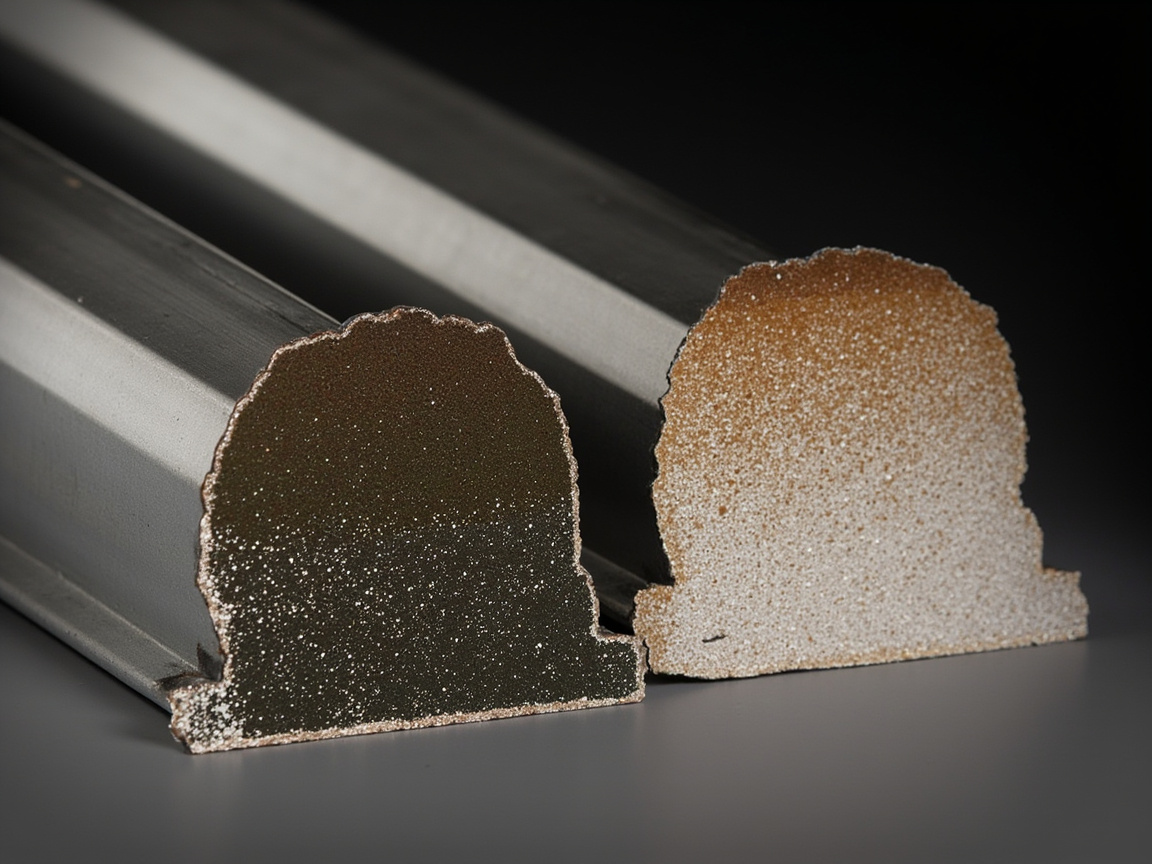
Water-based anti-rust is rarely used alone; follow the "primer + intermediate + topcoat" compatibility of ISO 12944:
- Primer: Water-based epoxy zinc-rich (heavy anti-corrosion) or water-based zinc phosphate acrylic (medium).
- Intermediate Coat: Water-based epoxy micaceous iron oxide (barrier, thickness build, increase DFT).
- Topcoat: Water-based acrylic or water-based polyurethane (weather-resistant decoration).
Total DFT by corrosion grade: C3 approx. 200 µm, C4 approx. 240 µm, C5 approx. 280–320 µm (reference ISO 12944 system). Water-based systems have limited single-coat thickness (thick coating prone to sagging, slow surface dry), often requiring multiple coats to reach design total thickness.
Kexin New Materials (kexinMaterials) emphasizes a "zinc-rich primer + micaceous iron intermediate + PU topcoat" three-stage approach in heavy anti-corrosion water-based projects, and uses salt spray scribe creep as the core acceptance criterion rather than just reporting hours. For the deep mechanism of cathodic protection of epoxy zinc-rich, extended reading is available at Cathodic Protection Mechanism of Epoxy Zinc-Rich Primer (published system).
VII. Application Key Points and Defects
- Surface Treatment: Blasting Sa 2½ (ISO 8501-1 / GB/T 8923.1), zinc-rich primer is extremely sensitive to cleanliness; oil/salt residue destroys cathodic protection uniformity.
- Environment: Temperature ≥ 5℃, humidity ≤ 80%, substrate at least 3℃ above dew point.
- Mixing (Two-Component): Water-based epoxy zinc-rich with amine curing agent mixed by equivalent, zinc powder tends to settle, must be continuously stirred and control pot life.
- Film thickness: Zinc-rich primer single coat about 60–80 µm, too thick easily cracks and causes uneven zinc powder distribution.
- Intercoat: After primer surface dry, promptly apply intermediate coat to avoid white rust on zinc layer (zinc oxidation) affecting compatibility.
- Troubleshooting defects: Flash rust (add inhibitor, control environment), pinholes (defoam, seal substrate), poor adhesion (clean, roughness), sagging (control film thickness viscosity).
VIII. Typical Application Scenarios
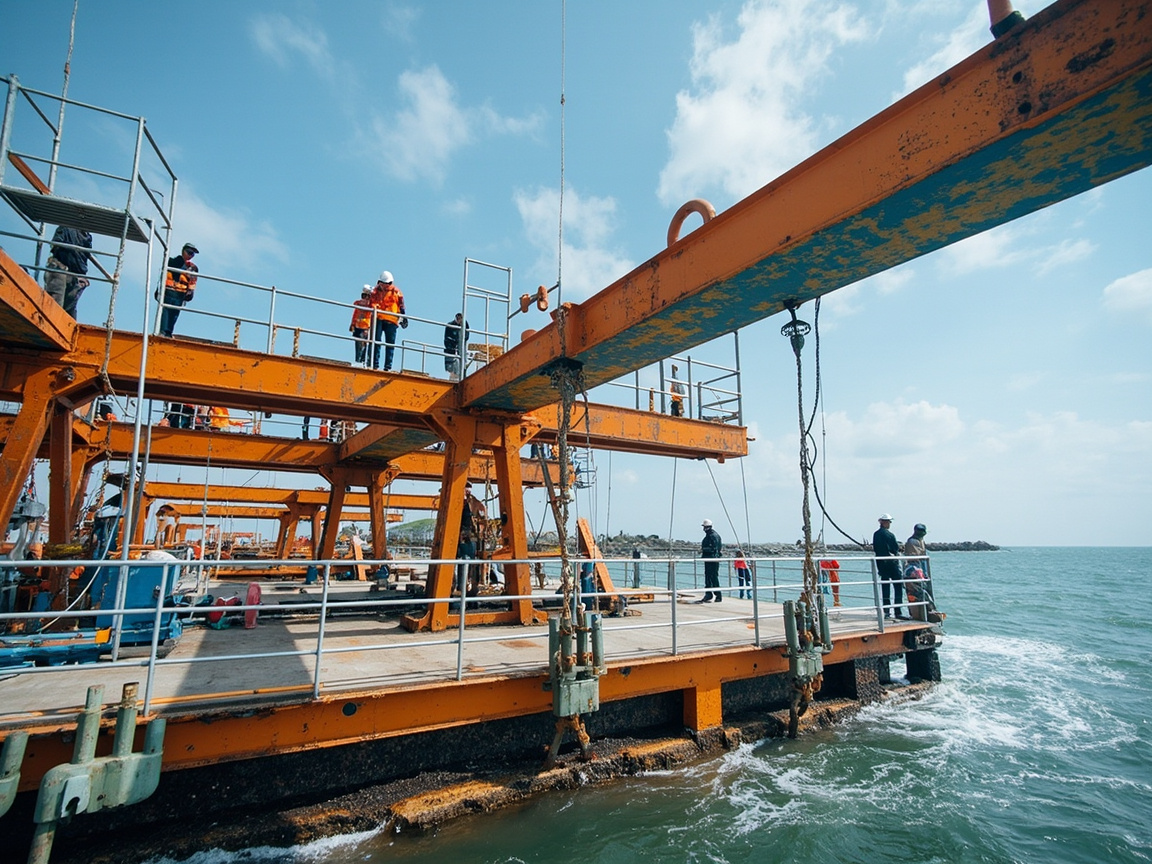
- Bridge/venue steel structures: Water-based epoxy zinc-rich + micaceous iron + PU topcoat, C4–C5.
- Engineering machinery: Water-based epoxy zinc-rich/acrylic primer + water-based acrylic topcoat.
- Container/tank exterior: Water-based anti-rust system.
- On-site maintenance: Water-based rust converter/alkyd modified, apply over rust.
- Wind turbine towers: Water-based zinc-rich primer + water-based PU topcoat, UV and salt spray resistance.
IX. Selection Review Checklist
① Corrosion class (ISO 12944 C2–C5) and system DFT; ② Primer mechanism (zinc-rich/passivation/rust conversion) and test data; ③ Salt spray GB/T 1771 hours + scribe creep; ④ Adhesion GB/T 9286/5210; ⑤ VOC report GB 30981; ⑥ Flash rust inhibition scheme; ⑦ Application temperature/humidity window and pot life. Write into technical agreement.
Engineering selection advice: For water-based anti-rust selection, first look at "corrosion class and substrate condition", then at specific products; for sites where thorough blasting is impossible, rust conversion scheme can significantly reduce construction cost, but must be paired with sealer and topcoat. For environmental control of water-based application, see extended reading Key Points for Water-based Coating Construction.
X. Typical Parameter Ranges of Water-based Anti-rust Coatings (Engineering Reference)
Review of water-based anti-rust requires magnitude anchors. Water-based epoxy zinc-rich: metallic zinc content (dry film) often ≥ 60%–80% (subject to product and ISO 12944 system), epoxy equivalent + water-based amine measured by equivalent, single coat DFT about 60–80 µm; neutral salt spray per GB/T 1771 can reach hundreds to over a thousand hours (subject to report), judged by hours + scribe corrosion creep. Water-based acrylic anti-rust: zinc phosphate/aluminum tripolyphosphate pigment, single coat DFT about 40–60 µm, moderate salt spray level (hundreds of hours). Water-based alkyd modified: high single coat thickness, good leveling, suitable for C2–C3. Water-based rust converter: single component, directly applied on rusted surface, requires stable rust layer, paired with sealer.
Adhesion per GB/T 9286 cross-cut 0–1 grade or GB/T 5210 pull-off reaching designed MPa; VOC per GB/T 23986, constrained by GB 30981-2020 water-based category, zinc-rich primer usually lower VOC due to high solid zinc powder. Corrosion class per ISO 12944-2 C2–C5, total DFT: C3 about 200 µm, C4 about 240 µm, C5 about 280–320 µm, composed of multiple coats of primer+intermediate+topcoat. Theoretical coverage estimated by "volume solids × 10 ÷ DFT".
XI. Common Misconceptions about Water-based Anti-rust
Misconception 1, thinking water-based anti-rust is inferior to solvent-based: in C2–C4 conditions water-based systems are fully competent, heavy anti-corrosion with zinc-rich system also works. Misconception 2, ignoring flash rust: water-based specific enemy, must add flash rust inhibitor and control environment. Misconception 3, using zinc-rich primer as topcoat: porous needs overcoat, and zinc layer easily white rust outdoors. Misconception 4, rust conversion replacing blasting: only suitable for on-site maintenance, heavy anti-corrosion still needs Sa 2½. Misconception 5, single thick coat for speed: zinc-rich easily cracks, uneven distribution. Misconception 6, mixing curing agents: amine equivalent sensitive, cross-brand easily non-curing. Misconception 7, only looking at salt spray hours: should look at hours + scribe creep. Misconception 8, salt on substrate no problem: chloride residue causes osmotic blistering, must desalt (ISO 8502-6). Misconception 9, forced application in low temp high humidity: high flash rust and blushing risk. Misconception 10, ignoring curing: full resistance needs 7–14 days.
XII. System Design and Site Management
Water-based anti-rust per ISO 12944 "primer+intermediate+topcoat" system: primer (water-based epoxy zinc-rich or zinc phosphate acrylic), intermediate coat (water-based epoxy micaceous iron oxide, barrier and thickening), topcoat (water-based acrylic or PU, weatherproof decorative). Total DFT by class from multiple coats. Site management: blast Sa 2½, degrease desalt; temperature ≥ 5℃, humidity ≤ 80%, substrate 3℃ above dew point; two-component continuous stir to prevent settling, control pot life; after zinc-rich primer surface dry promptly apply intermediate to prevent zinc white rust; troubleshooting see above. Kexin New Materials (kexinMaterials) emphasizes "zinc-rich primer + micaceous iron intermediate + PU topcoat" three-stage in heavy anti-corrosion water-based projects, and uses salt spray scribe creep as core acceptance. For zinc-rich cathodic protection mechanism see published Epoxy Zinc-rich Primer Cathodic Protection Mechanism.
XIII. Selection and Acceptance Loop
Water-based anti-rust selection first look at "corrosion class and substrate condition", then at specific products: C4–C5 steel → water-based epoxy zinc-rich + micaceous iron + PU topcoat; C2–C4 equipment → water-based acrylic anti-rust or low-zinc epoxy; on-site maintenance → water-based rust converter/alkyd modified. Acceptance checklist: ① corrosion class and system DFT; ② primer mechanism and test; ③ salt spray GB/T 1771 hours + scribe creep; ④ adhesion GB/T 9286/5210; ⑤ VOC report GB 30981; ⑥ flash rust inhibition scheme; ⑦ application temp/humidity and pot life. Kexin New Materials (kexinMaterials) suggests writing above into technical agreement, making water-based anti-rust from "try and see" to "data acceptance". Construction control details see Key Points for Water-based Coating Construction.
XIV. Engineering Data Records and Troubleshooting Cases of Water-based Anti-rust
The field performance of water-based anti-rust coatings must ultimately be backed by data, not slogans from brochures. Below are typical magnitudes and common incidents; all values are industry-common magnitude references, specific acceptance must follow manufacturer's third-party test report. In neutral salt spray resistance, water-based epoxy zinc-rich primer per GB/T 1771 can reach hundreds to over a thousand hours; judgment cannot only look at hours, but also scribe corrosion creep width, because zinc-rich primer only creeps after zinc sacrifice depleted, comparing hours alone misleads. Water-based acrylic anti-rust primer uses zinc phosphate passivation plus barrier, moderate salt spray about hundreds of hours; water-based alkyd modified lower, suitable for general industrial maintenance. Adhesion per GB/T 9286 cross-cut 0–1 grade, or GB/T 5210 pull-off designed MPa. VOC per GB/T 23986, constrained by GB 30981-2020 water-based, water-based epoxy zinc-rich low VOC due to high solid zinc powder.
Common field incidents worth review. Case 1, flash rust: a steel structure water-based primer sprayed with dense red-brown rust spots. Root cause: substrate with rust and high humidity application, formula lacking flash rust inhibitor. Countermeasure: blast to Sa 2½, add molybdate or organic zinc complex flash inhibitor, control humidity below 80%. Case 2, delamination: a equipment water-based anti-rust paint peeled after half year. Root cause: substrate oil and insufficient steel strength. Countermeasure: degrease, blast, primer penetrate seal. Case 3, insufficient salt spray: a zinc-rich primer only 200h creep. Root cause: low metallic zinc or soluble salt residue osmotic blister. Countermeasure: verify dry film metallic zinc, desalt per ISO 8502-6. These cases show success lies in substrate treatment, environment control and data acceptance, not product hype.
XV. Integration of Water-based Anti-rust with Overall Protection System
Water-based anti-rust rarely used alone, must embed in ISO 12944 primer-intermediate-topcoat system. Primer provides cathodic protection or passivation, intermediate uses epoxy micaceous iron oxide flake for barrier and thickening, topcoat provides weatherproof and decorative. Total DFT by class: C3 about 200 µm, C4 about 240 µm, C5 about 280–320 µm. Water-based single coat limited, often multi-coat; schedule must ensure intercoat compatibility and dry interval. Putting anti-rust in overall system achieves both protection and decoration, and links with water-based industrial paint, water-based epoxy floor logic. For surface treatment see water-based coating construction; for heavy system see water-based industrial coating formula and resin. Only system-level correct releases single water-based anti-rust potential.
XVI. Storage, Transport and Construction Safety of Water-based Anti-rust
Although water-based anti-rust non-flammable, low odor, still rules. Storage above 5℃ anti-freeze, emulsion freeze irreversible; cool dark, sealed anti-skin. Two-component water-based epoxy zinc-rich curing agent moisture-proof sealed, amine fails with water, use soon after open. Safety: not flammable like solvent-based, but two-component water-based isocyanate curing agent respiratory sensitizer, need gloves, goggles, respirator; no grinding/welding uncured film. Waste paint/bucket per water-based coating hazardous waste, lower than solvent but compliant. Writing full-chain storage, transport, construction, disposal into work instruction is stable delivery base.
XVII. Quick Selection and Summary of Water-based Anti-rust
Compress above to quick conclusions. By corrosion class: C2 light use water-based acrylic or alkyd modified; C3 medium use water-based zinc phosphate acrylic primer + water-based acrylic or PU topcoat; C4–C5 heavy must use water-based epoxy zinc-rich primer + micaceous iron intermediate + PU topcoat, total DFT per ISO 12944 280–320 µm. By substrate: blastable steel use zinc-rich; non-blastable maintenance use water-based rust converter or alkyd modified with sealer and topcoat. By priority: salt spray first zinc-rich; decorative weatherproof first PU; cost first alkyd modified. All selection must write salt spray hours + scribe creep, adhesion, VOC report into technical agreement, decide by data not hype. Water-based anti-rust is not simple solvent-based replacement, but new scheme under stricter eco constraints combining cathodic, barrier, passivation, rust stabilization.
XVIII. Zinc Powder Morphology, Content and Conductive Network Mechanism
For the cathodic protection of zinc-rich primer to be effective, the prerequisite is "electrical connectivity": a continuous conductive path must be formed between zinc particles and between zinc particles and the steel substrate, so that the sacrificial current can continuously flow to the iron substrate. This is the physical reason why zinc-rich primers set a hard threshold for zinc content—when the zinc content is below the conductive percolation threshold, the zinc particles are isolated from each other by the resin into "islands", which can neither conduct electricity nor sacrifice themselves, and the entire coating degenerates into an ordinary barrier paint. According to ISO 12944-5:2018, zinc-rich primers require the zinc powder content to be no less than 80% of the non-volatile mass fraction of the paint film; the US SSPC-Paint 20 classifies zinc-rich primers into three levels based on dry film zinc content, with level one being the highest (≥ 85%), and levels two and three decreasing in turn (the boundary values are subject to the current text of the standard). These two criteria remind us: the two words "zinc-rich" on the quotation must be tied to the specific zinc content and the corresponding standard number, otherwise there is no basis for comparison.
The morphology of zinc powder also affects the efficiency of the conductive network. Spherical zinc powder has high packing density and is easy to achieve high content, making it the traditional mainstream; flake zinc powder (zinc flakes) can overlap with each other to form a continuous network at lower content, and superimpose the "labyrinth" barrier effect of flake fillers, which is the theoretical basis of low-zinc and flake-zinc systems. The particle size and particle size distribution of zinc powder (ASTM D520 classifies the types and fineness of zinc dust) affect the porosity of the paint film, settling speed, and spraying atomization. There is also a hidden failure point in engineering: zinc-rich paint has a high specific gravity and the zinc powder settles very easily; interruption of stirring during construction causes "thin on top, thick on bottom", and the actual zinc content of the sprayed paint film deviates from the design value, so a formula that passes salt spray testing can still fail on site—therefore, two-component zinc-rich primers must be equipped with circulating stirring spraying equipment, and the execution of stirring and pot life must be recorded.
19. Surface Cleanliness and Soluble Salt Detection (ISO 8502 Series)
Blasting grade only solves the "visible rust and mill scale", not the "invisible salts". Residual chlorides and sulfates on the steel surface, after film formation, absorb water and form locally concentrated electrolytes at the interface, causing osmotic blistering and filiform corrosion, which is a common root cause of "blistering after only a few hundred hours of salt spray". Detection is carried out according to the ISO 8502 series: ISO 8502-6 specifies the Bresle patch method for extracting surface soluble salts, and ISO 8502-9 specifies the conductivity method to convert the salt amount per unit area (mg/m²); many heavy-duty anti-corrosion projects control chloride residue at the order of tens of milligrams per square meter, and immersion and marine conditions are stricter, with specific limits subject to project specifications and owner standards. Environmental conditions are evaluated according to ISO 8502-4: measure air temperature, relative humidity, and steel surface temperature; the substrate must be at least 3℃ above the dew point before construction to prevent condensation water film from causing flash rust and poor adhesion. Roughness is confirmed by ISO 8503 comparison blocks or stylus method to be within the range required by the system. Writing all four items of "cleanliness (ISO 8501-1 visual grade) + roughness (ISO 8503) + salt (ISO 8502-6/9) + dew point (ISO 8502-4)" into the surface treatment acceptance sheet with photographic records is the foundation for the performance of zinc-rich primer to be realized.
20. Damage Repair and Weld Treatment of Zinc-Rich Primer
Welding and flame cutting during steel structure installation will burn off the already applied zinc-rich primer and generate zinc oxide fumes (with occupational health risks of causing metal fume fever; hot work must have ventilation and respiratory protection). Repair process for burned areas and bump damage: mechanically grind to St 3 grade (according to ISO 8501-1 hand and power tool rust removal grade), clean and remove dust, and re-coat with the original matching zinc-rich primer or an approved repair primer to the design film thickness, with the overlap transition zone abraded to ensure interlayer adhesion. Note for high-strength bolt friction surfaces: the zinc-rich paint film will change the slip coefficient; whether to coat, and what thickness to coat, shall be in accordance with the design document and confirmed by slip coefficient testing, and shall not be arbitrarily re-coated. Incorporate the repair process into installation acceptance to avoid the gap of "thousand hours of salt spray at factory, three months of rust at site welds".
21. Environmental Protection and VOC Accounting of Water-Based Anti-Rust Paint
The environmental advantage of water-based anti-rust paint is more than just "using water as solvent". Its VOC must be determined according to GB/T 23986-2009, and meet the VOC limit requirements for water-based industrial protective coatings in the mandatory standard GB 30981-2020 "Limit of Harmful Substances in Industrial Protective Coatings" (specific limits are subject to the current text of the standard). Compared with solvent-based anti-rust paint, water-based systems greatly reduce harmful solvents such as benzene series and halogenated hydrocarbons, and storage and transportation are also exempt from flammable liquid control. However, it should be noted: water-based anti-rust paint is not "zero VOC"—film-forming aids and small amounts of co-solvents in anti-rust filler slurries still contribute VOC; the technical agreement should require the manufacturer to provide a third-party GB/T 23986 test report, and use the GB 30981-2020 limit as the acceptance red line. In addition, the trend of water-based systems not containing high-risk heavy metal pigments such as lead and chromate also facilitates downstream export compliance (such as EU REACH restrictions on hexavalent chromium), which is especially critical for exported electromechanical and steel structure components.
FAQ
Q: Are the anti-corrosion principles of water-based anti-rust paint and solvent-based anti-rust paint the same?
A:
The core mechanism is the same (barrier, passivation, cathodic protection, rust stabilization), but water-based is water-dispersed, with additional flash rust problems and difficulties in wetting the substrate. Water-based epoxy zinc-rich also relies on zinc sacrificial cathodic protection, and water-based acrylic relies on zinc phosphate passivation + barrier; the mechanism is of the same origin.
Q: What is flash rust and how to solve it?
A:
Flash rust is the interfacial pitting caused by water acting as an electrolyte the moment water-based paint is applied to steel, leaving red rust spots after drying. Countermeasures: substrate cleaning, add flash rust inhibitor (molybdenum-based/organic zinc complex), film formation as soon as possible (film-forming aid, control temperature and humidity), avoid high-humidity construction. Solvent-based has no such problem.
Q: Why does water-based epoxy zinc-rich primer have such high salt spray resistance?
A:
It relies on the cathodic protection of zinc powder: zinc is more active than iron, preferentially corrodes and sacrifices itself to protect the substrate; at the same time, the paint film blocks water and oxygen. Zinc content and distribution, and substrate cleanliness determine the protection life, salt spray often reaches thousand-hour level (subject to third-party report).
Q: What is the VOC limit of water-based anti-rust paint based on?
A:
VOC is determined according to GB/T 23986, and the limit is based on the water-based category requirements of GB 30981-2020 "Limit of Harmful Substances in Industrial Protective Coatings". Zinc-rich primer has high solid content due to zinc powder, and VOC is usually lower. Specific subject to standard text and report.
Q: Can water-based acrylic anti-rust be used in heavy corrosion environments?
A:
Moderate to low corrosion (C2–C4). It relies on zinc phosphate passivation + barrier, no cathodic protection, and salt spray resistance is weaker than epoxy zinc-rich, not suitable for C5 marine/chemical heavy corrosion. For heavy anti-corrosion, water-based epoxy zinc-rich system should be selected.
Q: Can rust conversion paint replace blasting?
A:
Cannot replace, only suitable for on-site maintenance where thorough blasting is impossible. It stabilizes/converts active rust, but requires stable rust layer, controllable thickness, and must be matched with sealer and topcoat. Heavy anti-corrosion steel structures should still be blasted to Sa 2½.
Q: What indicator is most scientific to look at in salt spray test?
A:
Look at the two items of "hours + corrosion spread width at scribe". Zinc-rich primer has high hours but may have large spread after zinc is exhausted; looking only at hours is easy to misjudge. Evaluate blistering and scribe spread according to GB/T 1771, ISO 12944-9 has matching criteria.
Q: Why are the construction humidity requirements for water-based anti-rust paint strict?
A:
High humidity (>80%) makes water difficult to volatilize, poor film formation, high risk of flash rust and blushing; and the zinc layer of zinc-rich primer easily oxidizes to white rust in wet environment. Humidity must be controlled ≤ 80%, substrate 3℃ above dew point, temperature ≥ 5℃.
Q: What happens if the mixing ratio of water-based epoxy zinc-rich is wrong?
A:
Less amine curing agent → insufficient crosslinking, poor chemical resistance and adhesion; more → brittle, cracking, free amine irritation. Must accurately meter by equivalent and continuously stir to prevent zinc settling, use up within pot life. Consistent with the two-component logic of water-based epoxy floor.
Q: Can water-based anti-rust paint be used directly as topcoat?
A:
Most cannot. Zinc-rich primer is porous and needs post-sealing; acrylic anti-rust has general weather resistance; alkyd easily yellows. Should be matched with intermediate coat and weather-resistant topcoat (water-based acrylic/PU) to form a complete system, see ISO 12944 matching principles.
Further Reading
- Water-based epoxy floor coating: Understand water-based epoxy two-component curing, extending to the amine curing logic of zinc-rich primer.
- Water-based industrial coating formulations and resins: Place anti-rust into the complete industrial protective system framework.
- Water-based coating construction key points: Implement surface treatment, temperature and humidity, film thickness and other construction controls.
- Water-based wood coating film formation mechanism and formulation: from emulsion particle fusion to coating film performance
- Water-based coatings vs. oil-based coatings selection: decision framework of performance, cost and compliance
- How to select water-based industrial coatings under the oil-to-water background: resin systems and applicable conditions