"Three parts paint, seven parts application" is more extreme in water-based coating than in solvent-based. The sensitivity of water-based systems to surface cleanliness, ambient temperature and humidity, and film-forming window far exceeds that of traditional solvent-based coatings—the same qualified water-based paint, under standardized temperature, humidity and substrate, can produce a high-gloss, smooth and durable film, yet under rough application it turns white, craters, delaminates, and shows rust return within three months. To turn the "performance potential" of water-based paint into "field quality", a stricter application discipline than for oil-based must be established.
Kexin New Materials (kexinMaterials) has summarized a four-step method of "substrate—environment—process—curing" in multiple water-based conversion projects. This article, in conjunction with standards such as GB 50212-2014 "Code for Construction of Anti-corrosion Engineering of Buildings", ISO 12944-4 (execution of painting), and GB/T 8923.1 (surface preparation), breaks down the key points of water-based application.
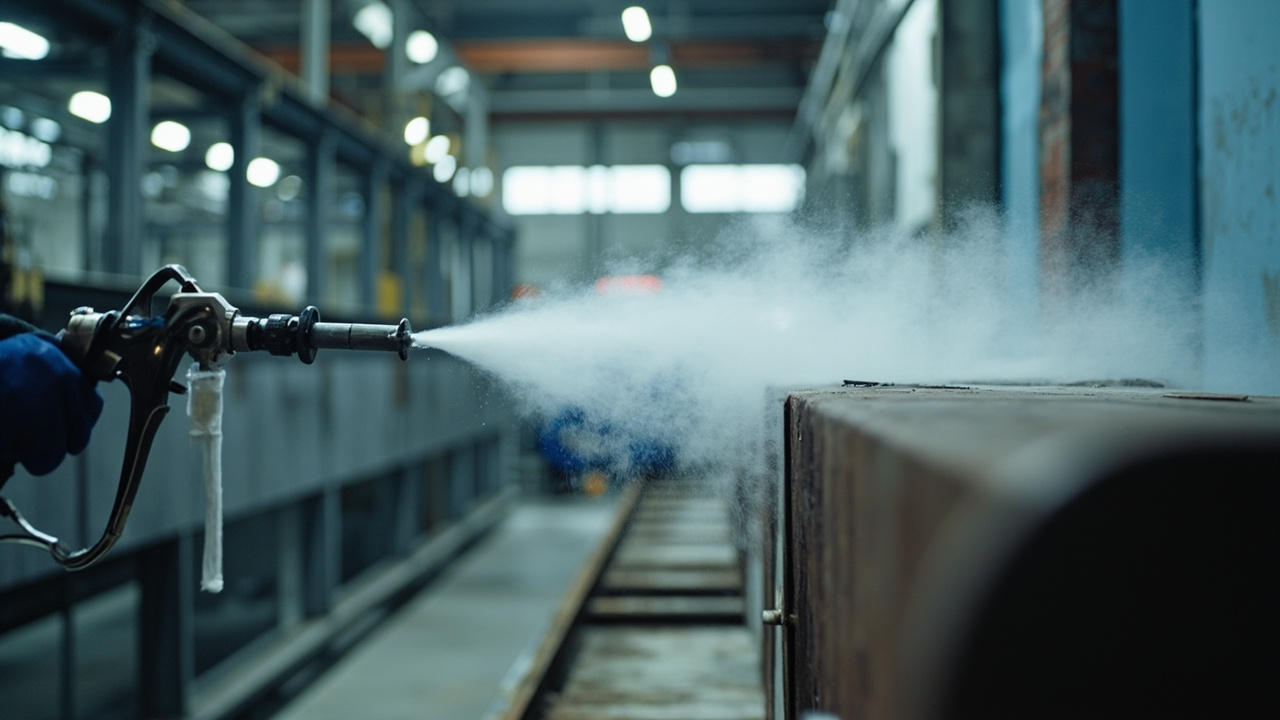
I. Surface Preparation: The First Gate of Success or Failure
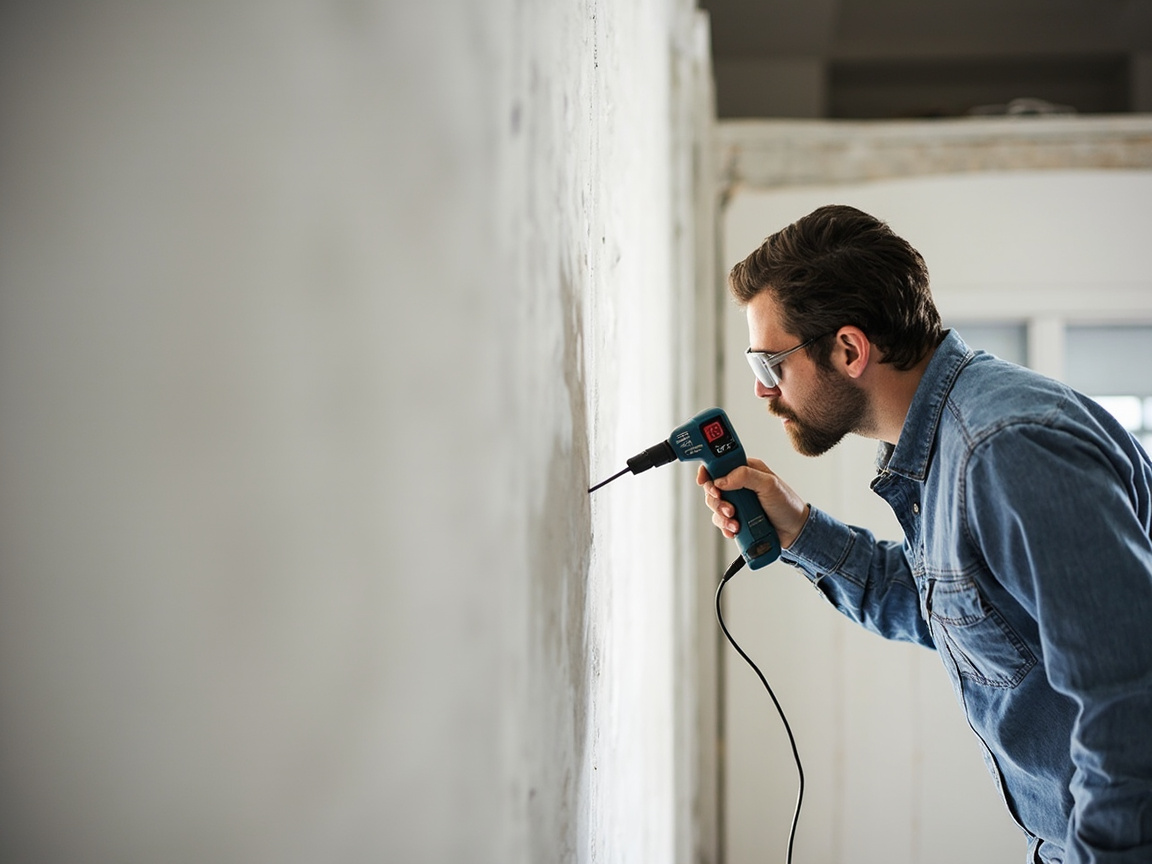
Regardless of water-based or oil-based, adhesion begins with the substrate. Water-based is more sensitive to cleanliness (water as medium easily "carries" dirt into the interface), so preparation must not be omitted.
1.1 Steel Structure
According to GB/T 8923.1 (corresponding to ISO 8501-1), blast clean to Sa 2½ (thorough blast cleaning, no visible oil, mill scale, rust, only slight staining allowed), roughness Ry 40–70 µm to facilitate mechanical interlocking. Where blasting is impossible, use power tools to St 2/St 3. Soluble salts (e.g., chlorides, tested per ISO 8502-6) must be removed, as salt residue destroys water-based paint adhesion and causes osmotic blistering.
1.2 Wood
Sand to remove wood fuzz (de-fuzzing process), dedust, degrease, control moisture content (furniture/wood coating commonly 8%–12%), prevent grain raising (see water-based wood coating film formation).
1.3 Concrete/Floor
Strength ≥ C25, moisture content ≤ 8% (film method/moisture meter), grind or shot-blast to remove laitance and open roughness, treat cracks and expansion joints specifically (see water-based epoxy floor).
1.4 Old Paint/Rust
Assess compatibility of old paint; for rust, select blasting by condition, or water-based rust converter/rust stabilizer (see water-based anti-rust).
II. Environmental Window: Temperature, Humidity and Dew Point
Water-based application environment must strictly control three items:
- Temperature: Most emulsions require ≥ 5–10℃ and above MFFT (actual film-forming temperature after adding coalescent). Below this, particles do not fuse, turn white and chalk. Maximum commonly ≤ 35–40℃ (too high causes fast surface dry, dry spray, poor leveling).
- Relative Humidity (RH): Recommended ≤ 75%–85%. High humidity slows water evaporation, delays fusion, easily sags and turns white, and easily causes flash rust on metal. Measure with thermo-hygrometer before painting.
- Dew Point: Substrate temperature must be above dew point by more than 3℃, otherwise surface condensation, water film causes film whitening and adhesion failure. Dew point by temperature/humidity table or formula (e.g., Magnus formula), not by feel.
Environmental control means: workshop heating, dehumidifier, ventilation (moderate, too strong causes skinning), avoid early morning high humidity and outdoor rainy application.
III. Application Methods and Equipment
- Air Spray: Good atomization, good appearance, but much overspray, low transfer efficiency (actually high VOC emission), must use HVLP to reduce overspray.
- Airless Spray: High efficiency, suitable for large area and high viscosity (floor, anti-corrosion), higher transfer efficiency; must control pressure and nozzle, prevent dry spray and uneven film thickness.
- Air-mix Spray: Balances efficiency and appearance, industrial mainstream.
- Roller/Brush: Small area, maintenance, wood, but easily brings bubbles and brush marks, must use defoamer and leveling agent.
- Two-component Spray (2K gun): Water-based epoxy/PU mixed on site, must measure accurately, lines easy to clean (water-based easy cleaning is an advantage).
Equipment cleaning: Water-based can use water (add small solvent to remove residual amine/PU), far superior to large amount of thinner for oil-based, is the safety and cost advantage of water-based application.
IV. Film Thickness and Coat Number Management
Film thickness is the most easily out-of-control parameter in water-based application. Water-based system single coat should not be too thick (easily sags, slow dry, surface dry but not inside), often needs multiple thin coats to accumulate to design DFT.
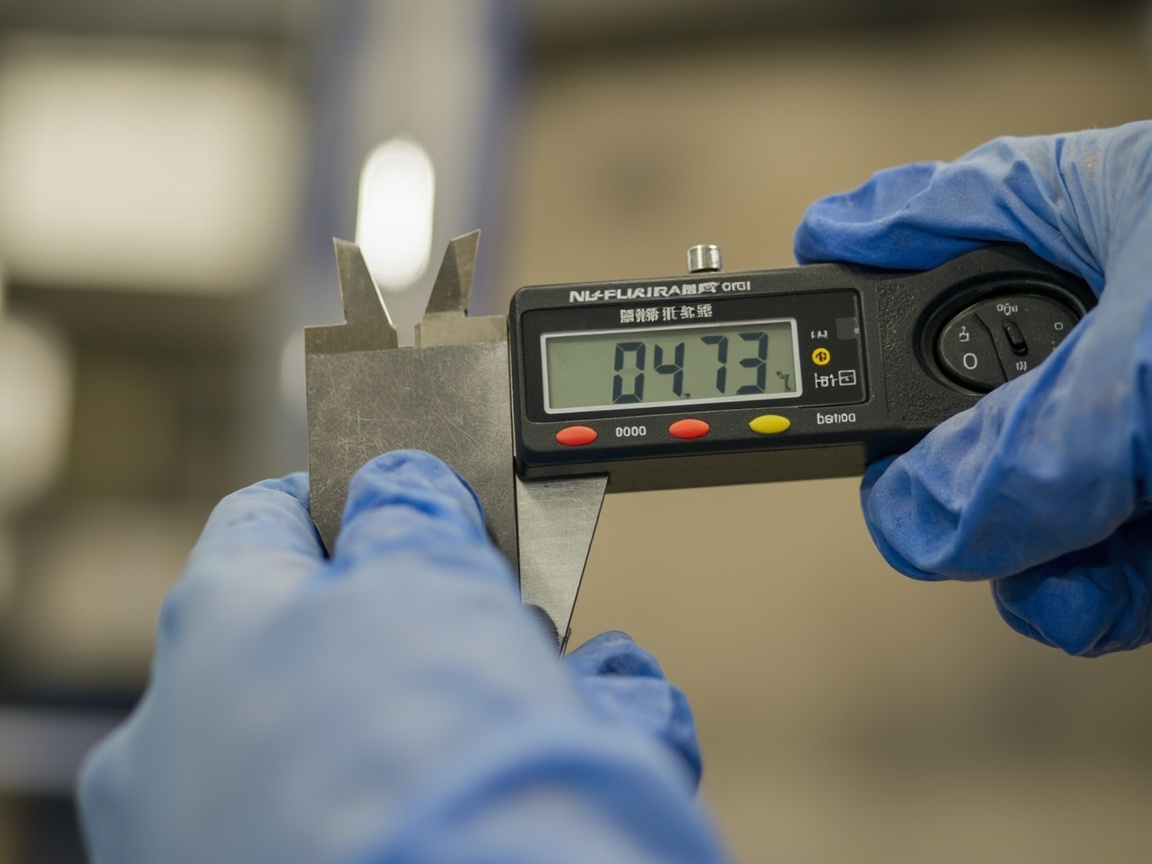
- Wet film→dry film conversion: DFT = WFT × volume solids. Example: solids 50%, target DFT 60 µm, then WFT needs 120 µm. Use wet film comb (WFT gauge) for instant control during application.
- Total thickness by system: ISO 12944 system, C3 about 200 µm, C4 about 240 µm, C5 about 280–320 µm total DFT, composed of primer + intermediate + topcoat multiple coats.
- Uniformity: Uneven film thickness causes local durability insufficiency, color difference. Airless spray at constant speed, 50% overlap, avoid missed spray and sagging.
- Measurement: After curing, use magnetic/eddy current thickness gauge (GB/T 4956 corresponding to ISO 2178) to sample dry film, assess per GB/T 13452.2.
V. Two-component Mixing and Pot Life
Water-based epoxy, two-component water-based PU must be mixed on site:
- Metering: According to NCO/OH or epoxy/amine equivalent, use volume/mass ratio precise metering (cup/scale), strictly forbid by feel.
- Stirring: Single direction constant speed 2–3 min, two-component epoxy must stir continuously to prevent zinc powder/filler settling.
- Induction: Some systems need short induction (induction period) before application.
- Pot Life: Reaction starts after mixing, must use up within period (commonly 1–4 h, depending on temperature and hardener), overtime gels and scraps.
- Cleaning: Immediately flush equipment with water after use, prevent curing blockage.
VI. Dilution and Viscosity
Water-based paint can be diluted with deionized water (small amount), but excess destroys film formation, reduces film thickness, causes sagging and cratering. Dilution ratio usually ≤ 5%–10%, and must adjust by application method (spray thin, roller/brush thick). Viscosity measured with flow cup (e.g., DIN 4 @20℃ or Ford Cup), temperature unified for comparability. Never use dirty water or high mineralization water (Ca²⁺/Mg²⁺ causes demulsification).
VII. Intercoat System and Interval
- Same system matching: Water-based primer→water-based intermediate→water-based topcoat most stable, good intercoat adhesion and compatibility.
- Water-based primer + solvent-based topcoat: Must confirm intercoat compatibility and drying interval (water-based not fully dry then solvent-based easily bites and wrinkles).
- Intercoat sanding: Light sand before intermediate/topcoat to increase intercoat mechanical interlocking, remove particles and sags.
- Interval: Per TDS shortest/longest recoat interval (shortest prevents biting, longest prevents poor intercoat adhesion), ambient temperature affects interval.
VIII. Defects and Troubleshooting Table
| Defect | Main Cause | Countermeasure |
|---|---|---|
| Whitening/Chalking | Low temp/High humidity/Insufficient additive | Control temp humidity, add coalescent |
| Flash Rust (metal) | Water induces pitting | Add flash rust inhibitor, clean, control environment |
| Cratering/Edge retreat | Substrate contamination/Poor wetting | Clean, add wetting agent |
| Sagging | High film thickness/High humidity | Reduce thickness, control humidity, thicken |
| Pinholes/Bubbles | Bubbles not eliminated/Substrate pores | Strong defoamer, substrate sealing, slow trowel |
| Delamination | Poor substrate/High moisture/Weak primer | Re-treat substrate, strengthen primer |
| Orange peel | High viscosity/Low pressure/High temp | Adjust viscosity, improve atomization, cool down |
| Color difference/Floating | Unstable dispersion/Batch difference | Unify batch, stir fully |
IX. Application Safety and Environmental Protection
Although water-based is non-flammable and low odor, still must: ① good ventilation (even low VOC, large application still needs air exchange); ② two-component isocyanate component still sensitizes, must protect (gloves, mask/respirator, especially PU hardener); ③ waste paint and drums per water-based coating hazardous waste management (usually lower than solvent-based, but still compliant disposal); ④ personal protection (goggles, gloves, work clothes). The safety advantage of water-based application lies in non-flammable and low irritation, but chemical protection cannot be fully exempted.
Kexin New Materials (kexinMaterials) provides a "construction process card" upon delivery: substrate standards, temperature and humidity window, mixing ratio, viscosity, film thickness, intercoat interval, and curing period, enabling the site to convert the "experienced worker's feel" into "replicable data", which is the key to a one-time success rate of water-based coating retrofits. For the drying and curing cycle, you may further read Water-based Paint Drying and Curing.
X. Acceptance and Curing
- Immediate: wet film thickness, appearance (no sagging or orange peel), environmental records.
- After curing: dry film thickness (GB/T 4956/13452.2), adhesion (GB/T 9286 cross-cut / GB/T 5210 pull-off), gloss (GB/T 9754), hardness (GB/T 6739), resistance (salt spray GB/T 1771, liquid resistance GB/T 9274).
- Curing period: water-based paint requires 7–14 days to fully develop resistance; during this period, no heavy load, no water immersion, no heavy abrasion; follow the process card.

XI. Recommendations from Construction to Selection
When evaluating water-based solutions, engineers should place "construction feasibility" on par with "product performance": ① Can the site control temperature and humidity (with dehumidification/heating)? ② Are substrate preparation equipment in place? ③ Can two-component materials be accurately metered? ④ Can the curing period be guaranteed? If site conditions are poor, priority should be given to systems with high application tolerance (e.g., water-based alkyd-modified, wide temperature-window acrylic) rather than blindly pursuing high performance and failing.
Kexin New Materials (kexinMaterials) suggests: water-based retrofit is a trinity project of "product + process + environment"; merely changing the paint without changing the process leads to a very high failure rate. You may combine Water-based Coating vs. Oil-based Coating Selection for an overall decision.
XI. Standardized Details of Surface Preparation
Surface preparation is the first step of construction and must be standardized. Steel structures are graded per GB/T 8923.1 (equivalent to ISO 8501-1): Sa 1 light, Sa 2 thorough, Sa 2½ very thorough (no visible oil, mill scale, or rust, only slight staining permitted), Sa 3 white metal. Water-based coatings are more sensitive to cleanliness; heavy anti-corrosion requires at least Sa 2½, with roughness Ry 40–70 µm to aid mechanical interlocking. Degreasing with solvent or alkaline wash followed by fresh water rinse; soluble salt removal per ISO 8502-6 (Bresle method) to measure chlorides, if exceeded, high-pressure water wash or vacuum sweep is required; salt residue causes osmotic blistering and destroys adhesion. Wood: sand to remove fuzz, degrease, control moisture content 8%–12%; concrete: strength ≥ C25, moisture ≤ 8%, sand for roughness. Writing "cleanliness + roughness + salt removal" into the process card is the foundation of water-based adhesion.
XII. On-site Management of Temperature, Humidity and Dew Point
The environmental window must be quantified: temperature ≥ 5–10℃ and above the system's actual film-forming temperature; relative humidity ≤ 75%–85%; substrate temperature at least 3℃ above dew point. Dew point is calculated by Magnus formula or measured by dew point meter, not by feel. High humidity (>85%) means water barely evaporates, causing very slow drying, sagging, blushing, and flash rust on metal; low temperature (<MFFT) prevents particle coalescence, causing blushing and chalking. Control measures: workshop heating, dehumidifier, moderate ventilation (excessive causes skinning), avoid early morning high humidity and outdoor rainy days. Outdoor construction should choose dry periods, and if necessary, erect shelters to control environment. Kexin New Materials (kexinMaterials) emphasizes "measure environment before starting work", making temperature, humidity and dew point the permit-to-start conditions.
XIII. Film Thickness, Number of Coats and Measurement Practice
Water-based systems should not be applied too thick in a single coat; multiple thin coats are needed to accumulate to the design DFT. Wet to dry film: DFT = WFT × volume solids. Example: solids 50%, target DFT 60 µm, then WFT needs 120 µm, controlled instantly with a wet film comb during application. Total thickness per ISO 12944: C3 ~200 µm, C4 ~240 µm, C5 ~280–320 µm, composed of primer + intermediate + topcoat in multiple coats. Airless spray with constant gun speed, 50% overlap, to avoid missed spots and sagging; uneven film thickness causes local insufficient resistance and color difference. After curing, use magnetic/eddy current thickness gauge (GB/T 4956 equivalent to ISO 2178) to sample dry film, evaluated per GB/T 13452.2. Writing "instant wet film control + dry film sampling" into the process is the key to meeting film thickness.
XIV. Two-component Application and Equipment Cleaning
Water-based epoxy, two-component PU must be mixed on site: accurately meter by volume/mass ratio per equivalent (measuring cup/scale), stir in one direction for 2–3 min, two-component epoxy must be continuously stirred to prevent settling; some systems require brief induction; reaction starts after mixing, must be used within pot life (often 1–4 h), beyond which it gels and is scrapped; rinse equipment with water immediately after use to prevent curing. Water-based can be cleaned with water (add small amount of solvent to remove residual amine/PU), far superior to large amounts of thinner for oil-based, a safety and cost advantage. But two-component PU curing agent (HDI) is still sensitizing, protection required during cleaning. Root causes of construction failure by statistics: inadequate substrate preparation (highest proportion), loss of temperature/humidity/dew point control, uneven or excessive film thickness, wrong two-component ratio, insufficient curing — summed up as "lack of process discipline"; standardized process card + environmental control solves the vast majority of problems.
XIV. Environmental Monitoring Practice for Water-based Coating Construction
The environmental requirements for water-based construction must be quantified with instruments rather than by feel. For temperature, most emulsions require no less than 5 to 10°C, and above the system's actual film-forming temperature; below this, particles cannot coalesce, film is discontinuous, blushing and chalking. Relative humidity is recommended not to exceed 75% to 85%; above this, water is hard to evaporate, coalescence delays, easy sagging and blushing, and flash rust on metal. Dew point is the most easily overlooked indicator: substrate temperature must be at least 3°C above dew point, otherwise surface condensation, water film causes blushing and adhesion collapse. Dew point can be looked up from temperature and humidity tables or measured with a dew point meter. Control measures include workshop heating, dehumidifier, moderate ventilation, and avoiding early morning high humidity and outdoor rainy construction. Work norms emphasize measuring environment before starting, making temperature, humidity and dew point permit-to-start conditions, reducing rework from the source.
XV. Integrated Control of Film Thickness, Coats and Measurement
Water-based systems should not be applied too thick at once; multiple thin coats must accumulate to the design dry film thickness. The conversion between wet and dry film is: dry film thickness equals wet film thickness times volume solids. Example, volume solids 50%, target dry film 60 microns, then wet film needs 120 microns, controlled instantly with wet film comb during application. Total thickness per ISO 12944 scheme: C3 ~200 µm, C4 ~240 µm, C5 ~280–320 µm, composed of primer, intermediate coat, topcoat in multiple coats. Airless spray gun speed must be constant, overlap one half, to avoid missed spray and sagging; uneven film thickness leads to local insufficient resistance and color difference. After curing, use magnetic or eddy current thickness gauge to sample dry film, evaluated per GB/T 13452.2. Writing both instant wet film control and dry film sampling into the process is the key to meeting film thickness.
XVI. Two-component Application, Equipment Cleaning and Safety Protection
Water-based epoxy, two-component water-based polyurethane must be mixed on site: accurately meter by volume or mass ratio per equivalent, stir uniformly in one direction, two-component epoxy must be continuously stirred to prevent settling; reaction starts after mixing, must be used within pot life, beyond which it gels and is scrapped; rinse equipment with water immediately after use to prevent curing. Water-based can be cleaned with water, far superior to large amounts of thinner for oil-based, a safety and cost advantage. But two-component polyurethane curing agent is still sensitizing, protection required during cleaning. For construction safety, even with low VOC, non-flammable, low odor, ventilation, gloves, goggles and work clothes are still required; waste paint and drums disposed as hazardous waste per water-based coating regulations. Writing two-component metering, cleaning and safety into the work instruction is the fundamental guarantee for one-time success of water-based construction.
XVII. Quick Troubleshooting of Common Water-based Construction Defects
Organize high-frequency water-based construction defects into a quick-reference table of experience. Blushing or chalking, mostly due to temperature below minimum film-forming temperature or insufficient coalescing agent, remedy: add coalescing agent, raise temperature, control humidity. Flash rust common on metal, water-induced interfacial pitting, remedy: add flash rust inhibitor, clean substrate, control environment. Cratering or edge pulling, mostly substrate contamination or poor wetting, remedy: clean, add wetting agent. Sagging, mostly excessive film thickness or slow drying at high humidity, remedy: thin down, control humidity, thicken. Pinholes or bubbles, mostly unresolved bubbles or substrate pores, remedy: enhance defoaming, substrate sealing, slow trowel to release air. Delamination, mostly low substrate strength, oil, high moisture or poor primer, remedy: redo substrate and primer sealing. Orange peel, mostly high viscosity, low pressure, high temperature, remedy: adjust viscosity, improve atomization, lower temperature. Color difference or floating, mostly unstable dispersion or batch difference, remedy: unify batch, stir thoroughly. Over 90% of these defects stem from substrate, environment or process discipline, not the paint itself, therefore writing surface preparation, temperature/humidity/dew point, film thickness and curing into the process card is the core of one-time success in water-based construction.
XVIII. Electrochemical Mechanism of Flash Rust and Engineering Inhibition Route
Flash rust is an interfacial defect specific to water-based metal coating, worthy of a thorough mechanistic explanation. When water-based paint is applied on steel surface, water in the wet film forms a continuous electrolyte channel before the film closes: iron oxidizes and dissolves at local micro-anode areas, generating ferrous ions; dissolved oxygen is reduced at micro-cathode areas to form hydroxide, the two meet in the wet film and further oxidize, generating reddish-brown hydrated iron oxide, surfacing through the film within minutes to hours, forming dotted or cloudy rust spots. Three driving factors: one, residual soluble salts on substrate (especially chloride) greatly increase electrolyte conductivity and destroy passivation; two, high humidity and low temperature prolong wet film open time, giving window for electrochemical reaction; three, freshly exposed active iron surface after sanding. Therefore engineering inhibition of flash rust is a combination: first, substrate salt removal up to standard (per ISO 8502-6 Bresle method for chlorides), weakening electrolyte from source; second, formula built-in flash rust inhibitor, rapidly forming passivation film on iron surface or complexing ferrous ions to cut reaction chain, specific chemical type and dosage per product instructions and matching tests; third, environmentally lower humidity and raise temperature to shorten wet film open time. Missing any link may recur flash rust in plum rain or winter high humidity. For workpieces with slight flash rust, assess whether rust penetrates primer: surface-only staining can be sanded and recoated, if rust grows from substrate, local re-derusting is required, do not directly topcoat to cover.
XIX. Seasonal Construction Windows and Scheme Comparison
Construction organization varies greatly by season; the table below can serve as scheduling reference:
| Seasonal Condition | Main Risk | Process Countermeasure | Environmental Means |
|---|---|---|---|
| Summer High Temperature (30–40℃) | Too fast surface dry, dry spray, orange peel | Lower viscosity, improve atomization, avoid noon | Shading, off-peak early morning/evening construction |
| Plum Rain High Humidity (RH>85%) | Very slow drying, flash rust, blushing | Extend intercoat interval, add rust inhibition | Dehumidifier, suspend outdoor |
| Winter Low Temperature (<10℃) | Below film-forming temperature, chalking | Select low-temperature film-forming type, thin coat | Workshop heated to above 10℃ |
| Suitable in spring and autumn (15–25℃) | Dew condensation in morning and evening | Start work after dew evaporates in the morning | Measure substrate temperature and dew point in practice |
Special attention must be paid to winter construction: heating should not only raise the air temperature. Heavy steel components have large heat capacity, and the substrate temperature lags behind the air temperature by several hours. Before starting work, the actual temperature of the steel body must be measured rather than the workshop air temperature. If the temperature drops below the film-forming lower limit after heating stops at night, the paint film applied in the latter half of the day may turn white overall and be scrapped. During the plum rain season, it is recommended to concentrate spraying operations in a dehumidified workshop, and only perform installation and repair outdoors.
20. Construction Process Card and Work Permit Checklist
Fixing construction discipline into documents is the core tool of project management for water-based coating retrofit projects. A qualified water-based construction process card must contain at least ten items: surface preparation grade and inspection method (e.g., Sa 2½ by visual comparison per GB/T 8923.1), soluble salt limit and number of test points, start-up environmental window (temperature, humidity, dew point difference thresholds), product batch number and mixing ratio, induction and pot life, maximum dilution and viscosity control value (flow cup model and temperature), single-coat wet film and total dry film targets, minimum and maximum inter-coat intervals, curing period and prohibited actions, inspection items and acceptance criteria (film thickness per GB/T 13452.2, adhesion per GB/T 9286 or GB/T 5210). The accompanying work permit mechanism can draw on the idea of hot work permits: the team leader measures and records the three environmental parameters before daily start-up; if any exceeds the window, work stops and stands by, and the record sheet is included in the handover documentation. Following the construction quality acceptance framework of GB 50212-2014 and completing all intermediate process records will greatly reduce acceptance disputes. Kexin New Materials (kexinMaterials) has verified in multiple projects that after implementing process cards plus work permits, the rework rate dropped significantly and the first-time success rate of water-based primer coating improved markedly; this management cost is far lower than the loss of a single rework.
21. Typical Engineering Case: Construction Organization for Oil-to-Water Conversion of Steel Structure Workshop Coating
Taking the water-based coating of a newly built 20,000 m² steel structure workshop as an example, we can see how the above points are implemented. In this project, components were shot-blasted to Sa 2½ and given shop primer coating inside the fabrication plant; on site, only installation weld repair and topcoat were done. The construction organization was divided into four steps: Step 1, incoming re-inspection—power tool grinding of transport bumps and weld areas to St 3, and soluble salt around welds sampled per ISO 8502-6; Step 2, environmental access—the project department equipped two industrial dehumidifiers and temperature/humidity/dew point recorders, stipulating that coating stops when relative humidity exceeds 85% or substrate temperature to dew point difference is less than 3℃; Step 3, film thickness control—airless spray one coat each of intermediate coat and topcoat, the team checks with wet film comb every half hour, and after curing dry film is sampled by zone per GB/T 13452.2; Step 4, handover inspection—adhesion sampled by pull-off per GB/T 5210, appearance rated per contract. The project spanned the plum rain season; relying on coating-stop discipline and dehumidification window scheduling, no batch whitening or flash rust occurred, and passed acceptance at one time. The experience is summed up in one sentence: the success or failure of water-based construction is decided before start-up—once the three gates of substrate, environment, and measurement are held, on-site problems are reduced to a small amount of controllable repair. It is worth adding that the project also organized daily environmental records, batch traceability, and film thickness ledger into electronic files handed over with completion data; the owner can directly retrieve original specification and film thickness data during later maintenance and repainting, avoiding blindly selecting refinish paint and causing inter-coat compatibility issues—this is also the long-term dividend brought by fine management of water-based engineering.
FAQ
Q: Why is water-based coating construction more sensitive to temperature and humidity than oil-based?
A:
Water evaporation depends on temperature and humidity, and water as a medium easily brings dirt to the interface and induces flash rust on metal. Under low temperature and high humidity, water is difficult to evaporate and particles do not coalesce (below MFFT), causing whitening and chalking. Oil-based relies on rapid solvent evaporation and is relatively less affected by humidity. Therefore, water-based must strictly control temperature, humidity, and dew point.
Q: What is dew point, and why must the substrate be 3℃ above it?
A:
Dew point is the temperature at which moisture in the air reaches saturation and condenses. If substrate temperature ≤ dew point, a water film will condense on the surface, and the water-based paint film is disturbed by the water film during formation, causing whitening and adhesion failure. Therefore, the substrate must be required to be more than 3℃ above dew point, measured with a thermo-hygrometer/dew point meter, not by feel.
Q: What surface preparation grade is required for water-based coating?
A:
Steel structures per GB/T 8923.1 (ISO 8501-1) blast cleaning Sa 2½, or power tool St 2/St 3; and remove oil and soluble salts (chlorides, etc., per ISO 8502-6). Salt residue causes osmotic blistering and destroys adhesion; water-based systems must pay special attention to cleanliness.
Q: Why should water-based paint not be applied too thick in one coat?
A:
Thick coating has a long water evaporation path, the surface easily skins first while the interior dries slowly (surface dry but not through), and under gravity it easily sags and has high internal stress causing cracking. Water-based should be applied in thin multiple coats accumulated to the design DFT, with thixotropic thickening to control sagging, which better fits the physical law of film formation.
Q: How to mix two-component water-based paint without error?
A:
Accurately measure by equivalent (NCO/OH or epoxy/amine) with measuring cup/scale, stir in one direction for 2–3 min; two-component epoxy must be stirred continuously to prevent settling, and used up within pot life. Wrong ratio causes softening or embrittlement; measurement is mandatory, not by feel.
Q: What can dilute water-based paint, and can it be added more?
A:
Dilute with deionized water, normally ≤ 5%–10%; excess destroys film formation, reduces film thickness, and causes sagging and cratering. Do not use dirty water/high-mineralization water (Ca²⁺/Mg²⁺ cause demulsification). Viscosity measured uniformly with DIN 4 @20℃.
Q: Can solvent-based topcoat be applied over water-based primer?
A:
Inter-coat compatibility and drying interval must be confirmed. Applying solvent-based over not-fully-dry water-based easily causes lifting and wrinkling; must wait for water-based to fully dry (even cure) and do compatibility test. The safest is water-based primer + water-based topcoat same-system pairing.
Q: Is protection still needed for water-based construction, isn't it non-flammable and low-odor?
A:
Still necessary. Ventilation is mandatory; two-component PU curing agent (HDI) is sensitizing, gloves and respirator required; goggles and work clothes protection cannot be omitted. Water-based advantage is non-flammable and low irritation, but chemical protection cannot be fully waived.
Q: How long after water-based paint construction before walking/heavy load?
A:
Surface dry in minutes to tens of minutes, walkable usually 1–2 days, full property establishment needs 7–14 days curing (depending on temperature, humidity, and crosslink type). During curing, no heavy load or water immersion, otherwise properties are affected.
Q: What are the common root causes of water-based construction failure?
A:
By statistics: inadequate surface preparation (highest proportion), temperature/humidity/dew point out of control, uneven or excessive film thickness, wrong two-component ratio, insufficient curing. Can be attributed to "lack of process discipline". Standard process card + environmental control solves the vast majority of problems.
Q: After heating the workshop in winter, can construction start?
A:
Not necessarily. Heavy steel has large heat capacity, substrate temperature lags air temperature by hours; must measure steel body temperature above film-forming lower limit and more than 3℃ above dew point before start. If heating stops at night and temperature drops below lower limit, wet film will still whiten and be scrapped; continuous temperature达标 during film formation must be ensured.
Q: How to treat areas where flash rust has already appeared?
A:
First judge rust spot depth: if only floating color within wet film, wait to dry then sand and patch; if rust spots grow from substrate, locally re-derust (power tool to St 3), salt removal test qualified then coat, do not directly cover with topcoat, otherwise corrosion will continue to spread under the film.
Further Reading
- Drying and Curing of Water-based Paint: Explains the drying, curing, and curing period after construction thoroughly.
- Water-based Industrial Coating Formulation and Resins: Understand product performance boundaries to support construction selection.
- Selection of Water-based Coating vs Oil-based Coating: Extends from construction feasibility to overall oil-to-water decision.
- How to Select Water-based Industrial Coatings under Oil-to-Water Background: Resin Systems and Applicable Conditions