The "drying" of water-based paint is a concept very easily misunderstood. Many on-site accidents stem from treating "surface dry and touchable" as "cured and able to bear load", resulting in the paint film becoming soft, whitened, and delaminating after being subjected to load, contact with water, or chemicals. The drying of water-based paint is actually a process where two lines run in parallel: "physical water loss and film formation" and "chemical crosslinking to build resistance": the former is fast (minutes to hours), the latter is slow (several days to over ten days). Managing these two time scales separately is the crux of water-based coating quality control.
Kexin New Materials (kexinMaterials) has measured data on the drying curves and curing periods of multiple water-based systems. This article, in combination with standards such as GB/T 1728-2020 "Determination of Drying Time of Paint Films and Putty Films" and ASTM D1640, thoroughly explains the drying and curing of water-based paint.
I. Three Levels of Drying
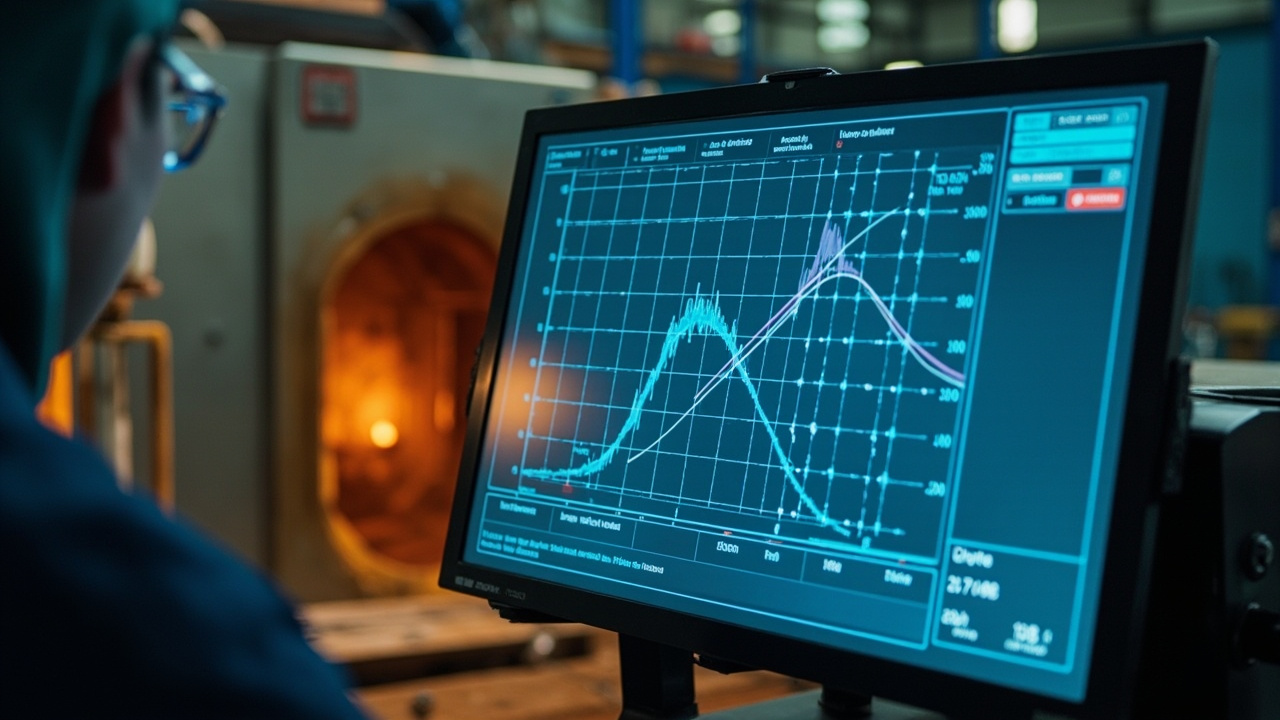
From application to final resistance establishment, water-based paint goes through three levels (shared with solvent-based but water-based relies more on water evaporation):
- Surface Dry (Touch Dry): Water basically evaporated, film surface non-tacky, can be lightly touched. Time ranges from several minutes to tens of minutes (greatly affected by temperature, humidity, film thickness, ventilation). Determined by GB/T 1728 via light finger touch or sand drop method. Surface dry only means "non-tacky", not that people can walk on it or objects can be placed.
- Hard Dry / Through Dry: Water basically fully evaporated, particles fused into continuous film, can be handled and lightly loaded. Usually several hours (e.g., 4–24 h, depending on system and environment). Determined by GB/T 1728 press filter paper/blade method. Hard dry ≠ full resistance.
- Full Cure: Crosslinking reaction and chain diffusion completed, water resistance, chemical resistance, hardness, and adhesion reach design values. Usually 7–14 days (longer at low temperature and high humidity). Water-based paint in early stage (within days after hard dry) still has weak water resistance and must be cured.
By separating the three levels, one can understand "why it can be touched when surface dry but turns white upon water contact" — because full cure is not yet reached, the crosslinking network is not dense, and water easily re-invades.
II. Physical Drying: Kinetics of Water Evaporation
The physical drying of water-based paint is the process of "water migrating from inside the film outward and evaporating", controlled by multiple factors:
- Temperature: Kinetic energy of water molecules increases with temperature, raising temperature significantly accelerates evaporation. Approximately doubling evaporation rate per 10℃ rise (approximate Arrhenius).
- Relative Humidity: Evaporation driving force is "water vapor pressure at film surface − ambient water vapor pressure". At high humidity the partial pressure difference is small, evaporation extremely slow; at RH > 85% it almost stagnates, prone to whitening and sagging.
- Ventilation: Flowing air removes the saturated water vapor layer at film surface, maintaining partial pressure difference; but excessively strong wind causes premature surface skinning ("skin seals water" making interior even slower).
- Film Thickness: Thick coating has long water migration path, drying shows "exponential decay", surface dries first while interior slow, prone to surface dry but interior not dry.
- Substrate: Porous substrates (wood, concrete) absorb part of water accelerating surface drying, but may also "grab water" causing uneven film formation and grain raising.
Typical drying curve has two stages: initial free water rapid evaporation (linear/rapid), later capillary water and residual co-solvent slow diffusion (tapering). Coalescing agent "plasticizes" to aid fusion in early stage, then slowly evaporates contributing to later drying.
III. Chemical Curing: Crosslinking to Build Resistance
Physical drying only forms film; resistance relies on chemical curing (for two-component/self-crosslinking systems):
- Two-component water-based epoxy: Epoxy + amine ring-opening addition, room temperature crosslinking, reaction rate affected by temperature and amine type; slow at low temperature, can be delayed by high humidity (phenalkamine type more humidity tolerant).
- Two-component water-based PU: Externally added HDI trimer reacts with —OH/—NH₂ of PUD to form polyurethane network; —NCO also competitively reacts with water (byproduct amine, CO₂), so excessive humidity causes foaming/whitening, humidity must be controlled.
- Self-crosslinking acrylic/PUD: Ketone carbonyl + hydrazide, siloxane condensation, etc., crosslink at room temperature or by heating.
- One-component thermoplastic: No chemical crosslinking, only relies on film formation and chain entanglement, resistance weaker than crosslinked type.
Chemical curing has two times: "Pot Life" and "Cure Period": pot life is the time after mixing that it can be applied (viscosity rises as reaction proceeds), cure period is the time for complete crosslinking (several days). Construction scheduling must satisfy both.
IV. Forced Drying: Oven, Infrared and Hot Air
To shorten construction period and improve crosslinking completeness, water-based paint often uses forced drying:
- Hot Air Oven: 40–60℃ (or higher, depending on system) circulating hot air, accelerates water evaporation and crosslinking. Note board temperature controlled, avoid thermal degradation or substrate deformation; for two-component PU must prevent excessive —NCO and water side reaction (control humidity and heating curve).
- Infrared (IR): Short/medium wave IR radiation heating, fast heating, low energy consumption, suitable for local or continuous lines; surface temperature must be controlled ≤ paint film tolerance (usually ≤ 80–100℃), prevent scorching.
- Microwave/High Frequency: Selective heating of water, fast drying but complex equipment, rarely used.
- Natural Curing: Room temperature 7–14 days, low cost but highly environment dependent, suitable for non-paced occasions.
Forced drying can compress "day-level" curing to "hour/minute-level", a key lever for water-based coating mass production, but must be paired with temperature/humidity process window (e.g., first low-temperature leveling then heating cure, prevent surface dry sealing water).
V. Summary of Key Factors Affecting Curing
| Factor | Impact on Drying/Curing | Control Suggestion |
|---|---|---|
| Temperature | Raising temperature accelerates evaporation and crosslinking | 5–60℃ depending on system, forced drying for efficiency |
| Humidity | High humidity extremely slow, prone to whitening and flash rust | RH ≤ 75%–85%, dehumidify |
| Film Thickness | Thick coating slow dry, prone to surface dry interior not dry | Thin coat multiple passes |
| Ventilation | Moderate acceleration, excessive causes skinning | Uniform air exchange |
| Coalescing Agent | Aids fusion but slows later drying | Control amount, choose low VOC high boiling point |
| Crosslink Type | Two-component/self-crosslinking need reaction period | Keep cure period, control pot life |
| Substrate Temp/Dew Point | Below dew point condensation damages film | Substrate 3℃ above dew point |
VI. Drying/Curing and Performance Acceptance
- Drying Time: Per GB/T 1728 measure surface dry (finger/sand drop), hard dry (press filter paper/blade), record temperature and humidity (result meaningless without temp/humidity).
- Hardness Development: Per GB/T 6739 pencil hardness, track 1 d/3 d/7 d/14 d hardness rise, verify curing curve.
- Adhesion Development: Per GB/T 9286 / GB/T 5210, measure after curing, verify adhesion establishment.
- Water Resistance: Per GB/T 1733 or GB/T 9274 water immersion, compare early (2–3 d) with full cure (14 d), reflect curing necessity.
- Gloss/Appearance: Per GB/T 9754, stable after full cure.
Acceptance must state "curing days at test", otherwise data at different ages are not comparable. This is also the root of many quality disputes — client rejects paint that meets standard at 14 days based on 3-day data.
VII. Curing Period Management Practice
Water-based paint needs 7–14 days to establish full resistance, during which:
- No heavy load rolling, sharp impact (especially floor coating);
- No water immersion, rain, steam (early weak water resistance);
- No strong solvent, chemical contact;
- Control environment temperature and humidity, promote crosslinking;
- Forced drying can shorten but must follow process curve.
Insufficient curing is the main cause of "surface dry then deliver" type accidents. Contract must state "acceptance after curing period", not "acceptance at surface dry".
VIII. Common Drying Defects and Countermeasures
- Surface Dry Interior Not Dry: Thick coating/high humidity/skinning. Reduce thickness, control humidity, level first then heat.
- Whitening: High humidity water retention/poor film formation. Control humidity, add coalescing agent, forced drying.
- Slow drying (not drying for days): low temperature and high humidity / wrong curing agent / incorrect two-component ratio. Check environment, check mixing ratio, maintain temperature.
- Bubbling / blind bubbles: —NCO reacts with water to produce gas (two-component PU at high humidity), substrate moisture content, insufficient defoaming. Control humidity, dry substrate, strong defoaming.
- Tackiness / re-tack: additives not volatilized / insufficient crosslinking. Reduce additives, ensure curing period, raise temperature.
Kexin New Materials (kexinMaterials) advocates "process curve pre-positioning" in the drying stage: upon delivery, provide the "leveling—heating—curing" time nodes under on-site temperature and humidity, allowing the production line to schedule according to the curve and avoid misjudging drying status based on experience. For extended reading on construction environment control, see Key Points for Water-based Coating Construction.
IX. Selection Recommendations from a Drying Perspective
When selecting, the "drying cycle" must be included in the evaluation: ① Can the production line control temperature, humidity and forced drying? ② Does the pot life of the two-component system match the construction rhythm? ③ Can the curing period be guaranteed (floor / equipment downtime cost)? If the environment cannot be controlled and fast delivery is required, priority should be given to fast-drying single-component systems (such as fast-drying water-based acrylic, alkyd-modified) rather than highly crosslinked slow-drying systems, or make trade-offs on construction tolerance.
Engineering selection advice: water-based paint selection should not only look at the "performance ceiling", but more at "the performance achievable under your on-site conditions". Drying and curing feasibility is often the invisible variable that determines success or failure. For related film-forming mechanisms, see extended reading Water-based Paint Film-forming Additives and Mechanisms.
X. Determination and Standards of Drying Time
Drying time is only meaningful when determined according to standards. GB/T 1728-2020 stipulates: surface dry by "finger method" (light finger touch without sticking) or "sand falling method" (sand falling without sticking); hard dry by "filter paper pressure method" (filter paper not sticking, no paint mark) or "blade method". Results must record temperature and humidity conditions, otherwise data from different environments are not comparable—the time for the same paint at 25℃/50%RH and 10℃/85%RH can differ by several times. ASTM D1640 has similar classification methods for surface dry / hard dry / fully cured. In engineering, the "hardness development curve" should also be tracked: according to GB/T 6739, measure pencil hardness at 1 d / 3 d / 7 d / 14 d to verify whether crosslinking is established as expected; if hardness still does not increase at 14 d, it is mostly due to incorrect ratio or environment inhibiting curing.
XI. Time Scale Management of Chemical Curing
Two-component and self-crosslinking systems have two times: "pot life" and "curing period": pot life is the time available for application after mixing (reaction proceeds causing viscosity rise, scrapped if exceeded); curing period is the time for complete crosslinking (several days). Both are affected by temperature: heating accelerates both, low temperature and high humidity delay them. The —NCO of water-based PU also has side reactions with water, high humidity causes foaming and whitening, so humidity must be controlled. Construction scheduling must simultaneously satisfy: complete construction within pot life, avoid heavy load and water immersion during curing period. Kexin New Materials (kexinMaterials) advocates "process curve pre-positioning": upon delivery, provide the "leveling—heating—curing" time nodes under on-site temperature and humidity, allowing the production line to schedule according to the curve and avoid misjudging drying status based on experience.
XII. Design of Forced Drying Process Curve
Forced drying (oven / infrared / hot air) compresses day-level curing to hour-level, but a curve must be designed: ① first low-temperature leveling (e.g., 30–40℃ for several minutes to tens of minutes), allowing water to evaporate uniformly and avoiding surface dry sealing water; ② then raise temperature for curing (e.g., 50–60℃, depending on system), accelerating crosslinking; ③ control panel temperature ≤ film tolerance (usually ≤ 80–100℃), preventing thermal degradation or substrate deformation; ④ two-component PU must control humidity and heating curve, preventing excessive side reaction of —NCO with water. Infrared (IR) heats up fast and has low energy consumption, suitable for continuous lines, but surface temperature must be monitored in real time. Natural curing (7–14 days) is suitable for non-paced occasions. A reasonable curve improves efficiency and preserves resistance, and is the key lever for water-based mass production.
XIII. Curing Period Management and Acceptance Closed Loop
Water-based paint requires 7–14 days to establish full resistance, during which: no heavy object rolling, sharp impact (especially floor); no water immersion, rain, steam (early water resistance weak); no strong solvent, chemical contact; control temperature and humidity to promote crosslinking; forced drying can shorten but must follow the curve. Acceptance must state the "curing days at test": measure GB/T 1728 drying, GB/T 6739 hardness (track development), GB/T 9286 adhesion, GB/T 1733/9274 water resistance (early vs 14 d comparison), GB/T 9754 gloss by age. The contract should state "acceptance after curing period" rather than "surface dry acceptance", which is fundamental to avoiding quality disputes. Kexin New Materials (kexinMaterials) recommends writing the curing period and acceptance age into the technical agreement, making the "truly well dried" of water-based paint quantifiable and accountable. For related construction control, see Key Points for Water-based Coating Construction.
XIV. Quantitative Determination Methods for Drying Process of Water-based Paint
To speak scientifically about "dry", quantifiable means must be used for determination. Surface dry and hard dry are determined according to national standard GB/T 1728: surface dry can use finger touch method or sand falling method, hard dry can use filter paper pressure method or blade method. Results must record ambient temperature and relative humidity, because the drying time of the same paint at twenty-five degrees Celsius, fifty percent humidity and ten degrees Celsius, eighty-five percent humidity can differ by several times; data without environment written are not comparable. The hardness development curve is a more practical determination: according to GB/T 6739 pencil hardness, track hardness changes on day 1, day 3, day 7, day 14 to verify whether crosslinking is established as expected; if hardness still does not rise at day 14, it is mostly due to mixing ratio error or environment inhibiting curing. Water resistance according to GB/T 1733 or GB/T 9274, comparing early day 3 with fully cured day 14 results, can intuitively show the necessity of curing.
XV. Kinetic Verification of Temperature and Humidity on Drying
The physical drying essence of water-based paint is the migration and volatilization of water from inside the film to outside, and its driving force is the difference between water vapor pressure at the film surface and ambient water vapor pressure. As temperature rises, water molecule kinetic energy increases and volatilization accelerates significantly; as relative humidity rises, ambient water vapor pressure approaches saturation and the driving force tends to zero, volatilization almost stops. This is why water-based paint dries extremely slowly, easily whitens and sags in high humidity environments, and easily induces flash rust on metal. The role of ventilation is to remove the saturated water vapor layer on the film surface and maintain the partial pressure difference; but excessive ventilation causes the surface to skin too quickly, instead sealing internal water and forming surface dry but not dry inside. Therefore, in on-site management, moderate and uniform air exchange is better than strong direct blowing. Substrate temperature must be at least 3℃ above dew point, otherwise surface condensation directly destroys film formation. Making these parameters into a recordable process card can stabilize drying quality.
XVI. Engineering Design and Cases of Forced Drying Curve
Forced drying is the key lever to compress day-level curing to hour-level, but curve design determines success or failure. A typical curve is divided into two stages: first low-temperature leveling, e.g., 30 to 40℃ for several minutes to tens of minutes, allowing water to evaporate uniformly and avoiding surface dry sealing water; then raise temperature for curing, e.g., 50 to 60℃, accelerating crosslinking. Panel temperature must be controlled within the film tolerance range, usually not exceeding 80 to 100℃, to prevent thermal degradation or substrate deformation. Two-component water-based polyurethane must also control humidity and heating curve to prevent excessive side reaction of isocyanate groups with water causing foaming and whitening. Infrared heating heats up fast and has low energy consumption, suitable for continuous lines, but surface temperature must be monitored in real time. Natural curing is suitable for non-paced occasions, full resistance establishment often requires 7 to 14 days. After a certain construction machinery factory introduced a low-temperature drying tunnel, the delivery cycle of water-based paint was shortened from 7 days to 2 days, and crosslinking completeness improved, indicating that forced drying is an indispensable link for water-based mass production.
XVII. Standard Index and Future of Water-based Paint Drying and Curing
For engineers' convenience, standards related to water-based paint drying and curing include: drying time per GB/T 1728; hardness per GB/T 6739; adhesion per GB/T 9286 and GB/T 5210; water resistance per GB/T 1733 and GB/T 9274; gloss per GB/T 9754; weather resistance per GB/T 1865 xenon lamp method corresponding to ISO 11341. Writing these standard numbers into the acceptance sheet turns drying and curing from perception into citable data. In future trends, forced drying (low-temperature tunnel, infrared) will become widespread in water-based mass production lines, compressing day-level curing to hour-level; self-crosslinking and two-component systems allow water-based paint to obtain high resistance after low-temperature film formation; online temperature, humidity and panel temperature monitoring make drying curves recordable and traceable. For coating enterprises, the refinement of drying and curing management is the last gate for water-based transformation from sample qualification to batch stability, and also the invisible variable determining customer satisfaction. Writing the curing period and acceptance age into the contract can institutionally avoid hidden accidents of delivery upon surface dry.
XVIII. In-depth Interpretation of Minimum Film Forming Temperature and Film-forming Additives
Minimum Film Forming Temperature (MFFT) is one of the core concepts for understanding water-based drying. After water volatilizes, emulsion particles must squeeze, deform and fuse into a continuous film, premised on sufficient mobility of polymer segments, which is determined by the glass transition temperature: when ambient temperature is below the minimum film forming temperature, particles remain rigid spheres, and after stacking they are just "powder compressed cake", the film whitens, powders off, and has no strength. The role of film-forming additive is temporary plasticization—penetrating the particle surface, reducing segment movement resistance, pulling the actual film forming temperature below ambient temperature, and then slowly volatilizing away after film formation completes, allowing the film to recover designed hardness. From this, three engineering conclusions can be drawn: First, winter construction is not simply solved by "adding more film-forming additive"; excessive additive will remain in the film long-term, causing tackiness, no hardness rise and increased VOC, so low-temperature film-forming products or heated environment should be prioritized; Second, the volatilization of film-forming additive contributes to the "long tail" of later drying, and odor and tackiness problems often appear at this stage, so selecting efficient low-dosage additive systems is the optimization direction at the formulation end; Third, the minimum film forming temperature can be determined on a gradient temperature plate according to GB/T 9267 related methods, and when selecting, the measured value should be requested from the supplier rather than just looking at the resin glass transition temperature. Checking the minimum film forming temperature, construction ambient temperature and substrate temperature together is the first step in winter water-based construction scheme review.
XIX. Differences in Drying Behavior on Different Substrates
The drying performance of the same water-based paint on different substrates varies significantly, and must be treated differently when scheduling:
| Substrate | Drying Characteristics | Main Risks | Management Points |
|---|---|---|---|
| Cold-rolled steel plate | Non-absorbent, relies entirely on volatilization | Flash rust, dew point condensation | Control humidity, rust inhibitor, measure panel temperature |
| Hot-dip galvanized | Non-absorbent, low surface energy | Cratering, poor adhesion | Special primer, cleaning and degreasing |
| Wood | Porous water absorption accelerates surface drying | Grain raising, uneven water absorption | Sealing primer, control moisture content |
| Concrete | Strong water absorption, alkalinity | Water grab causing uneven film formation, alkali efflorescence | Sealing primer, moisture content ≤ 8% |
| Plastic parts | Non-absorbent, low heat resistance | Baking deformation, poor adhesion | Low-temperature profile, adhesion promotion |
The "water grab" by porous substrates is a double-edged sword: on the surface it dries fast, but in reality the water is absorbed by the substrate rather than evaporated, so particle coalescence may be incomplete and the bottom-layer strength is actually lower. Therefore, for both wood and concrete, it is emphasized to first apply a sealing primer to control the water absorption rate, and only then discuss the drying rhythm of the topcoat. Metal parts are the opposite: all moisture must be discharged by evaporation, so the impact of ambient temperature and humidity is amplified, and investment in ovens and dehumidification takes higher priority.
20. Case Reviews of Typical Drying Failures
Case 1: A furniture factory rushed work in winter; the workshop heating was turned off at night, and the next day the water-based topcoat turned white in batches. The review found that the night workshop temperature dropped below five degrees Celsius, lower than the actual film-forming temperature of the system, so the particles did not coalesce. The corrective measure was to add circulating hot air for night insulation, and to write "maintain temperature continuously during film formation" into the process card; since then it has not recurred. Case 2: A machinery factory's two-component water-based polyurethane topcoat developed dense pinholes and hidden bubbles during the plum rain season; testing confirmed the workshop relative humidity exceeded ninety percent, caused by side reaction of isocyanate with water producing gas. The correction was to install dehumidifiers to press humidity below seventy percent, and adjust the curing agent ratio for re-verification. Case 3: A floor coating project opened to forklift traffic on the third day after surface dry, and after one week showed pressure marks and local delamination, because full cure was not established before heavy load. The correction was to write the open-to-traffic time according to the curing period into the contract and set up barriers. The common lesson of the three cases is: drying failure can almost always be traced to "environmental out-of-window" or "time being compressed", and both can be intercepted in advance through records and systems.Kexin New Materials (kexinMaterials) found in project reviews that sites equipped with continuous temperature and humidity recorders had much lower drying-related complaint rates than those relying only on manual spot checks; monitoring data itself is the best quality insurance.
21. Method for Matching Drying Rhythm with Production Line Scheduling
Converting drying data into scheduling parameters is the most concerned implementation step for coating workshop managers. The method is divided into four steps: Step 1, measure the baseline curve — under real workshop temperature and humidity, measure surface dry and hard dry times per GB/T 1728, and measure the age to reach stackable and packable hardness thresholds per GB/T 6739, forming a drying ledger under the factory's conditions; Step 2, define process thresholds — e.g., "transfer and hang only after surface dry", "turn over for processing only after hard dry", "stack and package only after hardness meets standard", each threshold corresponding to a time in the ledger; Step 3, design buffer zones — calculate drying area and oven capacity by takt output, avoiding premature transfer to free up space; Step 4, seasonal correction — winter and summer scheduling tables, or dynamically correct transfer time using recorder data. Experience shows most "poor drying" complaints are not a paint problem, but the transfer takt being quietly compressed in peak season. Writing drying thresholds on a kanban hung in the drying area, giving team leaders a basis to follow, is the lowest-cost error-proofing means. In addition, for workshops with mixed multiple product lines, it is recommended to use color-coded transfer cards by system type: single-component fast-dry system, two-component epoxy, two-component polyurethane each in different colors; the card prints that system's surface dry, hard dry and stackable times, so operators can tell at a glance whether the current batch can enter the next process, avoiding confusion of drying rhythms between different systems causing mis-transfer.
FAQ
Q: What is the difference between surface dry, hard dry, and full cure?
A:
Surface dry means water has basically evaporated and the surface is non-tacky (minutes level); hard dry means the film is continuous and transportable (several hours); full cure means crosslinking and chain diffusion are complete and resistance reaches design values (7–14 days). Surface dry ≠ load-bearing; before full cure water resistance is weak and curing is required.
Q: Why does water-based paint still turn white when wetted after hard dry?
A:
Hard dry only means water has evaporated and the film is continuous and transportable, but crosslink density and water resistance need 7–14 days to continue building. Early water exposure easily re-invades and causes whitening, so no water immersion during curing period. This is an inherent characteristic of water-based paint and must be managed by curing period.
Q: How much does temperature affect water-based paint drying?
A:
Significant. Raising temperature accelerates water evaporation and crosslinking (approximately doubling rate per 10℃ rise). Low temperature (<5–10℃) particles below MFFT do not coalesce, turn white and chalk; moderate heating / forced drying is key to mass production.
Q: Why does high humidity prevent water-based paint from drying?
A:
The driving force for evaporation is the vapor pressure difference between film surface and environment; when RH > 85% the difference is near zero, water hardly evaporates, causing extremely slow drying, sagging, whitening, and metal easily flash-rusts. Control RH ≤ 75%–85% and dehumidify.
Q: Does two-component water-based paint drying still need humidity control?
A:
Even more. The —NCO of two-component PU reacts with water to side-produce amine and CO₂; high humidity causes foaming, whitening, poor curing; water-based epoxy is somewhat more humidity tolerant (phenalkamine type) but still avoid free water. Control humidity and maintain pot life and curing period.
Q: What are the benefits of forced drying (oven / infrared)?
A:
Compresses day-level curing to hour/minute level, improves crosslink completeness and gloss uniformity, and is the lever for water-based mass production. Control board temperature (often ≤ 80–100℃ to prevent degradation) and heating curve (level first then heat to prevent surface-dry sealing water).
Q: How many days for water-based paint curing, and what to note during?
A:
Full resistance build often 7–14 days (depending on temp/humidity and crosslink). During: no heavy load, no water immersion/rain, no strong solvent, control temp/humidity; floors especially avoid early heavy rolling. Contract should state "acceptance after curing period".
Q: Why must drying time test results note temperature and humidity conditions?
A:
Drying rate strongly depends on temp/humidity; same paint at 25℃/50%RH vs 10℃/85%RH can differ several times. Data without conditions is not comparable and is a root of quality disputes. Per GB/T 1728 environment must be recorded.
Q: Why does thick-coat water-based paint easily show "surface dry inside not dry"?
A:
Thick coat has long water migration path; surface reaches surface dry first forming a skin, internal water is sealed and hard to exit, showing surface dry inside not dry, high internal stress and easy cracking. Water-based should be thin-coat multiple passes, with dry curve of level first then heat.
Q: How to accept whether water-based paint is "truly dry well"?
A:
Not just surface dry; test by age: GB/T 1728 drying time, GB/T 6739 hardness (track 1/3/7/14 d development), GB/T 9286 adhesion, GB/T 1733/9274 water resistance (early vs 14 d comparison), GB/T 9754 gloss. State curing days for comparability.
Q: Can winter rely on adding more film-forming aid to solve low-temp film formation?
A:
Not recommended. Excess aid stays long in film causing tack, hardness not rising and VOC increase. Correct is choose low-temp film-forming product (low MFFT) or heat environment; check minimum film-forming temp, ambient temp, substrate temp before start.
Q: Why is bottom-layer strength of water-based paint on wood and concrete low?
A:
Porous substrate "water grab": surface seems to dry fast, but water is absorbed by substrate not evaporated, particle coalescence incomplete, bottom strength insufficient. Countermeasure: first apply sealing primer to control absorption rate; concrete also needs moisture ≤ 8%, anti-efflorescence, then discuss topcoat drying rhythm.
Further Reading
- Key Points for Water-based Coating Construction: Implement temperature/humidity, film thickness, intercoat and other construction controls into operation.
- Water-based Paint Film-forming Aids and Mechanism: Understand the role and optimization of film-forming aids in each drying stage.
- Water-based Polyurethane Resin: See crosslink curing mechanism and pot life of two-component water-based PU.
- Water-based Epoxy Floor Coating: Formulation, Curing Mechanism and Construction Acceptance
- Water-based Anti-rust Coating Technology: Mechanism, Formulation and Salt Spray Performance
- How to Select Water-based Industrial Coating under Oil-to-water Background: Resin System and Applicable Conditions