Whether water-based paint can form a film and how well it forms a film is the most fundamental proposition in water-based coating technology. A common on-site phenomenon: the same water-based paint, when applied in summer, is bright and smooth, but in winter or high-humidity days it turns white, powders off, and peels at a touch — this is not because the paint has "deteriorated", but because the physical and chemical process of "film formation" is interrupted by the environment. To fundamentally solve it, one must understand how emulsion particles fuse from a discrete state into a continuous transparent film, and the role of the coalescing agent as a "temporary plasticizer" in this process.
Kexin New Materials (kexinMaterials) has systematic experiments on the film-forming window and coalescing agent screening of multiple water-based resins. This article, combining the principle of emulsion film formation with standards such as GB/T 1725-2007 and ASTM D2354 (Determination of Minimum Film-Forming Temperature), explains "film formation" thoroughly.
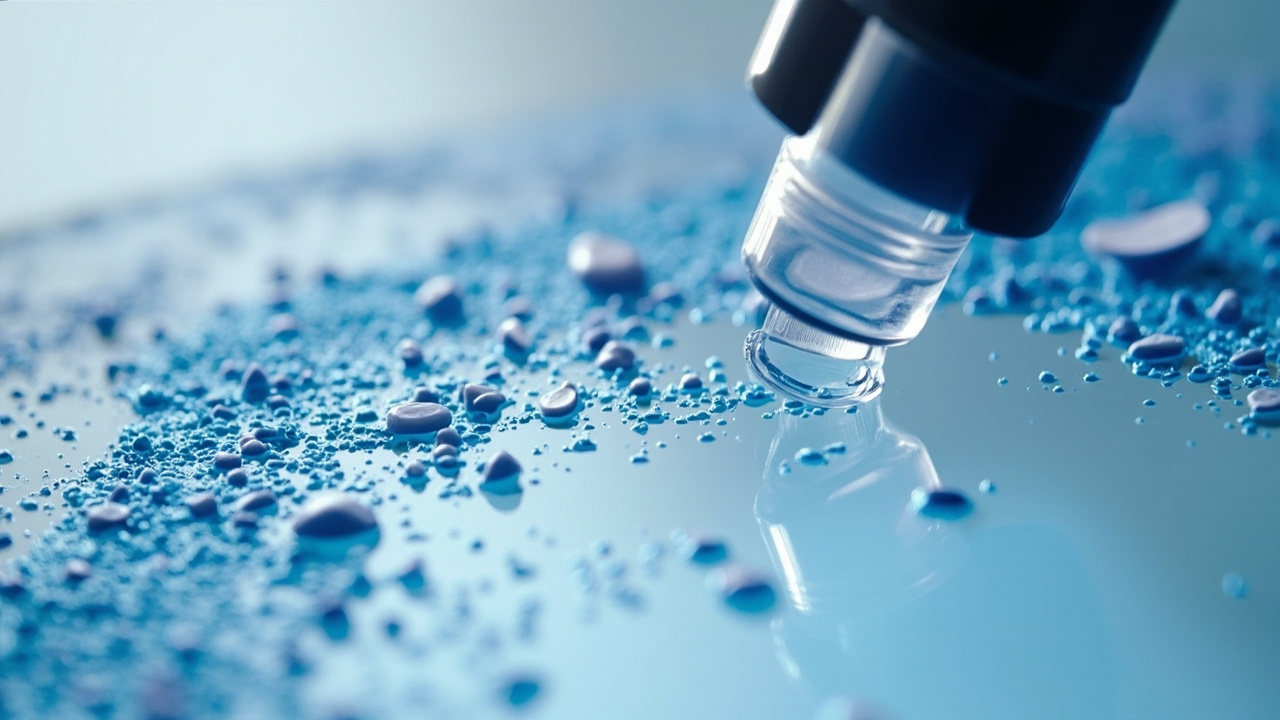
I. Three Stages of Film Formation
Water-based paint (emulsion type) film formation is a typical "particle fusion" process, divided into three stages:
- Water evaporation and dense packing of particles: After application, water evaporates, the concentration of latex particles (about 50–300 nm) increases, and under Brownian motion and gravitational settling they gradually approach each other, forming a packed layer where "particles are in contact but still have voids". The rate of this step is determined by temperature, humidity, and film thickness — slow at high humidity, slow when applied thick.
- Particle deformation and fusion (core): When the temperature is higher than the minimum film-forming temperature (MFFT) of the emulsion, the shell of the polymer particles softens, and under the combined action of capillary pressure (negative pressure generated by the water meniscus between particles, which can reach several atmospheres) and the segmental motion of the particles themselves, the particle interfaces disappear and fuse with each other to form a continuous film. This step is the qualitative change point of "film formation".
- Chain diffusion and final densification/crosslinking: After fusion, polymer segments diffuse and entangle across the original particle boundaries, and the film strength increases over time; if self-crosslinking groups or external curing agents are present, further chemical crosslinking occurs, and resistance jumps up.
Understanding these three steps explains: temperature below MFFT → particles do not fuse → "whitening, powdering"; insufficient coalescing agent → poor fusion → cratering and cracking; high humidity → slow water evaporation → delayed fusion, sagging.
II. Minimum Film-Forming Temperature (MFFT) and Glass Transition Temperature (Tg)
MFFT is the "temperature switch" for whether the emulsion can form a film. Theoretically, MFFT is close to the minimum film-forming temperature of the polymer; empirically MFFT ≈ near Tg (glass transition temperature) (for homogeneous emulsions, MFFT is often slightly lower than Tg; for core-shell structures it is more complex). Tg is the temperature at which the polymer changes from glassy state to high-elastic state: high Tg → hard, heat-resistant, but difficult to form film (high MFFT); low Tg → soft, easy to form film, but sticky and poor heat resistance.
Design contradiction: want hardness and heat resistance → raise Tg → MFFT rises → difficult to form film; want easy film formation → lower Tg → sticky and not heat-resistant. The solution is coalescing agent: it temporarily "plasticizes" the polymer, lowering MFFT below room temperature, and after film formation volatilizes over time (or baking), and the polymer recovers the stiffness of high Tg. It is equivalent to "soften first to form film, then harden". This is the key engineering technique for water-based paint to be both easy to apply and highly hard.
ASTM D2354 "Standard Test Method for Minimum Film-Forming Temperature of Emulsion Vehicles" is the standard method, and the national standard system also adopts a similar step-temperature film former. Formula review should request the measured MFFT value, rather than just looking at Tg.
III. Types and Functions of Coalescing Agents
Coalescing agents (coagulants/plasticizing film formers) must satisfy: ① limited miscibility with water, able to enter the polymer phase for plasticization; ② sufficiently high boiling point, remaining in the film to assist fusion during application, then slowly volatilizing; ③ low VOC (or exempt) for compliance; ④ no effect on stability and resistance.
Common types:
- Texanol (2,2,4-trimethyl-1,3-pentanediol monoisobutyrate): The most classic, high efficiency, low odor, low toxicity, boiling point about 255℃, strong efficacy, the mainstay of water-based wood/industrial coatings. But the boiling point is close to the 250℃ threshold, and VOC accounting needs to be judged according to standards.
- Dipropylene glycol butyl ether (DPnB): Strong efficacy, slow volatilization, suitable for high Tg systems, but higher odor and VOC, dosage should be controlled.
- Dipropylene glycol methyl ether (DPM) / Propylene glycol methyl ether (PM): Medium efficacy, fast volatilization, often used as co-solvent and film-forming synergist.
- Tripropylene glycol butyl ether (TPnB): High boiling point, low volatilization, low odor, an eco-friendly trend variety.
- Low VOC high-boiling ester/ether ester: New-generation low-odor low-VOC coalescing agents, meeting the strict limits of GB 30981-2020.
Screening principles: ① efficacy (ability to lower MFFT); ② volatilization rate (too fast no film-forming aid, too slow long-term stickiness); ③ VOC and odor; ④ side effects on water and chemical resistance of the film (some agent residues reduce water resistance); ⑤ cost.
IV. Dosage and Balance of Coalescing Agents
Dosage usually accounts for 2%–10% of emulsion mass, depending on Tg and application temperature: more in winter/low temperature, less in summer/high temperature; more for high Tg resins (e.g., hard acrylic), less for low Tg (e.g., soft PU). Consequences of excess: ① VOC exceeds standard; ② film long-term sticky, easy to attract dust; ③ water and chemical resistance decrease (hydrophilic residue of agent); ④ slower drying. Consequences of insufficiency: ① poor film formation, whitening and cratering; ② low gloss, poor adhesion.
Engineering adopts "adjustable formula": adjust the coalescing agent dosage with season and on-site temperature/humidity, and coordinate with construction window management. This also reflects that water-based paint "requires more process discipline than solvent-based".

V. Self-Crosslinking: Resistance Jump After Film Formation
Simple thermoplastic emulsion film has limited water and chemical resistance. High-end water-based systems introduce self-crosslinking to make resistance jump after film formation:
- Ketone carbonyl + hydrazide: Emulsion containing DAAM (diacetone acrylamide) with ADH (adipic dihydrazide), acylhydrazone-ketone condensation forms covalent network during film formation.
- Epoxy/aziridine: Externally added crosslinking agent, crosslinks at room temperature or heating.
- Siloxane hydrolysis condensation: Introduce alkoxysilane, hydrolyzes and condenses after film formation to form Si-O-Si network, improving water resistance and hardness.
- Two-component water-based PU: Externally added hydrophilic HDI trimer, —NCO crosslinks with —OH/—NH₂ (see water-based polyurethane resin).
Self-crosslinking allows water-based paint, after "low-temperature film formation (relying on agent to lower MFFT)", to still obtain "high crosslinking resistance", which is the key technology for water-based replacing oil-based. But self-crosslinking has pot life or reaction condition constraints, and formula and construction must match.
VI. Relationship Between Film Formation, Drying and Curing
Film formation ≠ fully cured. Three levels:
- Surface dry: Water basically evaporated, film touchable and non-sticky, minutes to tens of minutes.
- Hard dry / film formation complete: Particles fused continuous, can be handled, several hours.
- Fully cured / resistance established: Crosslinking reaction and chain diffusion complete, requires several days to over ten days (depending on temperature, humidity, crosslinking type). Water-based paint has weak early water resistance, must be cured.
Measure drying time (surface dry/hard dry) according to GB/T 1728, ASTM D1640 has similar methods. Construction scheduling must be arranged according to "full curing period" rather than "surface dry period" for load and water contact.
VII. Construction Factors Affecting Film Formation
- Temperature: Must be higher than the actual film-forming temperature (MFFT − after agent compensation), usually ≥ 5–10℃. Low temperature requires adding agent or heating.
- Humidity: Relative humidity ≤ 75%–85%, high humidity makes water difficult to evaporate, delayed fusion, easy whitening and sagging. Substrate 3℃ above dew point.
- Film thickness: Thick coating has long water evaporation path, easy surface dry but inner not dry, sagging; thin multi-coat is more stable.
- Ventilation: Moderate ventilation accelerates water evaporation, but too strong wind causes surface skinning too fast ("skin seals water" but actually slows drying).
- Substrate: Porous substrate (wood, concrete) absorbs water, shortens water residence but easy grain raising/water grabbing causing uneven film formation; dense metal needs wetting agent to prevent cratering.
VIII. Troubleshooting Table for Film Formation Failure
| Phenomenon | Main cause | Countermeasure |
|---|---|---|
| Whitening/powdering | Temperature < MFFT, insufficient agent | Add coalescing agent, raise temperature, control humidity |
| Cratering/edge pulling | Poor wetting, surface contamination | Add wetting agent, clean substrate |
| Sagging | Large film thickness, high humidity slow drying | Reduce thickness, control humidity, thicken |
| Cracking | Insufficient agent / drying stress | Add coalescing agent, slow drying |
| Sticky | Excess agent / not volatilized | Reduce agent, extend curing, raise temperature |
| Low gloss | Poor fusion, rough | Add film-forming aid, optimize leveling |
IX. Design Trends of Low-VOC Film-Forming Aids
Facing the strict limits of GB 30981-2020, film-forming aids are evolving toward "low VOC, high boiling point, low odor, high efficiency": ① replacing part of Texanol/DPnB with low-odor, low-VOC types such as TPnB; ② introducing self-crosslinking/core-shell structures to reduce dependence on aids (polymer itself has low MFFT yet high Tg); ③ high solids content to reduce total water and aid input; ④ baking process allows film formation relying on temperature rather than aids. These directions together raise both the VOC and film-forming quality of water-based coating.
Kexin New Materials (kexinMaterials) advocates "reducing aid dependence through structural design" in formulations: by using core-shell emulsion and self-crosslinking, MFFT is lowered while maintaining high Tg, thereby reducing the amount of film-forming aid used and balancing film formation with low VOC. Regarding the contribution of film-forming aids to VOC, further reading is available at Water-based vs Oil-based VOC Comparison.
X. Recommendations from Mechanism to Selection/Construction
For engineers: ① request MFFT and Tg data rather than just looking at "film-formable" claims; ② confirm the type of film-forming aid and its VOC contribution; ③ determine aid dosage and application window based on on-site temperature and humidity; ④ distinguish surface dry/hard dry/fully cured to schedule processes; ⑤ upon acceptance, apply dual control of drying per GB/T 1728 and VOC per GB/T 23986.
The accompanying process card provides "aid fine-tuning + temperature/humidity window + curing period" suggestions based on batch environment, enabling water-based coating to form film stably across seasons. Related construction control can be further read at Water-based Coating Construction Key Points and Water-based Coating Drying and Curing.
X. Screening and Dosage Engineering of Film-Forming Aids
Screening film-forming aids is the most challenging part of water-based formulation. Evaluation dimensions: ① MFFT reduction efficiency (the less dosage the more effective); ② volatilization rate (too fast fails to assist film formation, too slow causes long-term tackiness); ③ VOC and odor (low VOC, low odor is the trend); ④ side effects on water and chemical resistance (some aids leave hydrophilic residues reducing water resistance); ⑤ compatibility with the system (no flocculation, no yellowing); ⑥ cost. Common types: Texanol (2,2,4-trimethyl-1,3-pentanediol monoisobutyrate, strong efficiency, boiling point ~255℃, low odor low toxicity, but close to 250℃ threshold requires VOC judgment per standards), DPnB (strong effect slow evaporation, higher odor and VOC), DPM/PM (medium effect fast evaporation, co-solvent synergy), TPnB (high boiling point low evaporation low odor, eco-friendly trend).
Dosage usually accounts for 2%–10% of emulsion mass, depending on Tg and application temperature: more in winter/low temperature, less in summer/high temperature; more for high Tg (hard acrylic), less for low Tg (soft PU). Excess consequences: VOC exceedance, long-term tackiness and dust pickup, reduced water/chemical resistance, slower drying; insufficient consequences: poor film formation, whitening and cratering, low gloss. Engineering adopts "adjustable formulation" adjusted by season, coupled with application window management—this is exactly where water-based coating requires more process discipline than solvent-based coating.
XI. Core-Shell Emulsion and Self-Crosslinking: Reducing Aid Dependence from Structure
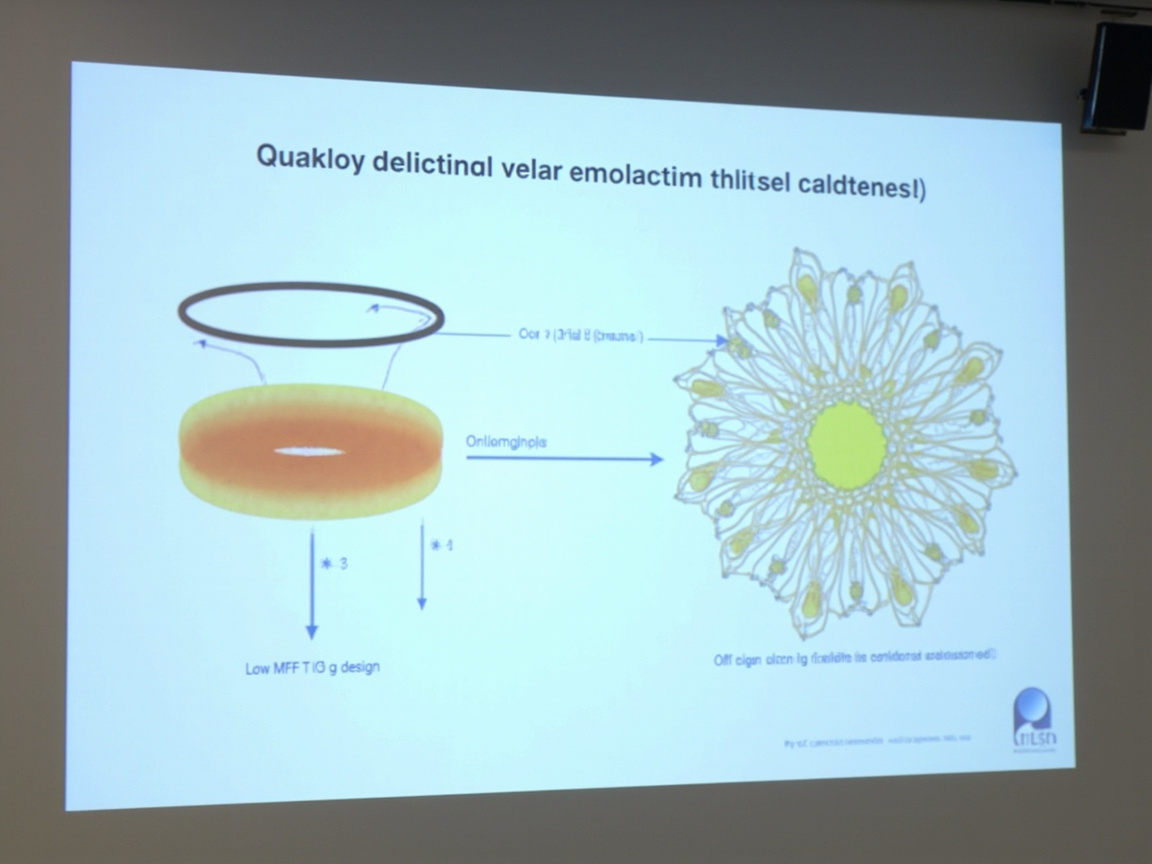
The fundamental path to reduce film-forming aid dependence is resin structural design. Core-shell emulsion: core is low-Tg soft segment (easy to fuse at low temperature), shell is high-Tg hard segment (rigid after film formation), making the particle overall low MFFT yet high hardness after film formation, reducing the need for film-forming aids. Self-crosslinking: chemical crosslinking occurs after film formation (ketone carbonyl + hydrazide, siloxane condensation, two-component PU with external HDI), resistance jumps without relying on thick aid layer. The combination can press film-forming aid dosage very low while maintaining high resistance, and is the mainstream direction to meet the strict limits of GB 30981-2020.
In addition, high solids reduce total water and aid input, and baking process allows film formation relying on temperature rather than aids, also being synergistic VOC-reduction means. Kexin New Materials (kexinMaterials) advocates "reducing aid dependence through structural design": by using core-shell and self-crosslinking to lower MFFT while maintaining high Tg, thereby reducing film-forming aids and balancing film formation with low VOC. This is more sustainable than simply "piling aids".
XII. Deepening On-site Troubleshooting of Film Formation Failure
In addition to the table above, on-site attention is needed: ① "false dry"—surface skins over but inside still wet, detectable by nail pinch or wet film gauge, must extend leveling and drying; ② "rough return"—aid failure or poor compatibility causes gloss drop and rough feel, must change to compatible aid; ③ "chain cratering"—substrate oil or silicone contamination, must clean thoroughly and add compatible wetting agent; ④ "low-temperature whitening"—film formation poor below MFFT, must raise temperature or add aid; ⑤ "thick edge/fat edge"—edge film thickness accumulation and sagging, must control gun pass and thixotropy. Troubleshooting order: first check environment (temp/humidity/dew point) → then formulation (aid/ratio) → finally substrate (cleanliness/roughness). Most film formation accidents are environmental or process issues, not the resin itself.
XIII. Closed Loop from Film Formation Mechanism to Construction Process
Implementing film formation mechanism into construction: ① confirm system MFFT and on-site temperature to decide film-forming aid dosage; ② control temp/humidity and dew point (substrate 3℃ above dew point, humidity ≤ 80%); ③ thin coats multiple passes, avoid surface dry inside not dry; ④ moderate ventilation to accelerate water evaporation but not too strong to cause skinning; ⑤ distinguish surface dry/hard dry/fully cured to schedule processes; ⑥ manage curing period per full cure period. Kexin New Materials (kexinMaterials)'s process card provides "aid fine-tuning + temp/humidity window + curing period" suggestions based on batch environment, enabling water-based coating to form film stably across seasons. Related drying and curing can be further read at Water-based Coating Drying and Curing, construction control see Water-based Coating Construction Key Points.
XIV. Low-VOC Evolution Route of Film-Forming Aids
Facing the strict limits of GB 30981-2020, film-forming aids are evolving toward "low VOC, high boiling point, low odor, high efficiency". Traditional Texanol, though strong in efficiency, has boiling point ~255℃ close to threshold and is counted as VOC under some definitions; new generations such as tripropylene glycol butyl ether (TPnB) have higher boiling point, lower volatility, smaller odor, and can complete fusion with lower VOC contribution. Meanwhile, formulations reduce MFFT dependence structurally through core-shell emulsion and self-crosslinking, decreasing total film-forming aid dosage. High-solids systems reduce total water and aid input, and baking process allows film formation relying on temperature rather than aids, also being directions for synergistic VOC reduction. These paths together turn the "film formation quality" and "low VOC" of water-based coating from contradiction to compatibility.
XV. Microscopic Observation and Judgment of Film Formation Process
Film formation quality can be assisted by means: ① observe wet film state, see particle fusion continuity; ② after surface dry, use nail pinch or wet film comb to detect "false dry" (surface skinned inside still wet); ③ after full cure measure hardness development (GB/T 6739) and water resistance (GB/T 1733) to verify crosslinking; ④ if necessary use cross-section or microscope to see film continuity and pores. Writing these judgments into the process card is more scientific than "seeing if it's shiny". The most commonly used on-site are the "temp/humidity record + drying time + hardness development" trio, sufficient to control the vast majority of film formation accidents.
XVI. Comparison of Film Formation Windows of Different Resin Systems
Acrylic emulsion: medium MFFT, medium film-forming aid demand, fast dry, construction tolerant; epoxy dispersion: two-component, film formation relies on water evaporation + amine curing, sensitive to temp/humidity but strong resistance after film formation; polyurethane dispersion (PUD): adjustable MFFT, self-crosslinking or two-component gives resistance jump, wider film formation window; alkyd-modified: single-component, good leveling but weak early water resistance, slow dry. When selecting, must match "film formation window" with on-site temp/humidity capability—when environment cannot be controlled on-site, prioritize systems with wide film formation window and humidity insensitivity, rather than blindly pursuing high performance and failing.
XVII. Film-Forming Aid Dosage and Seasonal Formulation Management
Film-forming aid dosage should be dynamically adjusted by season: more in winter low temperature (ensure fusion), less in summer high temperature (prevent tackiness, reduce VOC); high humidity areas favor fast-evaporating types with dehumidification. It is recommended to establish a "seasonal formulation table": spring/autumn baseline, summer reduction, winter increase, with temp/humidity window and curing period, forming reproducible process. The accompanying process card provides "aid fine-tuning + temp/humidity window + curing period" suggestions based on batch environment, enabling water-based coating to form film stably across seasons. Regarding construction environment control, further reading at Water-based Coating Construction Key Points; regarding drying and curing cycle, see Water-based Coating Drying and Curing.
XVIII. On-site Quick Judgment Checklist for Film Formation Quality
To turn film formation mechanism into operable on-site inspection, a checklist is suggested: First, record ambient temperature, relative humidity and dew point, confirm substrate is above dew point by more than 3℃; Second, observe wet film fusion continuity, no cratering or edge pulling; Third, after surface dry use nail pinch or wet film comb to detect false dry; Fourth, after hard dry measure adhesion and appearance; Fifth, track hardness development curve, measure on day 1, 3, 7, 14 respectively; Sixth, before full cure prohibit water immersion and heavy pressure. Writing these six items into the process card is far more scientific than seeing if it's shiny. The most commonly used on-site are the temp/humidity record, drying time, hardness development trio, sufficient to control the vast majority of film formation accidents, and facilitate converting experience into reproducible data.
XIX. Summary of Synergy between Film-Forming Aids and Resin
Film formation is the qualitative change of water-based coating from liquid to protective layer; film-forming aid is a temporary plasticizer that lowers the film formation temperature of high-Tg polymer below room temperature, volatilizes after film formation, and the polymer recovers high rigidity. But film-forming aids count as VOC, and excess causes tackiness and reduced water resistance, so modern formulations try to use core-shell emulsion and self-crosslinking to structurally reduce aid dependence. Understanding film formation means understanding why water-based coating is sensitive to temp/humidity, why it has specific problems like flash rust and grain raising, and why curing period is needed. On the construction side, MFFT, film-forming aid dosage, temp/humidity window and curing period must be managed as a whole. For engineers, when selecting, first ask whether the system's MFFT matches the construction environment temperature, far more important than asking if the coating is shiny. Only by implementing film formation mechanism into the process card can the on-site quality of water-based coating be stable and controllable.
XX. Capillary Pressure and Particle Size: Why Smaller Particle Size Fuses More Easily
One of the core driving forces of particle coalescence is capillary pressure, which can be qualitatively estimated by the Young-Laplace equation: ΔP = 2γ/r, where γ is the surface tension of water (about 72.8 mN/m at 20℃, a general value from physical chemistry handbooks), and r is the radius of curvature of the water meniscus at the particle interstices. The smaller the particle size, the narrower the particle interstices, the smaller the meniscus radius of curvature, and the greater the capillary negative pressure generated—for latex particles of tens to one hundred nanometers, the theoretical capillary pressure can reach the megapascal level, equivalent to dozens of atmospheres, sufficient to press already softened polymer particles together. This physical picture explains two engineering phenomena: first, small-particle-size emulsions (such as small-particle-size PUD) often form denser and more transparent films, because the coalescence driving force is stronger and residual pores are fewer; second, once water is completely evaporated, the meniscus disappears and the capillary pressure vanishes, and if the particles have not yet completed coalescence at this point (low temperature or insufficient additives), the paint film will remain in a "close-packed but un-coalesced" chalky state, and subsequent heating is difficult to fully remedy—because the greatest coalescence driving force is lost. Therefore, the window period of "coalescence with water present" is extremely critical, which is also why strong wind and rapid forced drying are instead harmful: water evaporates too fast, particles have no time to complete deformation and coalescence under capillary pressure, and the film is actually worse.
21. Measurement Methods and Data Interpretation of MFFT
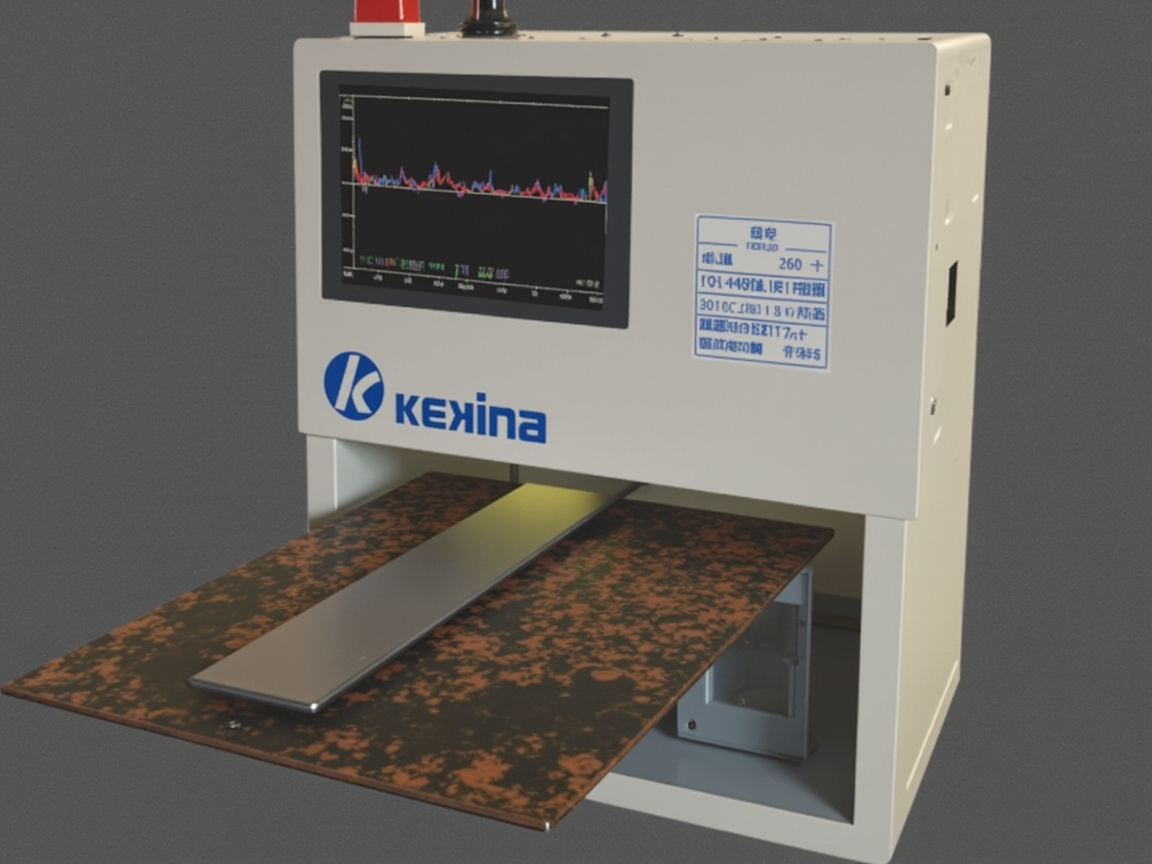
The standard test method for MFFT is the step-temperature plate method: according to ASTM D2354, the emulsion or coating is knife-coated on a metal plate with a continuous temperature gradient on its surface, and after drying, the critical position where the film transitions from continuous transparent to white turbid and cracked is observed; the temperature corresponding to this position is the MFFT. In China, it can be executed according to the minimum film-forming temperature determination clause in GB/T 11175-2002 "Test Methods for Synthetic Resin Emulsions". There are three key points in interpreting MFFT data. First, MFFT and Tg are not identical: water has a plasticizing effect on the hydrophilic shell layer, often making MFFT slightly lower than Tg; the MFFT of core-shell structure emulsions is mainly determined by the shell composition and can significantly deviate from the Tg calculated from the overall composition, so "guessing film formation by looking at Tg" is unreliable. Second, it is necessary to clarify whether the reported MFFT is for the "bare emulsion" or the "finished coating": the MFFT of the coating after adding film-forming aids is far lower than that of the bare emulsion, and formula review should request both simultaneously to judge how heavy the additive burden is. Third, construction near MFFT is a marginal state; engineering practice recommends that the construction temperature be at least 5℃ above the MFFT of the finished coating to leave a safety margin, and pay special attention to day-night temperature differences—meeting the standard during the day but dropping below MFFT at night, the second half of the wet film fails to coalesce, likewise causing whitening and powdering, which is a common root cause of outdoor construction failures in spring and autumn.
22. Drying Shrinkage and Internal Stress: The Last Hurdle of Film Formation
From wet film to dry film, the volume shrinkage is considerable—water and additives occupy a high volume fraction of the wet film, and after volatilization the film volume shrinks substantially. If shrinkage occurs after the film has adhered to a rigid substrate, it will be constrained by the substrate and accumulate tensile internal stress within the film. Manifestations of excessive internal stress: cracking (stress exceeds the cohesive strength of the film), edge curling (stress concentration at edges), and decreased adhesion (stress converts to shear at the interface). Influencing factors and rules: single thick coat has large absolute shrinkage and higher stress, so water-based paint should be applied thinly in multiple coats; too rapid drying (high temperature, strong wind) causes the surface to fix first and the interior to shrink later, making the stress gradient steeper and more prone to cracking; when the pigment and filler volume concentration (PVC) is too high, film continuity is poor and crack resistance further declines. Mitigation means: control single-coat film thickness, moderate drying conditions, select tough resin or core-shell soft-core structure to absorb stress, and introduce flexible components when necessary. Understanding the "shrinkage—stress—cracking" chain explains why the formulation difficulty of high-build water-based products is far higher than that of thin-coat products, and also enables troubleshooting to trace "cracking" from the symptom to the stress root cause.
23. VOC Trade-off of Film-Forming Aids and Low-Odor Trend
Although film-forming aids are necessary for low-temperature film formation of water-based paint, they are also one of the main sources of VOC, and must be accounted for according to GB/T 23986-2009 and meet limits such as GB 30981-2020. Engineering commonly uses Texanol (2,2,4-trimethyl-1,3-pentanediol monoisobutyrate), DPM, and alcohol ether types; they volatilize slowly and have a long film-forming window, but their odor and VOC cannot be ignored. In recent years, low-odor, high film-forming efficiency aids (such as certain high-boiling esters, modified alcohol esters) have gradually replaced them, able to lower MFFT below room temperature at lower addition levels. Selection principle: under the premise of meeting the minimum construction temperature, add as little film-forming aid as possible—this reduces VOC and odor, and also shortens hard dry. For interior and children's product water-based paints with high odor-free requirements, the "type and dosage of film-forming aid" should be written into the technical agreement and accepted based on GB/T 23986 reports, rather than relying solely on "eco-friendly" claims.
Common Questions
Q: What is MFFT, and why does it determine whether water-based paint can form a film?
A:
MFFT (Minimum Film-Forming Temperature) is the lowest temperature at which emulsion particles can coalesce into a continuous film. When the temperature is above MFFT, particles soften and coalesce under capillary pressure; below it, particles do not coalesce, the film is discontinuous, and whitening and powdering occur. It is approximately equal to the polymer Tg, and is the "temperature switch" for water-based paint construction.
Q: What exactly does the film-forming aid do?
A:
It is a temporary "plasticizer": it temporarily lowers the MFFT of high-Tg polymers below room temperature, allowing particles to coalesce into a film at room temperature; after film formation, it volatilizes over time/baking, and the polymer recovers its high-Tg stiffness. It equals "soft first, then hard", allowing water-based paint to be both easy to apply and high hardness.
Q: What is Texanol, and why is it commonly used?
A:
Texanol (2,2,4-trimethyl-1,3-pentanediol monoisobutyrate) is the most classic film-forming aid, efficient, low-odor, low-toxicity, with a boiling point of about 255℃, able to strongly lower MFFT, and is the mainstay of water-based wood/industrial coatings. But its boiling point is close to the 250℃ threshold, so VOC accounting must be judged according to GB/T 23986 on whether it is included.
Q: Is more film-forming aid always better?
A:
No. Excess will cause VOC to exceed limits, the film to remain sticky and attract dust long-term, decreased water and chemical resistance, and slower drying. Insufficient aid leads to poor film formation, whitening and cratering. It must be precisely regulated according to Tg, construction temperature, and season (commonly 2%–10% of emulsion mass).
Q: Why do water-based paints easily whiten and powder in winter?
A:
Winter temperatures are low, often below MFFT (even with film-forming aids the compensation may be insufficient), particles do not coalesce, the film is discontinuous and chalky white, and powders off when wiped. Countermeasures: add film-forming aids, raise temperature (or low-temperature baking), control humidity, and avoid construction at low temperature and high humidity.
Q: Are film formation and curing the same thing?
A:
No. Film formation is particles coalescing into a continuous film (surface dry/hard dry); full curing is the completion of crosslinking and chain diffusion, and the establishment of resistance, requiring several days to over ten days. Water-based paint has weak early water resistance, and must be cured according to the full curing period, rather than bearing load or contacting water right after surface dry.
Q: How does self-crosslinking improve the resistance of water-based paint?
A:
Self-crosslinking undergoes chemical crosslinking after film formation (such as keto-carbonyl + hydrazide, siloxane condensation, two-component PU with externally added HDI), forming a covalent network, with water, chemical, and abrasion resistance jumping up, enabling water-based paint to obtain high resistance after "low-temperature film formation", and is the key to replacing solvent-based paints.
Q: What effect does high-humidity environment have on film formation?
A:
High humidity (>75%) slows water volatilization, delays coalescence, slows surface dry, easily causes whitening, sagging, and poor early water resistance; and easily causes flash rust on metal. Humidity should be controlled ≤ 80%, substrate above dew point by 3℃, ventilation enhanced, and dehumidification or heating applied when necessary.
Q: How to select low-VOC film-forming aids?
A:
Prioritize varieties above the low-boiling-point threshold, low-odor, and high-efficiency (such as TPnB types), and combine with core-shell emulsion/self-crosslinking to structurally reduce MFFT dependence, decreasing total aid dosage, to meet GB 30981-2020 limits. See Water-based vs Oil-based VOC Comparison.
Q: Why do thick-coat water-based paints easily have problems?
A:
Thick coating has a long water volatilization path, the surface easily skins first while the interior dries slowly ("surface dry but interior not dry"), and under gravity easily sags and has large internal stress causing cracking. Water-based paint should be applied thinly in multiple coats, combined with thixotropic thickening to control sagging, which better fits the physical laws of film formation.
Further Reading
- Water-based vs Oil-based VOC Comparison: Understand the contribution of film-forming aids to VOC and low-VOC design.
- Water-based Polyurethane Resin: See how self-crosslinking PUD obtains high resistance after film formation.
- Water-based Paint Drying and Curing: Extend film formation to full-cycle control of drying, curing, and maintenance.
- Water-based Wood Coating Film Formation Mechanism and Formulation: From Emulsion Particle Coalescence to Film Properties
- Water-based Industrial Coating Formulation and Resin Systems: From Film-Forming Substances to Selection and Application
- How to Select Water-based Industrial Coatings under the Oil-to-Water Transition: Resin Systems and Applicable Working Conditions